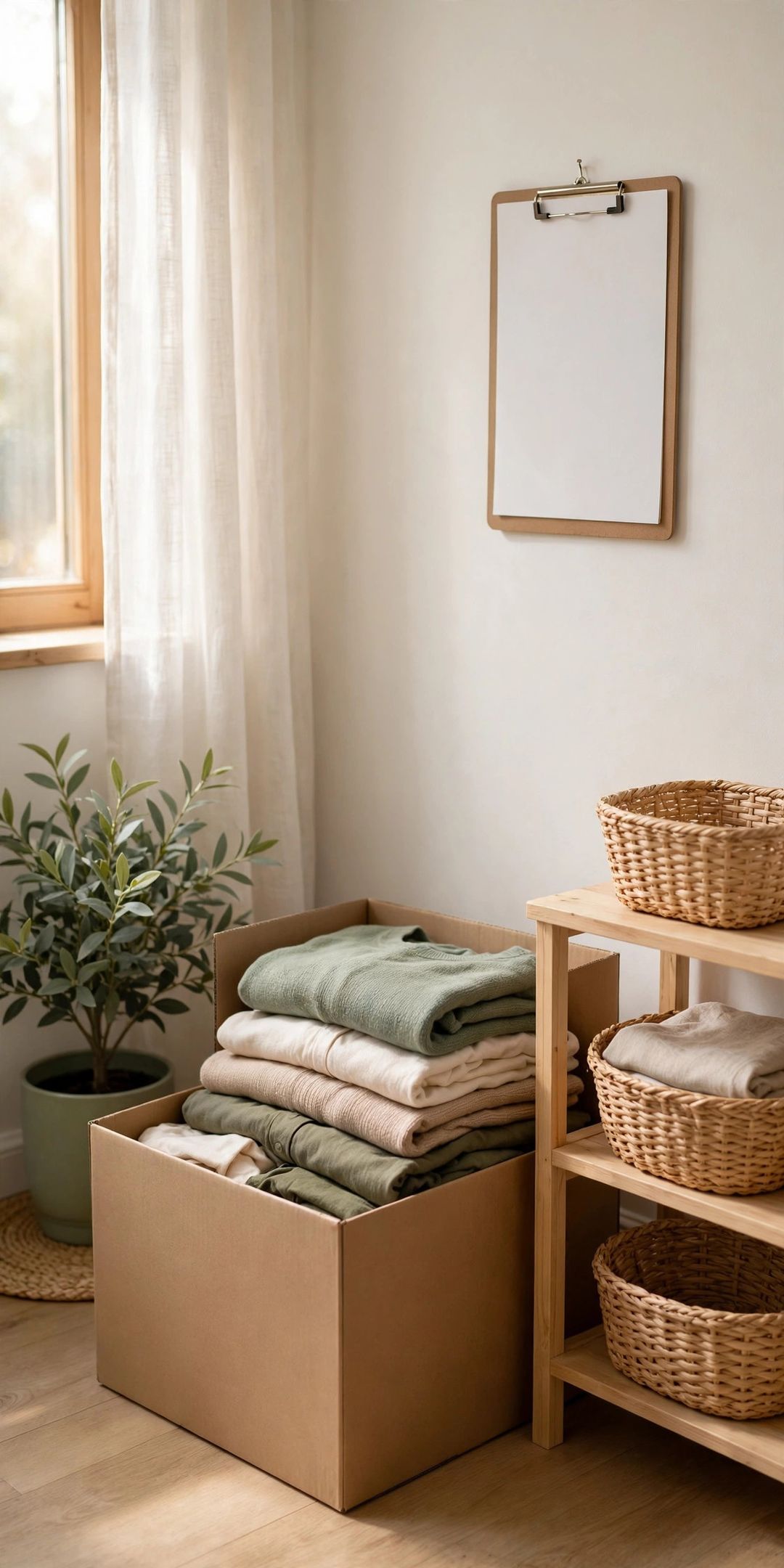
A weekend purge sounds fast, but it often ends with half-sorted piles, tired decisions, and bags that sit by the door for weeks. One focused zone at a time is slower on paper and far easier to finish.
This 12 month declutter calendar gives each area of the home its own month, matched to the season when the job makes the most sense. Most zones take one to three short sessions, not a full weekend.
Work through each zone the same way: empty it, sort into keep, donate, recycle, and toss piles, then return only what belongs. Keep a donation box open all year so finished items leave quickly.
Winter Reset: January to March
1. January — Paperwork, kitchen drawers and cabinets. Start indoors with paper and daily clutter. Sort mail, receipts, and manuals, shred what is outdated, and file what matters. Then clear expired items from kitchen drawers and cabinets. Allow two to three hours total. You need folders, a shredder or bag, and labels.
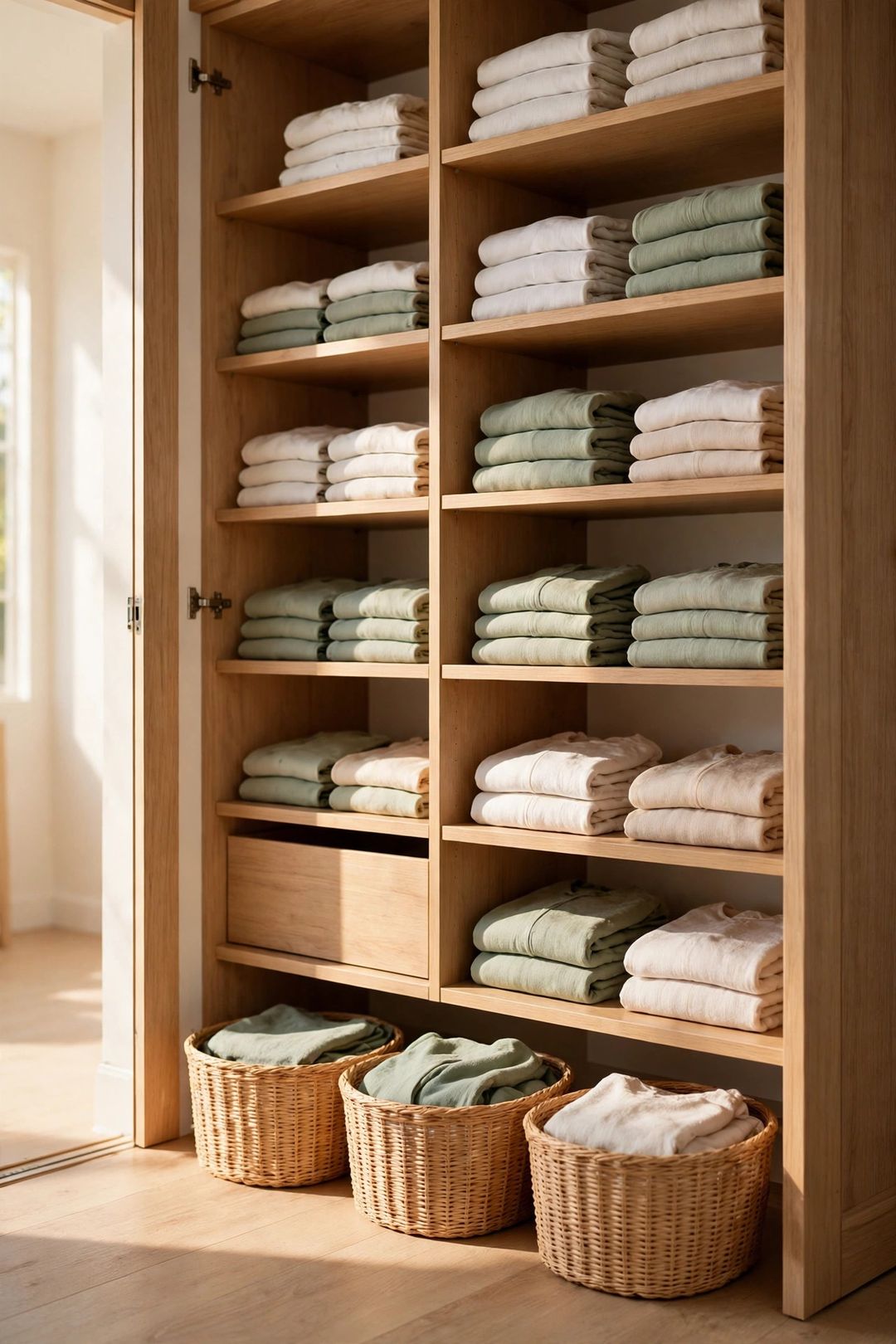
2. February — Bathrooms and the linen closet. Check cabinets, drawers, and shelves for expired products, worn towels, and duplicates that never get used. Group what stays by type so restocking is easy. Allow one to two hours. You need a trash bag, a donation bag, and small bins or baskets for grouping.
3. March — Bedroom closets and dressers. As the weather shifts, review winter clothing before storing it and check spring pieces as they come out. Donate anything unworn, damaged, or hard to pair. Allow two to three hours. You need donation bags, slim hangers, and a storage bin for off-season items.
Spring Clearing: April to June
4. April — Garage and outdoor storage. Mild weather makes this the best month for the garage. Sort tools, sports gear, paint, and seasonal items into clear zones, and sweep as each section empties. Allow three to four hours across two sessions. You need sturdy boxes, labels, and a broom.
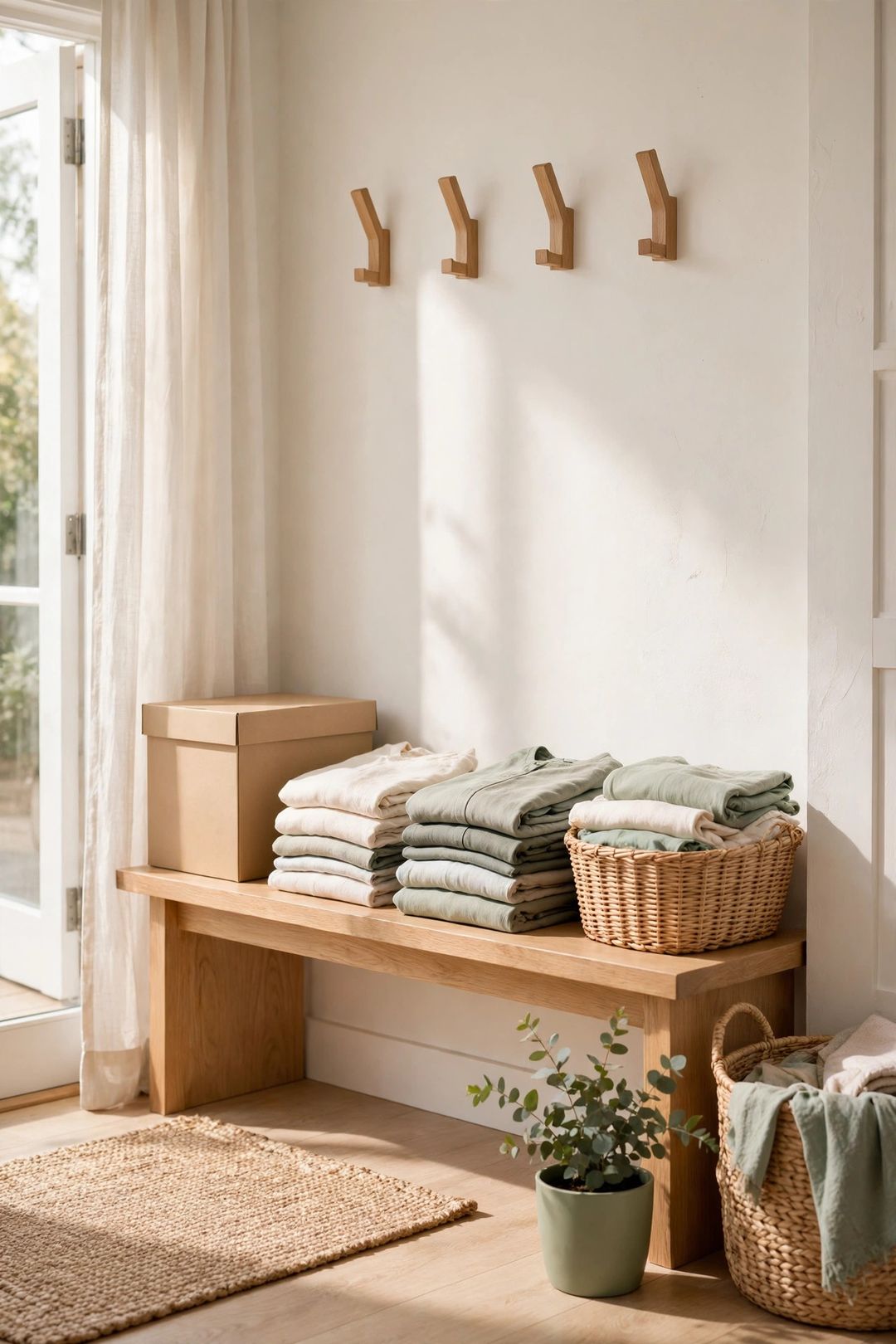
5. May — Living room and entryway. Clear surfaces, shelves, and the drop zone by the door. Sort shoes, bags, magazines, and cords, and return stray items to their real homes. Allow one to two hours. You need a basket for returns, a donation box, and hooks or a small tray.
6. June — Laundry room and cleaning supplies. Combine partial bottles where it is safe to do so, toss empty containers, and group supplies by task. Check cabinets and shelves for leaks or rust as you go. Allow about one hour. You need a caddy or bin, labels, and a trash bag.
Summer Lightening: July to September
7. July — Books, media and hobby supplies. Keep summer light with seated, indoor sorting. Review books, games, craft supplies, and old electronics, and pass on anything untouched for a year. Allow one to two hours. You need a donation box, a bag for cables, and labels for what stays.
8. August — Basement, attic and storage bins. Open every stored bin and check for damage, duplicates, and items kept only out of habit. Relabel each bin with its contents and season before it goes back. Allow two to three hours. You need clear bins, large labels, and a marker.
9. September — Closets again and the coat area. Do a shorter second pass as fall begins. Move summer clothing out, bring coats and boots forward, and donate last year's outgrown or unworn pieces. Allow one to two hours. You need donation bags, a storage bin, and space on the entry hooks.
Fall & Holiday Prep: October to December
10. October — Toys, games and gift wrap stock. Sort toys and games well before the holidays, while there is time to donate what is complete and outgrown. Check puzzles and game pieces, and group gift wrap in one spot. Allow one to two hours. You need donation bags and small bins.
11. November — Pantry and food storage. Clear shelves before holiday cooking begins. Check dates, move older items forward, and group baking, canned, and everyday staples so shopping lists stay accurate. Allow one to two hours. You need a trash bag, labels, and a notepad for the restock list.
12. December — Holiday decor and seasonal kitchen items. As decor comes out, set aside anything broken, faded, or unused for a second year. Pack what stays by room, label each box, and note what needs replacing. Allow one to two hours. You need sturdy boxes, tissue or padding, and labels.
What to Buy
Sturdy donation boxes or bags, typically $8–$15. Pro: A box that is always open catches donations the moment a zone is finished. Con: Cardboard weakens if it sits in a damp garage. Skip if: Stores nearby accept bagged donations and trips are frequent.
A label maker or large stick-on labels, typically $10–$25. Pro: Clear labels keep bins and files readable for everyone at home. Con: Tiny label tape runs out fast during big sorts. Skip if: A marker on painter's tape already gives clear, readable labels.
Clear storage bins with lids, typically $6–$12 each. Pro: Contents stay visible, so stored items get checked instead of forgotten. Con: Odd sizes stack poorly and waste shelf space. Skip if: Existing bins are sturdy, matching, and already labeled well.
A simple wall calendar or planner, typically $8–$18. Pro: Writing each month's zone down makes the plan visible and easy to follow. Con: A planner helps only if it lives somewhere it gets seen. Skip if: A phone calendar with monthly reminders already works.
Mistakes to Avoid
- Doing two zones at once. Split focus leaves both areas half-finished. Complete one zone, donate, and reset before starting the next.
- Skipping the donation drop-off. Sorted bags that stay in the hallway become clutter again. Schedule the drop-off in the same week.
- Buying bins before sorting. Storage bought early often fits the clutter, not what remains. Sort first, measure, then buy.
- Treating the calendar as a deadline. A busy month happens. Shrink the zone to one drawer or shelf instead of abandoning the whole plan.
- Keeping a maybe pile forever. Give undecided items one box and one review date. If the date passes unused, donate the box.

Frequently Asked Questions
What if a month gets missed?
Pick up with the current month and shrink the missed zone to its worst shelf or drawer. The calendar works because it keeps moving, not because every month is perfect.
How much time does each zone really take?
Most zones take one to three hours, split into sessions of 30 to 45 minutes if that fits better. The garage and storage areas usually take the longest, so plan two sessions for those.
Can the order of the months change?
Yes. Keep the seasonal logic — garage in mild weather, pantry before holiday cooking, closets near season changes — and swap the rest to match the home. The order matters less than finishing one zone fully.
What should happen to donations each month?
Take them out within the week the zone is finished. A regular drop-off point, a scheduled pickup, or a charity shop on a normal route all work, as long as bags do not pile up.
Print the calendar, pick the current month's zone, and schedule the first short session this week. Save this post to your Decluttering board on Pinterest so the full year plan is easy to find each month.