Spring cleaning feels huge when you picture the whole house at once. It feels much smaller when you pick one tiny spot, set a timer, and stop when the timer ends.
This 7 day spring declutter challenge does exactly that: one small space per day for seven days, each with a short task list and a clear finish line. No room makeovers, no emptying entire closets, and no special supplies needed to start.
Work in order or swap days to fit your week. The goal is seven finished spaces, not a perfect house.
Before You Start: A Quick Prep
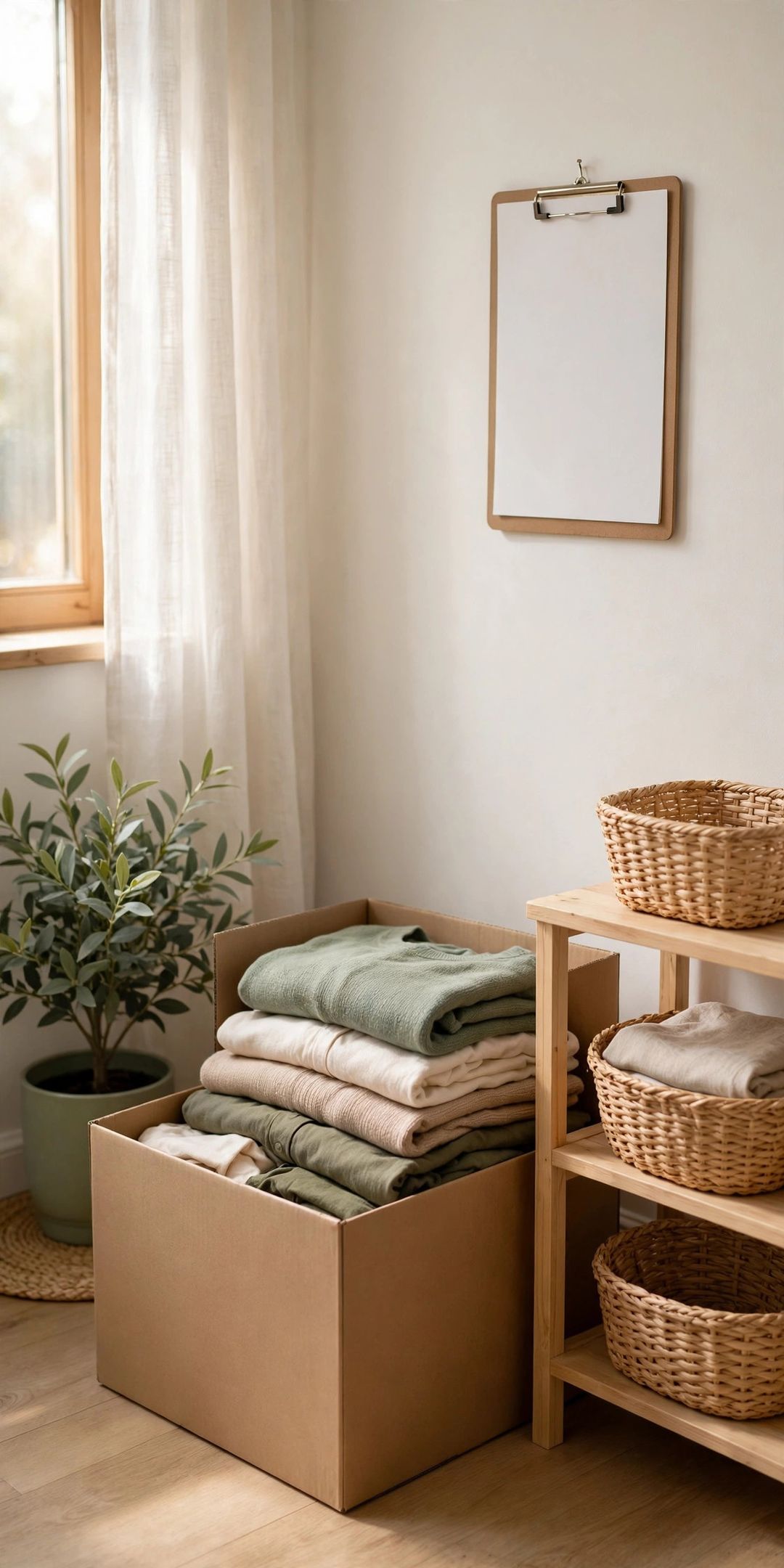
Gather four things before Day 1: a trash bag, a donation box, a basket for items that belong elsewhere, and a marker for quick labels. Keep them together all week.
For each space, use the same order: take everything out, wipe the surface, sort into keep, donate, trash, and relocate, then put back only the keep pile.
Day 1: The Entryway
Time guide: about 20–30 minutes. The entryway is usually small enough for a fast win on the first day.
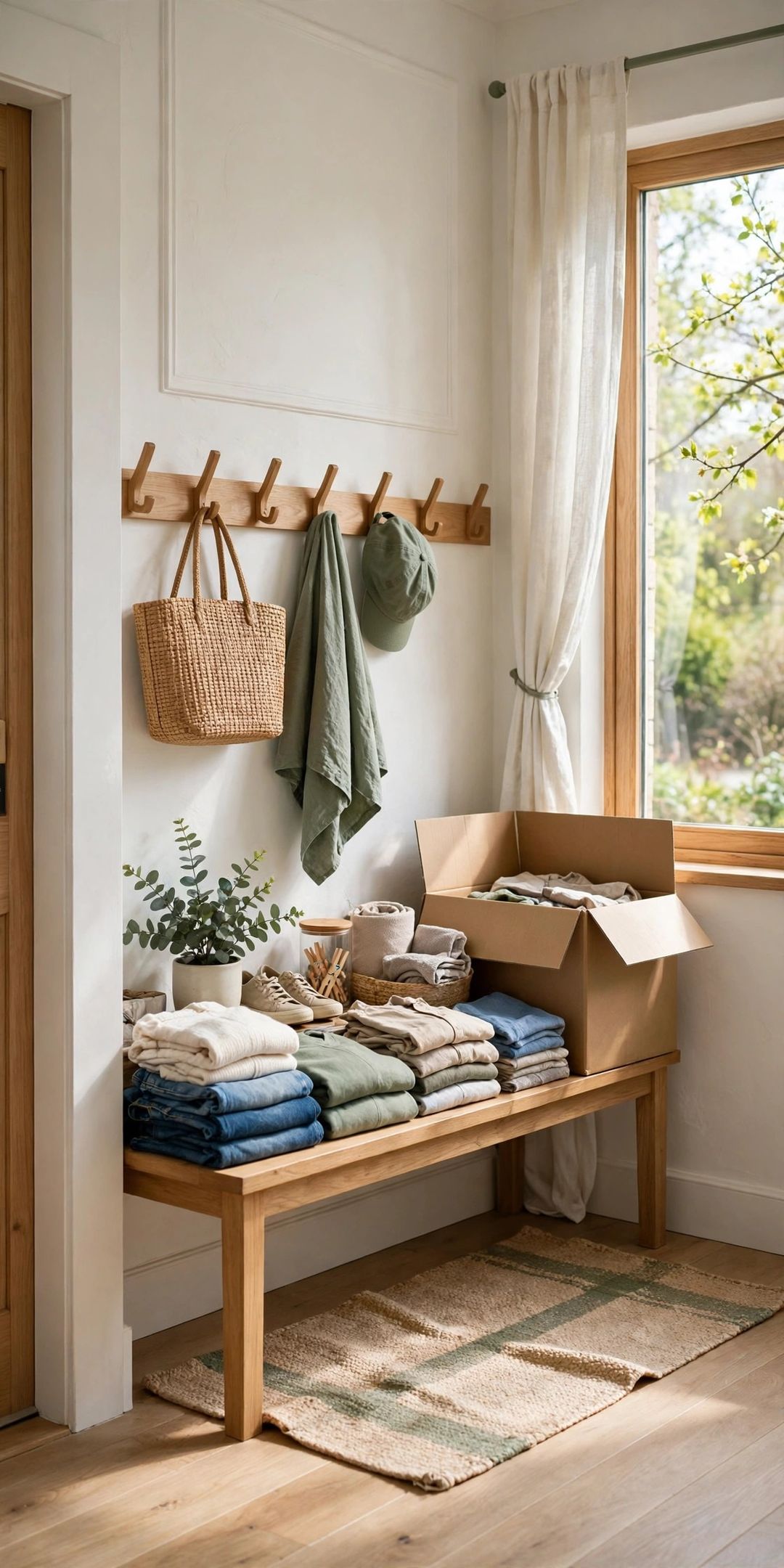
- Remove everything from hooks, benches, and the floor area by the door.
- Keep only the shoes and coats used this week; move off-season items to a closet.
- Toss worn-out gloves, broken umbrellas, and single mittens with no match.
- Add one small tray or basket for keys, mail, and sunglasses if they tend to scatter.
Day 2: The Junk Drawer
Time guide: about 20 minutes. Every home has one drawer that catches everything. Today it gets a reset, not a perfect system.
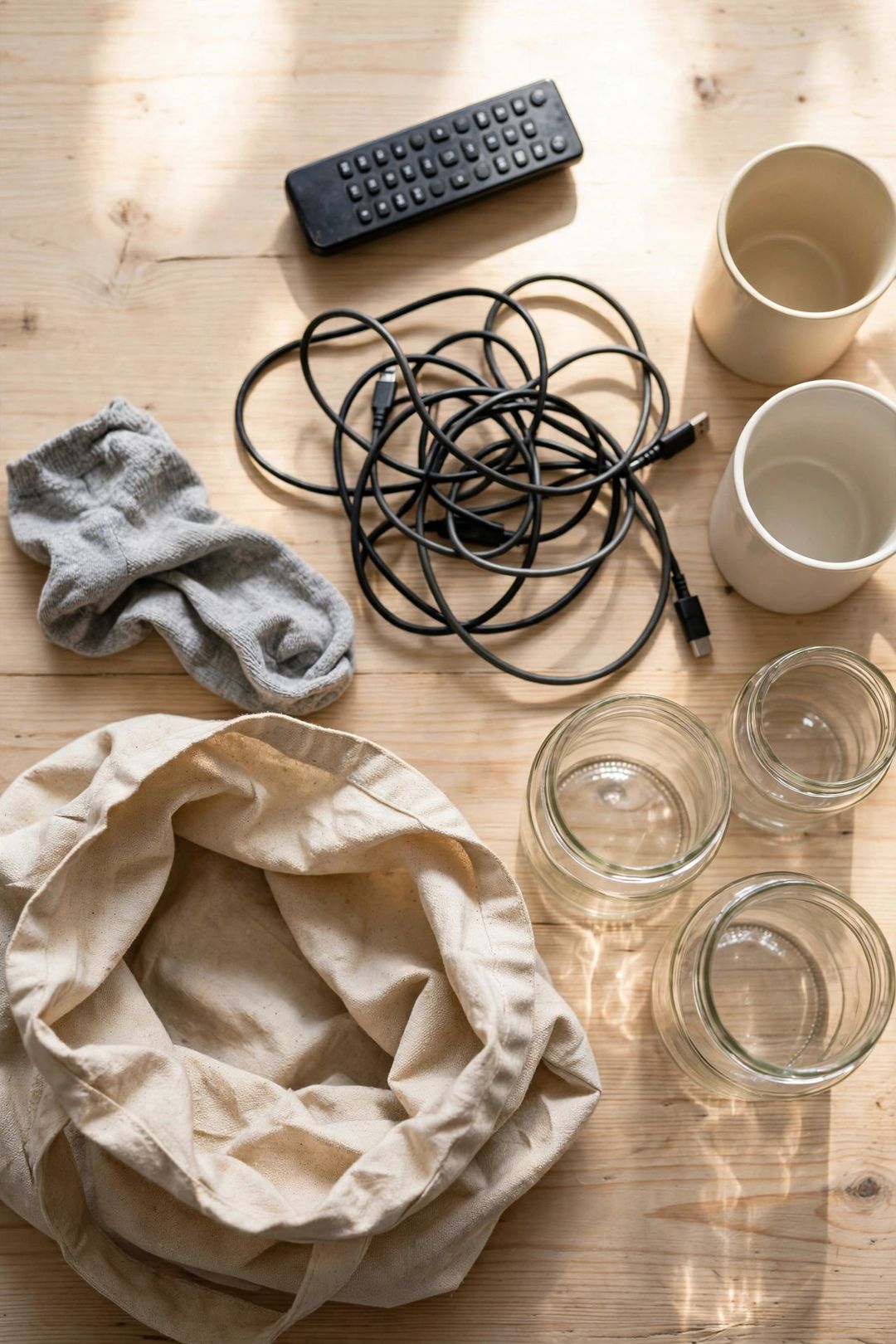
- Empty the whole drawer onto a table and wipe out crumbs and dust.
- Test pens and markers, then toss the dead ones along with dried glue and dead batteries for proper disposal.
- Group what stays: tape, scissors, chargers, batteries, and small tools each get a corner or a small divider.
- Move anything with a real home elsewhere — tools to the toolbox, makeup to the bathroom, papers to Day 7.
Day 3: The Bathroom Cabinet
Time guide: about 25–30 minutes. Cabinets hide expired products and near-empty bottles that crowd out daily items.
- Pull out everything shelf by shelf and check dates on medicine, sunscreen, and cosmetics.
- Toss expired items and bottles with only a trace left; combine duplicates when it is safe to do so.
- Keep daily items at the front and group extras and cleaning supplies behind them or in a small bin.
- Use a small tray for tiny items like cotton balls and hair ties so they stop rolling loose.
Day 4: One Closet Shelf
Time guide: about 25 minutes. Do not do the whole closet. One shelf — the messiest one — is the whole task for today.
- Take everything off the shelf and fold or stack what you keep into neat, visible piles.
- Donate clothes and linens that no longer fit, are worn thin, or have not been used in a year.
- Move out-of-season items to the back or to a labeled bin so this-season items stay easy to reach.
- Leave a little empty space; a packed shelf fills back up with clutter fast.
Day 5: The Fridge Door
Time guide: about 15–20 minutes. The fridge door is the fastest day of the week, and one of the most satisfying.
- Remove every bottle and jar from the door shelves and wipe the shelves clean.
- Check dates and toss anything expired, plus sauces and dressings no one in the home actually eats.
- Group what returns: dressings together, condiments together, and drinks or small jars in their own row.
- Move the oldest items to the front so they get used first, just like a simple first-in, first-out rule.
Day 6: Under the Bed
Time guide: about 30 minutes. Under-bed space should store a few planned items, not hide forgotten ones.
- Pull out every box, bag, and loose item from under one bed.
- Donate or toss anything you forgot was there and no longer need; dust or vacuum the empty space.
- Keep only flat, closed storage here: off-season clothes, spare bedding, or gift wrap in low bins that slide easily.
- Label each bin on the side that faces out, so you can read it without pulling everything out again.
Day 7: The Paper and Digital Pile
Time guide: about 25–30 minutes. Finish with the pile on the counter or desk that grows all spring.
- Sort paper into four piles: act now, file, recycle, and shred anything with account numbers or personal details.
- File the keepers into one folder, binder, or box with simple labels like bills, school, and warranties.
- Unsubscribe from five mailing lists or store emails you never open, and clear phone photos you no longer need.
- Set one small spot — a tray, folder, or inbox — where new paper lands from now on, instead of across counters.
What to Buy
A set of small drawer dividers, typically $8–$15. Pro: They give the junk drawer clear sections that hold after Day 2. Con: Fixed sizes do not fit every drawer. Skip if: Small boxes or trays you already own fit the drawer well.
Two low under-bed storage bins, typically $12–$25. Pro: Flat, lidded bins slide easily and keep bedding and off-season clothes dust-free. Con: Soft bins without structure can sag. Skip if: Under-bed space is already empty or too low for bins.
A small entryway tray or basket, typically $10–$18. Pro: One landing spot stops keys and mail spreading across surfaces. Con: A tray that is too big becomes a new clutter pile. Skip if: Hooks and a wall pocket already handle daily items.
A simple label set or painter's tape and marker, typically $5–$10. Pro: Labels make bins readable for everyone in the home. Con: Labels need updating when contents change. Skip if: Clear bins already show contents at a glance.
Mistakes to Avoid
- Expanding the day's space. One shelf becomes the whole closet, the timer gets ignored, and the challenge stalls. Stop at the planned space.
- Buying organizers before sorting. Sort first, then measure what remains. Containers bought early rarely match the real keep pile.
- Keeping "just in case" duplicates. Five spare chargers and three near-empty lotions are clutter, not backup. Keep one spare, donate or toss the rest.
- Skipping the donation drop-off. A donation box that sits for weeks becomes clutter again. Put it by the door and drop it off within a few days.
- Aiming for perfect instead of done. A tidy-enough drawer that stays tidy beats a styled space that collapses in a week.

Frequently Asked Questions
What if I miss a day?
Just pick up with the next space the following day. The order is a guide, not a deadline. Finishing all seven spaces in ten days still gives you the same result.
How do I handle a space that takes longer than the time guide?
Stop when the timer ends and note what is left. Finish it on Day 7 or add an eighth day. Short sessions make the plan easy to repeat.
What should I do with items I am unsure about?
Place them in one small "maybe" box with a date on it. If nothing is needed by the end of the season, donate or toss it without sorting again.
Can this challenge work in a very small apartment?
Yes. The spaces are already small ones — a drawer, a shelf, a fridge door. Swap under-bed storage for a nightstand drawer or a single kitchen cabinet if that fits your home better.
Seven small spaces in seven days can change how a home feels, without an exhausting weekend. Save this post to your Spring Cleaning board on Pinterest so each day's list is ready when you are.