Bottles, nipples, caps, sippy cups, snack bowls, and toddler plates add up fast. Each piece is small on its own, but together they roll, stack badly, and spill out every time the cabinet door opens.
These baby bottle and toddler dish storage kitchen ideas fit the whole collection into one small cabinet or one deep drawer. The goal is simple: every type of piece gets one clear home, so clean items go back quickly and nothing hides at the back.
Start by gathering every bottle and toddler dish in one place and letting go of unmatched or unused pieces. A smaller collection is far easier to fit well.
1. Sort Pieces Into Clear Bins
One bin per type of piece. Keep bottle bases in one bin, nipples and caps in a second smaller bin, and toddler bowls in a third. Clear sides let you see the contents without pulling each bin out.
Choose bins without lids for anything you grab often — open tops are faster during busy mornings.
2. Add a Bottle Drying Rack Beside the Cabinet
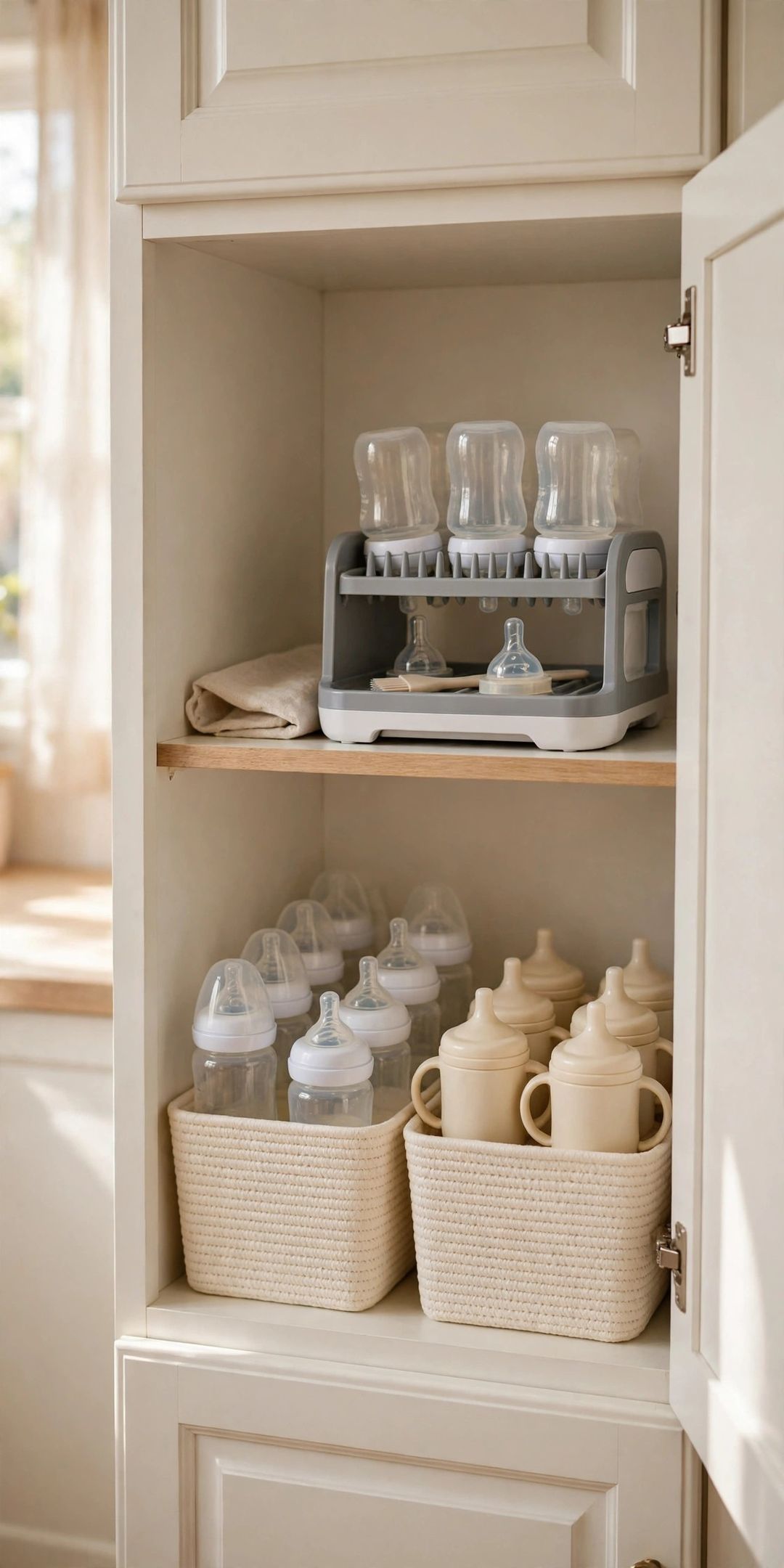
Give clean pieces a landing spot. A compact drying rack on the counter near the cabinet holds washed bottles and cups until they are dry and ready to put away. This keeps damp pieces out of the closed cabinet.
Once items are dry, move them into their bins in one quick pass. The rack stays clear for the next wash instead of becoming storage itself.
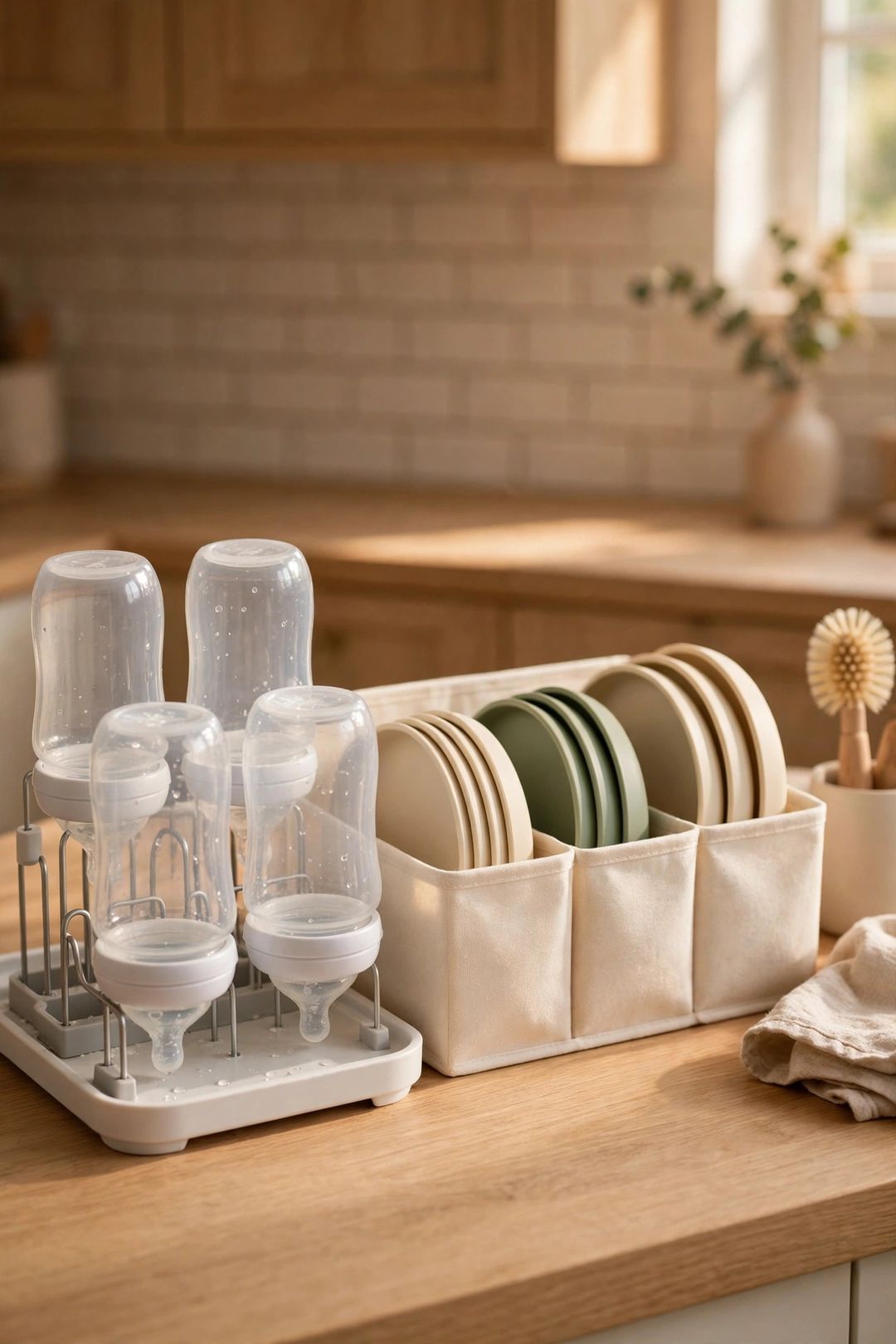
3. Stand Bottles Upright in a Divided Tray
Stop bottles from rolling and tipping. A divided tray, a low basket with sections, or a simple row organizer keeps bottles standing upright in a drawer or on a shelf.
Upright storage makes it easy to count clean bottles and spot a missing cap or ring quickly.
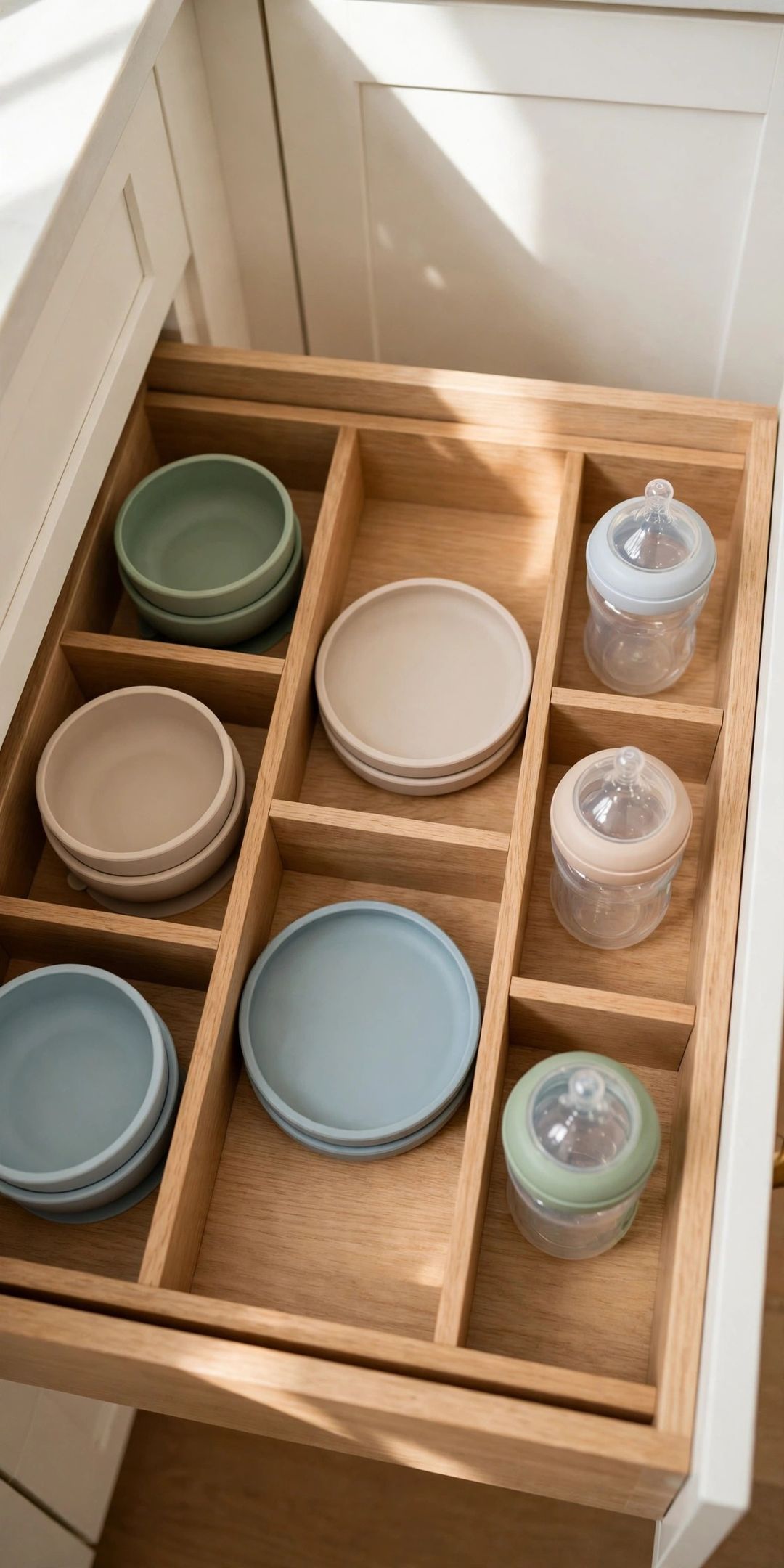
4. Use Vertical Dividers for Toddler Plates
File plates instead of stacking them. A plate divider or a simple file-style rack holds toddler plates and lids on their edges, like books on a shelf. Each plate slides out without lifting a whole stack.
This works especially well for flat snack trays and divided plates, which tend to stick together and topple when stacked in a pile.
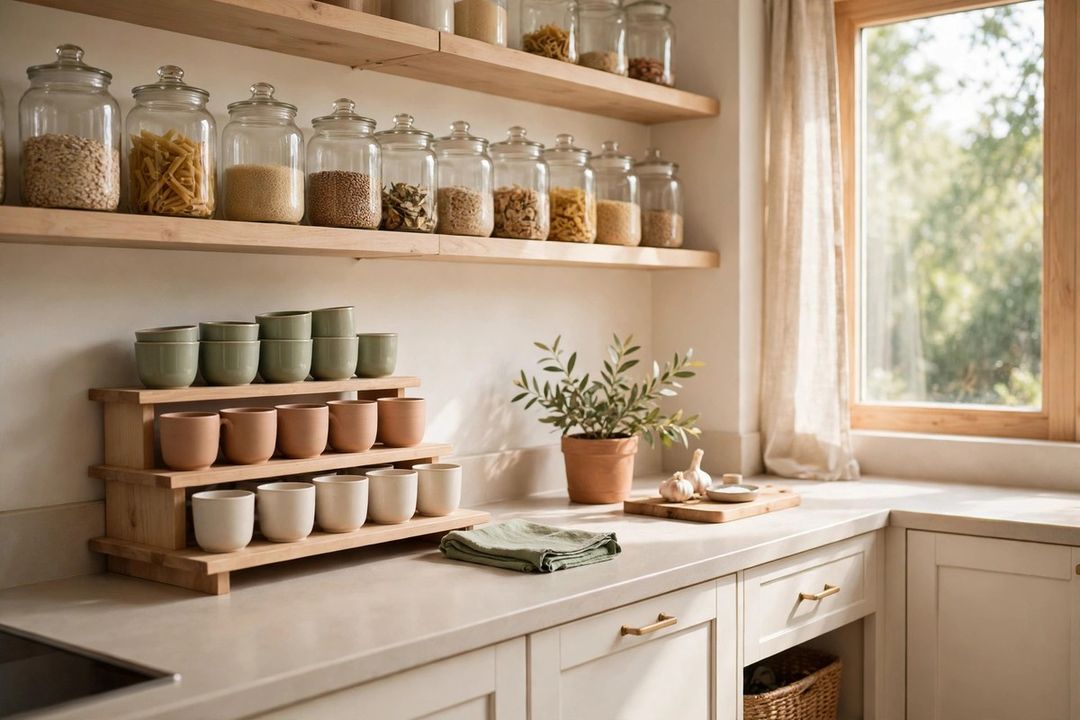
5. Add a Small Shelf Riser
Split one tall shelf into two levels. A short riser creates an upper level for sippy cups and a lower level for bowls or bottles, using height that would otherwise sit empty.
Measure the tallest bottle or cup first, then choose a riser height that leaves clearance on both levels.
6. Keep Sippy Cups in One Open Basket
Corral the cups and their lids together. Sippy cups multiply quickly, and their lids and valves are easy to lose. One open basket keeps each cup with its parts in a single spot.
If the basket gets too full to see into, pare it back to the cups in regular rotation and store spares elsewhere.
7. Use the Inside of the Cabinet Door
Claim the door for flat, light pieces. A slim over-door or adhesive rack can hold small flat items such as lids, snack-cup tops, or bibs, depending on clearance when the door closes.
Test the door with the rack loaded before relying on it. The door should close fully without pressing against the shelves or bins inside.
8. Create a Small Parts Bin
Give tiny pieces their own container. Valves, straws, rings, and spare nipples are the pieces most likely to vanish. A small lidded box or divided container keeps them together in one known place.
Store this bin at the front of the cabinet, at eye level if possible. Small parts stored at the back are small parts that get bought again.
9. Set Up a Drawer as the Bottle Station
Try a drawer if the cabinet is not working. A deep drawer near the sink or prep area can hold the whole system: a divided tray for bottles, a bin for cups, and dividers for plates, all visible from above.
Looking down into a drawer is often easier than reaching into a dark cabinet, and nothing can hide at the back.
10. Keep a Strict One-Cabinet Limit
Let the space set the collection size. Decide that bottles and toddler dishes live in this one cabinet or drawer only. When a new cup arrives, an old or outgrown one leaves to make room.
This single rule prevents slow spread into other cabinets and makes tidying fast, because there is only one place to put things back.
What to Buy
Clear storage bins, typically $8–$18. Pro: Contents stay visible and sorted by type. Con: Oversized bins waste space in a small cabinet. Skip if: You already own baskets or boxes that fit the shelf well.
A compact bottle drying rack, typically $12–$22. Pro: It gives washed pieces a clear landing spot outside the cabinet. Con: It takes up counter space while in use. Skip if: Counter space is very tight and a small towel by the sink works instead.
A vertical plate divider, typically $10–$20. Pro: Plates and lids slide out one at a time without restacking. Con: Very small or oddly shaped dishes may not sit securely. Skip if: You store only a few plates that stack neatly already.
A small shelf riser, typically $10–$18. Pro: It doubles the usable levels inside one tall shelf. Con: The wrong height can make both levels cramped. Skip if: Your cabinet shelf is already short with little wasted height.
A small lidded parts container, typically $5–$12. Pro: Tiny valves, rings, and straws stay together and easy to find. Con: It is one more container to open during busy moments. Skip if: A spare small bin already keeps parts corralled.
Mistakes to Avoid
- Storing pieces in several cabinets. Bottles in one place and lids in another guarantee a daily search. Keep the full set together.
- Keeping every cup ever received. A growing collection will outgrow any cabinet. Keep the regular rotation and store or pass on the rest.
- Stacking toddler plates in tall piles. Divided plates stick and topple. Filing them on edge is faster and calmer to use.
- Putting small parts at the back. Valves and rings stored deep in a cabinet get lost and replaced. Front and visible is the rule.
- Skipping the sort before buying organizers. Bins bought for an unsorted collection usually fit the mess instead of fixing it.
Frequently Asked Questions
How many bottles and cups should be kept in the cabinet?
Keep the number in regular rotation, plus a small backup. If the cabinet cannot close or the bins cannot be seen into, the collection is too large for the space.
Is a cabinet or a drawer better for bottle storage?
Both can work. A drawer gives a top-down view that stops items hiding at the back, while a cabinet with bins and a riser suits kitchens with no spare deep drawer. Choose based on which space sits closest to the sink.
How should toddler plates and bowls be stored together?
File plates on their edges in a divider, and keep bowls in a shallow bin or a short stack nearby. Separating plates from bowls stops the mixed pile that makes both hard to grab.
Where should spare parts and extra cups go?
Store spares outside the main cabinet, in a labeled bin in a pantry or closet. The daily cabinet should hold only what is in regular use, so it stays quick to tidy.
One small cabinet really can hold the whole bottle and toddler dish collection when every piece has a set place. Save this post to your Kitchen Organization board on Pinterest so the system is easy to find on your next tidy-up day.