Baby clothes are tiny, but they move fast. One month a drawer holds newborn sleepers, and a few months later those pieces are too short, while the next size is buried in a bag in the closet.
A simple baby clothes size rotation storage system solves that churn. Set up one labeled bin for each size band, keep only the clothes your baby wears now in the drawer, and move pieces in one clear direction as your baby grows.
The setup takes one sorting session, and after that each size change is a short swap.
The Six Size Bins: One Per Size Band
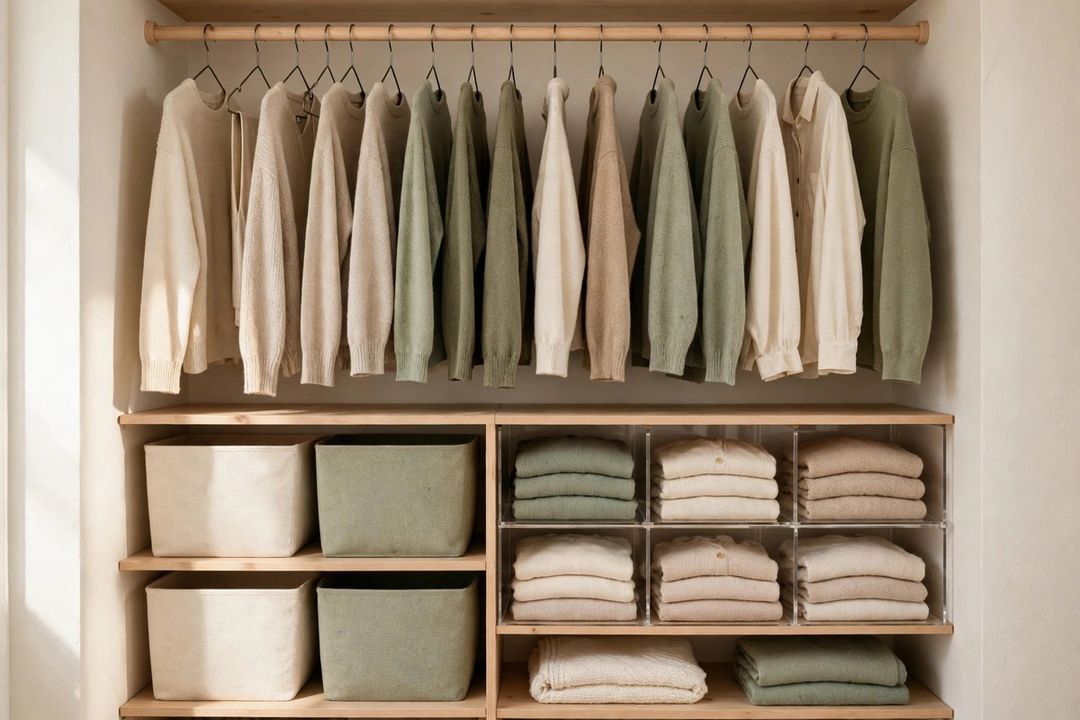
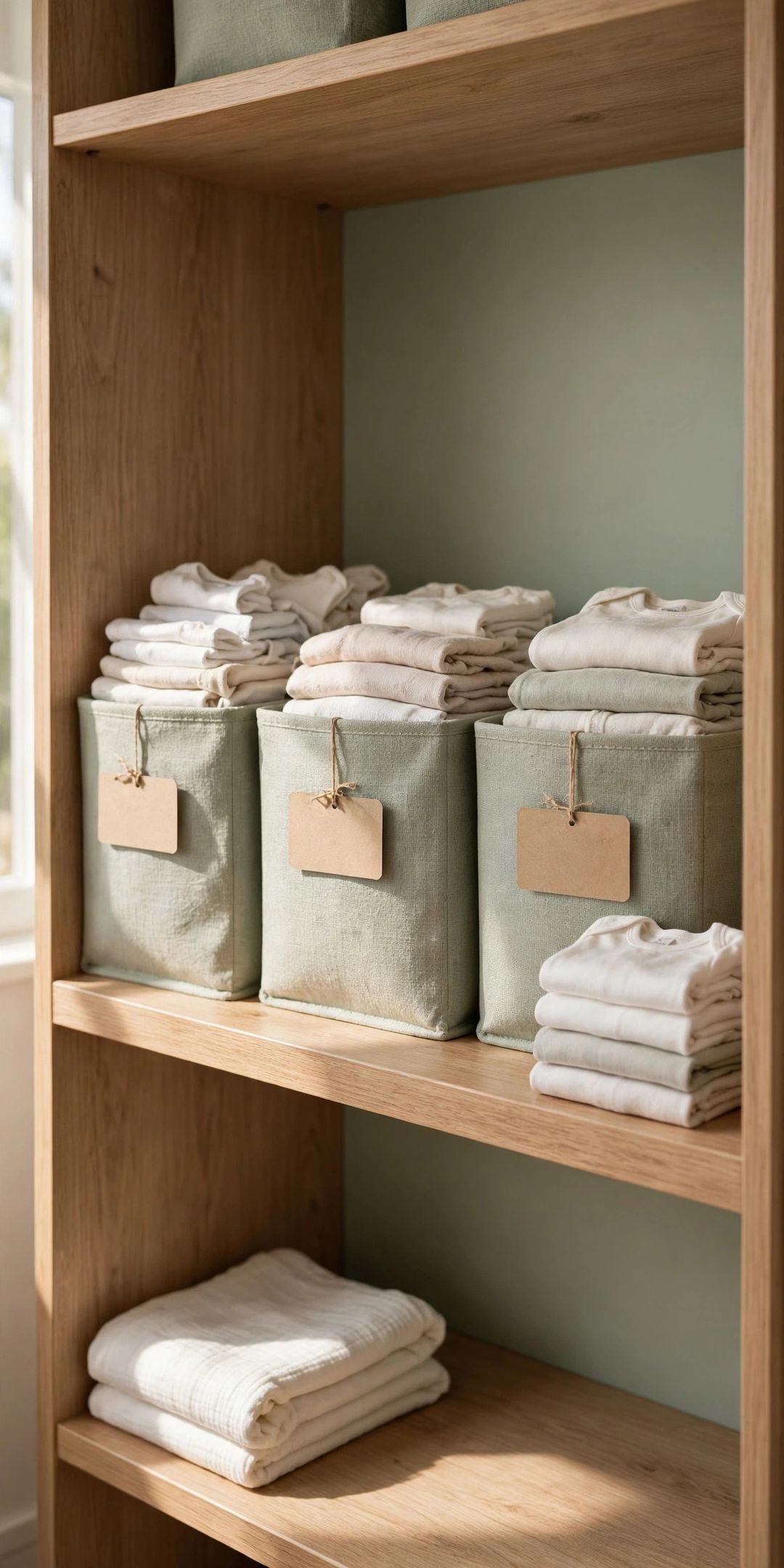
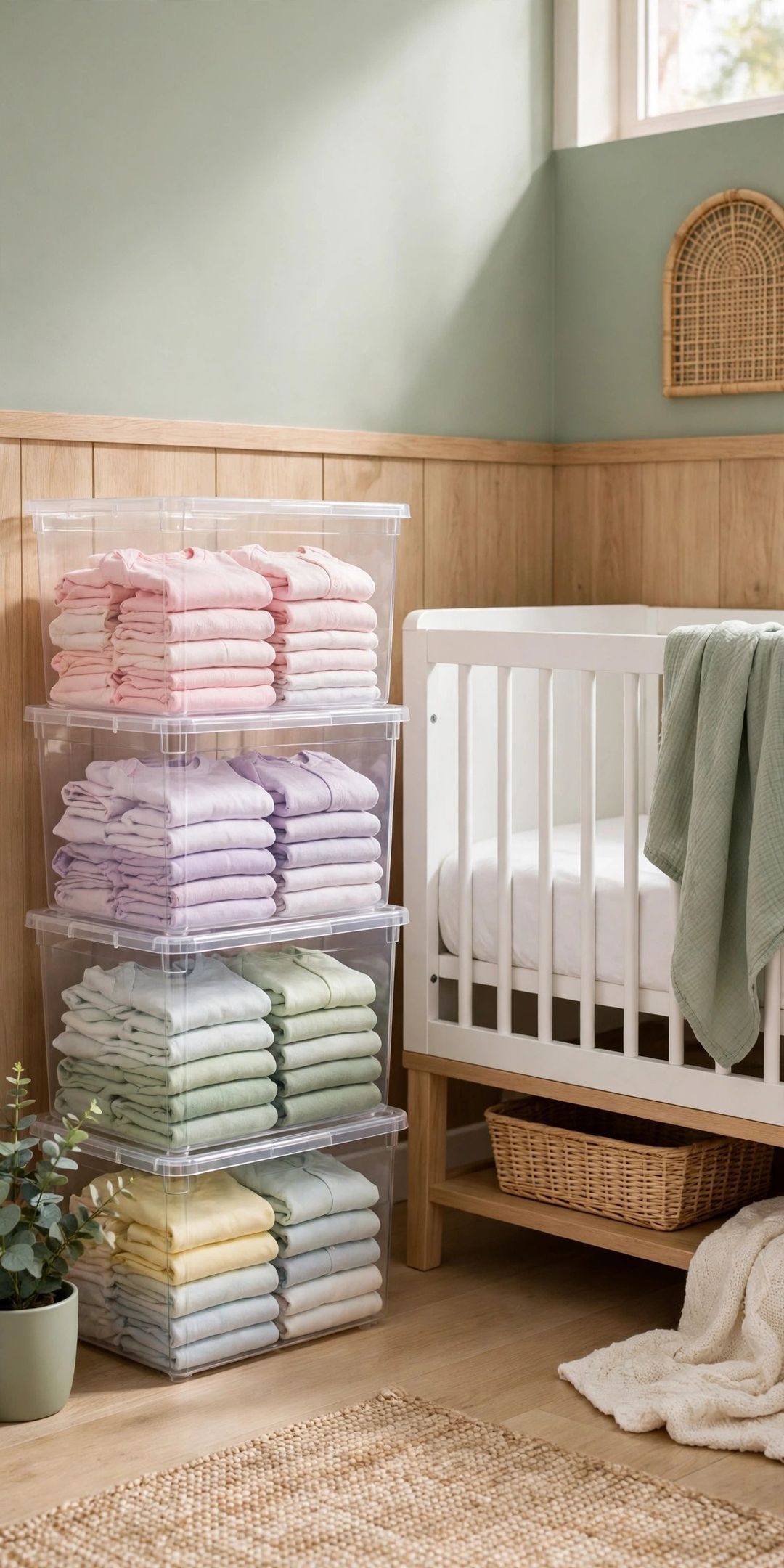
Start with six bins, one for each size band: 0–3 months, 3–6 months, 6–9 months, 9–12 months, 12–18 months, and 18–24 months. Each bin can be small, because baby clothes fold down compactly.
Sort every piece you own into its size band. Check the tag rather than guessing by eye, because sizes vary a lot between brands.
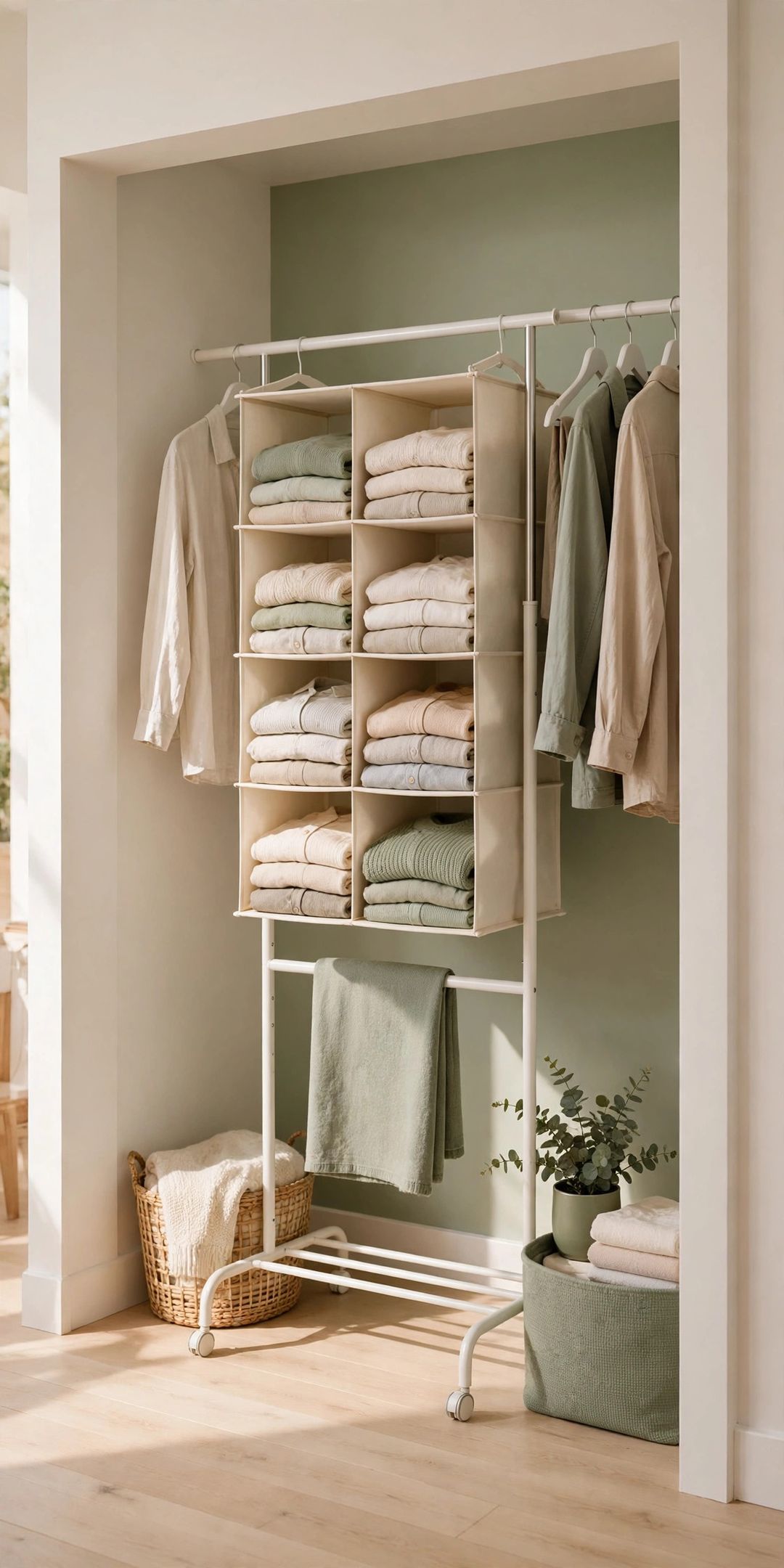
Put each pile into its labeled bin. Future sizes stay closed and stacked in one place: a high closet shelf, under the crib, or the top of a hallway closet. The current-size bin can stay partly empty, because most of that size will live in the drawer zone below.
The Now Wearing Drawer Zone
Your daily drawer should hold only the size your baby wears right now. That single rule ends the morning digging through clothes that are too small or too big.
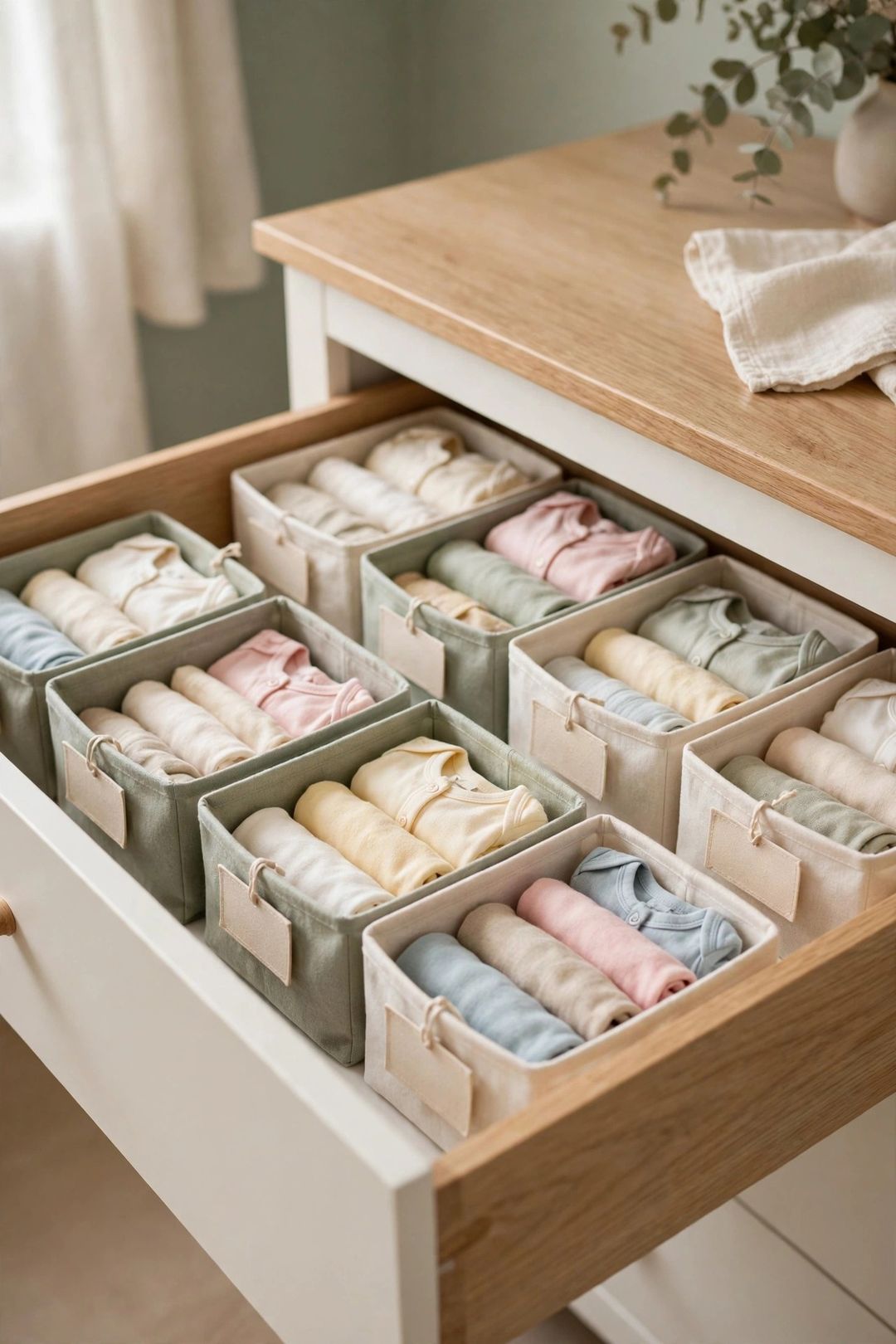
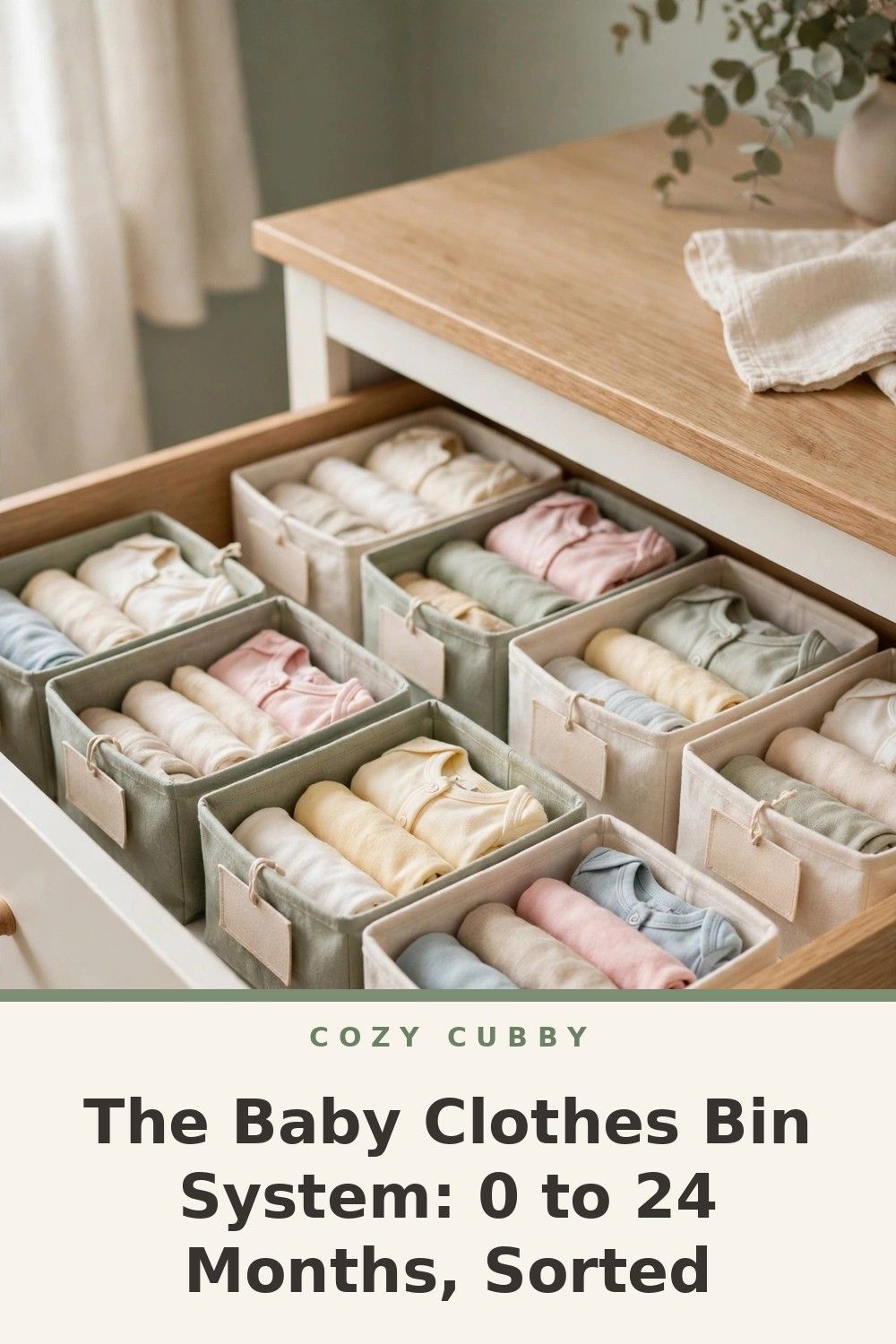
Divide the drawer by type: sleepers in one section, tops in another, bottoms in another, and a small spot for socks, hats, and bibs. Drawer dividers, fabric boxes, or clean shoeboxes can make the sections. Roll or file-fold each piece so you can see every item at a glance.
Keep the amount realistic for your laundry habits. A stuffed drawer usually just means outgrown pieces have not moved out yet.
The Outgrown Bin and the Too-Big Bin
Two working bins keep the rotation moving between swaps. The first is an outgrown bin, kept ready on the closet floor, beside the dresser, or on a low shelf near where you change your baby.
Every time a piece looks tight, short, or hard to snap, drop it straight into the outgrown bin instead of folding it back into the drawer. This habit keeps the drawer honest and saves you trying the same too-small outfit again next week.
The second is a too-big bin for gifts and hand-me-downs that arrive between sizes. Drop mixed-size pieces here first, then sort them into the correct size bins when you have a few quiet minutes. When the outgrown bin fills up, that is your signal to run the swap routine below.
Labeling That Stays Clear
Put a large label on the front of each bin with the size band in big writing, such as 6–9 MONTHS. Label the side that faces out when stacked, not the lid, because lids get swapped. Tape and a thick marker work fine.
Add one extra note to each future-size bin if it helps, like “6–9 months — mostly sleepers, few pants,” so you know if a size still needs basics.
The Simple Swap Routine
When clothes across a whole size start looking tight, not just one small-fitting piece, it is swap time. Four steps usually fit into one nap or one quiet evening.
Step 1: Empty the drawer. Move everything left in the now wearing zone into the outgrown bin. The whole old size leaves at once.
Step 2: Sort the outgrown bin. Check each piece for stains or worn fabric. Clean, sound clothes go into their labeled size bin, or into a bag to pass on or donate. Worn-out pieces leave the system.
Step 3: Refill from the next size bin. Fill the drawer zone by type. Anything still clearly too big goes into the too-big bin to try again in a few weeks.
Step 4: Reset the bins. Close the stored size bin and stack it away. Put the empty outgrown bin back in its ready spot, because the new size will start filling it sooner than you expect.
Wash Before You Store
As a general rule, wash clothes before they go into a storage bin. Clean fabric stores better than fabric put away with milk, food, or diaper cream on it, and stains are easier to deal with now than months later.
Dry everything fully before the lid goes on, because a bin closed over damp clothes can smell stale when opened. Store bins in a dry spot away from damp walls.
What to Buy
Clear bins with lids, typically $8–$15 each. Pro: Contents stay visible, and matching bins stack neatly. Con: Buying six adds up, and hard lids can crack. Skip if: You already own sturdy boxes that stack well.
Drawer dividers or fabric drawer boxes, typically $10–$18 for a set. Pro: Tiny clothes stay sorted by type. Con: Fixed dividers may not suit every drawer depth. Skip if: Rolled clothes in one open drawer are already easy to grab.
Large labels, tape, and a thick marker, typically $5–$10. Pro: Big labels make the rotation work without opening bins. Con: Tape can peel in damp rooms. Skip if: Your bins have built-in label holders.
Mesh laundry bags for small items, typically $6–$12 for a set. Pro: Socks and hats stay together through the wash. Con: They add a small sorting step. Skip if: You rarely lose small items in the wash.
Mistakes to Avoid
- Mixing two sizes in the daily drawer. Only the current size belongs in the now wearing zone.
- Guessing sizes by eye instead of reading tags. Brands size very differently, so a tag check keeps each bin accurate.
- Folding outgrown clothes back into the drawer. Drop each tight piece into the outgrown bin right away.
- Storing clothes that are dirty or still damp. Stains set and smells build in a closed bin, so wash and dry fully first.
- Scattering size bins around the home. Bins in three rooms get forgotten. Keep them in one stacked home base.
Frequently Asked Questions
How many bins do you need for baby clothes from 0 to 24 months?
Six bins cover the size bands: 0–3, 3–6, 6–9, 9–12, 12–18, and 18–24 months. Add one outgrown bin and one too-big bin as working bins, and the system is complete.
What if your baby skips a size or grows through one very fast?
Move the skipped size straight into its storage bin, and refill the drawer from the next size bin. The labels keep it clear which sizes were barely used.
Where do the bins go if there is no nursery closet?
Stack future-size bins under the crib, on top of a wardrobe, or on a high shelf in any closet. Only the drawer zone and outgrown bin need to be near the changing area.
Should hand-me-downs be sorted right away?
Put them in the too-big bin first, then sort them into the labeled size bins when you have a few minutes. Sorting by tag size keeps future swaps fast.
Set up the six bins in one sorting session, and every size change after that becomes a calm, quick swap. Save this post to your Closet & Wardrobe board on Pinterest so the full bin system is ready before the next growth spurt.