Bulk packs save trips to the store, but a small bathroom rarely has room for twelve rolls, four shampoo bottles, and a value pack of toothpaste at once. Good backstock storage ideas small bathroom bulk buys move the extras out of the bathroom and keep only a short supply inside it.
Think of backstock as a waiting area. The bathroom holds what you will use in the next week or two. Everything else lives in a dry zone nearby, grouped by type, where you can see it and grab it during a quick restock.
Start With One Rule: The Bathroom Holds Days, Not Months
Set a simple limit for the bathroom itself. Keep one item in use, plus one spare, for most daily products: one open shampoo and one backup, one toothpaste in the drawer and one waiting, and about four to six spare toilet paper rolls near the toilet.
Count what you own before choosing storage. Sort bulk items into piles: paper goods, hair and body care, dental care, cleaning supplies, and first-aid basics. Keep like items together from this point on. Mixed bins are where backstock gets forgotten, because nobody wants to dig through shampoo to find toothpaste.
Zone 1: A Linen Closet Shelf for Paper and Towel Extras
If you have a linen closet, give backstock one shelf. Toilet paper, tissues, and cotton products are light and bulky, so they suit a wide shelf well. Stand packs upright instead of stacking loose rolls in a pyramid, which crushes rolls and hides the count. If a pack is opened, slide the remaining rolls into a clear bin so the whole group moves at once.
Use the same shelf for spare hand towels, folded in one short stack. Keep cleaning refills in a separate bin, so a slow leak does not ruin a full pack of paper goods.
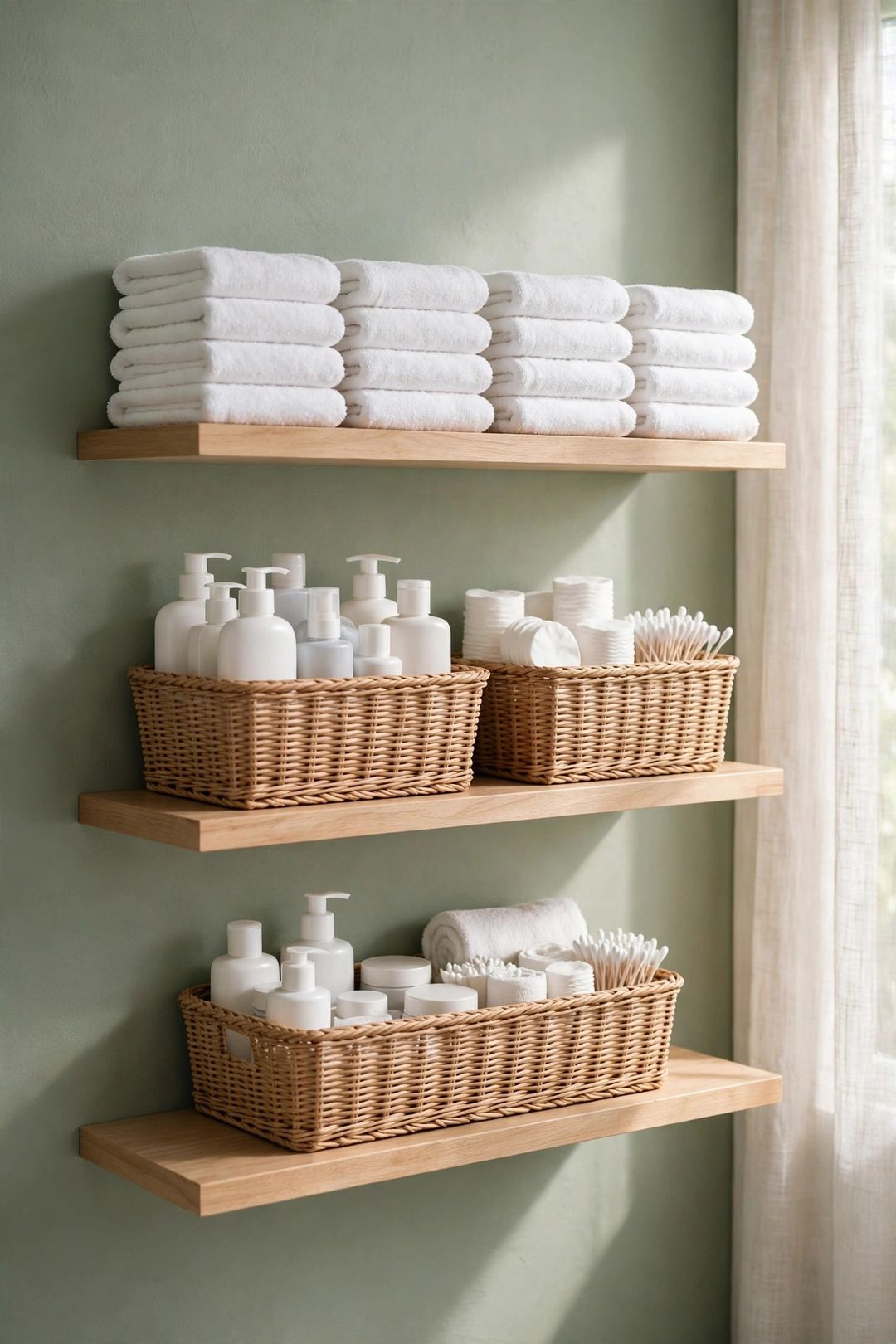
Zone 2: A Hall Closet for Bottles, Tubes, and Refills
A hall closet near the bathroom is often the best home for shampoo, conditioner, body wash, lotion, toothpaste, and soap refills. These items are smaller and heavier, and they line up well in rows.
Use shallow, clear bins that pull forward like a drawer, one category per bin, labels facing forward. Stand bottles upright, keep tubes in a narrow bin, and place the oldest refill in front, so it is the next one used.
If the shelves are deep, never push small bottles to the back wall. Add a shallow tray that holds the whole row and slides out as one piece.
Zone 3: An Under-Bed Bin for True Overflow
Under-bed storage suits the deepest backstock: the second bulk pack, or extras you will not need for a month or more. Choose a low, lidded bin and measure the clearance under the bed frame first, including any center support legs.
Reserve this zone for sealed, dry items, such as unopened packs, bar soap, and cotton balls. Skip liquids that could leak unnoticed, and skip anything you need weekly. Label both short ends of the bin, not just the lid, so you can read it from either side.
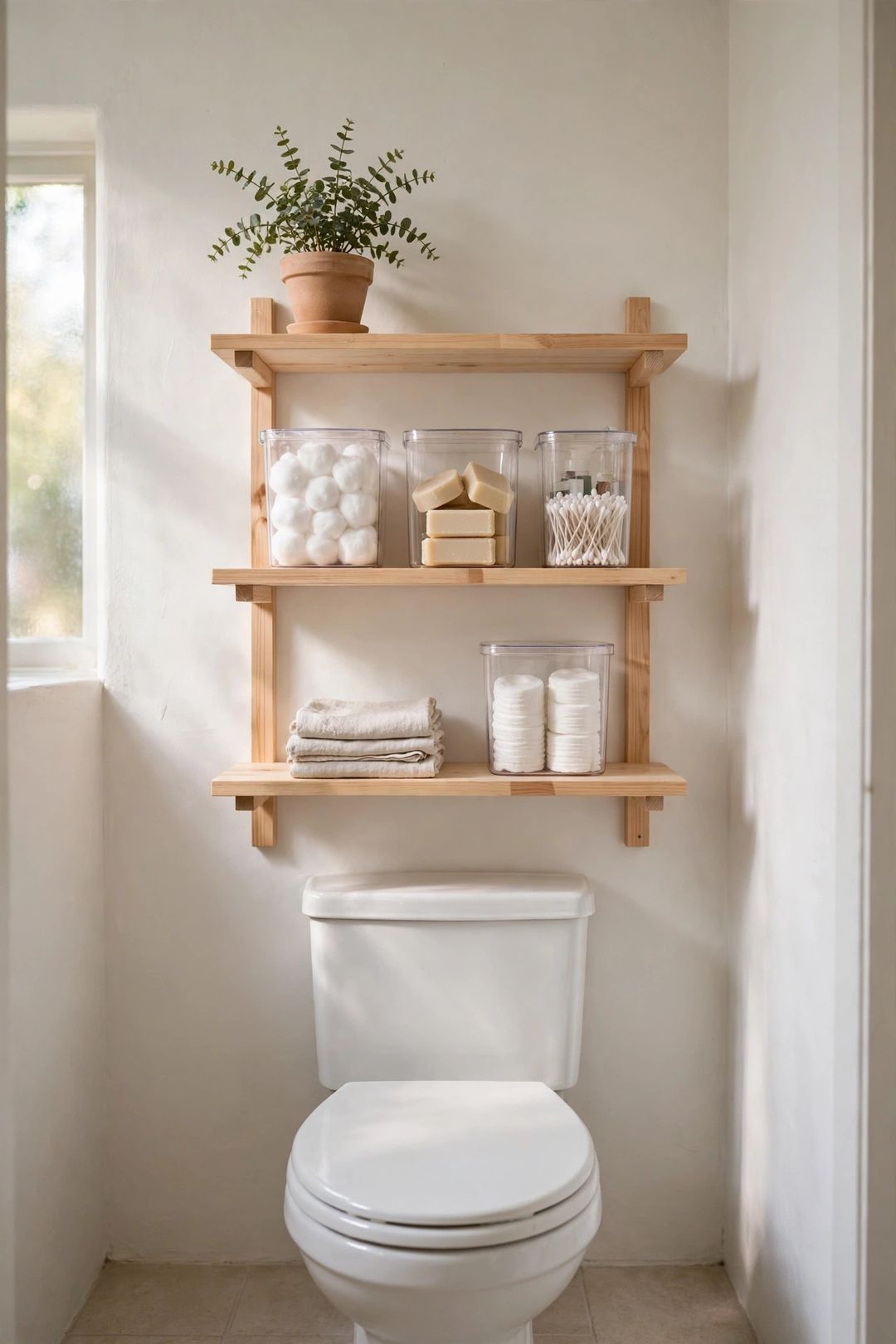
Zone 4: Over-Toilet and Under-Sink Space for Next-Up Items Only
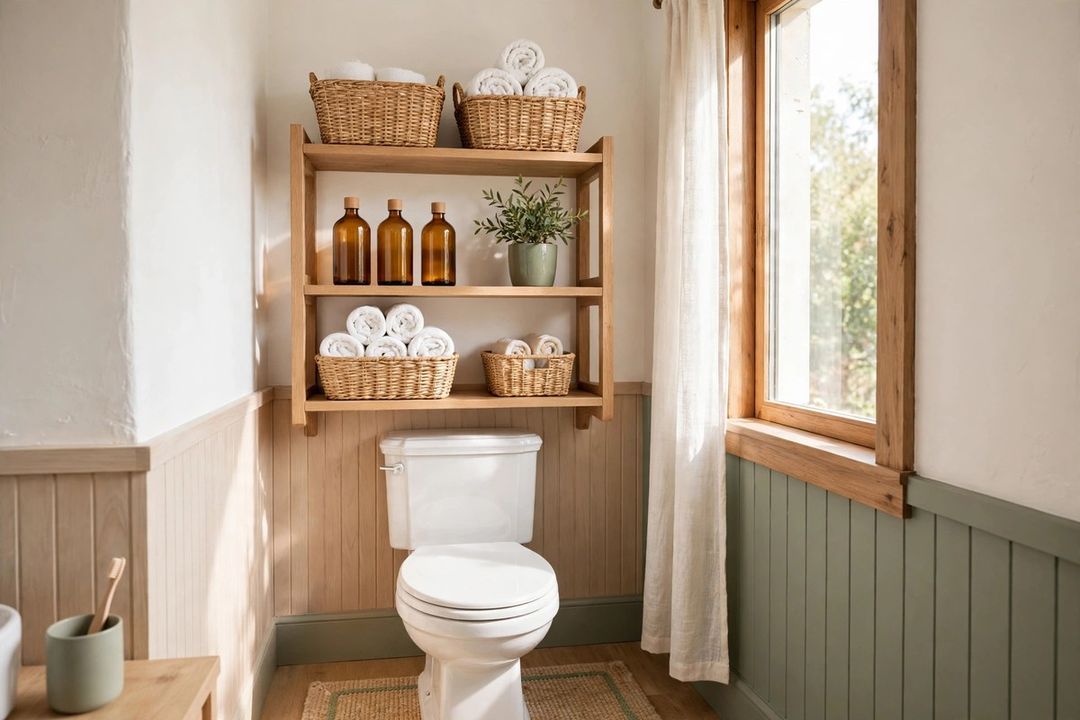
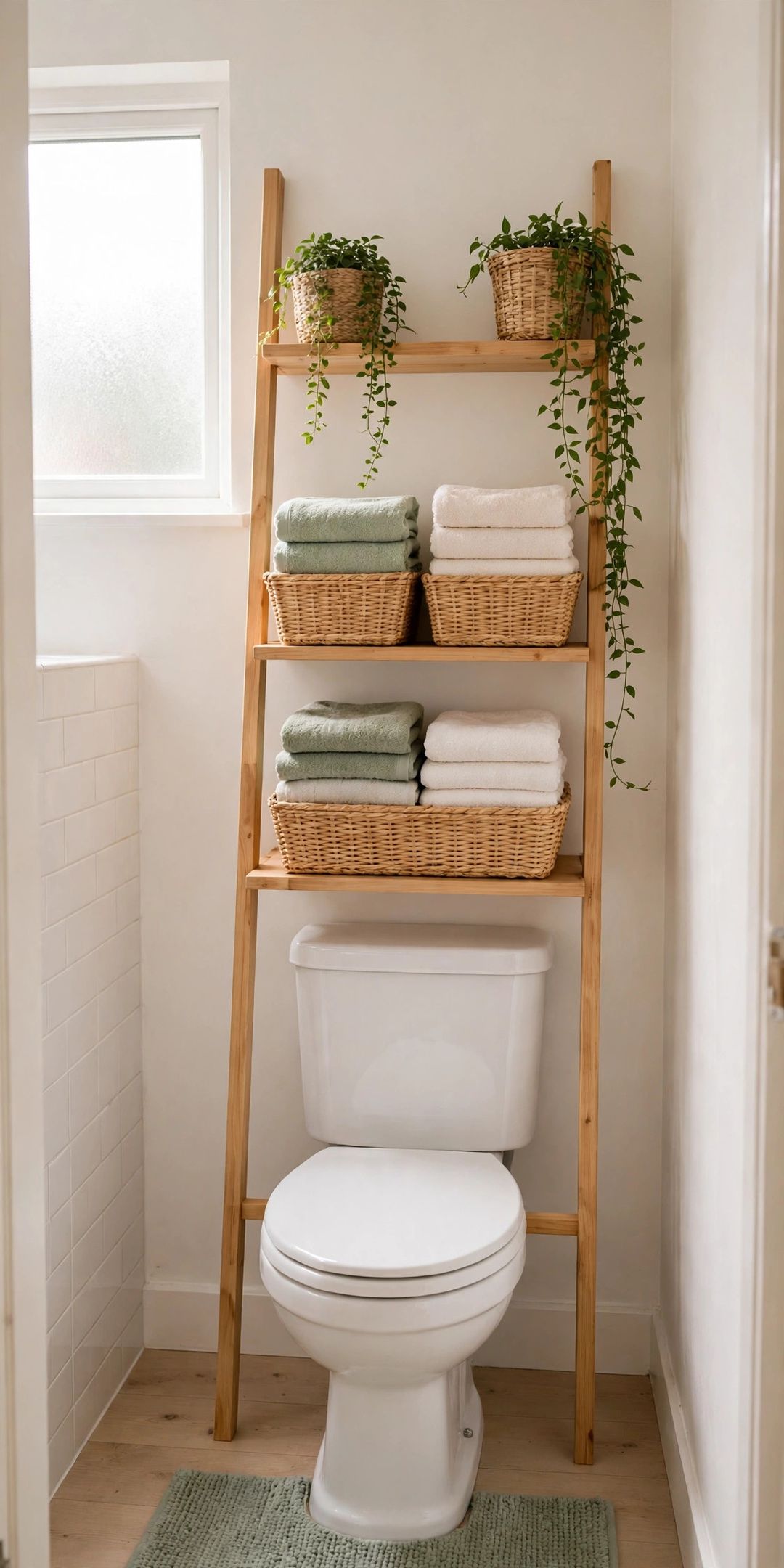
The bathroom still needs a small staging area. An over-toilet cabinet or shelf works well for next-up items: spare rolls, the next soap bar, and a small bin of cotton swabs that will replace what is on the counter this week.
Keep this zone deliberately small. One shelf or one cabinet section is enough. If next-up items spread across every surface, the limit has slipped, and extras should move back to the closet zones.
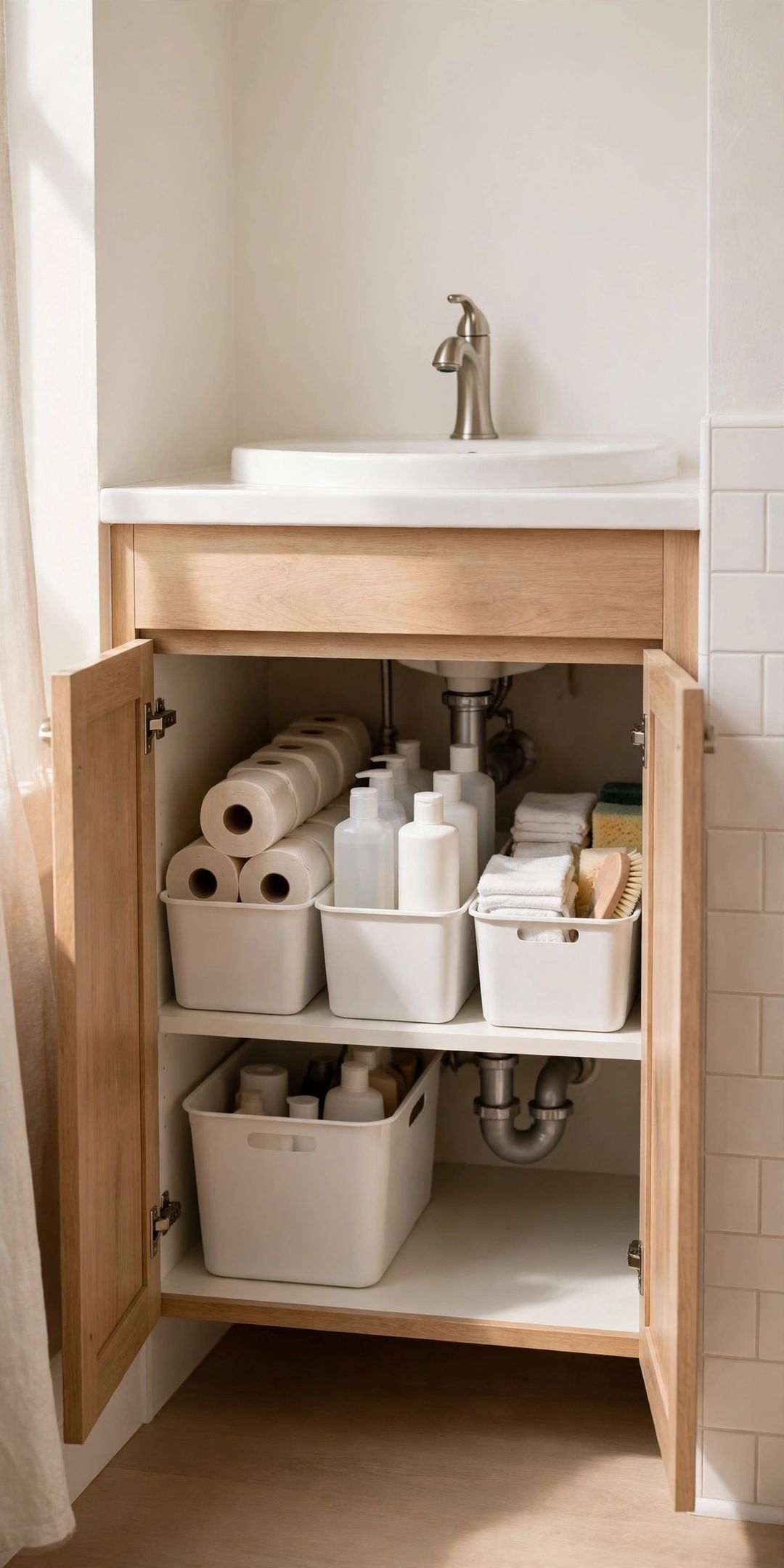
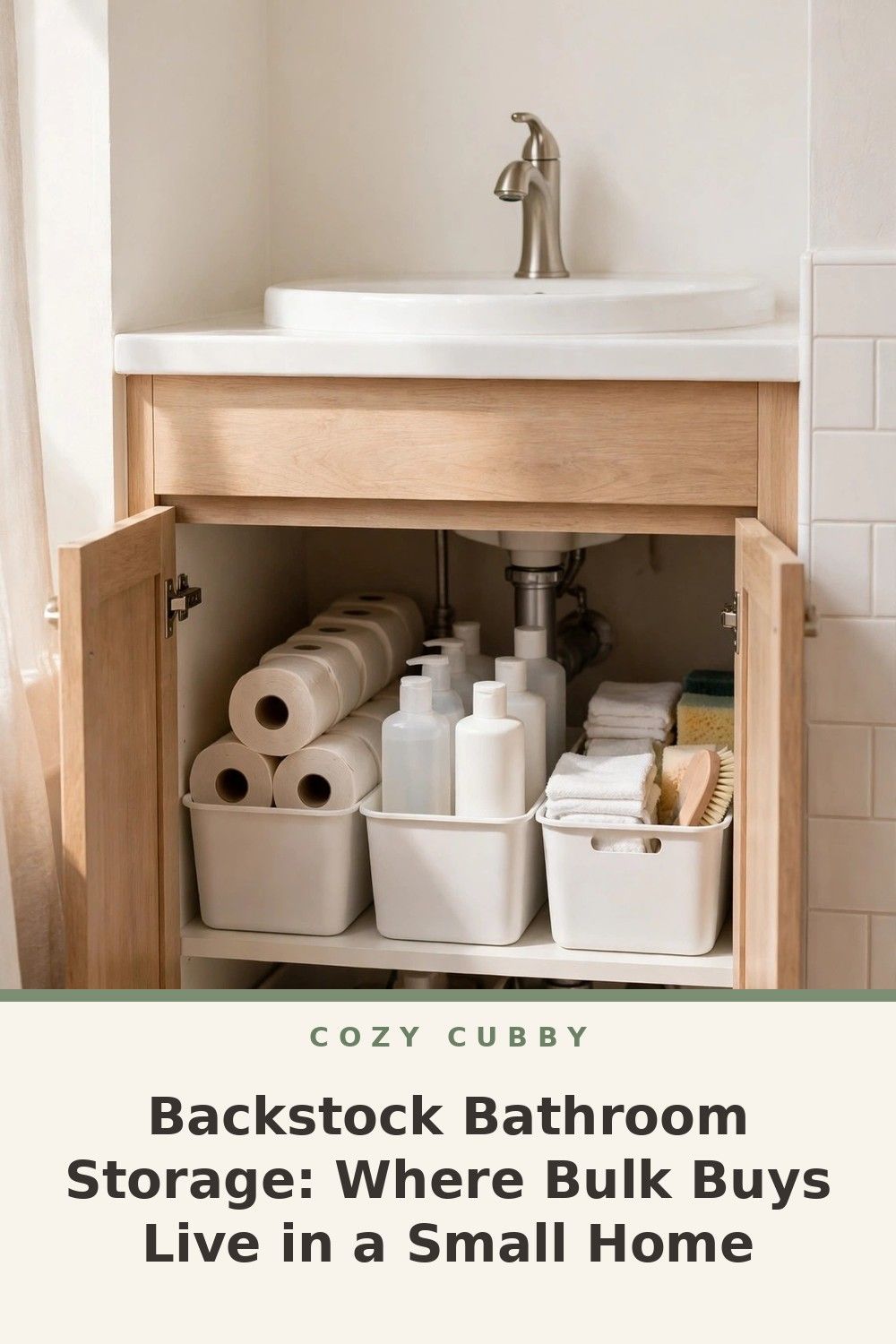
Under the sink, keep cleaning supplies and one refill, standing in a single caddy that pulls out as one piece. Bulk shampoo, extra toothpaste, and full paper packs belong in the outer zones.
The Inventory Habit That Keeps Backstock Moving
Backstock fails when it is stored well but never checked. A plain list fixes that. Tape a card inside the closet door, or keep a phone note, with three columns: item, how many, and date last checked.
Update the list at one fixed moment: when you move an item into the bathroom. Cross off one shampoo, and note when a new pack arrives. Once a month, do a two-minute scan of each zone for items in the wrong bin, forgotten duplicates, and dated packages to use first. Move those to the front. Shop from your list before the store, too. If it shows six tubes of toothpaste, a sale price is not a saving.
What to Buy
Clear lidded storage bins, medium, typically $12–$20 each. Pro: Sealed extras stay visible, and lids let bins stack. Con: Oversized bins get heavy. Skip if: your shelves are too shallow for a lidded bin to slide out.
Shallow open bins or pull-out trays, typically $10–$18 each. Pro: Bottles slide forward like a drawer, so nothing gets lost at the back. Con: Open tops collect dust. Skip if: tall bottles tip when a tray moves.
Low under-bed bin with smooth glides, typically $18–$30. Pro: Uses dead space for sealed overflow and slides out without lifting. Con: Contents are easy to forget without a label. Skip if: clearance is under about 6 inches.
Over-toilet cabinet or shelf unit, typically $35–$60. Pro: Gives next-up items a tidy home in the bathroom. Con: Holds far less than a closet shelf. Skip if: the tank lid cannot lift clear.
Blank adhesive labels, typically $8–$14. Pro: One label per category makes every zone easy to read. Con: Labels need updating when a bin changes jobs. Skip if: every bin is clear and single-category.
Mistakes to Avoid
- Storing the whole bulk pack in the bathroom. A full pack crowds cabinets and counters; keep a short supply inside and move the rest out.
- Mixing every category in one big bin. Paper, bottles, and tubes jumbled together hide the count and make restocking a dig.
- Hiding backstock in a damp spot. Paper goods and cardboard soften in steamy air, so choose a dry closet or bedroom zone.
- Buying containers before sorting. Bin sizes guessed in advance rarely match the real piles, so sort and measure first.
- Keeping no list at all. Without a simple count, you will rebuy items you already own and let extras sit unused.
Frequently Asked Questions
How much backstock should stay inside the bathroom?
Keep about one to two weeks of daily items inside: one spare shampoo, one spare toothpaste, and four to six spare rolls. Store the rest in a closet or under-bed zone and restock from there.
Where should bulk toilet paper go without a linen closet?
Use the top shelf of a hall or bedroom closet, or a lidded under-bed bin for sealed packs. Keep four to six rolls in the bathroom and store the remaining pack dry and upright.
How do you stop backstock from being forgotten?
Keep one short list, update it when you move an item into the bathroom, and scan each zone monthly. Grouping one category per bin and putting oldest items in front also helps extras get used in order.
Should cleaning refills be stored with toiletries?
Keep them in a separate bin, ideally on a different shelf. A slow leak can ruin paper goods and toiletries, and separate bins make restocking each group faster.
Bulk buying works when the bathroom holds a little and the outer zones hold the rest, sorted and counted. Set up one zone at a time and start your list today. Save this post to your Bathroom & Laundry board on Pinterest so your zones stay easy to find.