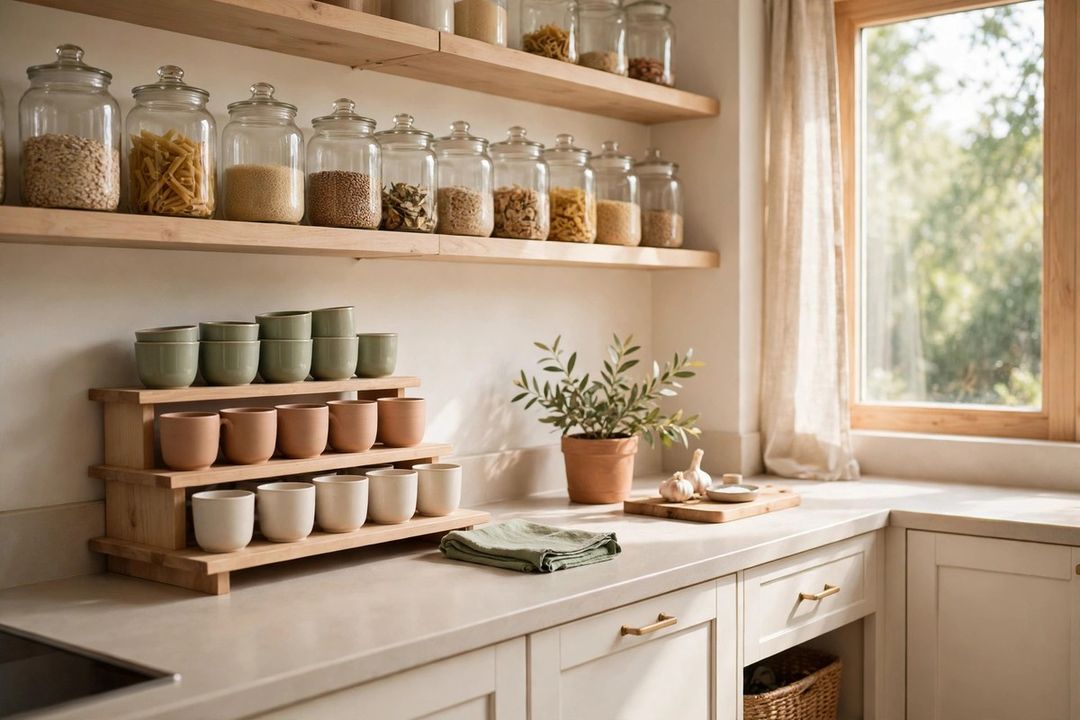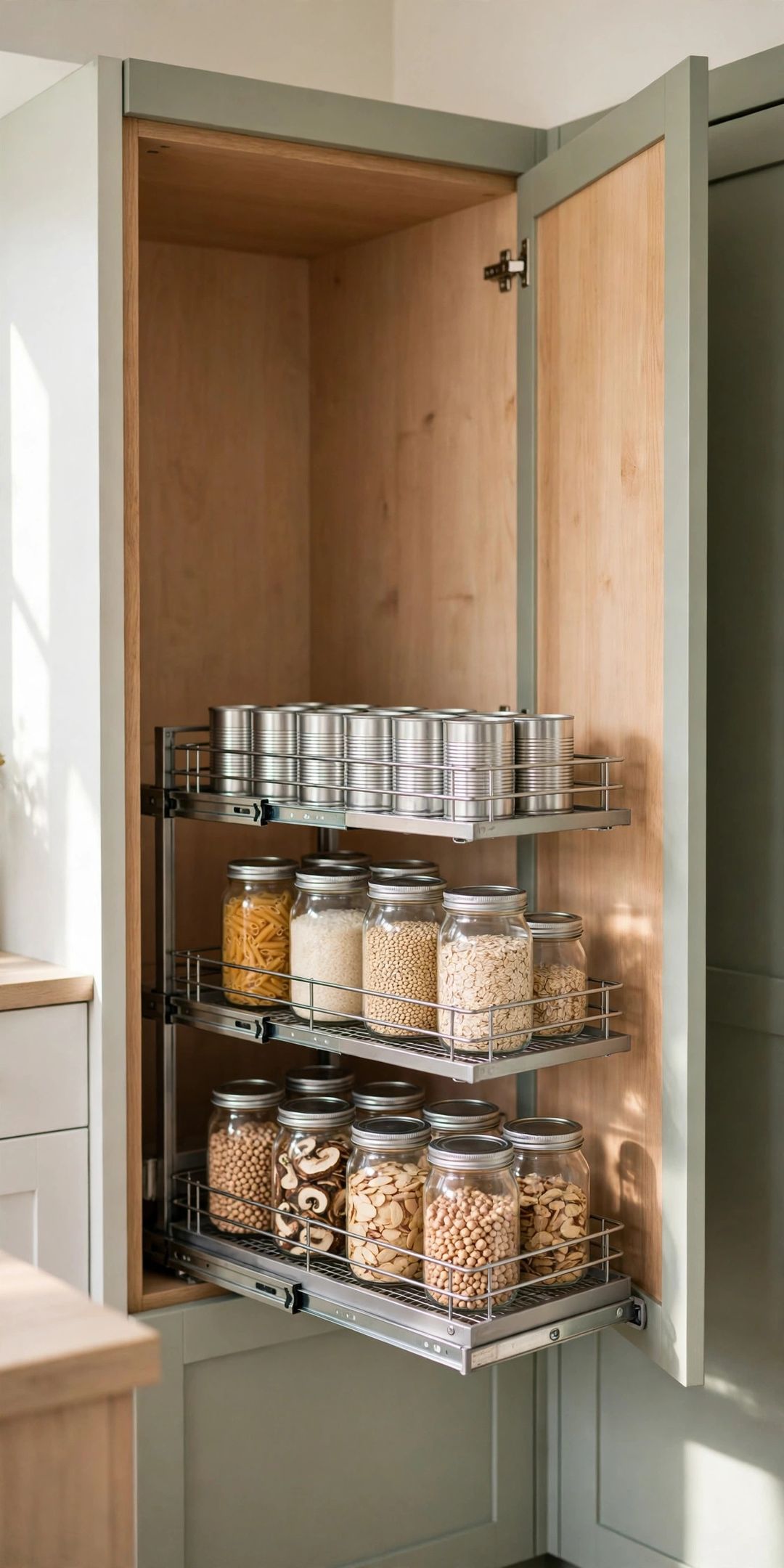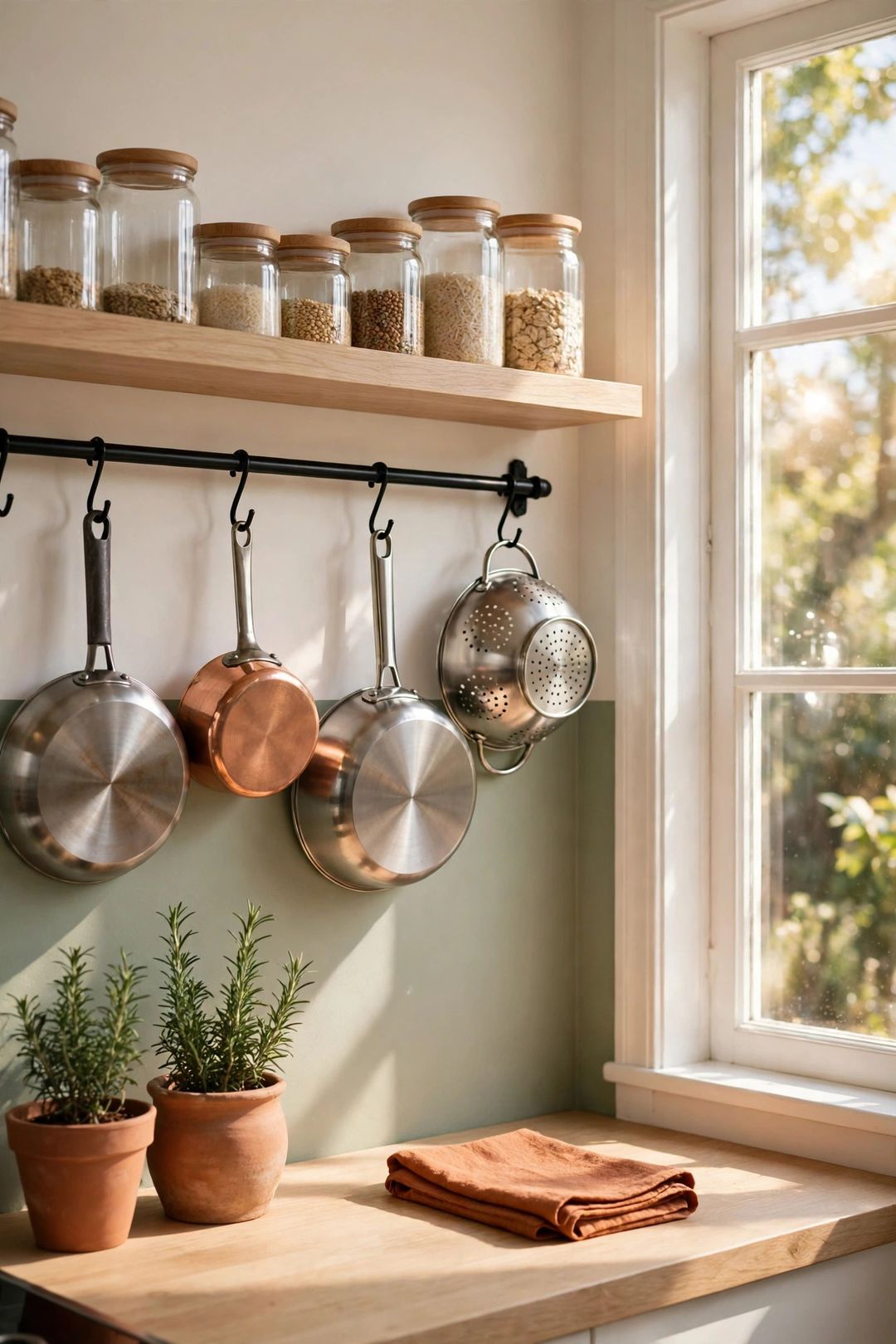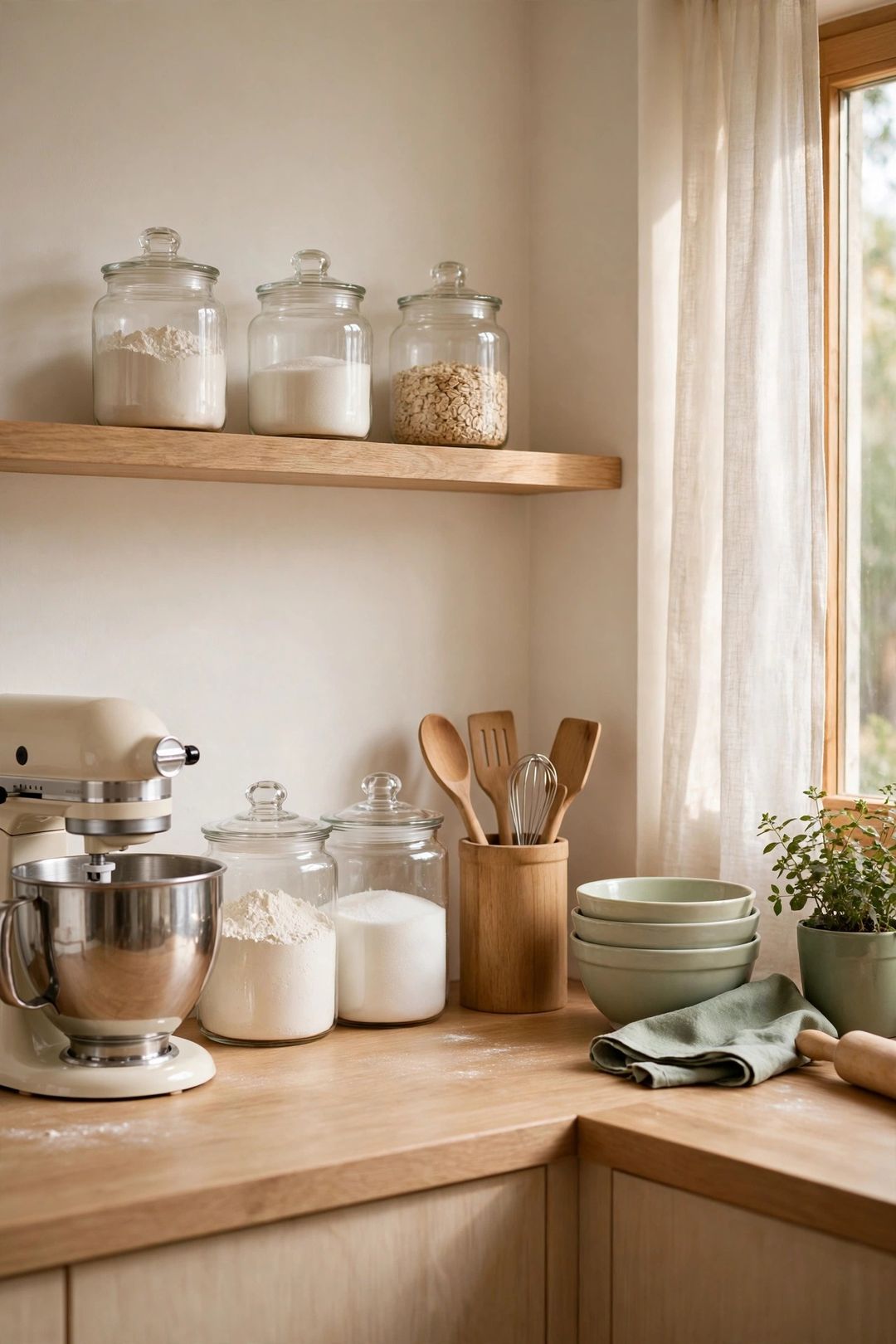
A baking project can take over a small kitchen fast. Flour dusts the counter, the mixer blocks the sink, and measuring spoons vanish right when the oven is ready. The mess is usually about baking tools living in five different places.
These baking station organization ideas gather everything into one clear zone, even if that zone is a single counter section and one cabinet. You will give flour a sealed home, park the mixer where it is easy to use, and sort the small tools that always go missing.
Start by clearing the area completely, then bring items back in groups, leaving a little empty space so the station stays easy to work in.
1. Pick One Zone and Keep Baking There
Choose one counter stretch, ideally near the oven, and call it the baking station. Keep staples, tools, and pans in that zone or in the cabinet right above or below it. When everything lives within arm's reach, you stop crossing the kitchen with flour on your hands.
2. Store Flour and Sugar in Wide, Sealed Canisters
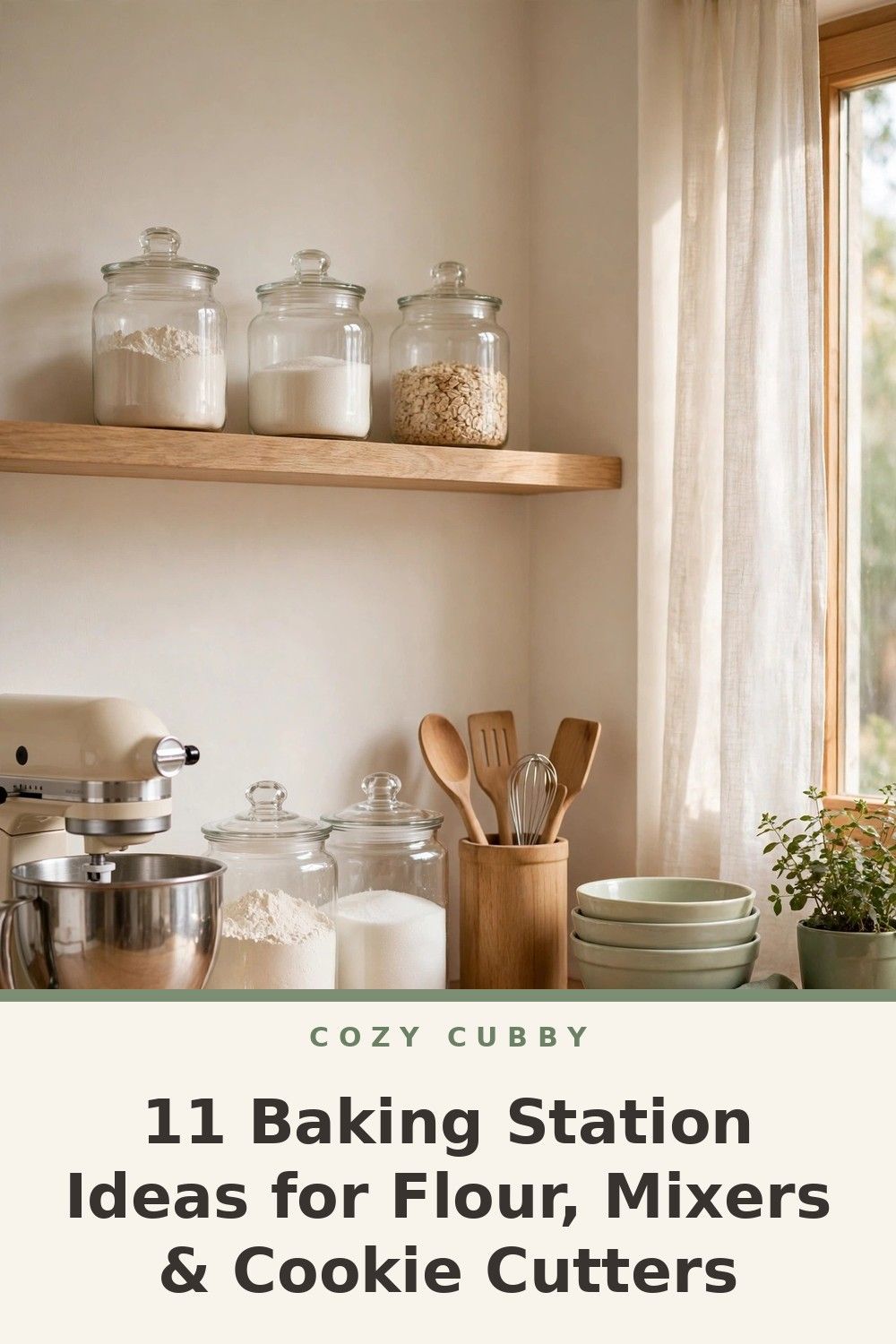
Move flour, sugar, and brown sugar out of paper bags and into wide, airtight canisters. A wide opening lets a measuring cup scoop and level without spills, and a firm seal helps keep out moisture. Label each canister with the contents and fill date.
3. Park the Mixer Where It Will Actually Be Used
A heavy stand mixer hidden in a low cabinet rarely gets used. If space allows, park it in the baking zone on a small mat that slides, so you can pull it forward to work and push it back after. In a tight kitchen, store it on a sturdy tray that slides out of a cabinet.
4. Corral Small Tools in One Shallow Drawer or Tray
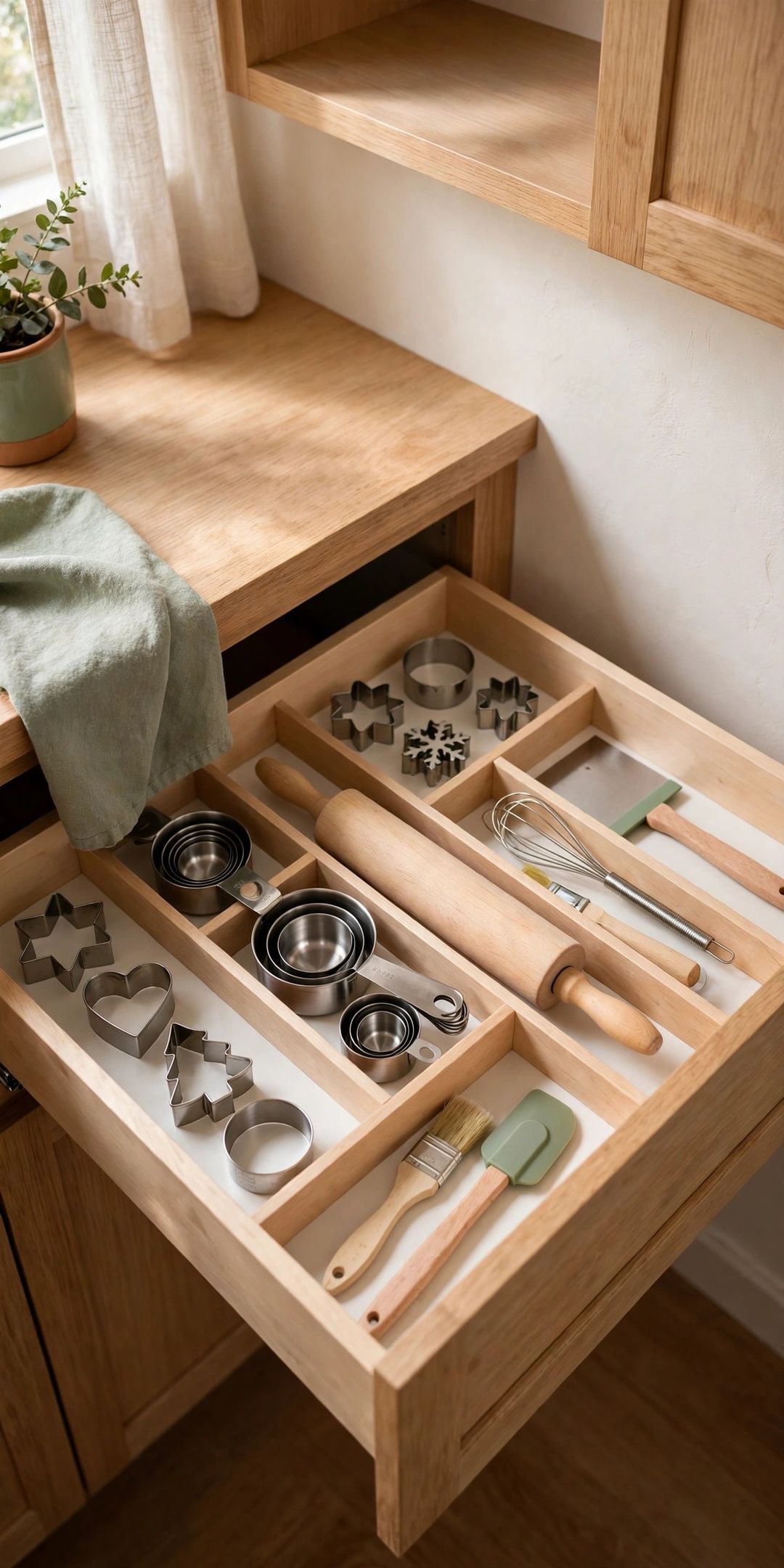
Measuring spoons, spatulas, whisks, and a bench scraper all disappear into deep drawers. Give them one shallow drawer in the zone, divided into sections, or a flat tray inside a cabinet. When every small tool has one visible home, you can find the teaspoon measure in seconds.
5. File Sheet Pans and Cooling Racks Upright
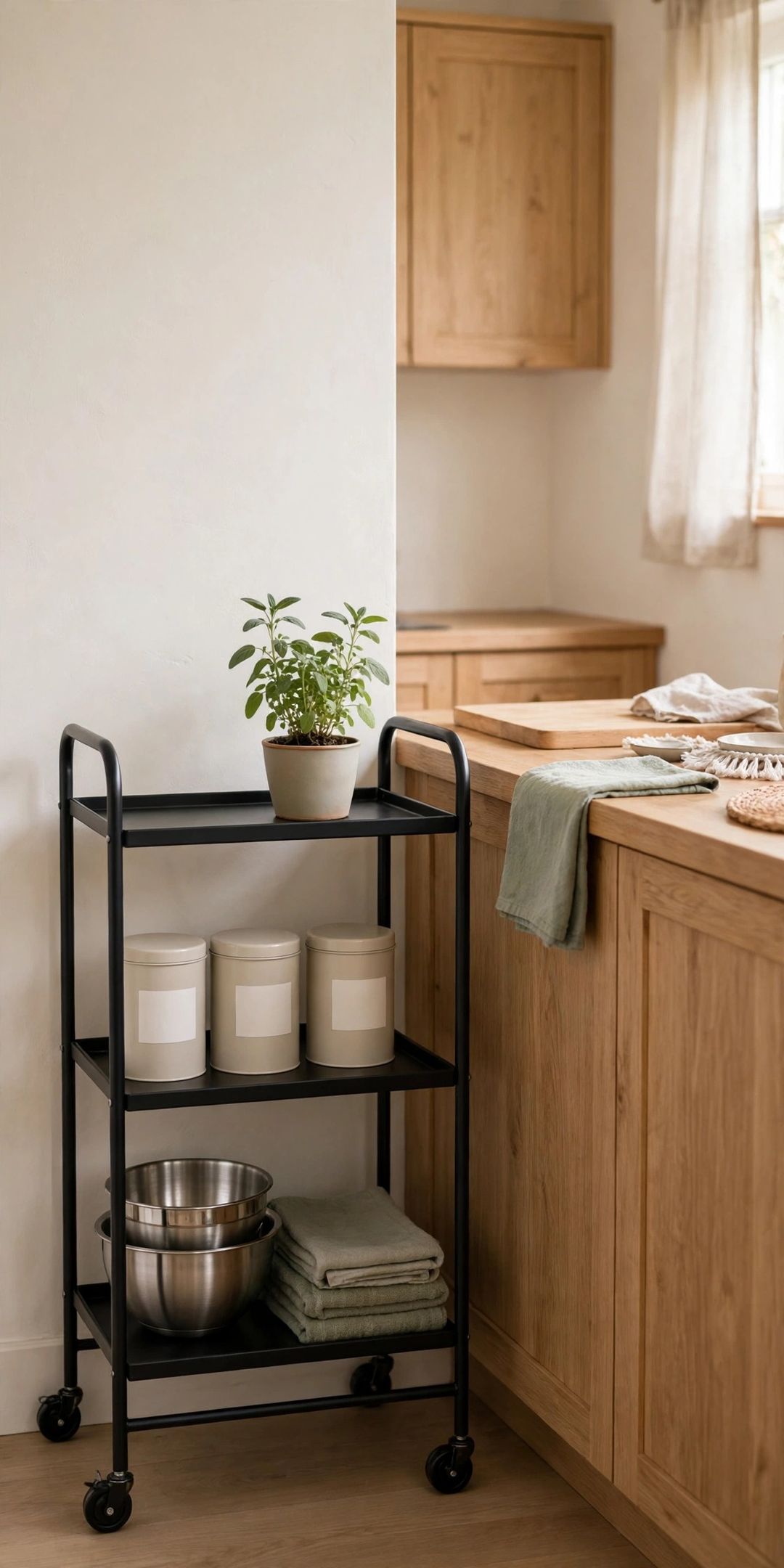
Flat stacks of pans are heavy to lift and noisy to sort. Store sheet pans, muffin tins, and cooling racks upright instead, like files in a folder. A simple vertical divider or pan organizer inside a cabinet or deep drawer keeps them separated, so you can slide out the one pan you need without moving the whole stack.
6. Hang Measuring Cups Inside a Cabinet Door
Measuring cups take up odd space and tangle together in a drawer. Hang them on small hooks inside the cabinet door above the baking zone, largest to smallest. The cups stay visible, dry, and out of the way, and door space that was doing nothing now earns its keep.
7. Give Cookie Cutters One Clear, Lidded Box
Cookie cutters tumble out of bags and bend in crowded drawers. Keep them in one clear, lidded box or wide jar in the baking cabinet, sorted loosely by season or shape if you own many. A clear container shows what you have, so you stop buying duplicate shapes.
8. Use a Tray for Ingredients in Progress
Before you start a recipe, set a rimmed baking sheet or tray in the zone and place every ingredient on it. The tray holds drips, keeps small items like vanilla from wandering, and carries sticky bottles to the sink in one trip after baking.
9. Keep Everyday Baking Extras in a Small Caddy
Baking powder, baking soda, cocoa, vanilla, cinnamon, and sprinkles are small, easy to lose, and used together. Group them in a small caddy, bin, or turntable inside the zone cabinet. One container you can lift out beats six jars scattered across two shelves. Move older items to the front.
10. Use the Wall for a Rolling Pin and Apron
Long items rarely fit drawers well. Mount a simple hook or rail on the wall beside the station, or on the side of a cabinet, for a rolling pin, apron, and oven mitts. Keeping mitts in the zone matters when a hot pan comes out.
11. Finish With a Five-Minute Reset
Stations drift when cleanup feels big, so make the reset tiny. After baking, return canisters to their row, hang the cups, and put the cutter box back in its spot. Keep one small basket for items waiting to be washed, so they do not spread.
What to Buy
Airtight flour and sugar canisters, typically $18–$35 for a set. Best for staples that spill from bags. Pro: wide mouths scoop easily and seals help with freshness. Con: large canisters may not fit short cabinets, so measure first.
A vertical pan organizer, typically $12–$25. Best for sheet pans, muffin tins, and cooling racks. Pro: each pan slides out on its own. Con: very deep cabinets may need a wider rack to stay stable.
Drawer dividers or a shallow tool tray, typically $10–$22. Best for measuring spoons, spatulas, and whisks. Pro: small tools stay visible in one layer. Con: fixed dividers may not match odd tool shapes.
Small hooks for cabinet doors, typically $6–$14 for a pack. Best for measuring cups. Pro: cheap and quick to install. Con: adhesive hooks can fail with heat or weight, so keep loads light.
A clear lidded box for cutters, typically $8–$16. Best for cookie cutters and piping tips. Pro: you see the whole collection at once. Con: tiny shapes can tangle, so add small bags for them.
Mistakes to Avoid
- Spreading baking gear across the whole kitchen. Flour in one spot and the mixer in another turns every recipe into a scavenger hunt.
- Keeping flour in its paper bag. Bags tear, spill, and do not seal well, so flour ends up on shelves and in other foods.
- Buying canisters before measuring. Tall canisters often miss fitting under cabinets by a small amount. Measure height and depth first.
- Burying the mixer in a hard spot. A heavy mixer stored low or far back will be avoided, even for recipes that need it.
- Letting small tools share a junk drawer. Measuring spoons and cutters get lost fast when they mix with batteries, tape, and chargers.
Frequently Asked Questions
How much space does a baking station need?
One counter section about two to three feet wide, plus one cabinet or drawer, is enough for most home bakers. The key is keeping the zone together, not making it large.
Where should a stand mixer go in a small kitchen?
Keep it in the baking zone if possible, on a sliding mat on the counter or on a tray in the cabinet below. Keep its attachments in the same spot.
What is the best way to store flour?
Use a wide, airtight canister that fits a measuring cup, label it with the contents and fill date, and keep it in the baking zone. Refill from the oldest backup bag first.
How do I keep cookie cutters from getting bent?
Store them loose in one clear, lidded box instead of a crowded drawer or thin bag. Keep delicate shapes on top, and group holiday shapes in small bags inside it.
Pick one counter section, gather your flour, mixer, and small tools into it, and let the zone prove itself with your next bake. Save this post to your Kitchen Organization board on Pinterest so the full setup is handy before baking day.