When a house has no attic, every box that would normally go overhead ends up in the basement — holiday decor, outgrown clothes, luggage, paint, and keepsakes all competing for the same floor.
These basement storage ideas homes with no attic treat the basement as your main storage space, not a drop zone. You will set simple zones, get everything off the floor, and label well enough that you can find a bin in minutes, even months later.
Start with the zone you use most, set it up fully, then repeat the same system around the room.
1. Zone the Basement Like Separate Rooms
Zoning is what turns a big open basement into storage you can actually use. Give each area one job, and keep that job in the same place all year.
1. Create zones by how often you use things. Put seasonal and yearly items in the far corners, monthly items like cleaning backstock along a main wall, and weekly items near the stairs. The less you use it, the farther it can live from the door.
2. Keep one clear work and sorting table. Leave a small table near the stairs for sorting, labeling, and packing bins. Without a landing spot, projects end up spread across the floor.
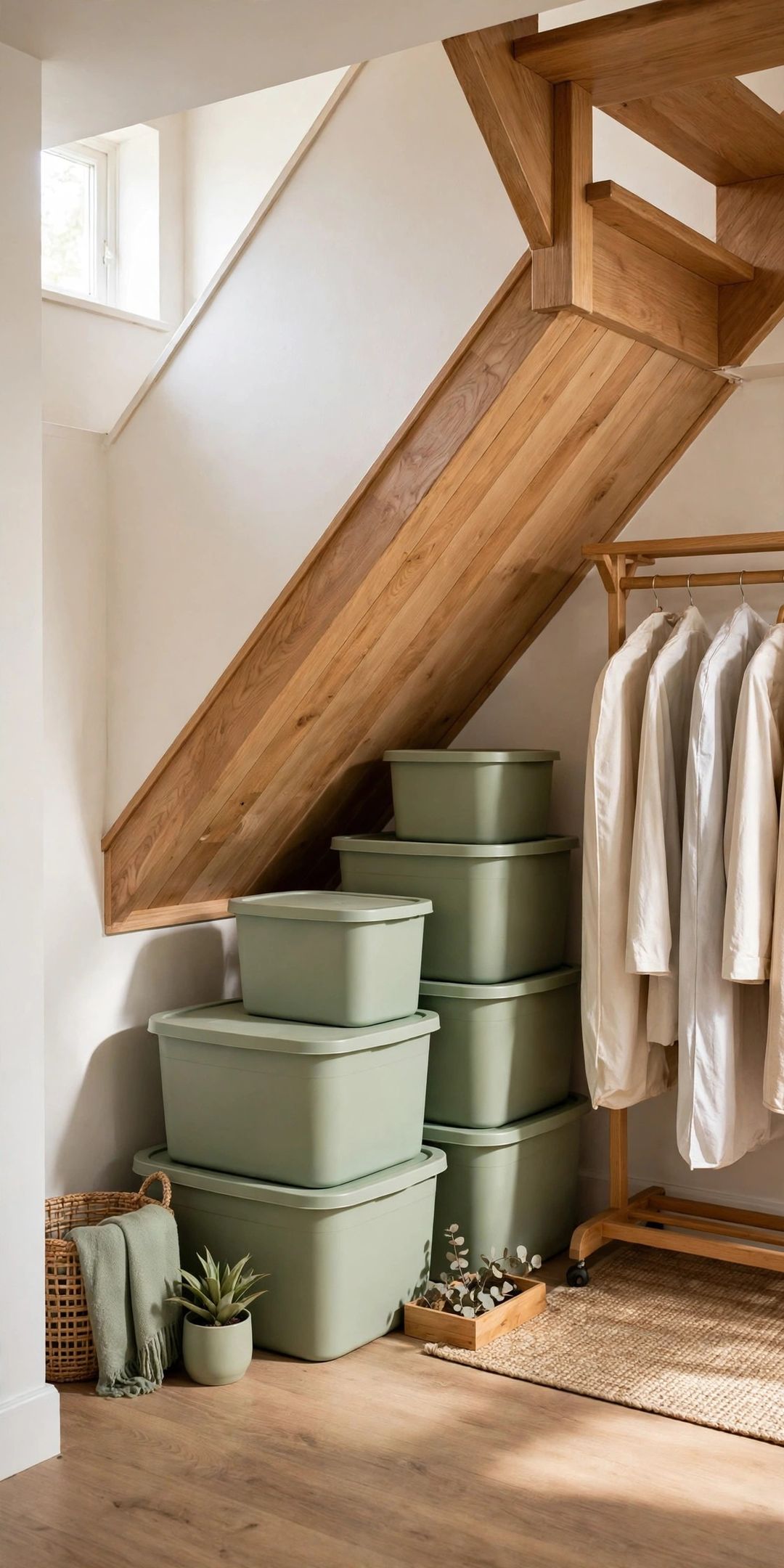
3. Leave a walkway you can carry a bin through. Keep a clear path from the stairs to each zone, wide enough to carry a full bin without turning sideways. If you cannot reach a zone easily, you will stop putting things back where they belong.
2. Shelving and Bins That Hold Up
With no attic backup, your shelving has to do serious work. Sturdy shelves and consistent bins matter more here than in almost any other room.
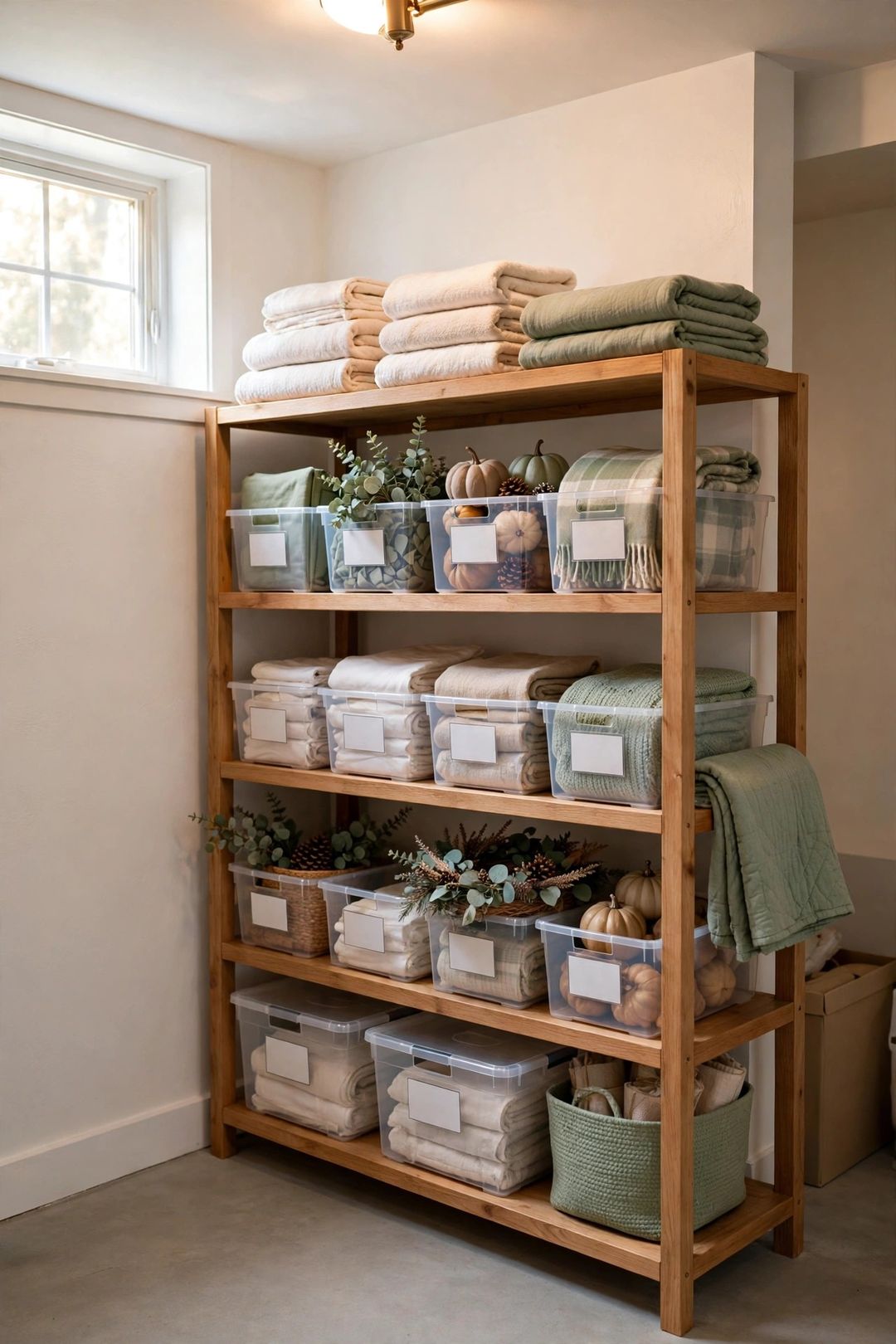
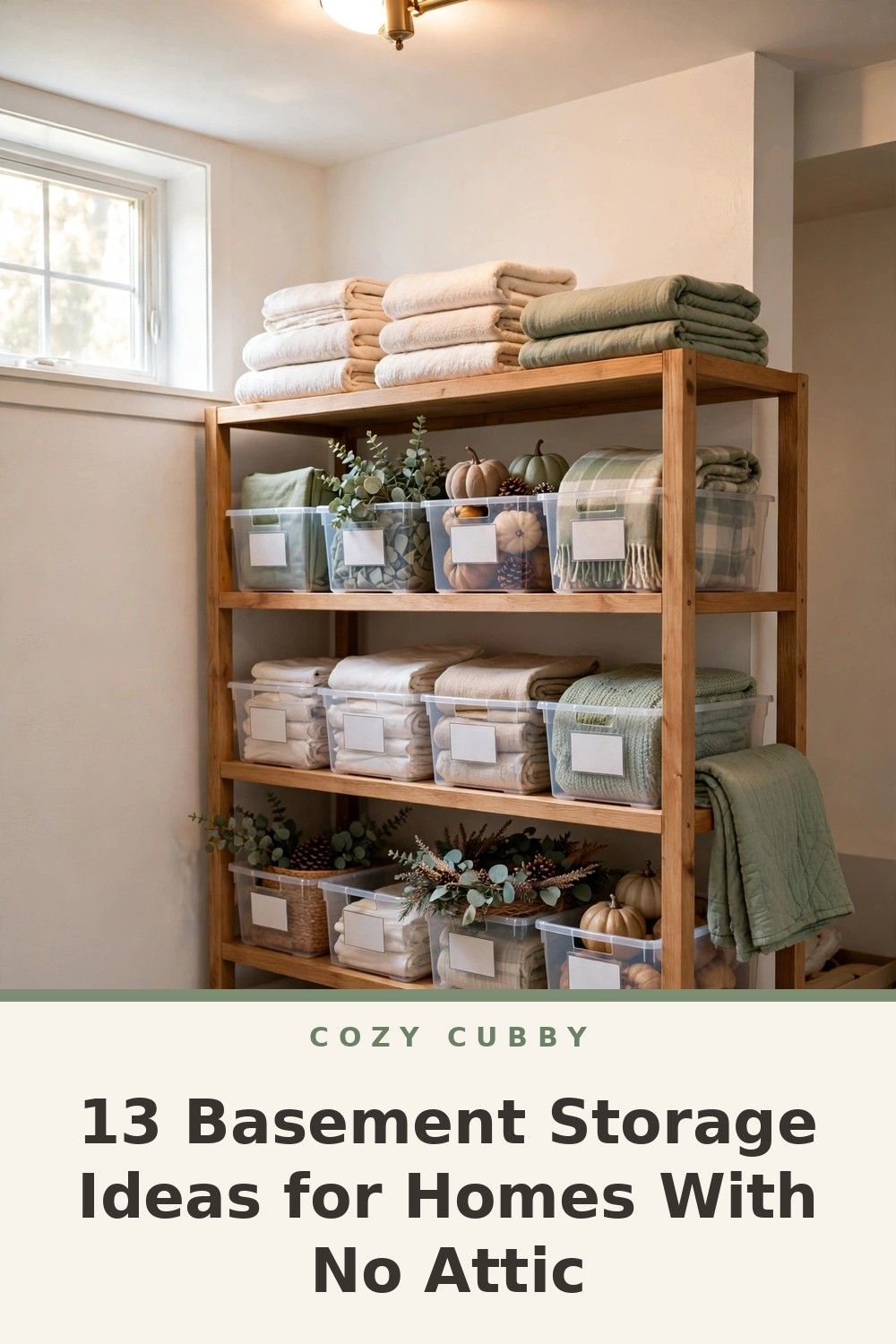
4. Use freestanding shelves along the walls. Line the longest walls with sturdy freestanding shelf units and keep the center of the room open. Measure your tallest bins before you set shelf heights, and leave a little headroom so bins slide in without tipping.
5. Switch to clear bins in one or two sizes. Clear bins let you spot contents at a glance, and using just one or two sizes means lids match and bins stack evenly.
6. Label every bin on two sides. Put a large label on the front and on one short end, so you can read it from the aisle or from the side of a stack. List the main contents in plain words, like winter coats or gift wrap, not just a vague word like miscellaneous.
7. Store heavy bins low and light bins high. Place heavy bins on the bottom shelves and light, bulky items like pillows, wreaths, and empty luggage up top. This keeps shelves steady and makes lifting safer for everyone in the house.
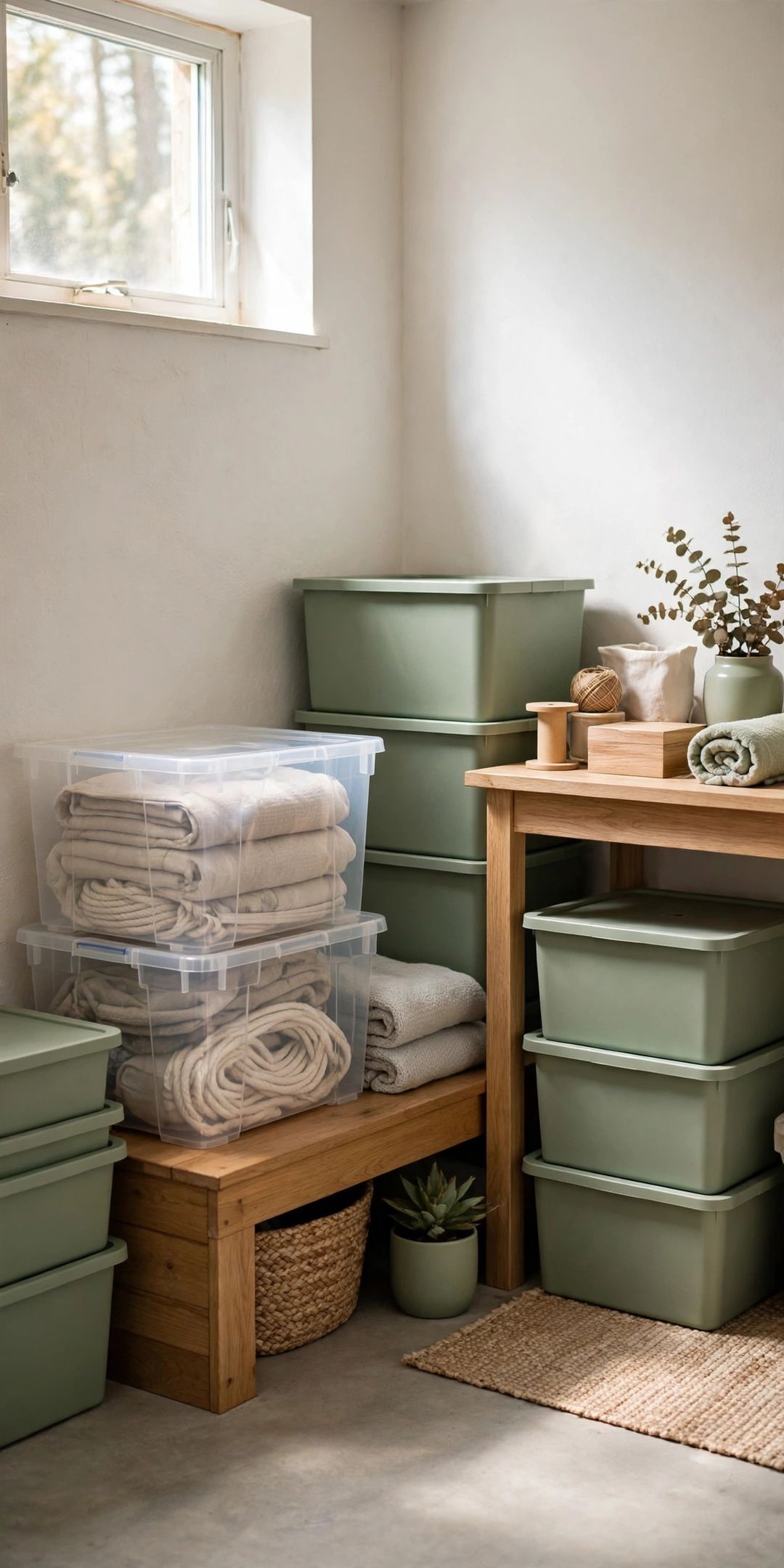
3. Off the Floor and Easy to Check
Basements need a little extra care, because floors can feel damp and small spills can go unnoticed. These general habits keep stored items cleaner and easier to check.
8. Keep everything off the bare floor. Store bins and boxes on shelves, pallets, or low platforms instead of directly on concrete. Even a few inches of lift makes cleaning easier and helps you spot a spill or leak before it reaches your things.
9. Leave a small gap behind shelves. Pull shelf units a few inches away from outside walls instead of pushing them flat. The gap lets you see behind the shelves during a quick check and makes it easier to clean along the wall.
10. Choose bins with snug lids for long-term storage. For items stored for months, like keepsakes and seasonal clothes, pick bins with lids that close firmly and stack flat. Check the bins when the seasons change.
4. Everyday Storage That Stays Findable
The last group covers the items you reach for again and again. If these are easy to grab and return, the whole system stays in shape.
11. Build a seasonal swap shelf near the stairs. Keep one shelf by the stairs for the current season swap — the bin coming up and the bin going down. Rotating through one spot prevents half-swapped piles from spreading across the basement each spring and fall.
12. Group luggage, sports gear, and tools in open spots. Store bulky gear where you can grab it without moving bins. Nest luggage inside larger pieces, and keep tools in one zone, not mixed with household storage.
13. Keep a simple map and inventory list. Tape a one-page map of your zones near the stairs, with a short list of what is in each zone. Update it when you add a new bin.
What to Buy
Freestanding shelf unit, typically $45–$90. Pro: It holds heavy bins and adjusts to different heights. Con: It takes time to assemble and level. Skip if: Your basement already has sturdy built-in shelves with room to spare.
Clear storage bins with lids, typically $8–$16 each. Pro: Contents stay visible and bins stack neatly in matching sizes. Con: Buying a full set at once adds up. Skip if: You already own sturdy bins in consistent sizes that stack well.
Low storage platform or pallet, typically $15–$35. Pro: It lifts overflow bins off the floor when shelves are full. Con: It uses floor space that could hold a shelf unit. Skip if: All of your storage already fits on shelving.
Large bin labels, typically $6–$12. Pro: Big, clear labels make zones work from a distance. Con: Labels need updating when you repack a bin. Skip if: You already label bins clearly with a bold marker on tape.
Mistakes to Avoid
- Storing boxes directly on the floor. Floor storage blocks cleaning, hides spills, and makes the bottom boxes hard to reach. Shelves or platforms fix this.
- Mixing every category in every corner. Without zones, finding one item means searching the whole basement. One job per area keeps searches short.
- Buying bins in many random sizes. Mixed sizes stack poorly and lids get lost. One or two sizes make the whole wall work better.
- Blocking the path to the back. If the far zones are hard to reach, they become the place things go to be forgotten.
- Skipping labels because bins are clear. Clear bins still hide small items inside. A clear label tells you which bin to open first.
Frequently Asked Questions
What should go in the basement when there is no attic?
Use the basement for sturdy, boxed items like seasonal decor, luggage, keepsakes in sealed bins, and household backstock. Keep papers and photos in the driest, most finished area you have, on high shelves, and keep daily items upstairs where you use them.
How do you keep basement storage from feeling damp?
As general care, keep bins off the floor, leave space behind shelves, and move anything that feels damp to a drier spot right away. If you notice ongoing water or dampness, have the source checked.
How many shelf units do you need to start?
Start with two units along one wall — one for seasonal items and one for household backstock. Live with that setup for a few weeks. You will quickly see whether you need more shelves, more bins, or simply better zones.
What is the best way to store seasonal clothes?
Wash and fully dry clothes before packing, fold them into clear bins with snug lids, and label the size and season on two sides. Store the bins on a middle shelf in the clothing zone, where they are easy to reach at swap time.
With clear zones, sturdy shelves, and everything lifted off the floor, a basement can handle the job an attic would have done — and still stay findable. Save this post to your Small-Space Storage board on Pinterest before your next big sort.