Bath toys cause trouble after the bath, not during it. They get left in a pile in the tub, still full of water, and the pile stays damp for hours. A damp, closed pile is exactly what allows musty smells and visible mold to develop.
Good bath toy storage ideas do three jobs in order. First, toys drain so no water sits inside them. Second, they dry fully with air on all sides. Third, they disappear from sight when the bath is over and guests use the room.
Use the drain-dry-disappear routine below as one system. Skipping the drying step and hiding wet toys in a closed box makes the storage look tidy while trapping the moisture that causes the problem.
Drain: Get Water Out Right After the Bath
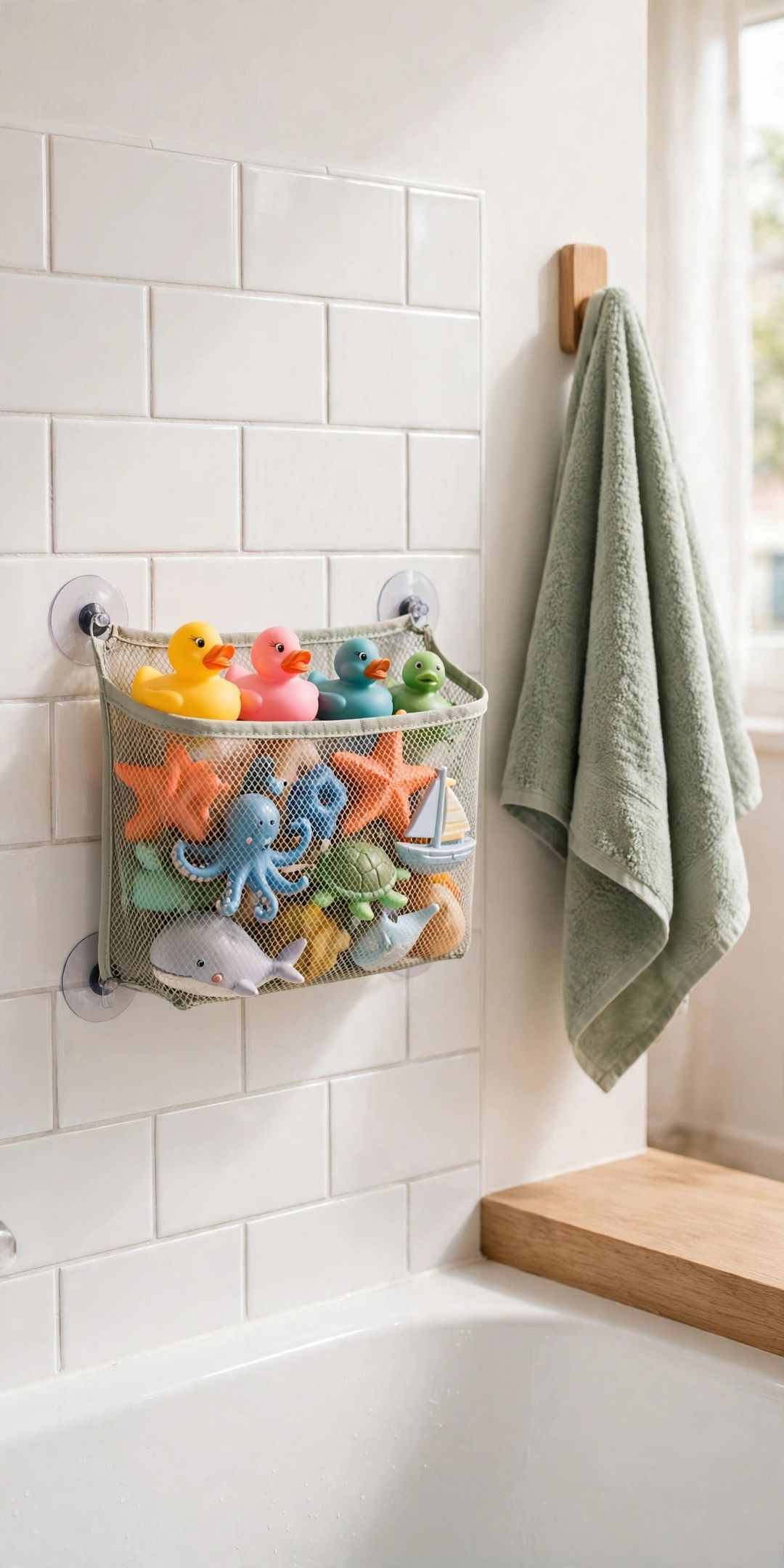
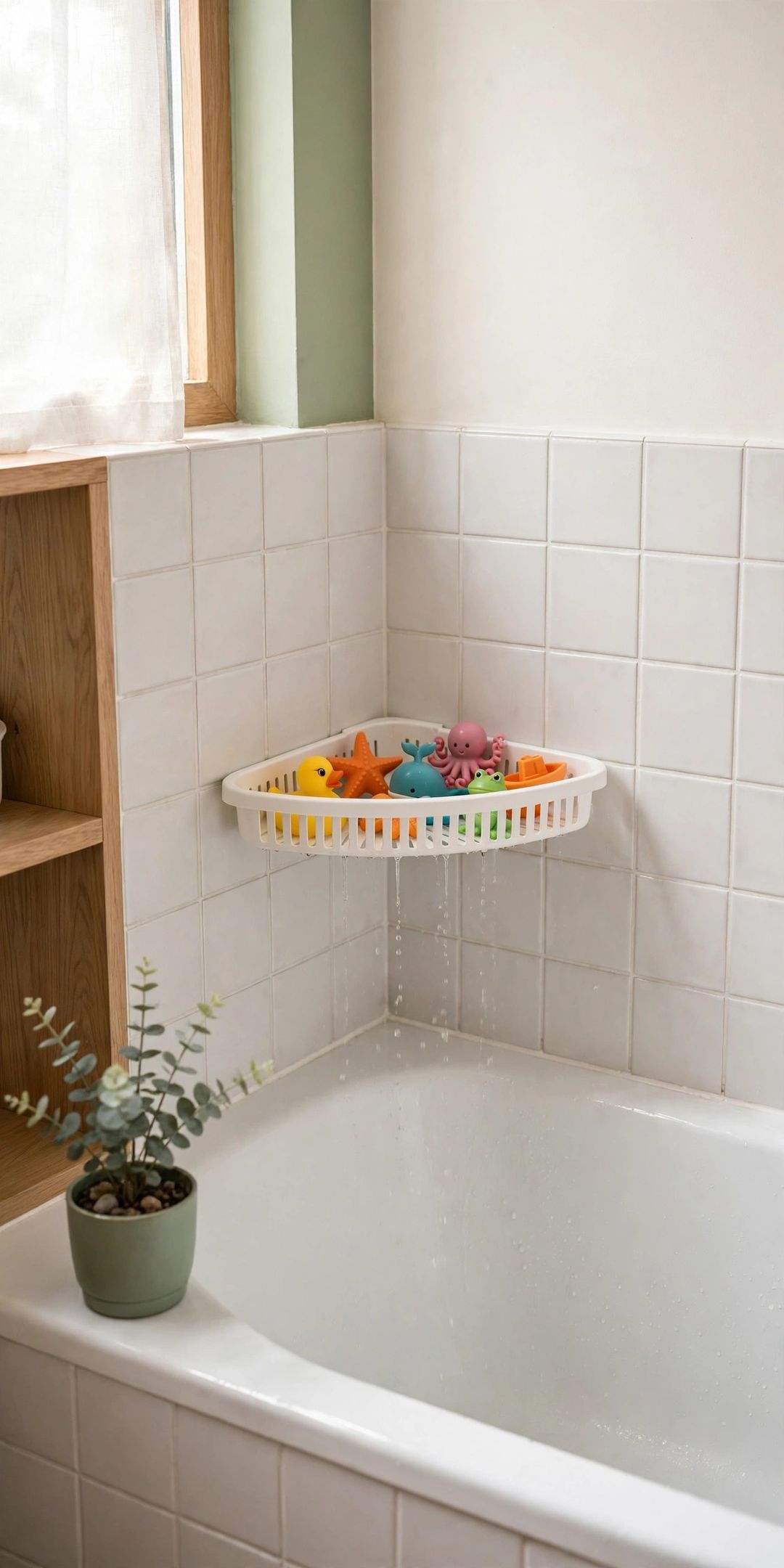
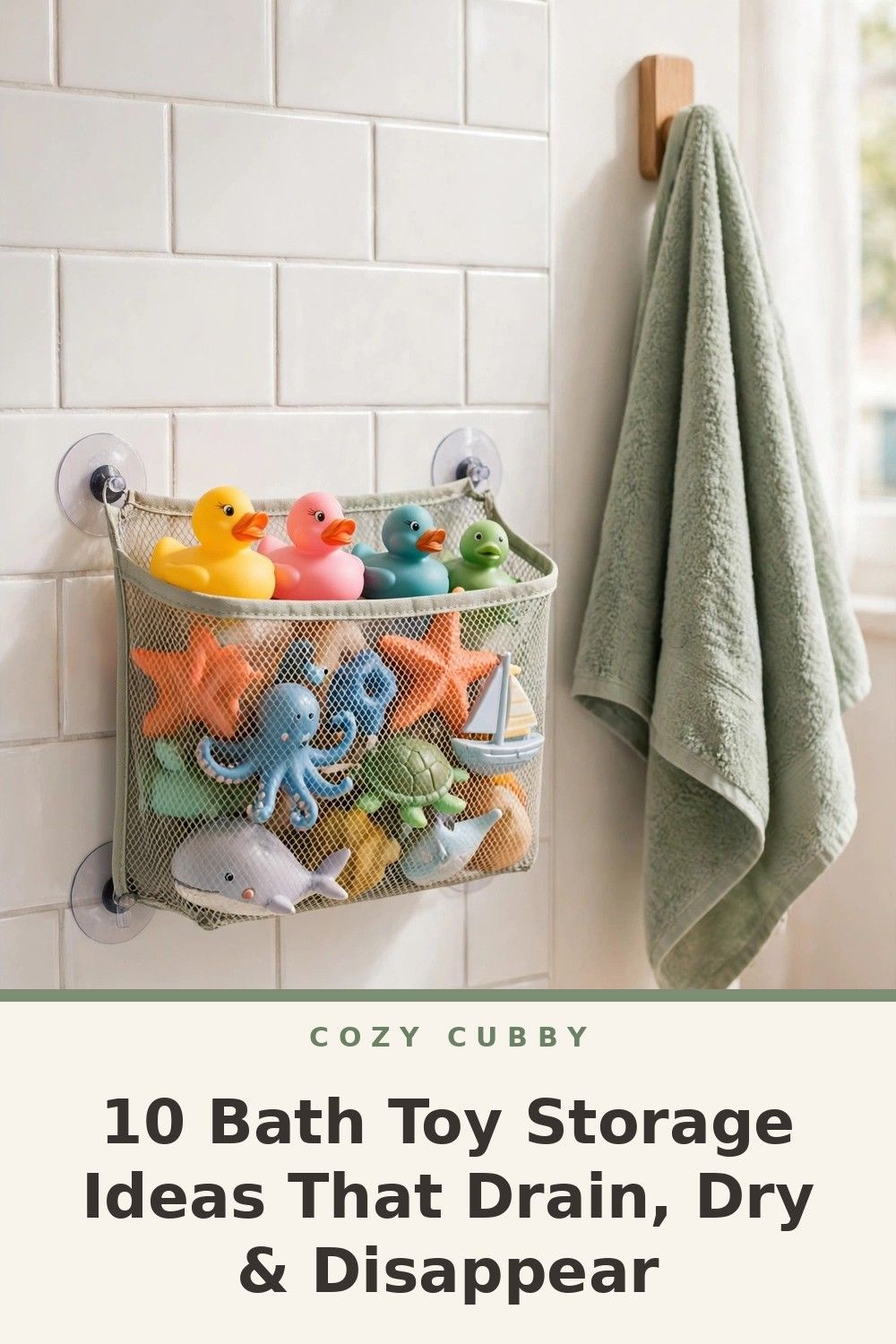
1. Hang a suction basket high on the tub wall. Scoop toys into a basket with large drainage holes and press it to smooth tile above the splash zone. Water drips back into the tub instead of pooling. Check the suction cups weekly, because they loosen over time and hold less weight when wet.
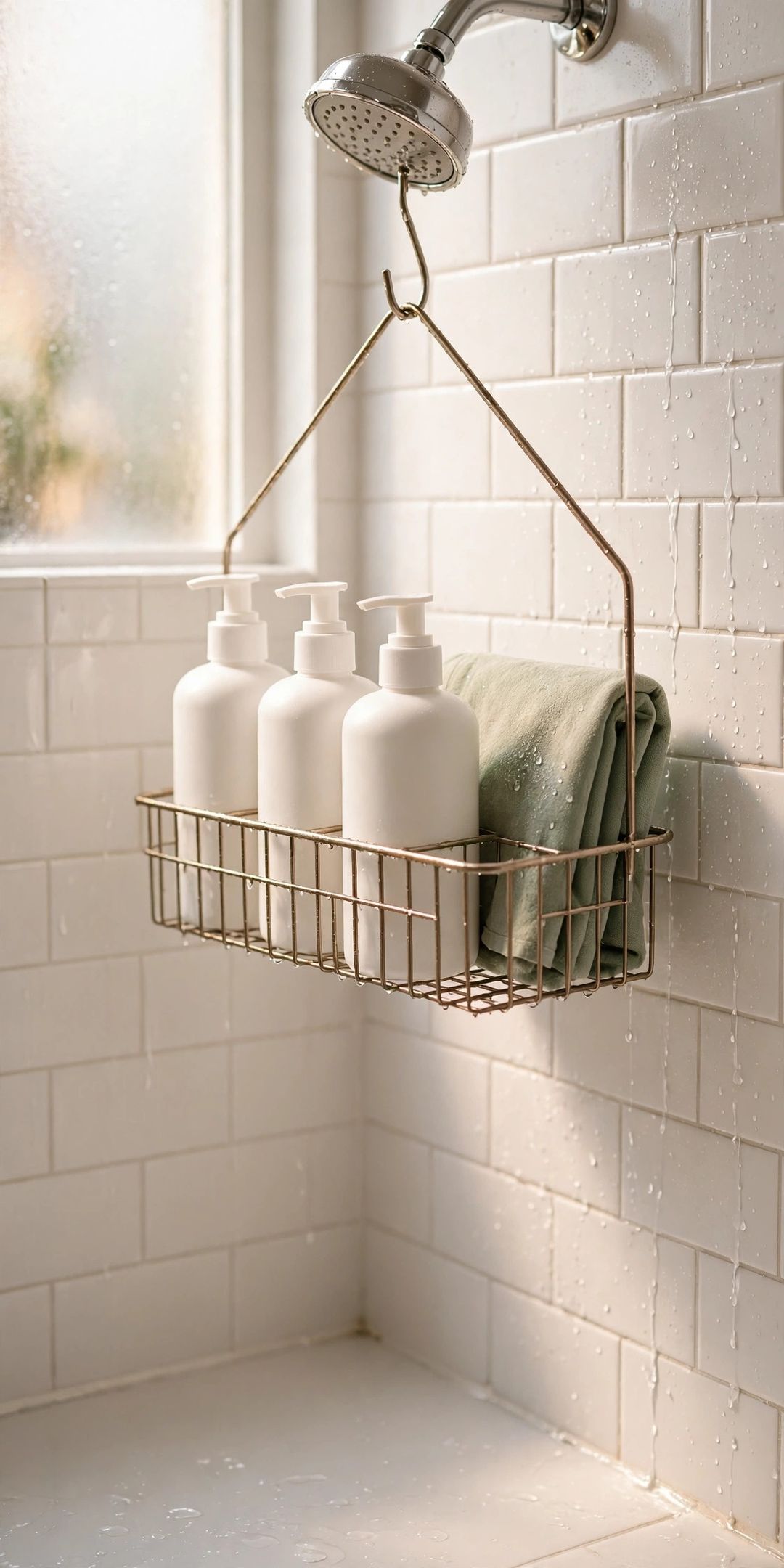
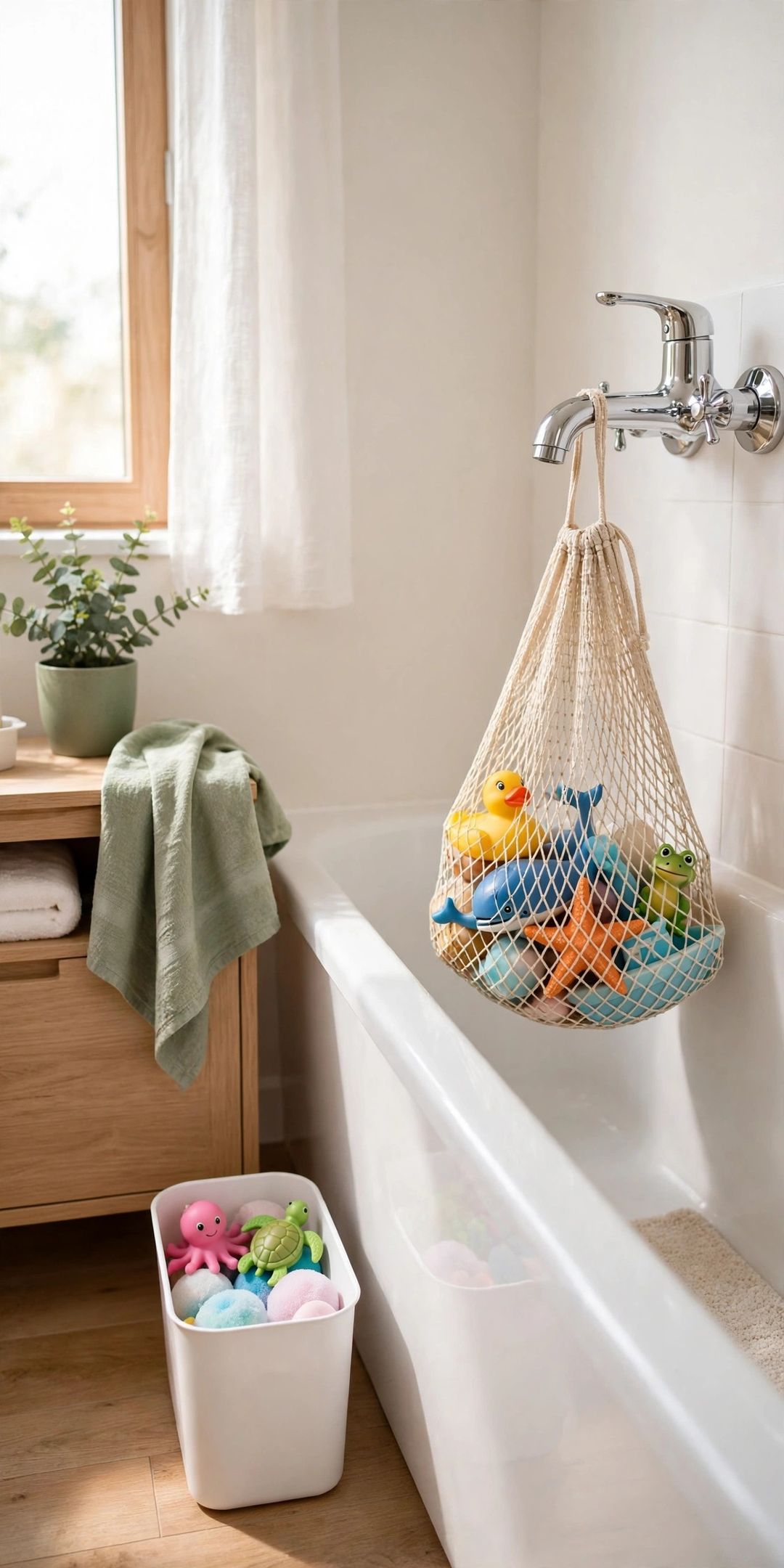
2. Use a mesh bag on a hook. A mesh bag lets water fall straight through and air pass on every side. Hang it from a sturdy hook or shower rod after the bath so it does not sit in the tub. Choose a bag with a wide opening so toys go in without a struggle.
3. Try a scoop-and-store bin. A handled scoop with drainage slots gathers floating toys in one pass, then mounts on the wall or rests across the tub to drip dry. The honest drawback is size: a small scoop holds only a few toys, so large collections need a second storage spot.
Dry: Airflow Is What Helps Prevent Mold
4. Spread toys on a small drying rack. Move toys from the scoop or basket onto a ventilated rack on the tub edge or counter for a few hours. Spreading them out dries them faster than leaving them in a pile. Once fully dry to the touch, they can move to closed storage.
5. Squeeze and shake squeeze toys every time. For toys that take in water, squeeze them out over the tub, shake them, and store them hole-side down so the last water can escape. If water inside a toy will not clear, or dark spots appear inside where they cannot be cleaned, replace the toy.
6. Switch to solid or openable toys where possible. Solid toys with no holes and toys that open into two halves dry completely because there is no sealed, wet center. This is a gradual swap, not a shopping trip: replace worn squeeze toys first and keep favorites that can be cleaned and dried well.
Disappear: Storage That Hides Toys Away
7. Rotate toys so fewer live in the tub. Keep only a small set available for the bath and store the rest, fully dry, in a bin outside the bathroom. Swap the set each week. Rotation cuts drying time, reduces clutter, and makes the stored set feel new again without buying more toys.
8. Use an over-tub caddy that slides away. A caddy that spans the tub holds the current toy set and a washcloth during bath time. After drying, slide it to one end of the tub or lift it into a cabinet. Choose one with open slats, not a solid base that traps a puddle underneath.
9. Store dry toys in a ventilated lidded bin. Once toys are completely dry, move them to a lidded bin in a linen closet, vanity cabinet, or shelf. The lid hides the bright colors when guests come. Leave the lid off or ajar if there is any doubt about dryness, because a sealed bin traps moisture.
10. Add a corner net for the current set only. A corner mesh net keeps the week's toys in one raised spot, off the tub floor and partly out of the main sight line. It is not a long-term store for a large collection. Limit it to the rotation set so air can still move around every toy.
What to Buy
A suction drainage basket, typically $10–$18. Pro: It drains into the tub and keeps toys off the floor. Con: Suction cups often fail on textured tile and need regular re-pressing. Best for: Smooth tile or a smooth tub surround.
A mesh toy bag with a hanging loop, typically $7–$13. Pro: It drains fast and dries with strong airflow. Con: Mesh can tear at the seams if overloaded with heavy toys. Best for: Light toys and small collections.
A scoop-and-store bin, typically $12–$20. Pro: It gathers toys quickly and drains through built-in slots. Con: Capacity is limited, and the mount may not suit every wall surface. Best for: A small daily set of toys.
A ventilated drying rack, typically $11–$19. Pro: Spreading toys out gives the most complete drying. Con: It takes counter or tub-edge space for a few hours. Best for: Homes dealing with damp or musty toys.
A lidded storage bin with vents, typically $9–$16. Pro: It hides dry toys in a closet or cabinet before guests arrive. Con: It traps moisture if toys go in damp, so it is the last step, never the first. Best for: The rotation set stored outside the tub.
Mistakes to Avoid
- Storing wet toys in a closed bin. A lid on damp toys traps moisture and creates the musty conditions the system is meant to prevent.
- Leaving toys in a pile in the tub. A pile drains poorly, dries slowly, and blocks the tub for showers and cleaning.
- Keeping too many toys in the bath at once. A large set takes longer to collect, squeeze out, and dry. Rotation keeps the working set small.
- Ignoring the inside of squeeze toys. If a toy cannot be opened, cleaned, or dried inside, dark growth can stay hidden. Replace toys that no longer come clean.
- Trusting suction cups without checking. Cups loosen on wet and textured surfaces. Check them weekly so a full basket does not fall into the tub.
Frequently Asked Questions
How do you keep bath toys from getting moldy?
Drain them right after the bath, squeeze water out of squeeze toys, and let everything dry with air on all sides before using closed storage. No storage product prevents mold on its own if toys go away wet, so the drying step matters most.
Where should bath toys go when guests come?
Once toys are fully dry, place them in a lidded bin in a linen closet or vanity cabinet. Keep the current set in a mesh bag or corner net if drying is not finished, and move it only when dry.
How many bath toys should be out at one time?
A small set that fits in one basket or scoop is easiest to drain and dry. Store the rest dry outside the bathroom and rotate a fresh set in each week.
When should a bath toy be replaced?
Replace a toy when it stays musty after cleaning, shows dark spots inside that cannot be reached, or has cracks and torn seams that trap water. Solid and openable toys are simpler replacements because they dry fully.
The drain-dry-disappear routine takes only a few minutes and keeps the tub clear, dry, and ready for guests. Save this post to your Bathroom Organization board on Pinterest so the full routine is handy at your next tidy-up.