A bathroom can look tidy and still store years of clutter underneath. Expired products sit behind current ones, three open shampoo bottles crowd the shower, and sample packets multiply in a drawer.
This bathroom declutter checklist works zone by zone, so nothing gets skipped and nothing is done twice. Each zone uses three checks: Is it expired or past its open period? Is it a duplicate of something already open? Is it a sample that needs a use plan or an exit?
Start with a trash bag, a recycling bag, a bin for items that belong elsewhere, and a notepad for expiry dates. Wipe each zone before anything goes back.
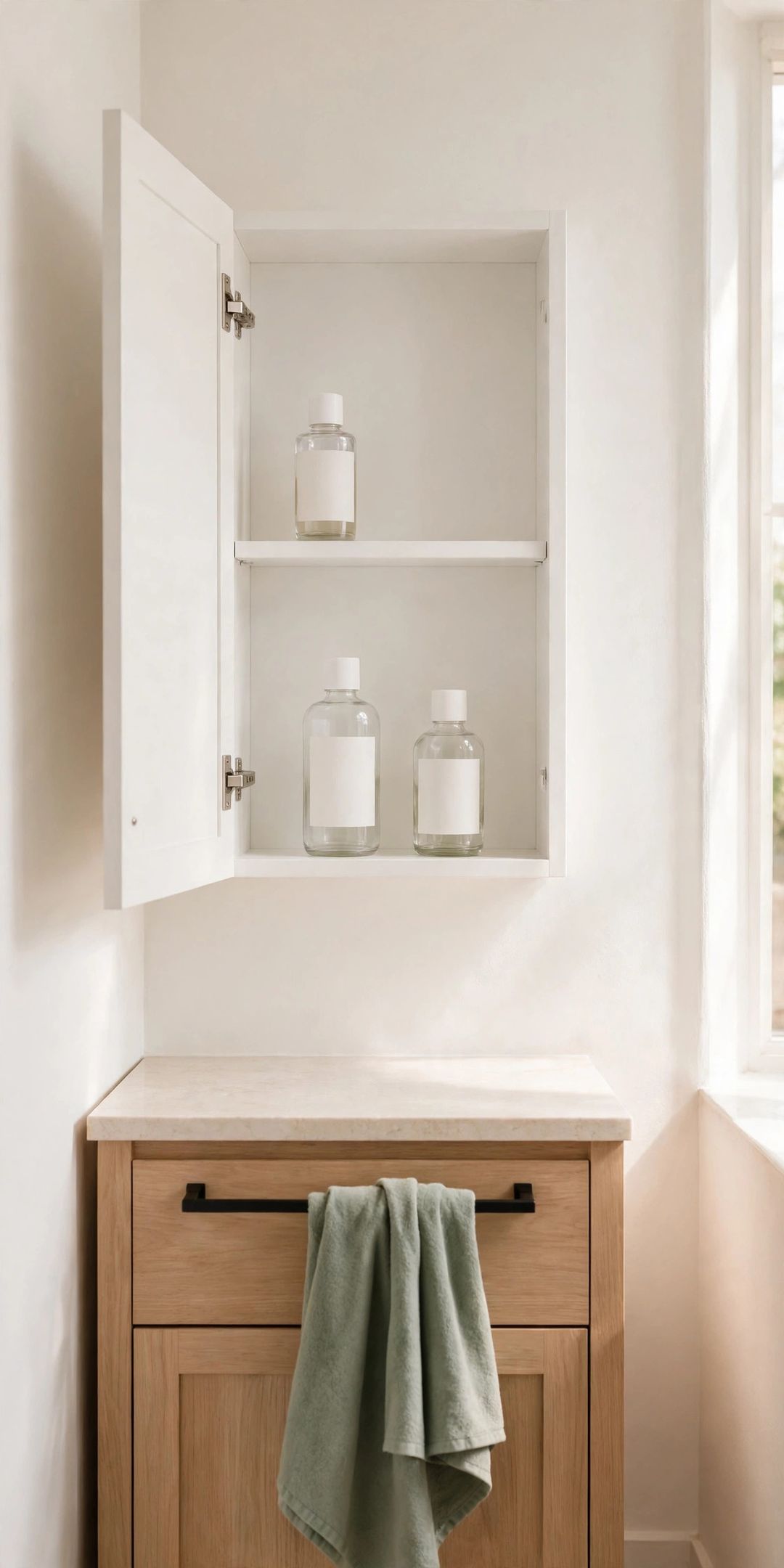
Medicine Cabinet
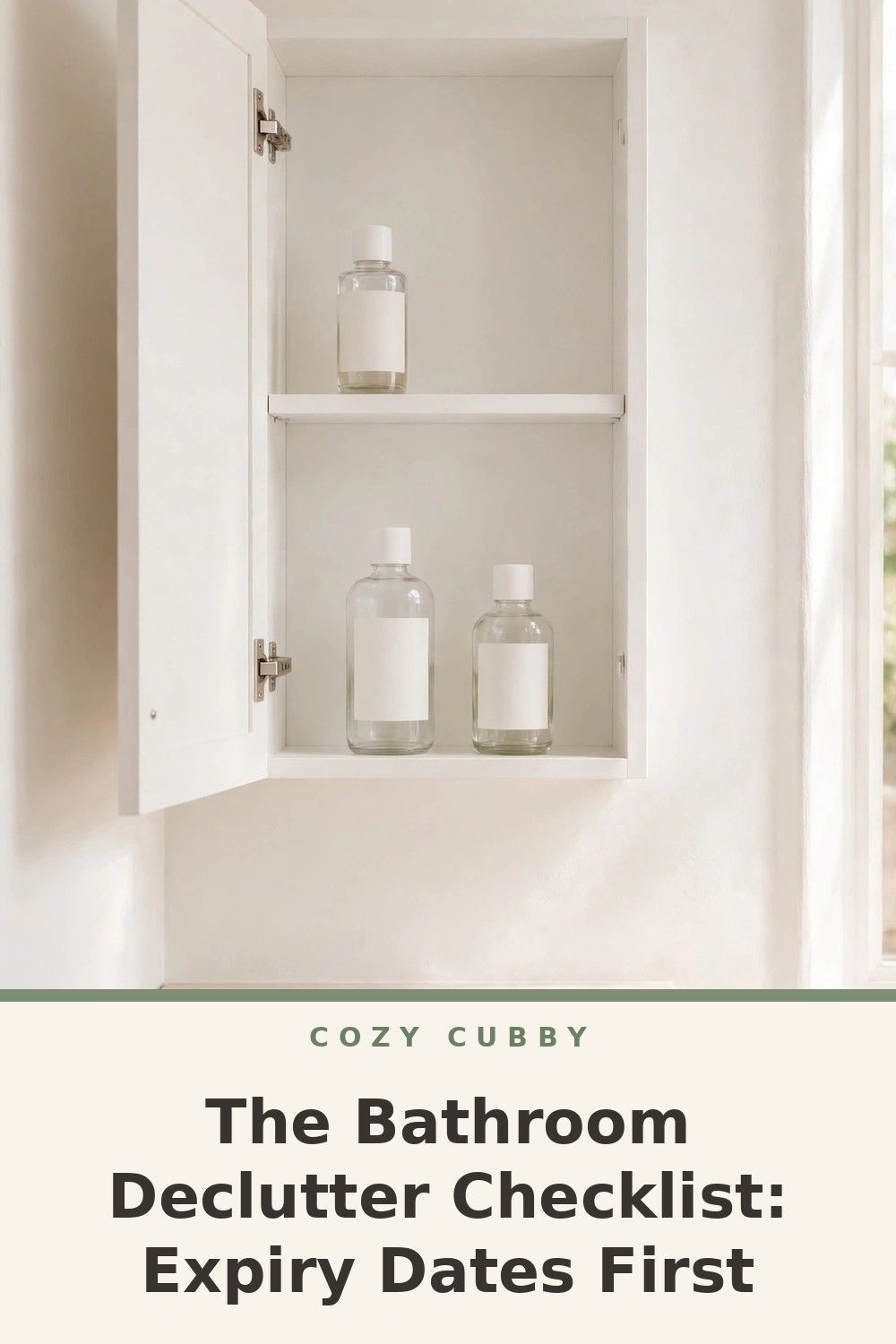
The medicine cabinet is the expiry zone, so go slowly and read every label.
- Check every printed date. Remove anything past its expiration date and set it aside for safe disposal. Follow the printed date rather than guessing from appearance or smell.
- Read the period-after-opening symbol. Many cosmetics show a small open-jar symbol with a number and M, such as 6M or 12M, generally meaning use within that many months after opening. If the opening date is unknown and the product is old, treat it as done.
- Consolidate duplicates. Keep one open item per type, plus one sealed backup at most. Multiple open tubes age faster and hide stock levels.
- Clear the samples. Move foil packets and mini tubes to the sample spot in the drawers zone.
- Dispose safely. Do not treat medication like regular trash by default. Ask a pharmacist about take-back programs, and follow local guidelines.
Under-Sink Cabinet
This dark, damp space hides leaks and forgotten products.
- Empty it fully. Wipe it dry and check for leaks or damaged bottles before sorting.
- Toss the clearly finished. Remove empty bottles, dried-out wipes, rusted items, and broken pumps.
- Group duplicates. Line up bottles of the same cleaner. Keep the open one and one backup; move extras to household storage or let them go.
- Check dates on rarely used products. Sunscreen and specialty cleaners still carry dates. Anything well past its date goes to the disposal pile, following local guidelines.
- Contain what stays. Keep remaining bottles in one or two bins, so leaks stay contained and stock is visible.
Shower and Tub Area
The shower is where duplicates do the most damage: every extra bottle takes space and collects film underneath.
- Count open bottles by type. Three open shampoos is the core problem. Keep one open bottle per type, per person.
- Merge or queue duplicates. Combine two bottles of the exact same product where that can be done cleanly. Otherwise, line extras up as “use next” instead of opening anything new.
- Remove empties and abandoned products. Recycle empties. A product left untouched for months does not need shower space.
- Check razors and tools. Remove rusted or dull items, and store only the tools actually used here.
- Move out mini bottles. Hotel and sample bottles belong in the sample plan, not lined up permanently along the tub edge.
Drawers
Drawers are the sample trap. Sort them one at a time, fully emptied.
- Create one sample spot. Gather every sample, trial size, and travel mini into one pouch or box. Then set the rule: use samples first, save them for travel only if travel is likely, or let most go.
- Apply the expiry check. Look for printed dates and the open-jar symbol on makeup and skin care. Products open far beyond that period should go.
- Cut duplicates down. Keep a sensible number of hair ties, clips, and tools. Extras beyond one neat layer are clutter.
- Remove non-bathroom items. Batteries, receipts, and tools that drifted in go back to their real homes.
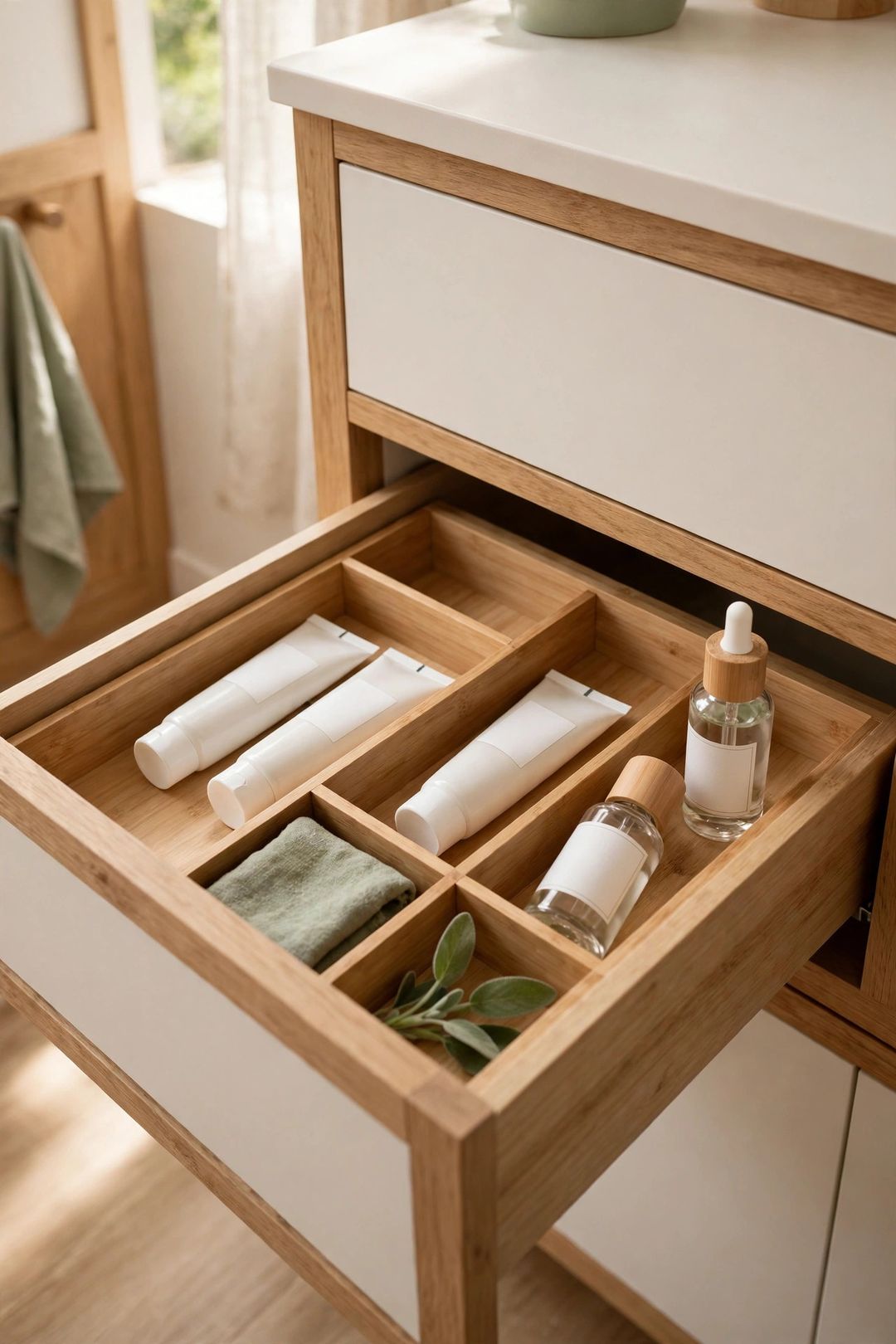
- Divide what stays. Use small trays so each type has a section and an obvious place.
Countertop
The counter should hold daily use only. Everything else earns a cabinet spot, or it leaves.
- Keep the daily lineup short. Toothbrushes, one hand soap, and the few products used daily are enough for most counters.
- Move backups off the surface. Extra toothpaste and bulk buys belong in a cabinet, not around the sink collecting splashes.
- Wash and check what sits open. Wash cups, holders, and trays. Products stored open still carry dates worth checking.
- Limit decor. One small plant or tray is fine. A crowded counter makes cleaning harder.
Linen Overflow
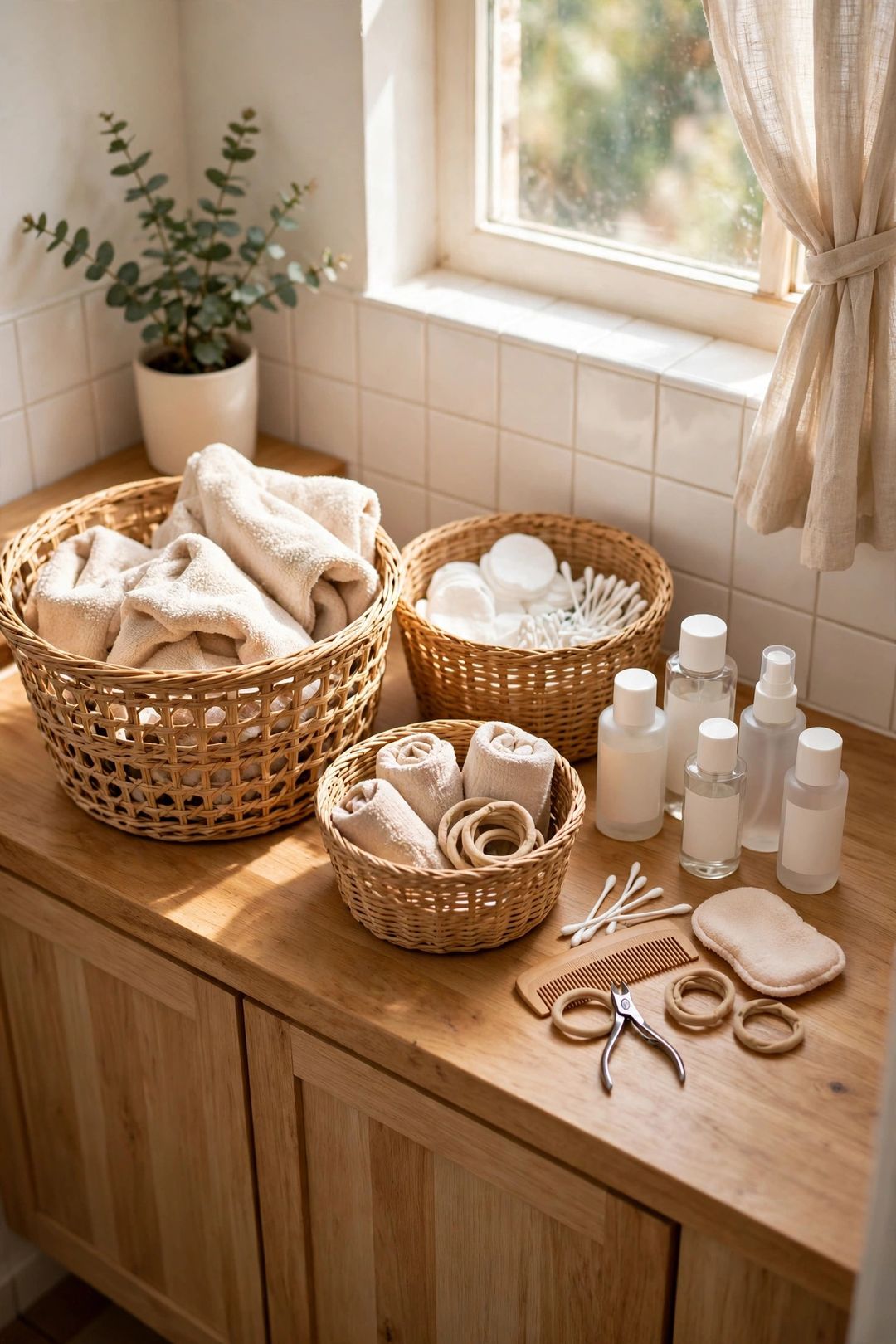
Towels and backups often overflow into hallway closets and baskets. Count them in, even if they live outside the door.
- Sort towels by condition. Keep towels that are absorbent and intact. Move worn towels to a rag pile only if rags are needed.
- Set a limit that fits the space. The right number is what the shelf holds neatly. Anything beyond that is overflow.
- Consolidate backup stock. Group extra toothpaste, soap, and unopened products in one place, check their dates, and note them before buying more.
- Give samples their visible home. If drawers are full, keep the one sample pouch here. One use-first spot stops samples spreading again.
- Label the shelf or bin. A simple label makes backups checkable in seconds before a shopping trip.
What to Buy
Small clear sorting bins, typically $8–$18. Pro: Stock stays visible and grouped. Con: Oversized bins waste space under pipes. Best for: Under-sink and linen storage.
A label set and marker, typically $6–$12. Pro: Dating a product at opening makes the open-jar symbol useful. Con: Labels must be written at opening time. Best for: Creams and backups.
A small expiry-date tracker notepad, typically $4–$9. Pro: One list of key dates replaces guessing. Con: New items must be added when opened. Best for: Medicine cabinet stock.
Sturdy trash and recycling bags, typically $5–$10. Pro: Empties leave the same day. Con: Not every pump or tube is recyclable. Best for: Reset day.
Drawer dividers or small trays, typically $9–$16. Pro: Sections stop small items mixing into one pile. Con: Measure first. Best for: Drawers and samples.
Mistakes to Avoid
- Judging expiry by smell or color alone. Use the printed date and open-jar symbol first; a product can look fine and still be past its use period.
- Opening a new bottle while three are open. Finish or merge open duplicates first, or every zone fills with half-used products again.
- Keeping samples with no plan. Without a use-first rule, samples age in a drawer until they become trash anyway.
- Skipping the under-sink empty-out. Sorting around bottles hides leaks and damaged stock. This cabinet needs to be fully empty for the reset.
- Using one disposal rule for everything. Medication, chemicals, and packaging are handled differently in many areas. Follow local guidelines and pharmacist advice on take-back options.
Frequently Asked Questions
How should expiration dates in a bathroom be read?
Follow the printed date on the package or tube crimp. For the open-jar symbol, count the months shown from when the product was opened. Writing the opening month on a label makes that check possible.
What is the best way to handle duplicate products?
Keep one open and, at most, one sealed backup. Merge identical open products where practical, line extras up in use-next order, and check the backup spot before buying more.
Are sample and travel sizes worth keeping?
Only with a plan: an amount that fits one pouch, used first or saved for a specific trip. Without a limit, samples collect and quietly expire.
How often should this checklist be repeated?
A full run-through every few months keeps dates and duplicates under control. A quick version — shower, counter, and one drawer — can be done monthly.
Work zone by zone, check dates before duplicates, and give samples one home with a use-first rule. Save this post to your Bathroom Organization board on Pinterest for your next reset.