Every home has a row of flat, empty surfaces that rarely get a job: the backs of its doors. In a small home, that missed space matters. A door can hold wraps, towels, cleaning supplies, or art tools without taking any floor or shelf space.
This tour shows behind the door storage ideas every room can actually use, with one clear job per door. When a door holds one category only, items are easy to find and easy to put back.
Before you start, open and close each door fully. Only solid, swinging doors with clearance behind them get a rack or organizer in this tour.
1. Pantry Door: Wraps, Foil, and Spice Packets
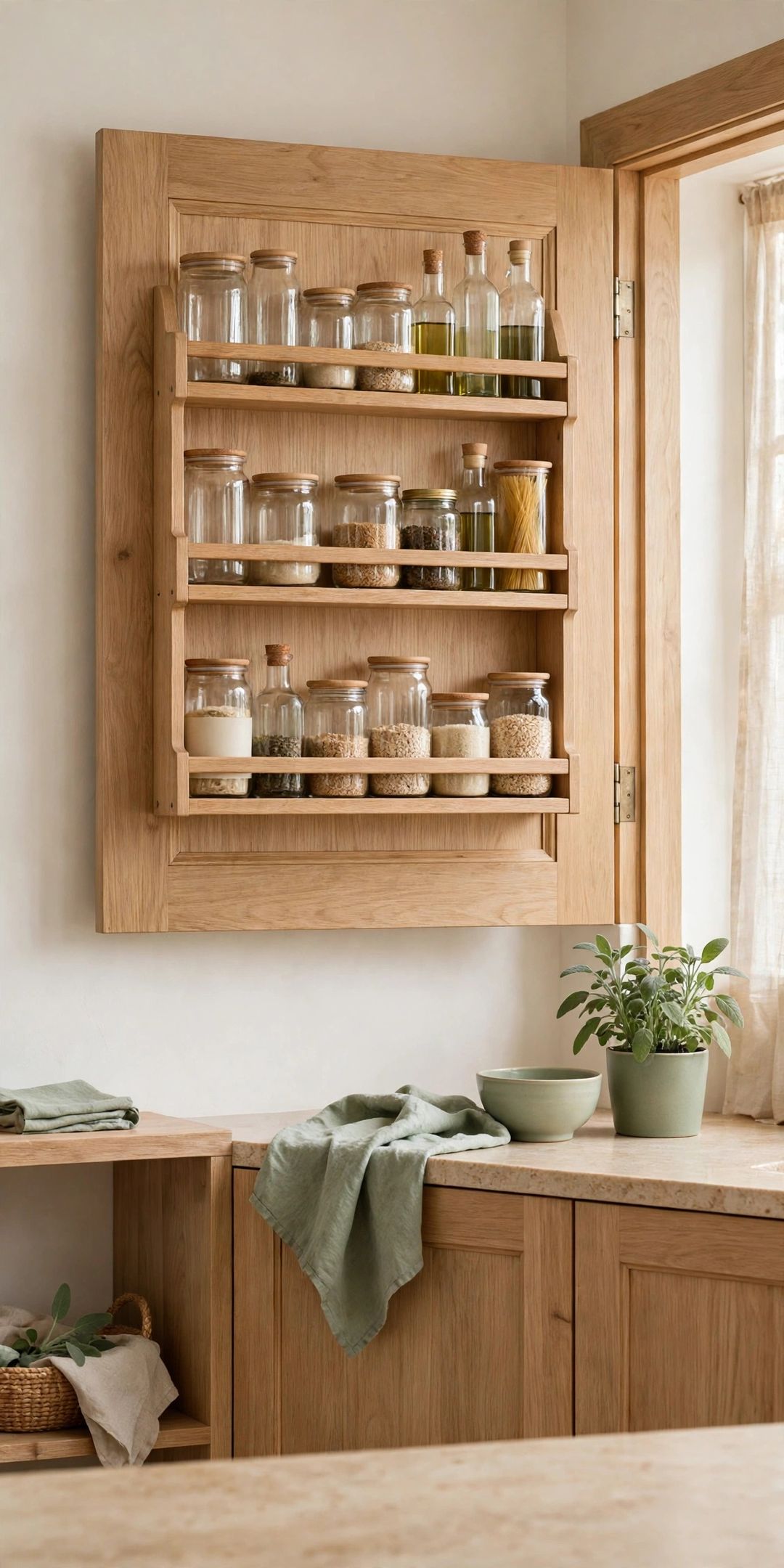
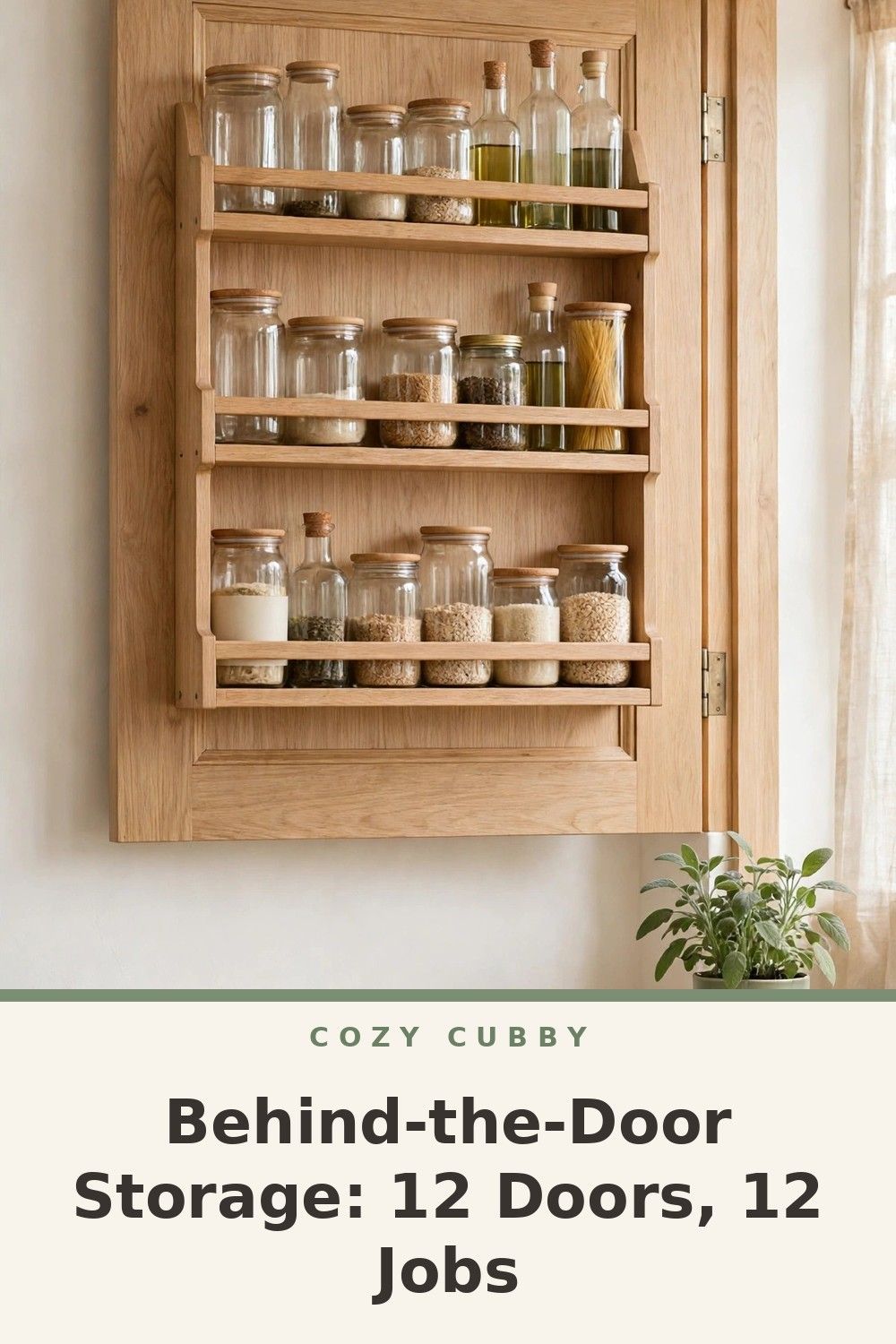
Give the pantry door the flat, light items that crowd shelves. A slim rack or clear pockets hold foil, wrap, parchment, zip bags, and spice packets in neat rows. These items are thin, so the door still closes smoothly, and every box stays visible at a glance.
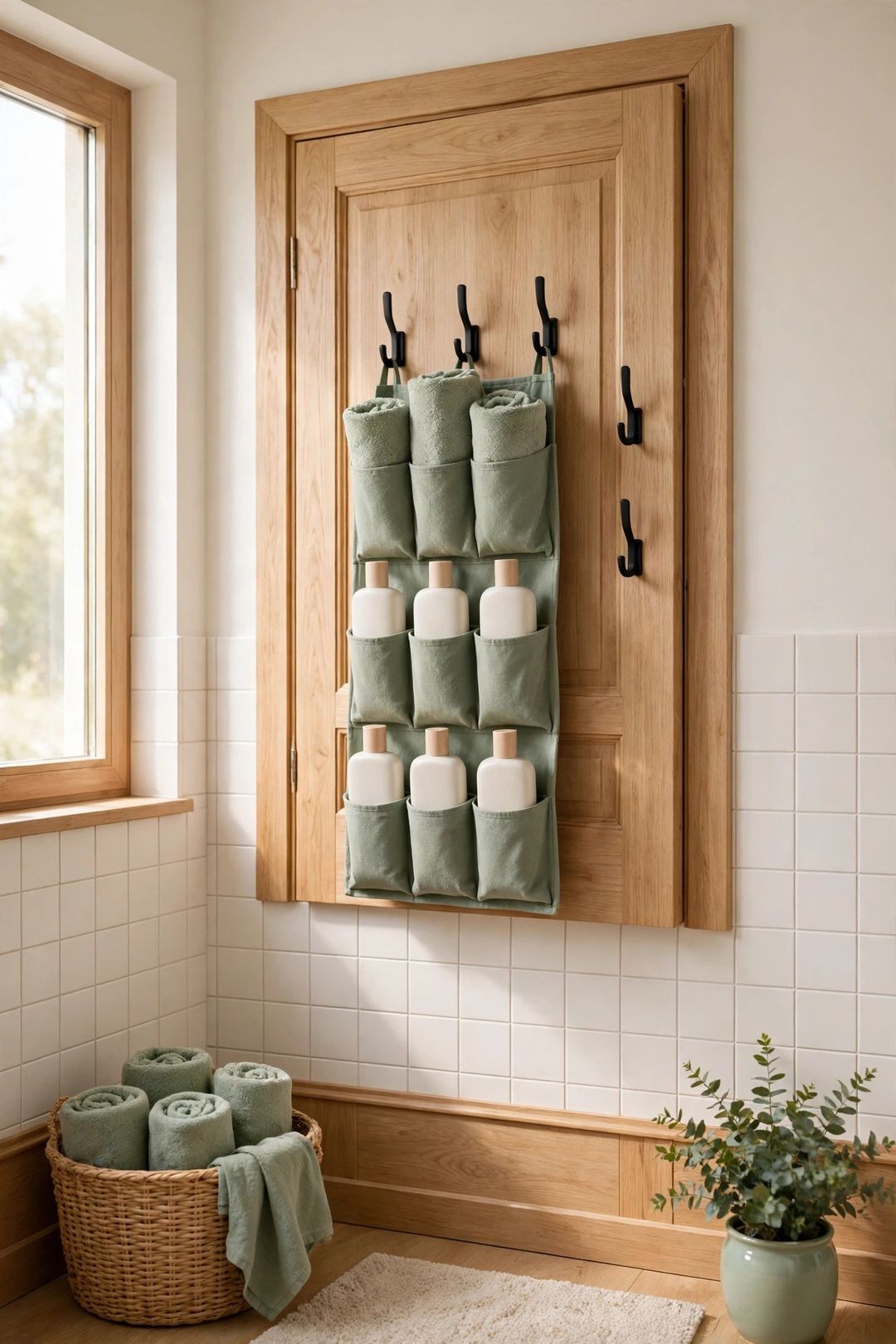
2. Bathroom Door: Towels, Robes, and Hair Tools
Use a hook rack on the bathroom door for daily towels and robes, so they dry in open air. If there is room for pockets too, add one row for hair tools and brushes. Keep heavy bottles on shelves, since a door rack works best with light, soft items.
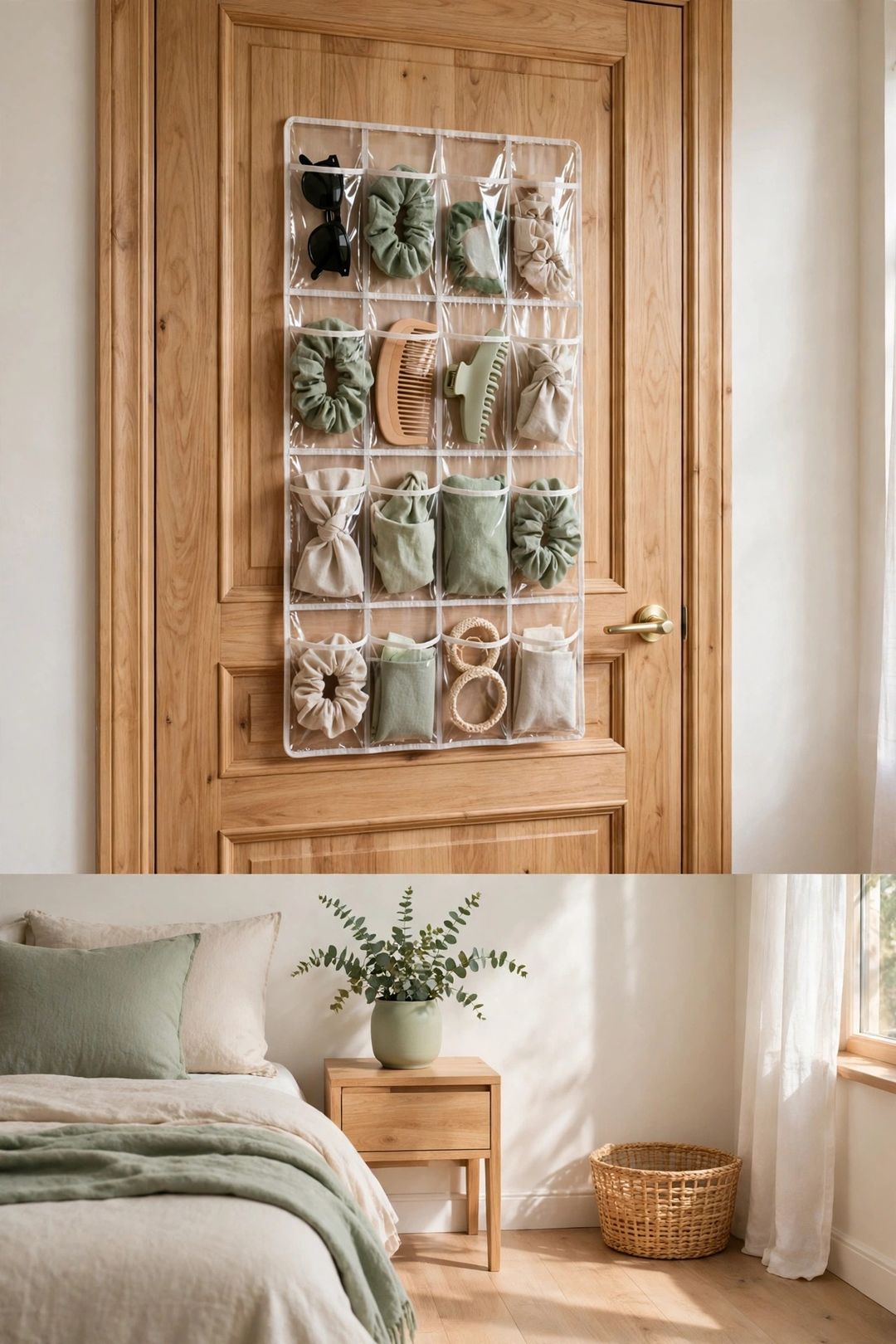
3. Bedroom Closet Door: Belts, Scarves, and Jewelry
The inside of a bedroom closet door is prime space for accessories. Small hooks or a pocket organizer hold belts, scarves, necklaces, and sunglasses where you get dressed. Each piece gets its own spot, so belts stop tangling and scarves stay visible.
4. Bedroom Door: Bags, Totes, and Caps
Hang everyday bags on sturdy hooks on the back of the bedroom door. One row holds a work bag, a tote, and caps without crushing them. Limit the row to bags in weekly use. Too many bags make the door heavy and hard to open, so seasonal bags belong in the closet.
5. Kids' Room Door: Art Supplies and Small Toys
Clear pockets turn a kids' room door into a tidy art station. Sort crayons, markers, stickers, glue sticks, and coloring books by pocket, at a height kids can reach. Keep only safe, light items here, and put adult items like scissors in the top pockets.
6. Kids' Closet Door: Picture Books and Dress-Up Pieces
Use the inside of a kids' closet door for flat, fun extras. Slim pockets hold favorite picture books face-out, so choosing a bedtime story is fast. A few low hooks hold dress-up hats, capes, and costume pieces. Rotate the books and costumes now and then to keep it fresh.
7. Laundry Room Door: Cleaning Supplies and Stain Tools
A basket rack on the laundry door keeps cleaning supplies together and off the washer. Store stain remover, dryer sheets, cloths, and a lint roller in separate baskets by task. Keep bottles upright with lids closed, and place stronger cleaners on the highest basket if young kids are in the home.
8. Linen Closet Door: Guest Supplies and Extra Toiletries
The inside of a linen closet door is a smart spot for guest extras. Pockets or small baskets hold spare toothbrushes, travel-size toiletries, cotton balls, and first aid basics. These small items stop getting lost between stacks of towels and sheets.
9. Home Office Door: Cords, Chargers, and Mail Supplies
Give the office door the small supplies that clutter a desk. Pockets hold spare cords, chargers, pens, sticky notes, stamps, and envelopes, each in its own section. The desk stays clear, and the cord you need is always in the same pocket.
10. Entry Closet Door: Hats, Gloves, and Dog Leashes
The inside of an entry closet door can speed up every exit. Hooks and pockets hold hats, gloves, scarves, sunglasses, and a dog leash right where coats live. In warmer months, swap the winter gear for sunscreen and caps. One door, one season at a time keeps it from overflowing.
11. Guest Room Closet Door: Extra Hangers and Travel Gear
Use a guest room closet door for quiet extras: spare hangers, a lint roller, and travel items like packing cubes and luggage tags. Guests find a hanger without asking, and your travel gear waits in one place. Keep the load light.
12. Utility Closet Door: Bulbs, Batteries, and Basic Tools
Finish the tour at the utility closet door, the home base for small household supplies. Sturdy pockets or baskets hold light bulbs, batteries, tape, a flashlight, and a few basic tools. Sort by type and keep the heaviest items low. The spare is then in its known spot.
What to Buy
A clear pocket over-door organizer, typically $12–$20. Pro: Every pocket is visible, so small items stay sorted and easy to grab. Con: Thin pockets can tear if stuffed with heavy items. Skip if: You only need hooks for towels and robes.
A metal over-door hook rack, typically $14–$24. Pro: Strong hooks handle bags, robes, and coats without any drilling. Con: Wide hooks may stop a door from closing fully. Skip if: Your doors already have hooks that hold the same load.
An over-door basket rack, typically $20–$35. Pro: Sturdy baskets suit pantry, laundry, and utility supplies that pockets cannot hold. Con: It costs more and can rattle if mounted loosely. Skip if: Your doors are sliding, bifold, or too thin for a frame.
A slim over-door spice rack, typically $15–$25. Pro: Narrow shelves keep spice packets, wraps, and small jars in one flat layer. Con: It fits the pantry door only and has little use elsewhere. Skip if: Your spices already live in a drawer that works well.
Mistakes to Avoid
- Giving one door too many jobs. A door that holds towels, tools, and snacks at once becomes a pile. One category per door keeps the system clear.
- Overloading a light door. Heavy bottles and full bags strain hinges and stop doors closing. Keep door loads light and spread weight low.
- Skipping the swing test. A rack that bangs the wall or blocks the door will annoy you daily. Test the full swing before you fill it.
- Using organizers on sliding doors. Hanging racks need a swinging door with clearance. Sliding and bifold doors need a different plan.
- Hiding daily items behind doors. If you open a door many times a day for one item, that item belongs in a drawer or on a shelf instead.
Frequently Asked Questions
Will an over-door organizer damage the door?
Most hanging organizers rest on padded hooks and need no screws, so they leave no marks. Check that hooks fit your door thickness and pad any metal contact points.
What if a door will not close with a rack on it?
Try slimmer hooks, move the rack inside a closet door, or store only flat items there. If the gap is still too tight, choose a wall hook or shelf instead.
How much weight can a door hold safely?
Keep it light as a rule: towels, accessories, wraps, and small supplies are ideal. If the door feels heavy to swing, sags, or creaks, remove items right away and move the load to fixed shelving.
Which door should you start with?
Start with the door nearest your worst clutter spot, often the pantry or bathroom door. One finished door shows the value fast and gives you a simple model to copy for the rest of the tour.
Twelve doors, twelve clear jobs, and a home where the backs of doors finally earn their keep. Save this post to your Small-Space Storage board on Pinterest so the full door tour is handy when you start yours.