Belts, ties, and scarves are small, but they cause a daily snag. Belts curl into a drawer, ties slide off a hanger into a pile, and scarves knot together so the one you want is hard to pull free.
These belt tie and scarf storage ideas match the storage method to the item. Belts need hooks or divided slots, ties need grip or rolls that protect the fabric, and scarves need loops or cubbies they can slide out of one at a time.
Start by sorting each type into its own group and letting go of pieces that are worn out or never worn. Every idea below works better with a smaller set.
Hanging Storage for Belts, Ties and Scarves
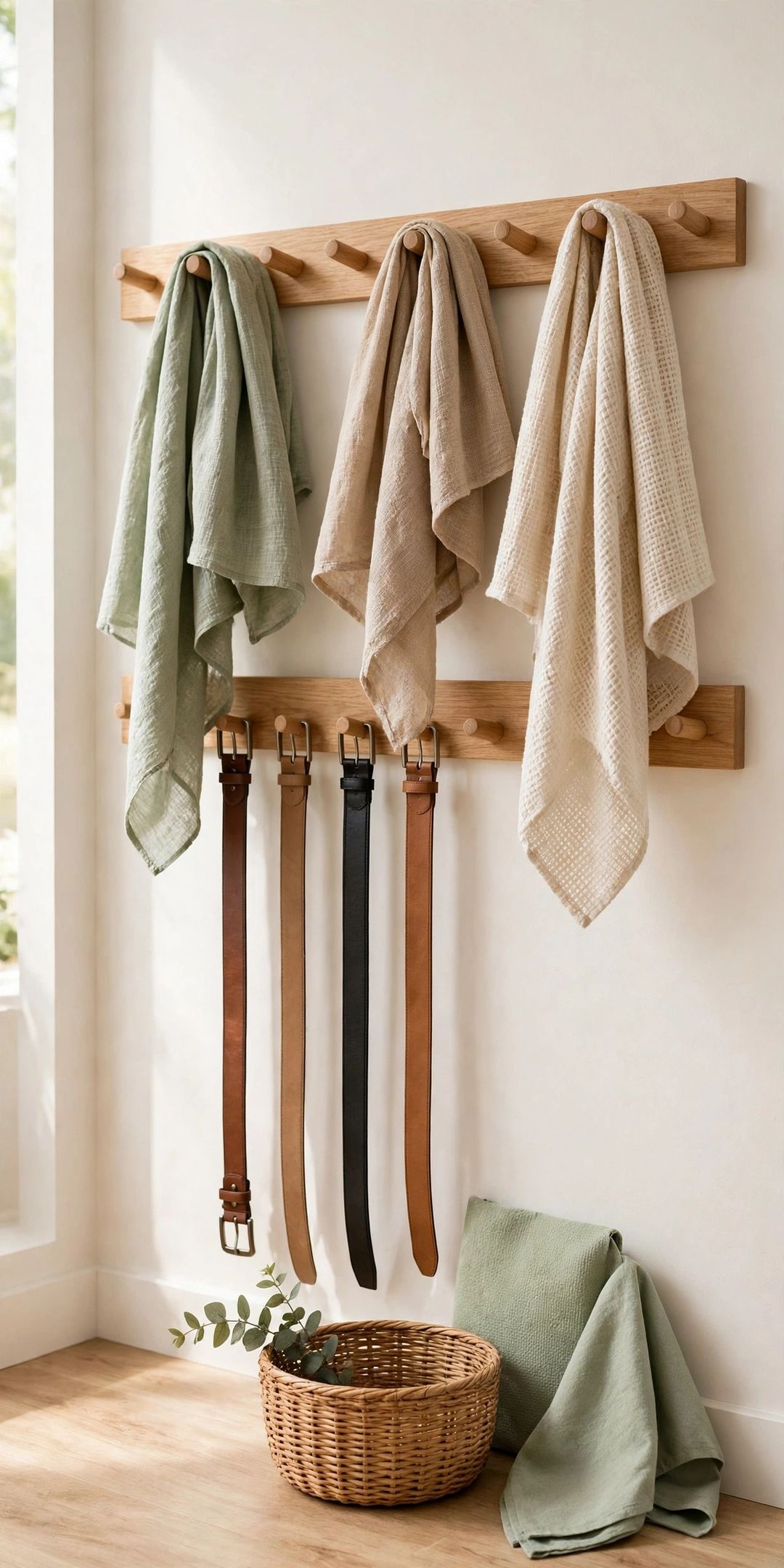
1. A multi-hook belt rack on the closet rod. Best for belts. Hooks hold each belt by its buckle, so the full row is visible and one belt lifts off without moving the rest. Hang it at the end of the rod for easy reach.
2. A rotating tie rack. Best for ties in regular use. Short arms hold many ties in a small circle of rod space, and a spin brings each one into view. The drawback is bulk: a full rack can be wide, so check nearby clothes still hang straight.
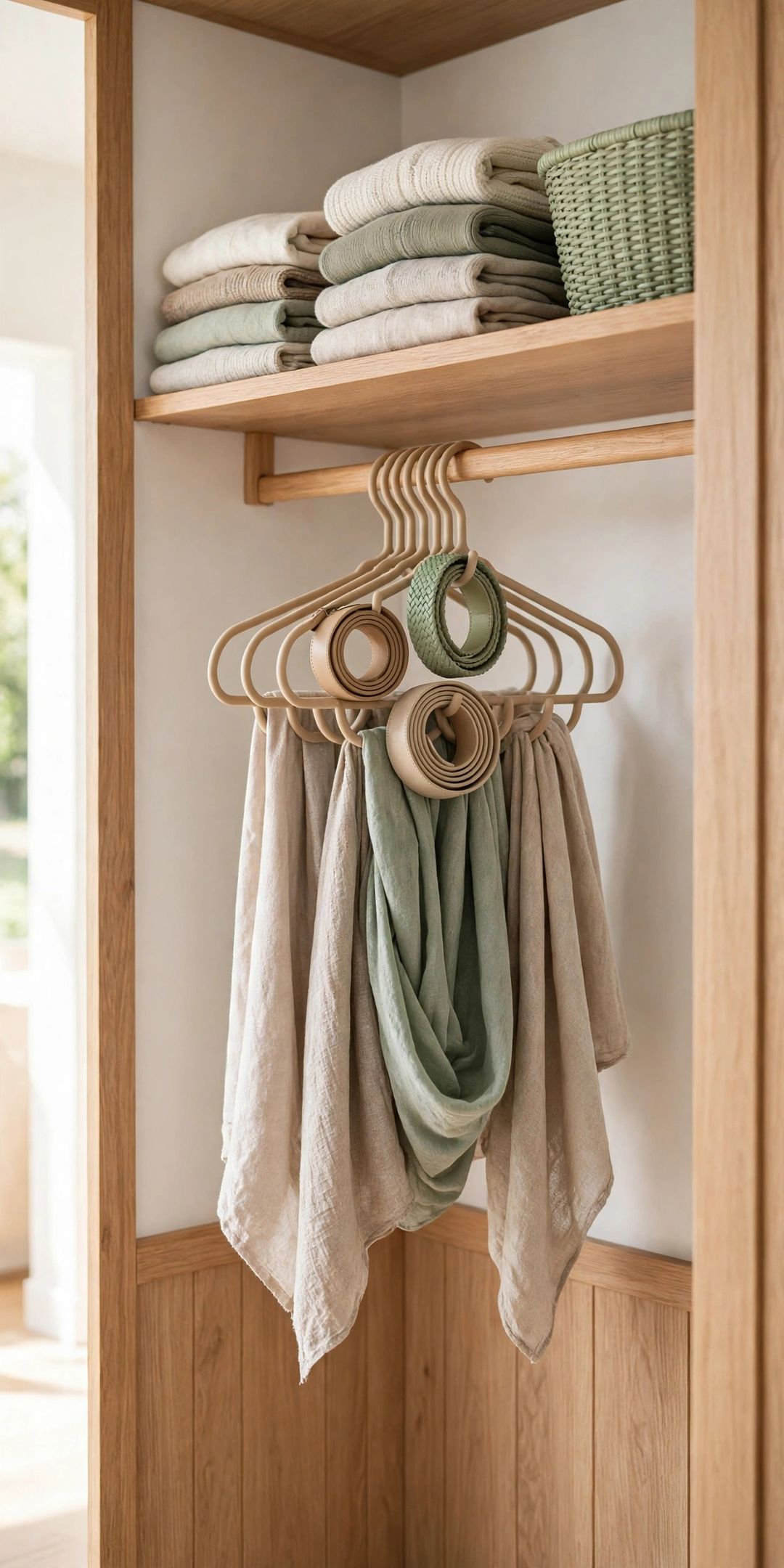
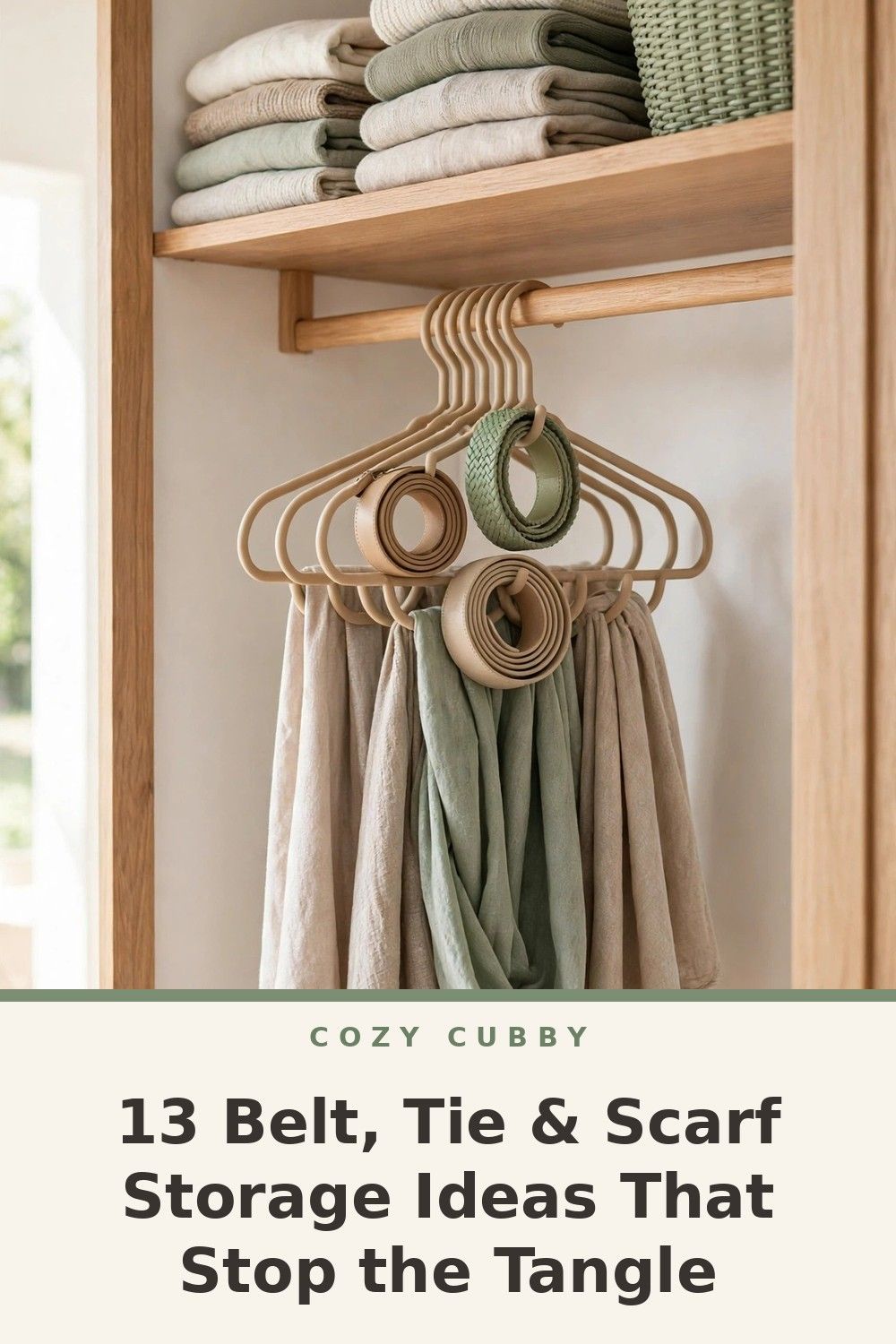
3. A scarf hanger with loops or rings. Best for scarves. Thread each scarf through its own loop or ring and hang it on the rod or a hook. One scarf slides out without pulling the others. Silky scarves can slip, so choose loops with slight grip.
4. Simple wall hooks or a peg rail inside the closet. Best for belts and sturdy scarves. One item per hook stops the layered pile that forms on a single hook. Keep hooks smooth and rounded, because sharp edges can snag knit scarves.
5. An over-door rack with hooks or pockets. Best for closets with no spare rod space. Belts hang well on door hooks, while clear pockets suit scarves you want to see at a glance. Check the door gap first, and skip heavy loads that make the door rattle.
Drawer and Shelf Storage That Keeps Each Piece Apart
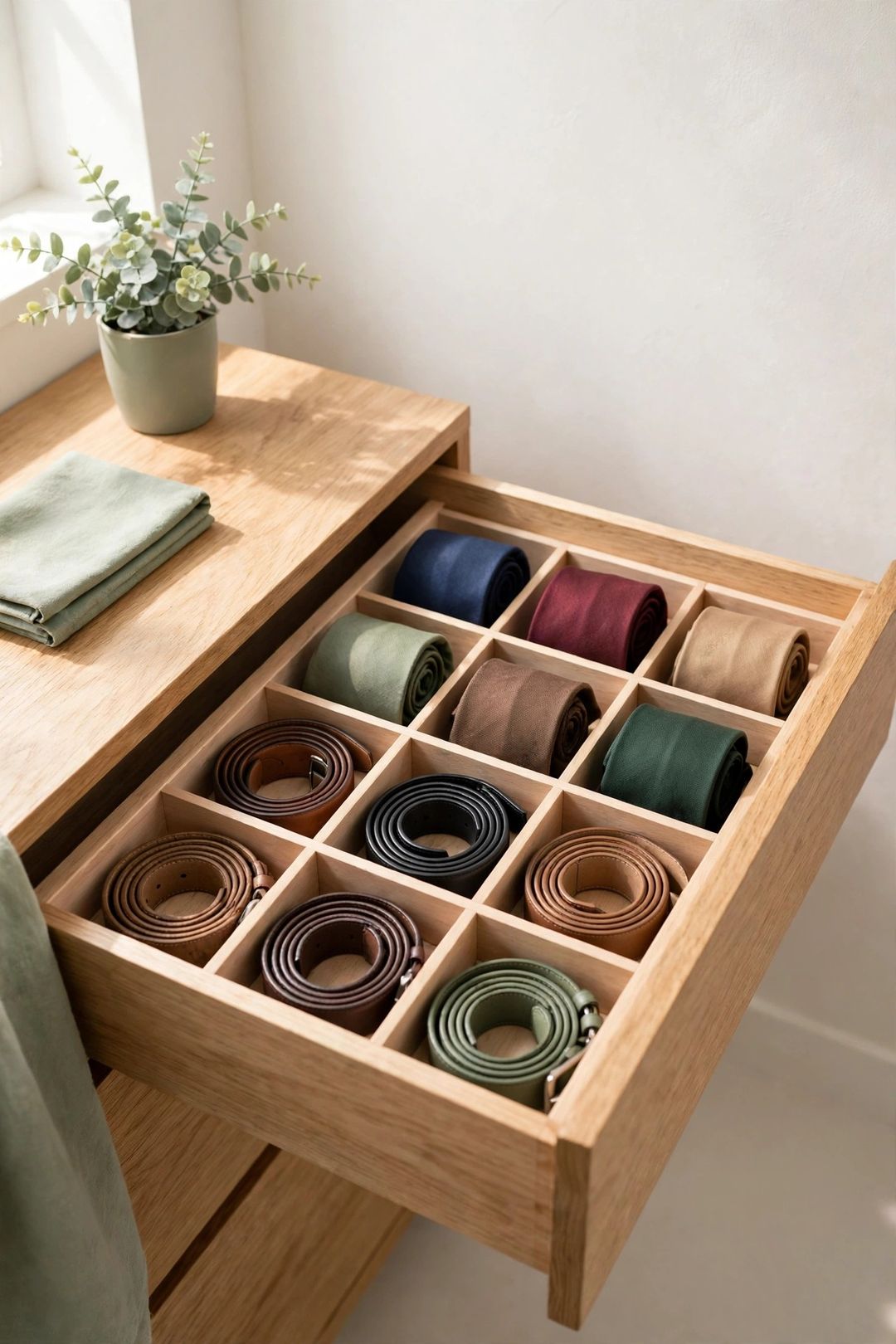
6. Drawer dividers with small sections. Best for belts and ties together in one drawer. Coil each belt or roll each tie into its own section, and the drawer opens to a full, clear view. Measure depth first, because tall dividers can stop a shallow drawer closing.
7. Rolled ties in a shallow tray. Best for ties, especially silk ones. Roll each tie loosely from the narrow end and stand the rolls side by side in a tray. Rolling avoids the crease a tight fold leaves. Keep the tray away from rough items that snag.
8. Coiled belts in a divided box on a shelf. Best for belts with shelf space but no spare drawer. Coil each belt flat and set it buckle-up in its own section, so you can see the whole set at once. Coil stiff leather loosely in a larger section.
9. Small cubbies or a pigeonhole organizer. Best for scarves, plus rolled ties. One or two scarves per cubby keeps colors visible and stops the deep stack where bottom pieces are never worn. Shelf or wardrobe-door cubbies both work if the depth fits a folded scarf.
10. A lined basket for chunky winter scarves. Best for thick scarves too bulky for loops or small cubbies. Fold each scarf once and stand the folds upright, like files, so you can flip through them. A smooth lining matters, because rough weave can catch on knit.
Small-Space and Travel-Friendly Fixes
11. A single multi-bar hanger. Best for ties and light scarves in a very small closet. Drape one tie or scarf over each bar instead of stacking several on one bar. The honest limit is capacity: most hold only four to six pieces well before they slide together again.
12. Shower-curtain rings on one sturdy hanger. Best for scarves and belts on a tight budget. Clip rings along the bottom bar of a hanger, then thread a scarf through each ring or hang a belt by its buckle. Use smooth coated rings, not bare metal that can snag fabric.
13. Clear zip pouches sorted by type. Best for off-season scarves and spare belts on a high shelf. One pouch per type keeps dust off and makes the seasonal swap quick. Do not seal leather belts in airtight plastic for months; a breathable fabric bag suits leather better.
What to Buy
A multi-hook belt rack, typically $10–$18. Best for belts. Pro: Every belt stays visible and separate on the rod. Con: It holds belts only, so ties and scarves still need their own spot.
A scarf hanger with loops, typically $9–$16. Best for scarves. Pro: One hanger holds many scarves in very little rod space. Con: Silky scarves can slide out of smooth loops when the closet is bumped.
Adjustable drawer dividers, typically $12–$22. Best for belts and rolled ties. Pro: They fit many drawer sizes and can change as your set grows or shrinks. Con: Thin dividers can shift when the drawer opens fast.
A rotating tie rack, typically $15–$28. Best for a larger tie collection. Pro: Many ties fit in a small space and spin into view. Con: Motor styles add cost and upkeep; simple manual racks avoid that.
An over-door hook rack, typically $14–$25. Best for doors with no closet space to spare. Pro: It installs in minutes, no screws needed. Con: It needs door clearance and can knock if overloaded.
Mistakes to Avoid
- Storing all three types in one loose drawer. Give each type its own spot, even inside the same drawer with dividers.
- Hanging ties on a bare wire hanger in a stack. Ties slide to one end, crease, and fall. Use arms, bars, or rolls that hold each tie apart.
- Rolling ties and belts too tightly. A tight roll can leave creases in silk and cracks in stiff leather. Roll and coil loosely, and let the shape do the holding.
- Using rough hooks or rings on delicate scarves. Sharp or rusty metal snags silk and knit. Choose smooth, coated hooks and rings for anything fine.
- Keeping every piece you own in daily storage. A crowded rack tangles again fast. Move off-season scarves and spare belts to a pouch or box on a high shelf.
Frequently Asked Questions
What is the best way to store belts so they keep their shape?
Hang belts by the buckle on hooks, or coil them loosely in divided sections. Both keep the strap straight or gently curved. Avoid tight coils and sharp folds, which can mark leather, and keep belts dry and out of direct sun.
Should ties be rolled or hung?
Both work. Hanging on a rack with separate arms suits ties worn each week, because each one is easy to see and grab. Rolling loosely in a tray or divided drawer suits silk ties and larger sets, and protects them from sliding and creasing.
How do you store scarves without wrinkles?
Hang everyday scarves through loops or rings so they drape in one layer, and fold bulky scarves once and stand them upright in a lined basket or cubby. Avoid tight knots around a hanger, which leave a crease across the middle.
Can belts, ties and scarves share one organizer?
Yes, if the organizer keeps them apart. A divided drawer, a cubby unit, or a door rack with hooks for belts and pockets for scarves can hold all three. The key is one section per piece, not one shared space.
Sort by type, give each piece its own hook, loop, roll, or section, and getting dressed stops starting with a tangle. Save this post to your Closet Organization board on Pinterest for your next closet reset.