Almost every home has one drawer where loose batteries roll around with tape, pens, and dead remotes. AA and AAA batteries mix together, a 9-volt hides at the back, and no one knows which ones still have charge left.
The best battery organizer with tester fixes both problems at once. Batteries sit in labeled slots by size, so you can see what you have, and the built-in tester shows which ones are still good before you load a remote, a toy, or a flashlight.
The six organizers below are grouped by storage style. Check capacity and battery sizes first, because some hold only AA and AAA, while larger cases also fit C, D, 9-volt, and small button cells.
Hard Cases With Built-In Testers
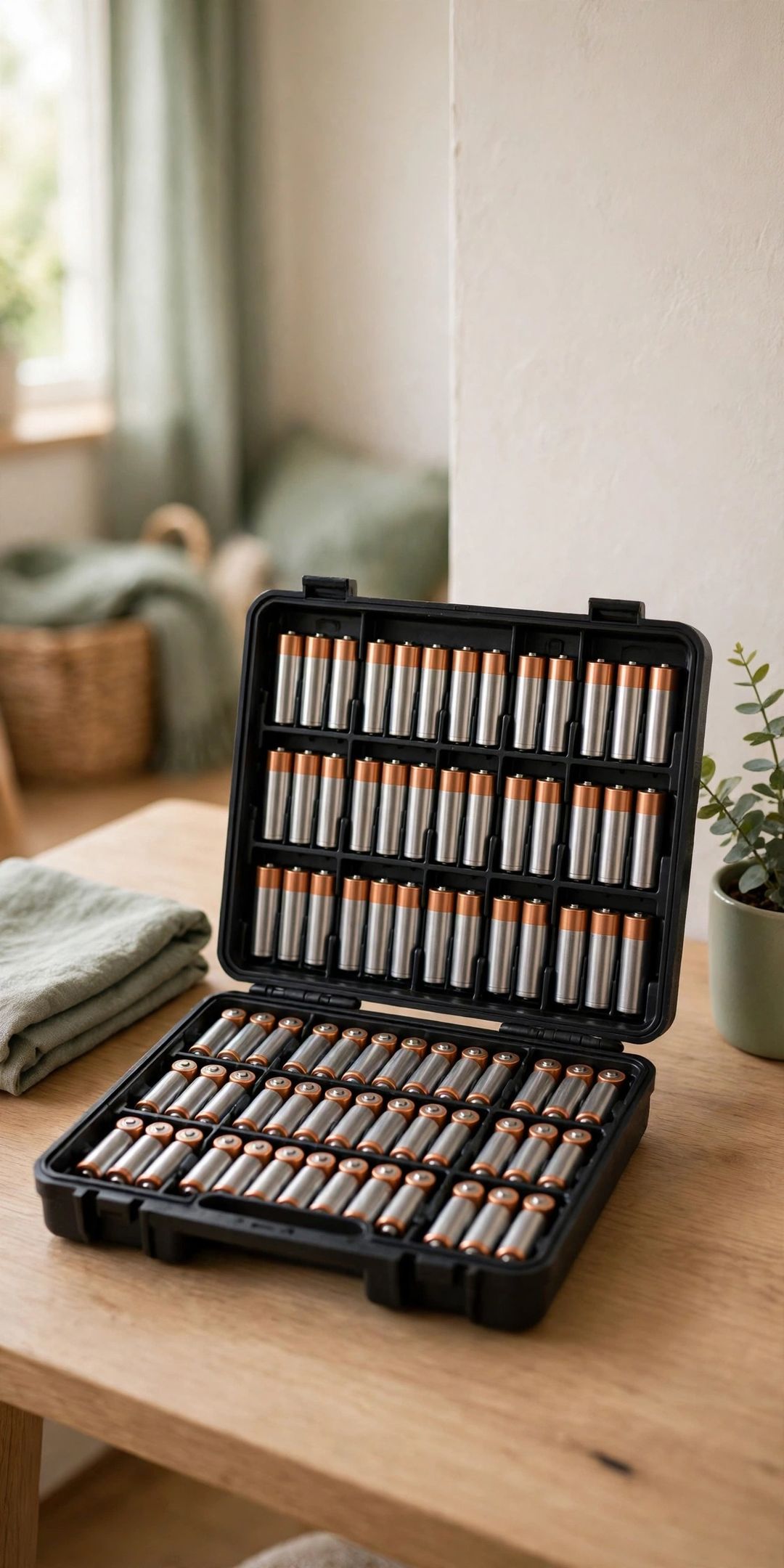
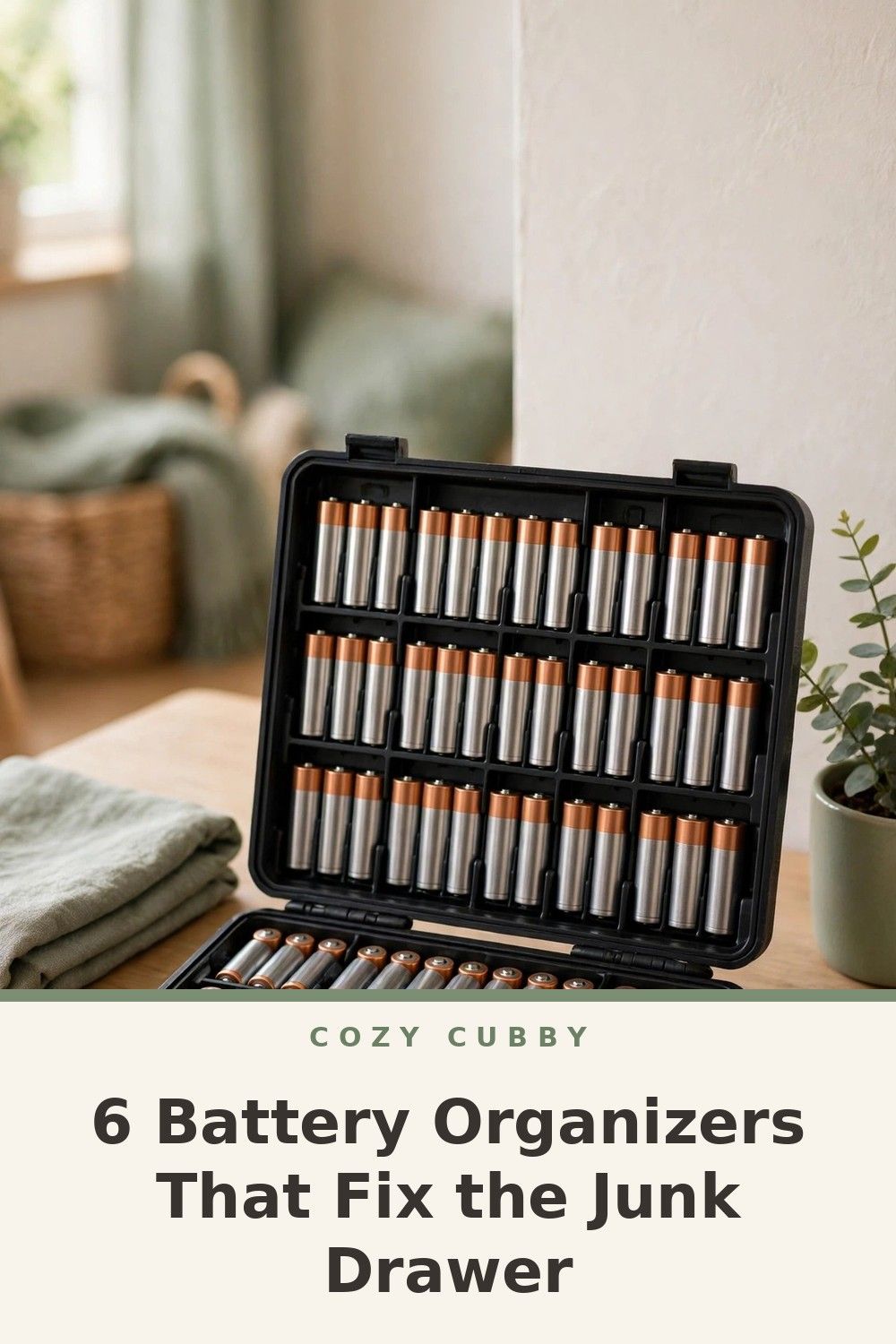
1. Large hard case with built-in tester. Best for a full home stock, this lidded case holds a large mix, often 90 to 180 batteries depending on size mix, in molded slots for AA, AAA, C, D, and 9-volt batteries. The tester sits in the lid or top tray and gives a simple good, low, or replace reading. The drawback is size: a full case is bulky and heavy, so it suits a shelf or cabinet better than a shallow drawer. Typically $25–$40.
2. Compact hard case with tester and hinged lid. Best for apartments and smaller drawers, this case holds a smaller set, commonly 40 to 70 batteries, mostly AA and AAA with a few C, D, or 9-volt spots. The built-in tester works the same way as larger models, without taking shelf space. The drawback is limited room for big batteries and bulk spares, so heavy users will outgrow it fast. Typically $16–$28.
Drawer Trays and In-Drawer Organizers
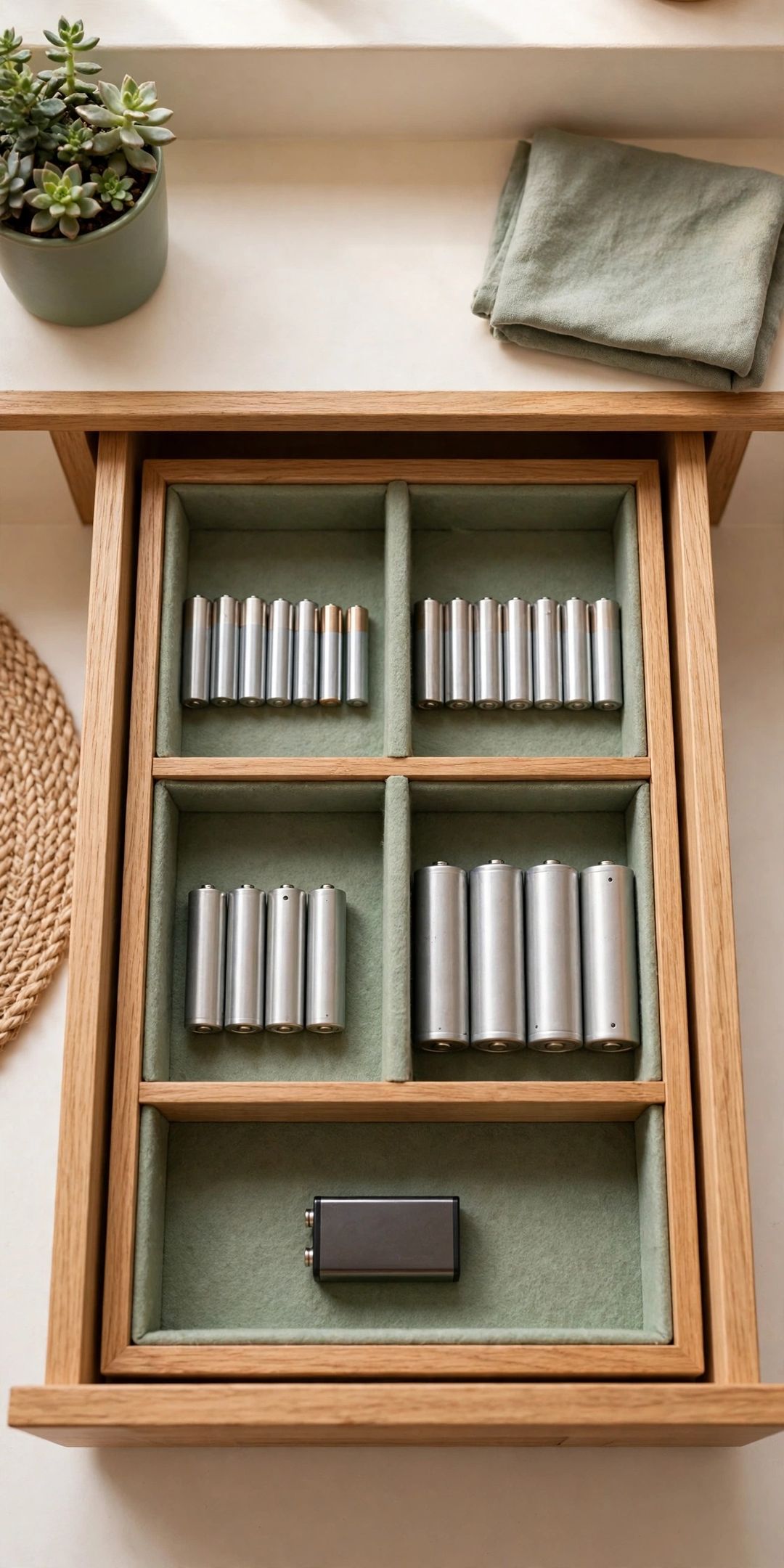
3. Drawer tray organizer with tester slot. Best for the classic junk drawer, this flat tray lays batteries on their sides in rows by size, so the whole stock is visible when the drawer opens. Many trays include a small tester stored in its own slot or built into one end. The drawback is drawer fit: measure depth, width, and height first, because trays that are too tall stop the drawer closing over tall 9-volt batteries. Typically $14–$24.
4. Stackable drawer organizer set with tester. Best for deep drawers and craft or utility cabinets, these trays stack two levels high, with everyday AA and AAA batteries on top and C, D, and spare packs below. A slide-out or clip-in tester is included with most sets. The drawback is access: batteries on the lower level hide under the top tray, so it is easier to forget what is stored below. Typically $20–$34.
Wall-Mount Dispensers and Portable Cases
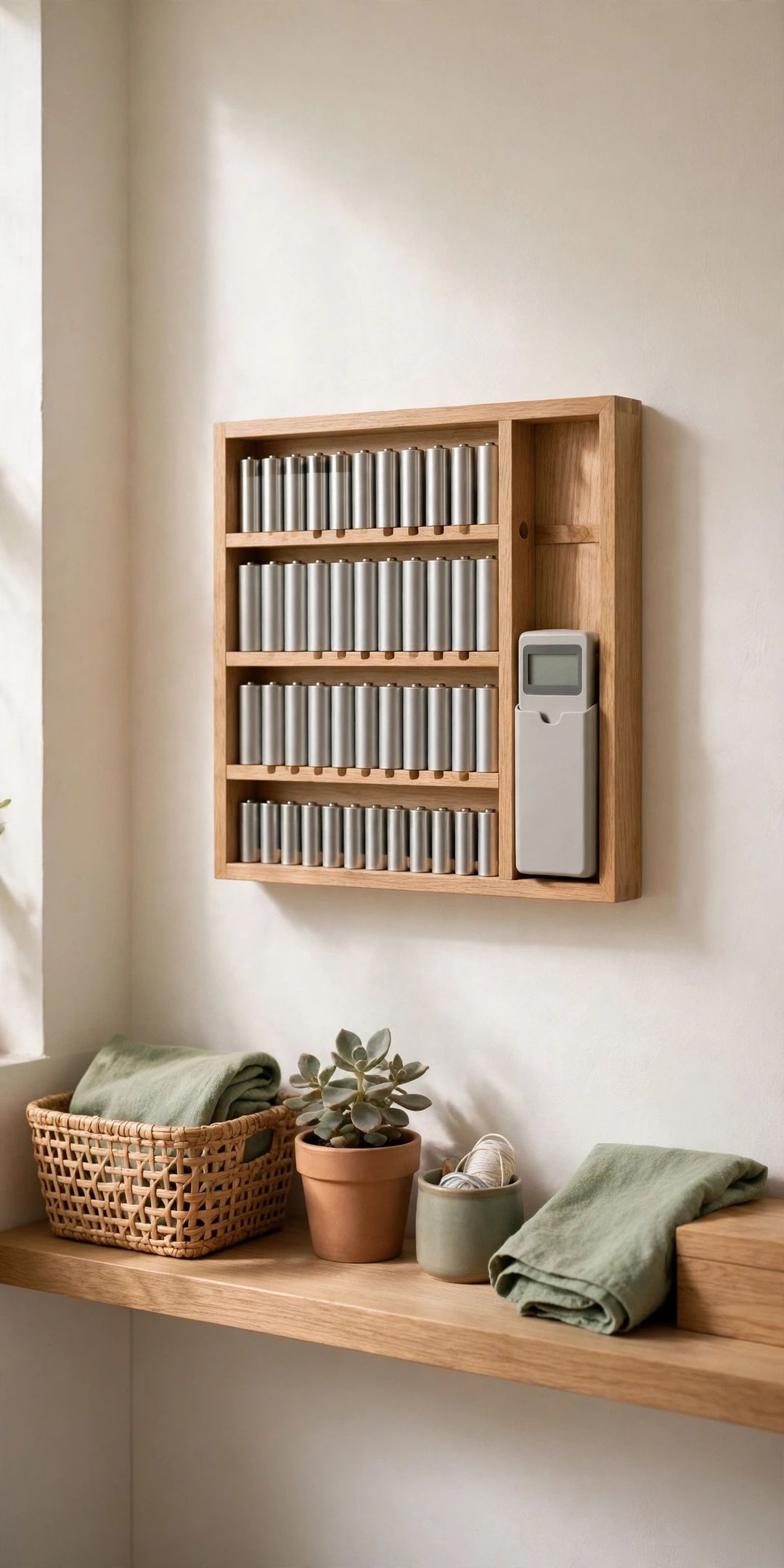
5. Wall-mount battery dispenser with tester. Best for garages, workshops, and laundry rooms, this dispenser mounts on a wall or inside a cabinet door and drops batteries by size into separate slots or channels. A tester is usually built into the front or stored in a side slot, so you can check spares before a job. The drawback is mounting: it needs a flat wall space and screws, and gravity-feed channels can jam if sizes are mixed in one slot. Typically $22–$38.
6. Portable zip case with tester pouch. Best for travel, camera bags, and emergency kits, this soft or semi-hard zip case holds a smaller mix, often 30 to 60 batteries, in elastic loops and mesh pockets. Look for a version with a small tester in its own pouch, since not every zip case includes one. The drawback is protection: soft cases cushion less than hard cases, and loose button cells need their own small pocket to stay safe and sorted. Typically $13–$22.
What to Buy
Large hard case with built-in tester — the best buy for most homes, because it holds every common size in one place and the tester ends the guesswork about dead batteries. Typically $25–$40.
Drawer tray organizer with tester slot — the junk drawer fix, since it keeps batteries flat, visible, and sorted in the drawer you already use. Typically $14–$24.
Wall-mount battery dispenser with tester — the workshop buy, because it clears drawer space and puts spares at eye level where tools are stored. Typically $22–$38.
Portable zip case with tester pouch — the kit buy for travel and emergency bags, where a small, sorted set matters more than total capacity. Typically $13–$22.
Mistakes to Avoid
- Storing loose batteries touching each other. Loose terminals, especially on 9-volt batteries, can short against other batteries or metal in a drawer. Slots, trays, or original packaging keep them apart.
- Mixing new and used batteries. An organizer only helps if dead ones leave. Test spares before storing them, and keep a small spot for used batteries waiting for proper disposal.
- Buying capacity you do not need. A huge case for twenty batteries wastes space. Count your usual stock by size first, then buy the smallest organizer that fits it with a little room to grow.
- Ignoring button cells. Small coin batteries need their own closed slot or pocket, stored out of reach of young children, not loose in a tray section.
- Skipping the size check. Some organizers hold AA and AAA only. If you use C, D, or 9-volt batteries, confirm those slots exist before you buy.
Frequently Asked Questions
How does a built-in battery tester work?
You place the battery in the tester slot or press its contacts to the tester points, matching the positive and negative ends. A simple dial, light, or display shows if the charge is good, low, or ready to replace. It gives a quick guide, not an exact measure of remaining life.
How many batteries should a home organizer hold?
For most homes, space for 40 to 80 batteries across sizes is plenty. Count what you use in remotes, clocks, toys, and flashlights, keep a small spare set for each size, and avoid stocking far more than you will use before they age.
Can rechargeable batteries go in the same organizer?
Yes, but keep charged and uncharged rechargeables apart. Use one row or section for ready-to-use batteries and another for ones waiting to be charged, and label each section so they do not mix.
Where should a battery organizer be stored?
Store it in a cool, dry drawer, cabinet, or shelf away from heat sources and out of reach of young children. Avoid damp garages or bathrooms for long-term storage, and keep the organizer where you can reach the tester easily.
Count your batteries by size, toss the dead ones the tester finds, and give the rest one sorted home instead of a rolling drawer pile. Save this post to your Home Organization board on Pinterest so the capacities and picks are handy when you shop.