Finding the best can organizer for pantry shelves starts with one simple goal: every can visible, with the oldest can used first. Rows of cans stacked two deep on a flat shelf fail both tests, and the back row quietly expires.
Measure first, because cans are less forgiving than boxes. A standard soup or vegetable can is about 3 inches wide and 4 to 5 inches tall, and most pantry shelves are 12 to 16 inches deep. Write down your shelf depth and the height between shelves in inches, then match the organizer to that space, not the other way round.
Gravity-Feed and Rolling
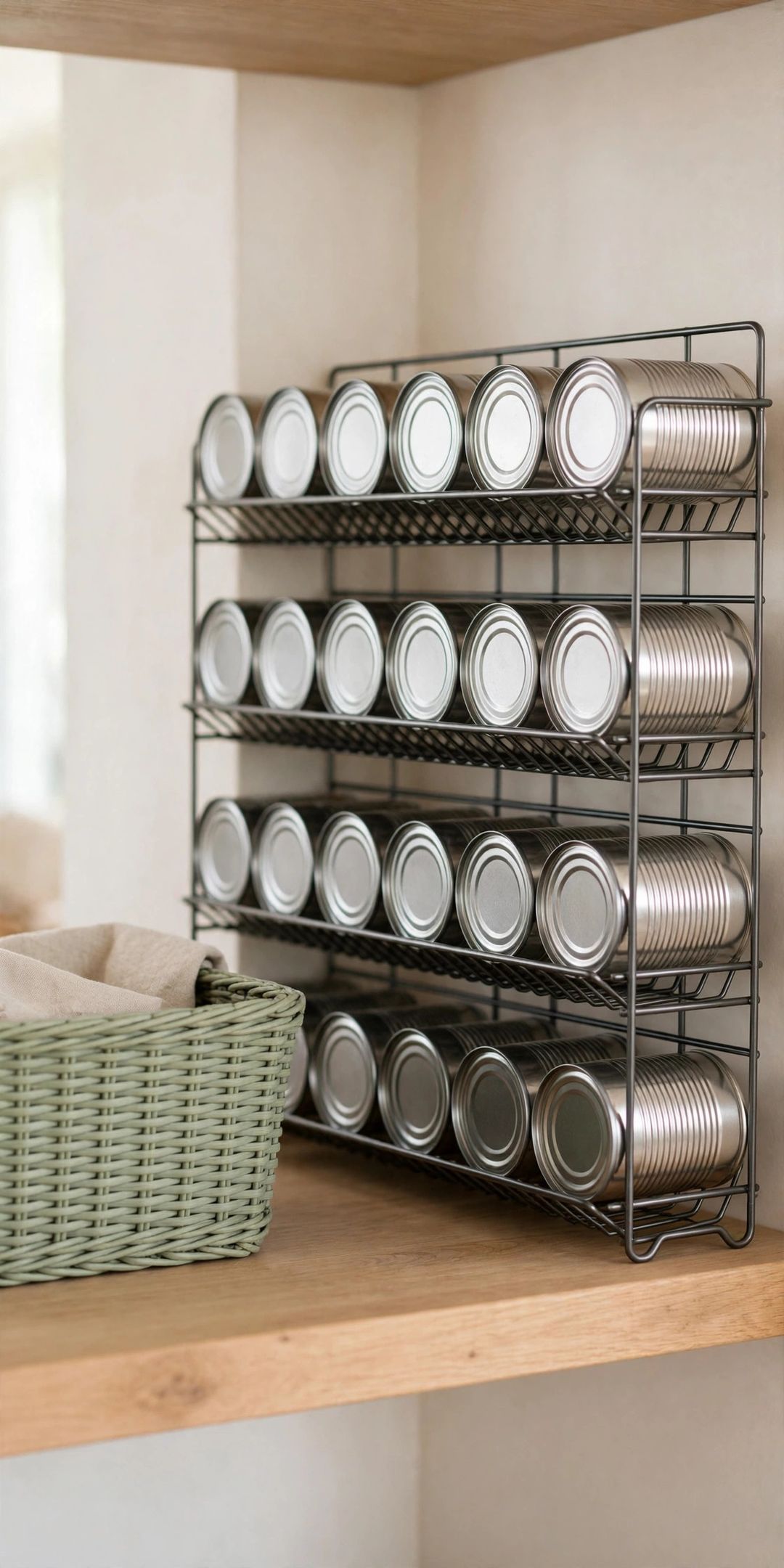
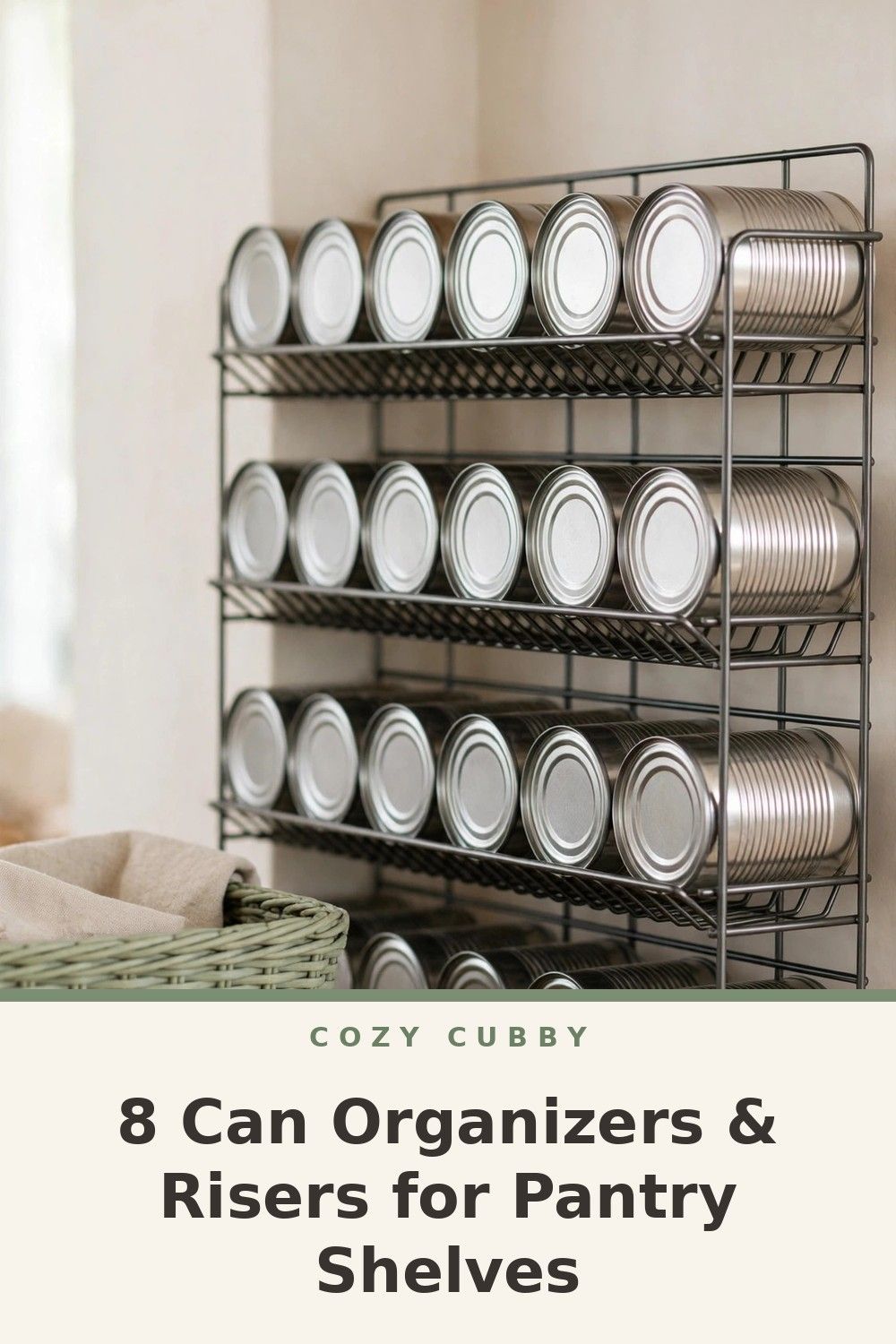
1. Double-row gravity-feed can rack. Best for households that buy the same soups, beans, and tomatoes in bulk, because you load cans from the top and take them from the front, so stock rotates on its own. A typical rack is roughly 16 inches deep, 11 inches wide, and 10 inches tall, and holds about 30 to 36 standard cans. The drawback is height: it needs a tall shelf opening, and it is wasted on pantries with only a few cans of each type. Typically $28–$42.
2. Single-row rolling can dispenser. Best for a narrow slice of shelf beside bigger items, where one rolling row keeps a single type of can in order. Most are roughly 14 inches deep, 4 inches wide, and 5 inches tall, holding about 8 to 10 standard cans that roll forward as you take one. The drawback is capacity: one row per food type means several dispensers, and the cost adds up fast. Typically $14–$22.
3. Stackable gravity-feed rack, set of 2. Best for deep pantry shelves with high clearance, because two racks stack and turn one tall opening into two rolling rows. Each rack is roughly 15 inches deep and 6 inches tall, holding about 12 to 15 cans, so the pair stores close to 30. The drawback is the top rack is hard to load if the shelf above sits close, so leave at least a few inches of loading room. Typically $30–$44.
4. Rolling under-shelf can bin. Best for cans stored on a low shelf or pantry floor, because the whole bin rolls out instead of you kneeling and reaching. A typical bin is roughly 14 by 10 by 5 inches and holds about 12 standard cans in two loose rows. The drawback is there is no real rotation: cans at the back can still sit there for months unless you reload the bin in order. Typically $16–$26.
Tiered Risers and Shelves
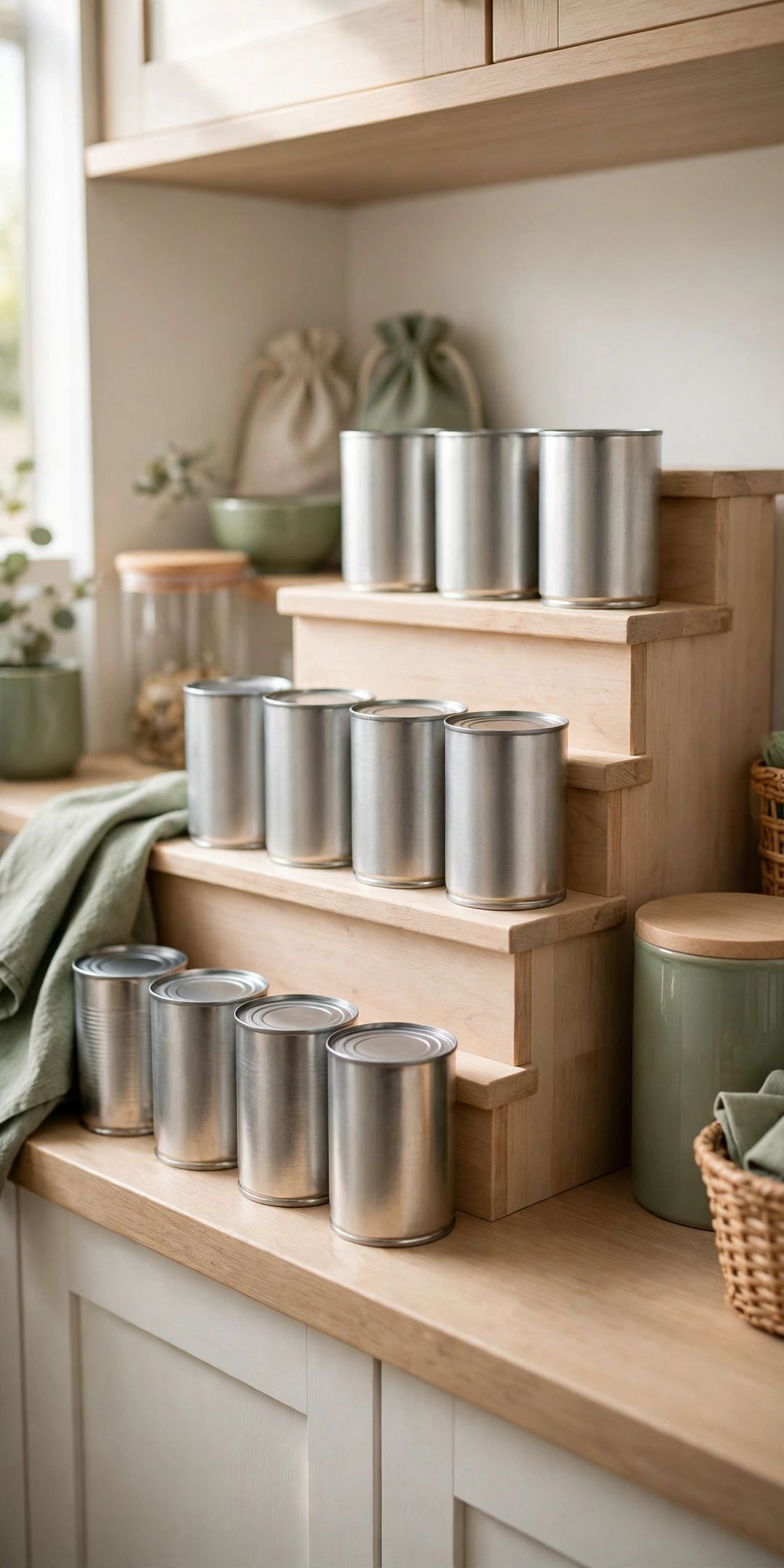
5. Three-tier stepped riser shelf. Best for seeing every label at a glance on a standard pantry shelf, because each row sits about 1.5 inches higher than the one in front. Most risers are roughly 10 inches deep, 12 to 15 inches wide, and 4 to 5 inches tall overall, holding about 12 to 15 cans across three rows. The drawback is the back row still takes a reach, and tall cans on the top step can crowd the shelf above. Typically $15–$24.
6. Expandable tiered shelf riser. Best for shelves that change width, like a rented pantry or a shared cupboard, because the two pieces slide apart from about 13 inches to 24 inches wide. Depth is roughly 10 inches, with three steps that hold about 15 to 20 cans when fully extended. The drawback is the overlap in the middle creates a slightly uneven step, so cans placed right on the seam can wobble. Typically $18–$28.
7. Two-tier turntable can organizer. Best for a deep corner shelf where cans disappear into the back corner, because a spin brings the back row to the front. Most are 12 to 15 inches across, hold about 10 to 14 cans in a single layer, and need a shelf at least as deep as the full diameter. The drawback is wasted space: a round turntable on a square shelf leaves the corners empty, and cans can tip when it spins fast. Typically $16–$26.
8. Clear front-facing can bin with divider. Best for mixed small cans, like tomato paste, tuna, and pet food, that get lost on a big rack built for standard cans. A typical bin is roughly 12 by 6 by 4 inches, holds about 8 to 10 small cans in two short rows, and the clear sides keep the small labels readable. The drawback is size: standard soup cans fit tightly or not at all, so check the inside width before you buy. Typically $12–$20.
What to Buy
Double-row gravity-feed can rack — the best all-round pick for families who buy cans in bulk, because loading from the top and taking from the front keeps the oldest cans moving first. Typically $28–$42.
Three-tier stepped riser shelf — the simplest fix for most pantries, since it needs no loading system at all and makes every label on a standard shelf visible in one look. Typically $15–$24.
Clear front-facing can bin with divider — the pick for small cans that big racks ignore, keeping tuna, paste, and pet food sorted in one pull-forward bin. Typically $12–$20.
Mistakes to Avoid
- Ignoring shelf depth. Many gravity racks are 15 to 16 inches deep, so on a 12-inch shelf they overhang and the pantry door will not close.
- Forgetting the height between shelves. A stacked or gravity-feed rack plus a can on top often needs 10 inches or more of clear opening.
- Mixing can sizes in one rolling row. Wide chili cans and slim tuna cans roll at different speeds and jam the track, so give each size its own row.
- Loading new cans in front. With risers and bins, new cans belong at the back, or the oldest cans sit untouched until they expire.
- Buying a huge rack for a small stock. A 36-can rack half empty wastes shelf space that a simple riser would use far better.
Frequently Asked Questions
How many cans does a standard gravity-feed rack hold?
Most double-row racks hold about 30 to 36 standard cans, roughly 15 to 18 per row. Smaller single-row dispensers hold about 8 to 10. Count your usual stock before buying, so the rack fits your habits, not just your shelf.
Will a can organizer fit on a 12-inch deep shelf?
Tiered risers and clear bins usually will, since most are 10 to 12 inches deep. Many gravity-feed racks will not, because they run 15 to 16 inches deep. Measure the shelf, then check the product depth, including any lip at the front.
Are tiered risers or gravity racks better?
Risers are better for a mix of many can types in small amounts, because every label stays visible. Gravity racks are better when you stock a lot of a few staples, because they rotate stock for you as you load and take cans.
How do I keep cans from expiring at the back?
Use a system where the oldest can is the easiest to take: load gravity racks from the top, and on risers, push older cans to the front when you unload groceries. A quick date check with a marker on the top of each new can helps too.
The right can organizer turns a deep, messy shelf into rows you can read at a glance. Save this post to your pantry organization board on Pinterest, so the sizes and picks are ready before your next pantry reset.