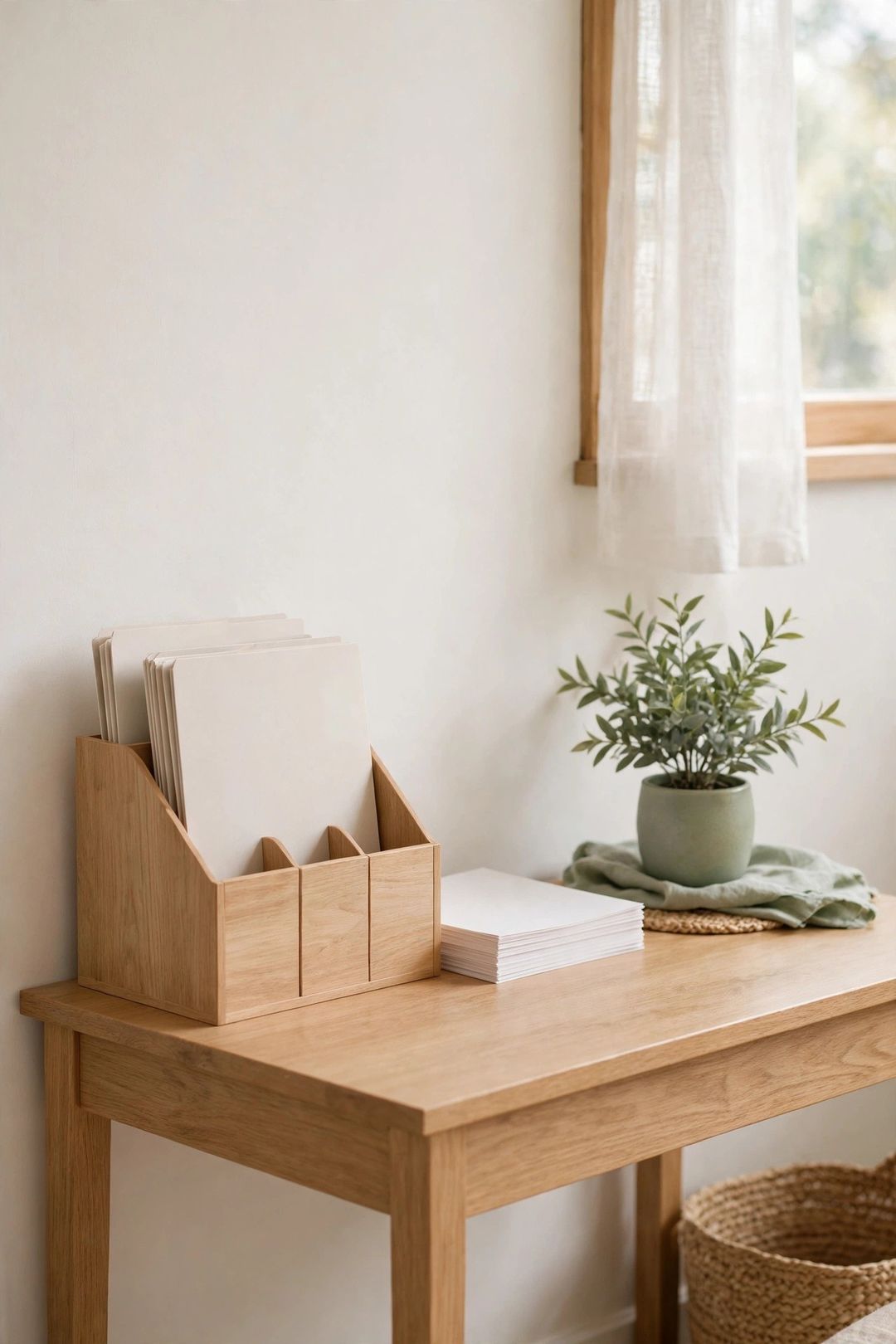
A paper pile is not a storage system. Mail, school forms, bills, and printouts land in one stack, and anything at the bottom is effectively lost. The best desktop file sorter for paper piles breaks that stack into labeled sections, so each type of paper has one obvious place to go the moment it arrives.
Measure first, and sort before choosing. Measure the desk space a sorter can take, in width and depth, and check whether letter-size paper, folders, or a laptop also need to fit in it. Then sort the current pile into rough groups and count them: that count is the minimum number of sections or trays needed. Also check the opening height and depth on each listing. Shallow sections suit daily action papers, while deep, tall sections suit folders and files kept close for weeks.
Upright Slot Sorters
Vertical dividers that hold paper standing up, using the least desk depth for the most sections.
1. Five-section upright metal mesh sorter. Best for a standard action-paper setup, with five stepped sections about 10 to 12 inches wide that hold letter-size paper and standard folders upright, each section visible over the one in front. Mesh sides keep it light and let titles show through. One honest drawback: five sections fill fast in a busy household, and thin mesh can flex under heavy files. Typically $16–$28.
2. Eight-section stepped upright sorter. Best for many paper categories at once, such as bills, school, work, and receipts, with eight graduated slots that keep rear sections visible above the front ones. Most hold letter and legal folders and stand roughly 12 to 14 inches wide. One honest drawback: the wide footprint and tall back section take real desk space, and the rear slots are awkward to reach over a keyboard. Typically $24–$40.
3. Compact three-slot sorter for small desks. Best for tight workspaces and single-purpose piles, with three upright sections in a footprint often under 10 inches wide, sized for letter paper, a notebook, and a planner. It handles an in, out, and pending split without crowding a laptop. One honest drawback: three slots is the ceiling, so any new paper category has nowhere separate to go. Typically $12–$22.
Tiered Trays
Stacked horizontal trays that sort paper by stage, from new arrivals on top to finished papers below.
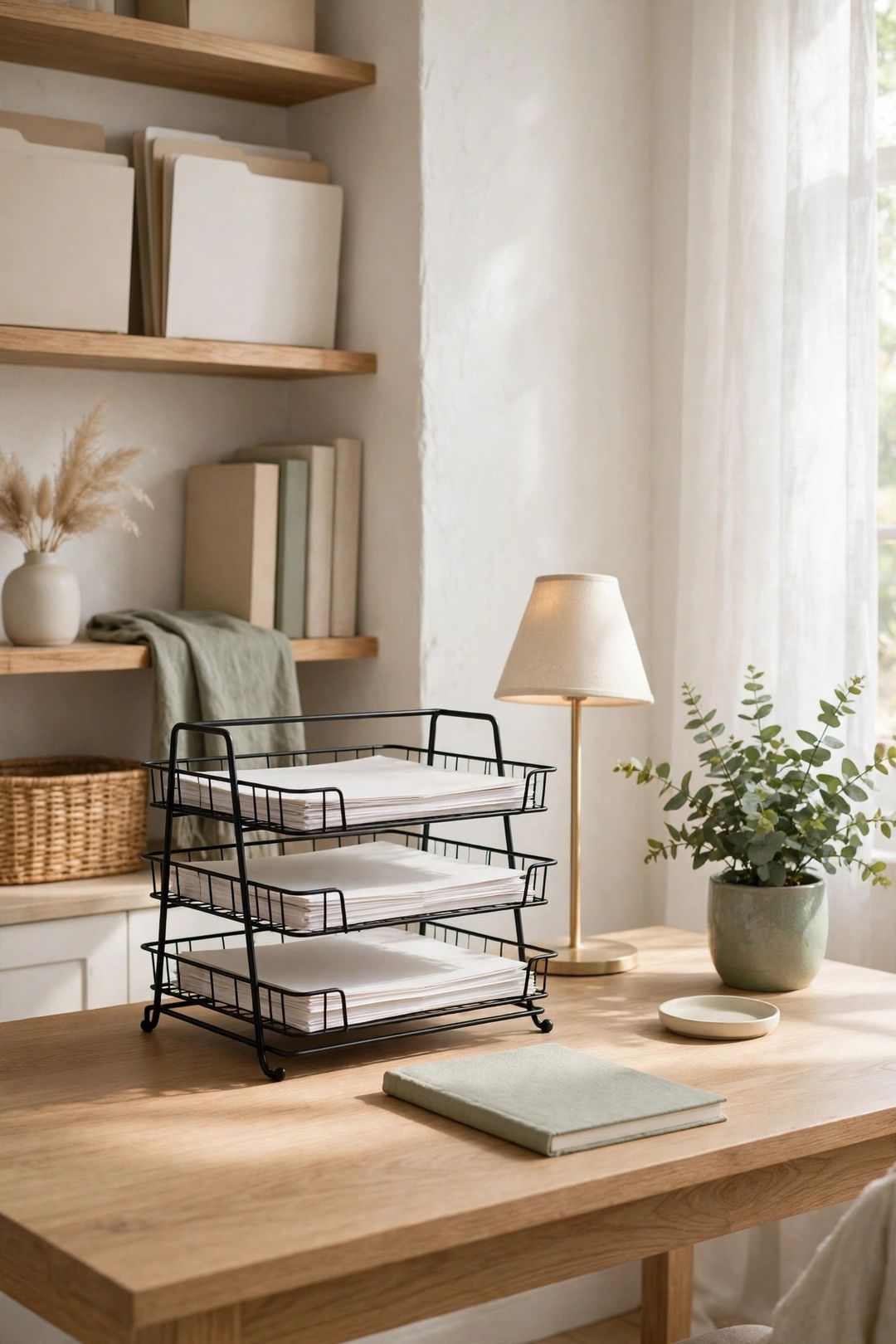
4. Three-tier sliding letter tray stack. Best for paper that moves through stages, with three trays roughly 13 inches long and 10 inches wide for letter paper with margin, each tray sliding out or lifting off for access. Incoming, in-progress, and done is the classic split. One honest drawback: trays hide what is inside, so unlabeled lower trays quietly become new piles. Typically $18–$32.
5. Four-tier slanted tray organizer. Best for high-volume desks, with four angled shelves that tilt papers forward so the front edge of each stack stays visible. The slant makes grabbing the top sheet easier than from a flat stack, and most sizes fit letter and A4 paper. One honest drawback: angled shelves let loose sheets slide forward and spill if overfilled, and four tiers add height that can block a monitor. Typically $26–$44.
6. Tiered tray stack with a small drawer. Best for desks that collect paper plus small clutter, combining two or three letter trays with a shallow drawer for stamps, clips, sticky notes, and chargers. Keeping supplies inside the same unit stops them spreading across the desk. One honest drawback: the drawer is shallow and small, and the whole unit is heavier and harder to move for cleaning. Typically $28–$48.
Pocket-Style Desktop Units
Standing pocket files that lean or mount at the desk edge, keeping paper visible like a wall file without the wall.
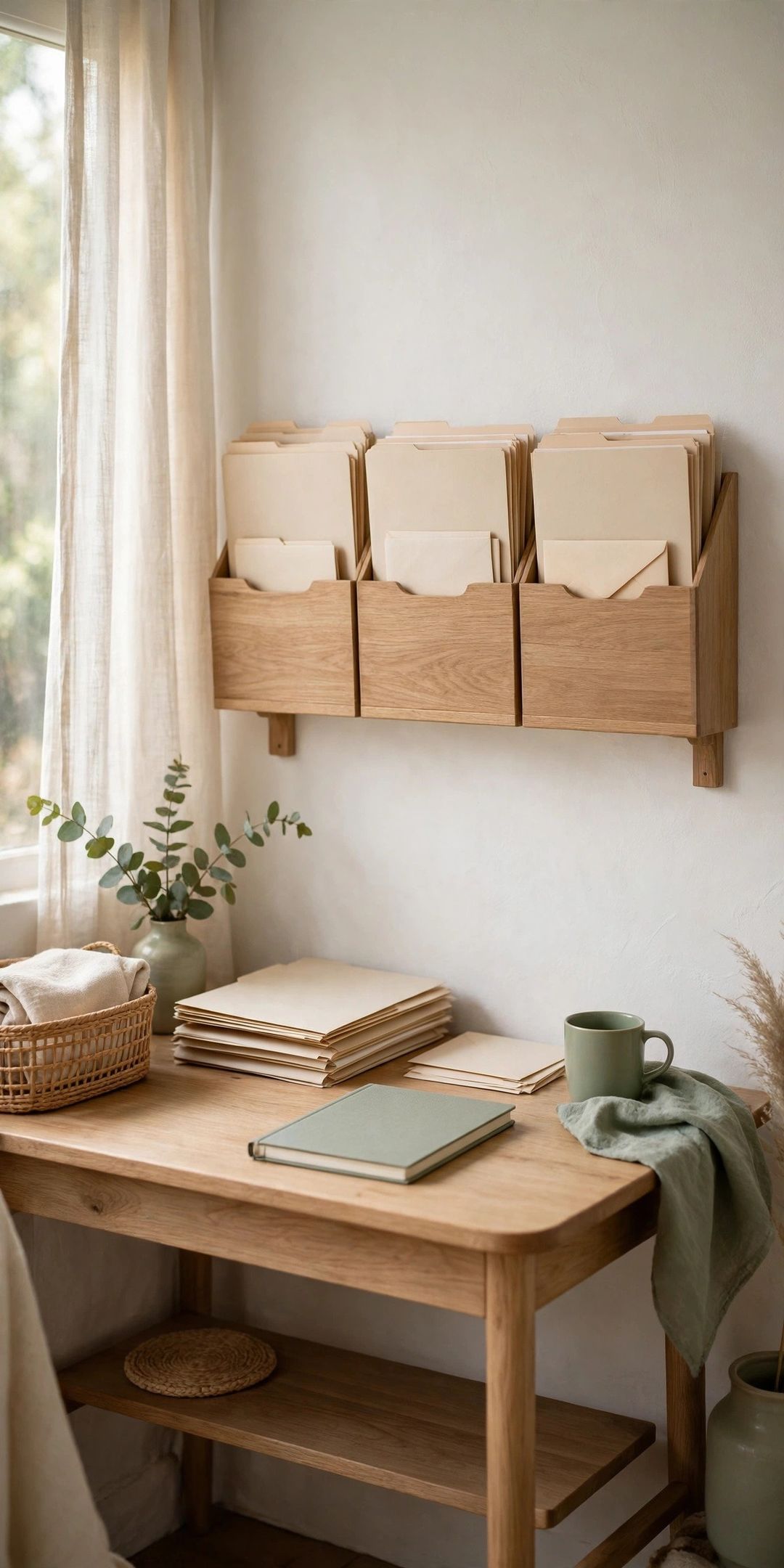
7. Standing cascading pocket file, about 6 pockets. Best for visibility above all else, with six staggered clear or mesh pockets, each holding letter-size paper, folders, or a slim notebook, fanned so every label and top sheet shows at once. It stands on a desk or hangs over a partition hook on some models. One honest drawback: pockets hold limited thickness each, so thick files and catalogs bulge and block the pocket behind. Typically $20–$36.
8. Desktop pocket file with magazine-style holders, set of 4. Best for sorting by project or person, with four upright holders, each roughly 3 to 4 inches wide, lined up on a shared base or used separately around the desk. Each holder takes a project's folder, mail for one family member, or a month of statements. One honest drawback: loose single sheets curl and flop in wide holders without a folder behind them for support. Typically $22–$38.
What to Buy
Five-section upright metal mesh sorter — the best first buy for most paper piles, because five visible sections cover the main household categories in a small footprint. Typically $16–$28.
Three-tier sliding letter tray stack — the key buy for paper that moves through stages, since separate trays keep new, active, and finished papers from mixing back into one stack. Typically $18–$32.
Standing cascading pocket file, about 6 pockets — the right buy when out of sight means forgotten, because every pocket stays visible and nothing sinks to the bottom of a pile. Typically $20–$36.
Mistakes to Avoid
- Buying fewer sections than paper categories. Overflow sections become mixed piles again within weeks. Count the sorted groups first, then buy at least that many slots or trays.
- Skipping the footprint measurement. Wide stepped sorters and four-tier trays can crowd out a laptop or monitor stand. Measure the clear desk area, not the whole desktop.
- Choosing trays without labels. Closed, unlabeled trays hide paper as effectively as a pile does. Each tray needs a clear job, written where it can be seen.
- Mixing action papers with archive files. Old statements stored in the action sorter bury this week's bills. Keep archives in a box or cabinet away from the desk.
- Letting the sorter become the pile. A sorter only works if papers are filed daily and sections are emptied when full. A stuffed slot is a pile standing up.
Frequently Asked Questions
How many sections does a desktop file sorter need?
Start with the sorted pile. Most home desks land on four to six groups: incoming mail, bills to pay, papers to file, school or work papers, and receipts. Buying one or two sections beyond that count leaves room for a new category without starting a side pile.
Are upright sorters or trays better for paper piles?
Upright sorters keep every section visible and suit paper sorted by category. Trays suit paper sorted by stage, such as new, active, and done, but hide contents unless labeled. Desks with forgotten-paper problems usually do better with visible upright or pocket styles.
Will a desktop sorter fit legal-size folders?
Some will, and many will not. Letter-size sections are typically about 10 to 12 inches wide, while legal folders need roughly 15 inches of length or width depending on orientation. Checking the stated paper size on the listing matters more than overall product dimensions.
Where should a file sorter sit on the desk?
Within arm's reach of the chair, on the side where paper naturally lands, usually beside the door-side edge or next to the computer. A sorter placed across the room gets skipped, and the pile restarts on the nearest flat surface instead.
One sorted afternoon clears the pile, but the right sorter is what stops it coming back. Save this post to your Home Office Organization board on Pinterest so the section counts and size checks are handy before ordering.