Keys land on the nearest flat surface, mail piles up beside them, and the morning search begins. A landing zone fixes that by giving every item one clear home right inside the door. The best key and mail organizer entryway setup is the one that matches the wall space, counter space, and mail volume in the home, not the one with the most hooks in the photo.
Start with a quick count. How many sets of keys need a hook? How much mail arrives in a week, and how much of it is junk that can go straight to recycling? Measure the wall beside the door, including how far the door swings open. An organizer that blocks the door or crowds a light switch will annoy everyone daily. The picks below are grouped by how they install and where they sit, so it is easy to match one to a real entryway.
Wall-Mounted Picks That Clear the Counter
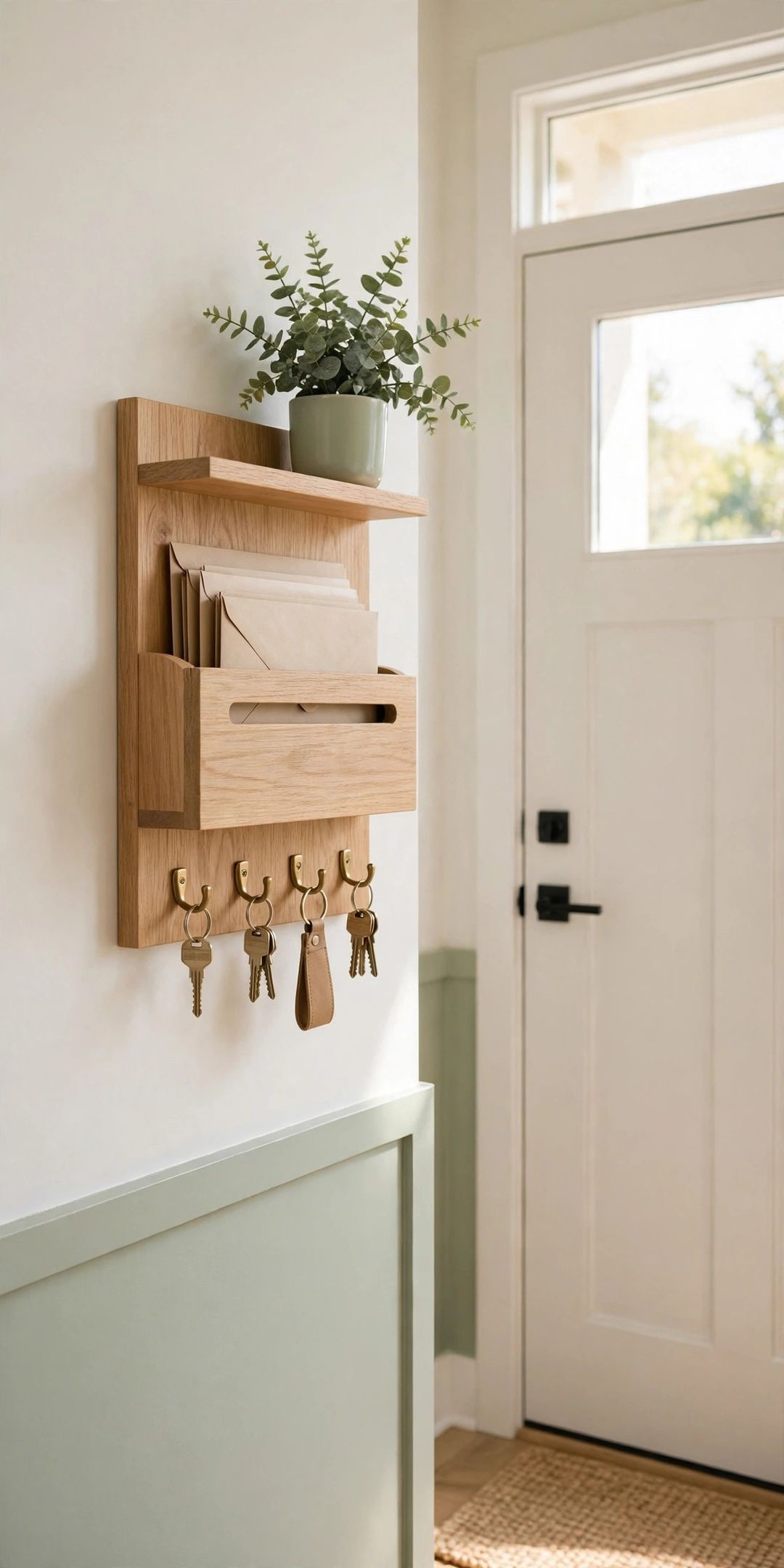
1. Wall-mounted rack with key hooks and an open mail slot. Best for most homes, this classic style combines a row of 4 to 6 hooks below a single open slot that holds letters upright. Most versions run about 12 to 16 inches wide and fit on the wall beside a door. The open slot makes mail easy to drop in and flip through. The drawback is capacity: a bulky week of catalogs and packages will overflow it fast. Typically $18–$35.
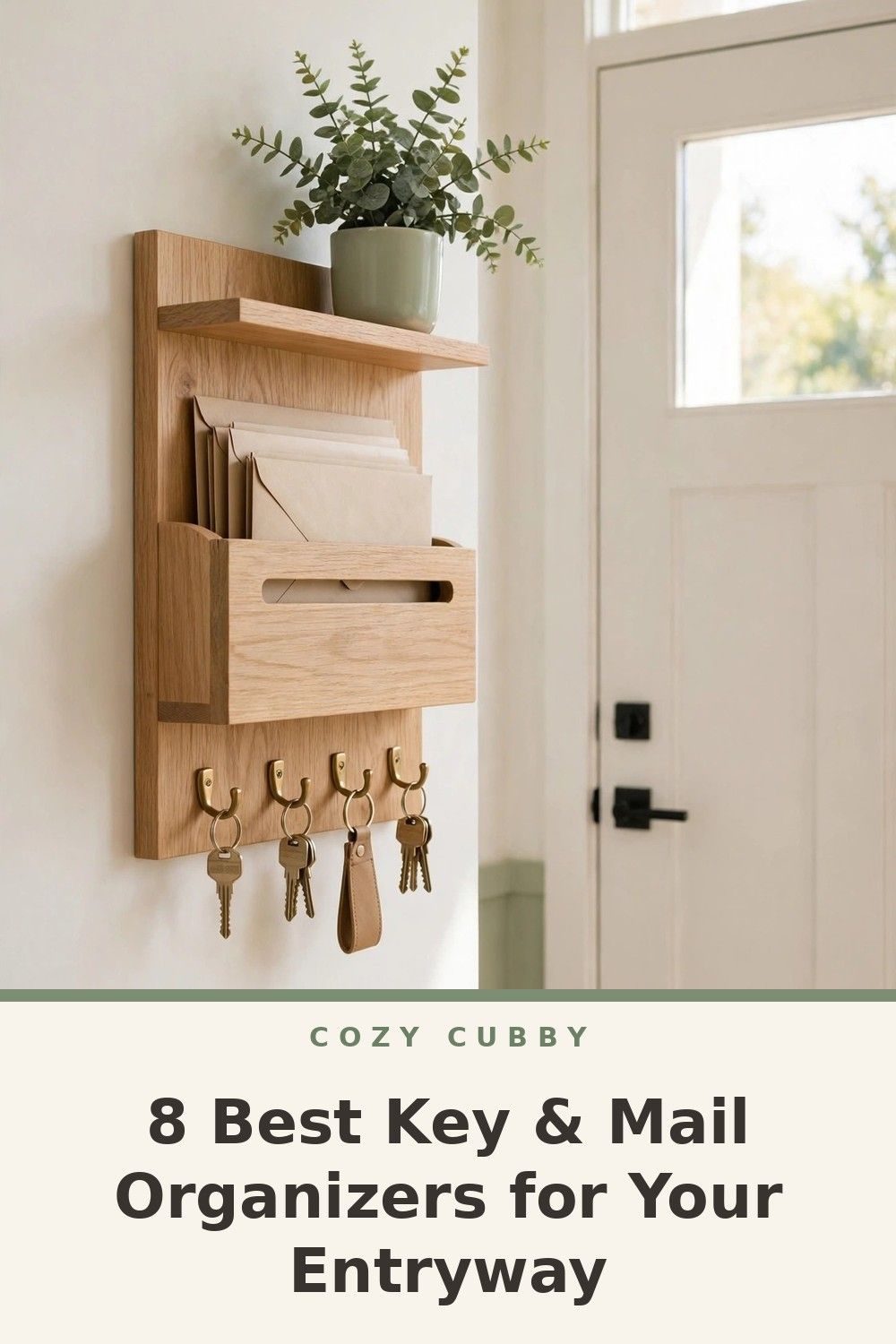
2. Shelf-and-hooks organizer with a top ledge. Best for households that drop more than keys, this style adds a shallow shelf, often 4 to 5 inches deep, above the hooks and mail slot. Sunglasses, a wallet, and a small plant can sit on top while keys hang below. It holds more daily items in the same wall space. The drawback is depth: in a narrow hallway, even a shallow shelf can catch shoulders and bags as people pass. Typically $28–$50.
3. Two-tier vertical mail sorter with hooks below. Best for high mail volume, this tall, narrow style stacks two or three letter slots above a hook rail. Slots can separate incoming mail, mail to send, and papers to file. Most are about 10 to 14 inches wide but 16 to 20 inches tall, so wall height matters more than width. The drawback is that lower slots can hide small envelopes behind larger ones if the sort does not happen weekly. Typically $25–$45.
Tabletop Picks for Counters and Consoles
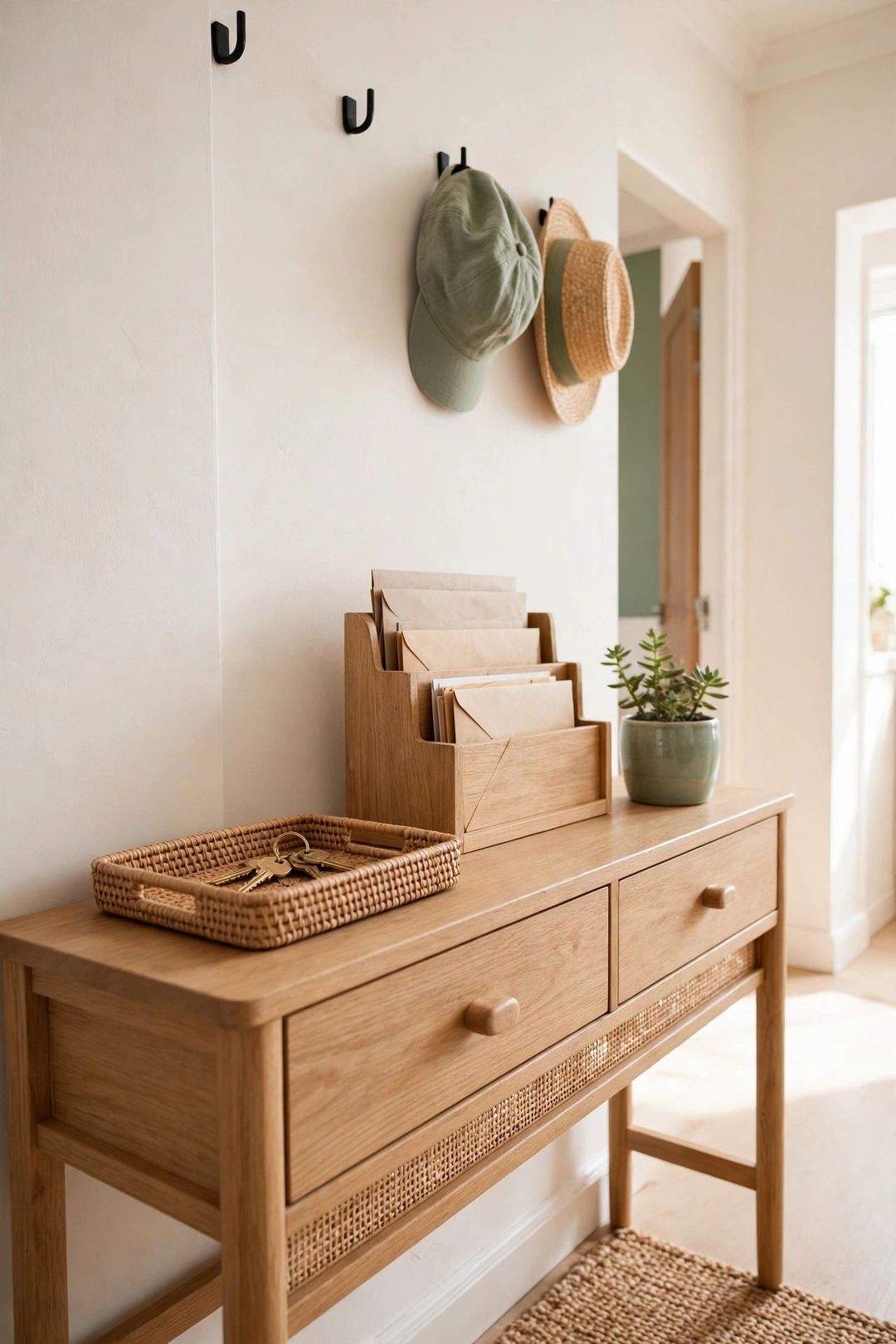
4. Tabletop sorter with divided mail slots and a key tray. Best for an entry console or kitchen counter edge, this freestanding style has two or three upright dividers for mail plus a flat tray or small drawer for keys. No wall mounting is needed, and it can move in minutes. The drawback is footprint: it takes up surface space that a small entry may not have to spare. Typically $20–$38.
5. Small entry cabinet with a door and interior hooks. Best for a tidy, closed look, this box-style organizer hides keys on hooks inside a shallow cabinet, often 3 to 4 inches deep, with a mail slot or basket on top. It keeps clutter out of sight and dust off keys. The drawback is habit: if the door stays open or keys land on top instead of inside, the system stops working. Typically $30–$55.
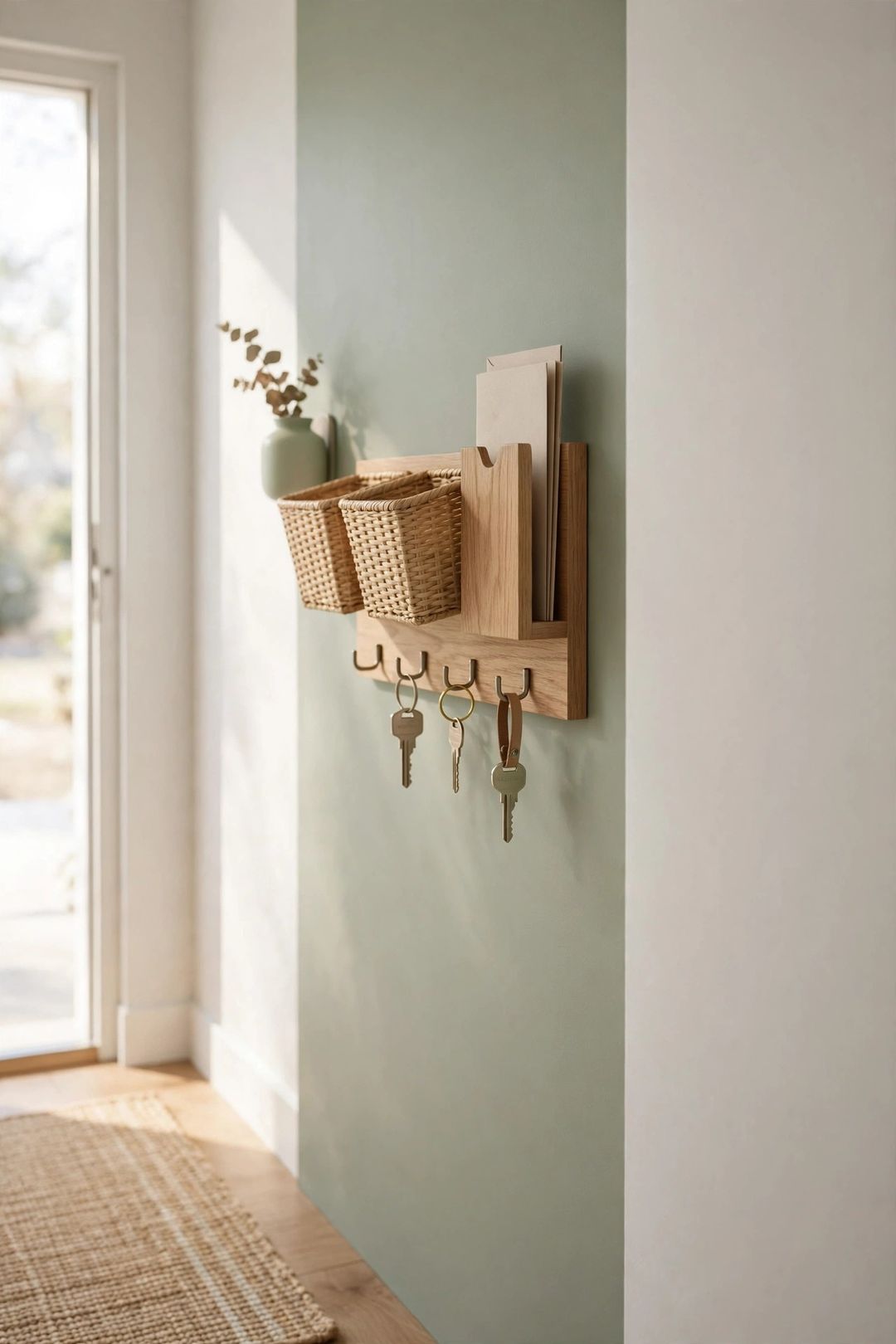
6. Basket-and-hook combo set. Best for a flexible setup, this paired style uses a wall or tabletop wire basket for mail and a separate small hook strip for keys. Each piece can sit where it fits best, even on different walls. Baskets hold odd sizes, from magazines to small parcels. The drawback is that an open basket looks messy faster than a slot, and small keys can slip through wide wire gaps if they are tossed in too. Typically $16–$32.
No-Drill and Renter-Friendly Picks
7. Adhesive hook rail with a hanging mail pocket. Best for renters, this no-drill style sticks to a smooth wall or the back of a door with removable adhesive strips. A fabric or clear pocket holds mail below 3 to 5 small hooks. It installs in minutes and leaves no holes. The drawback is weight limits: heavy key rings and overstuffed pockets can pull strips loose, especially in heat or humidity. Typically $12–$24.
8. Over-the-door hook rail with an attached mail basket. Best for entries with no free wall at all, this style hangs over a closet or entry door on flat hooks that need no tools. The basket keeps mail off the floor, and hooks hold keys, lanyards, and dog leashes in one line. The drawback is door fit: thick hooks can stop some doors from closing fully, and items swing and rattle when the door moves. Typically $15–$28.
What to Buy
Wall-mounted rack with key hooks and an open mail slot — the best first buy for most homes, because it clears the counter, costs the least to set up well, and handles daily mail for one or two people. Typically $18–$35.
Two-tier vertical mail sorter with hooks below — the best buy for busy households, since separate slots stop bills, school papers, and outgoing mail from mixing into one stressful pile. Typically $25–$45.
Adhesive hook rail with a hanging mail pocket — the best buy for renters, because it builds a full landing zone with zero holes and can move to the next home. Typically $12–$24.
Mistakes to Avoid
- Mounting behind the door swing. Hooks and baskets placed there get hit daily and can damage the wall or the door.
- Buying too few hooks. Count keys, leashes, lanyards, and guest keys before choosing; a rail that is full on day one will overflow by week two.
- Skipping a junk-mail exit. Place a small recycling bin or shredder near the landing zone so junk mail never enters the sorter at all.
- Letting the sorter become storage. Coupons from last season and old receipts need a weekly clear-out, or the organizer just hides the pile.
- Ignoring door and switch clearance. Measure around light switches, thermostats, and trim before drilling or sticking anything to the wall.
Frequently Asked Questions
Where should a key and mail organizer go?
Place it on the wall or surface reached first when entering, at a comfortable height for all adults in the home. If reaching it takes extra steps, keys and mail will land somewhere else instead.
How can a landing zone work with no entryway at all?
Use the wall behind the front door or the side of a nearby cabinet. A slim adhesive rail or a small tabletop sorter on the nearest counter can create a landing zone in less than a foot of space.
What size mail slot is big enough?
Look for a slot at least 12 inches wide and 3 to 4 inches deep for standard letters and most magazines laid flat or upright. Oversized catalogs and small parcels will still need a basket or bin nearby.
How often should the mail sorter be emptied?
A quick sort once a week keeps most systems working. Toss junk on arrival, act on bills within the week, and file or recycle the rest so slots stay ready for new mail.
A landing zone only has to do one job well: catch keys and mail in the same place, every time. Pick the style that fits the wall and the routine, and the morning key hunt ends. Save this post to an entryway organization board on Pinterest so the picks and sizes are easy to find before shopping.