When closet floors and entryway racks are full, the back of a door is often the only storage space left. The best over door shoe organizer for a home depends on shoe sizes, door fit, and how visible the pairs need to stay, not just on how many pockets the listing counts.
Measure first, before choosing a style. Most interior doors are about 1.4 inches thick and need hooks that fit that thickness without blocking the frame, plus roughly 2 to 3 inches of clearance between the door top and the frame so the door still closes. Check shoe length too: deep pockets suit sneakers and boots, while shallow pockets suit flats and sandals. Note whether the door swings fully or sits near a wall, since bulky organizers need swing room.
Clear-Pocket Organizers for Easy Visibility
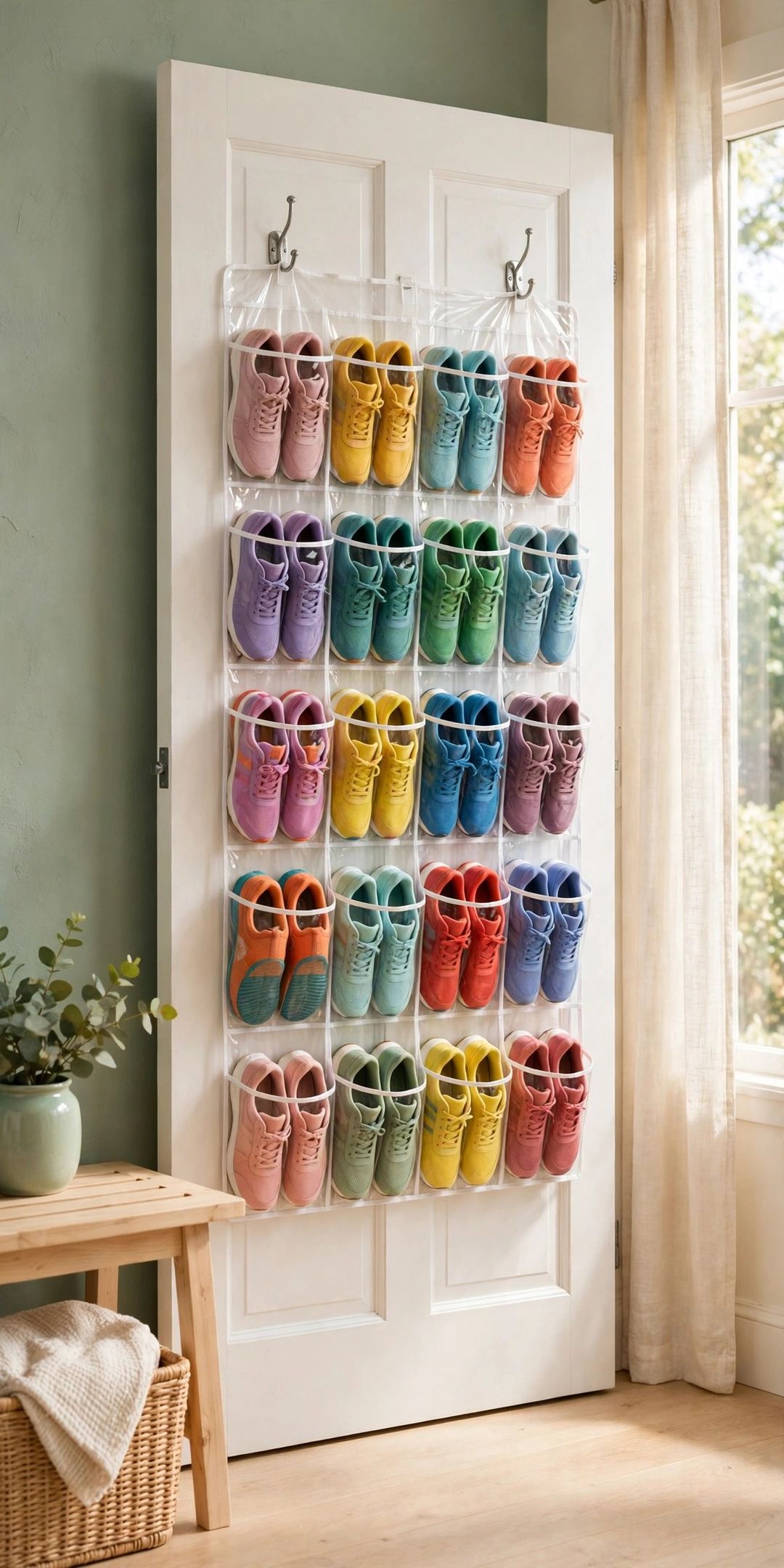
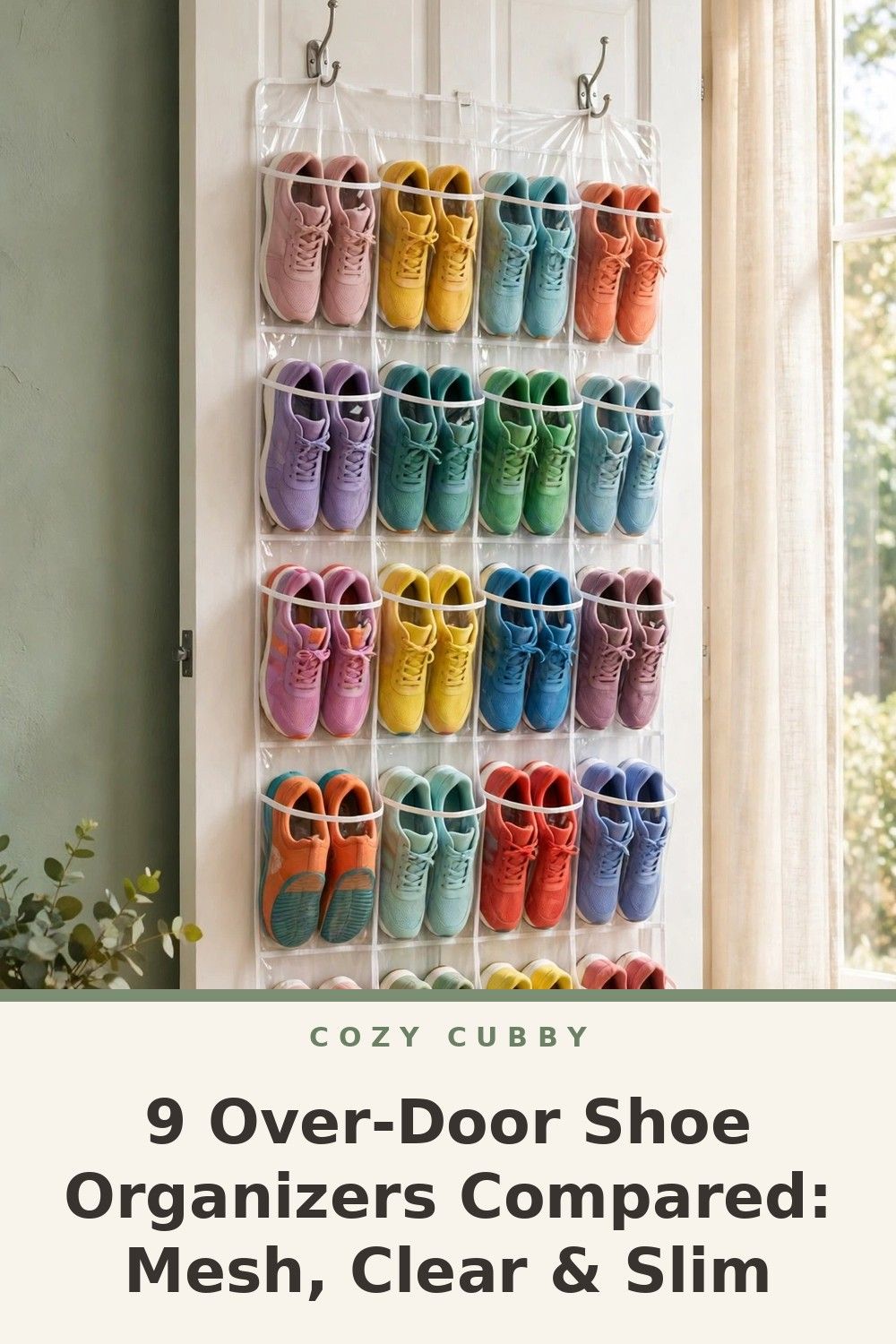
1. Clear plastic pocket organizer, 24 pockets. Best for everyday family shoes, this classic style holds about 12 pairs of standard sneakers or flats in see-through pockets, usually on 4 metal hooks. Clear fronts make pairs easy to spot fast. One honest drawback: plastic pockets can tear at the seams under heavy boots. Typically $12–$22.
2. Clear pocket organizer with extra-deep pockets, 16 pockets. Best for larger shoes, this version holds about 8 pairs, with each pocket sized for chunky sneakers, low boots, or men's larger sizes that squeeze standard pockets. Hooks are usually wider-set for stability. The drawback is capacity: fewer, bigger pockets mean fewer total pairs per door. Typically $16–$28.
3. Clear sleeve organizer for kids' shoes, 20 to 24 pockets. Best for small sizes, these shorter pockets hold about 10 to 12 pairs of kids' shoes, sandals, and ballet flats that get lost in adult-size pockets. Lighter hooks suit lightweight loads. The drawback: children outgrow the pocket size quickly, so this style has a shorter useful life. Typically $10–$18.
Mesh & Fabric Organizers for Airflow
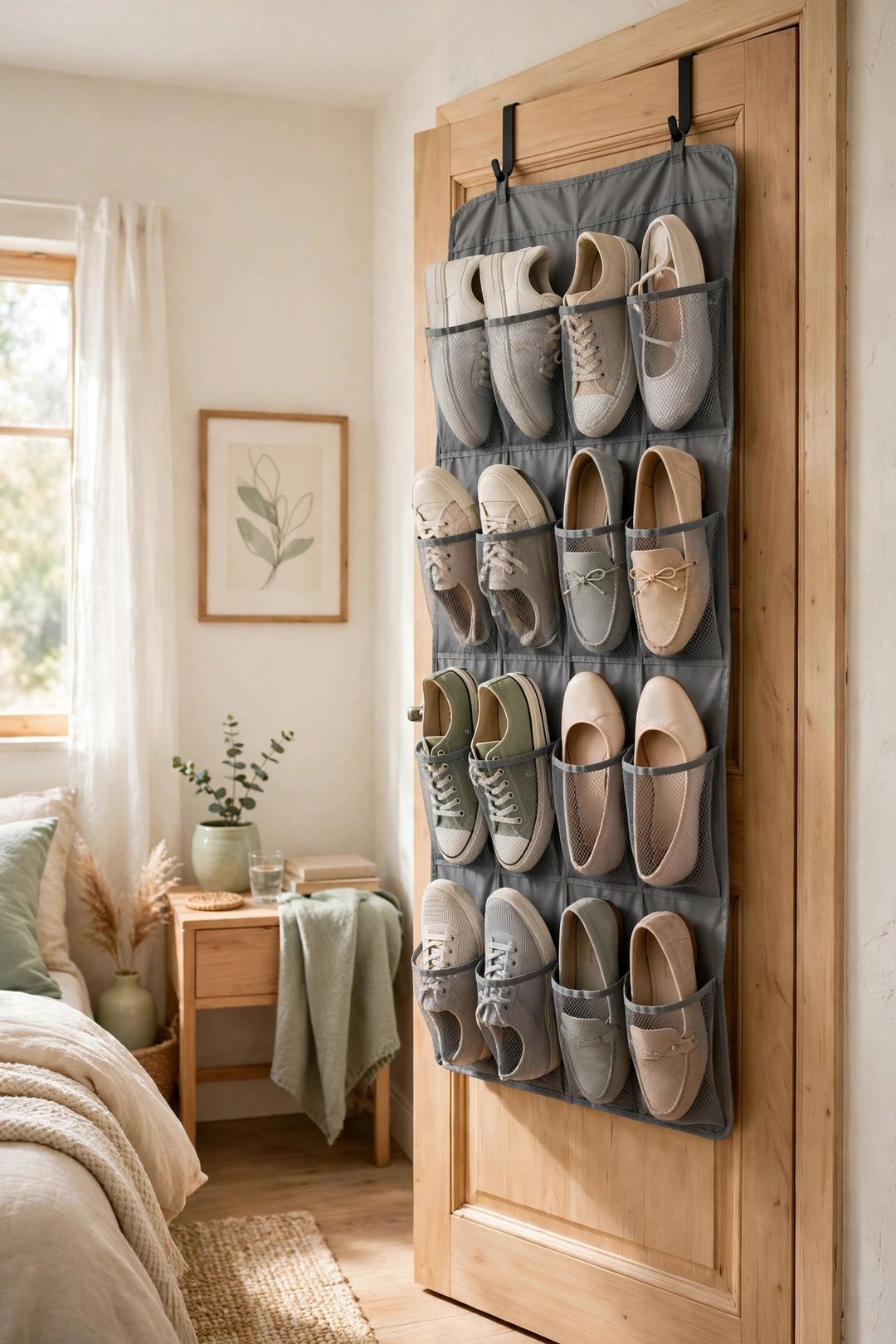
4. Mesh pocket organizer, 24 pockets. Best for gym shoes and everyday sneakers that benefit from airflow, this breathable style holds about 12 pairs and lets damp shoes dry between wears. Mesh fronts still show colors and shapes for quick picking. The drawback: mesh stretches over time, so pockets can sag with heavy pairs. Typically $14–$24.
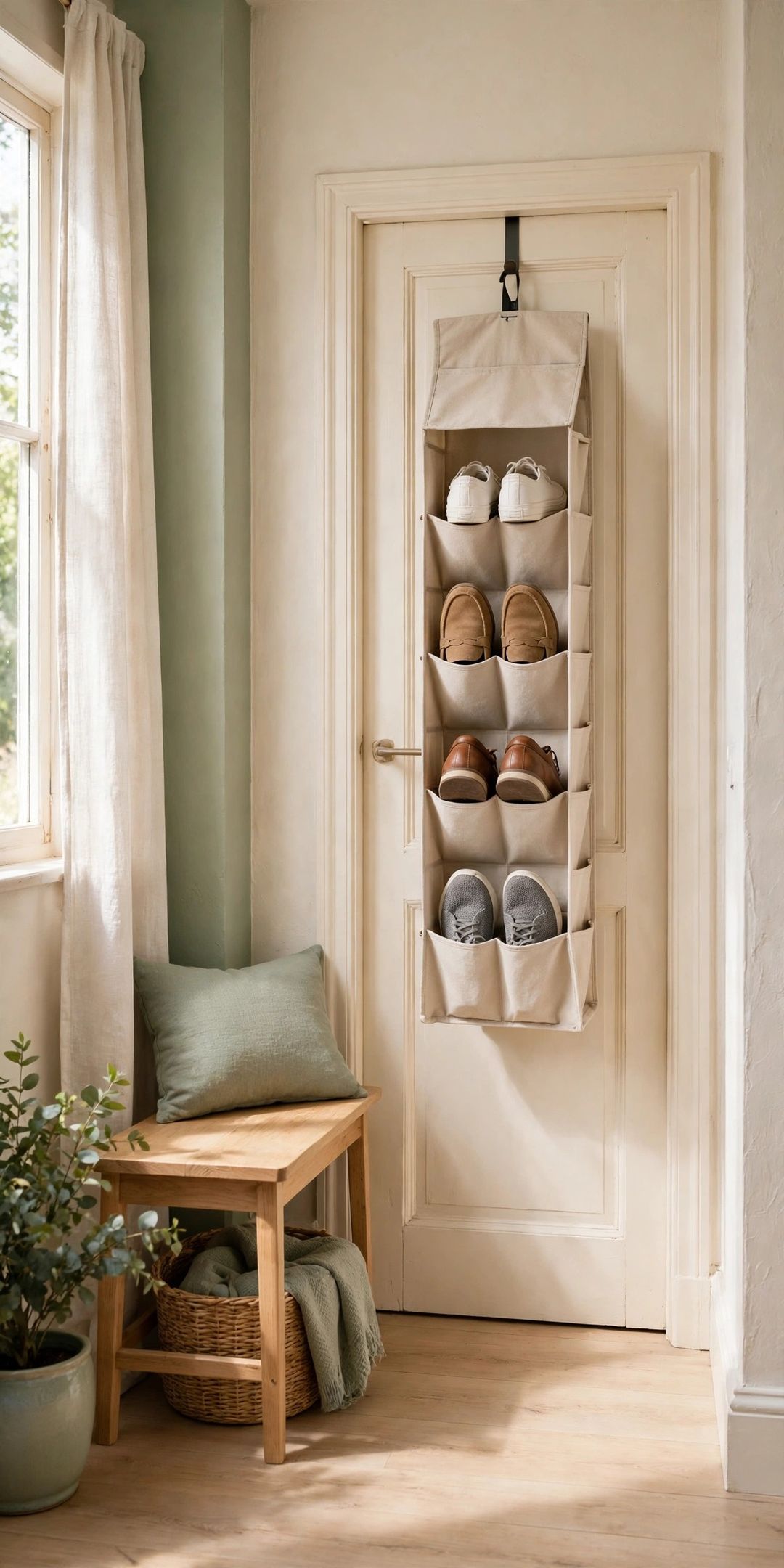
5. Fabric pocket organizer with reinforced pockets, 20 pockets. Best for a neater look on bedroom doors, this style holds about 10 pairs in sturdy fabric pockets that hide scuffs and dust better than clear plastic. Reinforced stitching helps pockets hold their shape. The drawback: contents are hidden, so finding a pair takes a quick scan of labels or memory. Typically $18–$30.
6. Hanging fabric shelf organizer with open cubbies. Best for shoes that do not suit pockets, this shelf style offers 8 to 10 open cubbies, each holding 1 pair, for about 8 to 10 pairs total, including low heels and ankle boots. Open fronts allow fast in-and-out use. The drawback: it hangs deeper than pocket styles and needs more door swing clearance. Typically $20–$35.
Slim Racks & Specialty Styles
7. Slim over-door metal rack, 3 to 4 tiers. Best for a flat, low-profile fit, this rack holds about 9 to 12 pairs on angled bars and sits close to the door, suiting closets where pockets would bulge. Hooks usually include pads to reduce noise. The drawback: open bars let small heels slip through, and assembly takes longer than hanging pockets. Typically $28–$45.
8. Over-door rack with adjustable hooks for boots. Best for taller footwear, this rack uses spaced bars or tall hooks to hold about 6 to 8 pairs, including mid-calf boots that crush in pockets. Adjustable spacing fits mixed heights on one door. The drawback: boot weight makes the door noticeably heavier to swing and close. Typically $30–$50.
9. Slim rotating or double-sided hook organizer. Best for very tight spaces, this narrow style holds about 6 to 10 pairs on hooks along both sides of a slim frame, fitting pantry or laundry doors where a full-width organizer will not. The drawback: hooks hold fewer pairs neatly, and crowded hooks make shoes rub together. Typically $22–$38.
What to Buy
Clear plastic pocket organizer, 24 pockets — the best first buy for most homes, because clear fronts, about 12 pairs of capacity, and a low price solve the everyday shoe pile fast. Typically $12–$22.
Mesh pocket organizer, 24 pockets — the best buy for active households, since breathable pockets help gym and school shoes dry between wears while still holding about 12 pairs. Typically $14–$24.
Slim over-door metal rack, 3 to 4 tiers — the best buy for tight closets, because the flat profile closes cleanly in small spaces and angled bars keep pairs separated. Typically $28–$45.
Mistakes to Avoid
- Skipping the door measurement. Hooks sized for thick doors wobble on thin ones, and a door that will not close makes any organizer useless.
- Overloading the top pockets. Heavy boots stored high strain hooks and seams. Keep the heaviest pairs in the lowest pockets or on a rack.
- Ignoring swing clearance. Deep cubbies and full racks need room to swing. Test the door fully open and closed before filling every pocket.
- Mixing wet shoes with dry storage. Damp pairs need airflow first. Let shoes dry, or choose mesh, so moisture and odor do not build up in closed pockets.
- Counting pockets instead of pairs. One pair often takes two pockets in standard styles. Check the pair count, not just the pocket count, before buying.
Frequently Asked Questions
How many pairs does an over-door organizer hold?
Most pocket styles hold about 8 to 12 pairs, because one pair usually fills two pockets. Deep-pocket and rack styles hold fewer pairs, often 6 to 10, but fit larger shoes and boots that standard pockets cannot handle comfortably.
Will an over-door organizer damage the door?
Most styles hang from padded metal hooks and cause little wear when sized correctly. Felt pads on hooks, avoiding overloads, and lifting the door slightly if it sags help protect the frame and keep the door closing smoothly.
What shoes should not go in pocket organizers?
Tall boots, heavy work boots, and shoes with sharp or wide heels suit racks or cubbies better than pockets. Pockets work best for sneakers, flats, sandals, and kids' shoes that match the pocket depth without forcing the seams.
How can door banging and noise be reduced?
Choose hooks with padding, add small adhesive pads where the organizer meets the door, and avoid overfilling the lowest pockets. A rack or organizer that sits flat against the door will also swing more quietly than a loose, bulky one.
The right door organizer turns unused space into a full shoe station without taking a single inch of floor. Save this post to your shoe storage board on Pinterest so the sizes and picks are handy when you measure and shop.