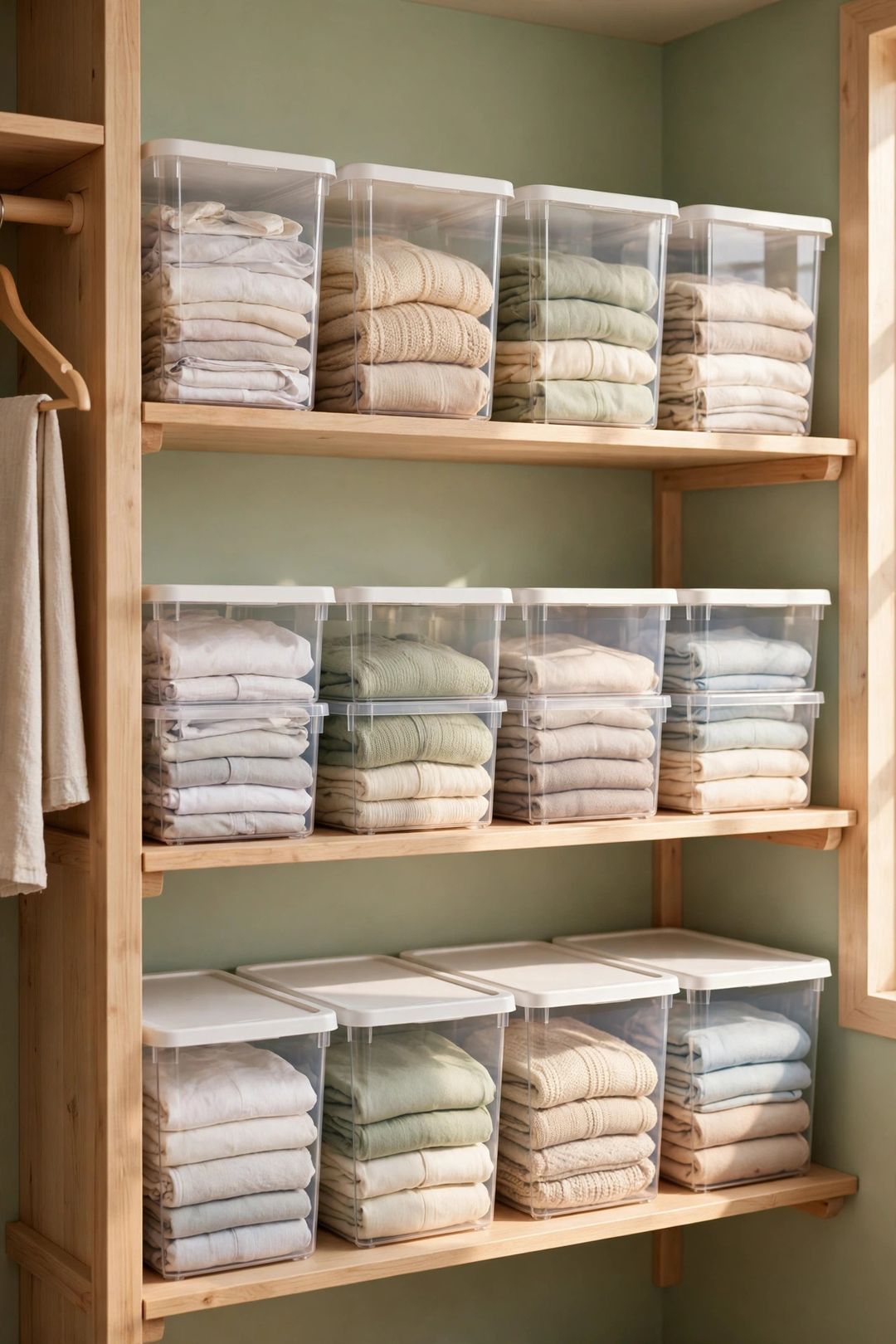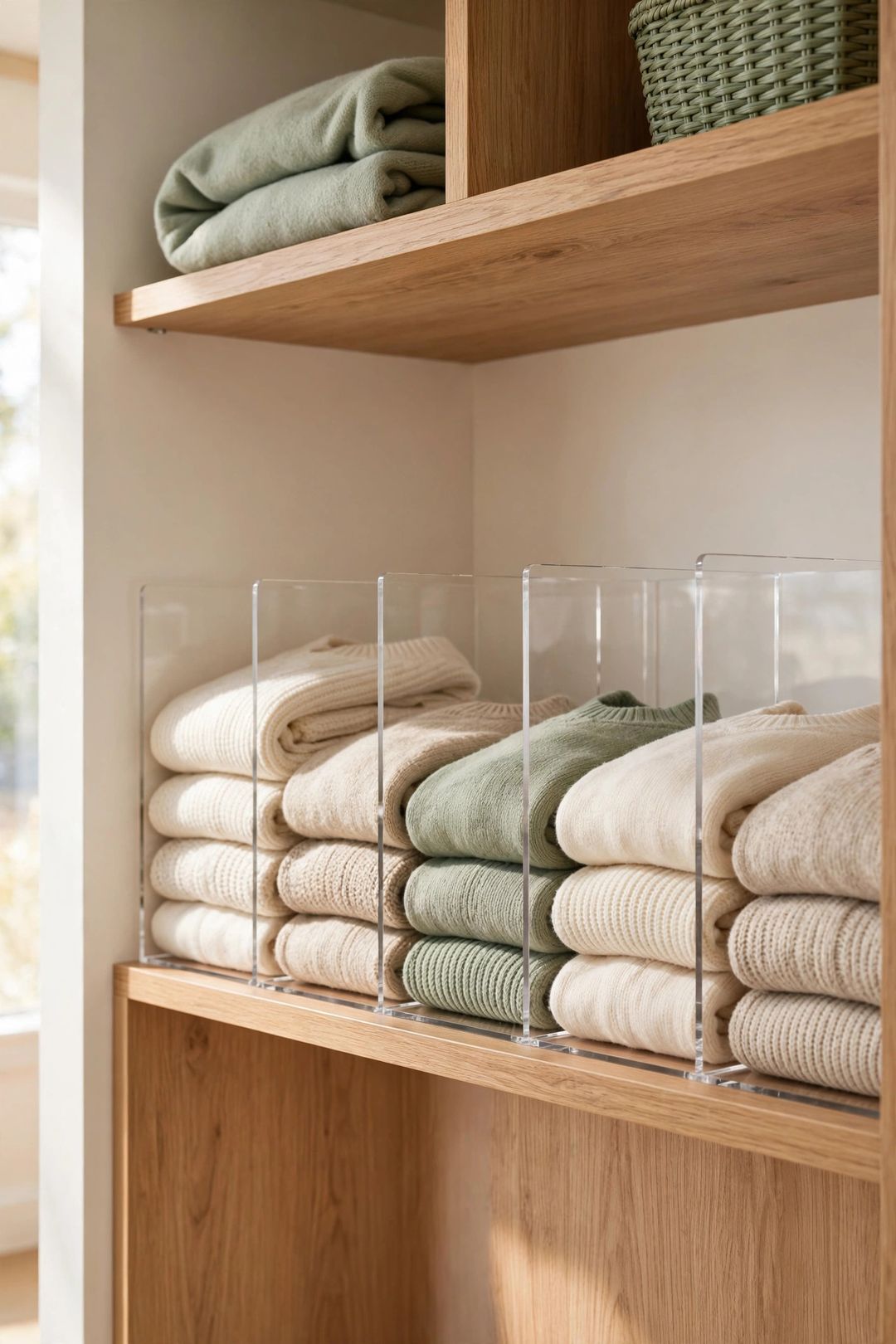
A closet shelf can be folded perfectly on Sunday and leaning like a bookshelf with no bookend by Friday. Dividers fix that by giving each stack its own walls. The best shelf dividers for closets fit your shelf thickness exactly, match the height of your stacks, and stay put when you pull one sweater out of the middle.
Measure before you shop. Most wood and laminate shelves are 0.5 to 0.75 inches thick, while some built-ins run a full 1 inch — that difference decides whether a slide-on divider grips or wobbles. Measure shelf depth too, note your tallest stack, and check the shelf underside for lips or trim that can block a clip.
Acrylic Slide-On Dividers
Clear acrylic dividers slide onto the front edge of a shelf and disappear visually, which suits open closets and neat, uniform stacks.
1. Clear acrylic slide-on divider, 12 inches tall. Best for sweater, T-shirt, and jeans stacks on standard shelves, this tall panel keeps rows upright and easy to see. It fits shelves about 0.4 to 0.9 inches thick and slides on with no tools. One honest drawback: on slick laminate it can creep forward when you pull an item out, so it works best between heavier stacks. Typically $20–$35 for a set of 4.
2. Short acrylic slide-on divider, 8 inches tall. Best for kids' clothes, linens, and low stacks under a hanging rod, where a tall divider wastes vertical space. It fits the same 0.4 to 0.9-inch shelf range and moves easily as piles change size. One honest drawback: stacks taller than about 6 inches lean right over the top, so it cannot rescue a deep pile. Typically $15–$25 for a set of 4.
3. Wide-grip acrylic divider for thick shelves, up to 1.2 inches. Best for built-in closets and older wood shelving that standard dividers cannot grip, this version opens wider and clamps thicker boards. The thicker panel also flexes less under a heavy jeans stack. One honest drawback: the wider grip looks bulkier, and on a thin 0.5-inch shelf it can feel loose instead of snug. Typically $25–$40 for a set of 4.
Wire Clip-On Dividers
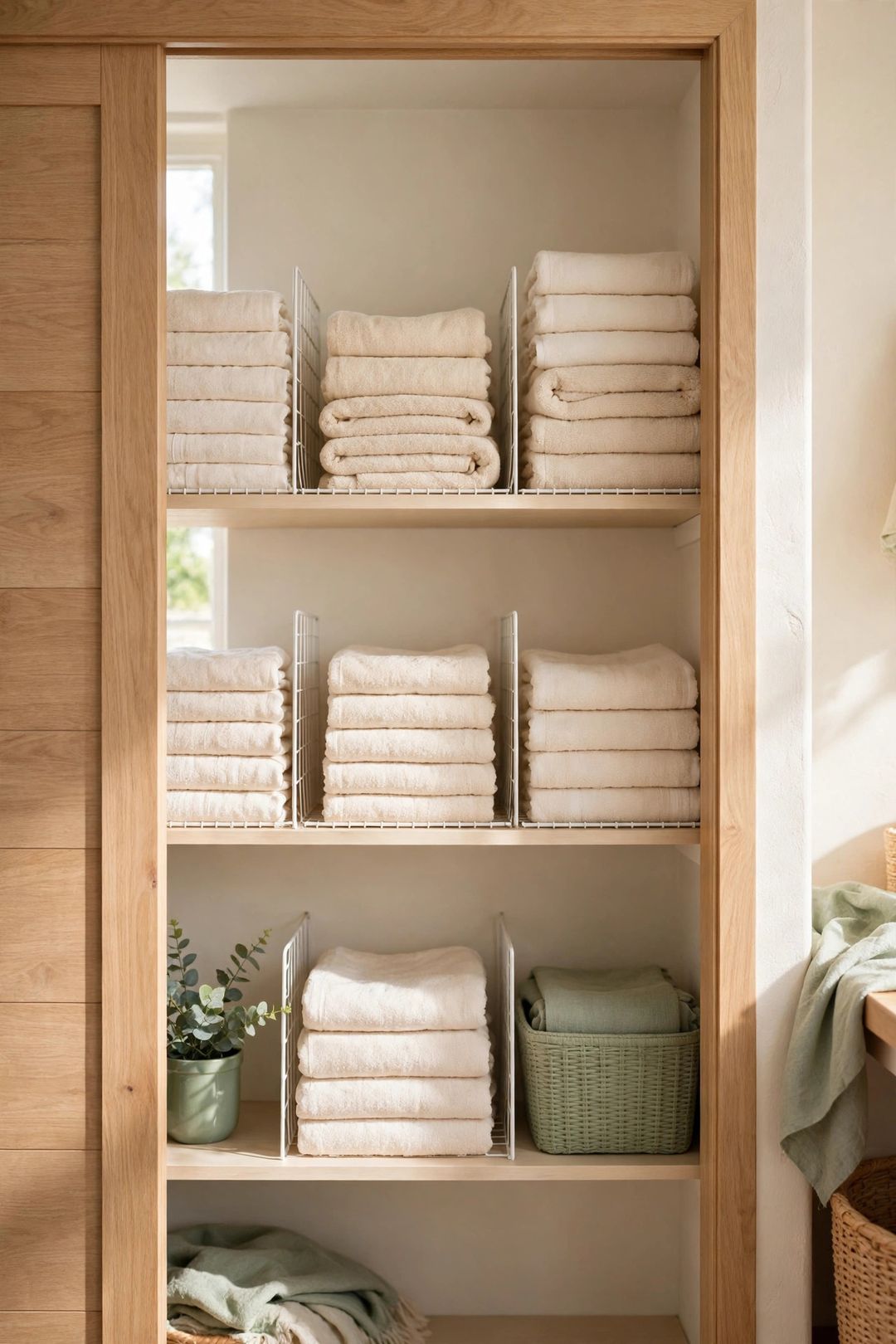
Wire dividers clip onto wire shelving or hook over solid shelves, trading a clean look for a firmer mechanical grip.
4. Steel wire clip-on divider for wire shelves, 10 to 12 inches tall. Best for the wire closet systems common in many apartments, this divider snaps between the wires and stands upright without sliding. It suits wire shelves only, not solid boards. One honest drawback: the wire frame can leave light marks on soft knits pressed against it for months, and small items can slip through the gaps. Typically $15–$28 for a set of 4.
5. Vinyl-coated wire divider for solid shelves, 12 inches deep. Best for handbags, hats, and bulky hoodies on wood or laminate shelves, this style hooks over the shelf edge and runs front to back. The coating softens the metal edge. One honest drawback: the hook raises items slightly at the front, and on very smooth shelves a hard pull can still shift it. Typically $18–$30 for a set of 4.
No-Tool Tension and Bookend Styles
These dividers need no clip sized to your shelf — they stand, press, or wedge in place, which makes them the most forgiving option for odd shelves.
6. Spring-tension shelf divider, adjustable length. Best for renters and anyone whose shelf thickness is unknown, this divider presses between the shelf and the closet side panel and holds by tension. Lengths adjust for shelf depths around 12 to 16 inches. One honest drawback: tension weakens on uneven surfaces, and it supports light to medium stacks, not a full row of heavy denim. Typically $16–$26 for a set of 2.
7. Heavy metal bookend-style divider. Best for the end of a row, this L-shaped steel piece slides under a stack and stands like a bookend, holding the last pile upright. It works on any shelf thickness because nothing clips on. One honest drawback: it braces from one side only, so middle stacks need a second piece, and the base plate lifts the stack about 0.25 inches. Typically $14–$24 for a pair.
8. Non-slip standing divider with weighted base. Best for slick shelves where slide-on styles keep moving, this freestanding panel uses a wide, grippy base instead of a clip. It suits any shelf thickness and also works on a dresser top. One honest drawback: the base eats about 1 to 2 inches of shelf width per divider, and stacks over 12 inches can tip it if they lean hard. Typically $22–$36 for a set of 4.
What to Buy
Clear acrylic slide-on divider, 12 inches tall — the best first buy for most solid shelves, because it is invisible in an open closet, fits the common 0.4 to 0.9-inch range, and handles standard sweater stacks. Typically $20–$35 for a set of 4.
Steel wire clip-on divider for wire shelves — the right buy for wire shelving, since slide-on acrylic cannot grip wire properly and this style locks between the wires instead. Typically $15–$28 for a set of 4.
Heavy metal bookend-style divider — the flexible buy for thick, thin, or odd shelves, because it needs no clip fit at all and can brace one problem stack before you commit to a full set. Typically $14–$24 for a pair.
Mistakes to Avoid
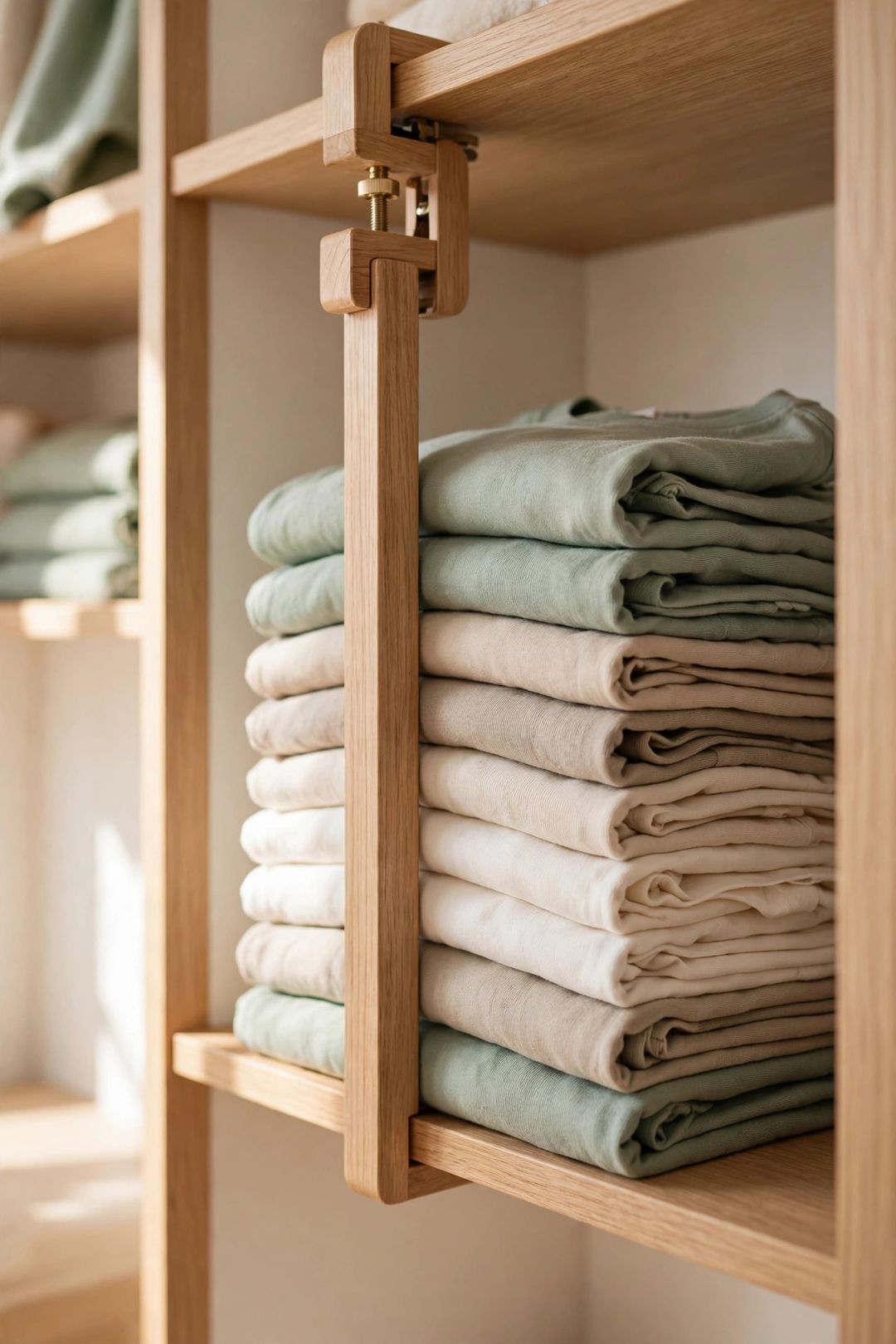
- Skipping the thickness measurement. A divider made for a 0.75-inch shelf will wobble on a 0.5-inch shelf and may not fit a 1-inch built-in at all. Measure before ordering.
- Buying dividers shorter than your stacks. A divider only holds what it rises above. If your sweater stack is 10 inches tall, an 8-inch divider will not stop the lean.
- Spacing dividers too wide. Sections wider than about 12 inches let stacks slump in the middle. Narrower sections, one per clothing type, stay upright longer.
- Ignoring a slick shelf surface. Slide-on and standing styles can creep on glossy laminate. Add a non-slip liner or choose a clip or tension style instead.
- Overloading one section. Cramming a section full pushes dividers sideways and can scratch shelf edges or acrylic panels. Leave a little breathing room in each stack.

Frequently Asked Questions
How do I know what shelf thickness my closet has?
Measure the front edge of the shelf with a ruler or tape. Most laminate and wood shelves measure 0.5 to 0.75 inches. Built-ins and older solid wood shelves can reach 1 inch or more, which needs a wide-grip or clip-free style.
Will acrylic dividers scratch my shelves?
They can leave light marks if dragged sideways under a heavy load, especially on painted shelves. Lift or unload a divider before moving it, and keep grit out from under the grip edge.
How many dividers does one shelf need?
Start with one divider every 10 to 12 inches, or one between each type of clothing. A 48-inch shelf usually works well with three to four dividers, creating four to five sections.
Can shelf dividers work for handbags and linens?
Yes. Taller dividers, around 12 inches, prop up handbags so they keep their shape and stay visible, and shorter dividers keep towel and sheet sets in separate stacks. Choose smooth acrylic for delicate bag materials.
One measured shelf and one well-fitted set of dividers can end the leaning-stack cycle for good. Save this post to your Closet Organization board on Pinterest so the fit measurements are handy when you shop.