A shelf riser looks simple — a small raised platform inside a cabinet — but the wrong height or width wastes the space it was meant to save. The best shelf risers for kitchen cabinets match your shelf size, the height of the items above and below, and the weight they need to hold every day.
Measure before you shop. Write down the inside width and depth of the cabinet, then the clear height between shelves. Most risers stand 4 to 7 inches tall, so check that tall items still fit on top and that everyday items fit underneath without scraping. Leave about half an inch of clearance, and weigh heavy stacks like dinner plates before choosing thin wire over a sturdier frame.
Everyday Risers for Most Cabinets
1. Fixed metal wire riser, medium width. Best for a general-purpose cabinet holding mugs, bowls, or canned goods, this one-piece riser is commonly 13 to 15 inches wide, 9 to 10 inches deep, and about 5 to 6 inches tall. The open wire frame is light, wipes clean, and holds everyday dishes without flexing much. The honest drawback: the fixed width cannot adjust, so it wastes space in wider cabinets and will not fit narrow ones. Typically $10–$18.
2. Expandable-width riser. Best for odd-sized cabinets, this riser slides out from about 14 inches to 24 or 25 inches wide, with a height near 5 to 6 inches and a depth around 9 inches. It adapts when you move or rearrange shelves. The drawback is the sliding joint: the middle section can feel less steady under a heavy, uneven load, so keep the heaviest items near the supported ends. Typically $16–$28.
3. Stacking shelf insert set, two pieces. Best for building two or three levels in one tall cabinet, these inserts are usually 12 to 15 inches wide and 5 to 7 inches tall, designed to stack safely or sit side by side. Short cups go below, taller glasses above. The drawback: stacked inserts shift if the feet do not lock or grip, and each added level steals height from the shelf below. Typically $18–$30.
4. Wood or bamboo riser. Best for open shelving or a countertop cabinet where looks matter, this solid riser is commonly 14 to 17 inches wide, 8 to 10 inches deep, and 4 to 6 inches tall. The flat top suits oils, jars, or a small plant, and the frame feels stable under moderate weight. The drawback: wood and bamboo need wiping dry, and standing water under a dish rack or plant can mark or swell the surface. Typically $20–$35.
Corners, Spices & the Space Under a Shelf
5. Corner riser, triangular or quarter-round. Best for deep corner cabinets where items disappear, this riser fits a corner at roughly 10 to 13 inches along each side and 5 to 6 inches tall, lifting back jars into view. Some designs stack two tiers in the corner. The drawback is shape: the angled front leaves small gaps that waste space, and round jars fit its curves better than square boxes. Typically $12–$22.
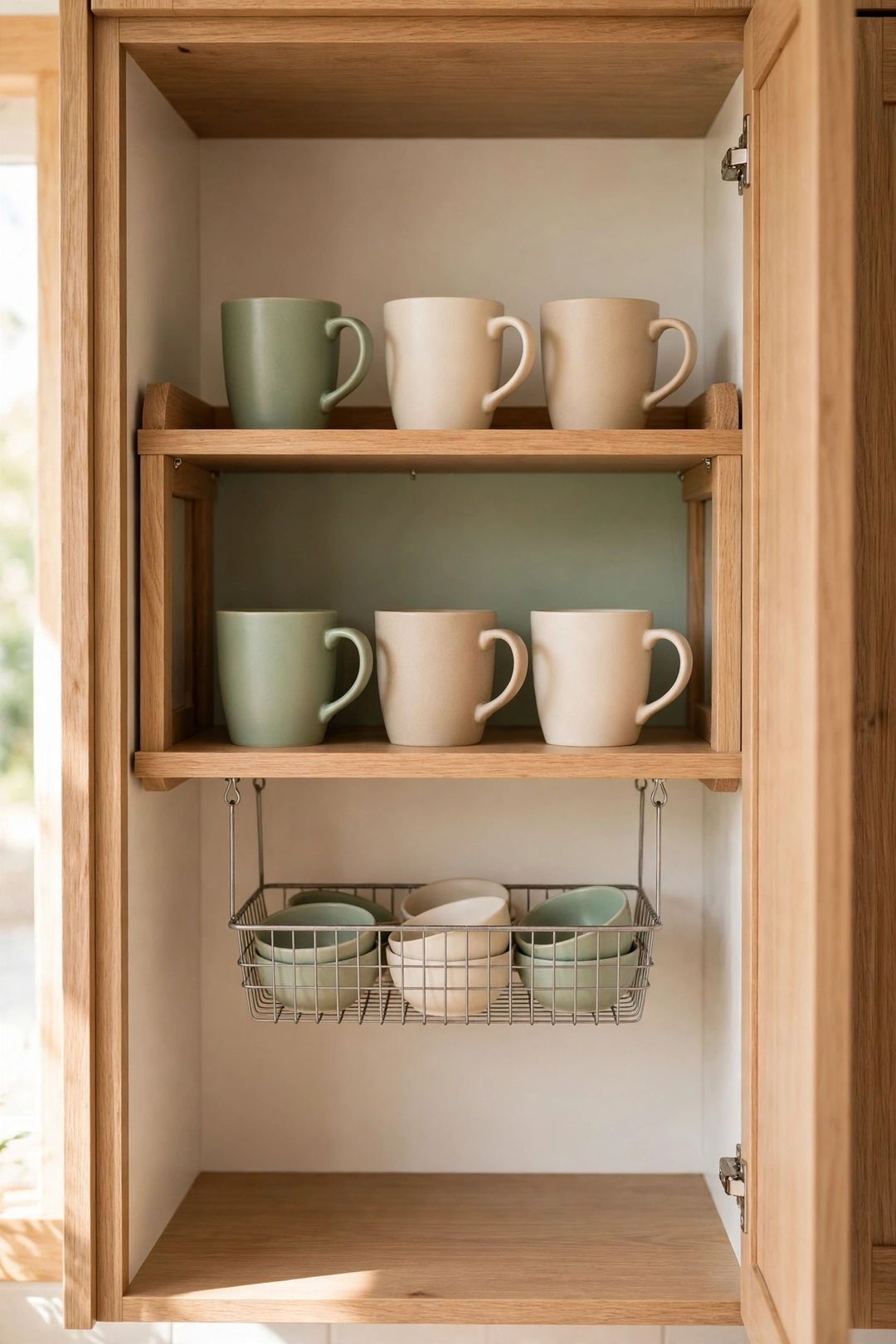
6. Under-shelf hanging basket. Best thought of as a riser in reverse, this basket hooks over a shelf about 0.6 to 1 inch thick and hangs below it, usually 12 to 16 inches wide, 10 inches deep, and 5 to 6 inches tall. It suits napkins, wraps, lids, or snack packets in otherwise empty air space. The drawback: it only works where the shelf edge is exposed, and heavy cans can bow the basket or stop a door closing. Typically $10–$20.
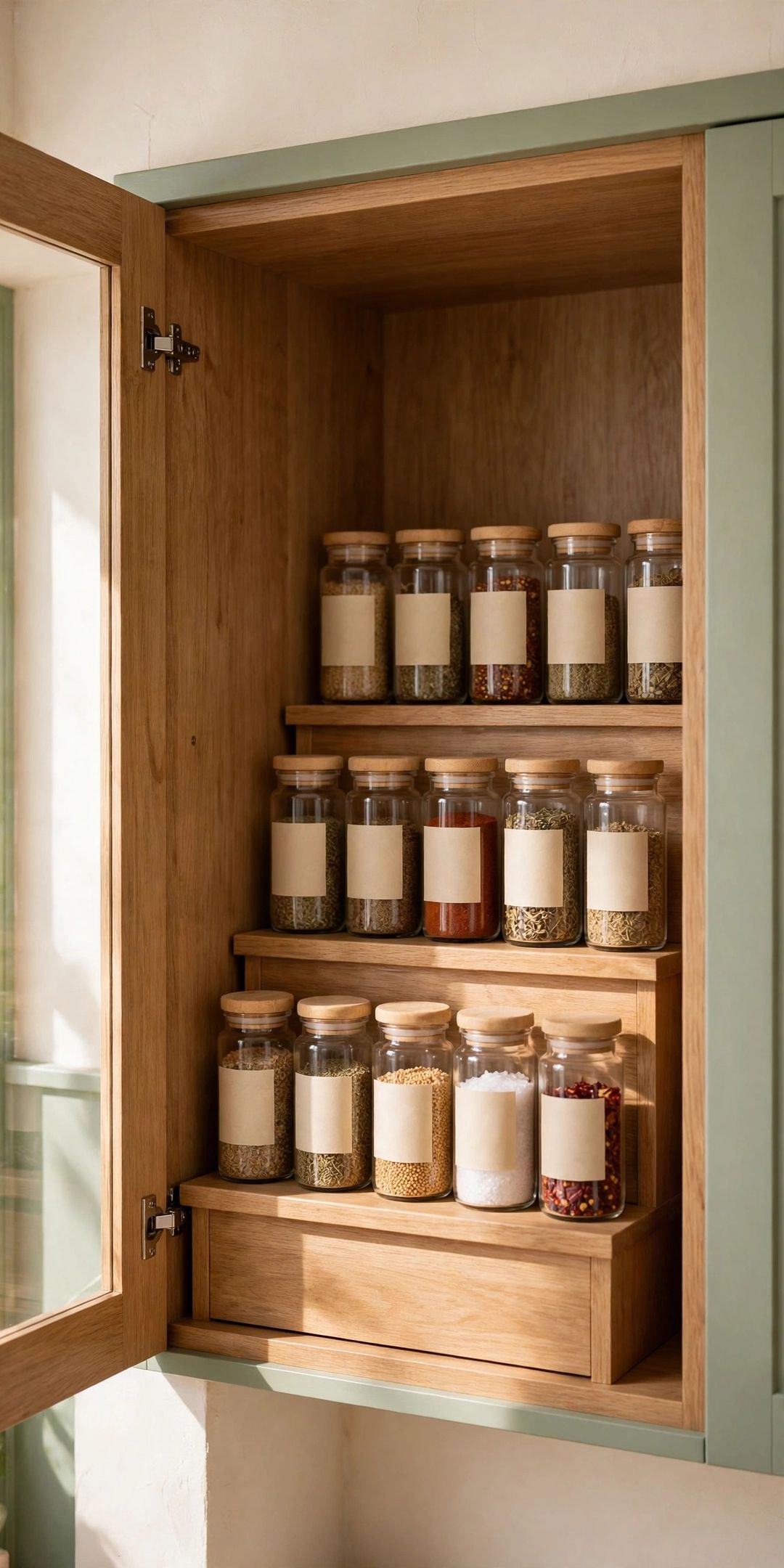
7. Narrow low-height spice riser. Best for spice jars and small bottles, this slim riser is about 10 to 13 inches wide, 6 to 8 inches deep, and only 3 to 4 inches tall, so short jars stack in two visible rows. Some versions step up in two or three tiers instead of one flat level. The drawback is its low clearance: standard mugs and tall sauce bottles will not fit underneath, so it is a single-job tool. Typically $9–$16.
Heavy-Duty Risers for Dishes & Cookware
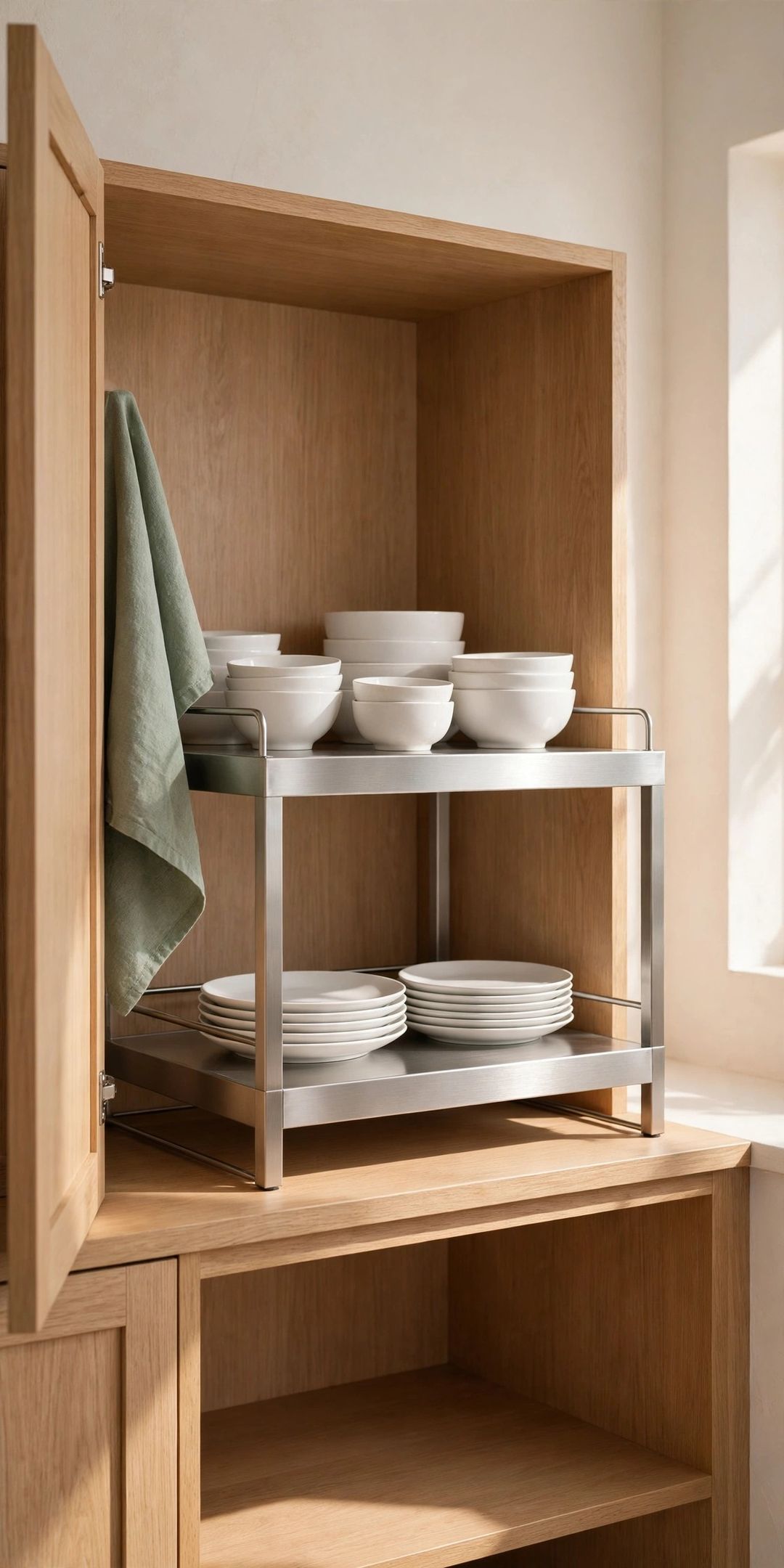
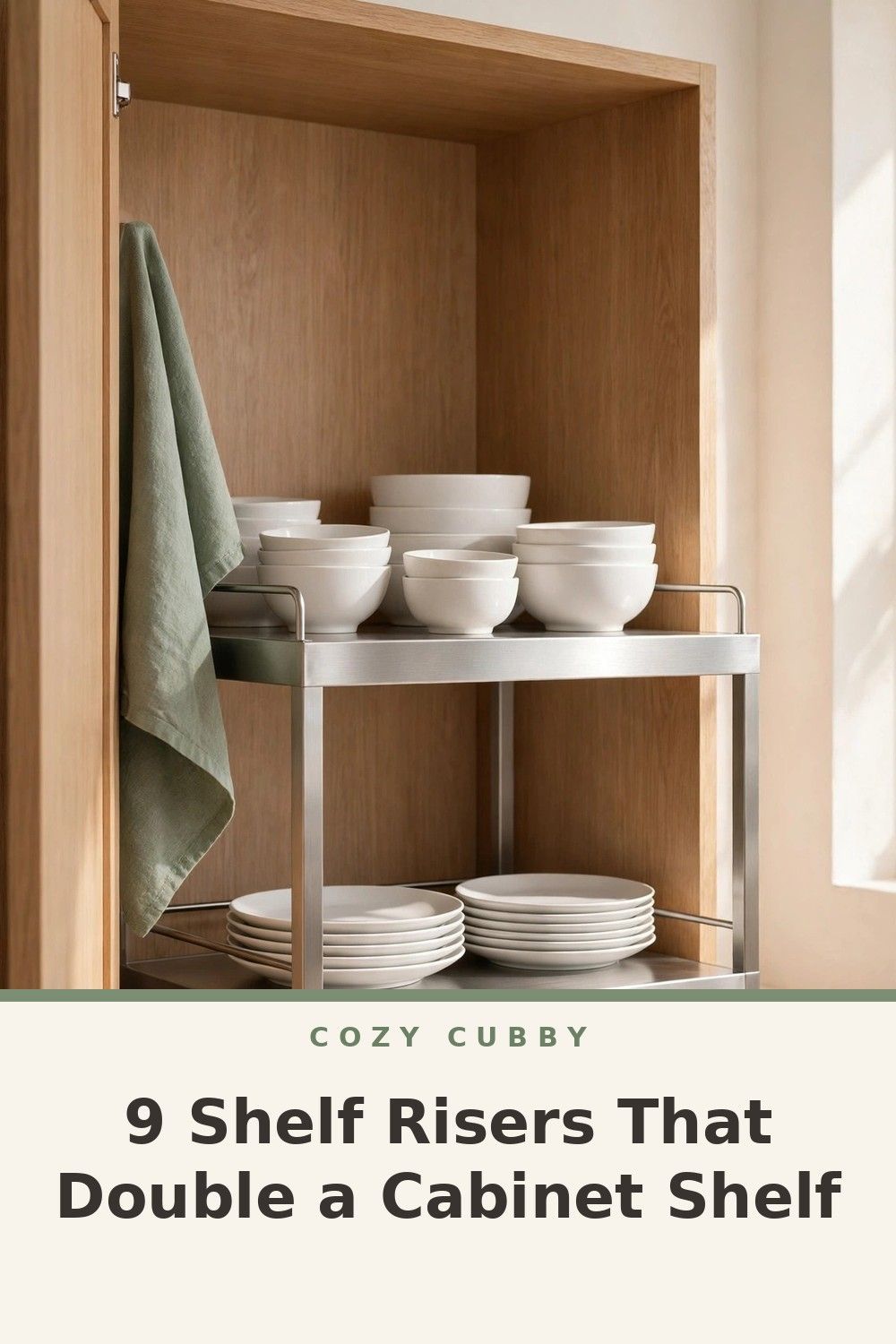
8. Heavy-duty steel riser for dinnerware. Best for stacks of dinner plates, bowls, and serving dishes, this reinforced riser is commonly 15 to 18 inches wide, 10 to 11 inches deep, and 6 to 7 inches tall, with thicker bars and non-slip feet. Check the stated weight limit and stay well under it with stoneware. The drawback: it is heavier and bulkier than wire basics, and its taller height fails in short cabinets. Typically $22–$38.
9. Wide two-level riser for pots and bakeware. Best for a deep base cabinet, this wide frame, often 18 to 22 inches across and 6 to 8 inches tall, creates a low level for baking sheets or lids and a top level for pots. It helps most when items are wide and flat. The drawback: pots with tall handles may not fit either level, and the large footprint eats space in a standard upper cabinet. Typically $25–$42.
What to Buy
Fixed metal wire riser — the best first buy for most cabinets, because it is cheap, sturdy enough for daily dishes, and needs no setup. Measure your width first. Typically $10–$18.
Expandable-width riser — the smart buy for renters or mixed cabinet sizes, since one riser adjusts from about 14 to 25 inches and moves with you. Typically $16–$28.
Heavy-duty steel riser for dinnerware — the buy worth making if plates are your problem, because thin wire can flex under stoneware and this frame is built for that load. Typically $22–$38.
Mistakes to Avoid
- Measuring only the width. Height decides whether anything fits on top; check the full inside space and leave clearance.
- Stacking heavy dishes on a light riser. Thin wire bends under stoneware; match the riser to the real weight.
- Buying a riser taller than your items need. Extra height wastes the layer below and can block the cabinet door.
- Filling both layers with rarely used items. Risers help most for daily things; deep storage belongs at the back or higher up.
- Ignoring feet and grip. Smooth feet slide on slick shelves every time a door slams; look for coated or non-slip feet.
Frequently Asked Questions
How tall should a cabinet shelf riser be?
Most everyday risers are 4 to 7 inches tall. Choose based on the shorter layer: spice jars need only 3 to 4 inches, while mugs and bowls often need 5 to 6. Always leave a little clearance above the top layer so items lift out easily.
Can a shelf riser hold a full stack of plates?
Yes, if it is a heavy-duty steel design used within its stated weight limit. Keep the stack centered, avoid stacking two heavy sets on one light wire riser, and check for flex after the first loading.
Do under-shelf baskets count as shelf risers?
They do the same job in a different direction. A riser adds a layer on top of a shelf, while a hanging basket adds one below it. Both turn empty vertical space into a usable layer, but baskets suit light, flat items best.
What is better, a fixed or expandable riser?
Fixed risers feel sturdier and cost less, so they suit a cabinet you will not change. Expandable risers cost more and can flex at the joint, but they fit odd widths and move between cabinets, which suits renters well.
Start with the one cabinet you open every morning, measure it twice, and add a single riser before buying for the whole kitchen. Save this post to your kitchen organization board on Pinterest so the sizes are handy when you shop.