A narrow entryway leaves almost no room for shoe storage, yet shoes still pile up by the door. The best slim shoe cabinet under 10 inches deep solves that squeeze by standing flat against the wall, so the walkway stays open and the mess stays hidden or neatly lined up.
Start by measuring the space with care. Measure wall length, floor depth, and door swing, then leave at least an inch of clearance. Depth matters most: a cabinet listed at 9.5 inches deep can still block a tight hall if a handle or baseboard pushes it out. Also check shoe size early. Tilt-out bins save the most depth, but large men's shoes, often size 12 and up, can press against the bin door or fail to close fully in the shallowest models.
Assembly and safety come next. Most slim cabinets arrive flat-packed and need a screwdriver and patience with small hardware. Tall tip-out styles are top-heavy when a bin is pulled open, so anchoring the cabinet to a wall stud with the included strap or bracket is a firm safety step, not an extra. With size, fit, and anchoring settled, the nine styles below cover the main entryway needs.
Tip-Out Cabinets
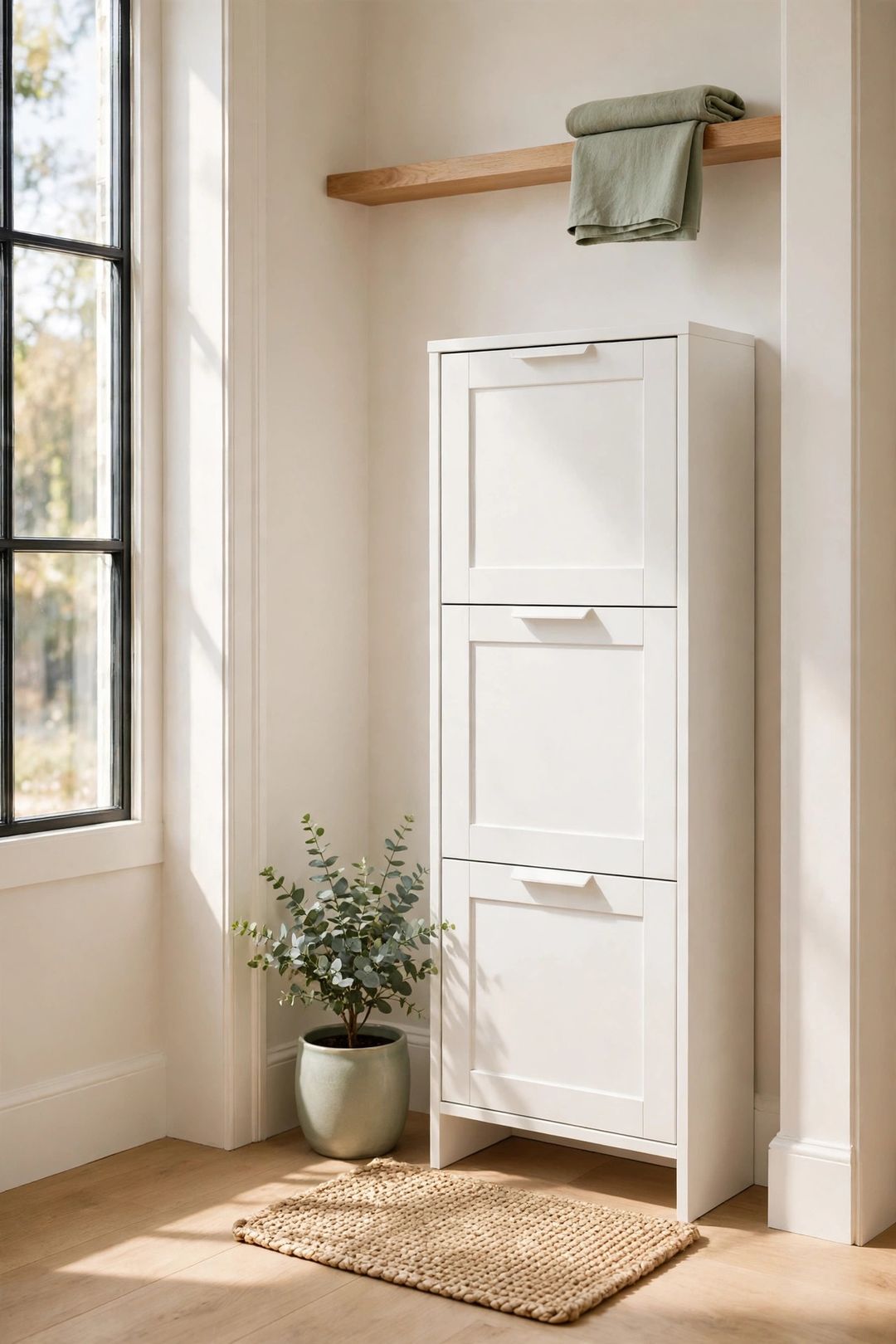
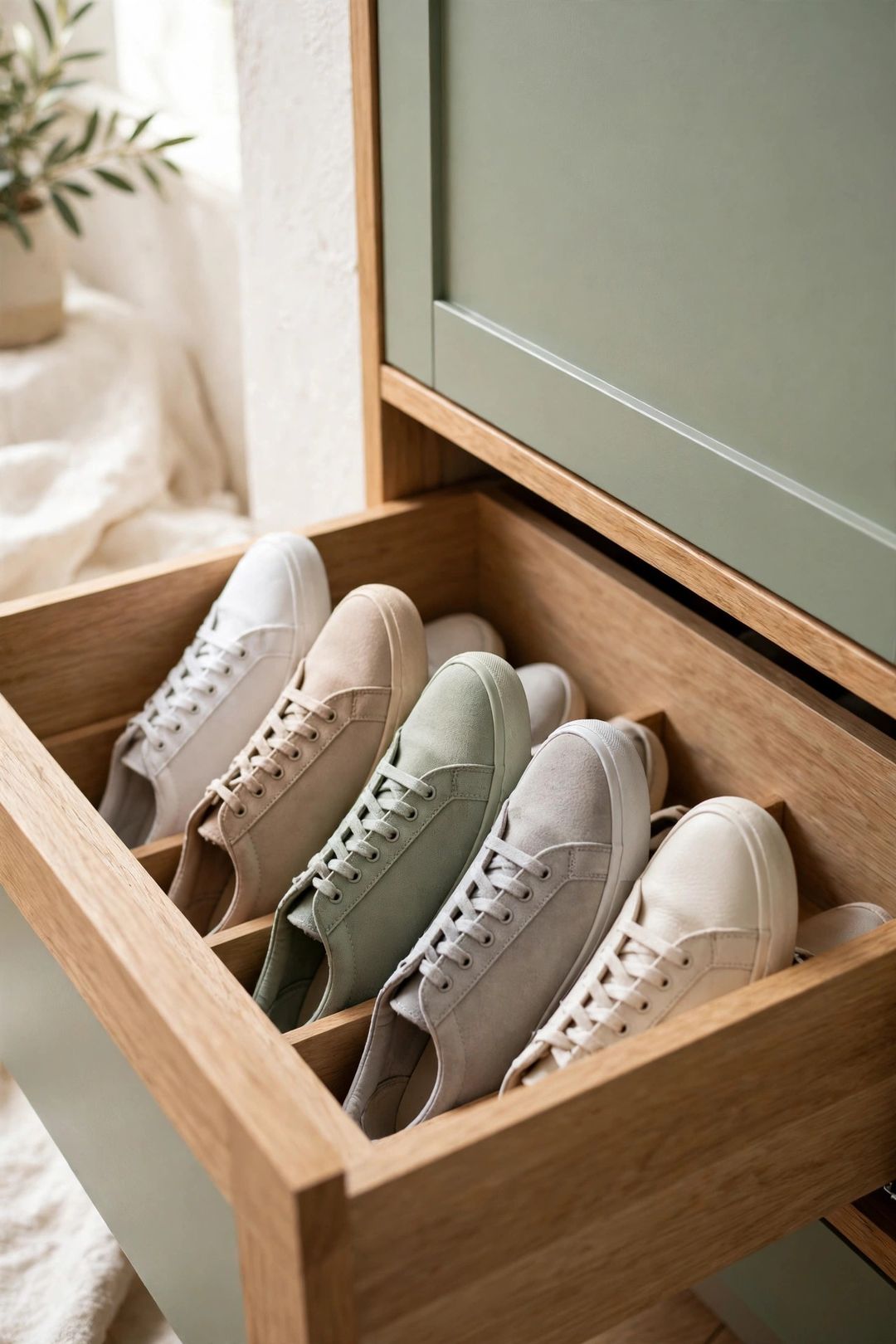
1. Two-drawer tip-out cabinet. Best for small households that want shoes fully hidden in a hall or behind a door. At about 9.5 inches deep, each drawer tips forward and holds shoes upright in a pocket. It typically holds 8–12 pairs. The honest drawback is fit: tall boots do not fit, and large men's shoes can keep the drawer from closing flush. Typically $80–$160.
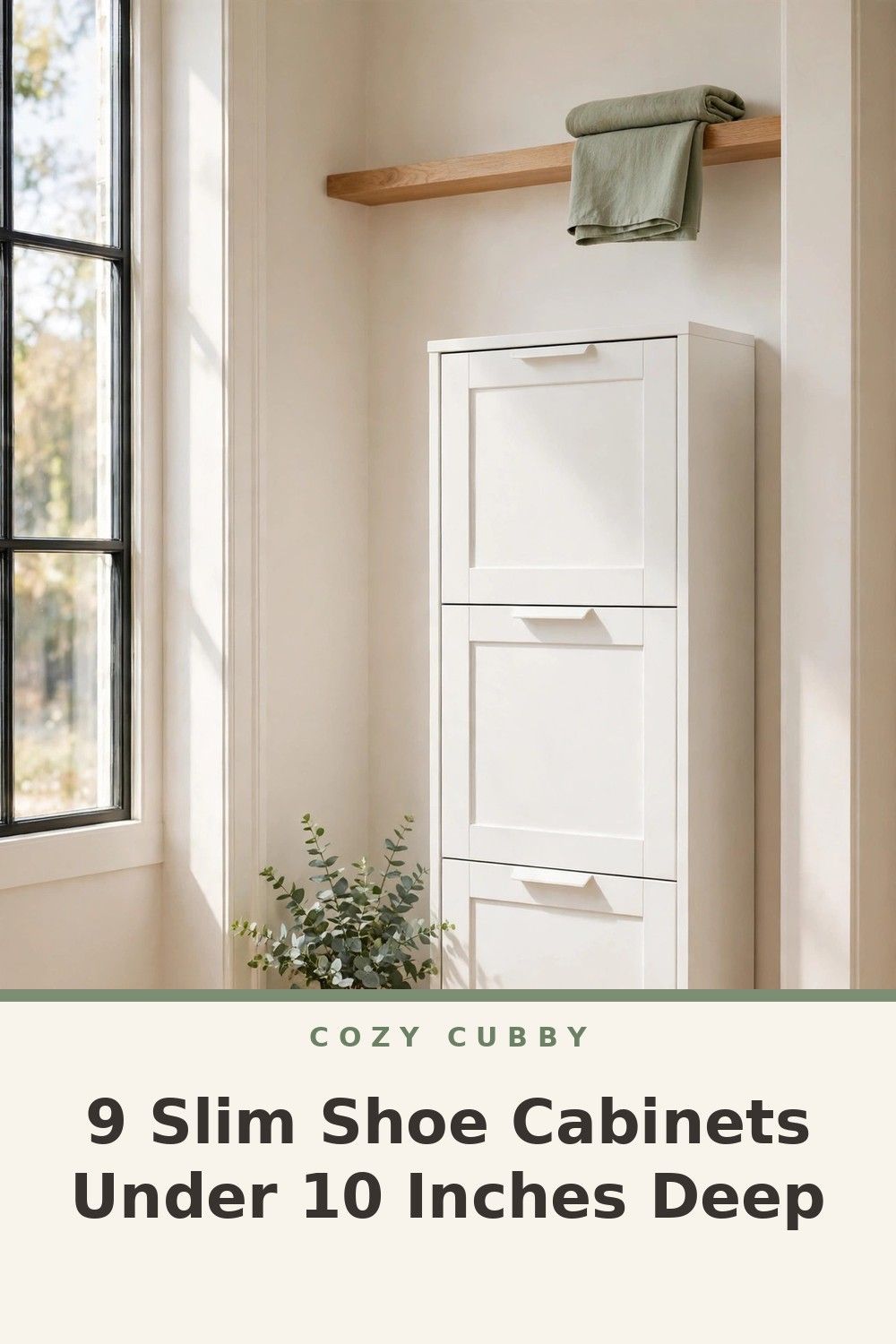
2. Three-drawer tall tip-out cabinet. Best for families that need maximum hidden storage on one short wall. At about 9.8 inches deep, the tall frame stacks three tip-out drawers and typically holds 12–18 pairs. The height makes wall anchoring essential, since an open top drawer shifts weight forward. Assembly also takes longer than most styles here. Typically $130–$230.
3. Single-drawer tip-out cabinet. Best for a studio entry, a dorm-style room, or a tight spot beside a coat rack. At about 9 inches deep, the low single drawer typically holds 4–6 pairs and doubles as a slim surface for keys and mail. Capacity is the clear limit, and the shallow pockets suit low shoes better than chunky sneakers. Typically $50–$100.
Slim Racks & Covered Cabinets
4. Slim open-tier rack cabinet. Best for fast grab-and-go storage where shoes need air flow after rain or workouts. At about 9.5 inches deep, open angled tiers typically hold 8–12 pairs and make every pair easy to see. The drawback is dust and a busier look, since nothing is hidden. Heels can also slip between bars on some tier designs. Typically $35–$80.
5. Fabric-covered slim rack cabinet. Best for a low-cost covered option in a closet, bedroom corner, or rental entry. At about 9.8 inches deep, a zip or roll-up fabric cover over a light frame typically holds 9–15 pairs across stacked tiers. The cover hides clutter well for the price, but the frame feels less sturdy than wood styles and zippers wear out sooner than doors. Typically $30–$70.
6. Louvered-door slim cabinet. Best for a polished entryway look with some air flow for leather shoes. At about 9.6 inches deep, fixed shelves behind slatted doors typically hold 10–14 pairs. The doors hide shoes while the slats let air move, which helps with odor. The drawback is shelf height: fixed shelves limit tall shoes, and the doors need clear swing space in front, unlike tip-out drawers. Typically $110–$200.
Bench & Specialty Styles
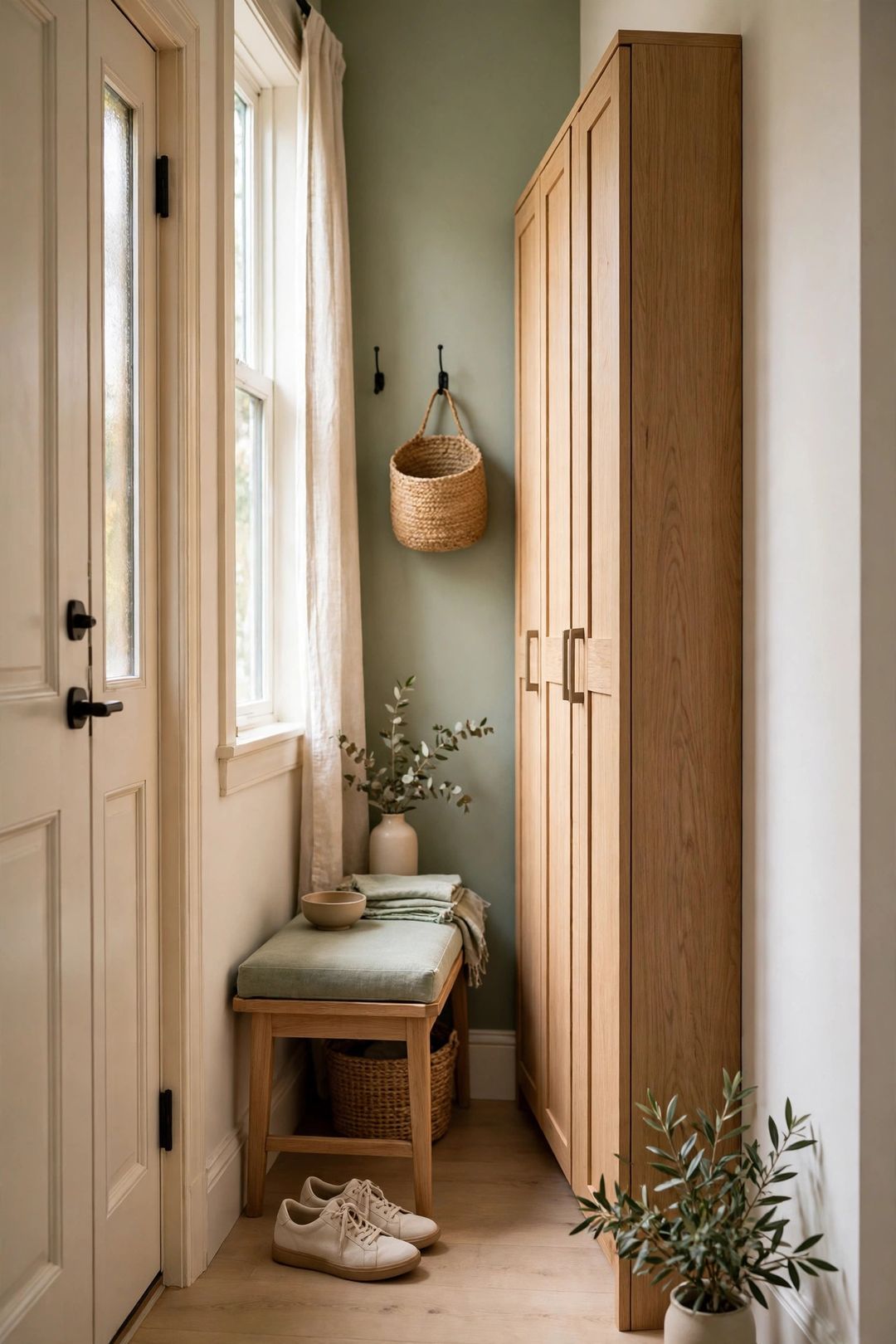
7. Slim shoe bench cabinet. Best for entries where people sit to pull shoes on and off. At about 9.8 inches deep, a padded or wood bench top sits over one or two shoe shelves that typically hold 4–8 pairs. The seat is the main win, so storage stays small. Weight limits matter too, and low shelves fit flats and sneakers better than boots. Typically $70–$150.
8. Rotating slim shoe cabinet. Best for deep closets or a corner where a spinning tower can use height instead of floor space. At about 9.5 inches deep on each open side, stacked rotating tiers typically hold 12–20 pairs in a narrow footprint. The drawback is balance: the tower must stand level, and shoes stay exposed to dust. Typically $90–$180.
9. Wall-mounted fold-down cabinet. Best for the tightest halls, where floor depth is almost zero and a door swing rules out floor models. Mounted flat to the wall at about 6–8 inches deep, fold-down compartments typically hold 3–6 pairs. The limit is clear: solid wall mounting is required, capacity stays low, and each compartment suits one pair of low shoes. Renters may not be able to install one at all. Typically $60–$130.
What to Buy
For most entryways, the best first buy is the two-drawer tip-out cabinet. The hidden drawers keep a hall tidy, the depth fits most tight walls, and the size suits daily shoes for a small household. Typically $80–$160.
For big shoes, the best pick is the louvered-door slim cabinet or the open-tier rack. Fixed shelves and open tiers handle large sizes better than shallow tip-out pockets. Typically $35–$200 depending on style.
For the lowest budget, the best pick is the fabric-covered slim rack cabinet. The cover hides a full shoe pile for very little money, and the light frame moves easily when layouts change. Typically $30–$70.
Mistakes to Avoid
- Skipping the depth check. Measuring only wall width misses the real problem. Baseboards, door swing, and handles can add depth and block drawers or doors.
- Ignoring shoe size. A cabinet that fits small flats may not close on large men's shoes or chunky sneakers, so the biggest daily pair should set the choice.
- Skipping wall anchoring. Tall tip-out cabinets can tip forward when a loaded drawer opens. Anchoring to a stud is a basic safety step.
- Counting pairs too loosely. Stated capacity often assumes small shoes. Boots, heels, and wide sneakers take far more room, so real capacity runs lower.
- Blocking vents or doors. A slim cabinet still needs air and swing room. A tight squeeze against a heater or door can warp materials and scuff finishes.
Frequently Asked Questions
How many pairs fit in a slim shoe cabinet?
Most slim cabinets under 10 inches deep hold about 4–18 pairs, depending on height, tier count, and shoe size. Small low styles hold just a few daily pairs, while tall tip-out and rotating styles hold the most. Large shoes and boots always lower the real count.
Do tip-out cabinets fit large men's shoes?
Some do, but the shallowest pockets can pinch shoes around size 12 and up, and the drawer may not close fully. For larger sizes, a fixed-shelf cabinet or open rack gives more length and height per pair and closes without force.
Should a slim shoe cabinet be anchored to the wall?
Yes, for tall and tip-out styles. An open loaded drawer pulls weight forward, and a narrow cabinet has a small base. A strap or bracket fixed to a wall stud keeps the cabinet steady during daily use.
Can a slim cabinet hold boots?
Tall boots rarely fit in cabinets under 10 inches deep, since the pockets and shelves are built low and shallow. Short ankle boots may fit on an open tier or a taller fixed shelf. Full-height boots usually need a closet floor spot or a boot tray instead.
Save this post to your entryway board on Pinterest so the size checks are handy before ordering a slim shoe cabinet.