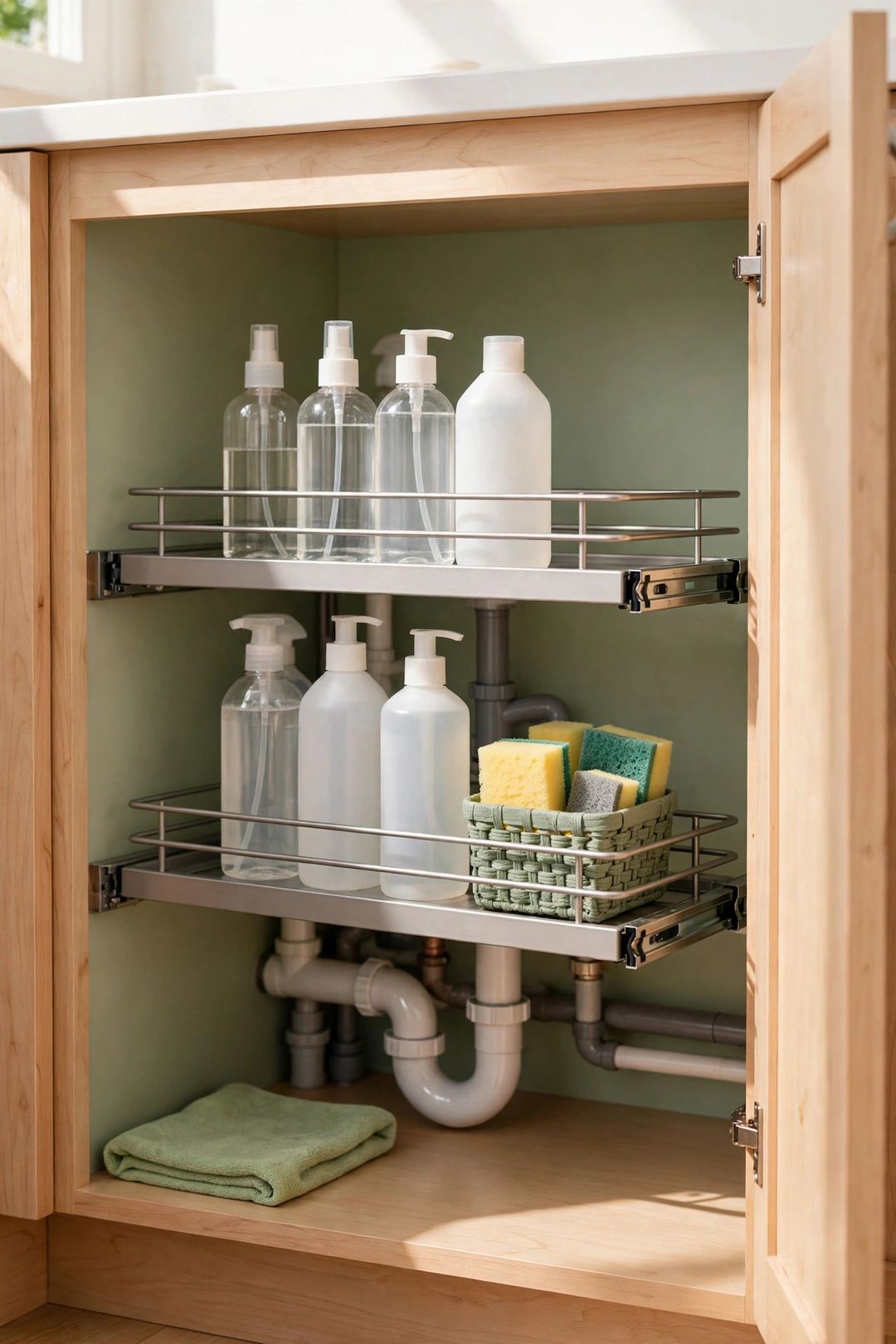
The cabinet under a sink is awkward by design: pipes cut through the middle, bottles are tall, and everything small slides to the back. The best under sink organizer for your cabinet works around that plumbing instead of fighting it, so cleaners, sponges, and extra supplies each get a spot you can actually reach.
Measure first, before anything goes in a cart. Note the inside width and depth in inches, then mark where the pipes, the trap, and the garbage disposal sit and how much clear space is left on each side. Also measure the tallest bottle you store, since many cabinets offer only about 12 to 15 inches of clear height under the trap.
1. Pull-Out Organizers That Glide Past Pipes
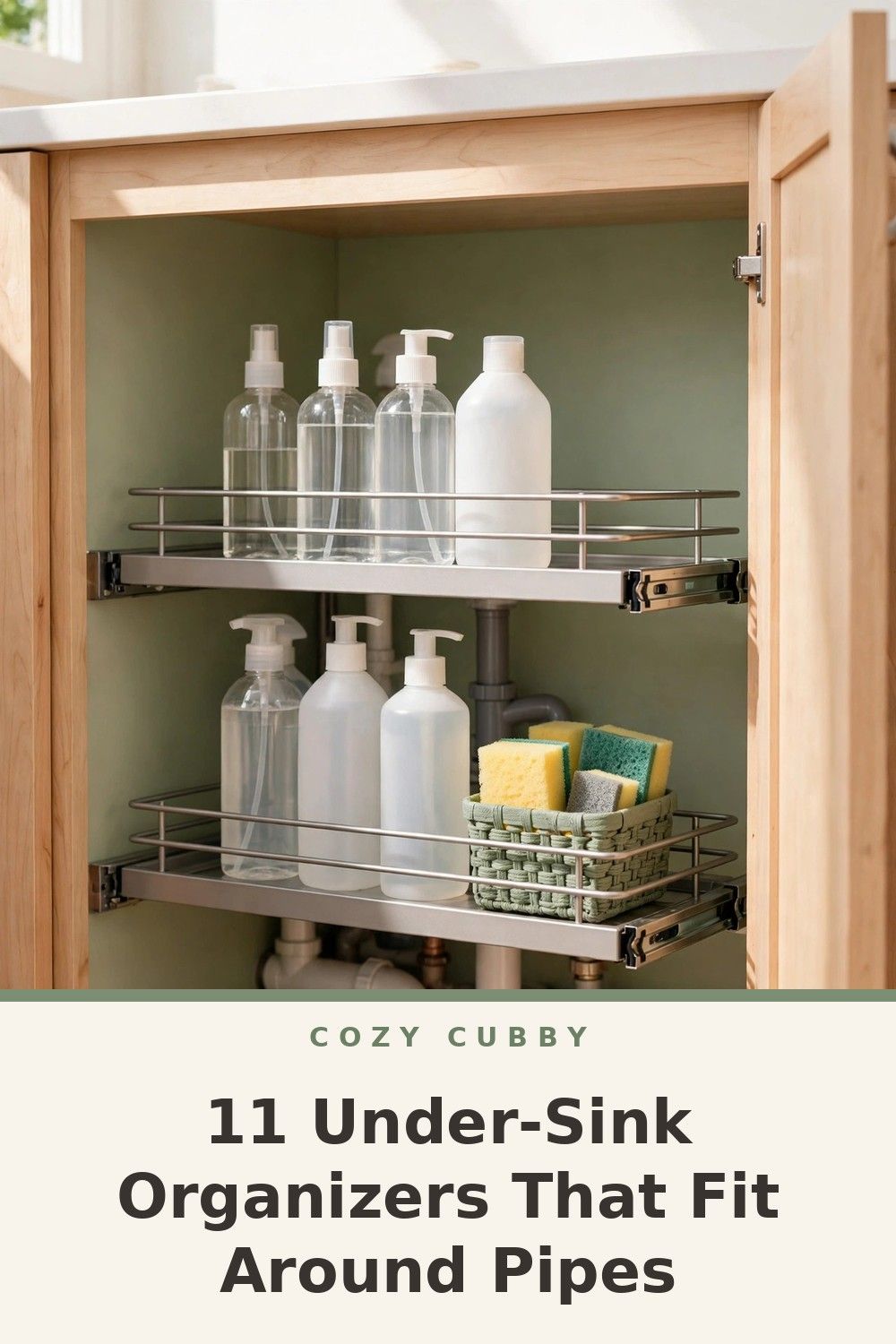
1. Two-tier sliding basket organizer. Best for kitchen sinks with one clear side, this organizer has a narrow top basket and a wider bottom basket, often about 15 inches wide, and the top tier slides forward so bottles below stay reachable. The sliding tier needs a clear path, so check that the trap does not sit in its track. Typically $22–$35.
2. Pull-out cabinet organizer with a removable top basket. Best for deep cabinets where items vanish at the back, the whole frame rolls forward on rails and the top basket lifts out for refills. Rails need a flat, solid cabinet floor to mount or sit on, and thin or warped floors can make the frame wobble. Typically $25–$35.
3. Single sliding under-sink tray. Best for a bathroom vanity with limited width, a single low tray about 12 to 14 inches wide holds daily bottles in one row and slides out like a drawer. One row is all you get, so this suits a short list of products, not a full cleaning stockpile. Typically $16–$26.
4. Rolling under-sink caddy. Best for renters and anyone who cleans in more than one room, this handled caddy on small wheels holds about 4 to 6 bottles and rolls out, then carries to the tub or shower. Wheels need a smooth floor, and tall bottles can tip when the caddy turns a corner, so keep heavy bottles in the center. Typically $14–$24.
2. Stackable Racks and Adjustable Frames
5. Expandable under-sink frame with adjustable shelves. Best for cabinets with a garbage disposal, this frame expands from about 18 to 28 inches wide and its shelf pieces move or come out, so you can build storage around pipes and the disposal body. Assembly takes longer than a ready-made rack, and the open frame holds bottles better than small loose items. Typically $20–$32.
6. Stackable 2-tier metal mesh rack. Best for stacking short bottles and jars in a narrow bath cabinet, this rack adds a second level about 6 to 8 inches above the first without any mounting. Mesh shelves let small caps and tubes slip through, so line the top tier or keep tiny items in a cup. Typically $15–$25.
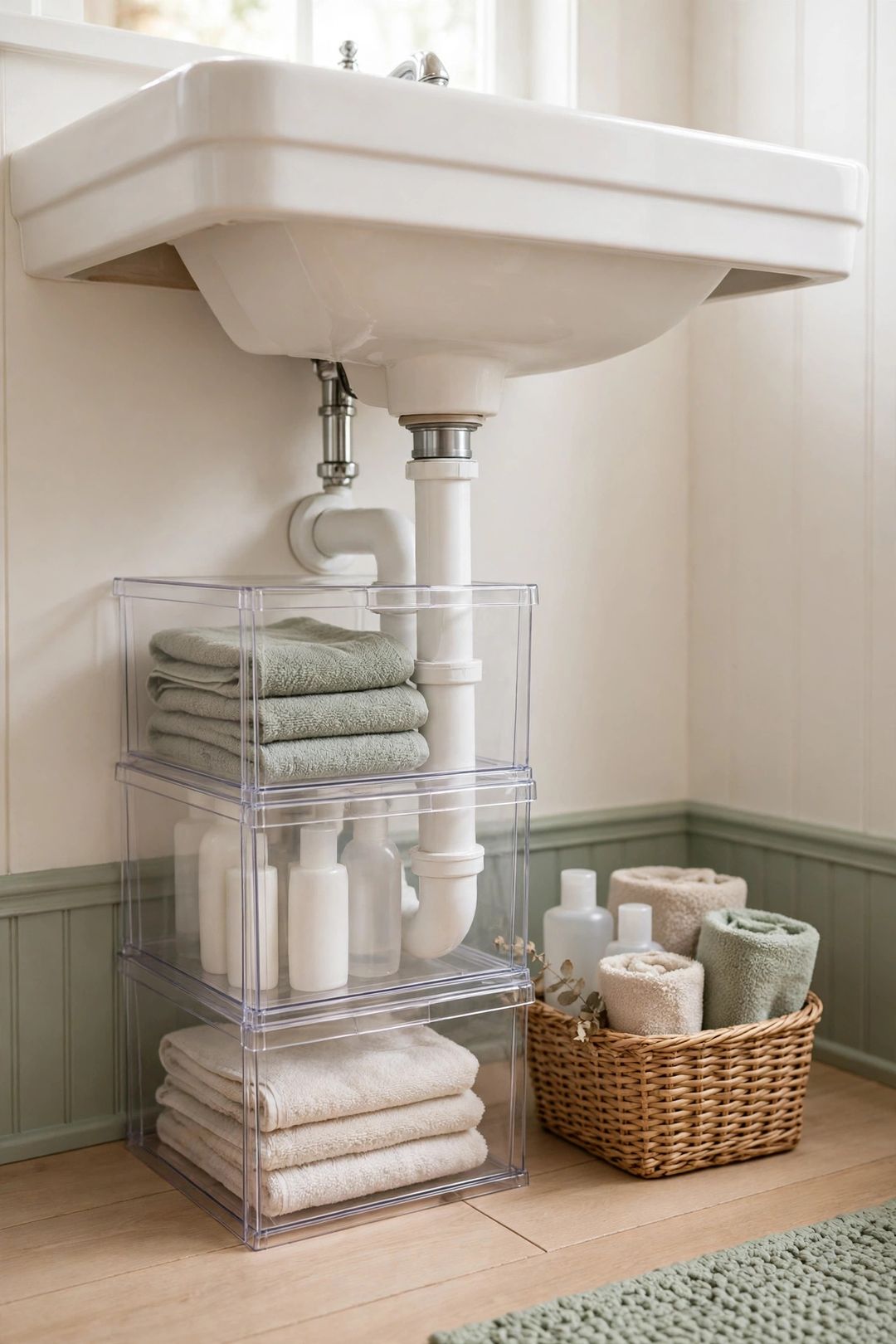
7. Modular stackable under-sink bins. Best for sorting supplies into clear groups, these bins stack two or three high in the open space beside the pipes, each holding roughly one category like sponges or trash bags. Stacks get top-heavy fast, so keep the heaviest bin at the bottom and limit stacks to two in a busy kitchen. Typically $16–$28.
8. Under-sink shelf riser set. Best for using the dead air above low items, a pair of small risers lifts a second row of bottles or folded cloths about 5 to 7 inches, keeping the front row visible. Risers hold light to medium loads only, so skip them for gallon jugs or heavy detergent bottles. Typically $12–$20.
3. Door-Mounted and Small Extras
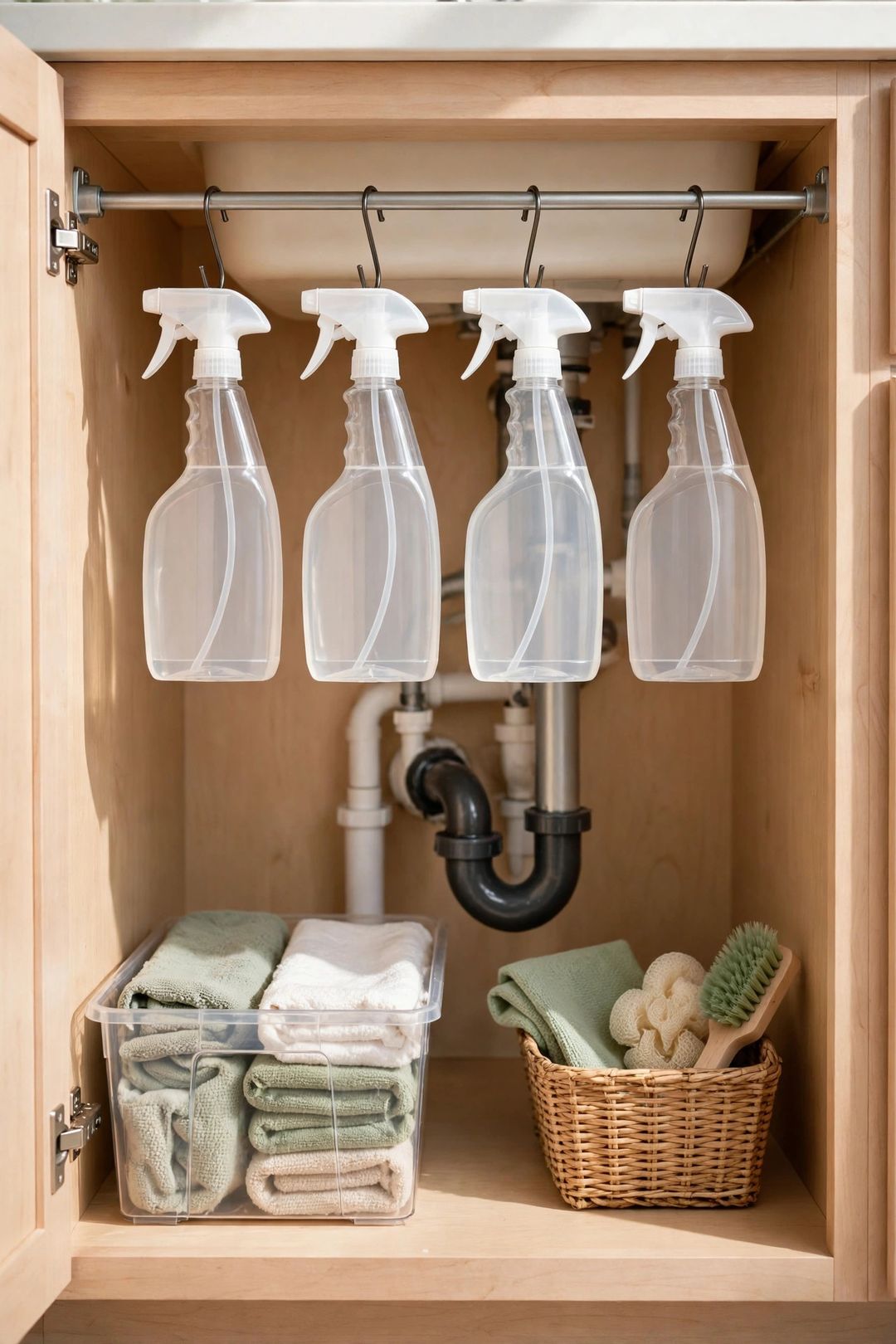
9. Over-cabinet-door caddy with towel-bar mount. Best for the flat items that always get buried, this caddy hangs from the towel bar or over the door and holds wraps, gloves, or a scrub brush in a slim pocket about 10 to 12 inches wide. The door must close cleanly with the caddy loaded, so test it before filling every pocket. Typically $12–$20.
10. Adhesive wall caddy and pockets. Best for the inside cabinet wall next to the pipes, these stick-on pockets hold sponges, stoppers, and small tools in space a shelf cannot use. Adhesive holds best on smooth, dry surfaces and can peel in a damp cabinet, so wipe the wall well and wait before loading it. Typically $12–$18.
11. Under-sink turntable tray. Best for a wide bathroom cabinet with many small bottles, a tray about 10 to 12 inches across spins lotions and cleaners from the back into reach. Round trays waste the corners of a square cabinet, and bottles near the edge can slide off if the tray spins too fast. Typically $13–$22.
What to Buy
Expandable under-sink frame with adjustable shelves — the most flexible pick for most small homes, because the moving shelf pieces fit around pipes and a disposal instead of forcing one fixed layout. Typically $20–$32.
Two-tier sliding basket organizer — the strongest kitchen pick, since the sliding top tier brings back items forward and keeps tall bottles below in one tidy footprint. Typically $22–$35.
Rolling under-sink caddy — the easiest starter pick, because it needs no measuring gymnastics, holds the core cleaning bottles, and moves to wherever the cleaning happens. Typically $14–$24.
Mistakes to Avoid
- Ordering before measuring where the pipes, trap, and garbage disposal actually sit inside the cabinet.
- Choosing an organizer too tall for your bottles, so nothing fits in the clear space under the trap.
- Stacking heavy bottles high, where a wobbling stack can fall and spill inside a closed cabinet.
- Ignoring a slow leak or damp cabinet floor and organizing right over the top of it.
- Filling every inch at once, leaving no room to slide, spin, or pull anything out.
Frequently Asked Questions
How do you measure around pipes?
Measure the inside width, depth, and height in inches, then note where each pipe and the trap sit, left to right. Sketch the cabinet as two or three open zones beside and below the plumbing, and shop for organizers that fit those zones, not the full cabinet size.
Is kitchen vs bathroom under-sink storage different?
The plumbing is similar, but the contents differ. Kitchens need height for cleaner bottles and room for a disposal, while bathrooms store smaller toiletries, hair tools, and first-aid basics. Vanity cabinets are often narrower, so single trays and door caddies usually fit baths better than wide frames.
What if there is a garbage disposal?
Treat the disposal as a fixed block in your sketch. It usually takes the center or one side, leaving a narrower open zone on the other side. Adjustable frames and single sliding trays suit disposal cabinets best, because they use one clear zone well instead of spanning the whole width.
How do you keep it from becoming a dumping zone?
Give each zone one job, like daily cleaners, refills, or tools, and put items back in that zone only. Keep one small empty spot for new buys, and do a two-minute sort whenever a bottle runs out, before its replacement goes in.
Start with your measurements, pick one organizer for your biggest zone, and live with it for a week before adding more. Save this post to your kitchen and bathroom organization board on Pinterest, so the sizes and picks are ready before you shop.