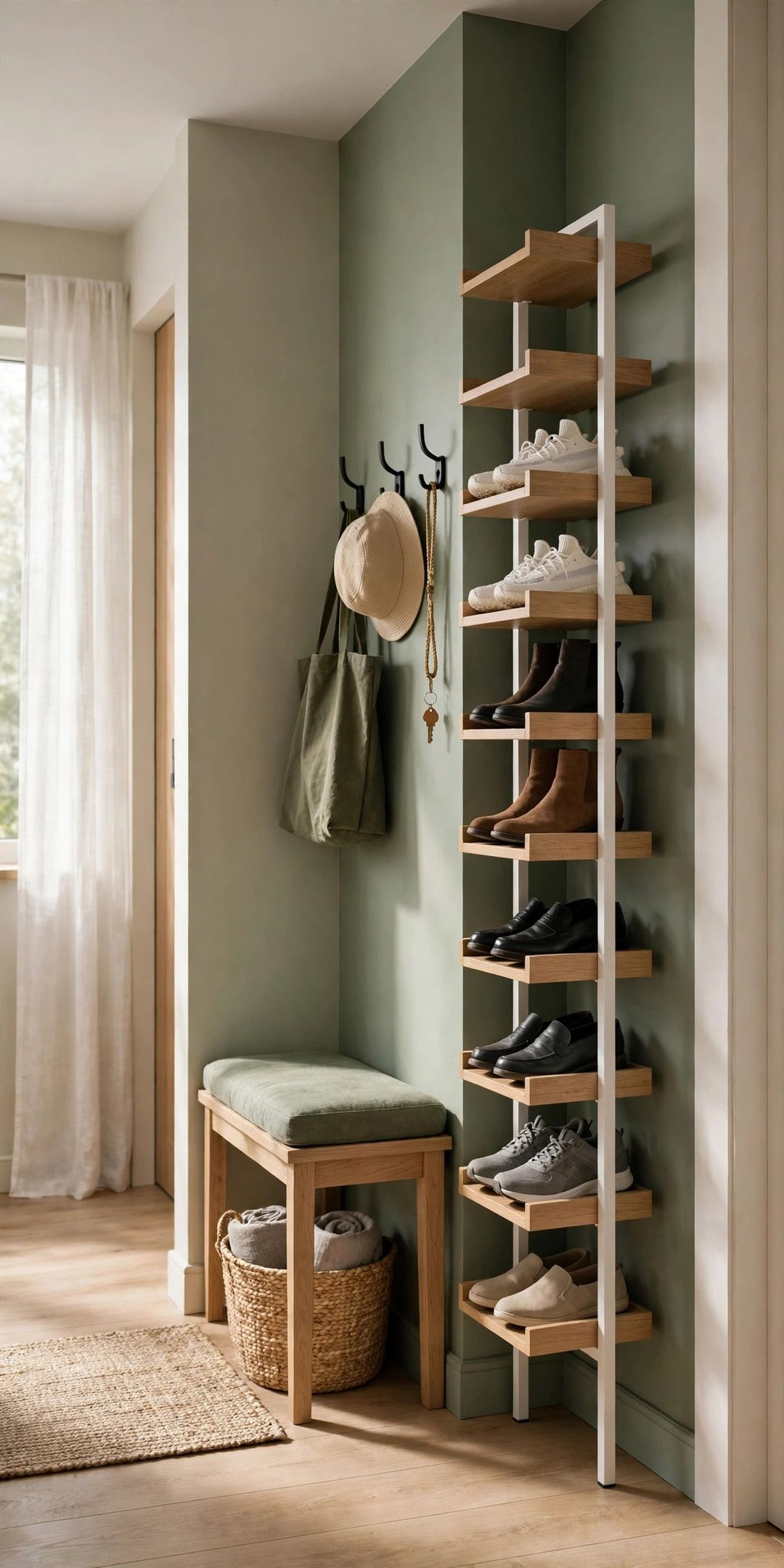
Shoes spread across a narrow entryway until there is barely a path to the door. The fix is to store up, not out. The best vertical shoe rack narrow entryway choice uses height well, keeps pairs easy to grab, and leaves enough floor space for the door to swing and people to pass.
Measure first, in three directions. Note the width of the free wall, the depth from the wall to where the door swings, and the height up to any switch, thermostat, or art. Most narrow entryways can spare only 10 to 14 inches of depth. Then count the pairs that truly need to live by the door. Daily shoes belong here; off-season pairs can live in a closet. The picks below are all vertical rack styles, grouped by how much they hold and how much room they take.
Tall Towers That Hold the Most Pairs
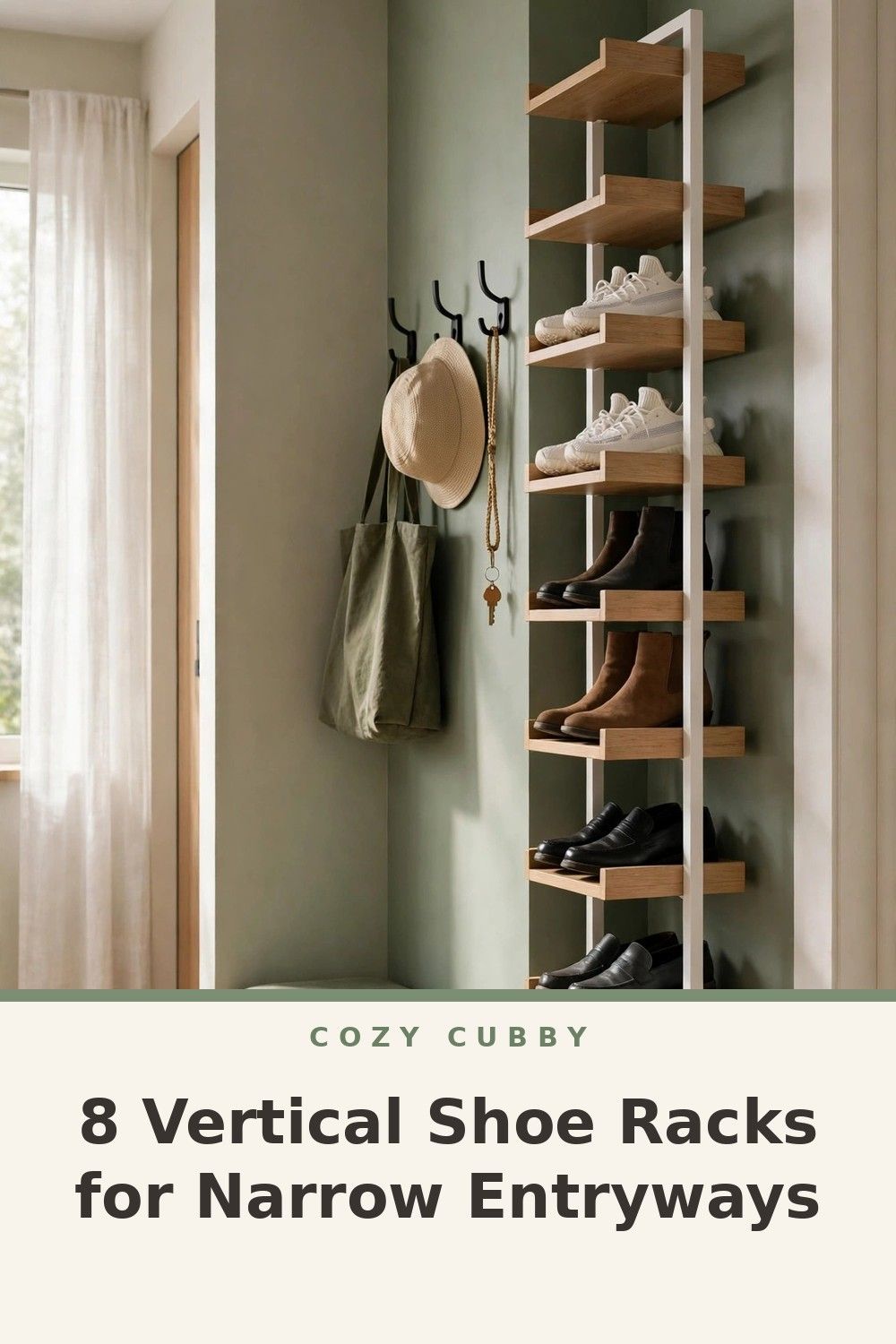
1. Tall narrow metal frame rack, 8 to 10 tiers. Best for maximum capacity in a slim footprint, this tower is often only 12 to 20 inches wide and about 10 to 12 inches deep, yet holds roughly 16 to 25 pairs on stacked open bars. Open tiers dry wet shoes well and keep every pair visible. The drawback is stability: tall, light frames can wobble on uneven floors, and heels can slip between bars. Typically $25–$45.
2. Stackable modular tower with closed shelves. Best for a custom fit, this style stacks separate shelf units two, three, or four high, so the tower can grow or split as needs change. Solid shelves, usually 10 to 12 inches deep, suit heels, flats, and kids' shoes better than bars. The drawback is cost per pair: buying enough modules for a tall tower adds up, and mixed stacks can look uneven. Typically $35–$65.
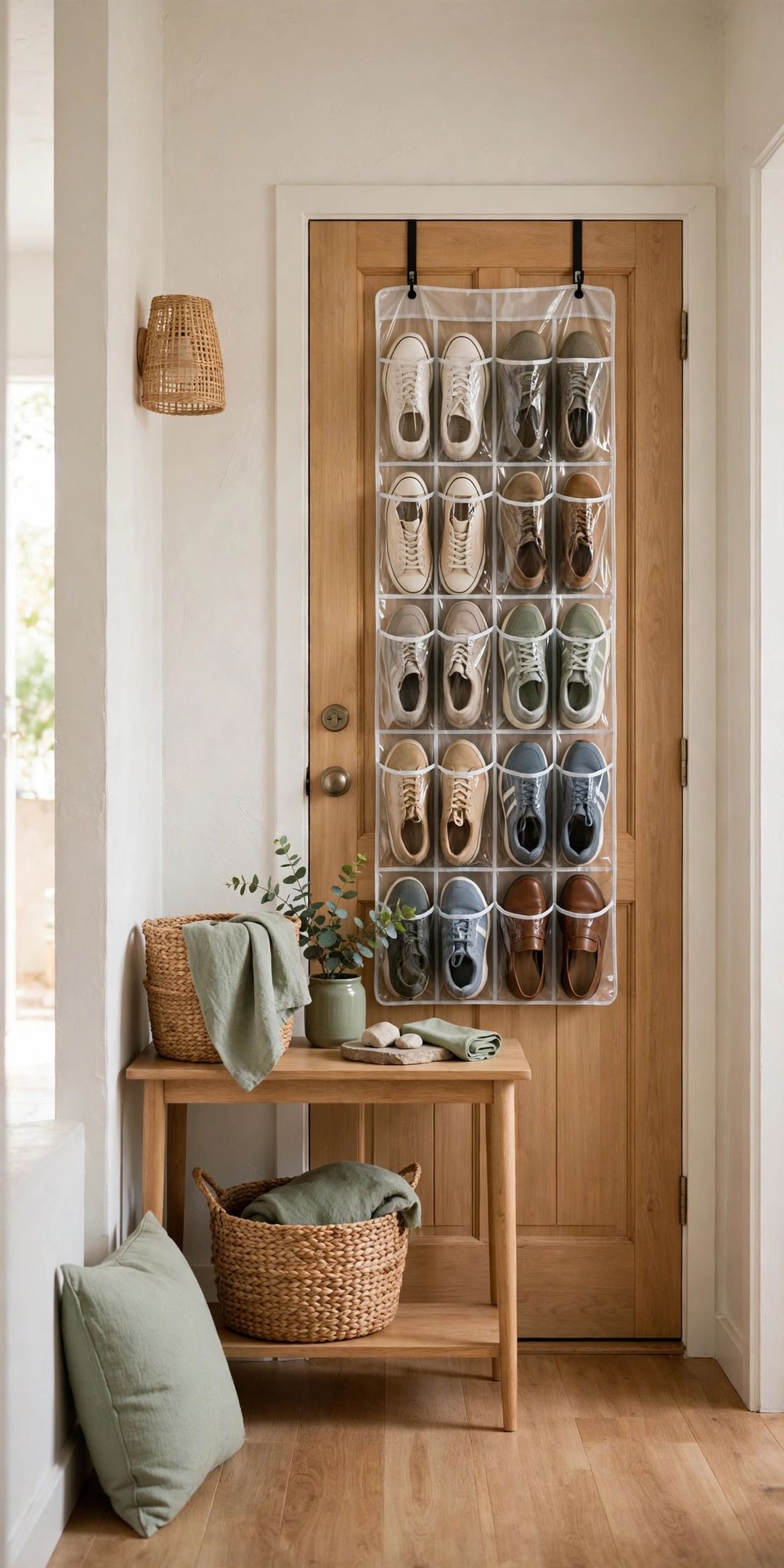
3. Rotating vertical shoe tower. Best for deep storage in a small square of floor, this round or square tower spins so shoes store on all sides. Many stand about 12 to 16 inches across and hold roughly 12 to 20 pairs in a footprint a flat rack cannot match. The drawback is clearance: the tower needs space to spin without hitting walls, and it rarely fits a truly narrow strip beside a door. Typically $45–$85.
Slim Racks for Tight Walls and Gaps
4. Ultra-slim open rack, under 10 inches deep. Best for the tightest entries, this lean frame holds shoes at a slight angle or on short shelves so the whole rack stays shallow. Widths often run 16 to 24 inches with room for about 6 to 10 pairs across 3 to 5 tiers. The drawback is shoe size: large men's shoes and chunky boots may overhang the shelves and block the walkway anyway. Typically $20–$38.
5. Slim rolling vertical rack. Best for a gap beside a door, closet, or washer, this narrow tower on small wheels slides into spaces about 8 to 12 inches wide and pulls out for access. Tiered shelves hold roughly 6 to 12 pairs stacked high instead of wide. The drawback is balance: a tall, narrow rack on wheels can tip if it is loaded heavily on top or pulled too fast. Typically $28–$50.
6. Ladder-style leaning rack. Best for a styled entry wall, this A-frame or leaning style rests against the wall with shelves that get shallower toward the top. It needs no assembly beyond a few screws on many models, and the open frame keeps the entry feeling light. The drawback is security: leaning racks should be anchored in homes with kids or pets, and total capacity is modest, often 6 to 9 pairs. Typically $35–$60.
Covered and Corner Vertical Picks
7. Tall slim cabinet with flip-down drawers. Best for a clean, closed look, this vertical cabinet hides shoes behind two or three flip-down doors in a unit often just 8 to 10 inches deep. Each drawer typically holds 2 to 4 pairs, for about 6 to 12 pairs total. The drawback is fit: deep drawers suit most shoes, but tall boots and high-tops often will not close inside. Wall anchoring is also a must for safety. Typically $55–$110.
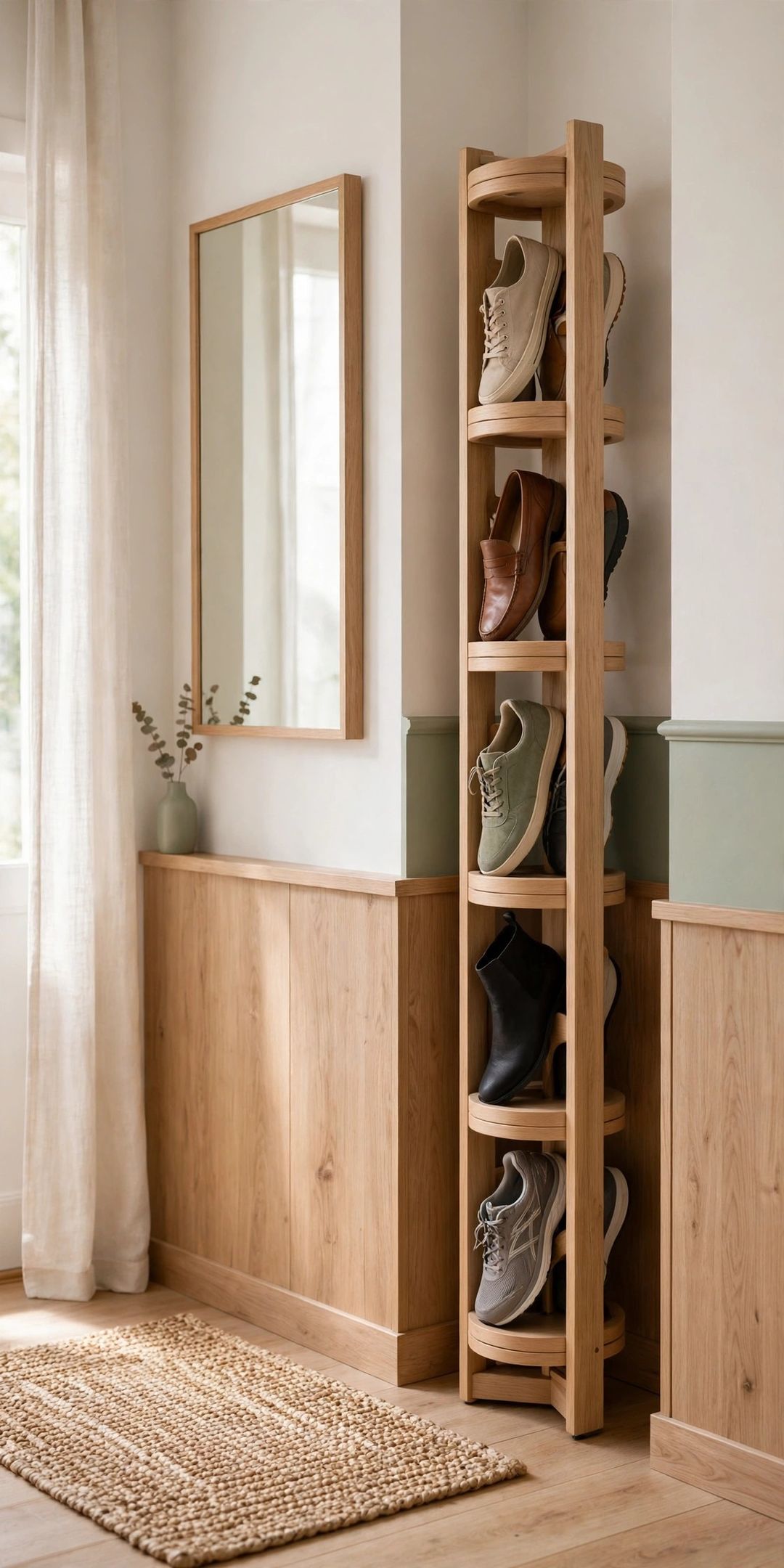
8. Corner vertical shoe rack. Best for a dead corner beside the door, this quarter-round or angled tower turns wasted space into storage for about 8 to 14 pairs. Corner units use height well and keep the main walkway fully clear. The drawback is access: shoes at the back of deep corner shelves are harder to reach, and the shape will not line up flat if the entry layout changes. Typically $30–$55.
What to Buy
Tall narrow metal frame rack — the best first buy for most narrow entryways, because it holds the most pairs per dollar and per inch of floor, and open tiers handle daily shoes well. Typically $25–$45.
Tall slim cabinet with flip-down drawers — the best buy when looks matter most, since closed doors hide the shoe pile and the shallow depth fits entries other racks cannot. Typically $55–$110.
Slim rolling vertical rack — the best buy for renters and odd gaps, because it needs no wall space, no anchoring, and can move to a closet when guests arrive. Typically $28–$50.
Mistakes to Avoid
- Measuring width but not depth. A rack that fits the wall can still block the door swing or the walkway; check both before buying.
- Storing every shoe by the door. Vertical racks fill fast. Keep only daily pairs here and move off-season shoes to a closet or under a bed.
- Skipping the anchor on tall units. Tall, narrow racks and flip-drawer cabinets can tip when loaded or pulled; anchor them to the wall where the design allows.
- Ignoring shoe size. Measure the longest and tallest shoes in the home. Boots and high-tops rule out several slim and closed styles.
- Blocking vents and switches. A tower placed over a floor vent or in front of a thermostat creates daily annoyance that a few inches of shift would prevent.
Frequently Asked Questions
How many pairs does a vertical shoe rack hold?
It depends on height and shelf style. Slim 3 to 5 tier racks often hold 6 to 10 pairs, while tall 8 to 10 tier towers can hold 16 to 25 pairs of standard adult shoes. Boots and bulky sneakers take the space of two pairs.
Will a vertical rack fit men's large shoes?
Many will, but check shelf depth first. Large shoes need about 12 inches of depth to sit flat. Ultra-slim racks under 10 inches deep suit smaller shoes and may leave large pairs hanging over the edge.
Are open racks or closed cabinets better for an entryway?
Open racks cost less, dry wet shoes faster, and make pairs easy to see and grab. Closed cabinets look tidier and contain dust and odor better, but they cost more and fit fewer bulky styles.
How can a tall shoe rack be kept from tipping?
Place it on a level floor, load the heaviest shoes on the lowest tiers, and use the wall anchor strap or bracket if one is included. Keep climbing-prone kids from using it as a step or handle.
In a narrow entryway, height is free storage that most homes ignore. Measure the strip of floor by the door, count only the pairs that belong there, and let a vertical rack do the rest. Save this post to a shoe storage board on Pinterest so the widths and capacities are handy when comparing racks.