A cleaning closet loses space fast when brooms, mops, and dustpans all lean in one corner and slide to the floor. Handles tangle, mop heads stay damp against the wall, and finding one tool means moving three others first.
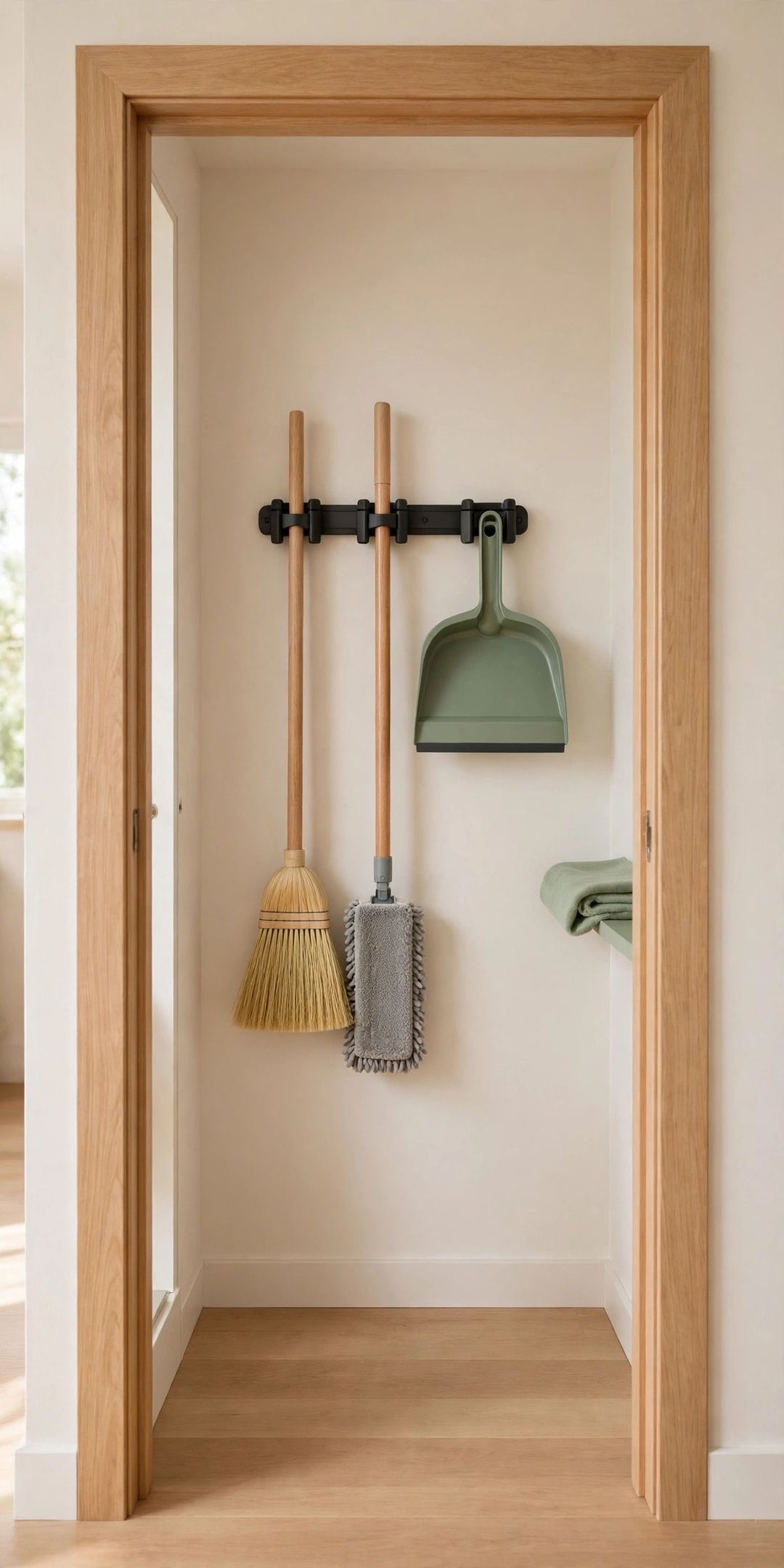
The best wall mounted broom and mop holder lifts everything into one visible row, so the floor stays clear for a bucket, a vacuum, or extra supplies. The right choice depends on your walls and your tools. Measure handle thickness, count what you need to store, and decide early if you can drill into studs or need a no-drill option.
The seven holders below are grouped by mounting type. Each one suits a different mix of heavy wet mops, light brooms, and small tools like brushes and dusters.
Screw-In Grip Rails and Clamp Holders
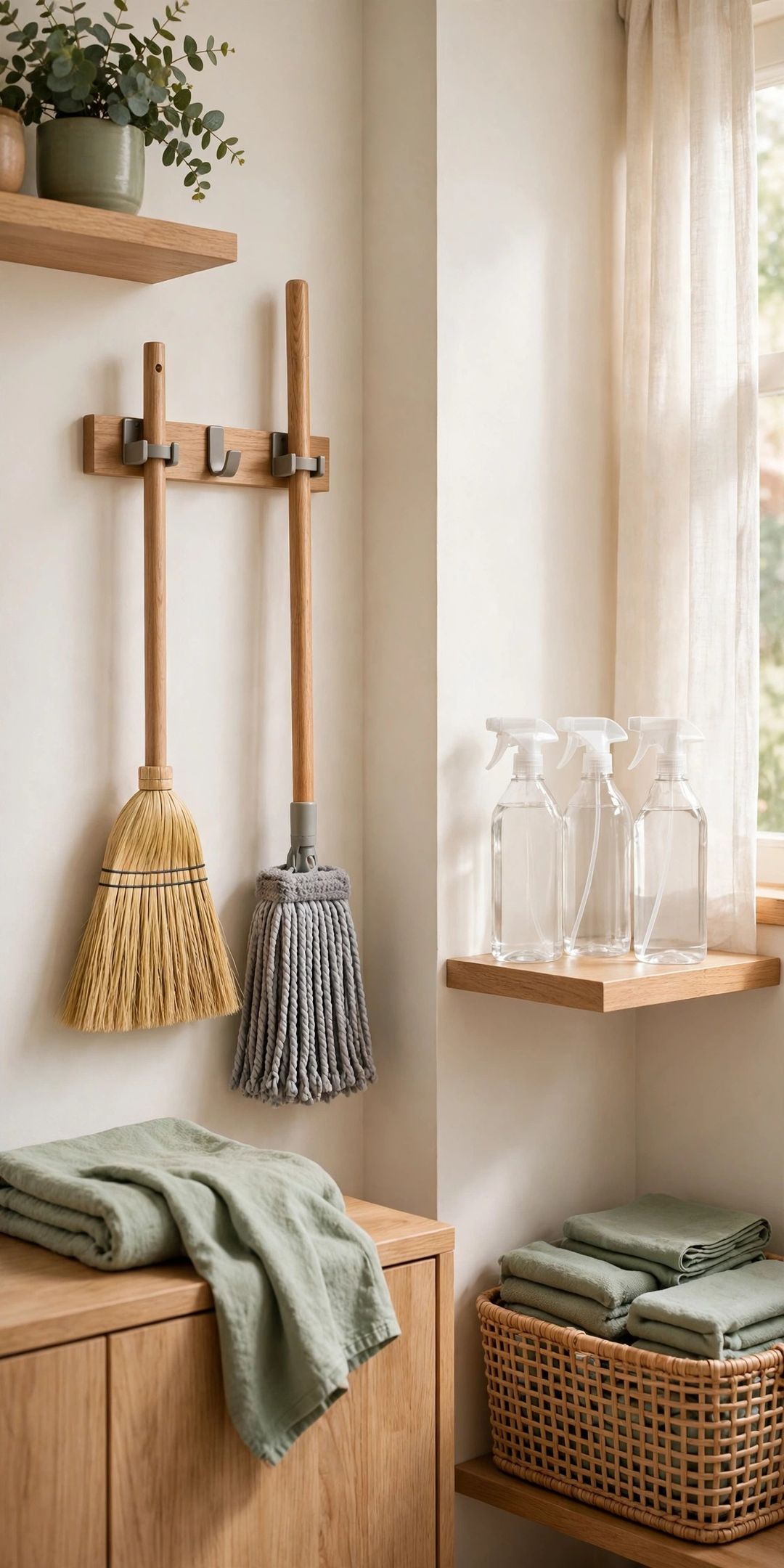
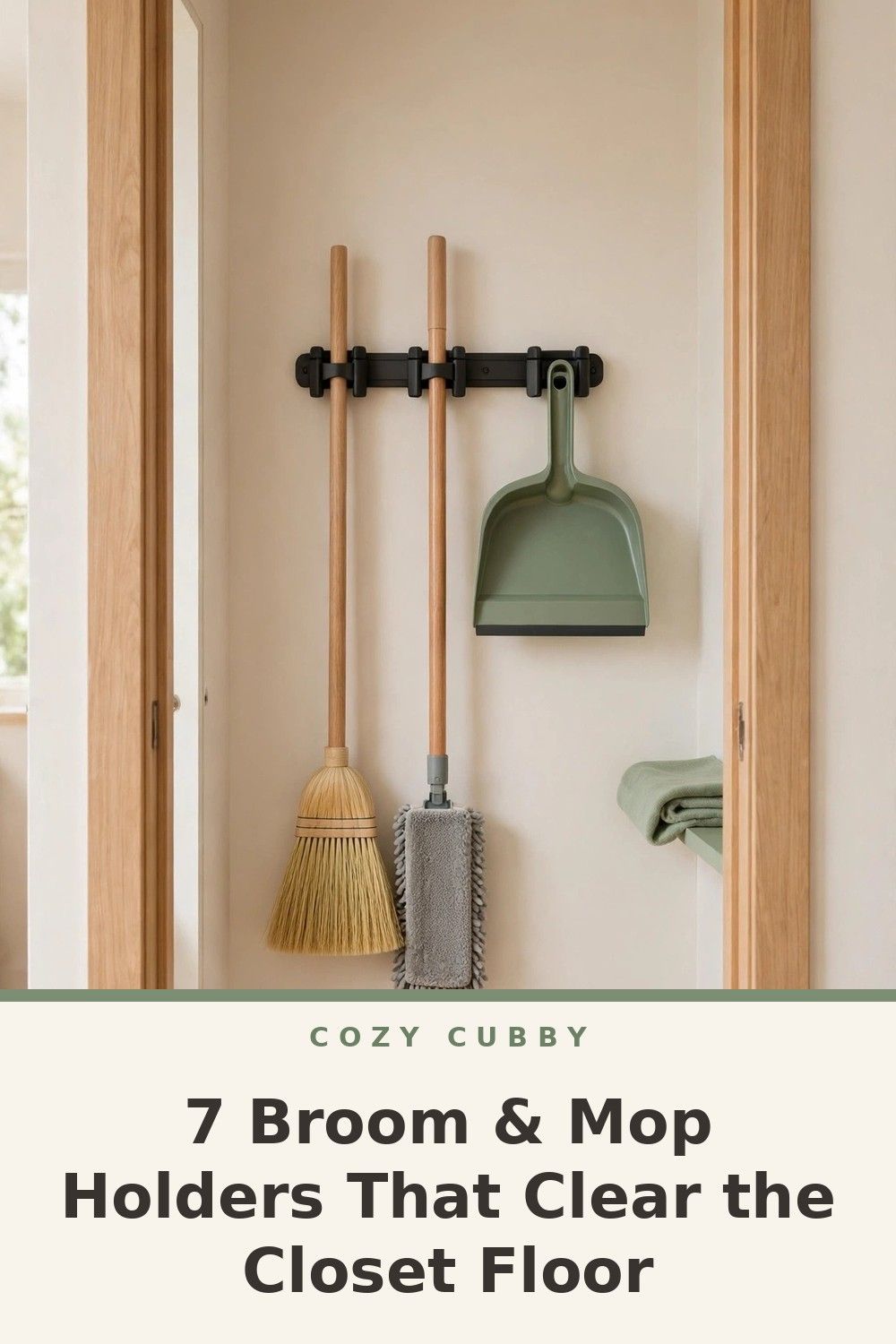
1. Spring-grip rail holder, 3 to 5 slots. Best for most cleaning closets, this single rail mounts with screws and holds handles in spring-loaded grips that open when you push a handle in and close around it. One rail can hold a broom, a flat mop, and a dustpan in a row about 12 to 17 inches wide. The drawback is grip wear: the springs and rubber pads can loosen on very thin or very heavy handles over time, so check the stated handle range before you buy. Typically $12–$22.
2. Individual clamp-style wall hooks. Best for odd spaces and mixed tools, these single clamps screw in one at a time, so you can space them for wide mop heads, narrow brushes, or a tall broom in a gap beside a water heater. Each clamp grips one handle and often includes a small hook for a cloth or dustpan. The drawback is alignment: separate clamps take longer to install in a straight line, and each one needs its own screws and wall anchors. Typically $10–$18 for a pack of 4 to 6.
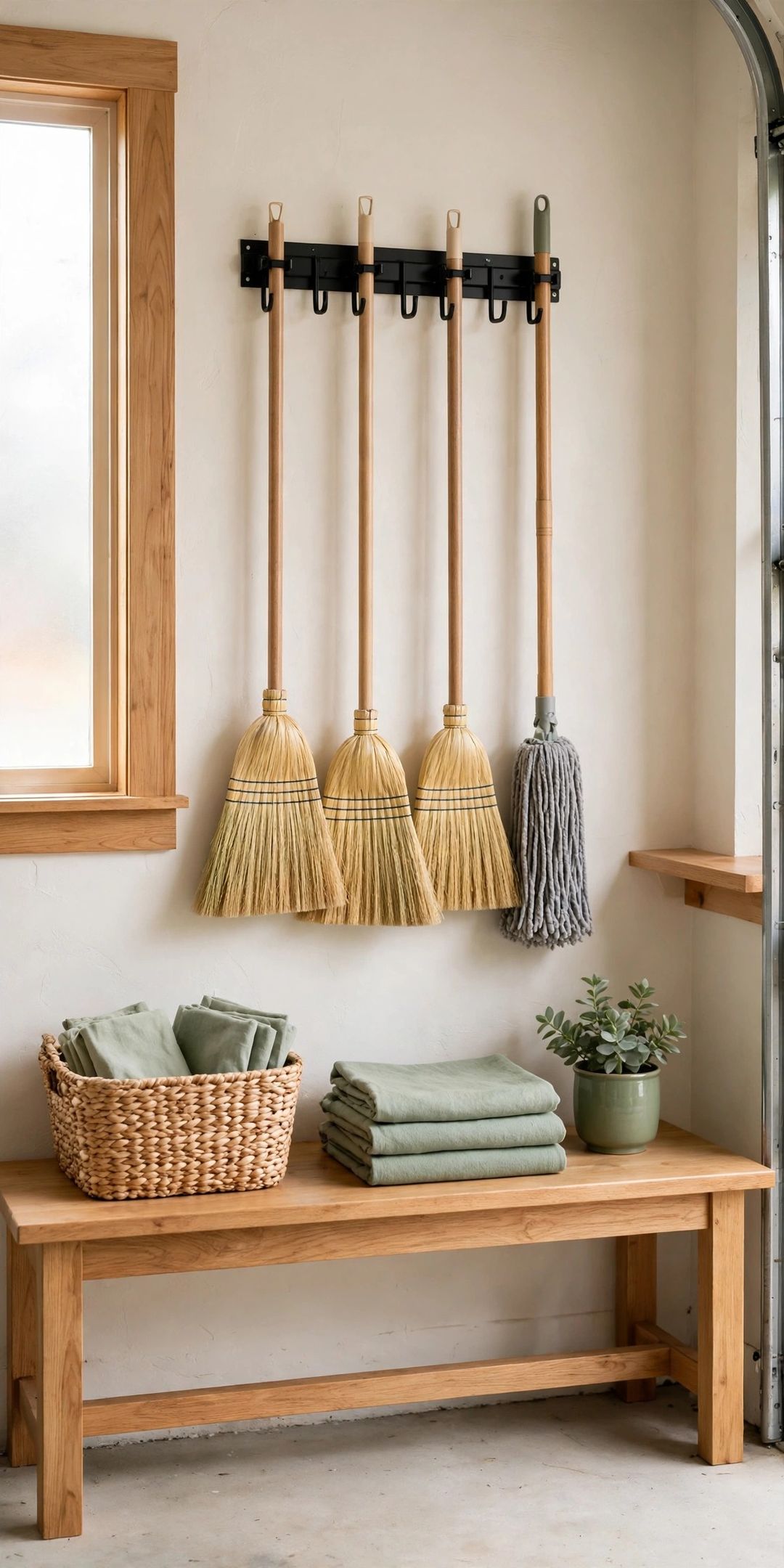
3. Heavy-duty steel grip rail. Best for garages and utility rooms with heavy tools, this sturdier rail uses metal grips or rollers and a higher weight rating per slot, often around 6 to 8 pounds. It handles wet string mops, push brooms, and long-handled tools that feel too heavy for a basic plastic rail. The drawback is weight and price: the rail itself is heavier to mount, needs solid studs or strong anchors, and looks more industrial than most closets need. Typically $25–$45.
No-Drill and Flexible Options
4. Adhesive single holders, no-drill. Best for renters and smooth tile or painted walls, these small holders stick on one by one and grip a single handle each, so you can place a broom by the kitchen door and a mop in the laundry area. Most need a clean, flat surface and a full day for the adhesive to set before use. The drawback is holding power: adhesive holders can fail on rough, damp, or dusty walls, and they hold less weight than screwed-in holders. Typically $8–$15 for a pack of 4.
5. Over-door holder rack with grips and hooks. Best for closets with no free wall space, this rack hangs over a standard door and adds grips for handles plus hooks for brushes, cloths, and a dustpan. It installs in minutes with no screws and moves easily if you change rooms. The drawback is door fit: thick doors may not close well, the rack can rattle when the door swings, and heavy wet mops can make it shift. Typically $20–$35.
Full Rail Systems for the Whole Tool Set
6. Rail system with sliding grips and add-on hooks. Best for families with many tools, this longer track, often 24 to 36 inches, lets grips and hooks slide, lock, or clip on where you need them. Brooms and mops sit in the grips, while smaller hooks hold scissors, brushes, and spray bottles off the shelf. The drawback is cost and setup: systems with extra hooks cost more, and planning the layout takes longer than mounting one fixed rail. Typically $30–$55.
7. Compact double-grip holder for small closets. Best for apartment closets and narrow laundry nooks, this short holder fits two or three main tools in about 8 to 11 inches of wall space. Some versions add a small shelf or hooks below for a dustpan and brush set. The drawback is capacity: it solves the broom and mop problem only, so extra tools still need a hook or bin elsewhere. Typically $10–$18.
What to Buy
Spring-grip rail holder, 3 to 5 slots — the best first buy for most homes, because one rail clears the whole floor pile, mounts in minutes, and fits standard broom and mop handles. Typically $12–$22.
Individual clamp-style wall hooks — the flexible buy, since you place each clamp exactly where a tool fits instead of forcing everything onto one rail. Typically $10–$18 for a pack of 4 to 6.
Adhesive single holders — the renter-friendly buy, because they add storage without holes and can split tools between two rooms. Typically $8–$15 for a pack of 4.
Rail system with sliding grips and hooks — the full-set buy for garages and busy laundry rooms where brushes and bottles need a home too. Typically $30–$55.
Mistakes to Avoid
- Mounting only into drywall. A loaded rail pulls hard on its screws. Use studs when you can, or anchors rated for the full weight of wet tools.
- Ignoring handle thickness. Grips have a size range. Handles that are too thin slip out, and handles that are too thick will not push in at all.
- Hanging wet mops flat against the wall. A damp mop head needs air. Leave space below and around it, or store it head-up so it can dry.
- Mounting too low or too high. Handles should clear the floor by a few inches but stay easy to grab. Test the height with your tallest tool before drilling.
- Overloading adhesive holders. Stick-on holders suit light brooms, not heavy wet mops. Keep loads light and surfaces clean, dry, and smooth.
Frequently Asked Questions
How high should a broom and mop holder be mounted?
Mount it so the tool heads clear the floor by about 2 to 4 inches and the handles sit at a comfortable grab height. For most brooms and mops, that puts the rail around 48 to 60 inches from the floor, but test with your longest tool first.
Can a wall holder hold a heavy wet mop?
Yes, if the grip and the mounting match the weight. Choose a screwed-in metal or heavy-duty rail for wet string mops, mount into studs or strong anchors, and check the per-slot weight rating on the package.
Do adhesive holders damage walls when removed?
They can pull paint if removed fast or used on weak paint. Follow the removal steps on the package, warm the pad gently if directed, and test one holder in a hidden spot first. Renters should expect some risk.
How do you stop brooms from sliding down in a grip holder?
Clean dusty or greasy handles, check that the handle size fits the grip range, and push the handle fully into the slot. If one tool keeps slipping, move it to a clamp or hook rated for its weight and shape.
Start with one rail, hang the tools you use every week, and leave a spare slot for the tool that always ends up on the floor. Save this post to your Cleaning Closet board on Pinterest so the sizes and picks are handy when you shop.