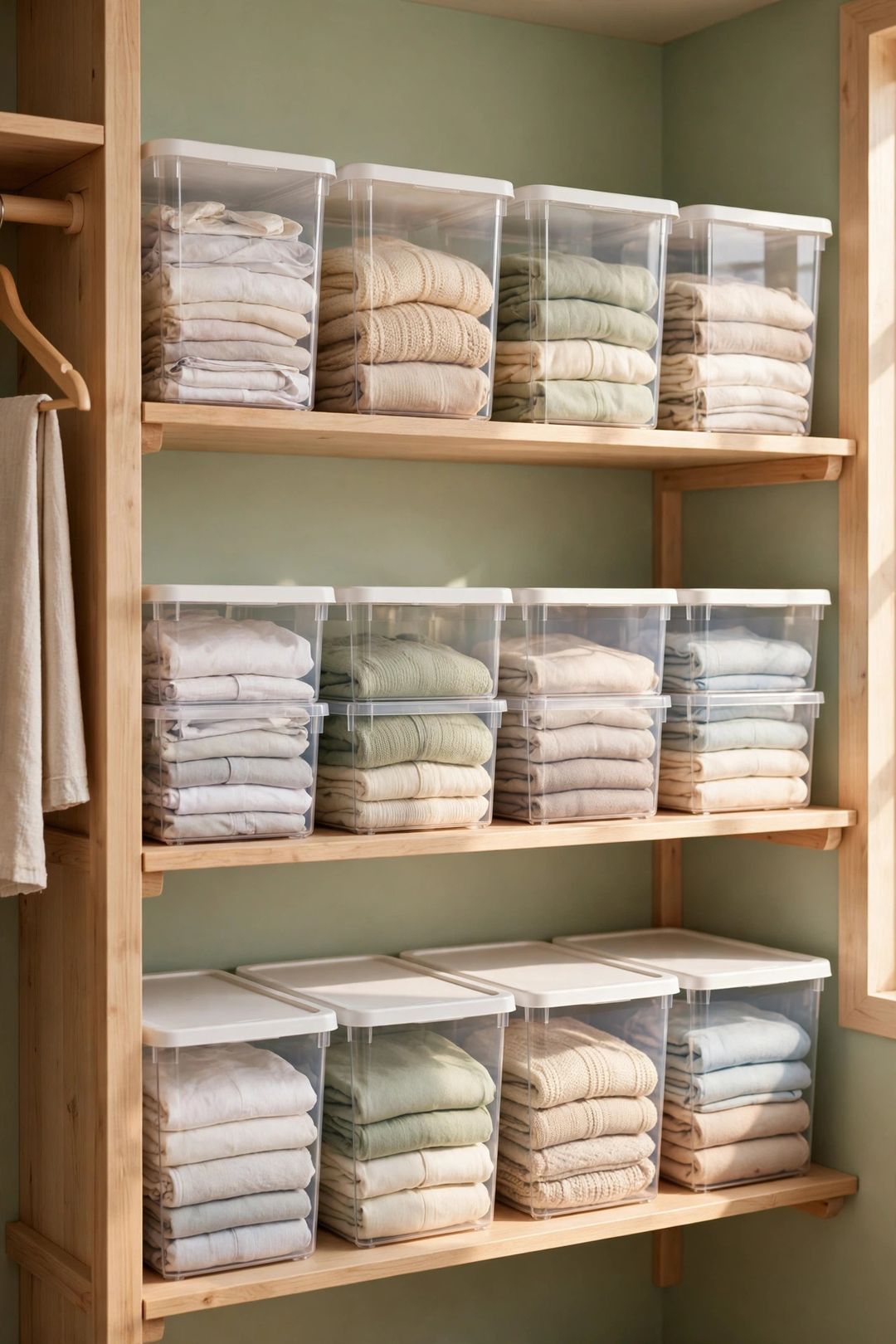
Blankets, quilts, and spare sheet sets are soft, bulky, and oddly hard to store well. They slide off shelves, collect dust on open stacks, and somehow expand to fill any closet. The best zippered storage bags blankets linens setup is not one bag bought eight times. It is a mix that matches how each item is used, stored, and aired out.
Measure before you shop. Fold one blanket the way you plan to store it, then note its length, width, and height. Check your shelf depth and, if you want under-bed storage, measure the clear space under the frame in inches — many beds allow only 6 to 7 inches. Comforters need far more room than sheet sets, while quilts and anything with loft do best when they are not crushed flat for months.
Large Bags for Blankets & Comforters
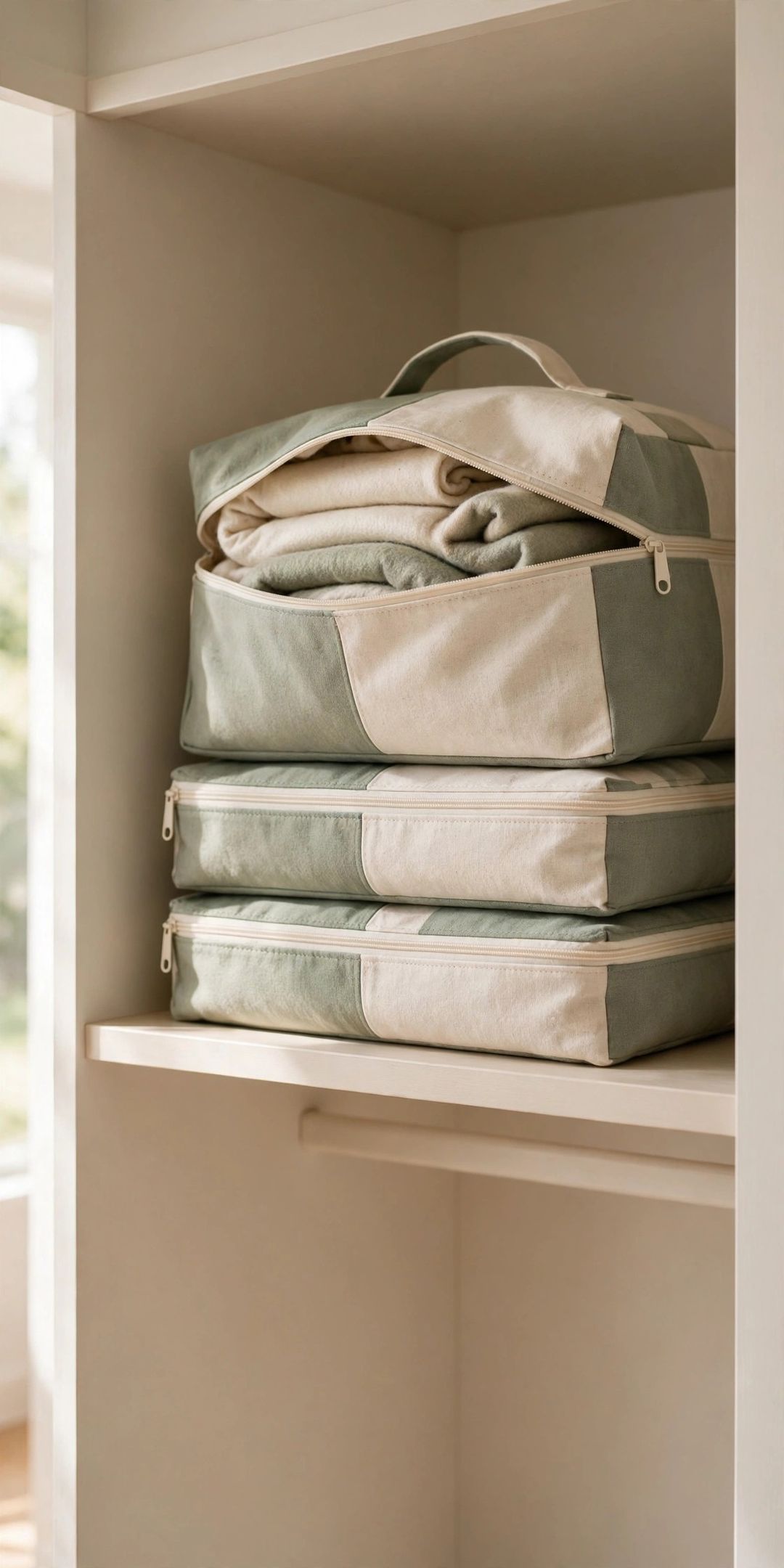
1. Large fabric bag with a clear window. Best for closet shelves, this soft-sided bag usually holds one king comforter or two folded blankets, often around 24 to 26 inches long. The clear window lets you see what is inside without unzipping every bag in the stack. One honest drawback: the window panel is less sturdy than the fabric and can crack or split if the bag is dragged or overstuffed. Typically $18–$30 for a set of 2.
2. Breathable fabric bag set. Best for quilts and blankets you want to protect from dust while still letting air move, these non-woven or cotton-blend bags commonly come in packs of 2 to 4, in large and extra-large sizes. They suit long storage on a shelf or in a dry closet. The drawback: breathable fabric does not block spills or damp air, so it is a poor choice for a garage or a damp basement. Typically $16–$28 per set.
3. Jumbo zippered bag with reinforced handles. Best for heavy loads, this oversized bag, often about 28 to 30 inches long, can hold a thick winter comforter plus a throw or two. Sewn handles on both ends make it easier to lift down from a high shelf. The drawback is weight: filled with dense blankets, it can be too heavy for one person to lift overhead safely. Typically $14–$24 each.
Bags for Quilts, Sheets & Everyday Linens
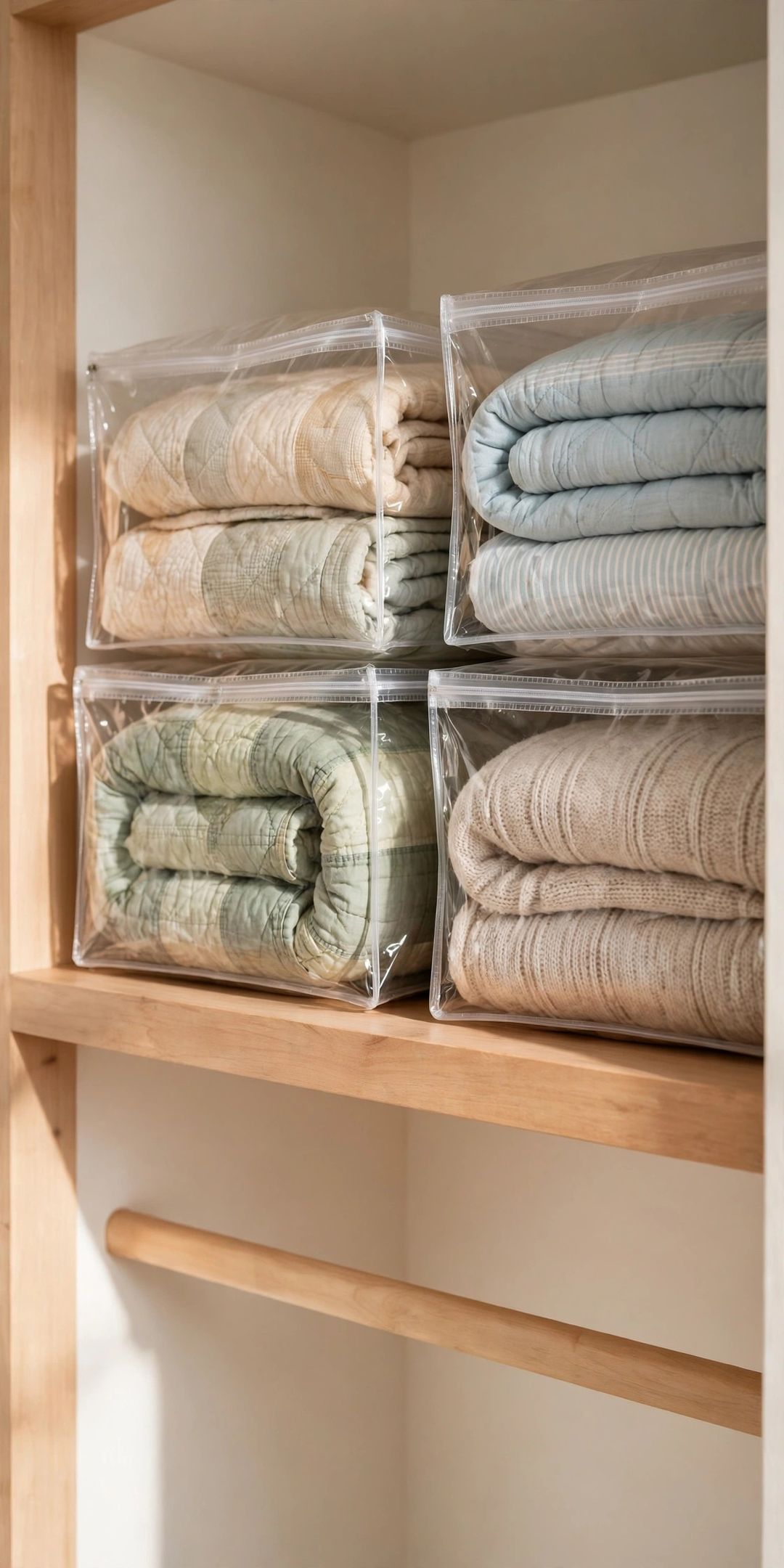
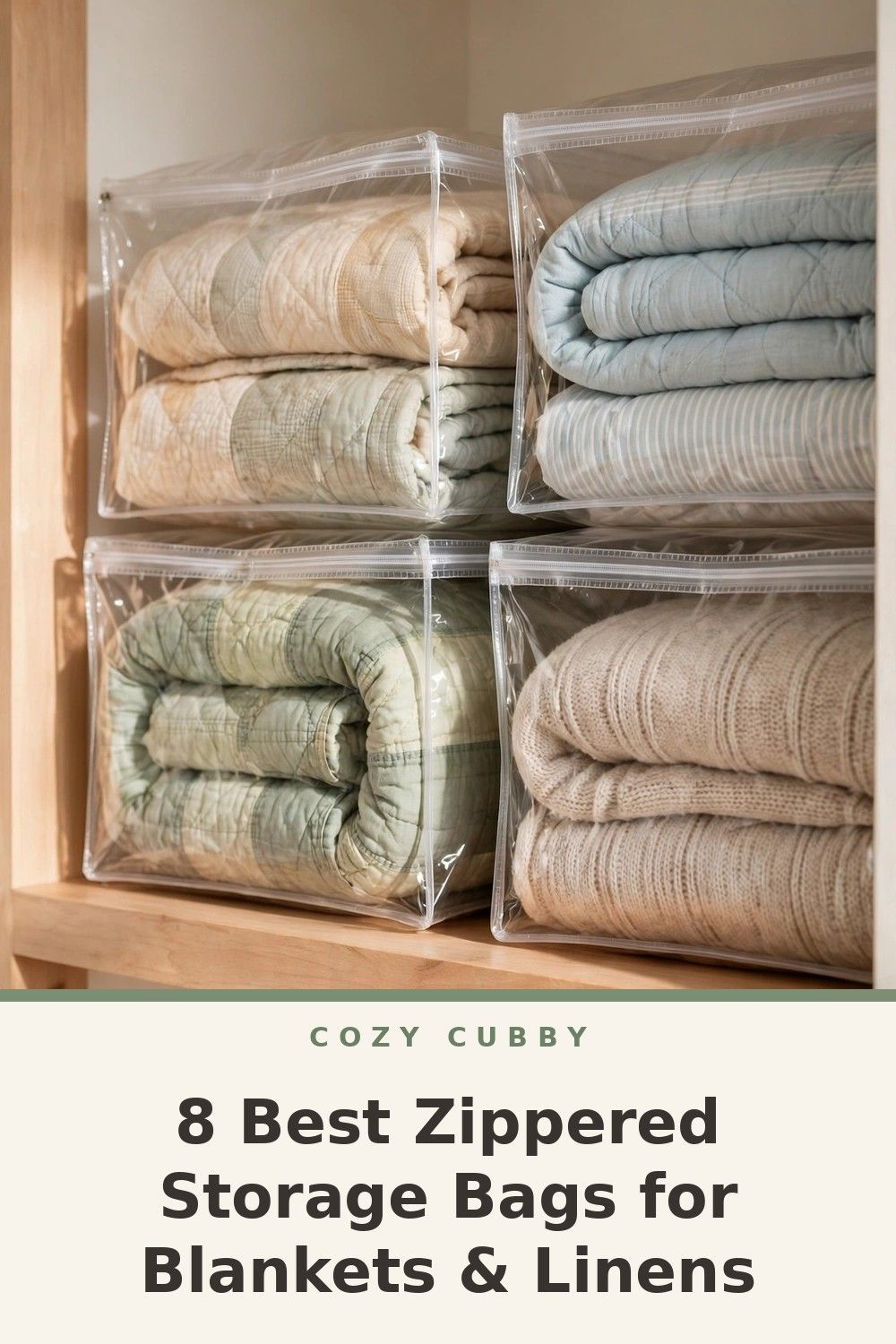
4. Clear vinyl zippered bag. Best for quick visual checks, this is the sturdy, see-through style bedding often comes in, with a zip on three sides for easy loading. Sizes range from pillow and sheet-set bags to large comforter sizes. You can wipe the outside clean with a damp cloth. The drawback: vinyl traps moisture, so linens must be fully dry before storing, and quilts stored this way should be aired now and then. Typically $12–$22 for a set of 2 to 3.
5. Medium fabric bags for sheet sets. Best for keeping each sheet set together, these smaller bags, often around 16 to 20 inches long, hold a folded flat sheet, fitted sheet, and pillowcases as one neat unit. Sets of 4 to 6 make a linen closet easy to restock. The drawback: they are too small for most blankets, so you will still need a few large bags alongside them. Typically $15–$26 per set.
6. Structured zippered bag with a label holder. Best for tidy, stackable shelves, this bag has firmer sides that hold a square shape even when it is only half full, plus a clear pocket or label slot on the front. Most hold one or two quilts or several towels. The drawback: firm sides do not squeeze into odd gaps the way soft bags do, so they waste space in tight or slanted closets. Typically $20–$34 for a set of 2.
Space-Saving & Under-Bed Bags
7. Vacuum-seal zippered bag. Best for saving the most space, this thick plastic bag has a zip seal and a valve for removing air with a vacuum or hand pump, shrinking bulky comforters by half or more once sealed. Jumbo sizes hold a full comforter set. The drawback: long, hard compression can flatten loft and crease delicate quilts, so skip it for feather, down, or heirloom pieces. Typically $16–$30 for a set of 4 to 6.
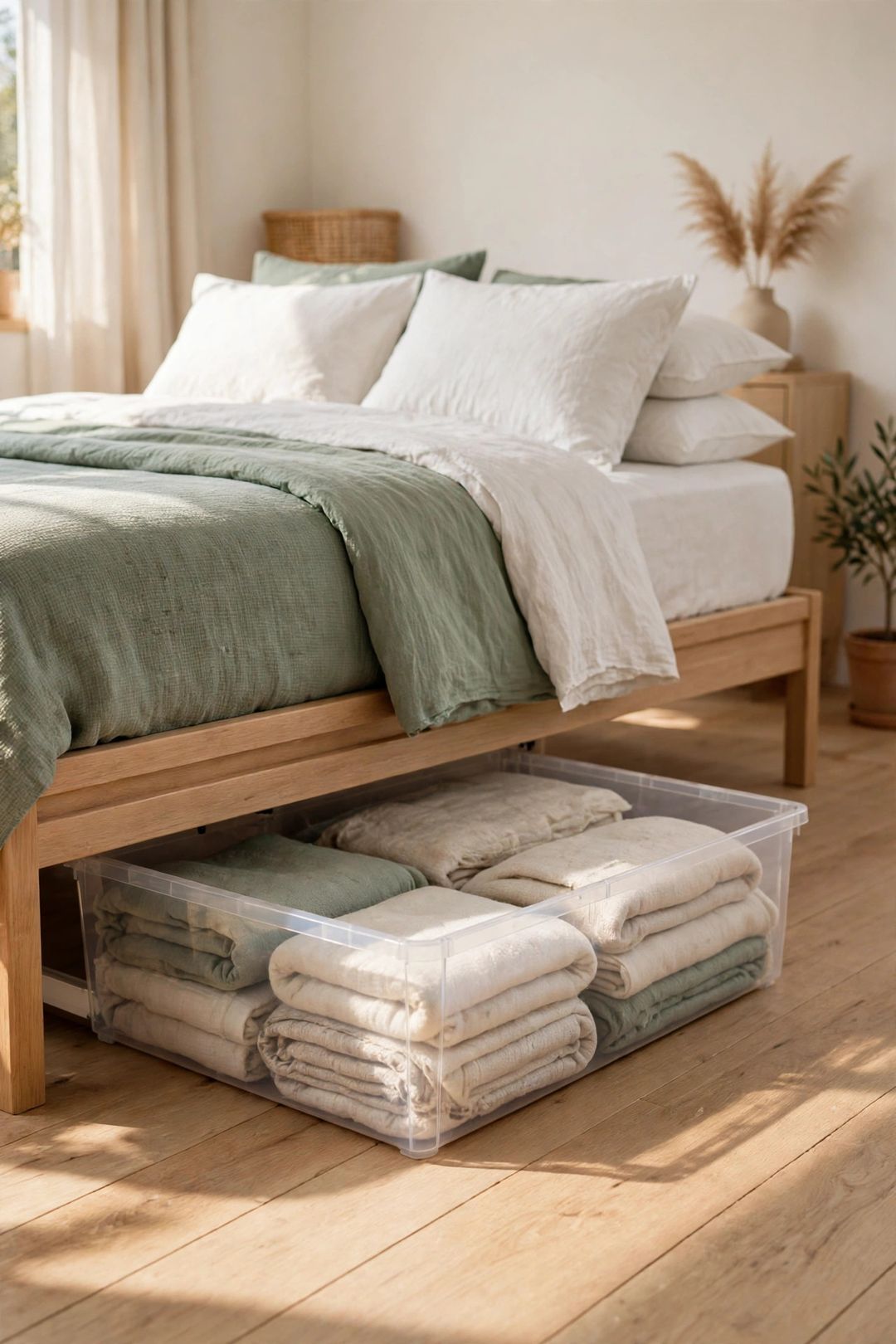
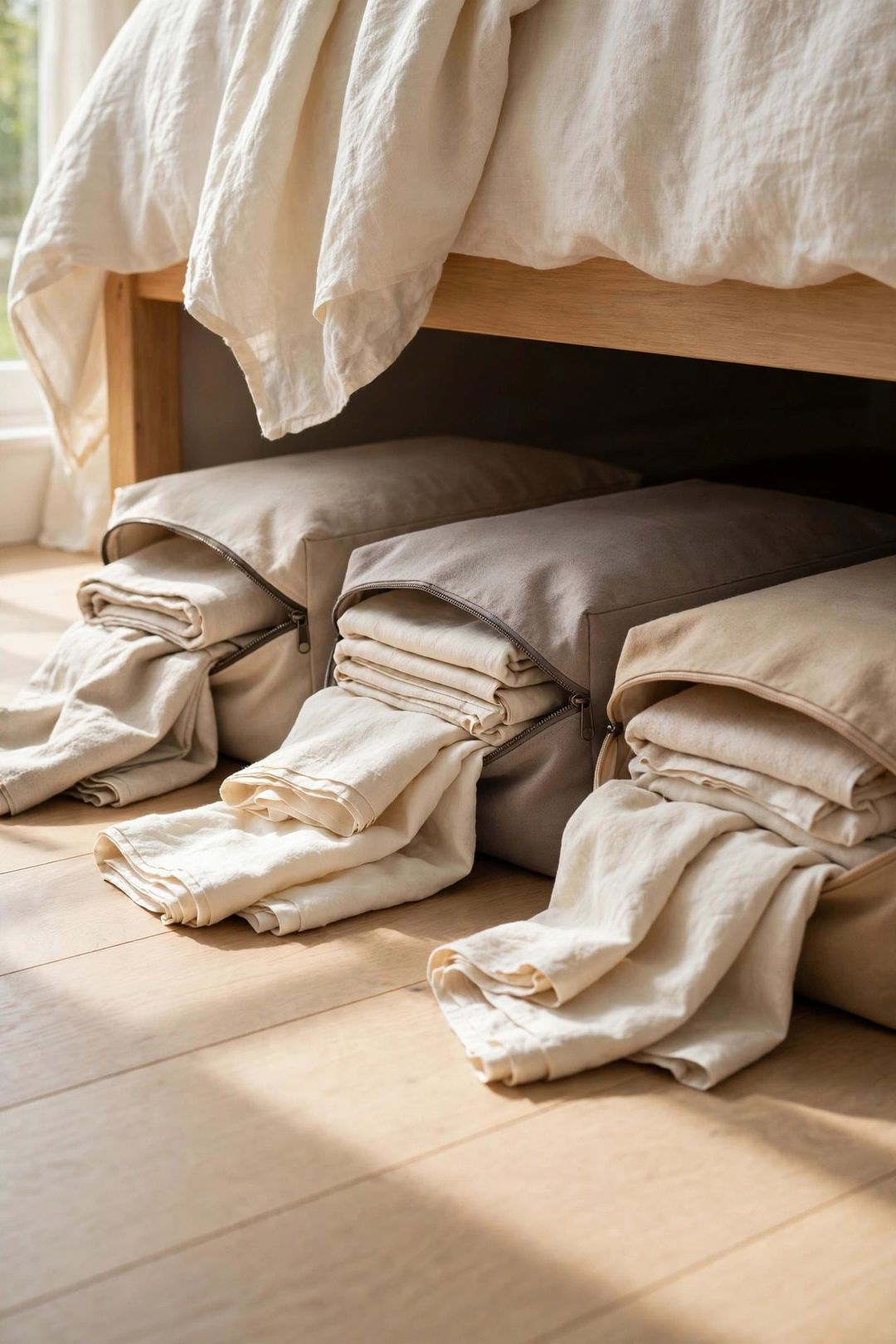
8. Low-profile under-bed zippered bag. Best for small closets and dorm-style rooms, this long, flat bag, usually 36 to 42 inches long and 6 to 7 inches tall, slides under the bed to hold off-season blankets or spare linens. A zip around the top keeps dust out. The drawback: it only works if your bed has enough clear height, and items at the back are awkward to reach without pulling the whole bag out. Typically $14–$25 each.
What to Buy
Large fabric bag with a clear window — the best first buy for most closets, because you can see the blanket you need, stack bags on a shelf, and keep dust off without sealing linens in plastic. Typically $18–$30 for a set of 2.
Breathable fabric bag set — the key buy for quilts and good blankets, since gentle air flow suits long storage better than a fully sealed bag, as long as the closet itself stays dry. Typically $16–$28 per set.
Vacuum-seal zippered bag — the space buy for sturdy, everyday comforters in a very small home; use it where space matters most, not for delicate or lofty pieces. Typically $16–$30 for a set of 4 to 6.
Mistakes to Avoid
- Storing linens before they are fully dry. Even slight dampness can lead to a musty smell in a closed bag; air items well before you zip them away.
- Overstuffing the zip. A zip forced shut over a bulging bag strains the teeth and seams, and it is often the first thing to fail.
- Vacuum-sealing everything. Down, feather, and heirloom quilts can lose loft or take deep creases; give them a breathable bag and shelf space instead.
- Guessing under-bed height. Measure the clear space under the frame first; a bag that is one inch too tall will not slide in.
- Mixing clean and used linens. Store only washed, dry items together, so smells and soil do not transfer during months in a closed bag.
Frequently Asked Questions
What size bag do I need for a king comforter?
Look for a large or jumbo bag, roughly 24 to 30 inches long when the comforter is folded, with enough height for its loft. If you have to sit on the bag to close the zip, go one size up or split the set into two bags.
Are fabric or clear bags better for blankets?
Fabric bags are better for long storage because they are sturdier and allow some air flow. Clear bags and windows are better when you swap blankets often and want to spot the right one fast. Many closets work best with fabric bags that have one clear window.
Can I store blankets in a garage or basement?
Only if the space stays dry and fairly steady in temperature. Breathable fabric will not protect against damp air, and any bag can trap moisture inside. A dry indoor closet or under-bed spot is safer for quilts and good linens.
How do I keep stored linens smelling fresh?
Wash and dry everything fully, refold quilts a different way every few months to ease creases, and open the bags now and then to air the contents. Skip strong scented products inside the bag, as the smell can build up in a closed space.
Start with the bulkiest comforter, give quilts room to breathe, and let each bag do one clear job. Save this post to your linen storage board on Pinterest so the sizes and picks are handy when you shop.