A bike is easy to ride and hard to store. In a small apartment, it ends up leaning in the entryway, blocking a closet, or taking the only free corner in the living room.
These bike storage ideas small apartment dwellers can actually use focus on three places most people overlook: walls, ceilings, and corners. Some lift the bike off the floor, some hold it flat to a wall, and some need few or no screws.
Before buying anything, note three numbers: your bike's weight, its length, and its handlebar width. Those decide which ideas below will fit your space.
1. Hang It Flat on a Wall Hook
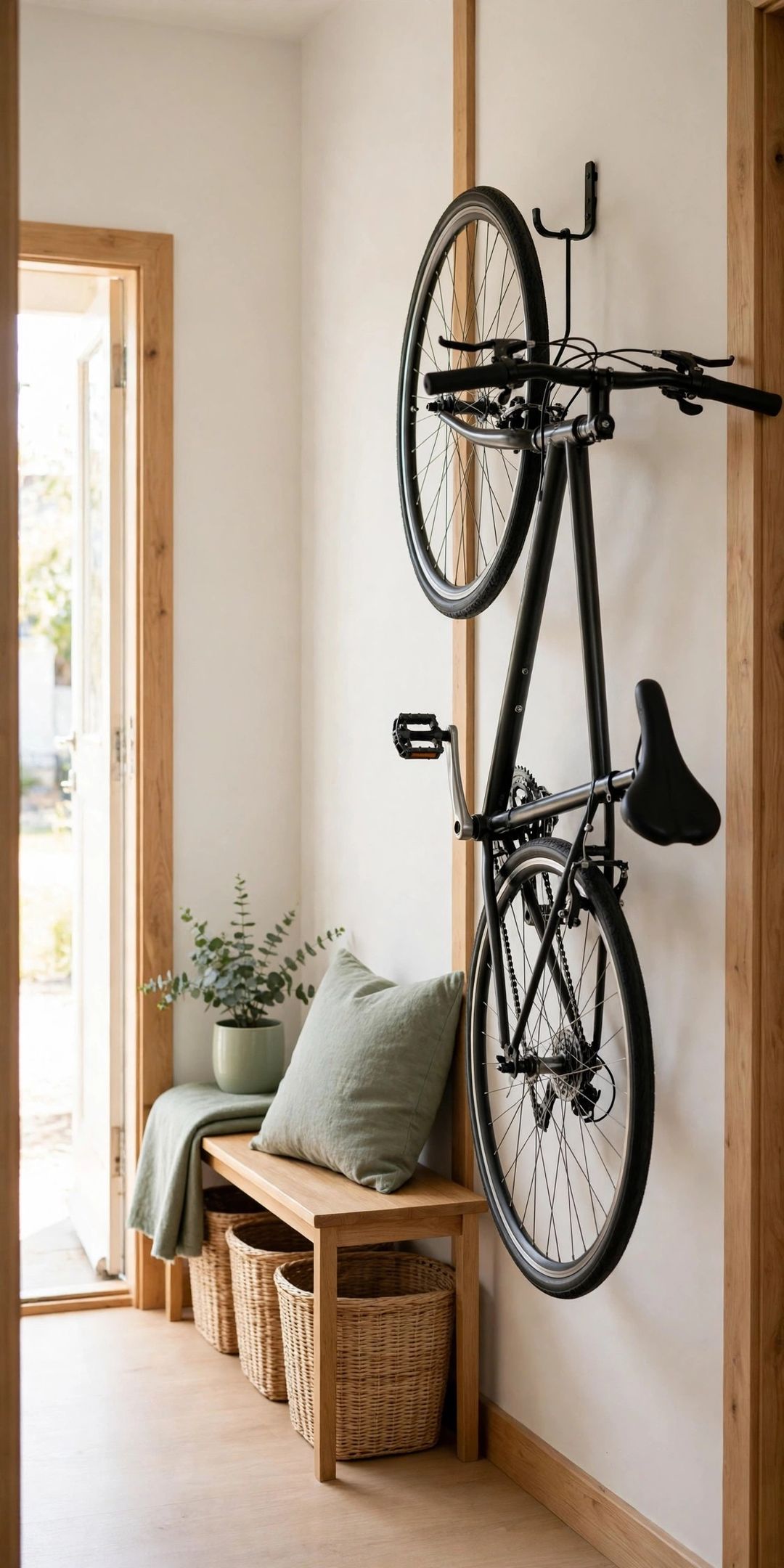
A wall hook holds the bike by its front wheel, hanging flat against the wall. A wide floor footprint becomes a thin strip of wall space, which suits an entryway or a hallway wall.
Safety first: the hook must fix into a wall stud, not drywall alone, and its weight limit must be above your bike's weight. Use a stud finder, and leave enough room to lift the bike on and off without twisting it.
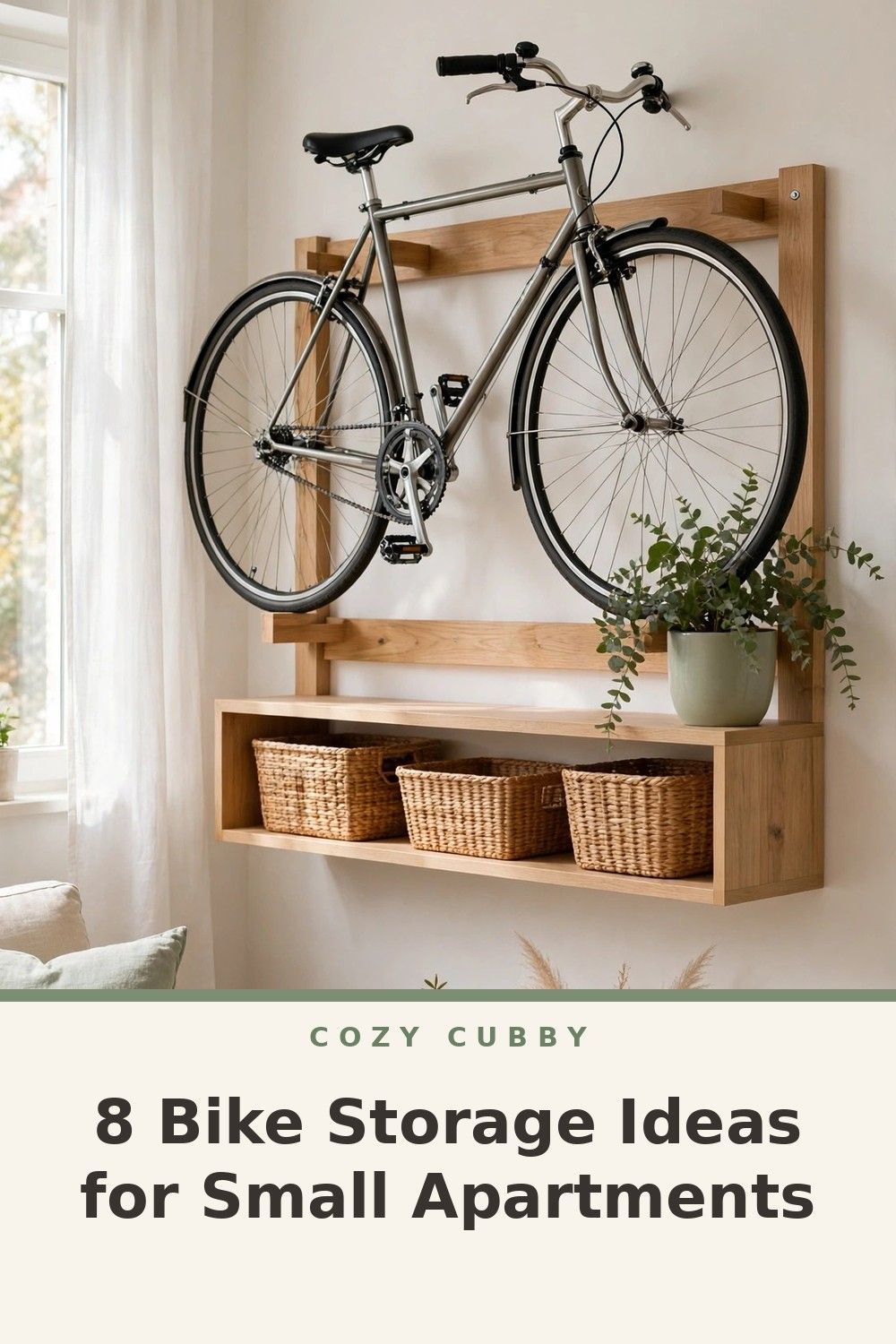
2. Use a Horizontal Wall Mount
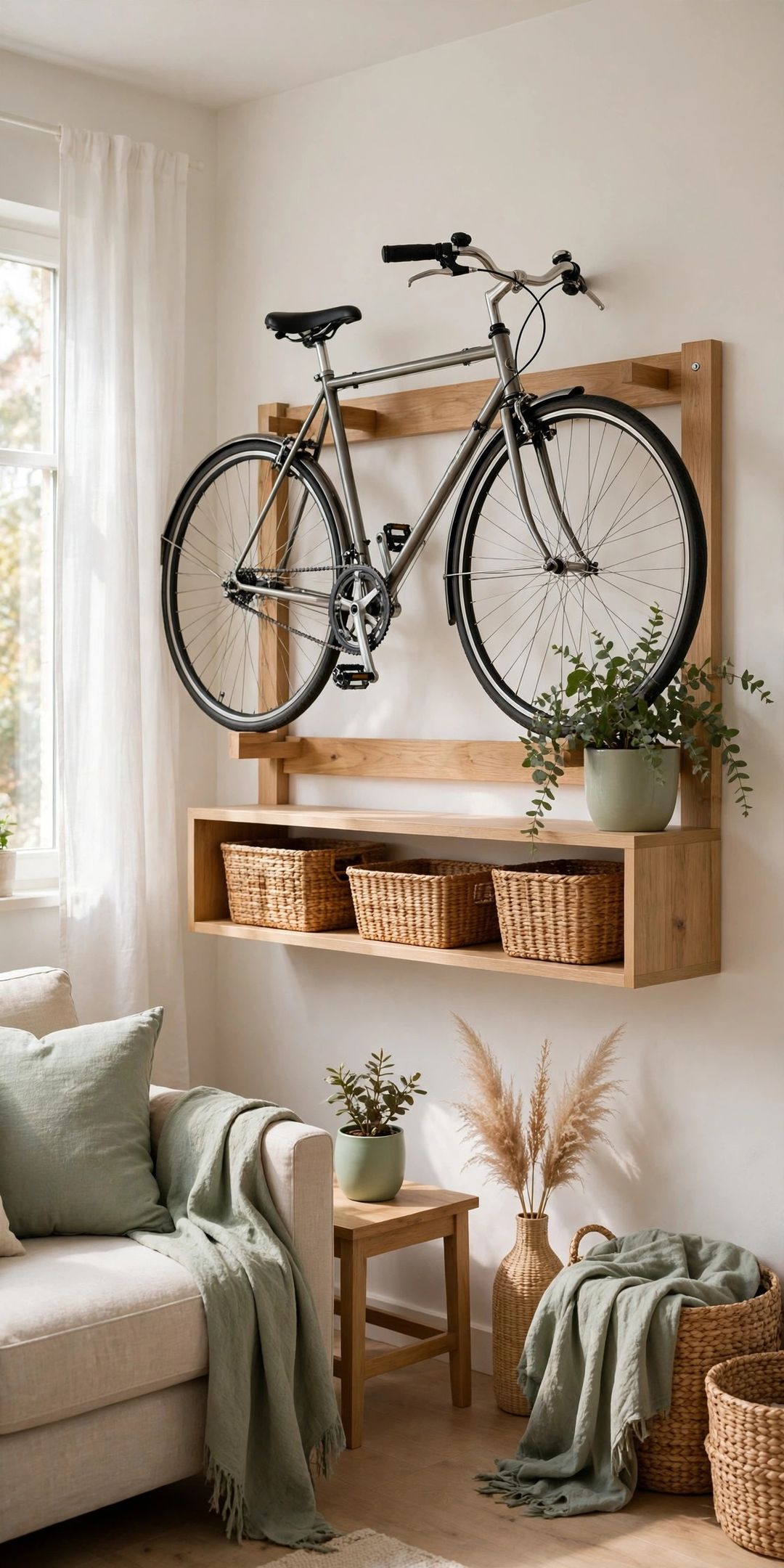
A horizontal mount holds the bike by its frame, level like a picture on the wall. The wheels stay off the floor, and the setup can look tidy in a living room or bedroom.
This style needs more wall width than a vertical hook, so measure the bike's full length first. Anchor into studs, match the mount to the bike's weight, and set it at a height you can reach without straining — a mount placed too high soon stops being used.
3. Lift It to the Ceiling With a Pulley Hoist
When wall space is full, look up. A ceiling hoist uses ropes and pulleys to lift the bike overhead, freeing the floor completely. It suits a tall entryway, a storage corner, or a room with high ceilings.
This mount carries the bike's full weight above your head, so secure fitting matters most. It must fix into ceiling joists, stay within its weight limit, and lock so the bike cannot slip. Unsure where the joists are? Choose a wall or floor option instead.
4. Tuck It Into a Corner With a Corner Stand
Corners are wasted in most rooms, yet a bike fits one well. A corner stand holds the bike upright by one wheel, leaning neatly into the angle where two walls meet.
Most corner stands need no screws, making this a strong renter-friendly pick. Check that the handlebars clear both walls and the bike stands steady. A small mat under the tires protects the floor from dirt and scuffs.
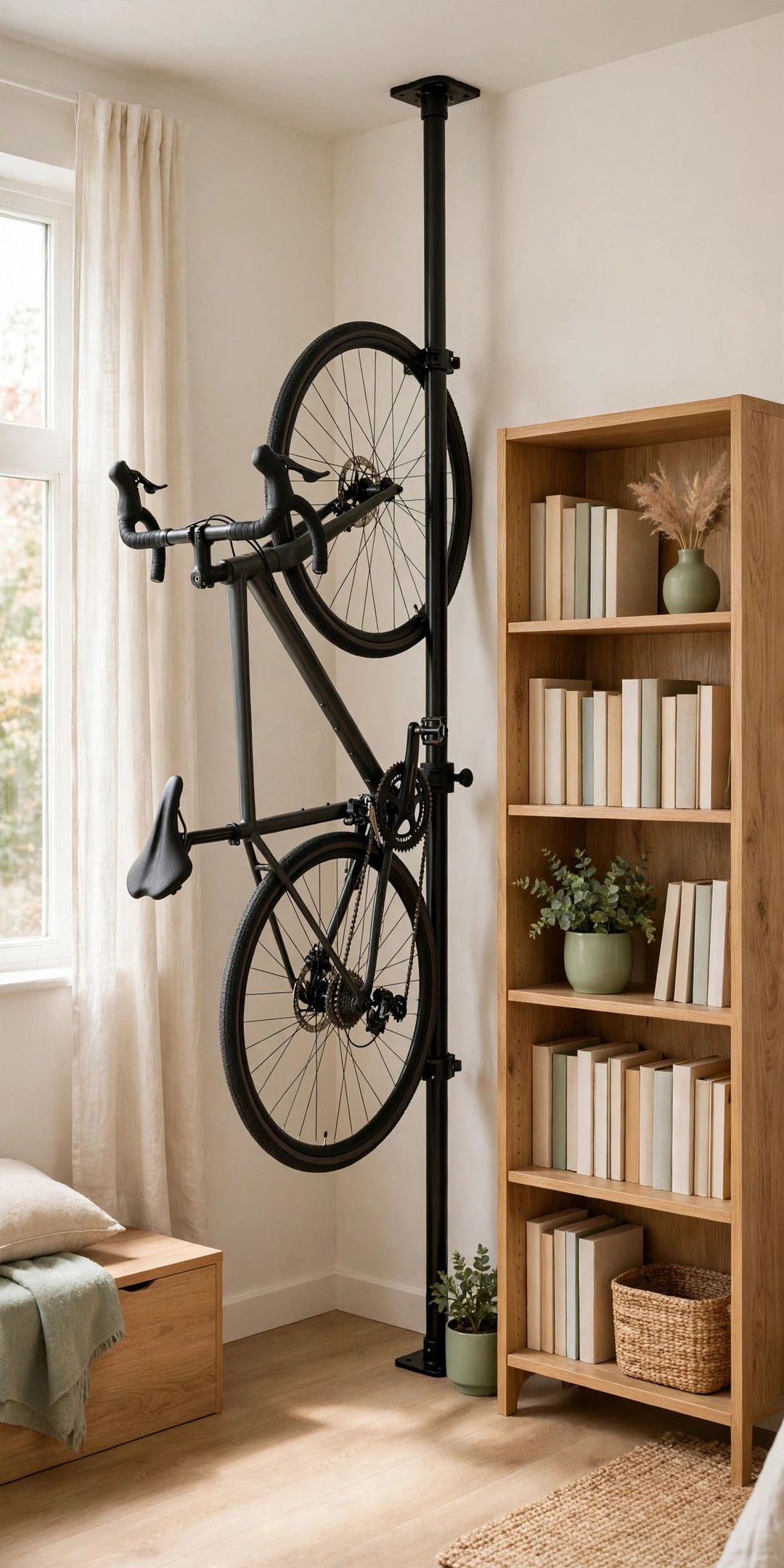
5. Stand It Upright With a Freestanding Rack
A freestanding rack holds one or two bikes upright with no wall fixing at all. Set it on the floor, roll the front wheel in, and the bike stands within its own footprint.
Nothing attaches to the walls, so renters can use it freely, and it moves easily when you rearrange the room. Choose a wide, stable base, and place it clear of door swings, heaters, and your main walkway.
6. Lean It on a Furniture-Style Bike Shelf
Some racks lean against the wall and add a small shelf or hooks above the bike. Helmets, locks, and bags sit on top while the bike rests below — handy in an entryway where gear piles up fast.
Leaning racks usually need no drilling, though some include an optional wall strap for stability; use it if provided. Keep the total load within the rack's limit, and avoid heavy items on the shelf above a bike you lift daily.
7. Fold the Problem Away With a Folding Bike
Choosing a bike for a very small home? A folding bike changes the storage question. Folded, it slides into a closet, under a tall bed, or behind a sofa, with no mount needed.
This is no quick fix for a bike you already own, but it is worth knowing before a future purchase. Check the folded size, not just the riding size, and confirm you can carry its weight up your stairs.
8. Share One Wall With a Two-Bike Gravity Rack
Two bikes double the floor problem, but they can share one wall. A gravity rack leans against the wall and holds two bikes on arms, one above the other.
Most designs need no screws, though a wall safety strap is a smart extra. Put the lighter bike on top, since you lift it higher, and check the rack's total limit for both bikes together. Renters: add felt pads where the rack touches paint.
What to Buy
A vertical wall hook, typically $15–$35. Pro: Uses little wall width and lifts the bike fully off the floor. Con: You lift the bike's full weight to hang it. Skip if: You cannot anchor into a stud.
A ceiling pulley hoist, typically $25–$50. Pro: Frees all floor and wall space below. Con: Fitting must reach the ceiling joists. Skip if: Ceilings are low, or you ride daily and need fast access.
A freestanding floor rack, typically $30–$70. Pro: No drilling, easy to move, renter-friendly. Con: Still uses some floor space. Skip if: No spot clears your doors and walkways.
A corner or leaning rack, typically $40–$90. Pro: Turns a dead corner into storage, often with no fixings. Con: Handlebar width can clash with walls. Skip if: Your corners hold furniture.
A stud finder, typically $10–$25. Pro: Makes any wall or ceiling mount far safer. Con: One more tool to store. Skip if: You choose only no-drill options.
Mistakes to Avoid
- Fixing mounts into drywall alone. A bike's weight can pull the fixing out. Wall and ceiling mounts belong in studs or joists.
- Skipping the weight check. Every hook, hoist, and rack has a limit. Weigh or look up your bike first.
- Measuring only the length. Handlebars and pedals add width. A bike that fits on paper can still block a door.
- Blocking exits and heaters. Never store a bike where it narrows an exit route or rests against a heat source.
- Choosing storage you dread using. If hoisting the bike feels hard, it ends up on the floor again. Pick what you will use daily.
Frequently Asked Questions
What is the most renter-friendly way to store a bike?
Freestanding racks, corner stands, and leaning gravity racks need no drilling, so they suit most rentals. Add felt pads where anything touches the wall, and check your lease before using any screw-in mount.
Can a wall hook hold a heavy bike?
Only if the hook is rated above the bike's weight and fixed into a stud. Heavier bikes, including many electric models, often do better on a floor rack, where the ground carries the load.
How high should a ceiling hoist hang?
High enough to walk under the stored bike without ducking, with the hoist locked. If your ceiling is low, a wall or corner option usually works better.
How do you store a bike without scratching floors or walls?
Use a washable mat under the tires, felt pads behind racks, and a hook with a padded contact point. Wiping grit off the tires before bringing the bike in helps too.
A bike stored well stops being clutter and starts being easy to grab and go. Save this post to your Small-Space Storage board on Pinterest so the 8 ideas are handy when you measure your walls and corners.