Busy mornings rarely go wrong because breakfast itself is hard. They go wrong because everything needed for breakfast is scattered: cereal in one cabinet, bowls in another, coffee supplies somewhere else, and lunchbox snacks nowhere in sight.
These breakfast station organization ideas gather the whole morning routine into one zone. Cereal, oats, coffee and tea, bread and the toaster, bowls and spoons, and grab-and-go items all live in the same small area, so no one has to hunt through the kitchen before school or work.
Pick a spot near the fridge or the counter where breakfast already happens. A single shelf, a stretch of counter, or one cabinet section is enough to start, and the zone can grow as the routine settles in.
1. Choose One Breakfast Zone
Pick the spot where breakfast already happens. A counter section near the fridge, a cabinet above the coffee maker, or a shelf beside the toaster all work well. Keep the zone small enough to reach in a few steps, so the morning routine stays in one place instead of spreading across the kitchen.
2. Group Cereal and Oats Together
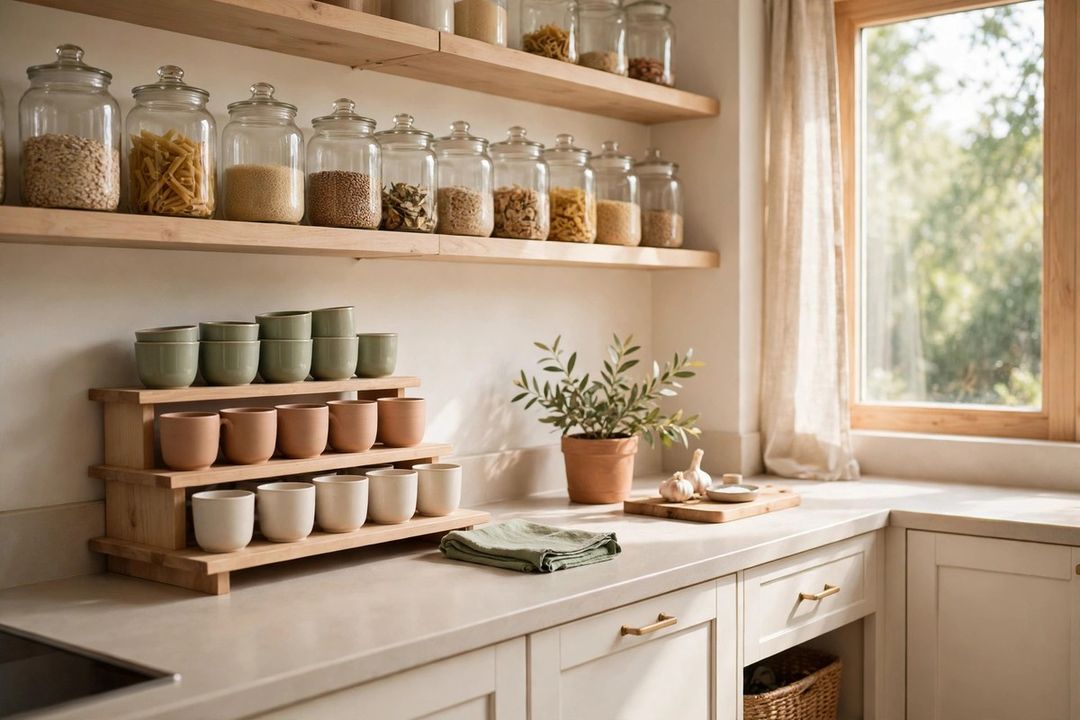
Keep breakfast grains in one clear group. Store cereal boxes, oats, and granola side by side, with the most-used box at the front. A single bin or basket can hold smaller packets and bars, so loose items do not drift onto other shelves.
3. Give Coffee and Tea a Small Corner
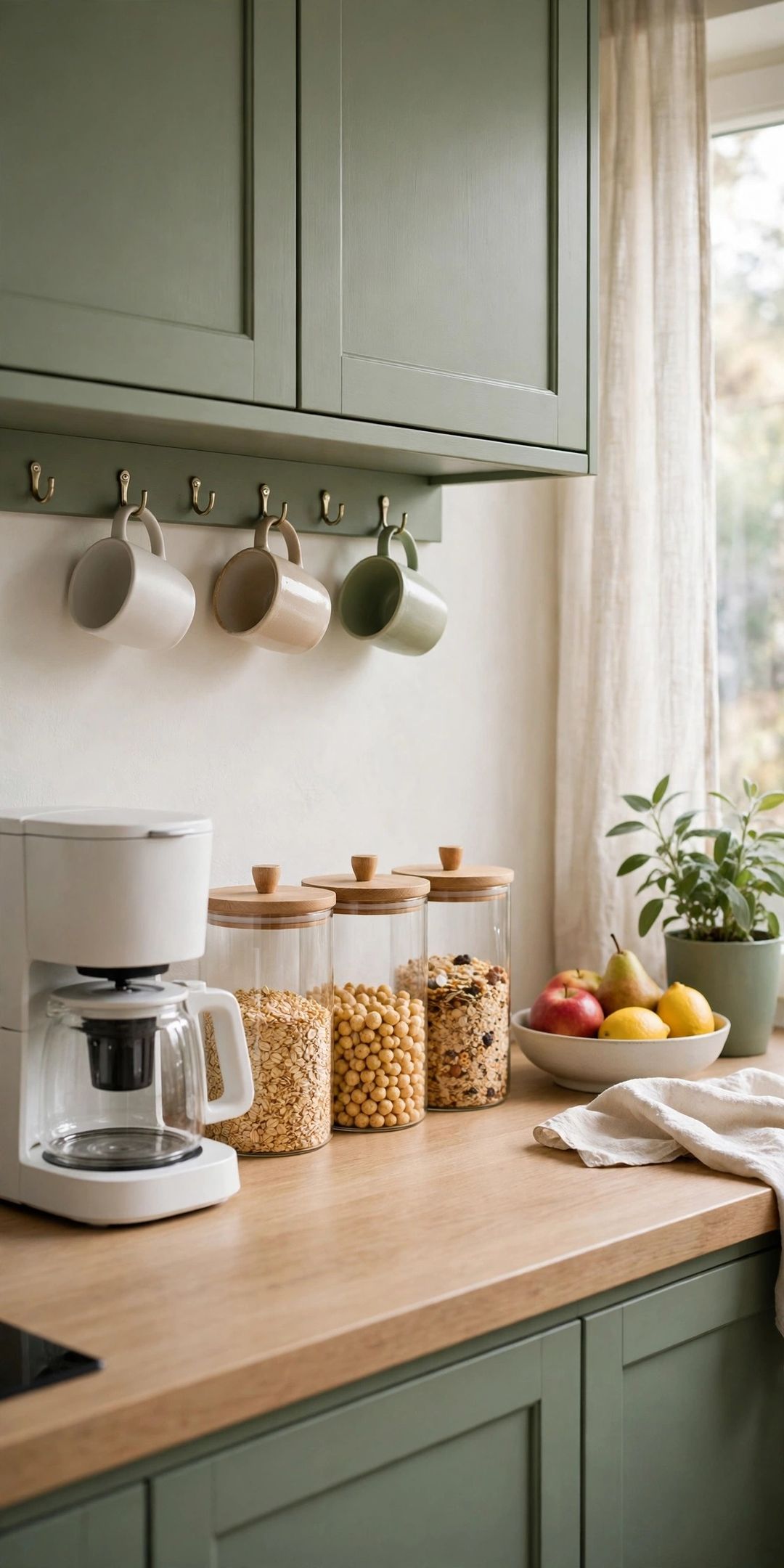
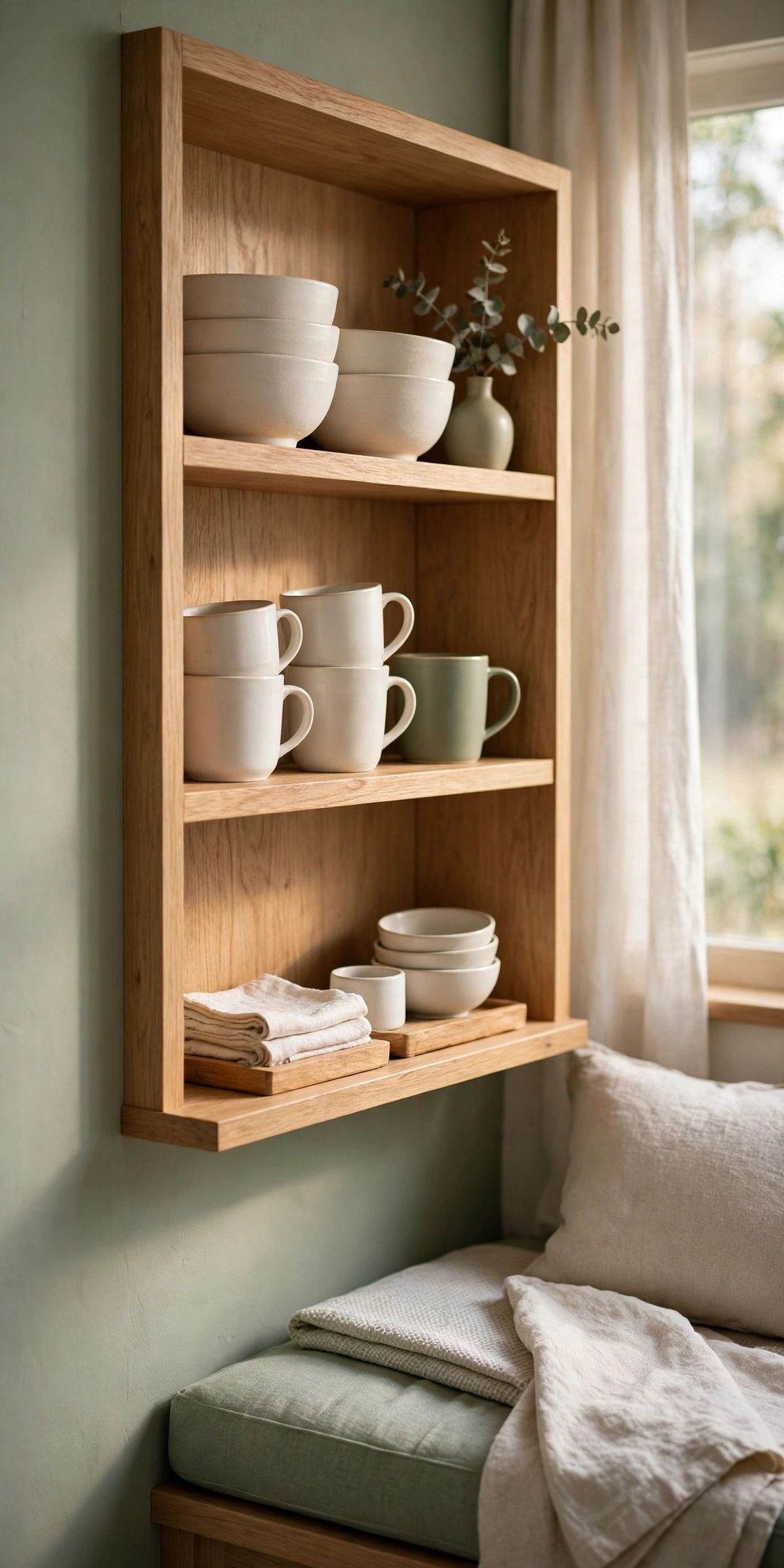
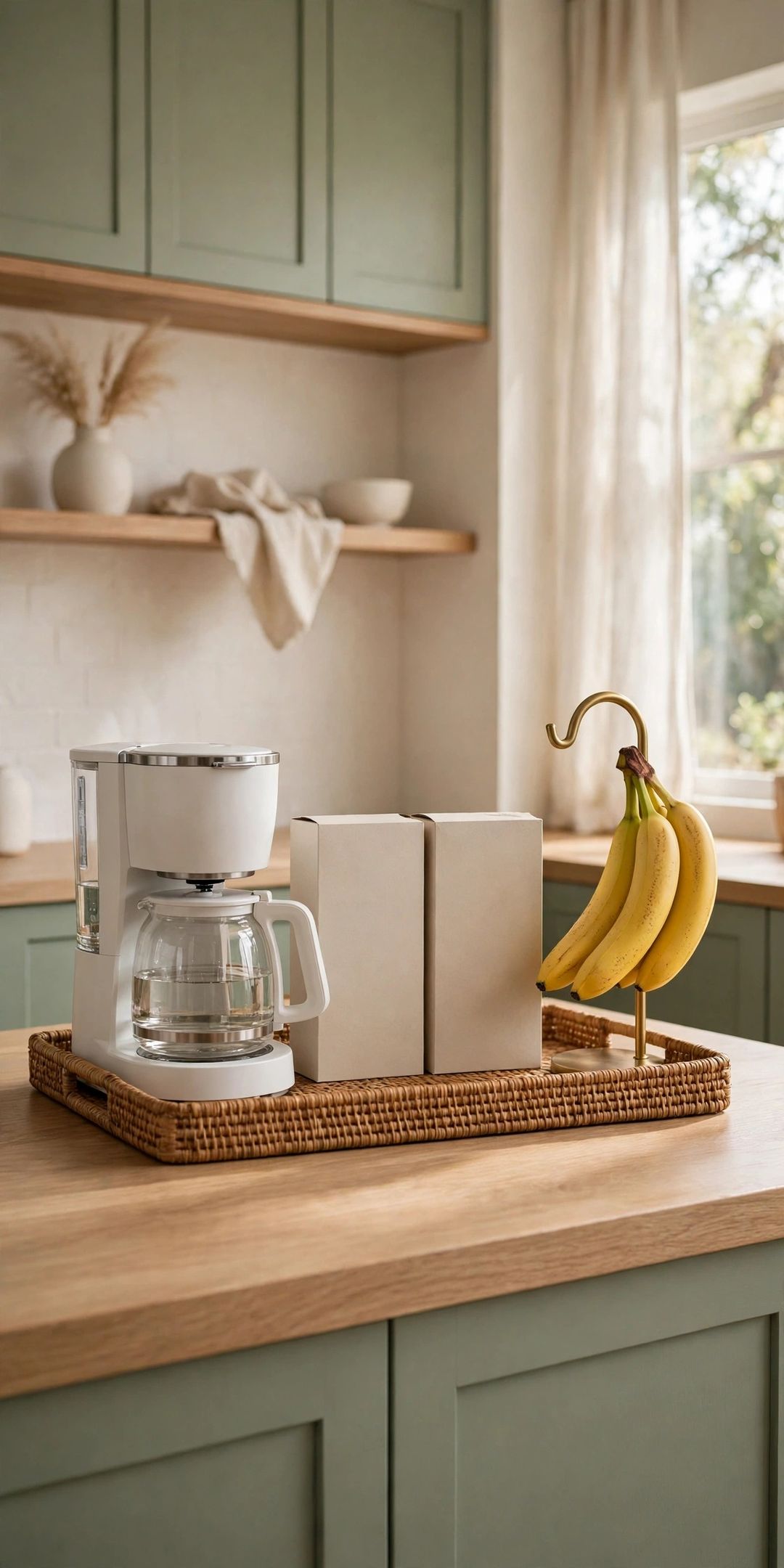
Let coffee and tea share one corner of the station, not the whole zone. Keep mugs, filters or pods, sugar, and tea bags together on a small tray or shelf section. When the coffee corner has clear edges, it stays contained and leaves room for cereal, bread, and bowls.
4. Set Up a Bread and Toaster Spot
Keep bread, the toaster, and spreads in one spot. Store bread, bagels, jam, peanut butter, and butter near the toaster, with a small plate or tray underneath to catch crumbs. Breakfast moves faster when toasting, spreading, and serving happen in the same few inches of counter.
5. Keep Bowls, Plates, and Spoons Within Reach
Store breakfast dishes where they are used. Keep a small stack of bowls, plates, and spoons in the cabinet directly above or beside the station. When dishes live in the zone, setting the table takes seconds and the rest of the kitchen stays out of the morning rush.
6. Add a Grab-and-Go Basket
Fill one basket with foods that can leave the house. Fruit, yogurt pouches, breakfast bars, and small snack bags belong here, ready to grab on the way out. Refill the basket in the evening or after shopping, so rushed mornings do not start with an empty basket and a last-minute search.
7. Use Clear Containers for Daily Staples
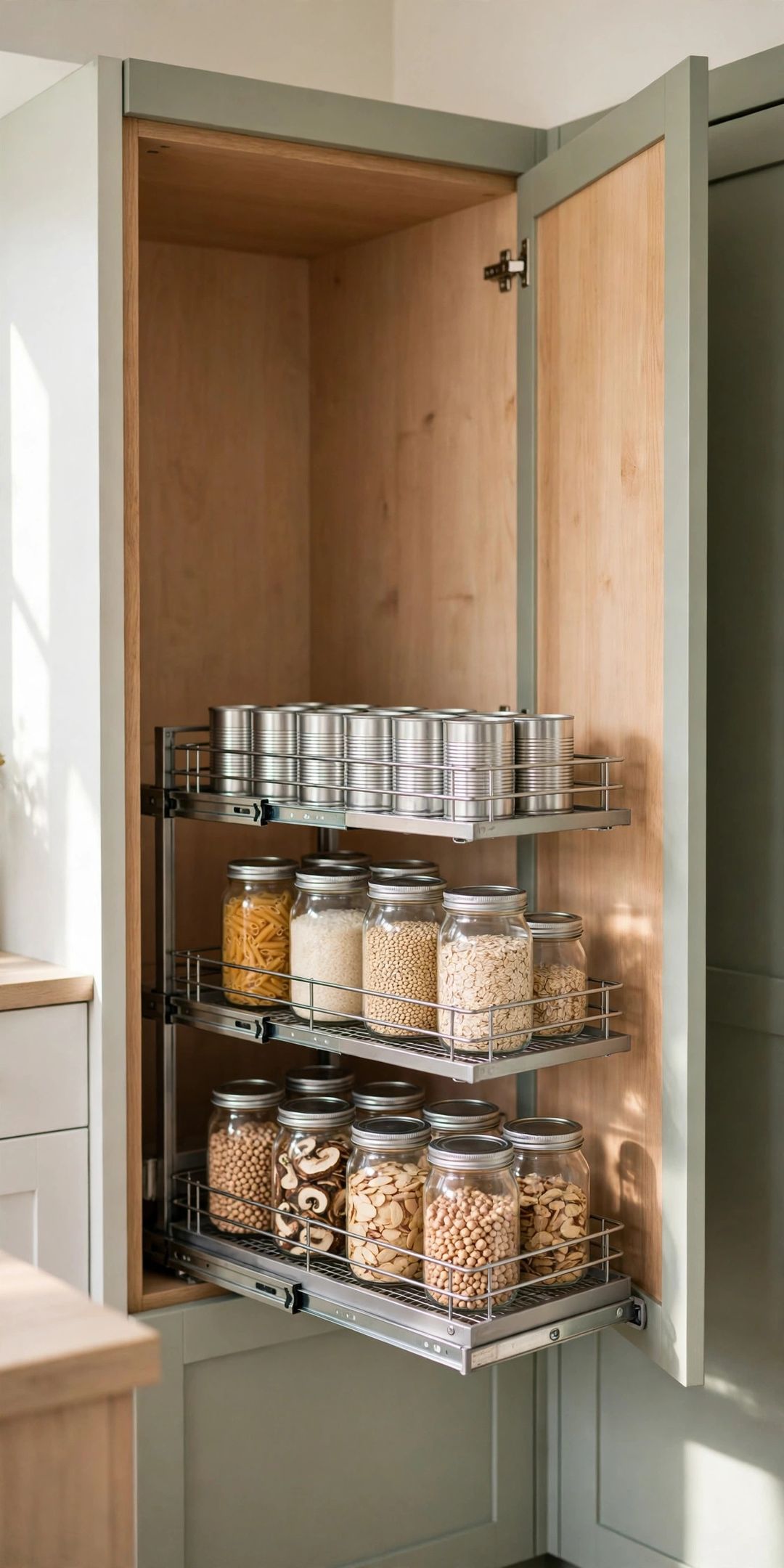
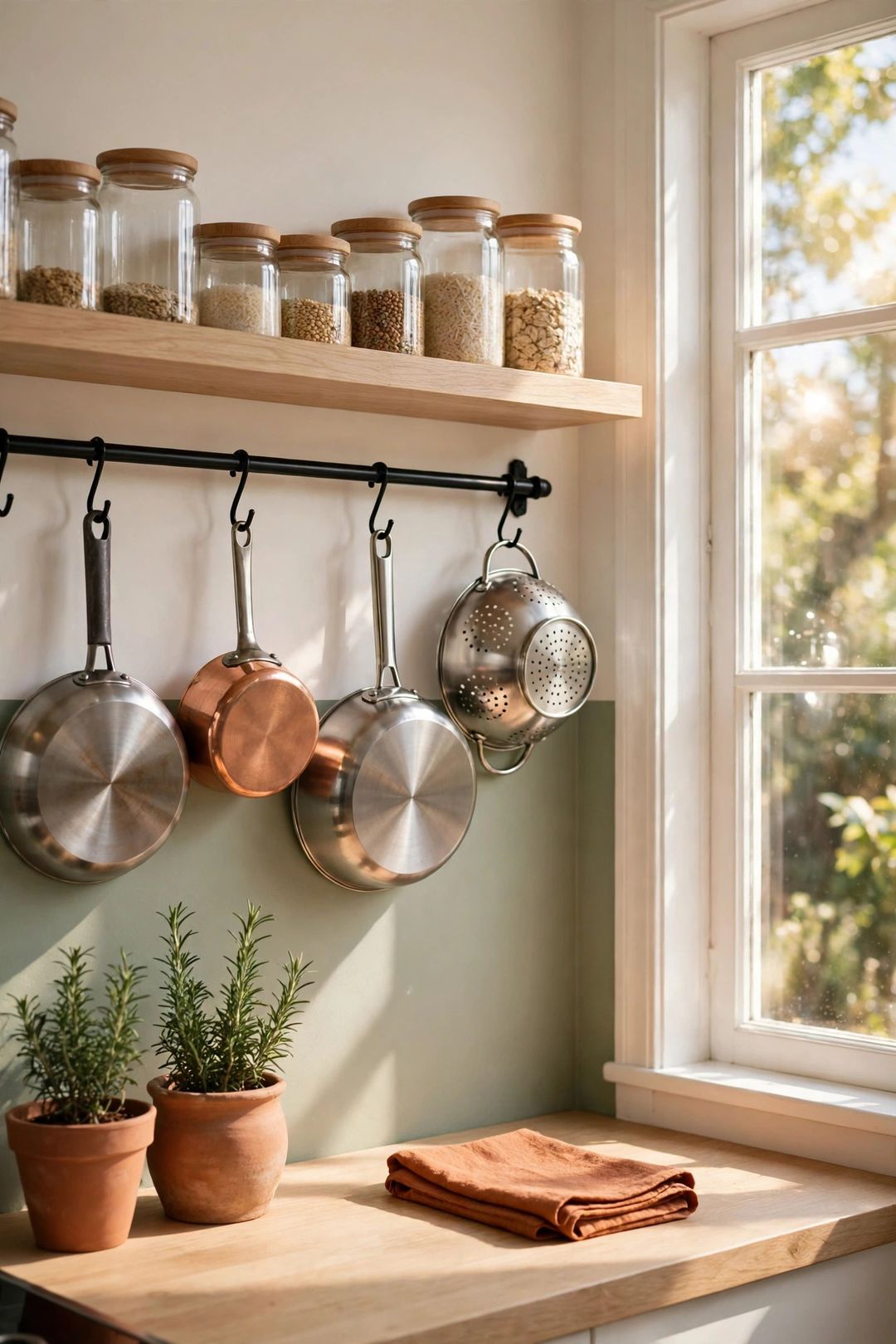
Decant only the staples used almost every day. Oats, granola, sugar, and cereal that comes in a flimsy bag pour and store better in clear, airtight containers. Label each container with the contents, and keep boxed items that still carry directions in their original boxes.
8. Label the Station for Everyone
Give every bin and shelf a simple label. Labels for cereal, coffee, snacks, and dishes help kids and guests find things without asking, and help everyone put things back in the right spot. Short, plain labels work best, and they can be updated as the station changes.
9. Plan a School-Morning Flow
Arrange the station in the order breakfast happens. Put cereal and bowls first, then milk and fruit, then the toaster spot, then the grab-and-go basket last. When the layout follows the morning steps, kids can serve themselves in order, and parents can pack bags while breakfast is still happening.
10. Reset the Station Each Evening
Give the station a two-minute reset at night. Return stray bowls to the zone, refill the grab-and-go basket, wipe the counter, and check what needs restocking. A short evening reset means the next morning starts calm, with everything in place and nothing to hunt for.
What to Buy
A countertop tray or small organizer, typically $12–$22. Pro: It defines the edges of the station and keeps coffee and tea supplies contained. Con: A tray that is too large eats valuable counter space. Skip if: A shelf section already gives the station clear boundaries.
A set of clear airtight containers, typically $18–$32. Pro: Daily staples pour easily and stay fresh, and contents are visible at a glance. Con: Odd sizes can waste shelf space. Skip if: Only one or two staples need decanting and matching jars are already on hand.
An open basket or bin for grab-and-go foods, typically $8–$16. Pro: Snacks and fruit stay visible and easy to grab. Con: An open basket can overflow if it is not refilled with care. Skip if: A drawer or shelf section already holds grab-and-go items neatly.
A small label set, typically $6–$14. Pro: Clear labels help the whole household return items to the right spot. Con: Labels need updating when contents change. Skip if: A marker on painter's tape already gives readable labels.
A mug tree or small mug rack, typically $14–$24. Pro: It frees cabinet space and keeps daily mugs within reach. Con: Tall mugs may not fit every rack. Skip if: Mugs already live in the cabinet beside the station.
Mistakes to Avoid
- Letting coffee take over the station. Coffee deserves a corner, not the whole zone. When pods, mugs, and extras spread, cereal and bowls lose their place.
- Building a station far from the fridge. Milk, yogurt, and fruit travel back and forth all morning. A zone far from the fridge adds steps to every breakfast.
- Decanting everything at once. Rarely used mixes and boxed foods keep their directions and store well in their boxes. Decant daily staples only.
- Skipping the grab-and-go refill. An empty basket on a school morning defeats the purpose of the station. Refill it in the evening, not during the rush.
- Forgetting the evening reset. Without a short reset, bowls drift, crumbs build up, and the calm zone slowly turns back into scattered shelves.
Frequently Asked Questions
How much counter space does a breakfast station need?
One stretch of counter about as wide as a toaster and a tray is often enough, especially if cereal and dishes live in the cabinet above. In a small kitchen, a single shelf plus a small tray can hold the whole station.
What if the kitchen has no spare counter space?
Use a cabinet section or a rolling cart instead. Keep cereal, coffee, and snacks in the cabinet, and roll the cart to the table in the morning. The zone matters more than the exact surface it sits on.
Should kids have their own breakfast basket?
A small basket just for kids can help, especially on school mornings. Fill it with items they can serve themselves, and keep it at a height they can reach safely.
How often should the station be restocked?
Check it during the evening reset and again after the weekly shop. A quick glance at cereal, coffee, bread, and the grab-and-go basket is enough to spot what is running low.
A breakfast station does not need a remodel or a large kitchen, just one clear zone where cereal, coffee, bread, and grab-and-go foods live together. Save this post to your Kitchen Organization board on Pinterest so the full station plan is handy before the next school morning.