Coats puff out, sweaters slide off hangers, and heavy jeans take up half a shelf in one stack. In a small closet, a few bulky pieces can crowd out everything else.
These 11 systems for bulky clothes storage small closet coats knits jeans give each heavy category its own method. Coats get a zone, knits get shelves, and jeans get hooks, while off-season pieces move out of the closet entirely.
You do not need all 11 at once. Start with the two or three that match the items taking up the most room right now.
Move Off-Season Bulk Out: Systems 1 and 2
The fastest way to make room is to store the season you are not wearing somewhere else.
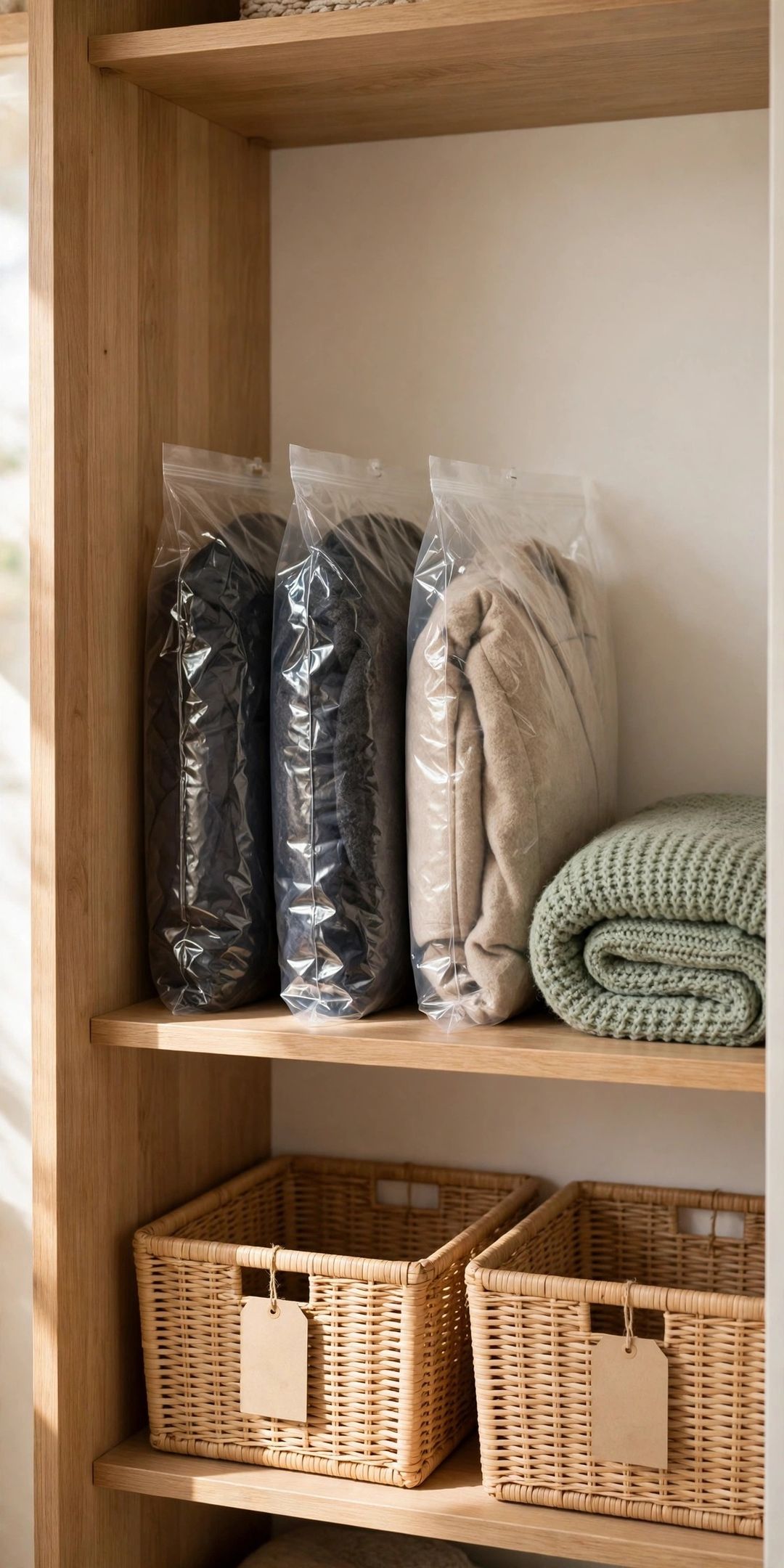
1. Vacuum storage bags for off-season coats and knits. Seal bulky winter coats and thick sweaters into vacuum bags, draw the air out, and store the flat bags under a bed or on a high shelf. Note on each bag what is inside. Save this for off-season pieces, since compressed clothes need a good airing before wearing.
2. Under-bed bins for heavy off-season pieces. Flat bins with lids, low enough to slide under your bed frame, hold folded jeans, sweatshirts, and knit layers out of rotation. Measure the gap under your bed first. This keeps heavy items low instead of stacked over your head.
Stack Knits and Jeans Well: Systems 3 to 5
Knits stretch on hangers and jeans waste rod space. Shelves and hooks suit both far better.
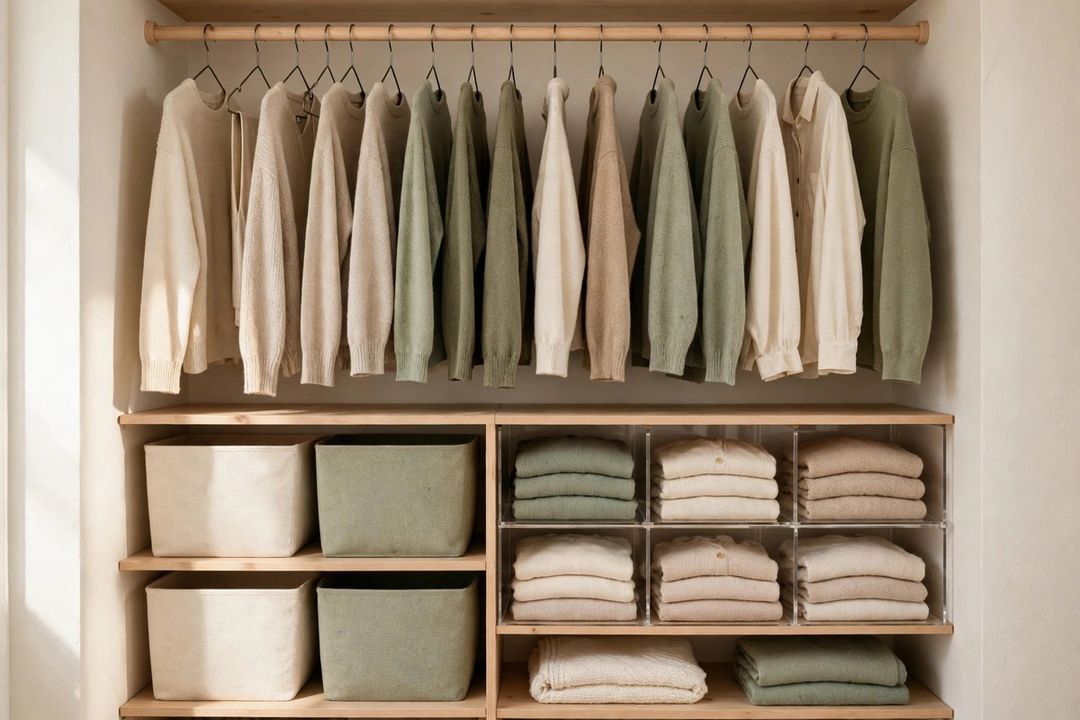
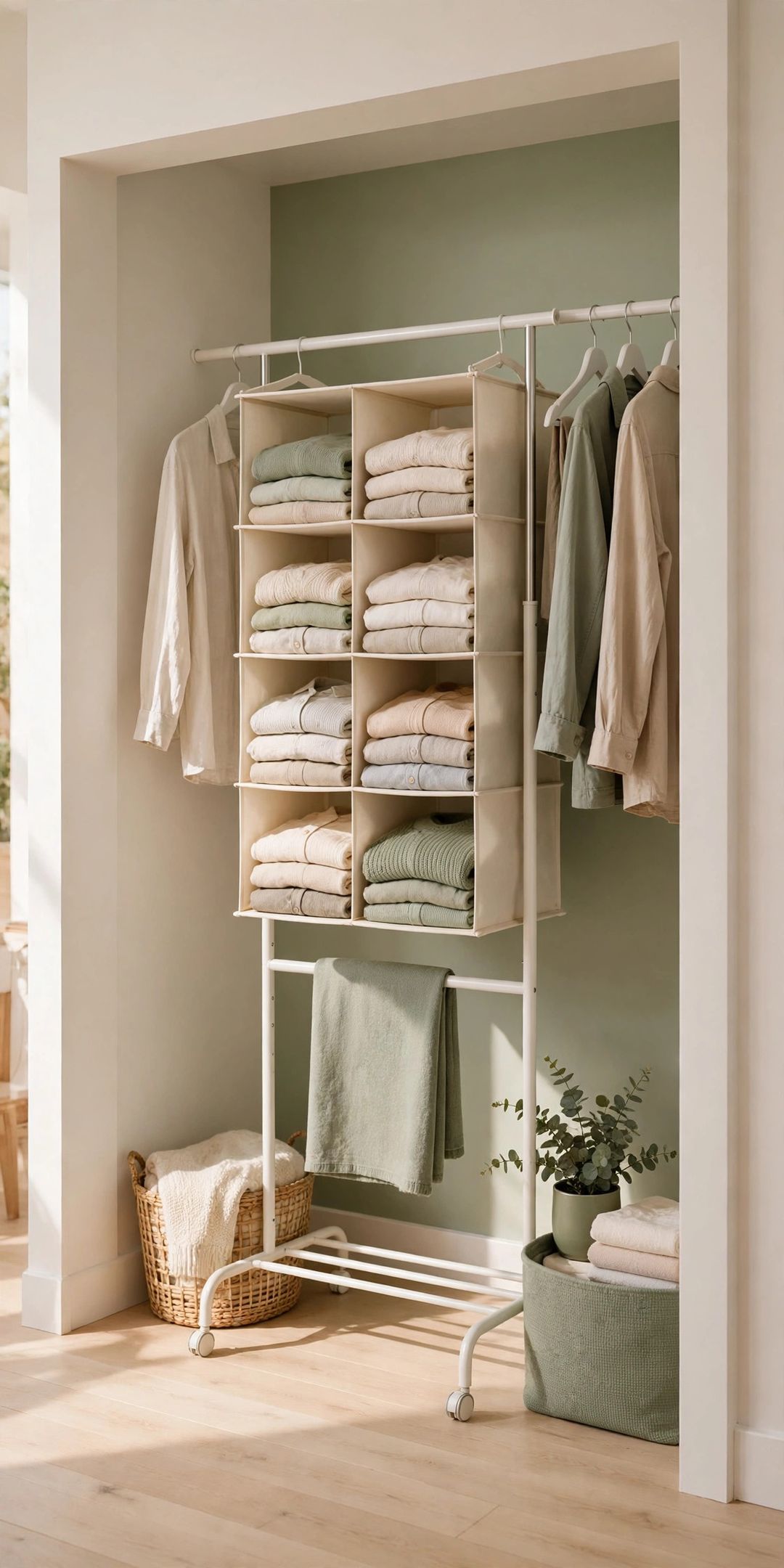
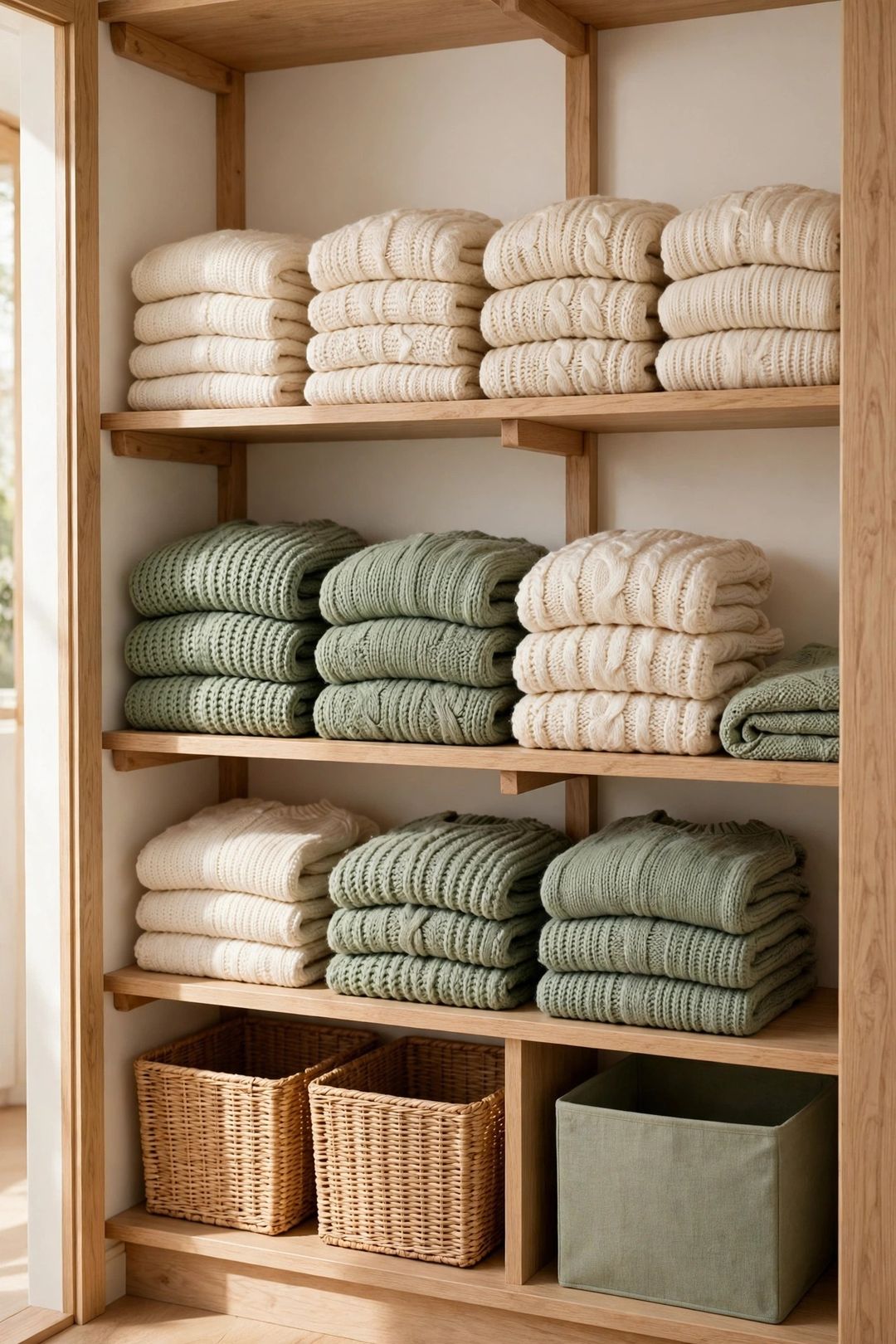
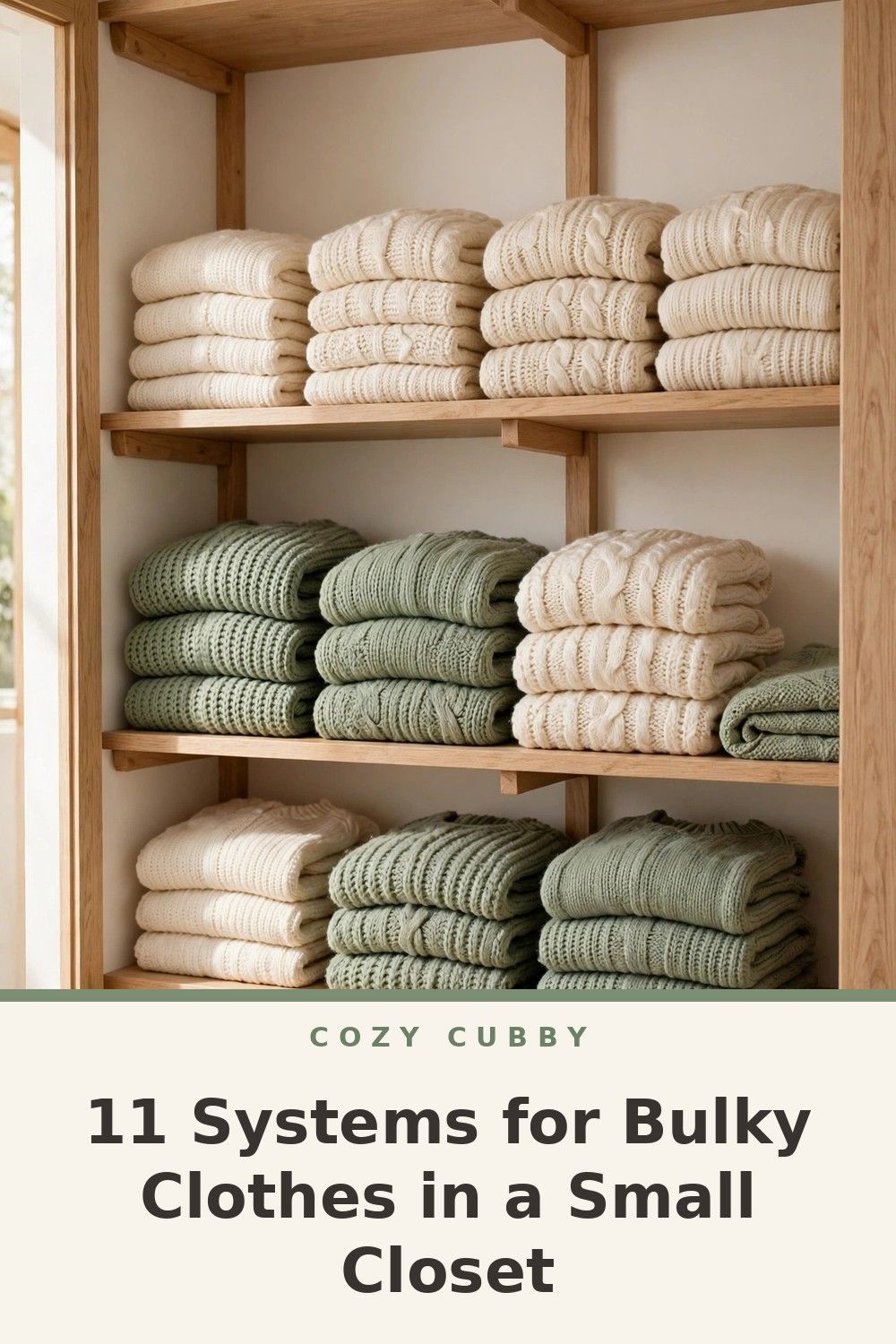
3. Fold and stack knits on shelves, not hangers. Fold sweaters and cardigans into short stacks of three or four pieces. Hanging heavy knits can pull shoulders out of shape. Put the knits you wear most at eye level, and heavier pieces lower down.
4. S-hooks or jean hooks for heavy jeans. Hang jeans by a belt loop on large S-hooks along the rod, or use hook hangers made for pants. Jeans hang flat in a row, and you can see every pair at once. Leave a little space between pairs so denim can air.
5. Shelf dividers to keep stacks upright. Clip-on dividers stand between stacks of knits, sweatshirts, and folded jeans so one pile does not slide into the next. They turn one long shelf into clear sections. Measure shelf thickness first, since dividers fit standard shelves best.
Give Coats Their Own Zone: Systems 6 to 8
Coats fail in small closets when they are spread through everything else. One tight zone works better.
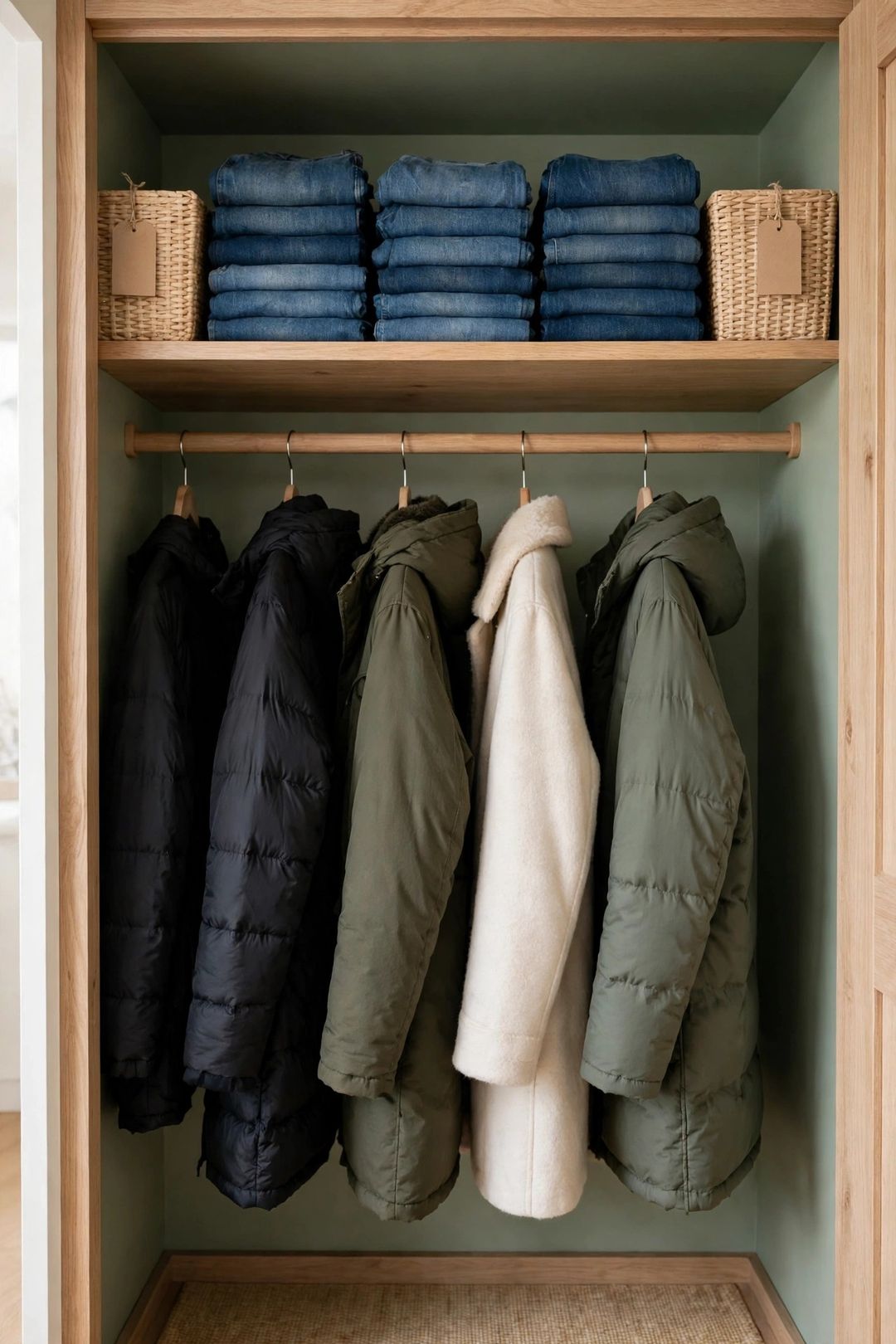
6. Coat zoning at one end of the rod. Group all coats at one end, longest coats where the floor below is clear. Daily coats go at the easy-to-reach edge, and rarely worn dress coats at the far end. Grouping stops coat bulk crushing lighter clothes.
7. Strong, slim hangers for heavy coats. Swap thin hangers that bend under coat weight for sturdy wooden or wide-shoulder hangers. Wide shoulders support coat shape, and matching hangers line up neatly, so the row takes less room than a mix of shapes.
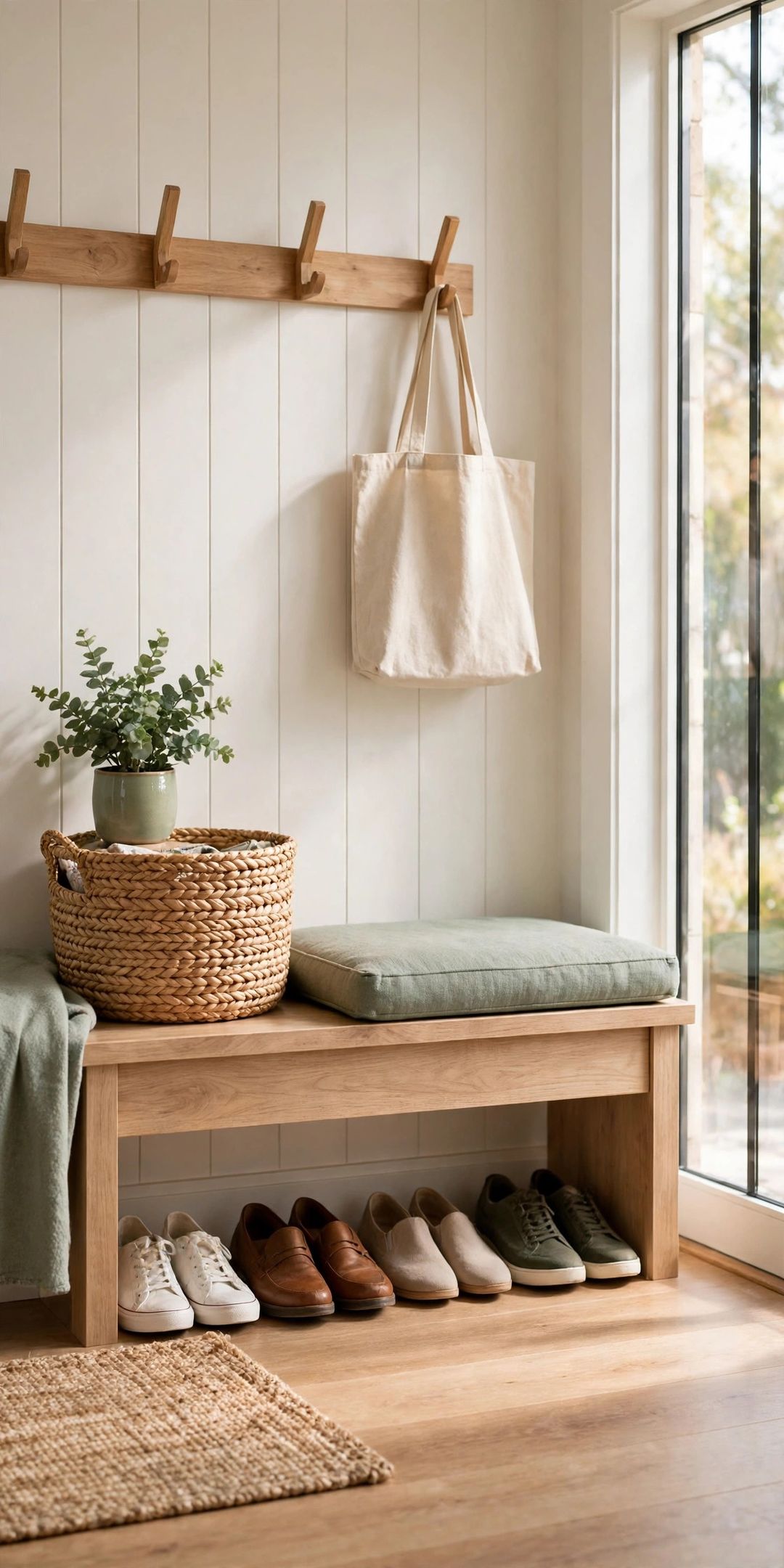
8. An over-door hook rail for daily coats. A hook rail over the closet or bedroom door holds the one or two coats you wear daily, plus a heavy hoodie, keeping them out of the packed rod entirely. Choose smooth hooks so linings do not snag, and check the door still closes fully.
Use Hidden and High Spaces: Systems 9 to 11
The last three systems claim the spaces most small closets waste.
9. Labeled bins on the top shelf for off-season knits. The high shelf above the rod is ideal for light, folded knits in closed bins, sorted by type. Label the front of each bin, since you will be reaching up for it. Never store heavy bins up high.
10. A long-hang section kept clear on purpose. Keep the floor under your longest coats empty, or use it only for a slim shoe rack lower than coat hems. That clear drop lets coats hang at full length without bunching, which protects their shape.
11. A simple two-season rotation. Twice a year, swap the closet fully: current-season bulky pieces in, off-season pieces out to vacuum bags, under-bed bins, or top-shelf bins. Only what fits stays. Pieces that no longer fit, or went unworn all season, leave at rotation time.
What to Buy
Vacuum storage bags, typically $15–$30 for a multi-pack. Pro: They shrink off-season coats and knits into flat layers. Con: Seals can fail if overfilled, and clothes need airing after storage. Skip if: You wear most coats year-round.
Flat under-bed bins with lids, typically $12–$25 each. Pro: They turn wasted space under the bed into storage. Con: They gather dust and need a wipe at each rotation. Skip if: Your bed frame sits too low for bins.
Large S-hooks or jean hooks, typically $8–$16 for a set. Pro: Jeans hang in a flat, visible row and free shelf space. Con: Hooks need a sturdy rod. Skip if: Your jeans already fit in one tidy shelf stack.
Clip-on shelf dividers, typically $12–$22 for a set. Pro: They keep knit and jean stacks separate and upright. Con: They can slip on very thick shelves. Skip if: Your shelves are already split into cubbies.
Wide-shoulder hangers for coats, typically $15–$28 for a set. Pro: They support heavy coats and help them keep their shape. Con: They take more rod space than thin hangers. Skip if: Your coats are few and light.
Mistakes to Avoid
- Hanging heavy knits on thin hangers. Weight pulls shoulders out of shape. Fold knits into short shelf stacks instead.
- Spreading coats all along the rod. Scattered coats crush lighter clothes. Keep coats in one zone at one end.
- Stacking knits and jeans in tall piles. Tall stacks topple and bury bottom pieces. Keep stacks to three or four items.
- Storing off-season bulk in prime closet space. Winter coats in July steal daily room. Move them to bags, bins, or under the bed.
- Blocking the floor under long coats. Boxes in the long-hang space bunch up coat hems. Keep that drop clear.
Frequently Asked Questions
Should sweaters be folded or hung in a small closet?
Fold them. Heavy knits can stretch on hangers, and short folded stacks usually take less room. Save rod space for coats and lighter clothes.
How do you store jeans without taking up shelf space?
Hang them by a belt loop on large S-hooks or jean hooks along the rod. Pairs hang flat in a row, and the shelf they left can hold knits instead.
Are vacuum bags safe for coats and wool knits?
They suit off-season storage for many coats and sturdy knits, if clothes go in clean and fully dry and get a good airing before wearing. For delicate or structured pieces, a breathable garment bag or lidded bin is gentler.
How many coats should stay in a small closet?
Keep the coats you wear this season in the coat zone, plus one spare if it fits. Store the rest off-season, and let the twice-yearly rotation decide what still earns its place.
Pick the systems that match your biggest bulky problem first, coats, knits, or jeans, and the closet will feel bigger within one sorting session. Save this post to your Closet & Wardrobe board on Pinterest so all 11 systems are handy at your next season swap.