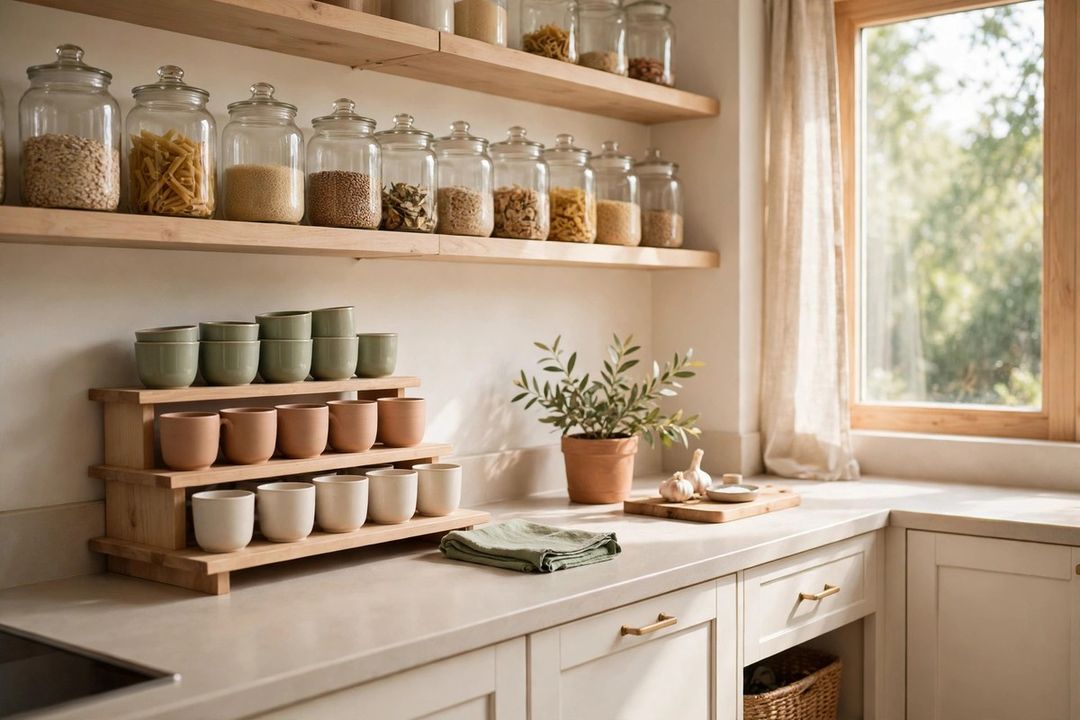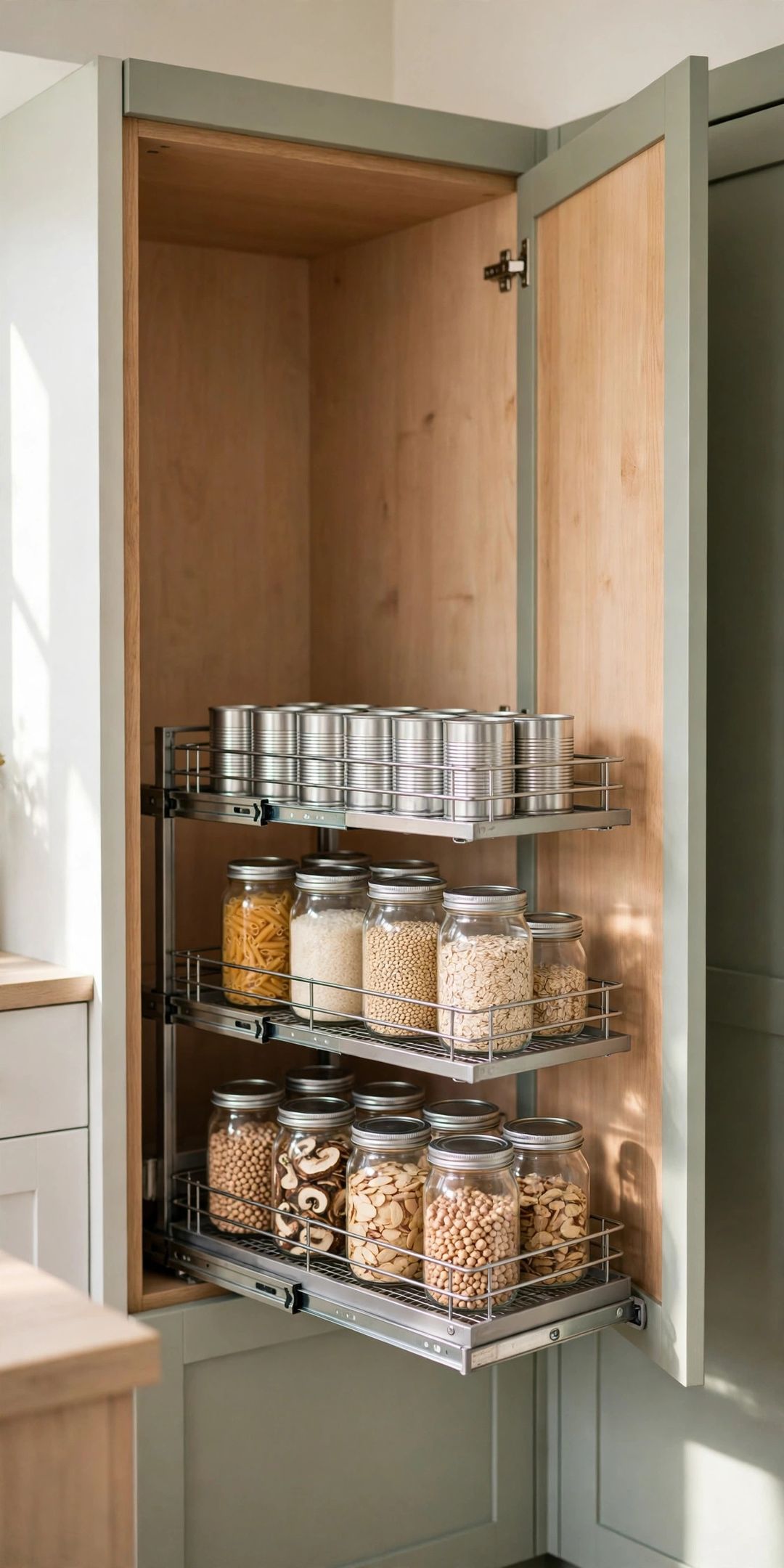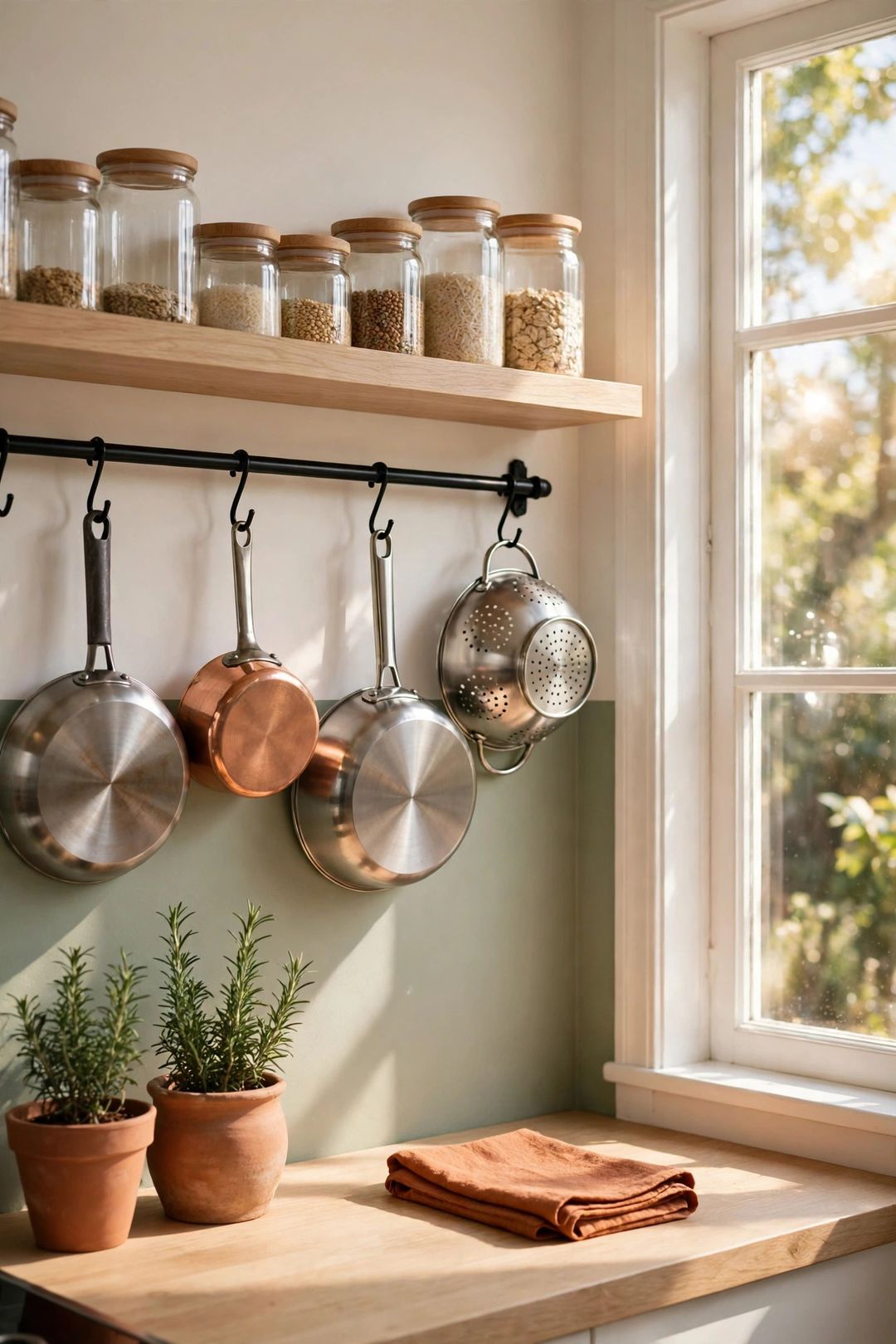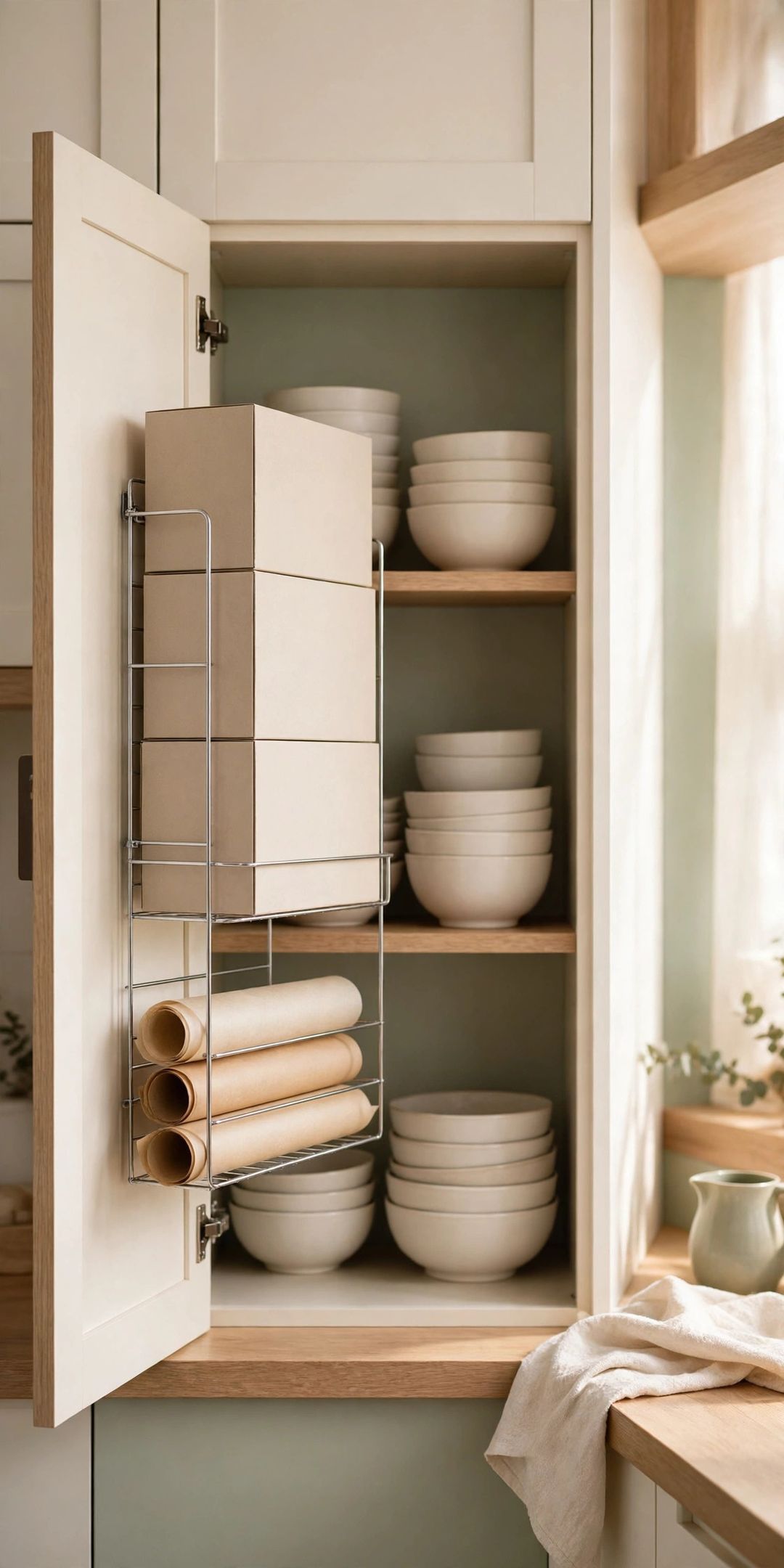
The inside of a kitchen cabinet door is flat, close to where you work, and usually empty. That makes it prime storage for thin, light items that tumble around drawers: wraps, lids, packets, and measuring tools.
These cabinet door storage ideas kitchen plans often skip one step: fit. A door organizer only works if the door still closes and the hinges are not carrying weight they were never built for. The 12 ideas below start with the doors that hold the most, then finish with the measuring and mounting rules.
Inside the Under-Sink Doors: Cleaning Packets and Daily Mess
The under-sink cabinet is deep and crowded with bottles. Its doors are the easiest place to lift small cleaning supplies out of that tangle.
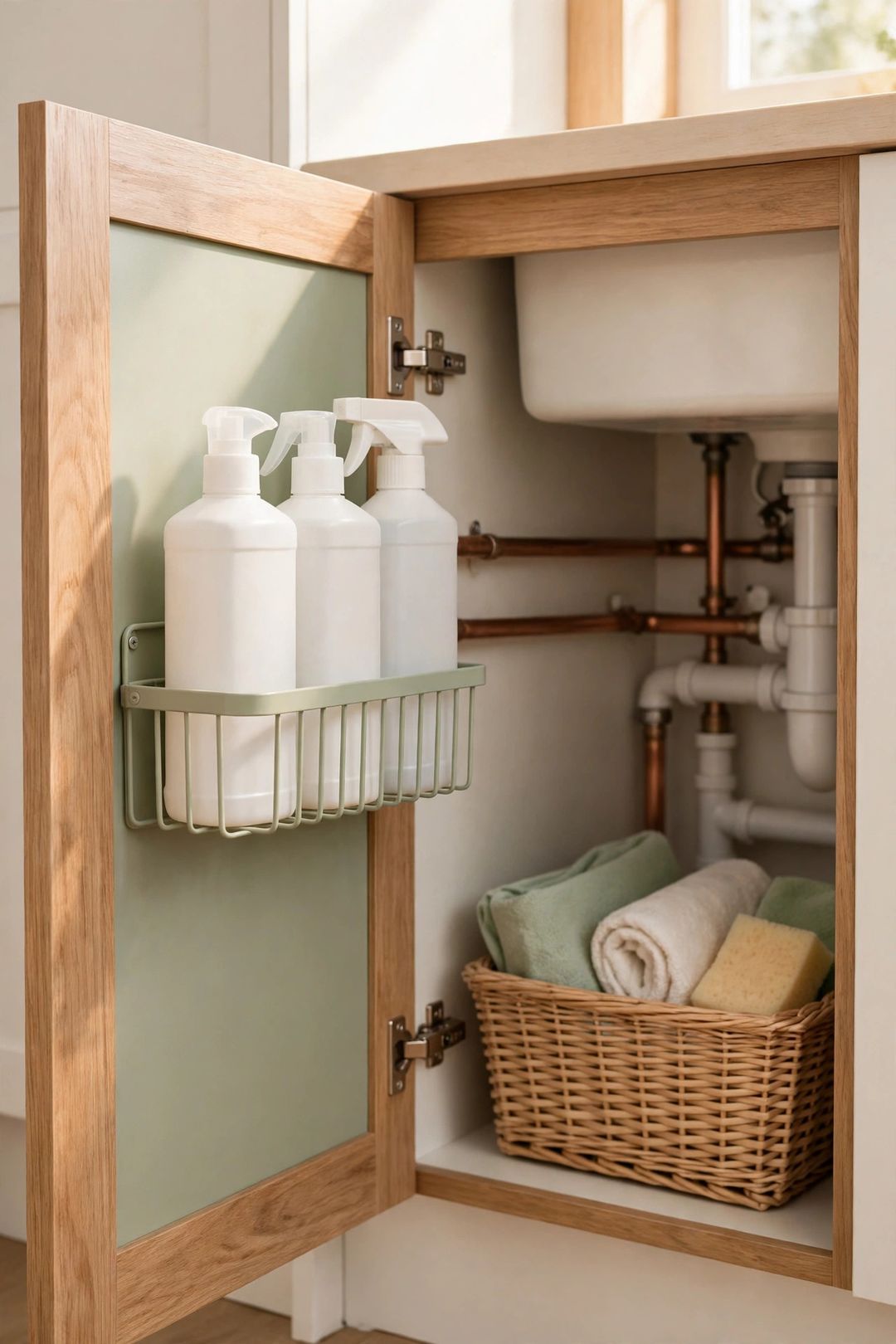
1. Mount a shallow caddy for dishwasher packets. A slim caddy, roughly 3 to 4 inches deep, holds the packet box upright where you can grab one with wet hands. Keep packets in their original packaging, up high if small children are in the home.
2. Hang a trash bag roll on two low hooks. Slide the roll onto a simple holder so bags tear off one at a time. Place it on the door nearest the trash.
3. Add a small holder for the sponge and sink brush. A ventilated cup or wire holder keeps the sponge out of the sink basin and lets it dry between uses.
4. Corral spray bottles with a short rail. A rail across the inside door lets two or three spray bottles hang by their triggers, off the cabinet floor. Keep the count low: sprays are heavier than they look.
Inside Pantry and Cabinet Doors: Wraps, Lids and Packets
Pantry and upper cabinet doors suit flat food-storage items best — the grab-and-go things you reach for while cooking.
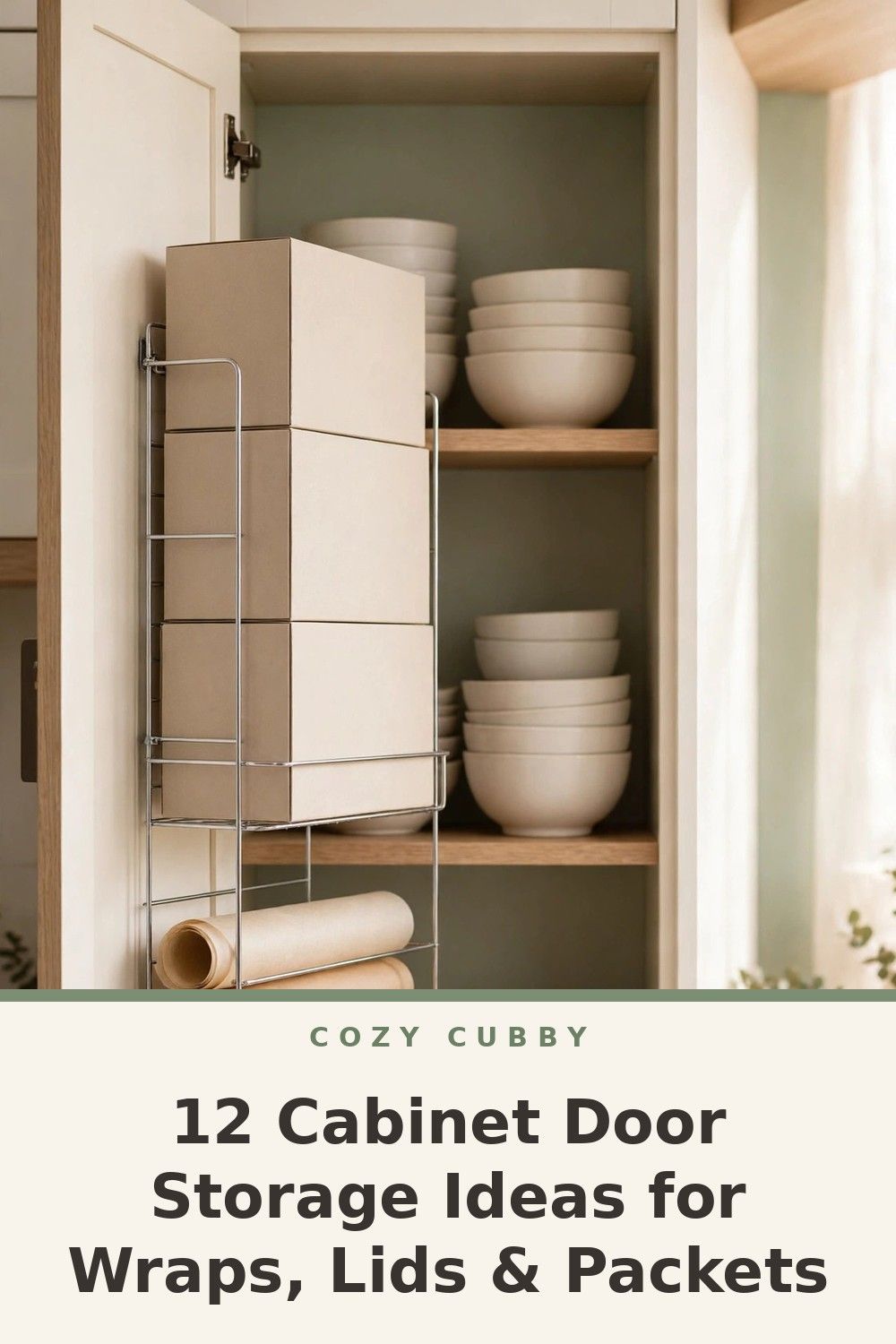
5. File wraps and foil in a vertical door rack. Plastic wrap, foil, parchment, and sandwich bags stand upright in a slim rack. Boxes stop sliding off shelves. Measure box length first; long foil rolls need a taller rack.
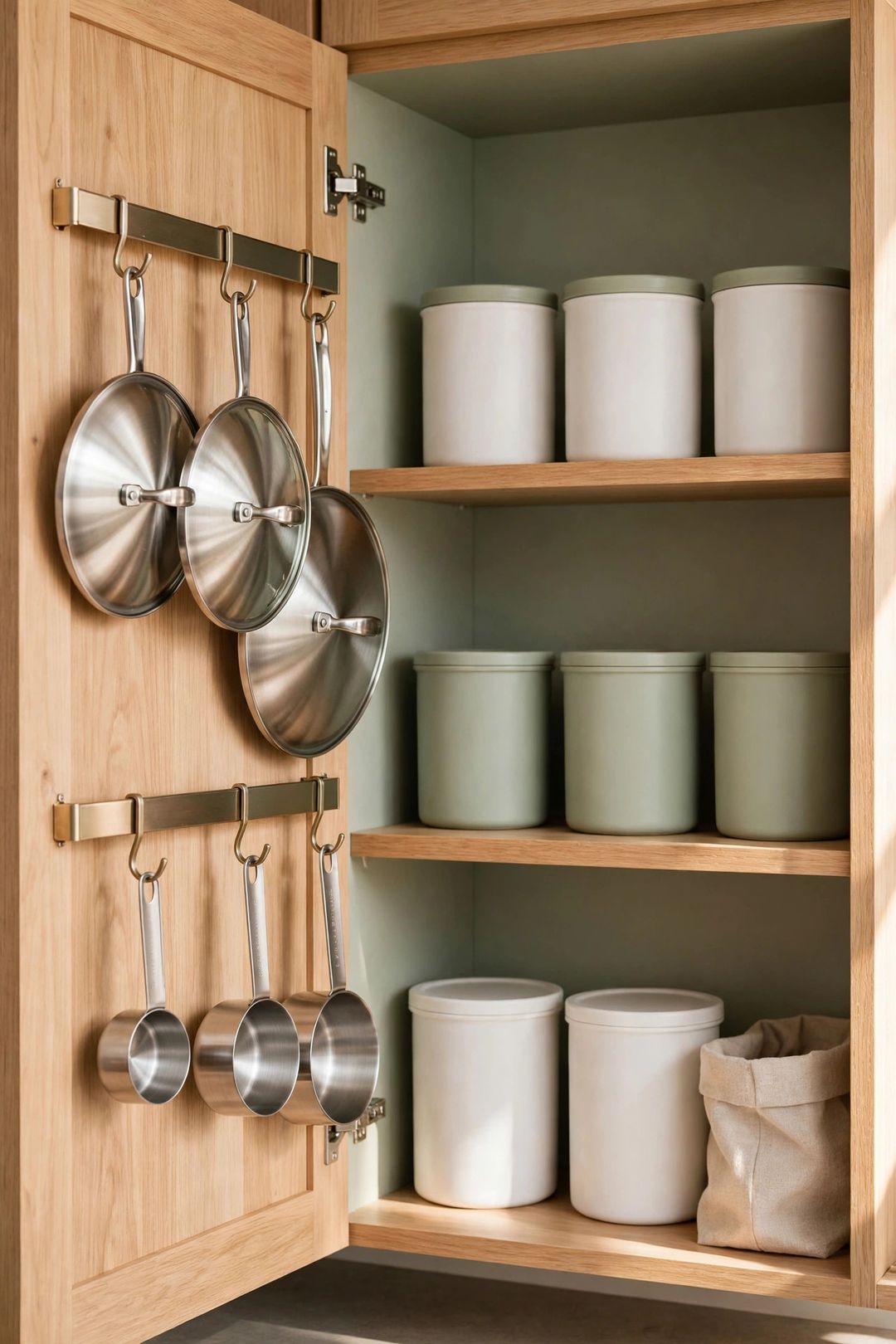
6. Store pot lids on a door-mounted lid rack. Lids are light, flat, and terrible in drawers. A rack with individual slots holds three to five lids by the handle. Keep heavy glass lids on a shelf if the rack feels strained.
7. Hang measuring cups and spoons on small hooks. Inside the baking cabinet door, a row of small hooks keeps measuring tools visible. Hang them by size so a missing quarter cup is obvious.
8. Give seasoning and sauce packets one clear door bin. Taco seasoning, gravy mixes, and drink packets multiply in drawers. One shallow, clear bin gathers them upright, so duplicates are visible before you buy more.
More Doors Worth Using
Two fit checks before the final four ideas. First, measure the door-to-shelf gap: close the door on a piece of cardboard cut to the depth of the holder you want. If the door pushes back or the cardboard scrapes the shelf or its contents, the holder is too deep. Second, keep weight away from the hinge side: center items on the door or shift them toward the handle side, and keep heavy things — cast iron, full bottles, stacked dishes — off doors entirely.
9. File thin cutting boards and sheet pans upright. A door-mounted file-style holder keeps one or two lightweight boards or pans from sliding inside a cabinet. Thin boards only; thick wood boards belong flat on a shelf.
10. Add hooks for oven mitts and pot holders. Two hooks inside the cabinet door nearest the stove keep mitts paired, off the counter, and clear of heat.
11. Use a slim bin for grocery bags or reusable totes. A narrow door bin tames the bag collection into one spot. Fold totes flat so the bin stays slim enough for the door to close.
12. Label one door bin as the backup-packet station. A small labeled bin for refill packets — extra sponges, descaler, filter reminders — keeps occasional items findable. Check it before ordering refills to avoid duplicate buys.
Choosing a Mount: Adhesive, Screws or Over-Door Hooks
Adhesive mounts need no tools and suit renters and very light loads, but they fail with heat, steam, and weight. Screws hold the most and suit permanent racks on solid doors, but they leave holes and can pull through thin hollow-core doors. Over-door hooks need no holes and move easily, yet they add thickness at the top, can stop the door closing flush, and may scratch the frame. Match the mount to the load: adhesive for packets and mitts, hooks for a trial run, screws for a lid rack you plan to keep.
What to Buy
A shallow door caddy, typically $10–$18. Pro: Lifts packets and sponges off the cabinet floor into reach. Con: Deep versions collide with shelves and plumbing. Skip if: Pipes leave less than about 4 inches of clear space behind the door.
A wrap and foil door rack, typically $14–$24. Pro: Boxes stand upright, visible, and off the shelves. Con: Oversized rolls may not fit standard slots. Skip if: You store wraps in a deep drawer that already works.
A pot lid door rack, typically $12–$22. Pro: Frees a whole drawer and ends lid stacking. Con: Only suits lids whose handles fit the slots. Skip if: Most of your lids are heavy glass with wide knobs.
Small adhesive or screw-in hooks, typically $6–$12 for a pack. Pro: Cheap, flexible storage for measuring tools and mitts. Con: Adhesive versions let go under heat and steam. Skip if: Your doors are inset and leave no room for hook depth.
Mistakes to Avoid
- Skipping the clearance test. A holder that hits the shelf behind the door will scrape, jam, or push items off it. Test depth with cardboard first.
- Loading the hinge side. Weight hung near the hinges strains them with every swing. Center loads or shift them toward the handle side.
- Hanging heavy items on doors. Cast iron lids, bulk spray bottles, and thick wood boards loosen mounts and sag hinges. Doors are for light, flat items only.
- Trusting adhesive with real weight. Steam, heat, and a full rack will peel adhesive pads. Use screws for anything beyond packets and mitts.
- Putting a rack on every door. Too many holders make doors heavy, noisy, and hard to close. Start with two or three doors that serve daily tasks.
Frequently Asked Questions
How much space does a door organizer need to clear the shelves?
Most slim racks need about 3 to 4 inches between the inside of the door and the front edge of the shelf or the items on it. If a cardboard piece cut to the holder's depth lets the door close and latch, the fit is safe.
Will door storage damage cabinet hinges?
Light loads centered on the door rarely cause trouble. Damage comes from heavy items, loads hung near the hinge side, and racks so deep the door is forced shut against shelves. Keep loads light.
What should never go on a cabinet door?
Skip knives, heavy glass or cast iron lids, full bulk bottles, and anything that would hurt someone if a mount failed. Also avoid heat-sensitive packets on doors beside the oven, where warmth builds up.
The inside of a cabinet door gives the thinnest, most-lost items a real home. Save this post to your Kitchen Organization board on Pinterest so the clearance checks are handy before your next organizer order.