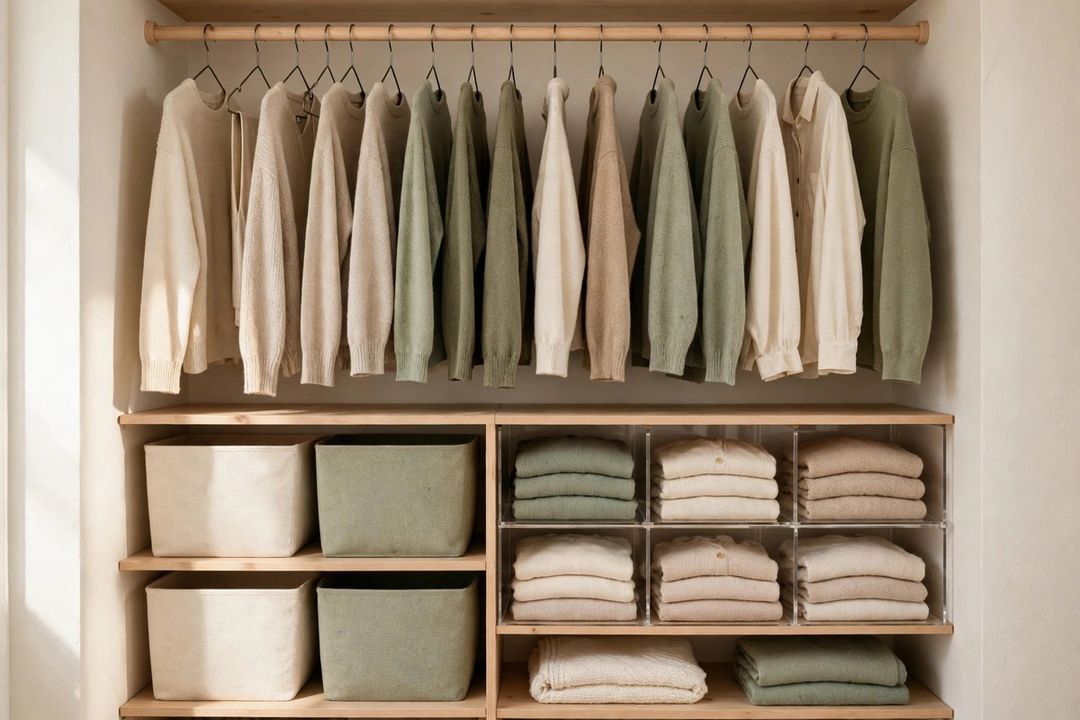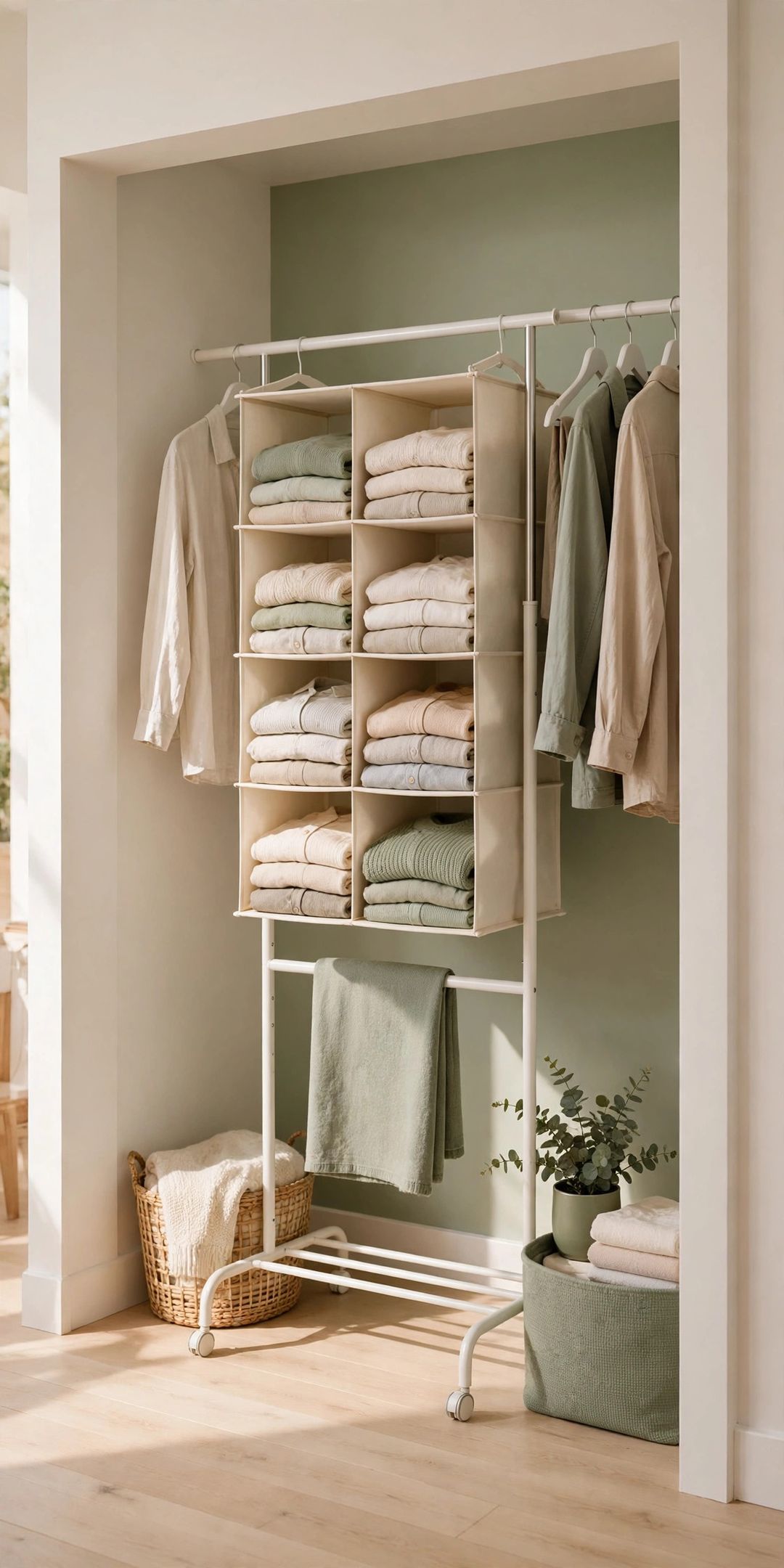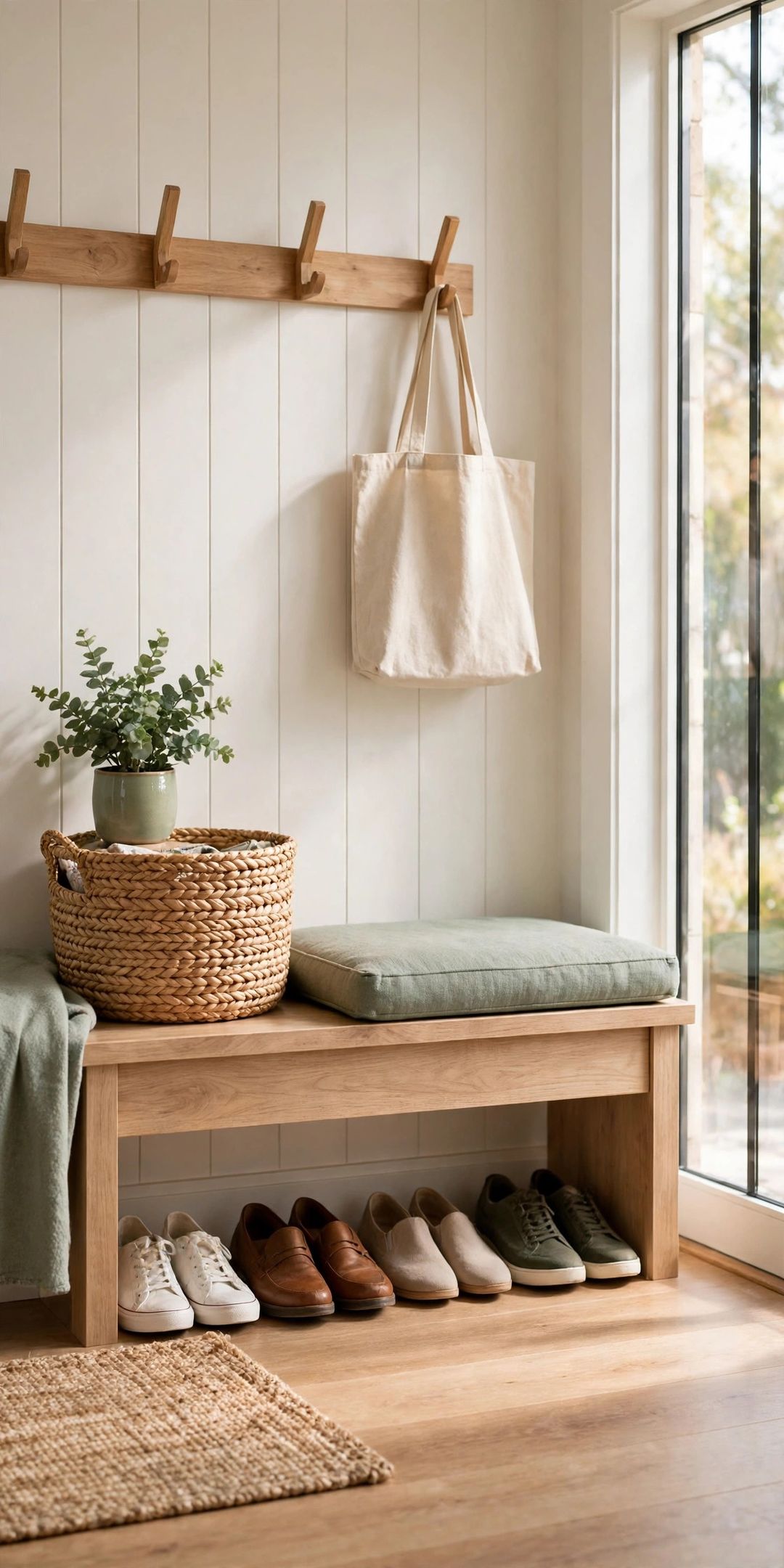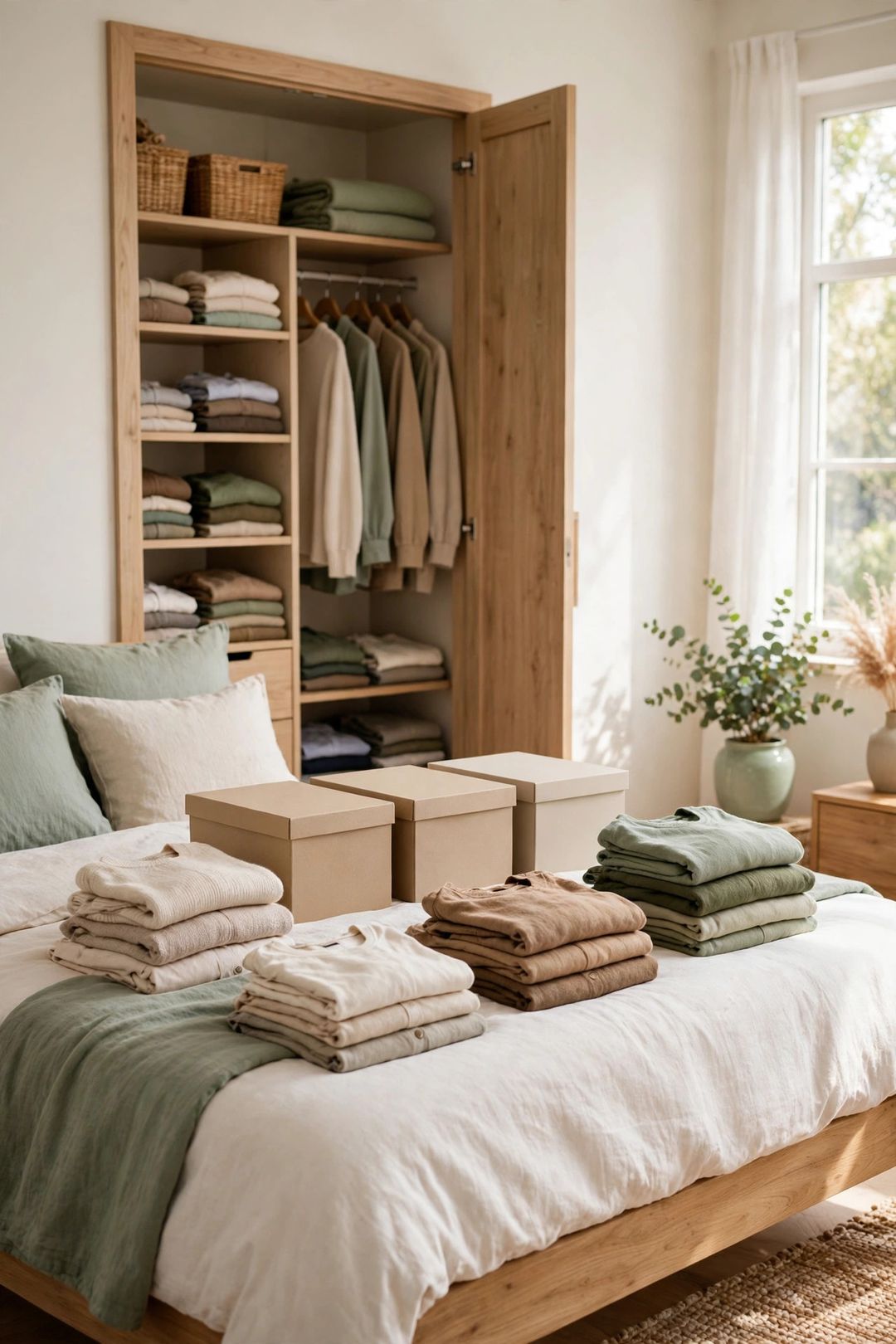
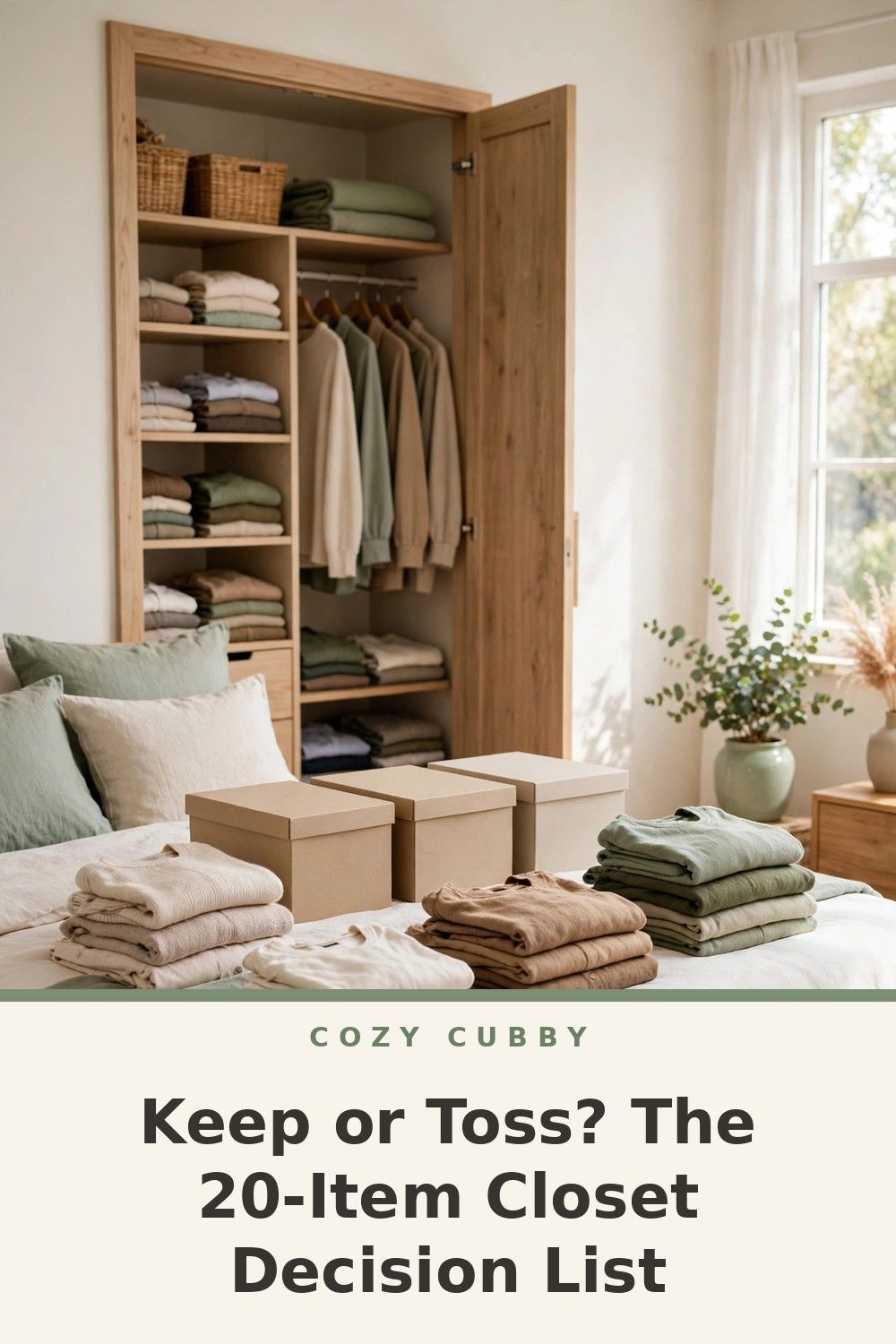
A full closet can still feel like nothing to wear. The snag is rarely a lack of clothes; the snag is hard choices hiding between easy favorites. A closet declutter keep or toss list turns those choices into simple yes-or-no rules.
Each item carries a clear test. Keep-if means the piece earns its space. Toss-or-donate-if means the piece can leave, kindly and without guilt. Donation suits items in good shape; worn-out pieces belong in trash or textile recycling where available.
Work through one group at a time, try on anything doubtful, and keep a donation bag nearby. A calmer closet is the goal, not an empty one.
Everyday Clothes
1. The "someday" jeans. Keep-if: the jeans nearly fit, feel fine sitting, and match tops in rotation. Toss-or-donate-if: the pair has waited a year or more for a body change. One well-fitting pair in the current size is the kinder swap.
2. Stretched-out basic tees. Keep-if: the tee holds shape at the neck and works for sleep, chores, or layering. Toss-or-donate-if: the collar sags and mornings always pass it over. Badly worn tees suit the rag bag better than donation.
3. Everyday tops on repeat. Keep-if: the top gets worn weekly, pairs with three or more bottoms, and looks neat after washing. Toss-or-donate-if: real mornings always pick a different top. Favorites deserve front space, not crowd duty.
4. Pants that fit today. Keep-if: the waistband feels fine after a meal, the length suits daily shoes, and sitting is easy. Toss-or-donate-if: the pair needs constant tugging or stays folded for months. Comfort now beats a label size.
5. The duplicate black top. Keep-if: one or two versions cover work, casual days, and layering, each with a clear role. Toss-or-donate-if: four near-identical tops compete and only the softest gets picked. The rest can help someone else.
Occasion, Seasonal & Sentimental
6. The formal outfit for rare events. Keep-if: the outfit fits now, suits most dressy invites, and needs no costly fixes. Toss-or-donate-if: the style feels dated and a real event would still trigger a new purchase.
7. The heavy seasonal coat. Keep-if: the coat gets real use each cold season, closes fully, and has sound pockets and lining. Toss-or-donate-if: a milder climate or newer coat means this one never leaves the hook.
8. The holiday or party outfit. Keep-if: the piece feels festive, fits well, and can repeat with different shoes or a scarf. Toss-or-donate-if: the outfit only worked for one themed party years ago. Festive pieces are easy to find secondhand later.
9. The sentimental keepsake shirt. Keep-if: the shirt holds a real memory and fits in one small keepsake box, not on five hangers. Toss-or-donate-if: a photo holds the memory while the shirt feels like clutter.
10. The costume or themed outfit. Keep-if: a yearly event truly calls for the costume and storage exists outside the main closet. Toss-or-donate-if: the outfit served one party and has gathered dust since. Costumes donate well before the holiday season.
Shoes, Bags & Accessories
11. Everyday walking shoes. Keep-if: the pair supports long walks, shows even sole wear, and gets picked most days. Toss-if: the sole is smooth, the heel leans, or foot pain follows every wear. Worn pairs suit shoe recycling where available.
12. Dress shoes rarely worn. Keep-if: the pair suits the formal outfit in the closet and stays comfortable for a full event. Toss-or-donate-if: the shoes pinch within minutes and sat idle through several events.
13. The everyday bag. Keep-if: the bag holds daily items, has a working zipper and strap, and matches most outfits. Toss-or-donate-if: the lining is torn, the strap frays, or a newer bag took over months ago. One trusted bag ends the shuffle.
14. The pile of extra tote bags. Keep-if: two or three sturdy totes cover groceries, library trips, and errands. Toss-or-donate-if: a drawer overflows with flimsy free totes that never get chosen. Extra totes free surprising space.
15. Scarves, belts, and hats in a tangle. Keep-if: each piece gets worn in its season and pairs with real outfits. Toss-or-donate-if: the item never suited personal style, or the tangle hides it for months.
Damaged, Worn & Done
16. Single socks and holey pairs. Keep-if: the mate turns up after one full laundry cycle and the pair keeps elastic and cushion. Toss-if: the sock stays single after that cycle or has heel or toe holes. Singles make decent dusting rags first.
17. Stained or torn clothing. Keep-if: a small stain sits out of sight and the item still works for chores or layering. Toss-if: stains sit front and center, or a tear repeats on a failed seam. Damaged pieces suit recycling, not donation.
18. Pilled sweaters. Keep-if: light pilling lifts off with a fabric shaver and the knit still feels warm and neat. Toss-or-donate-if: the sweater looks tired all over and gets skipped on cold days.
19. Worn-out undergarments and basics. Keep-if: elastic still grips, fabric stays opaque, and the piece feels comfortable all day. Toss-if: straps slip, elastic cracks, or fabric has thinned. These belong in the trash, not the donation bag.
20. Shoes with worn-down soles. Keep-if: a cobbler repair makes sense for a sturdy pair with strong uppers. Toss-if: the sole is split, the inner heel has collapsed, or the pair feels unsafe on wet ground.
What to Buy
Large donation bags, typically $3–$6 for a pack. Pro: a ready bag keeps sorted items moving out. Con: thin bags tear under heavy shoes, so choose a sturdier pack.
Clear bins for the maybe pile, typically $5–$10 each. Pro: doubtful items get a dated trial, with contents in clear view. Skip-if: space is very tight, since a labeled bag works too.
Slim hangers, typically $6–$10 for a pack. Pro: matching slim hangers save rail space and stop tops sliding off. Con: heavy coats need sturdier hangers, so keep a few strong ones.
Mistakes to Avoid
- Sorting by guilt instead of use. Price paid long ago earns no closet space today, so judge by wear, fit, and comfort.
- Donating damaged items. Centers need clean, wearable pieces, so recycle or trash torn and stained items instead.
- Deciding everything in one marathon. Tired choices get sloppy, so sort one group at a time and stop early.
- Keeping a maybe pile forever. Give the pile a firm date, such as the end of the season, and let untouched items leave then.
- Emptying the whole closet at once. Huge clothing piles cause rushed choices, so pull out one category and finish it first.
Frequently Asked Questions
How long should a full closet sort take?
The list works in short sessions, one group at a time. A single group often fits into an evening, and steady sessions beat one exhausting day.
What belongs in the maybe pile?
The maybe pile suits items with real doubt, like a dress that may suit a coming event. Box such pieces with a date on the lid, and donate anything still unworn by then.
Should sentimental clothes stay in the closet?
A small keepsake box outside the daily closet works better. One or two pieces keep the memory close, while the rail stays free for daily clothes.
What should happen to items that are truly worn out?
Worn-out items belong in the trash or a textile recycling bin where one exists. Check local council or store programs for current drop-off rules, since options vary by area.
Save this post to your closet organization board on Pinterest so the keep-or-toss rules are close at hand at the next sort.