Most closets waste the space closest to the ground. Shoes pile up, bags slump in corners, and the area under short hanging clothes sits half empty. The best closet floor storage ideas treat that bottom two feet as a real storage zone, with low, wide systems that slide in easily and keep every item visible at a glance.
Measure before you shop. Note the height from the floor to the hem of your shortest hanging clothes, the full depth of the closet, and how far the door swings or slides. Most floor systems work best between 8 and 24 inches tall. Leave a little breathing room above each unit so you can lift items out without scraping the clothes hanging overhead.
Low Bins for Bags, Boots and Bulky Items
Open and lidded bins suit the items that never sit neatly on a shelf.
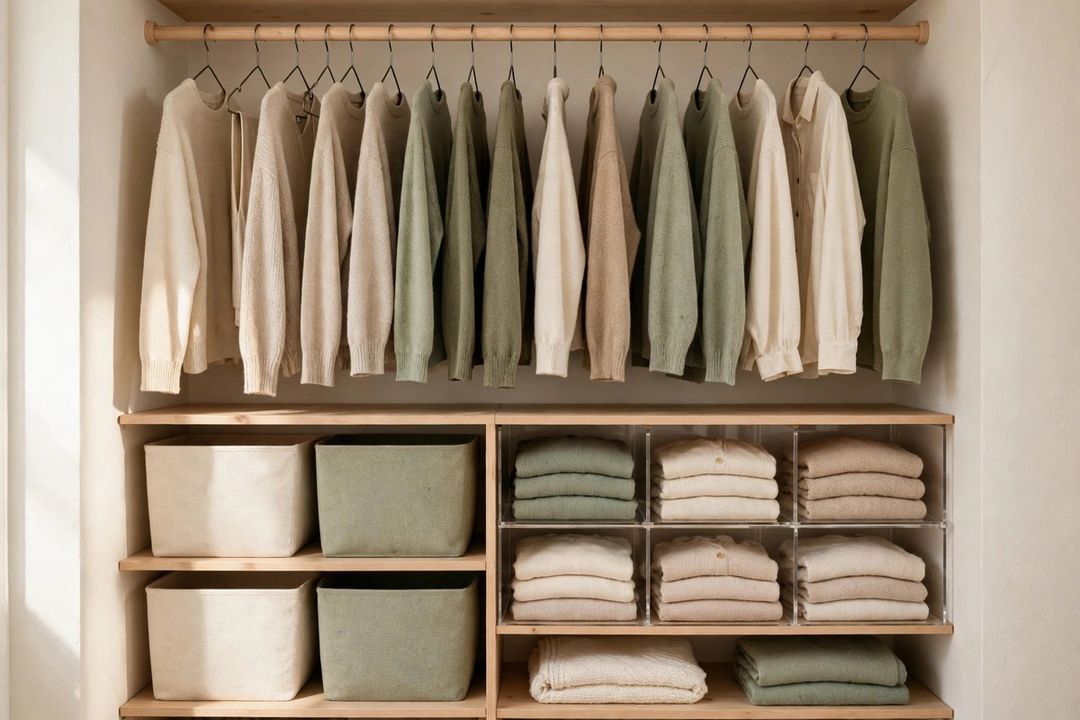
1. Low open-top bins. Place two or three wide, shallow bins side by side for handbags, gym bags, and everyday shoes. Open tops mean you can drop items in fast and see everything without lifting lids. Choose bins no taller than about 12 inches so they clear most hanging shirts.
2. Shallow lidded bins. Use these for off-season items that live on the floor for months, such as scarves, gloves, and folded swimwear. A lid keeps dust off and lets you stack a second light bin on top. Clear plastic makes the contents easy to check, while opaque bins look calmer in an open closet. Label the front either way, since floor-level contents are easy to forget.
3. Divided low trays. A shallow tray with dividers keeps small floor items in order: shoe care supplies, lint rollers, spare laces, and belts that slip off hooks. Set the tray on top of a lidded bin or beside your shoes, where you dress. Dividers stop the tray from turning into a junk drawer.
Shoe and Drawer Systems for the Floor Line
Shoes and small clothes cause most floor clutter, so give them fixed spots.
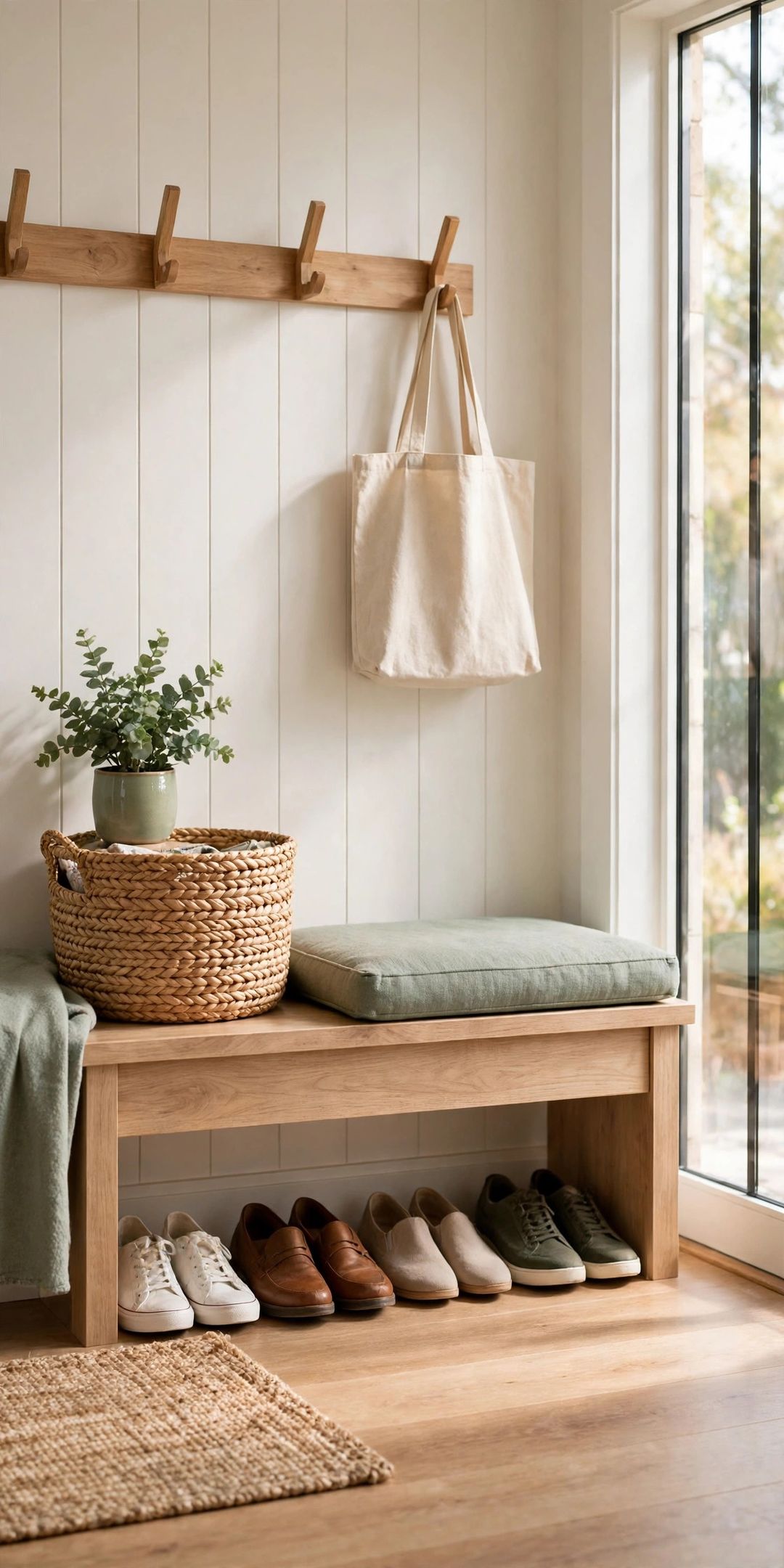
4. Low shoe cubbies. A short cubby unit, usually two rows high, lines up pairs in separate openings along the floor. Each pair gets its own space, which ends the pile that forms when shoes are tossed in. Measure your largest pair first, including heels and chunky soles, because cubby openings vary. Cubbies work especially well under a row of short hanging tops.
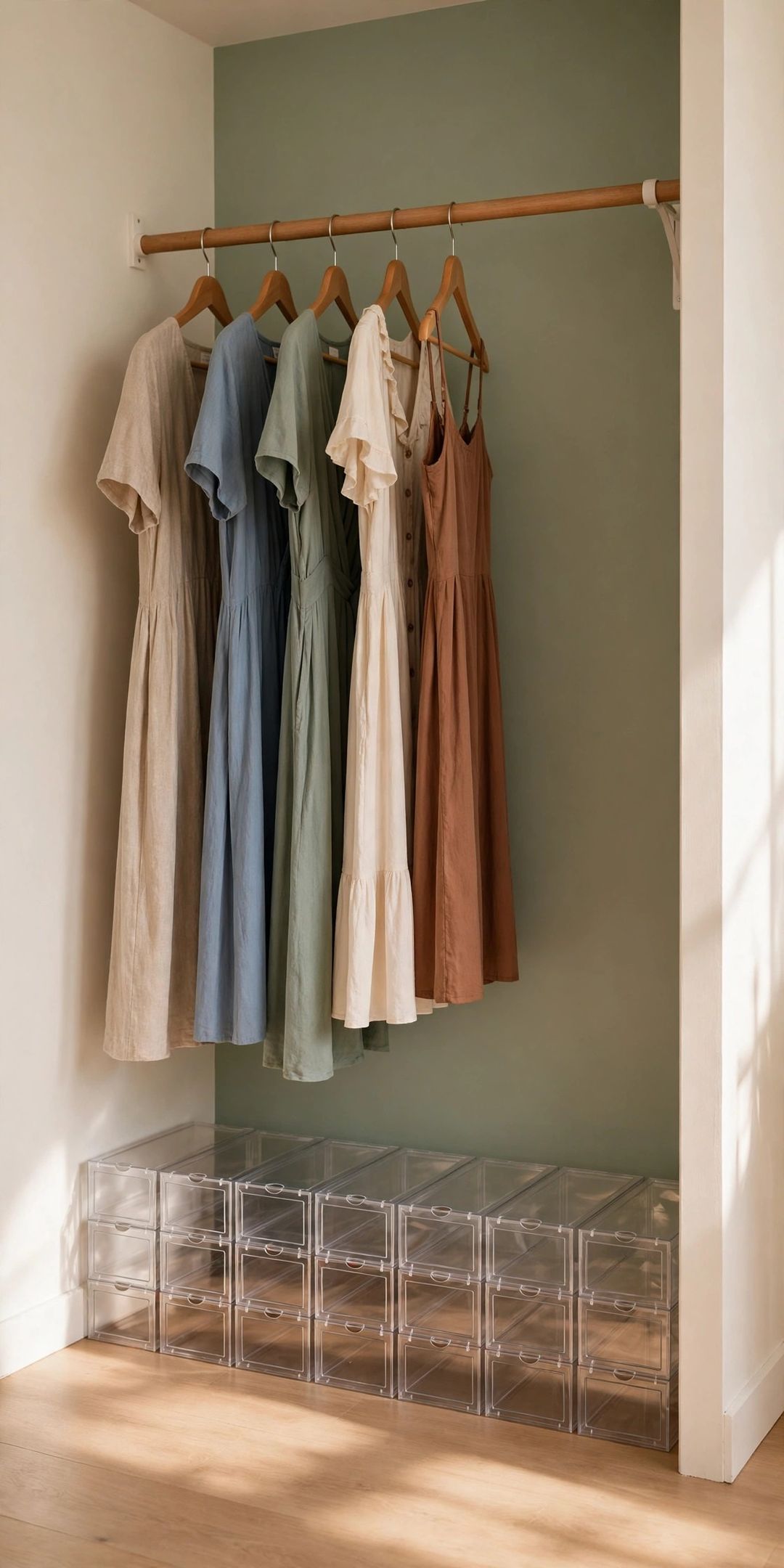
5. Clear stackable shoe boxes. Individual boxes stack two or three high and protect shoes you wear less often. Front openings or drop-front doors let you pull a pair out without unstacking the whole column. This system costs more per pair than a cubby, so save it for good shoes, special-occasion pairs, or a small collection.
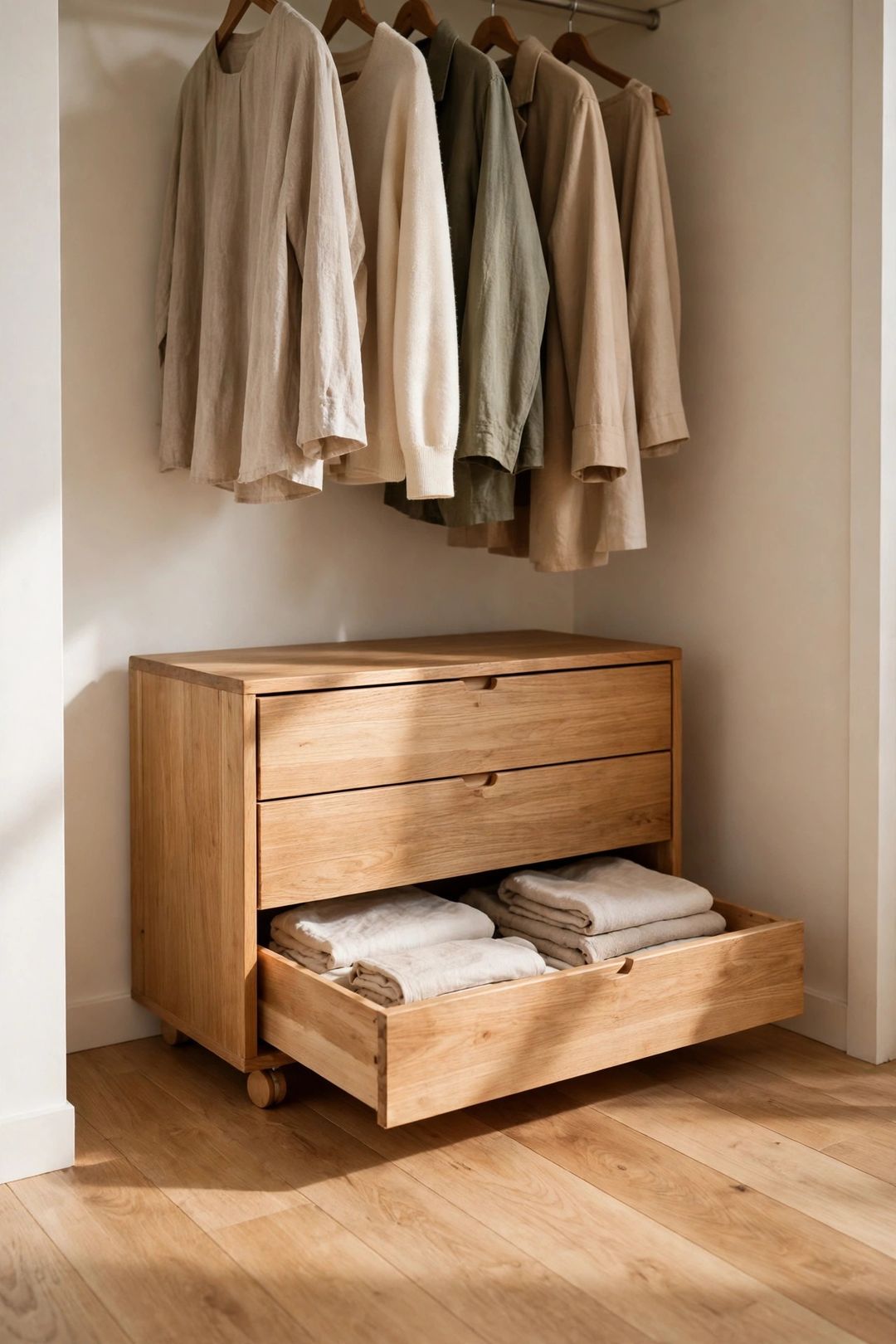
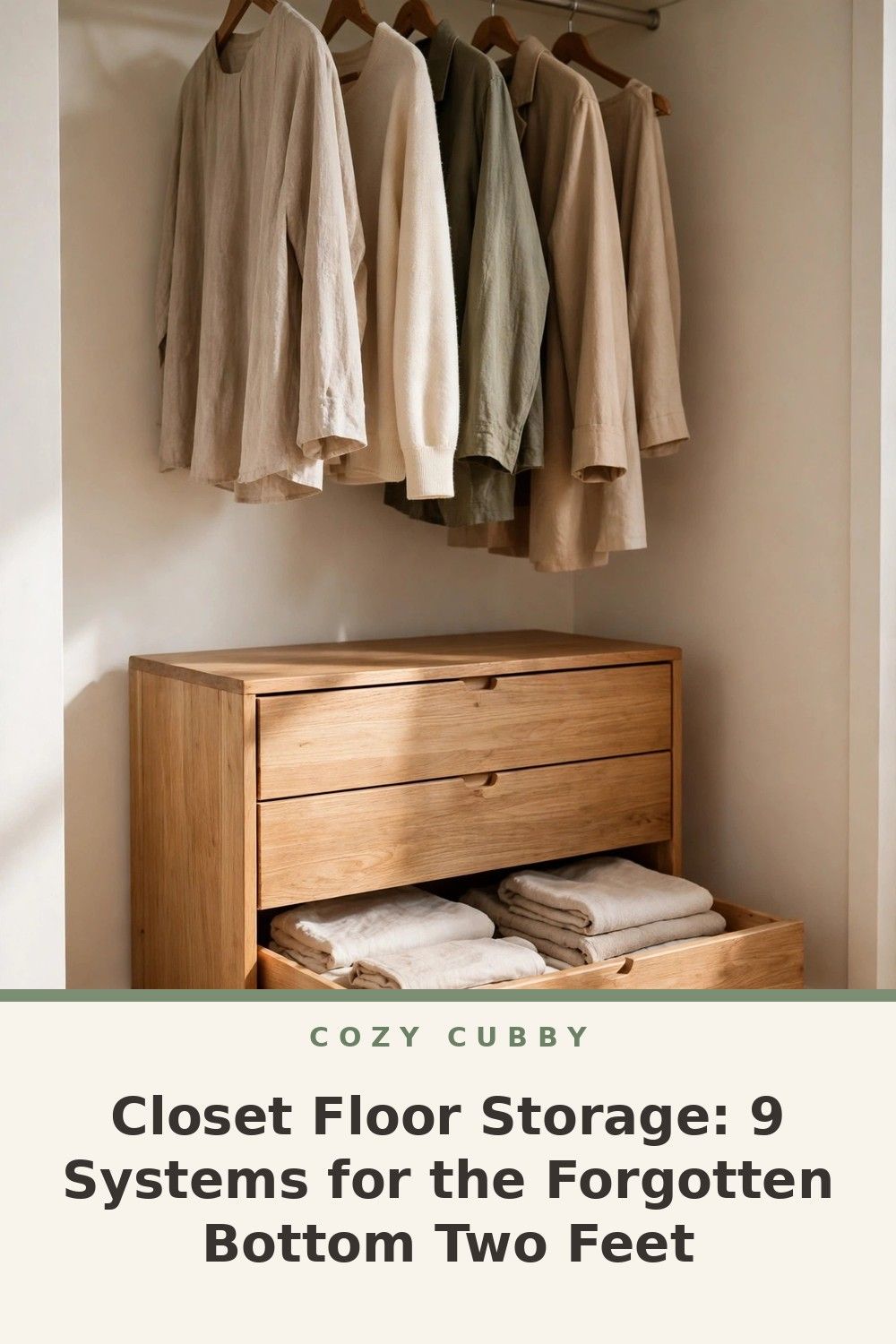
6. Slim rolling drawers. A narrow drawer unit on wheels turns deep closet floor space into storage you can actually reach. Roll it out, take what you need, and roll it back. Drawers hide socks, underwear, workout clothes, and pajamas that do not need hanging. Check the wheel height in your measurement, and test that the unit rolls smoothly over carpet if your closet floor is not hard.
Shelves and Risers That Build Upward
When floor width runs out, a low frame adds a second level without blocking hanging space.
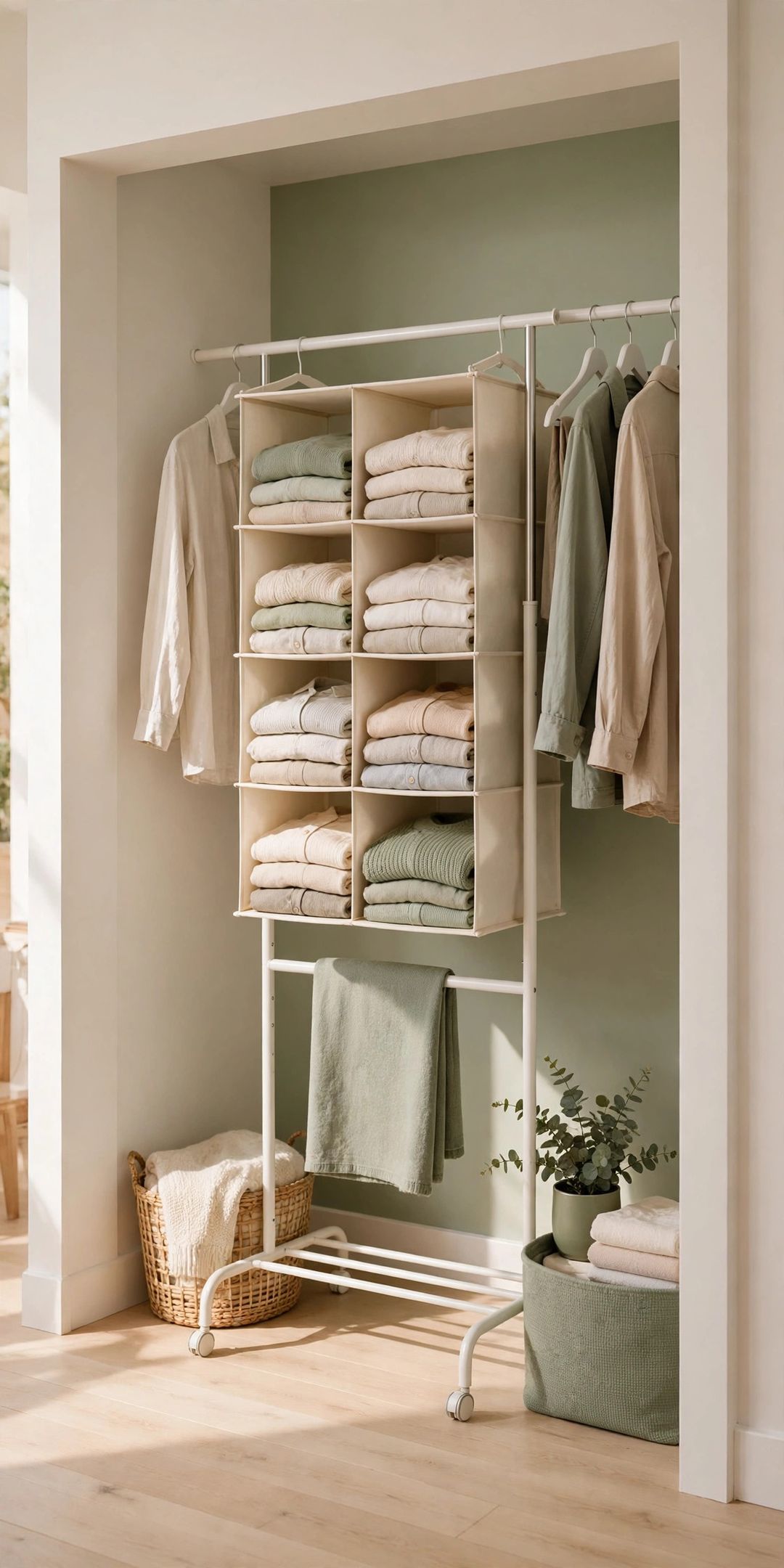
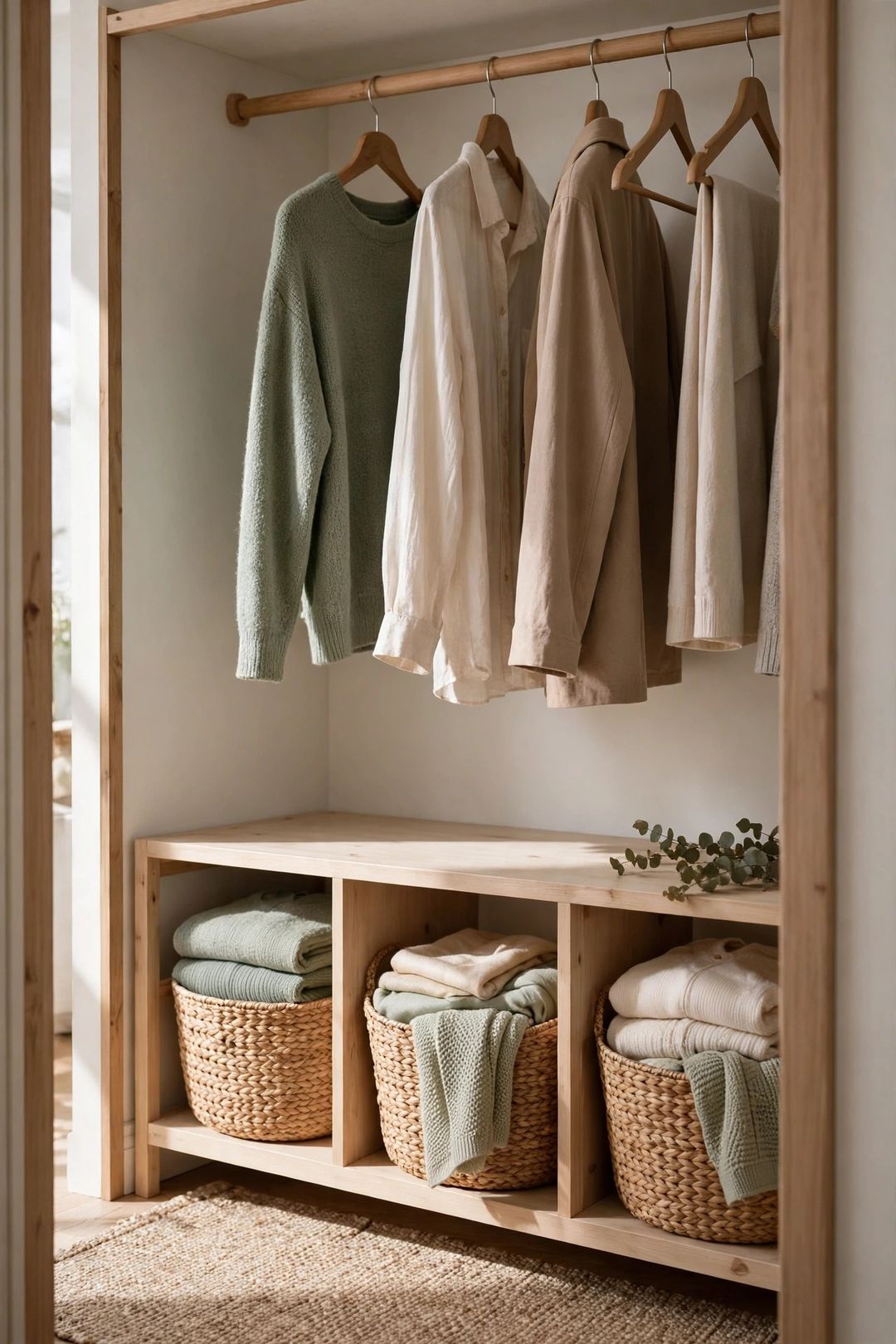
7. Single-tier floor shelf. A simple raised shelf creates two zones: shoes or bins below, and bags or folded clothes on top. This works well under dresses only if the shelf stays low, around 10 to 14 inches. Wood and metal shelves feel sturdier for heavy items, while light plastic suits shoes and soft goods.
8. Two-tier low shelving unit. A compact two-shelf unit doubles the storage in one footprint. Put daily shoes on the open lower shelf and folded jeans or sweatshirts above. Total height usually lands between 18 and 24 inches, so this fits best under short hanging sections, not under shirts that hang lower. Leave the unit unanchored and light enough to lift out for cleaning.
9. Expandable angled shoe shelf. An adjustable-width shoe shelf stretches to fit the clear space between closet walls or other furniture. Angled tiers tilt shoes forward, so pairs stay visible and heels do not slide off the back. Rails rather than flat boards keep dust from building up. Measure at floor level, since baseboards can steal an inch on each side and stop the frame from sitting flat.
What to Buy
Low open-top bins — Pro: fast access and easy to see inside. Con: no dust protection and no stacking. Skip if: the items are seasonal and rarely used. Typically $12–$20 each.
Clear stackable shoe boxes — Pro: protect shoes and use vertical space well. Con: cost adds up across many pairs. Skip if: you wear every pair daily and need grab-and-go speed. Typically $20–$35 for a small set.
Slim rolling drawer unit — Pro: reaches deep floor space and hides clutter. Con: wheels can struggle on thick carpet. Skip if: your floor space is shallower than the unit is deep. Typically $28–$50.
Two-tier low shelving unit — Pro: doubles one footprint with no tools needed for most freestanding styles. Con: too tall for low-hanging clothes. Skip if: your clear height is under 18 inches. Typically $25–$45.
Mistakes to Avoid
- Skipping the hem measurement. A unit that fits the floor can still crush hanging clothes. Measure floor to hem, then subtract a few inches for easy access.
- Buying deep bins for a shallow closet. Deep bins block the door swing and hide items at the back. Match bin depth to the closet, not to the product photo.
- Letting shoes stay in a pile. A pile hides pairs and damages heels and toes. Even one cubby row or shelf tier breaks the habit.
- Stacking too high. Tall stacks on the floor tip over and block hanging space. Keep floor systems under about two feet tall.
- Forgetting the baseboards. Baseboards and door tracks shrink the real floor width. Measure at the floor itself before ordering wide units.
Frequently Asked Questions
How tall should closet floor storage be?
Most floor systems work best between 8 and 24 inches tall. Measure from the floor to the hem of the shortest hanging clothes above, then leave a few extra inches so you can lift bins and shoes out without pushing the clothes aside every time.
What should go on the closet floor instead of shoes?
Lidded bins of off-season clothes, rolling drawers for socks and workout gear, handbags in open bins, and shoe care supplies in a divided tray all suit the floor. Keep daily shoes in cubbies or on a low shelf so they stay paired and easy to grab.
How do you keep closet floor storage from looking messy?
Give each system one job, keep heights similar across the row, and leave a small gap between units instead of packing them tight. Clear or labeled fronts help, and a quick sort every season stops the floor from becoming a catch-all again.
Can floor storage work in a closet with a sliding door?
Yes, as long as the units sit fully behind the door track and do not lean into its path. Rolling drawers are a smart pick here, because you can pull them forward into the open half of the doorway to reach the back.
That bottom two feet can hold far more than a shoe pile. Save this post to your Closet & Wardrobe board on Pinterest so the measurements and system ideas are ready before your next closet tidy.