A dark closet slows down every morning. Black and navy tops look the same, shoes hide in corners, and the top shelf becomes a place where things go to be forgotten. Many closets, especially in older homes and rentals, have no outlet at all.
These closet lighting ideas no outlet solve that problem without wiring or calling an electrician. Every idea below runs on batteries or recharges with a USB cable, and most install with adhesive, magnets, or a few screws in minutes.
Note the darkest spots first: usually under the hanging rod, on the floor, and on high shelves. You may need only two or three lights in total.
1. Stick a Battery LED Bar Above the Door Frame
A slim LED light bar mounted inside the closet, just above the door frame, washes light down over hanging clothes without shining in your eyes. Battery-powered bars stick on with adhesive or a magnetic strip, so they work in rentals too. Choose a bar about as wide as the doorway for even light.
2. Add Motion-Sensor Lights That Turn On With the Door
Motion-sensor lights switch on when you open the door or step close, and turn off on their own after a short pause. That means no fumbling for a switch, and no wasted battery from lights left on. Face the sensor toward the doorway.
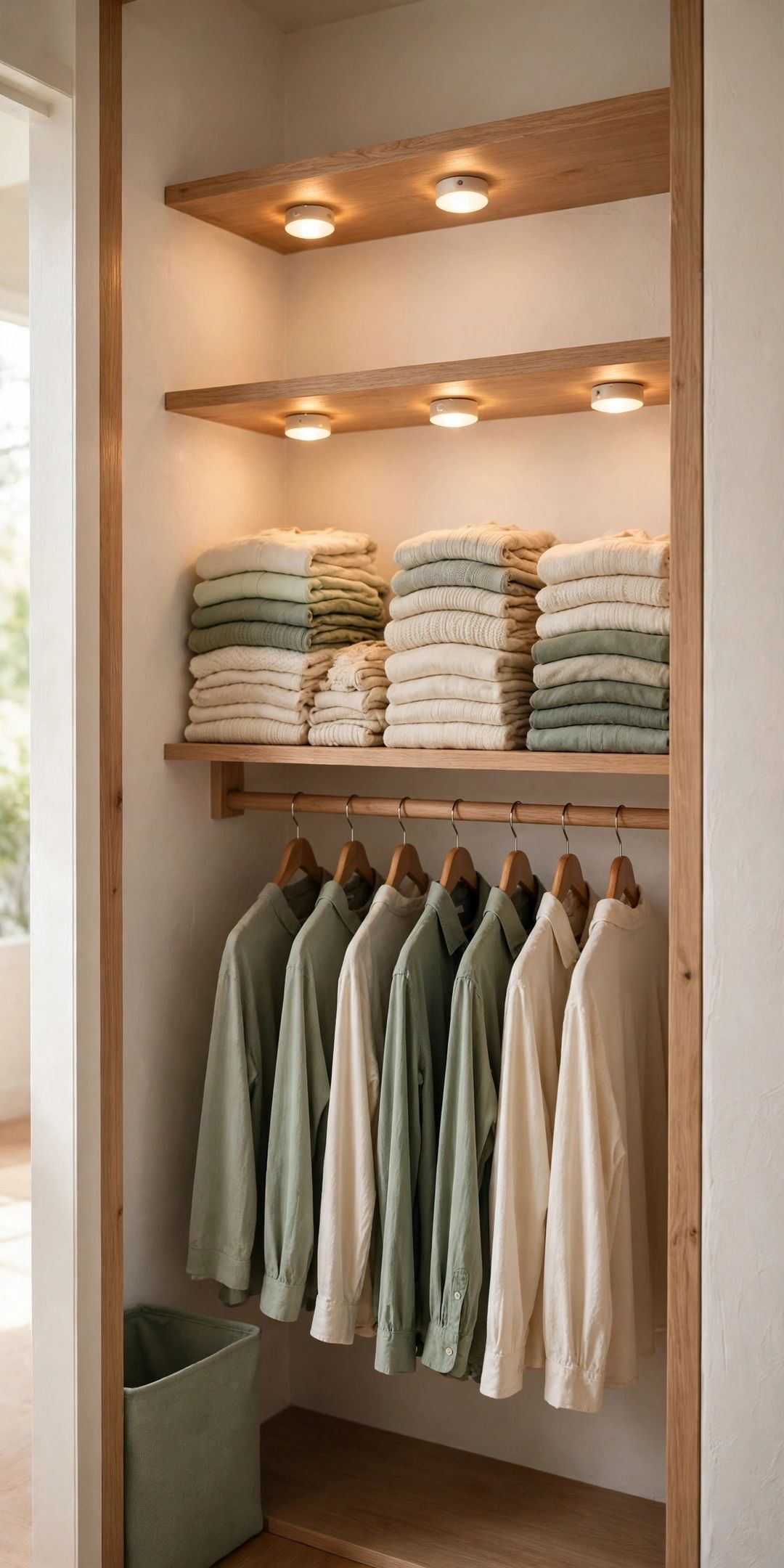
3. Use Rechargeable Puck Lights on Shelves
Round puck lights fit where bars cannot: under a shelf, inside a deep cubby, or above folded sweaters. Press to turn them on, or pick a style with a small remote. Rechargeable versions top up with a USB cable, so you are not buying batteries often.
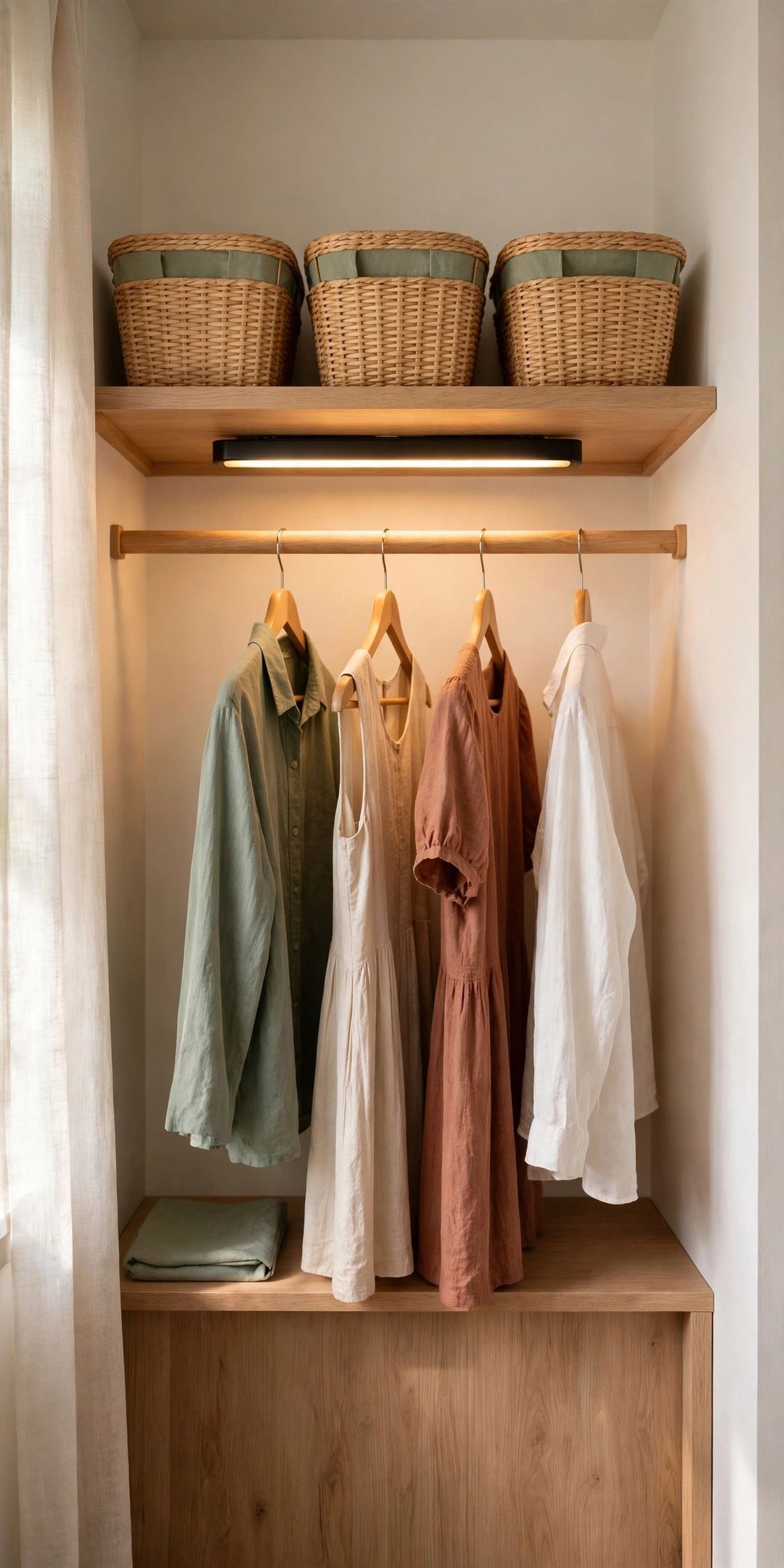
4. Run an Adhesive LED Strip Under the Rod Shelf
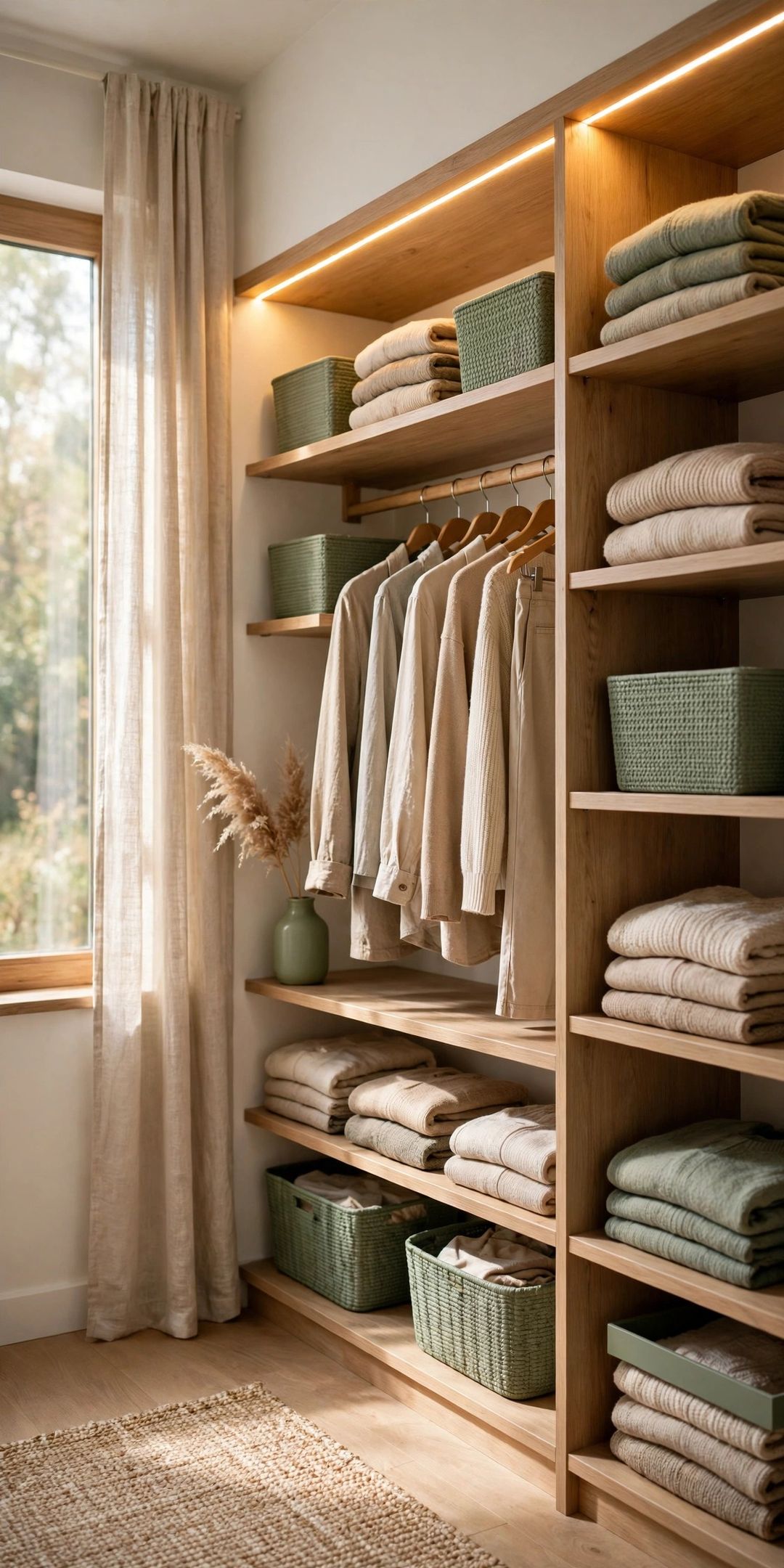
Most closets have a shelf above the hanging rod, and its underside is perfect for an adhesive LED strip powered by a small battery pack. The strip lights the clothes below, where shadows are worst, and stays hidden from view. The battery pack can tuck behind folded items on the shelf.
5. Light the Floor With a Low Bar or Strip
Shoes are usually the darkest part of a closet because hanging clothes block light from above. A short light bar, or a leftover piece of LED strip placed low near the floor or under a shoe rack, fixes that shadow. Keep it soft rather than bright: you only need enough light to tell brown shoes from black ones.
6. Pick a Light Color That Shows Clothes Clearly
Light color changes how clothes look. Very cool, blue-toned light can feel harsh, while warm light is softer but may make white and cream hard to tell apart. A neutral to daylight tone often shows clothing colors most clearly. Test multi-setting lights against a navy and a black item before mounting.
7. Use Magnetic Lights You Can Pop Off to Recharge
Magnetic mounts make rechargeable lights much easier to live with. The base stays stuck to the wall or shelf, and the light pops off when it needs charging and clicks back when it is done. You can also carry it to another dark spot when needed.
8. Add a Small Light Inside Deep Drawers and Boxes
Closet drawers and storage boxes hide small items like belts, scarves, and gloves. A tiny battery light with a sensor, placed inside the drawer front or under a box lid, lights the contents when you open it. Keep them low-profile so they do not catch on clothes.
9. Try a Clip-On Light for a Dressing Corner
If part of your closet doubles as a dressing spot, a clip-on battery light can aim light exactly where you stand. Clip it to a shelf edge, point it at the mirror or outfit area, and remove it when you do not need it.
10. Plan Charging and Battery Checks on a Schedule
No-outlet lights only help if they are charged. Pick one simple routine: recharge USB lights on the first weekend of the month, or on laundry day, and keep spare batteries nearby if you use battery styles. A dim light is a sign to recharge soon.
What to Buy
Battery LED light bars, typically $12–$25 for a pack. Best for above the door or under shelves. Pro: bright, even light and easy adhesive mounting. Con: batteries need replacing, so rechargeable versions cost less over time.
Motion-sensor light bars, typically $14–$28 for a pack. Best for hands-free use each morning. Pro: they turn on only when needed, saving power. Con: sensors can miss movement in deep closets, so placement matters.
Rechargeable puck lights, typically $13–$24 for a set. Best for shelves, cubbies, and drawers. Pro: small, flexible, and many include a remote. Con: each puck charges on its own, which takes a little time.
Adhesive LED strip with battery pack, typically $10–$20. Best for under the rod shelf or along the floor. Pro: cut to fit and hidden from view. Con: adhesive can weaken in heat, so clean the surface well first.
Spare batteries and a USB cable kit, typically $6–$12. Best for keeping every light ready. Pro: one small kit covers charging and backups. Con: it needs a storage spot, so keep it in the closet itself.
Mistakes to Avoid
- Putting all the light in one spot. One bright bar at the top still leaves the floor and deep shelves in shadow. Spread smaller lights across levels.
- Mounting before testing at night. A closet that looks fine in daylight may still be dark in the morning. Test positions after dark before using adhesive.
- Choosing light that is too harsh. Very bright, cool light can glare in a small space and still show colors poorly. Test against your clothes first.
- Forgetting a charging routine. Rechargeable lights that are never charged go dark within weeks. Tie charging to a habit you already keep.
- Blocking the sensor. A motion sensor hidden behind hanging clothes will not trigger well. Face it toward the doorway and keep it clear.
Frequently Asked Questions
How many lights does a small closet need?
Most small closets do well with two or three lights: one above the door or under the rod shelf, one for shelves, and one low for shoes. Add more only for deep corners or drawers that stay dark after the first lights are in.
How long do battery closet lights last?
It depends on brightness, sensor use, and battery size. Motion-sensor lights used a few times a day usually go much longer between charges than lights left on for long stretches. Recharge at the first sign of dimming.
Will adhesive lights damage rental walls?
Adhesive pads can pull paint if removed quickly. Use removable strips rated for the light's weight, and peel slowly when removing. Magnetic bases are the gentlest option for rentals.
Are motion-sensor lights better than switch lights?
For a main closet light, motion sensors are usually more convenient because they turn on when you arrive and off when you leave. Switch or remote puck lights suit shelves and drawers, where you want light only while that spot is open.
Start with the darkest spot in your closet, add one light, and live with it for a week before buying more. Save this post to your Closet Organization board on Pinterest so the placement tips are handy when you set yours up.