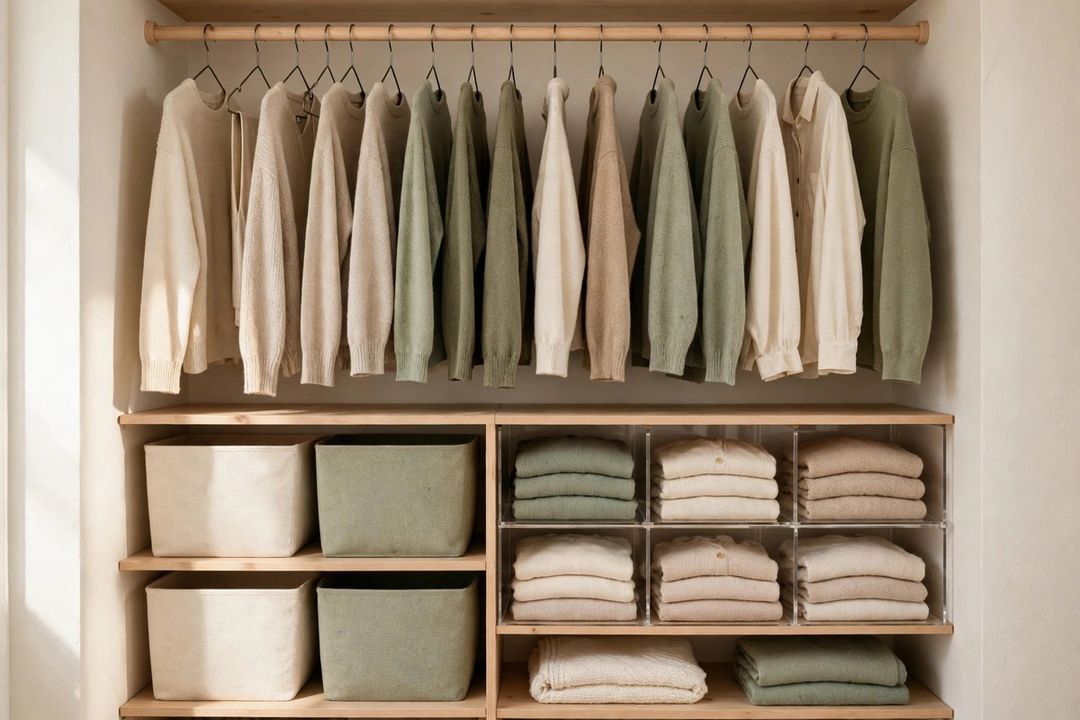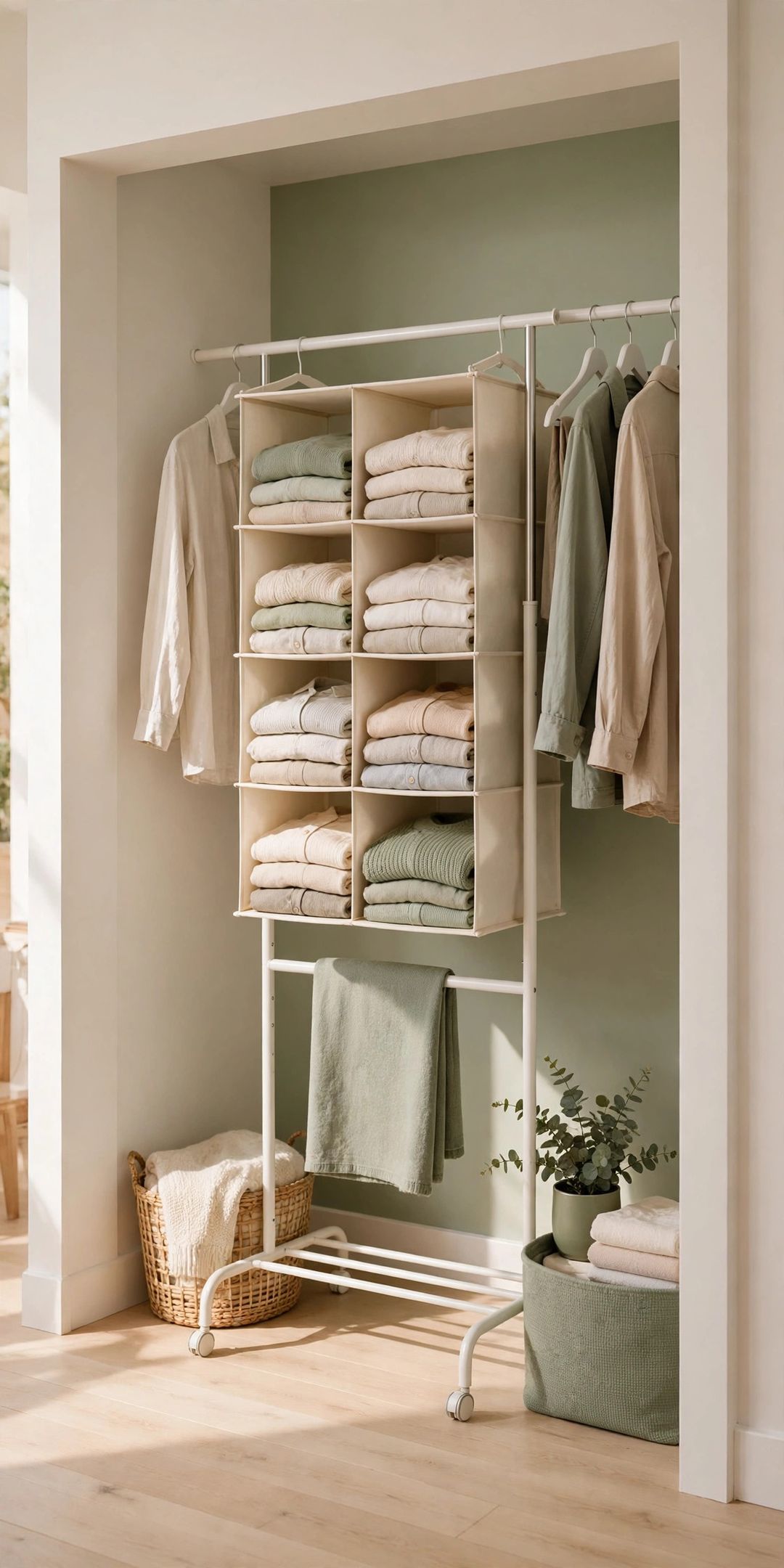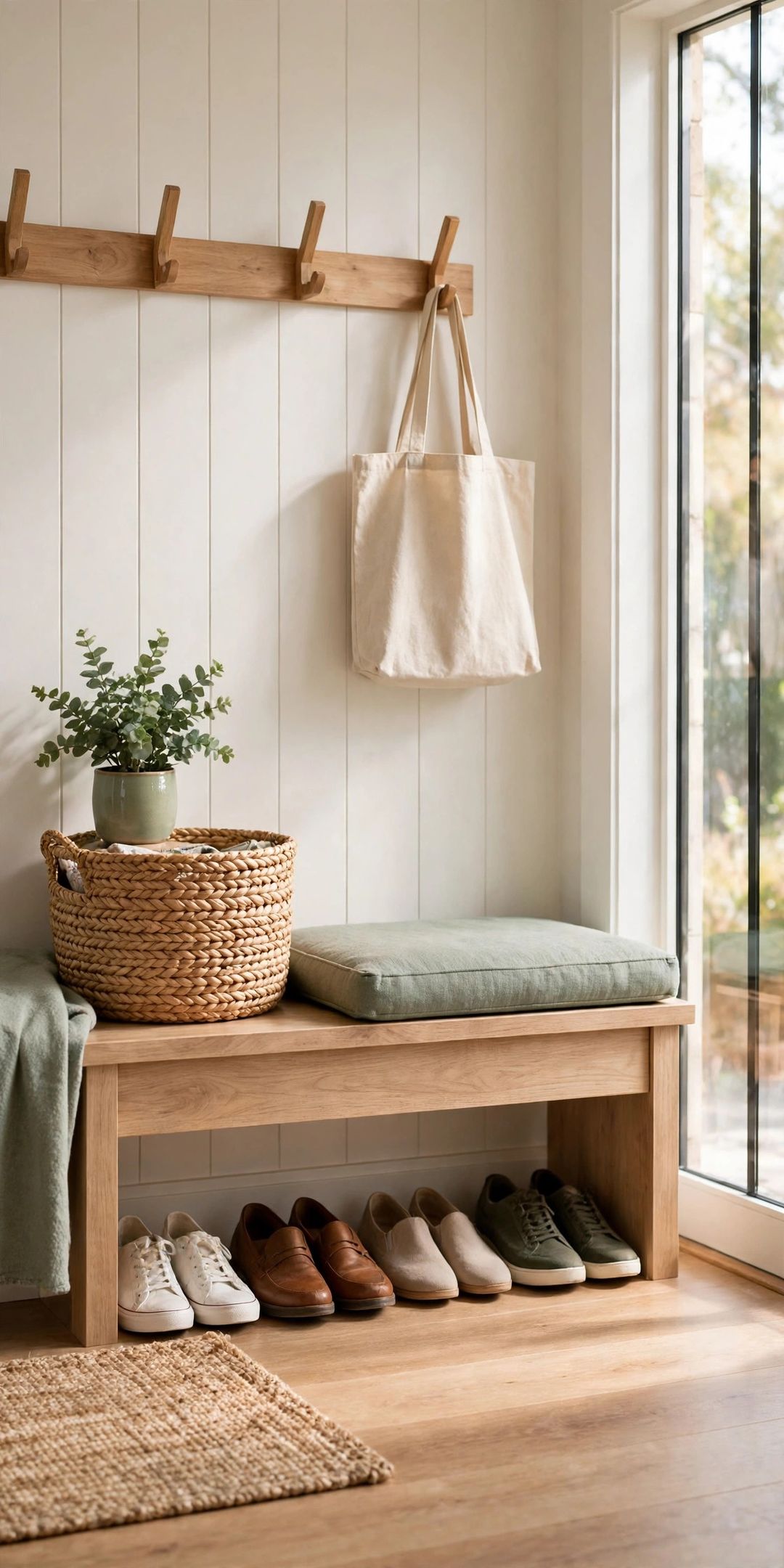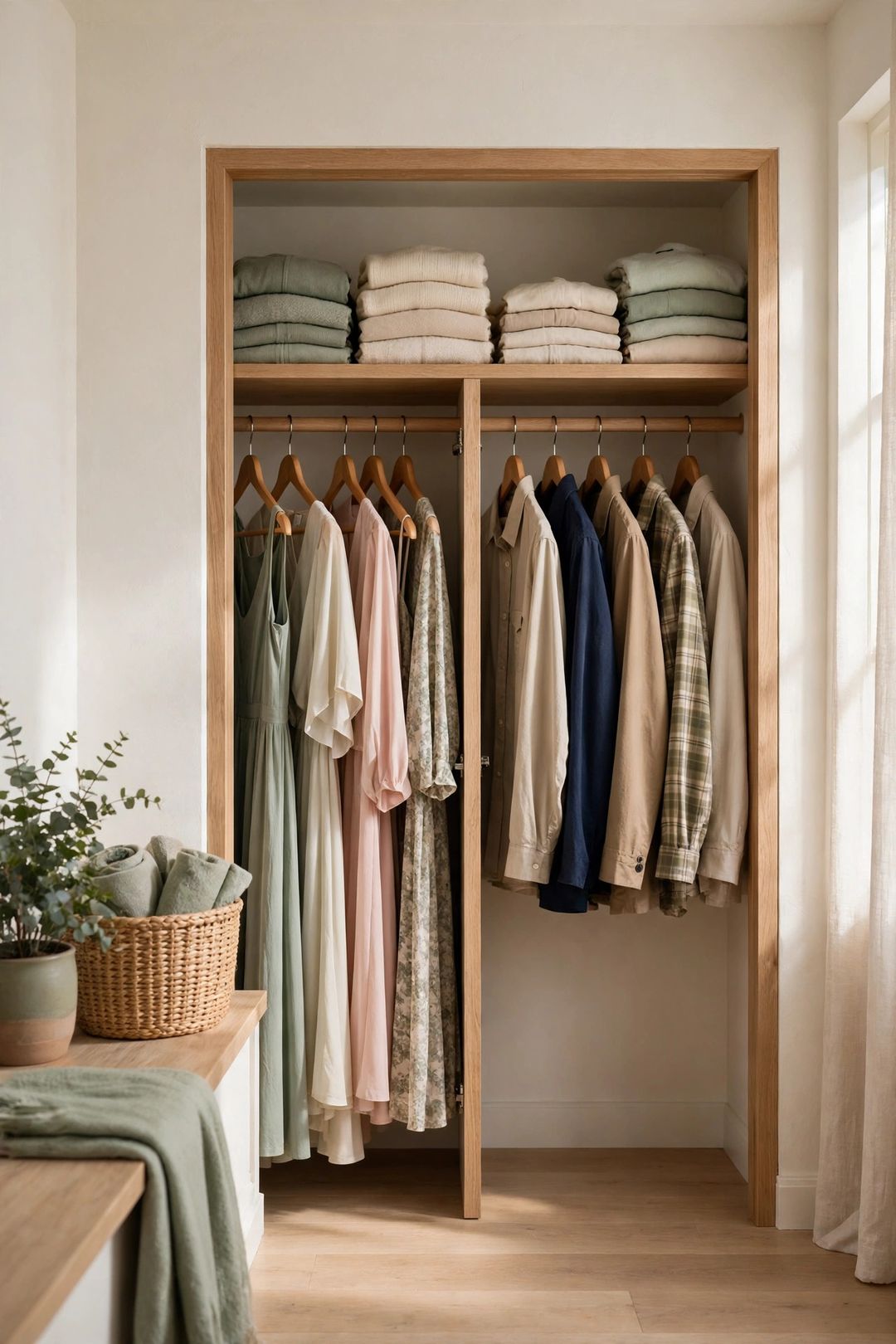
Shared closets rarely fail because they are too small. They fail on territory. One side slowly expands, a sweater lands on the wrong shelf, and soon every rushed morning starts with a small negotiation about whose clothes are where.
Good closet organization for couples is less about matching bins and more about clear agreements. When each partner knows where their clothes live and what happens when space runs out, the closet stops being a daily argument.
The system below uses neutral labels — Partner A and Partner B, or side one and side two — so it fits any couple and closet shape. It takes one honest sort and a short conversation about rules.
Map the Zones
Empty the closet in sections and sort every item by owner and type: hanging, folded, shoes, accessories. Then assign three kinds of zones before anything goes back in.
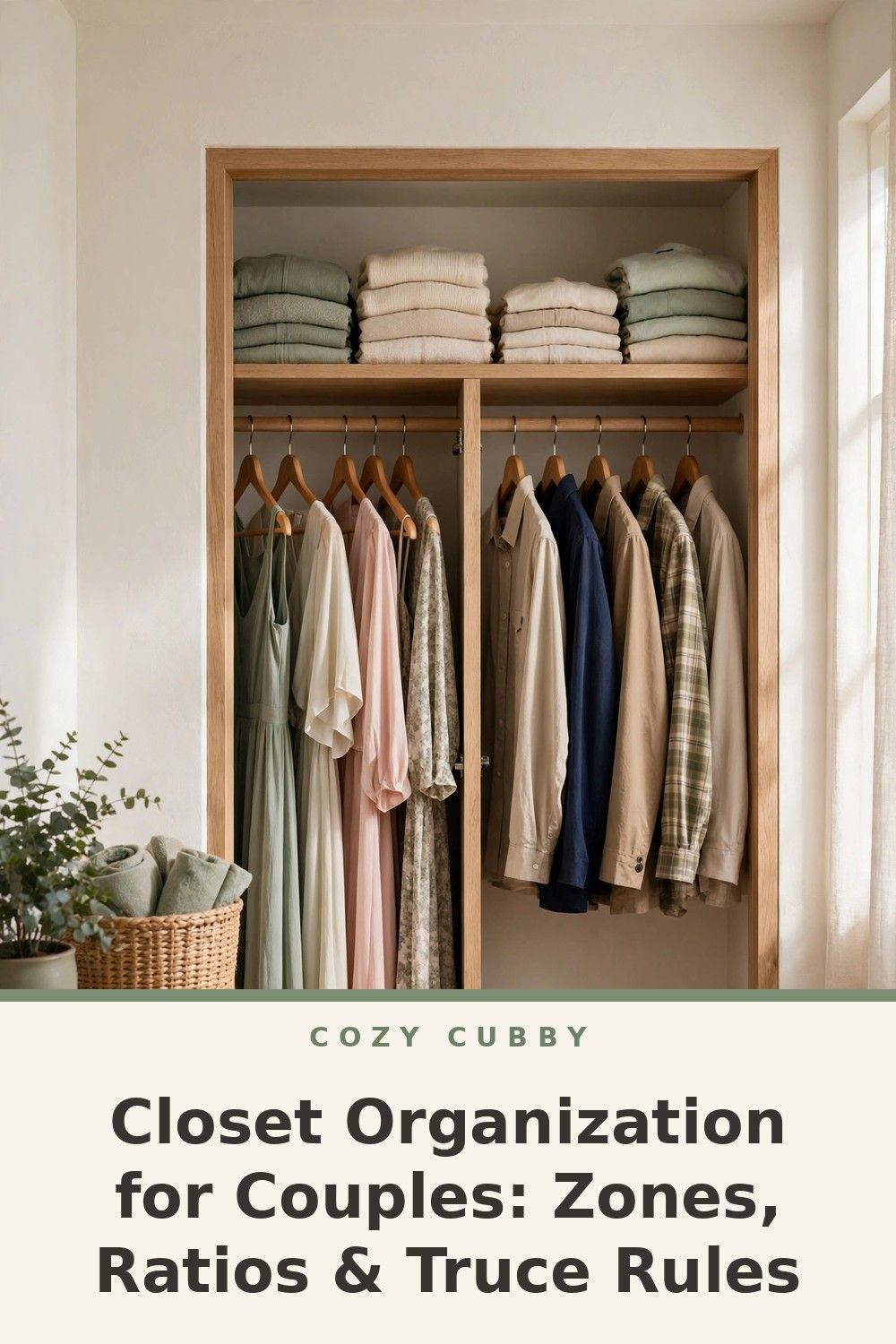
Partner A's zone. One clear side or section for Partner A's hanging and folded clothes, with a defined edge — a rod section end, a shelf, or a divider. The edge matters more than the size.
Partner B's zone. The matching section for Partner B, marked the same way. Each zone needs some hanging space and some shelf or drawer space, since almost no wardrobe is all one type.
The shared zone. A smaller, deliberate area for things that belong to both: seasonal coats, rarely worn outfits, and extras like a lint roller and steamer. Shared should be a choice, not the overflow pile that forms when zones fill up.
Mark the boundaries physically. A shelf divider, a different hanger color, or a label on each shelf edge makes the agreement visible — and lets you spot drift early.
Split by Ratio Not by Halves
The most common shared-closet mistake is the automatic 50/50 split. Equal halves feel fair, but wardrobes are rarely equal. One partner may own forty hanging shirts; the other, twelve hanging pieces and stacks of knitwear that cannot hang at all. Halves give one side wasted rod space and the other side overflowing shelves.
Count before you divide. Tally each partner's hanging and folded items, then split rod and shelves in roughly that ratio. If one wardrobe is twice the hanging size of the other, a two-to-one rod split is fairer than half and half.
Match the type of space to the type of clothes, too. Long hanging space for dresses and coats goes to whoever owns them, regardless of side. Shelf-heavy sections suit the partner with more knitwear, denim, and gym clothes. Shoes need an honest count too; twenty pairs cannot share evenly with four.
Ratios are not permanent. Wardrobes change, so revisit the split at the twice-a-year reset below. Space follows the clothes, not a coin toss.
The Shared Zones
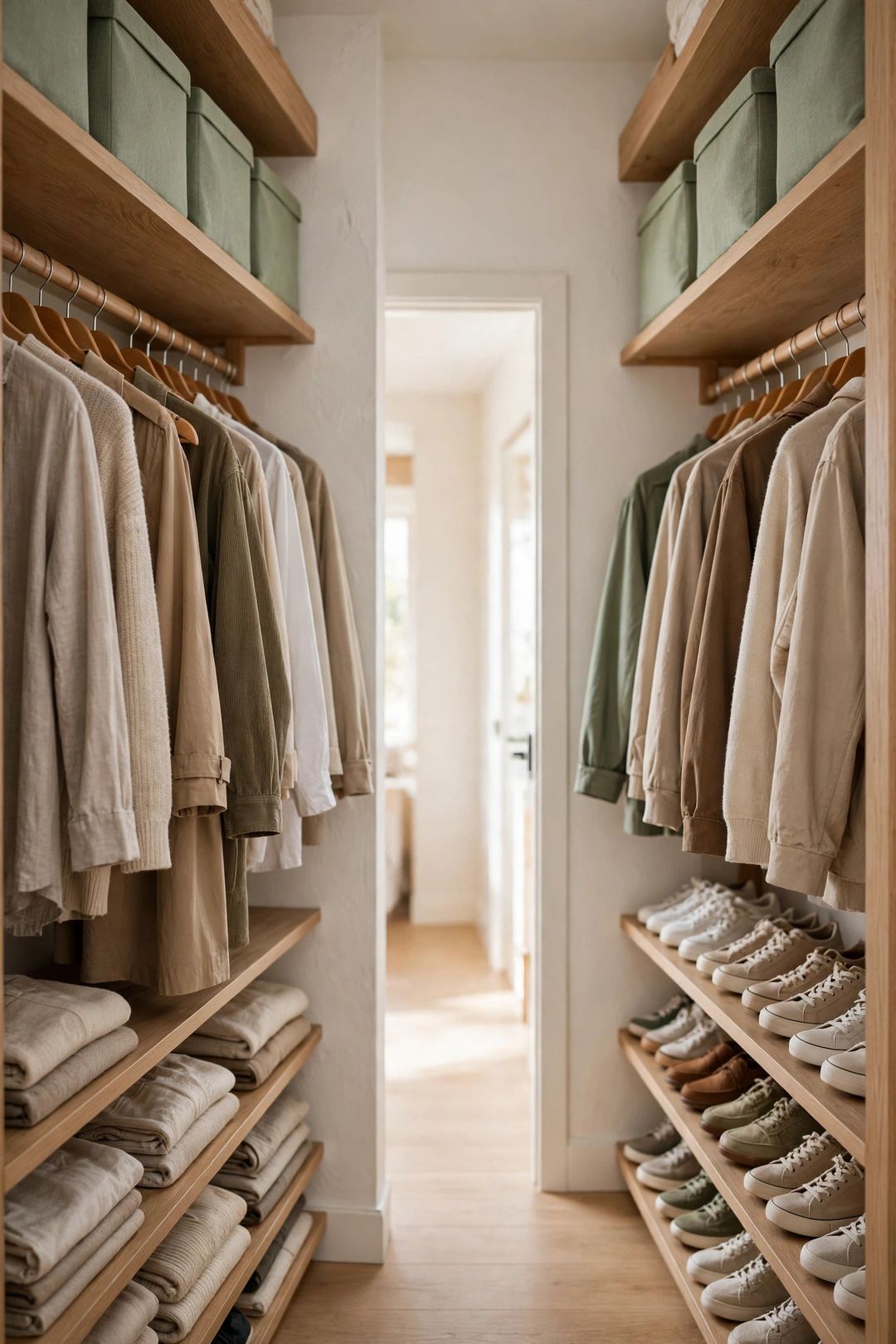
Some categories work better pooled than duplicated. Shoes are the first: a single shoe area near the closet door, divided into labeled sections per partner, keeps pairs together. Size each section by the ratio from your count, and let boots live on a low rack where they fit honestly.
Seasonal clothes are the second shared zone. Off-season items for both partners can share one high shelf or labeled bin area, because neither of you needs them weekly. Storing them together makes the twice-yearly swap one short job instead of two.
Accessories sit in between. Belts, scarves, ties, and bags do best in one shared organizer with separate sections — a divided drawer, small bins, or door hooks — labeled by owner. Small items cause outsized friction, so give each a visible home instead of a jumble basket.
Truce Rules
Zones hold only if both partners follow the same few rules. Agree on them out loud, and treat slips as system problems to fix, not character flaws.
1. One in, one out. When a new item enters a zone, an old one leaves for donation or storage. This single rule stops slow expansion better than any organizer.
2. The overflow rule. If your zone is full, the new item goes to your own overflow bin — not your partner's shelf. Borrowing space needs a direct ask, every time.
3. Laundry boundaries. Clean clothes return to the zone they came from. Whoever does the laundry puts items back in the right sections rather than stacking everything on the nearest shelf.
4. Nothing on the floor. The closet floor is a walkway, not a zone. Items that land there go back to a shelf, a hook, or the laundry sorter the same day.
5. Reset together twice a year. At each season change, spend thirty minutes together swapping seasonal clothes, checking the ratio split, and clearing donations.
What to Buy
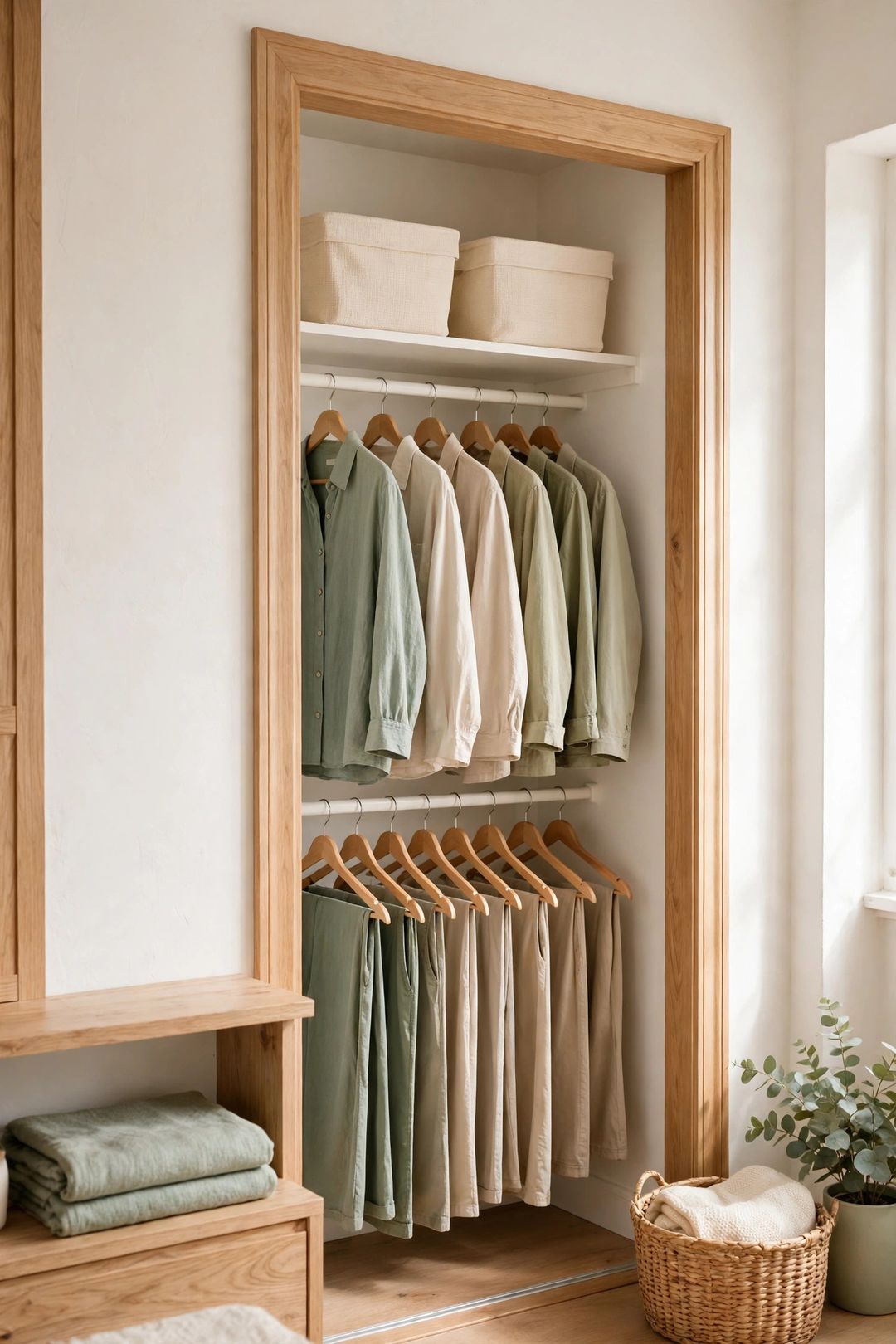
Matching slim hangers, typically $18–$30 for a large pack. Pro: One hanger type makes both zones look uniform and saves rod space. Con: Two wardrobes mean buying a lot at once. Skip if: Both partners already use the same slim hanger style.
Shelf dividers, typically $12–$22 for a set. Pro: They draw a visible line between folded stacks so zones stay obvious. Con: They fit only shelves of certain thickness and depth. Skip if: Your closet has drawers instead of open shelves.
Two laundry sorters or one divided sorter, typically $25–$45. Pro: Separate sections keep laundry boundaries clear from wash day to put-away. Con: Two sorters take real floor space. Skip if: You already sort at the machine and put clothes away the same day.
A label set or label maker tape, typically $6–$14. Pro: Labels on shelf edges and bins make zones and shared sections unmistakable. Con: Labels need updating when categories move. Skip if: Dividers and hanger colors already mark every boundary.
Mistakes to Avoid
- Splitting the closet exactly in half. Equal space for unequal wardrobes guarantees one overflowing side and one half-empty side. Count first, then divide.
- Letting shared mean overflow. An unlimited shared zone becomes a dumping ground. Give it a fixed size and a fixed list of categories.
- Organizing for a partner instead of with them. A surprise reorganization of someone else's clothes, however tidy, usually reads as a takeover. Sort and assign zones together.
- Buying organizers before counting. Rod space, shelves, and shoe storage should be divided by the actual count of clothes and shoes, not guessed.
- Keeping unworn clothes in prime space. Items neither partner has worn in a year belong in the seasonal or donation zone, not at eye level.
Frequently Asked Questions
What if one partner has far more clothes than the other?
That is exactly what the ratio split is for. Divide rod and shelf space in proportion to the actual wardrobes, store the larger wardrobe's off-season items in the shared seasonal zone, and apply one-in-one-out firmly on the larger side.
How do couples share a very small closet?
Keep only the current season in the closet, move off-season clothes to a bin elsewhere, and store formal, rarely worn pieces outside it. Door hooks and a slim shoe rack recover space without crowding either zone.
What if one partner is tidy and the other is not?
Lower the system's demands instead of raising the conflict. Fewer, bigger zones are easier to keep than many small ones, open bins beat lidded boxes, and the floor rule plus laundry boundaries cover most friction.
A shared closet works when the map is clear and the split follows the clothes. Save this post to your Closet Organization board on Pinterest so the zone plan and truce rules are handy on reset day.