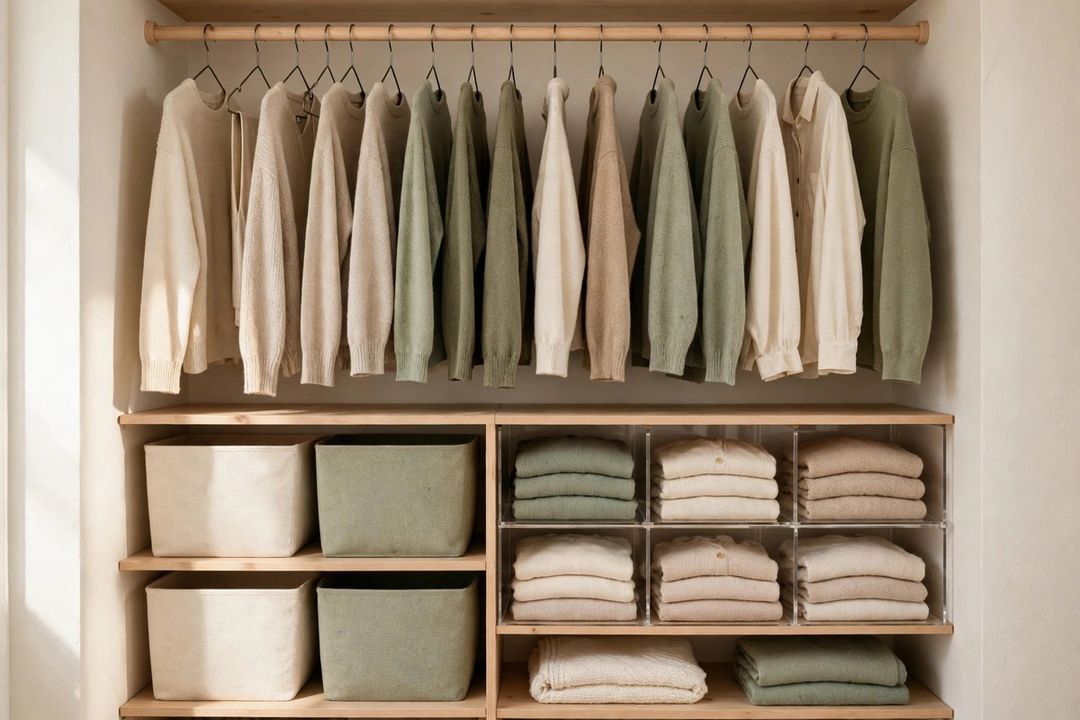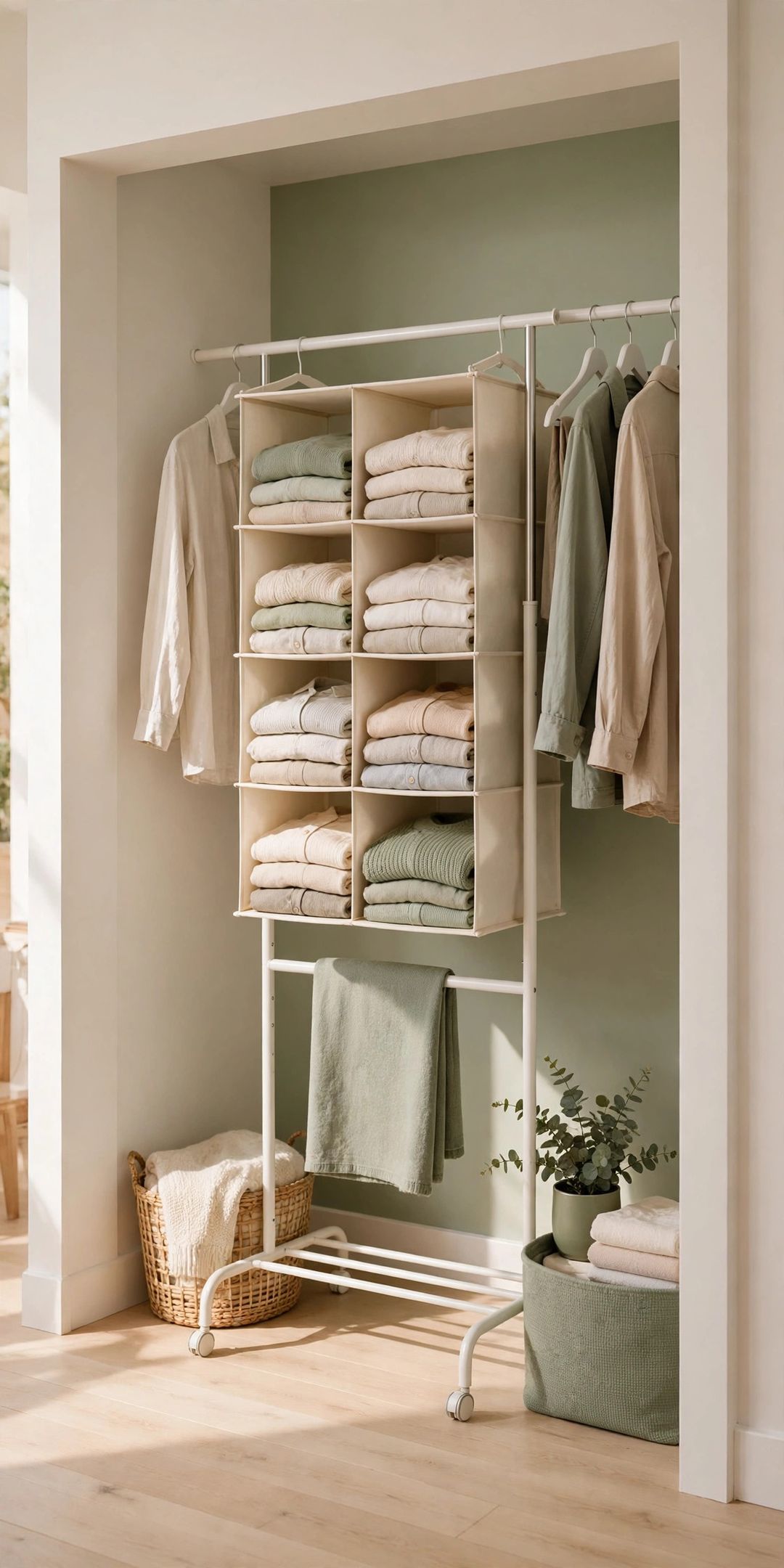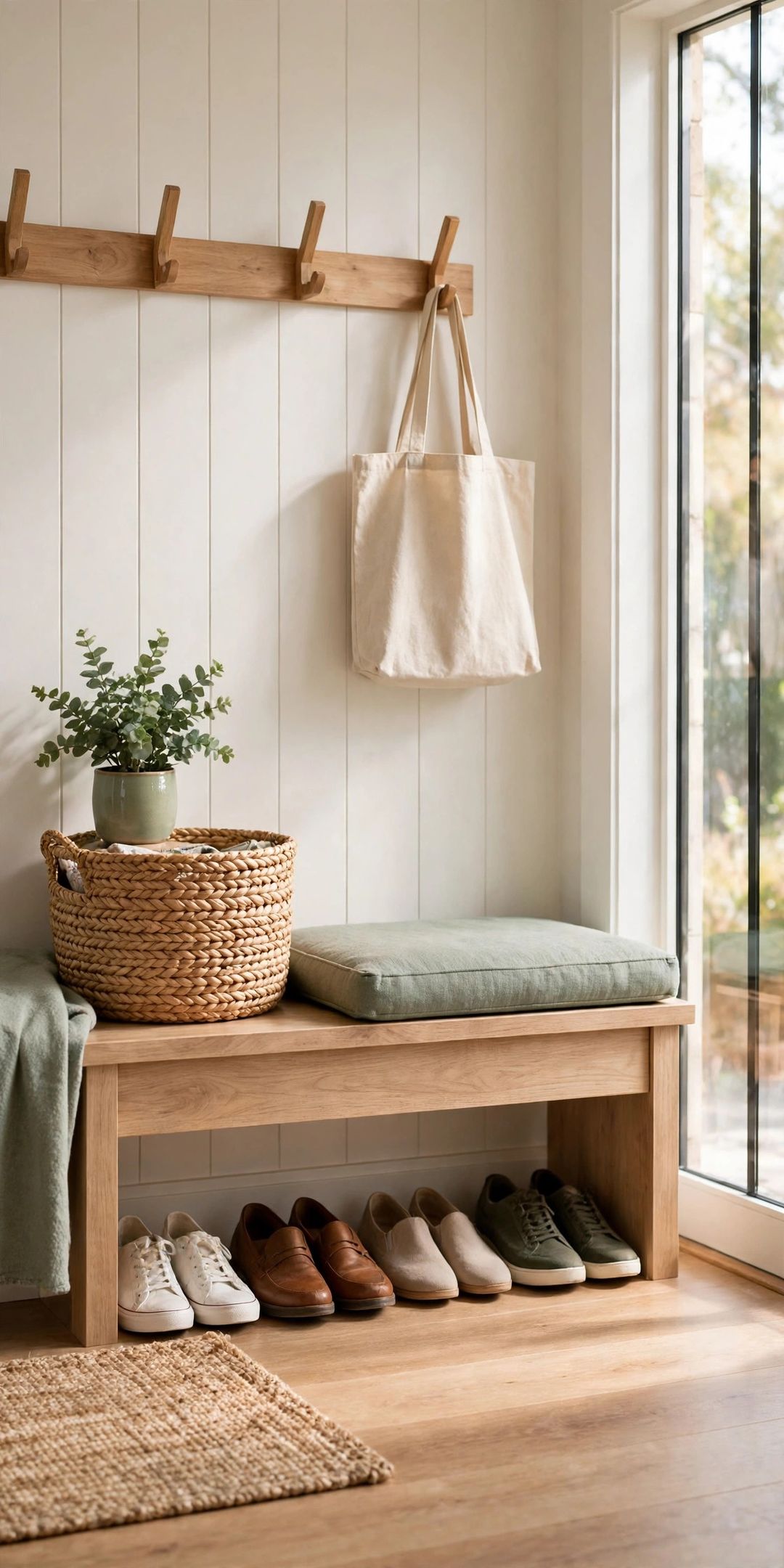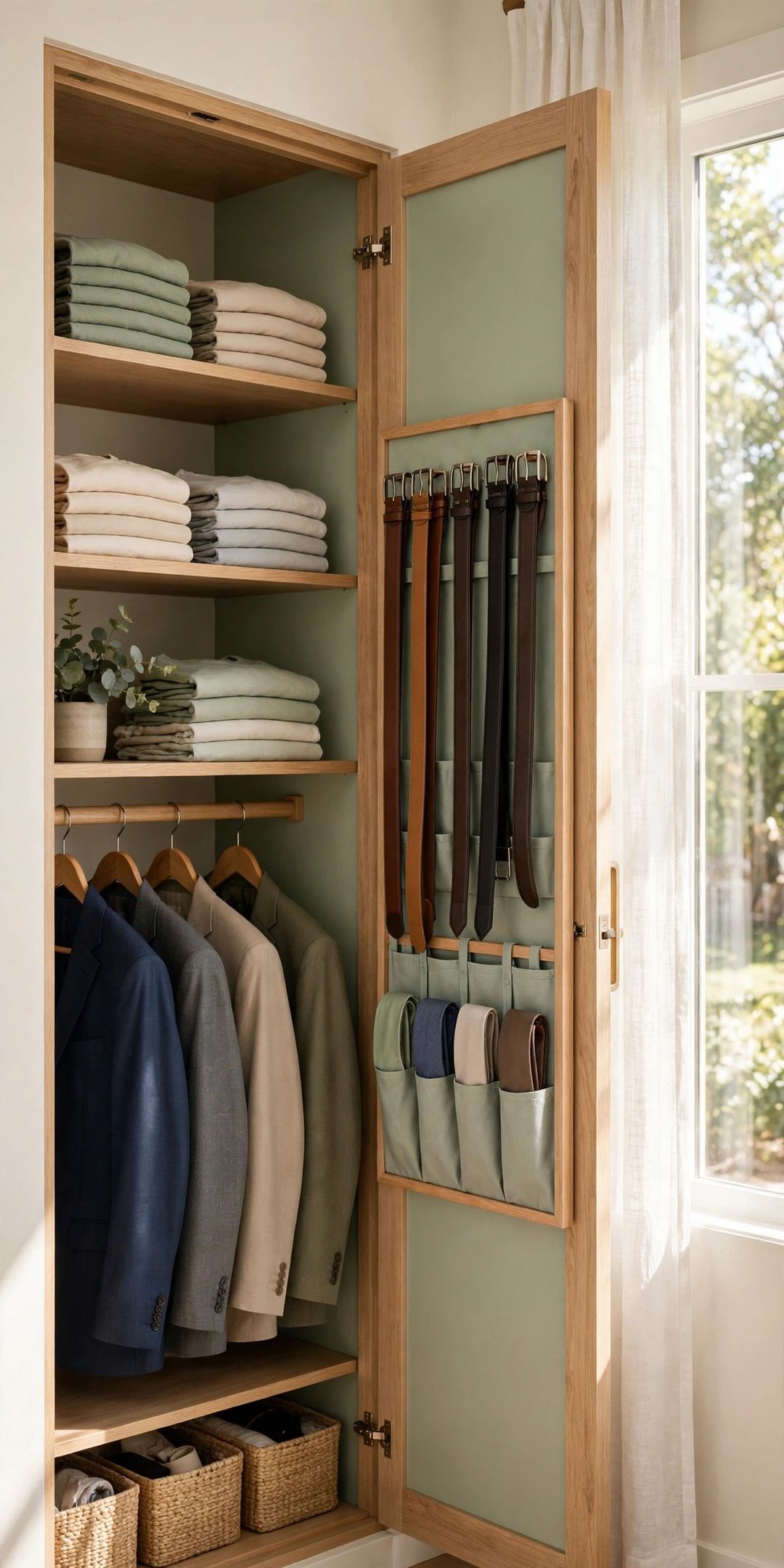
A men's closet usually fails in the same few spots. Suits get crushed between hoodies, clean tees pile up on a shelf, and sneakers end up in a heap by the door. Nothing needs a full remodel. It needs clear zones.
These closet organization ideas for men set up 12 simple systems, one for each problem area. Hang what should hang, fold what folds better, and give small items like belts and watches a single fixed home.
Work through the list in order, or start with the section that annoys you most.
1. Hang Suits on Wide, Matching Hangers
Suits need shoulder support. Use wide wooden or sturdy hangers that fill the shoulder shape, and hang each suit on its own hanger with space on both sides. Keep the jacket buttoned or zipped shut so it holds its shape, and leave suit trousers clipped or folded over the bar.
2. Group Dress Shirts by Color and Use
Hang dress shirts together, separate from casual shirts. Sort them light to dark, then work shirts before dressy ones. This shows at a glance what is clean and what needs ironing. Leave a finger of space between shirts so they do not wrinkle from crowding.
3. Keep Only This Week's Shirts on the Rail
A rail packed with every shirt you own hides the ones you actually wear. Keep the shirts in your normal rotation at the front, and move rarely worn shirts to the far end. If a shirt has not moved in months, it is a clear sign to donate, store, or sell it.
4. Fold Tees and File Them in Drawers
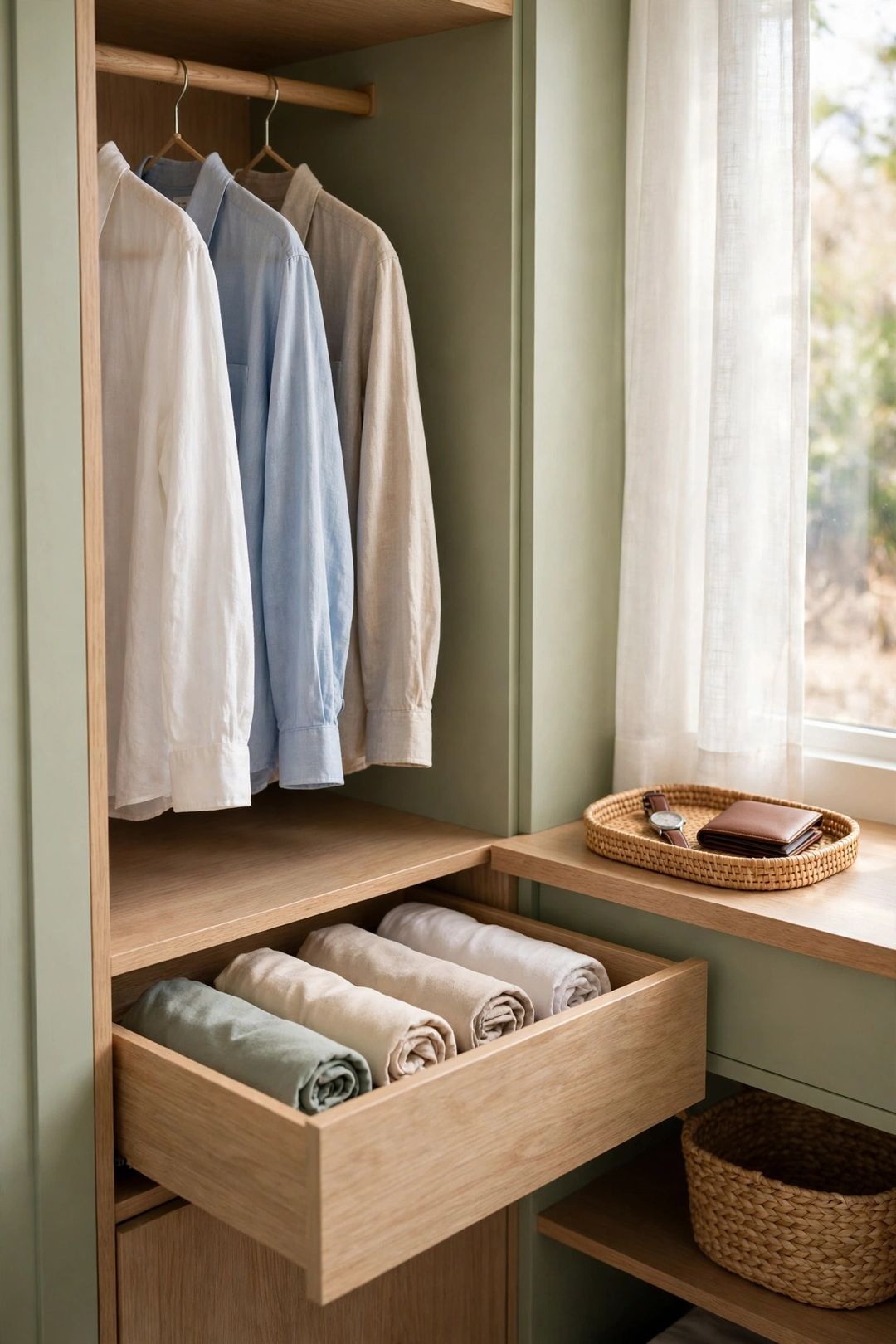
Tees stretch out on hangers, so fold them instead. File folded tees upright in a drawer, like files in a cabinet, so every color is visible at once. Group them by type: plain basics, graphic tees, and undershirts. If the drawer will not close easily, the limit has been reached.
5. Use One Drawer or Bin for Gym Clothes
Keep gym clothes together and separate from daily clothes: shorts, training tees, socks, and underwear in one drawer or open bin. Packing a gym bag then takes minutes, and sweaty gear does not get mixed into clean drawers. Add a small wash bag nearby for used items waiting for laundry day.
6. Give Workwear Its Own Tough Zone
Workwear is heavy, bulky, and often dirty. Give jeans, work shirts, hoodies, and boots a low shelf or a strong bottom drawer where wear and weight do not matter. Keep a separate laundry bin for work clothes if they come home dusty or greasy, so the rest of the wash stays clean.
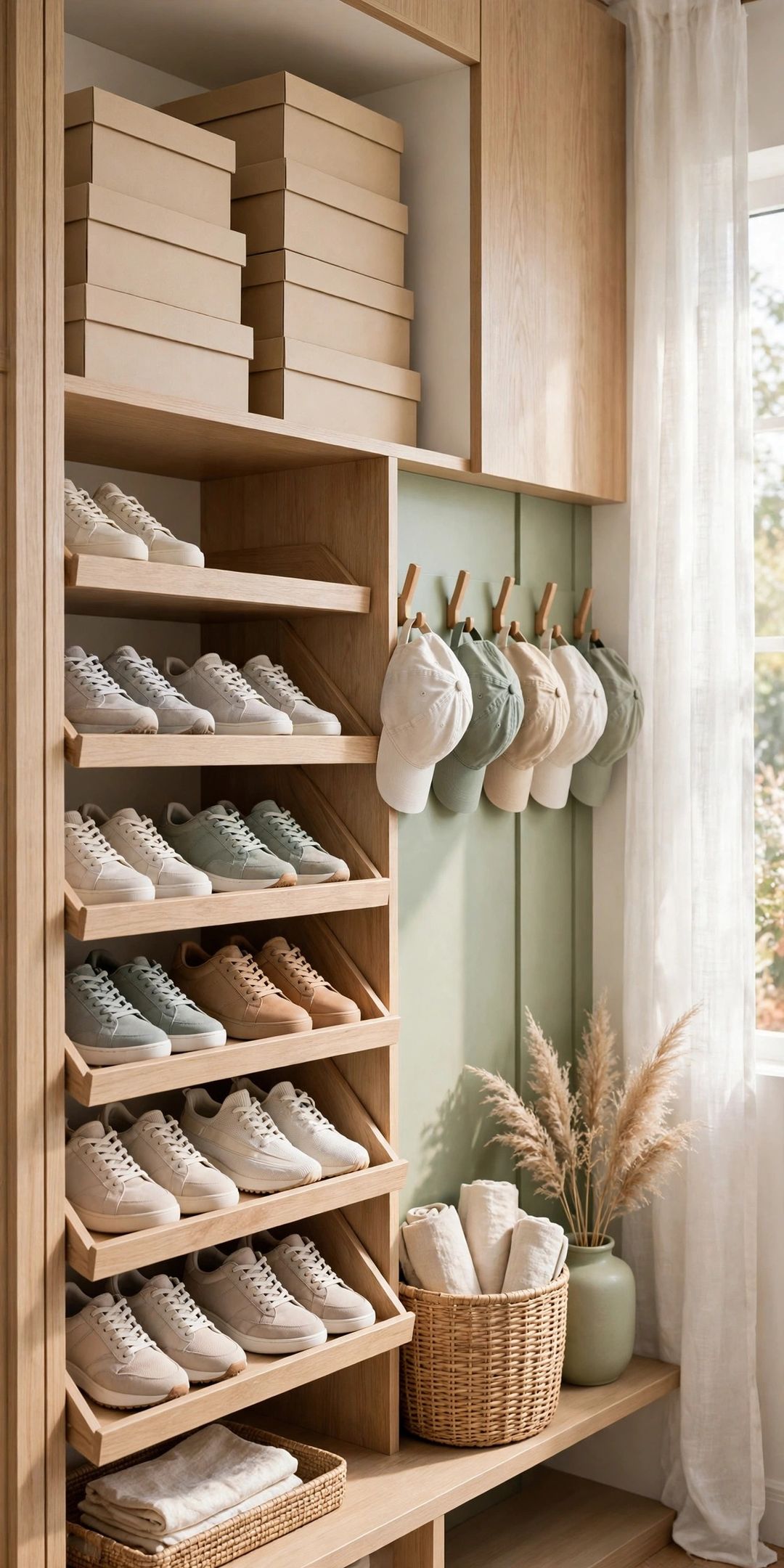
7. Store Everyday Sneakers on an Open Rack
The sneakers you wear most should be visible and easy to grab. A low open rack or angled shelf near the closet door holds two or three daily pairs. Open storage lets shoes air out between wears. Wipe soles before they go back, or the rack becomes a dirt tray.
8. Box the Extra Sneakers, Labels Out
Extra pairs do not all need display space. Store them in clear boxes or their original boxes with the label facing out, stacked on a high shelf. Rotate pairs in and out of the daily rack. One pair per box stops piles and protects shoes from dust.
9. Hang Belts and Ties Where You Dress
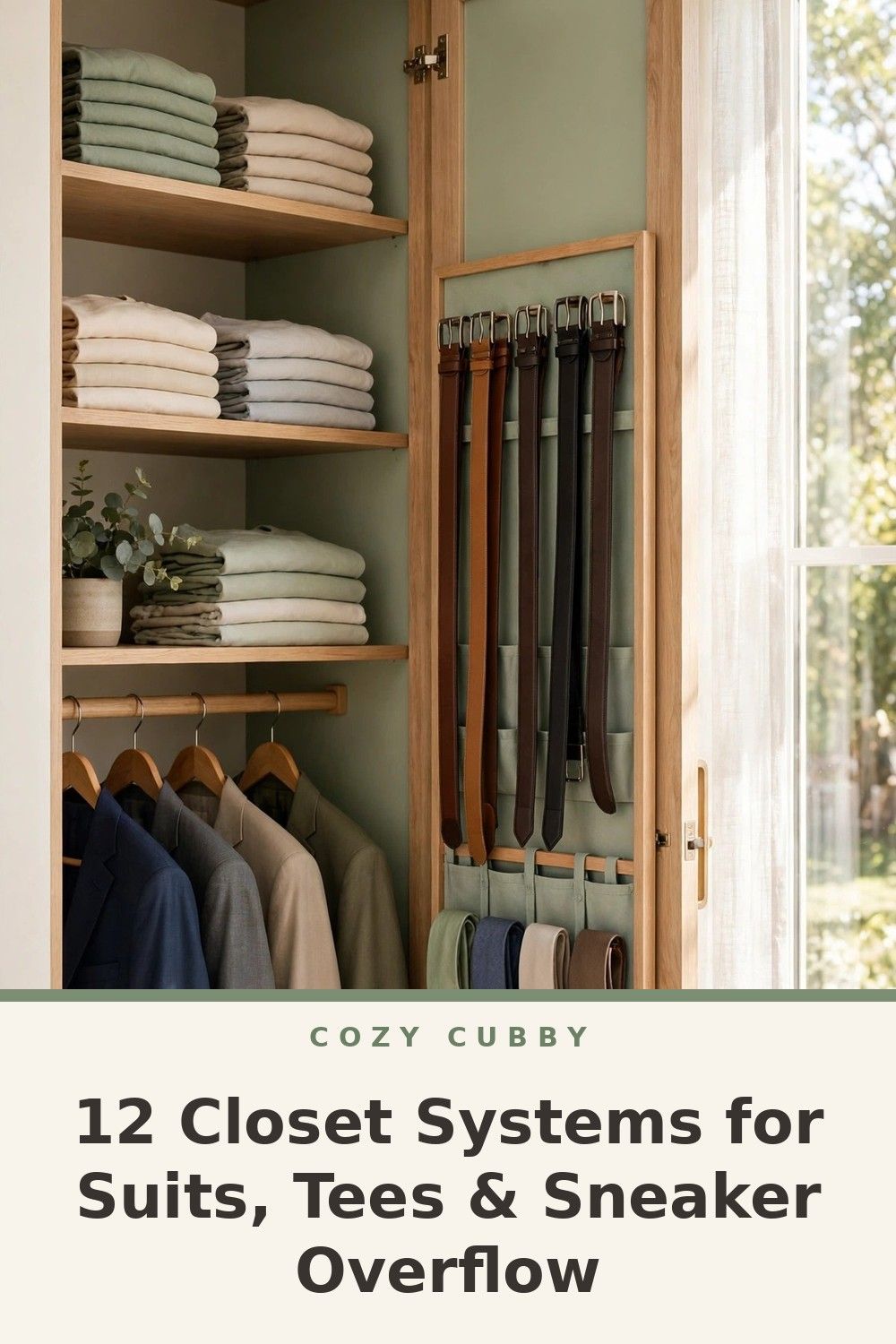
Belts tangled in a drawer get missed. Hang them by the buckle on a belt rack, hooks, or a multi-hook hanger on the closet door or side wall. Roll ties loosely or hang them on the same rack. Place this spot near your shirts and trousers, where you will actually use it.
10. Set Up a Small Watch and Wallet Tray
Watches, wallet, keys, sunglasses, and cufflinks need one landing spot, not five surfaces. Use a divided tray or small watch box on a shelf or dresser top. Everything comes off and goes back in the same place. This one habit ends most morning searches for small items.
11. Rotate Seasonal Clothes Twice a Year
Heavy coats and thick sweaters crowd out summer clothes, and the reverse happens in winter. Twice a year, move the off-season set into labeled bins on the top shelf, in a storage box, or under the bed. Wash items before storing them, and keep only the current season within easy reach.
12. Add a Donate Box and a Weekly Reset
Keep a small box in the closet for clothes that no longer fit or get worn. When it fills, drop it off. Once a week, take ten minutes to rehang shirts, line up shoes, and clear the tray. Small resets stop a full clean-out from being needed.
What to Buy
Wide suit hangers, typically $15–$30 for a pack. Best for suits and coats. Pro: They support shoulders and keep jackets in shape. Con: They take more rail space than thin hangers.
A low shoe rack, typically $20–$40. Best for daily sneakers and boots. Pro: Shoes stay visible and air out. Con: Open racks collect dust and need a quick wipe.
Clear shoe boxes, typically $15–$35 for a pack. Best for extra sneaker pairs. Pro: They stack neatly and show the pair inside. Con: Cheap lids can crack if overstacked.
A belt and tie rack, typically $10–$20. Best for small accessories. Pro: It uses door or wall space that is often wasted. Con: It only works if it is placed where you dress.
A divided valet tray or watch box, typically $15–$35. Best for watches and daily carry items. Pro: One fixed spot ends lost-item searches. Con: Small trays fill fast if extras creep in.
Mistakes to Avoid
- Hanging everything. Tees, sweaters, and gym clothes stretch or waste rail space. Fold them and save hanging room for suits and shirts.
- Mixing clean and worn clothes. Chairs and rails become piles. Use a clear rule: clean goes back, worn goes in the laundry bin.
- Storing sneakers in a pile. Piles crush shoes, hide pairs, and trap odor. Use a rack for daily pairs and boxes for extras.
- Buying organizers before sorting. Sort and cut down first, then buy only the storage that fits what remains and the space you measured.
- Skipping the seasonal swap. Off-season clothes left on the rail all year make a normal closet feel half its real size.
Frequently Asked Questions
Should tees be hung or folded?
Fold them. Hangers can stretch the neck and shoulders of most tees over time. Filing them upright in a drawer keeps every tee visible and saves rail space for shirts and suits.
How many sneakers should stay out on a rack?
Keep the two or three pairs you wear most on the open rack. Store the rest in labeled or clear boxes. If a boxed pair never rotates back in, that is a sign it can be sold or donated.
What is the best way to store a suit between wears?
Hang it on a wide hanger with space around it, and let it air for a day before it goes back into a crowded section. Brush off dust, empty the pockets, and keep trousers with the jacket so the set stays together.
How do I organize a closet with no drawers?
Use open bins on shelves as drawer substitutes. Give each bin one job, such as tees or gym clothes, and label the front. One category, one container, easy to reach.
Start with the suits, the tee drawer, and the sneaker rack, and the whole closet will feel calmer within an hour. Save this post to your Closet Organization board on Pinterest so the 12 systems are handy on clean-out day.