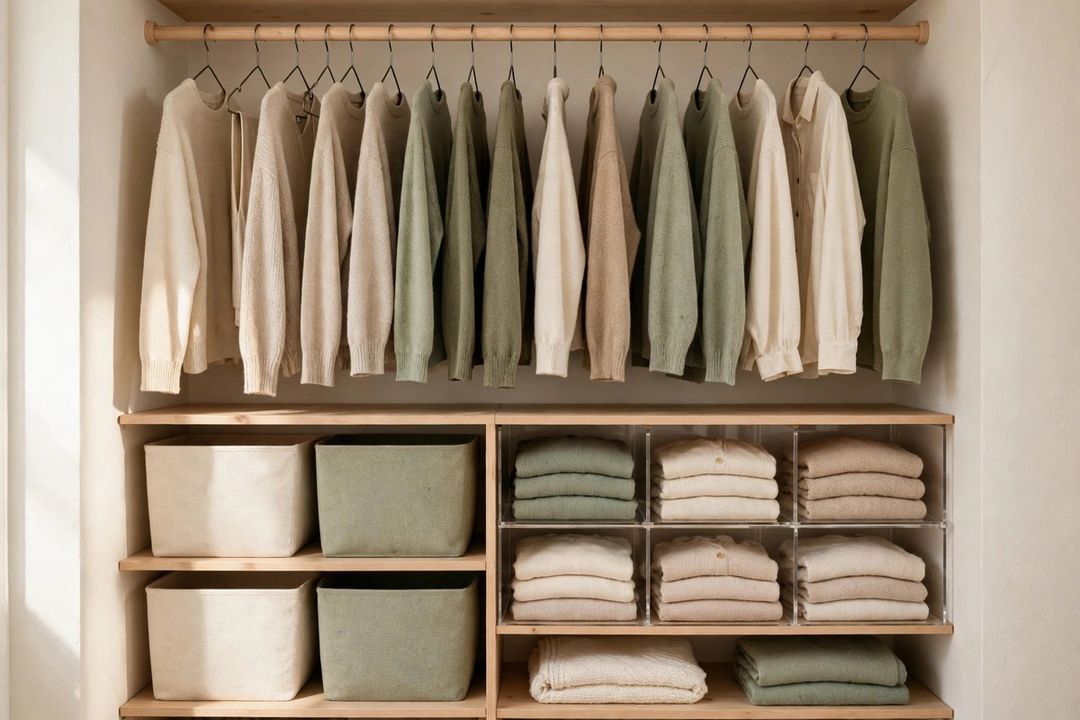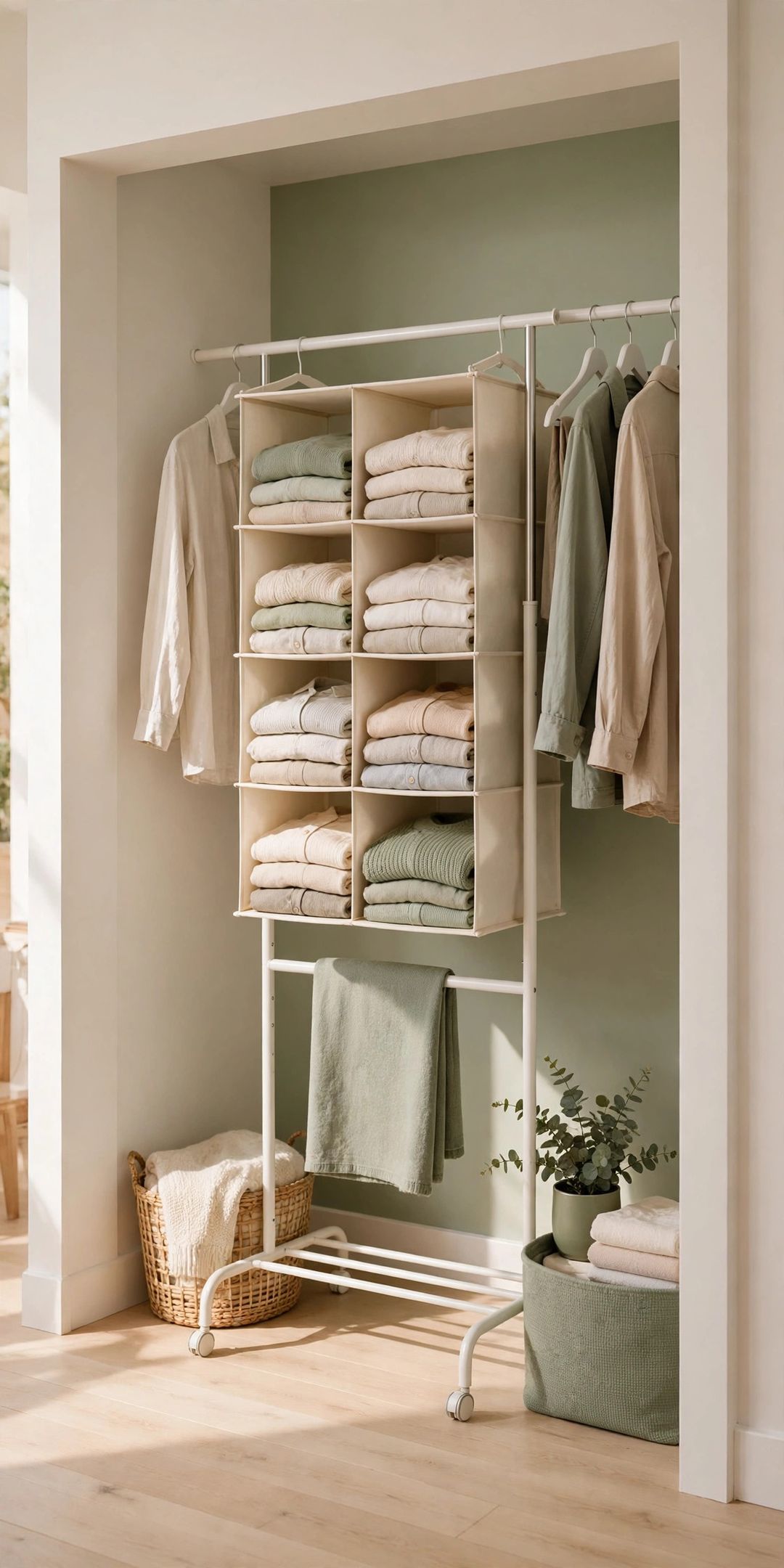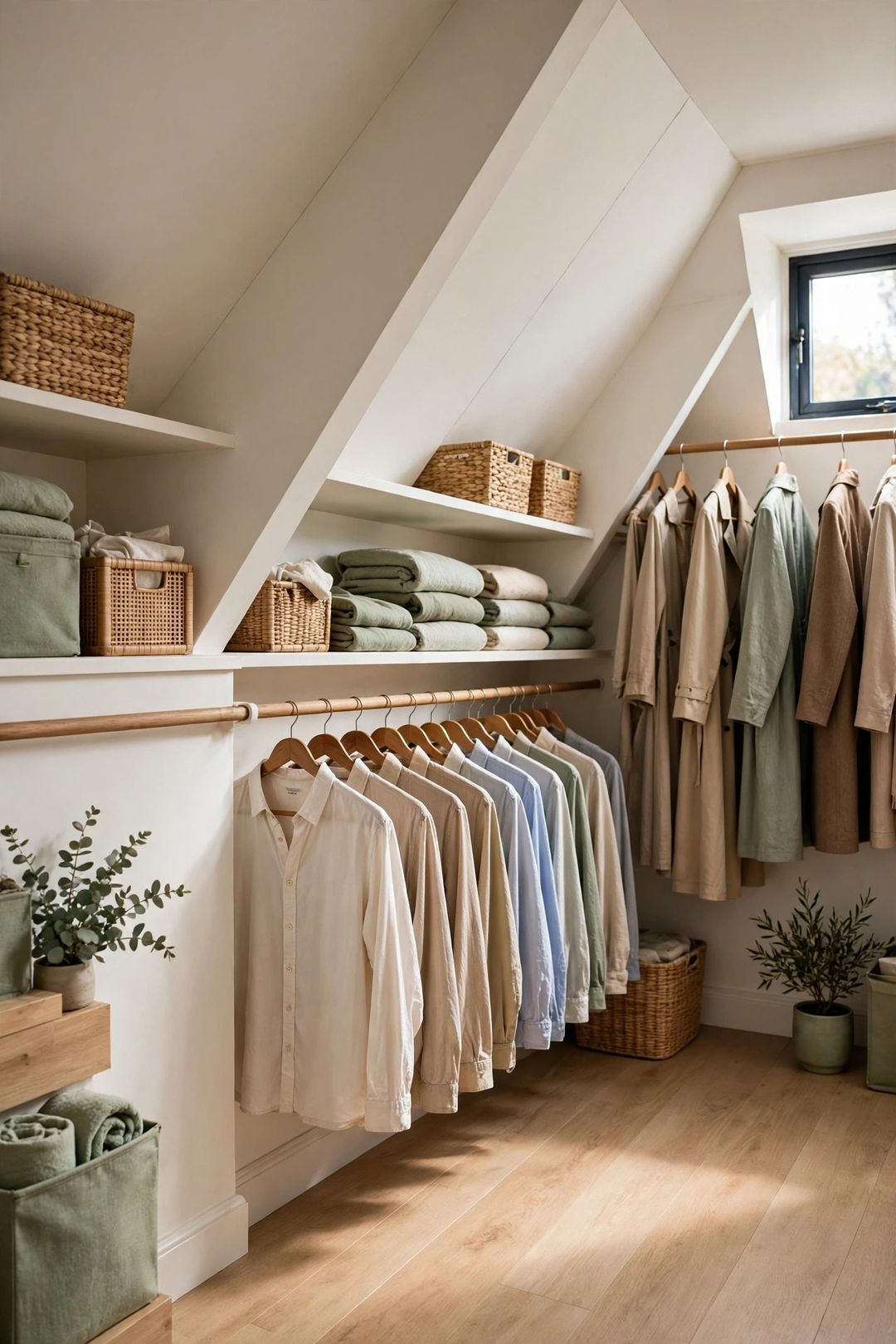
A sloped-ceiling closet can feel like wasted space. Long clothes brush the floor on one side, tall shelves will not fit on the other, and the lowest corner turns into a dark pile of bags and boxes you rarely open.
These closet storage ideas sloped ceiling layouts work with the angle instead of fighting it. You will put hanging where the height is, drawers and cubbies where the ceiling drops, and seasonal storage in the spots you reach least.
Before you buy anything, measure the tall wall, the point where you can stand comfortably, and the depth under the lowest part of the slope. Those three measurements decide which layouts will fit your closet.
1. Put Long Hanging on the Tallest Wall
1. Long hang on the tall wall. Reserve the highest wall for dresses, coats, and long pants hung from a single rod. This is the only place those items can hang without folding over a bar or dragging on the floor, so protect that space and do not let shelves or boxes creep into it.
2. Stack Two Short Rods at the Tall End
2. Double short rods. If you own more shirts, blouses, and folded-over pants than long items, split part of the tall end into two short rods, one above the other. Measure your shortest hanging clothes on their hangers first, then set each rod with a little clearance below the clothes above it.
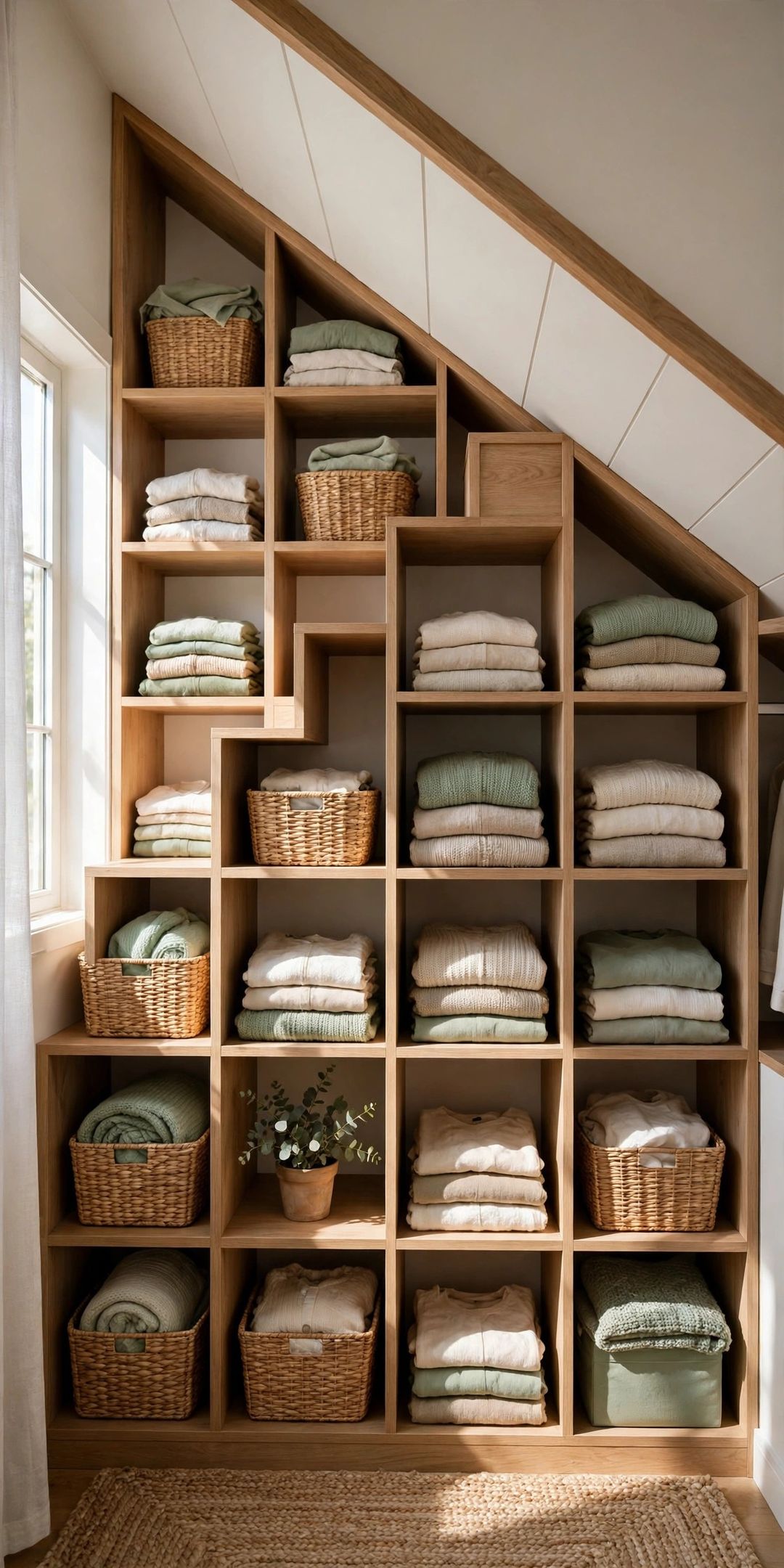
3. Run Low Drawers Under the Slope
3. Low drawers under the slope. Place a low, wide drawer unit where the ceiling is too short for hanging but tall enough to open a drawer. Use it for folded clothes, pajamas, workout gear, or linens. Drawers beat open piles here because you can see and reach the full depth without crawling in.
4. Build Stepped Shelves Down the Angle
4. Stepped shelves. Follow the slope with shelves that step down like stairs, taller at the high end and shorter as the ceiling drops. Store folded sweaters and bags on the higher steps, then shoes, small bins, and accessories on the lower ones. Leave a small gap between the top items and the slope.
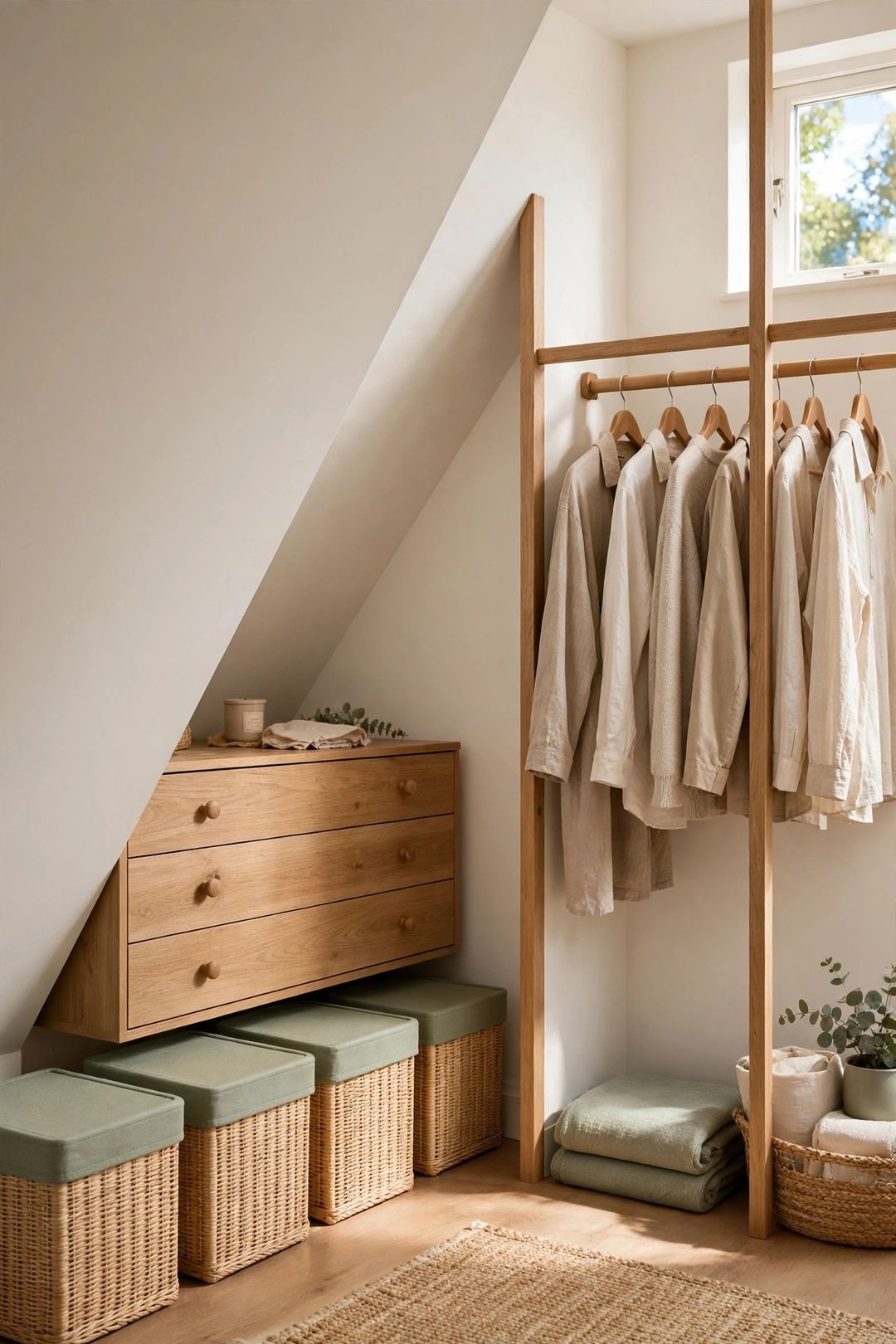
5. Open the Knee Wall for Hidden Storage
5. Knee-wall storage. The short vertical wall at the base of the slope often hides empty space behind it. If your closet has an access panel or you can add one safely, use that hidden area for labeled bins of seasonal or rarely used items. Keep a simple list on the door of what is stored inside.
6. Use Low Cubbies in the Tightest Corner
6. Low cubbies. Fill the lowest corner, where even drawers feel tight, with open cubbies or short stackable boxes laid on their sides. This spot suits shoes, rolled scarves, hats, and small bags. Open fronts matter here, because a lid or door is hard to swing where headroom is lowest.
7. Add a Rolling Cart for the Dead Zone
7. Rolling cart zone. Where the slope makes a deep, awkward pocket, use a slim rolling cart or a bin on casters instead of fixed shelves. You can pull the whole cart out to reach the back, then slide it in again. This works well for extra toiletries, craft supplies, or kids' items in a shared attic closet.
8. Keep Seasonal Storage at the Far Low End
8. Seasonal far-end storage. Put the items you swap only a few times a year, such as off-season clothes, extra blankets, or holiday gear, at the far low end of the closet. Use flat, labeled bins that match the slope height. Daily clothes should never live behind this layer, or every morning becomes a dig.
9. Finish the End Wall With Daily Hooks
9. End-wall daily zone. Use the flat end wall, often near the door, for hooks, a small mirror, and a tray or pouch for belts, ties, and jewelry. Keeping tomorrow's outfit and small accessories by the entrance means you can grab them without walking deep under the slope at all.
What to Buy
An adjustable hanging rod, typically $15–$30. Pro: It lets you set short rods at the exact height your clothes need. Con: It must be fixed into solid support to hold a full row of clothes. Skip if: Your closet already has a sturdy rod on the tall wall.
A low drawer unit, typically $35–$75. Pro: Drawers use the full depth under a slope and keep folded clothes visible. Con: Wide units can block the walkway in a narrow closet. Skip if: Your slope is so low that even a short drawer cannot open fully.
Stackable open cubbies, typically $20–$45. Pro: You can build them up at the tall end and keep them single-height under the low end. Con: Open cubbies collect dust faster than closed bins. Skip if: You mainly need covered storage for long-term seasonal items.
A slim rolling cart, typically $18–$35. Pro: It turns a deep, hard-to-reach pocket into storage you can pull out. Con: Wheels can catch on thick carpet or uneven floors. Skip if: Your closet floor is too uneven for a cart to roll smoothly.
Stick-on rechargeable lights, typically $12–$25. Pro: They brighten the low, dark end of the slope without any wiring. Con: Batteries or charges run out and need a regular top-up routine. Skip if: Your closet already has a bright ceiling light that reaches every corner.
Mistakes to Avoid
- Measuring only the floor. Floor size tells you little in a sloped closet. Measure wall heights at several points along the slope before buying anything tall.
- Hanging long clothes under the slope. Dresses and coats will pool, crease, and pick up dust. Long items belong on the tallest wall only.
- Blocking knee-wall access. Heavy drawers or stacked bins in front of an access panel make hidden storage useless when you need it.
- Putting daily clothes at the far low end. Crouching and digging every morning gets old fast. Daily items belong near the door and the tall wall.
- Buying fixed tall shelving. A standard tall unit rarely fits an angle well and wastes the space above it. Stepped or low pieces fit the shape better.
Frequently Asked Questions
How do you know what fits under the slope?
Measure the wall height at the exact spot where the item will sit, not at the center of the room. Then measure the item itself, including any lid or drawer clearance. Leave a small gap at the top so you can slide bins and drawers in and out without scraping.
Can shelves go on the sloped wall itself?
Short shelves can work on a slope if they are level and fixed to solid support, but stepped shelves on the floor or on the short wall below the slope are usually easier to load. Test with books or bins first, and keep heavy items low, close to the floor.
What should go in the lowest part of the closet?
Use the lowest area for items that are flat, light, or rarely used, such as shoes in open cubbies, flat seasonal bins, or rolled accessories. Avoid daily clothes, tall bottles, or anything fragile that could tip when you reach in at an angle.
How can you make a dark attic closet easier to use?
Add stick-on or battery lights under the slope, use light-colored bins with clear labels, and keep the walkway fully clear. A small mirror on the end wall can also bounce light around and gives you a quick outfit check by the door.
A sloped ceiling does not have to mean a half-used closet once every height has its own job. Save this post to your Closet Organization board on Pinterest so the 9 layouts are handy when you measure and plan yours.