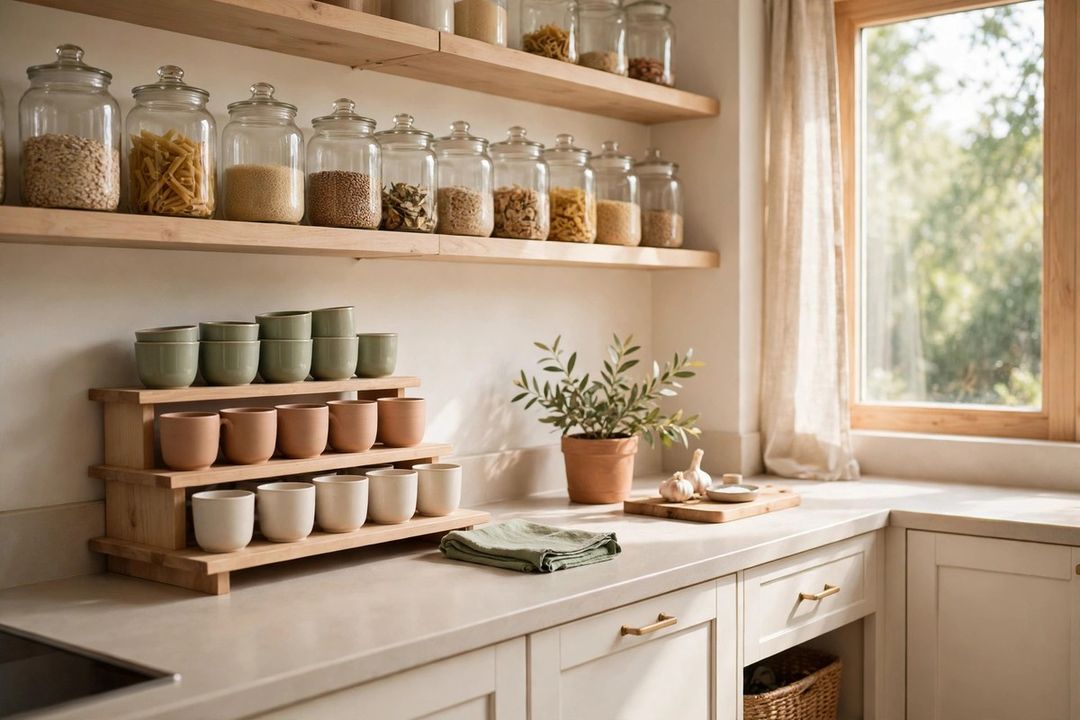
A blind corner cabinet can hold a lot, but most of that space is hard to use. Pots slide to the back, lids disappear into the dark, and reaching anything means kneeling down and stretching into a space you cannot see.
These corner kitchen cabinet storage fixes focus on one goal: bring the back of the cabinet forward, or bring the items stored there up into the light. Some fixes are simple rearrangements. Others are inserts you can add in an afternoon.
Start by emptying the cabinet completely and measuring its width, depth, and door opening. Those three numbers decide which fixes will actually fit, so keep them nearby as you read.
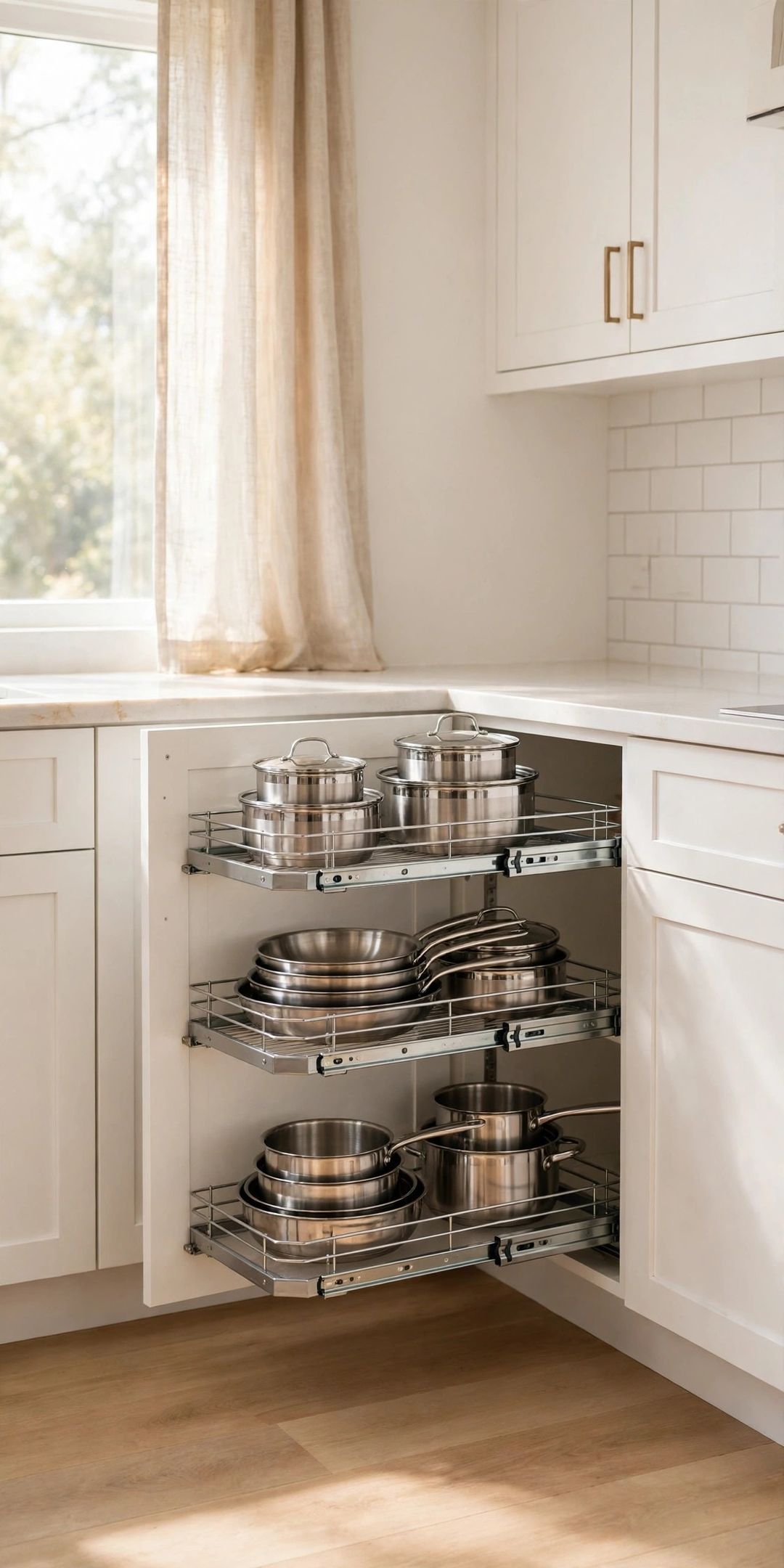
1. Add a Pull-Out Shelf
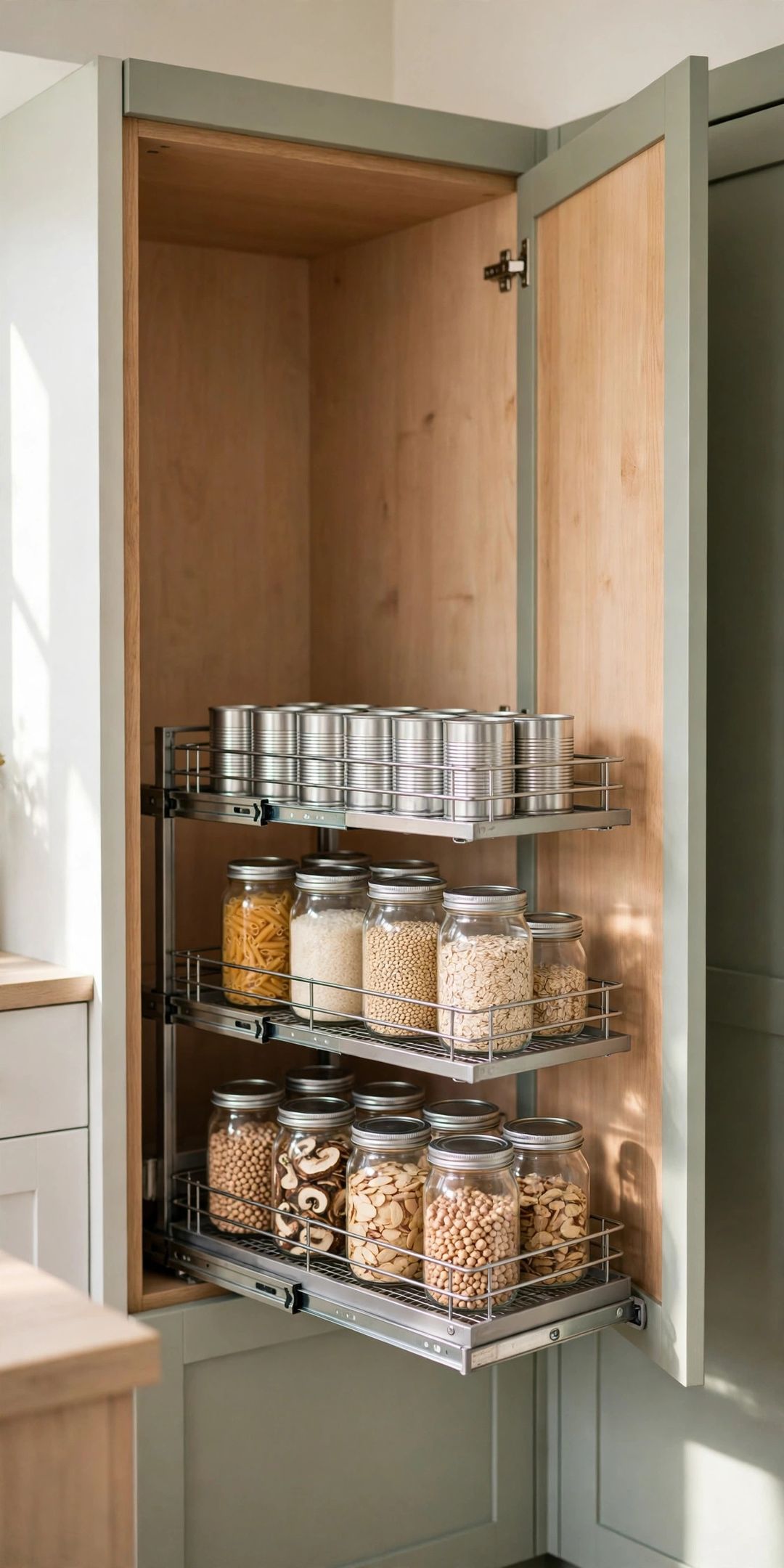
Let the shelf come to you. A pull-out shelf or basket slides the whole load forward, so back items arrive at the front without reaching or crawling. It suits heavy pots, small appliances, and mixing bowls that are awkward to lift from deep inside.
Measure the door opening, not just the cabinet interior. The shelf has to pass through the opening, and a slightly narrower shelf that slides freely beats a wider one that scrapes.
2. Use a Lazy Susan Turntable
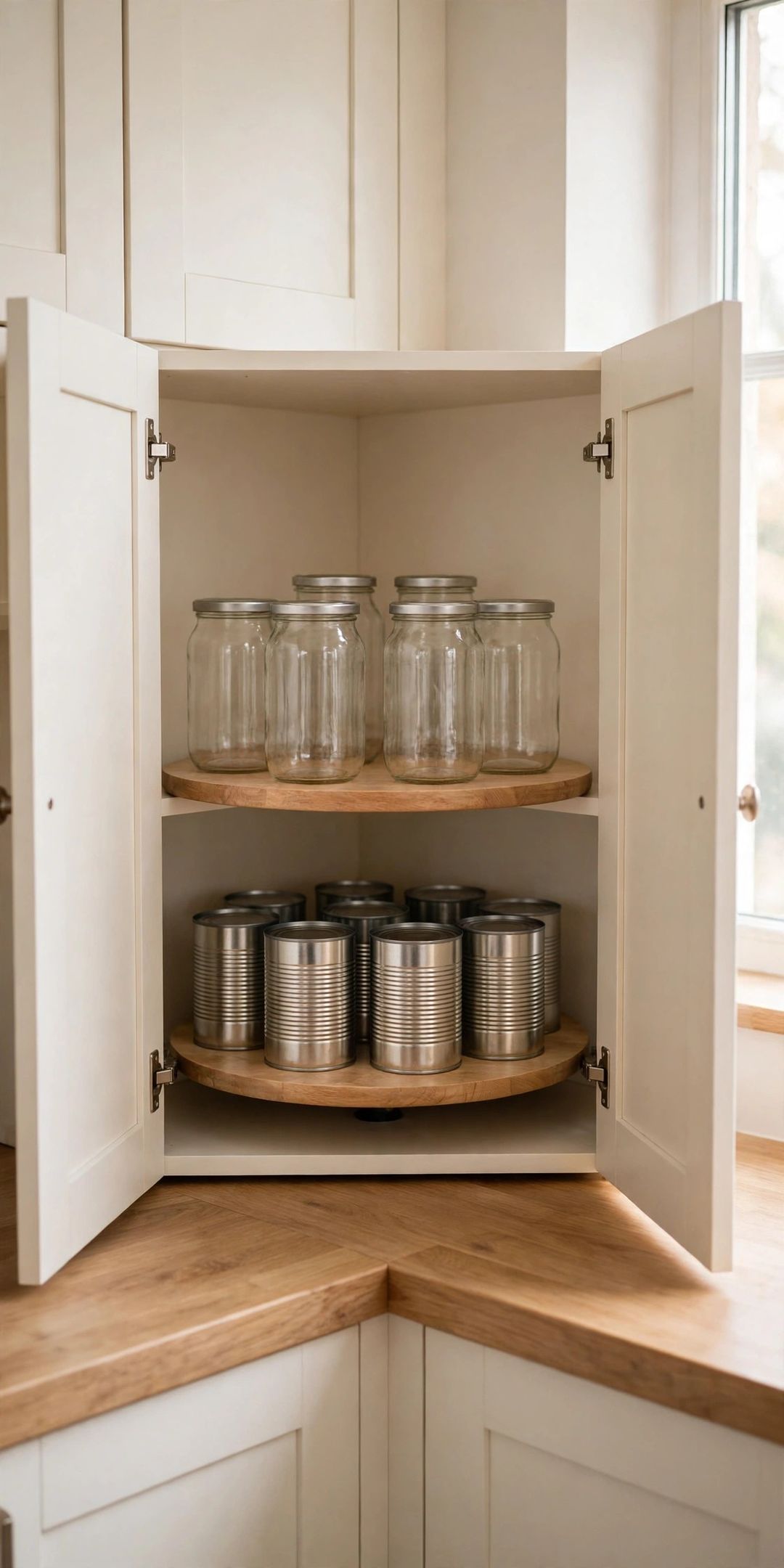
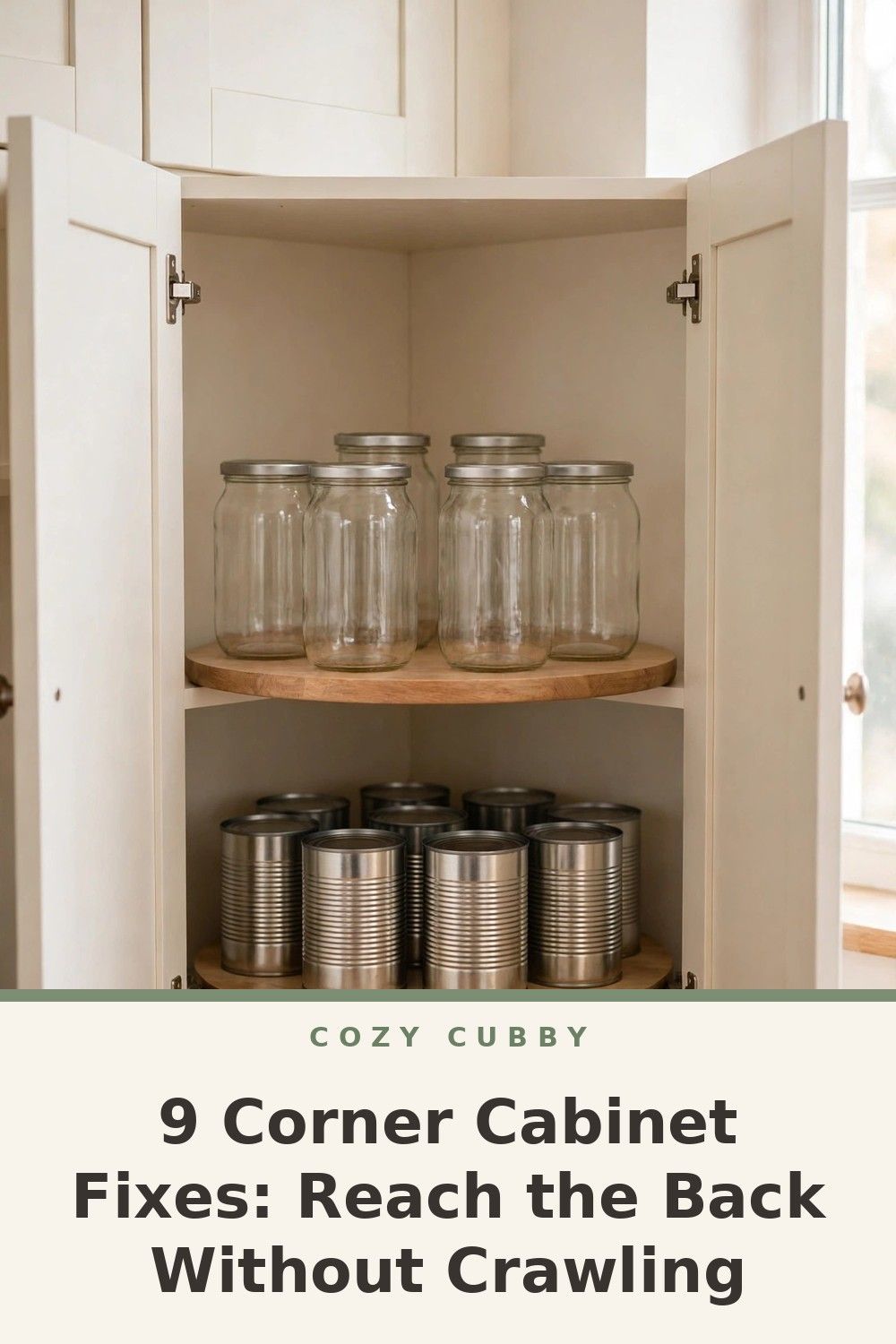
Spin instead of reaching. A round or kidney-shaped turntable turns the deep corner into a rotating shelf. A single spin brings oils, jars, or cans from the back to the front.
Choose a turntable with a raised edge or a non-slip surface. Smooth bottles can slide off a flat, slick tray when it spins, especially if the tray is crowded.
3. Try a Swing-Out or Half-Moon Tray
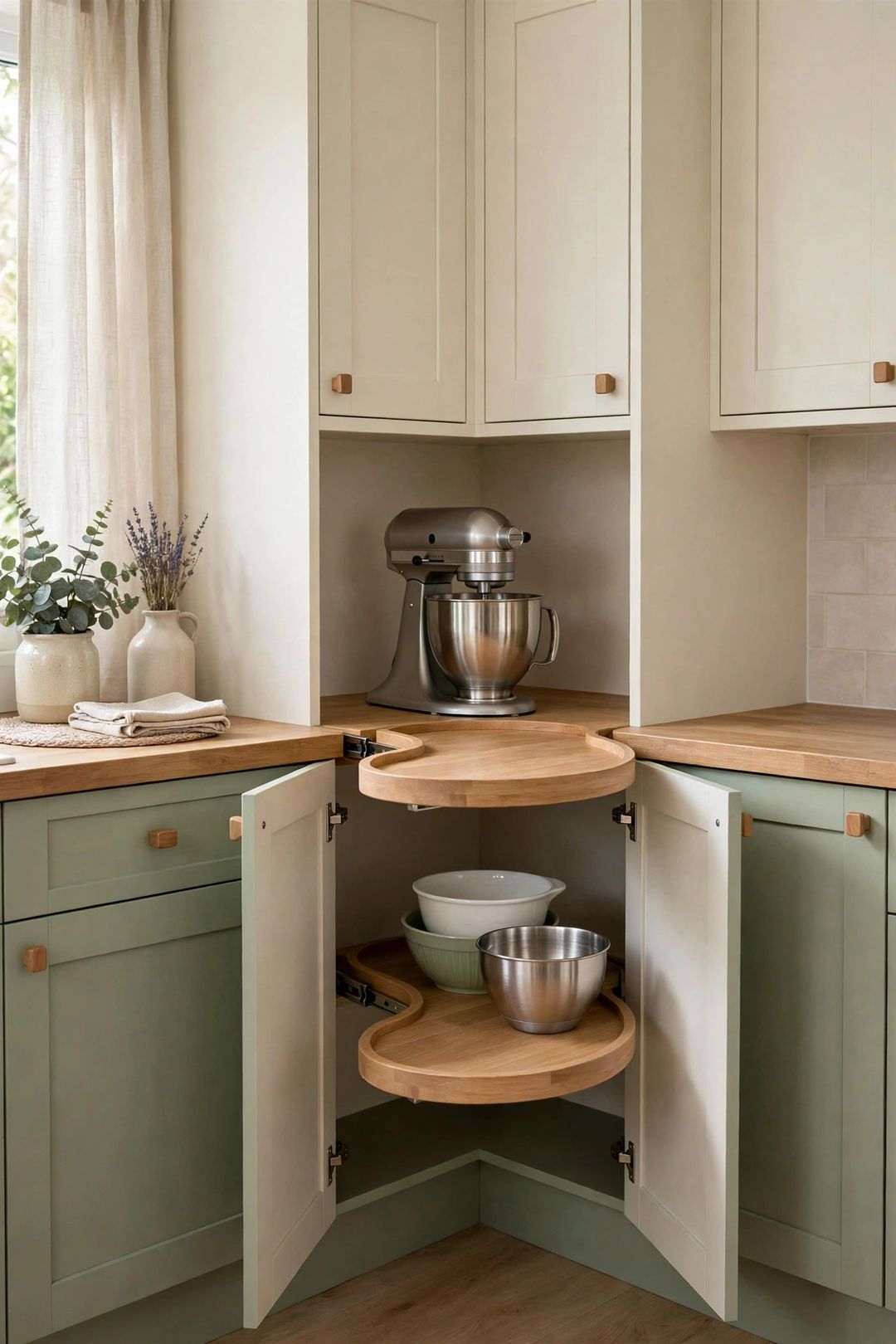
Match the tray to the blind shape. Half-moon trays are shaped for blind corner cabinets, where one side hides behind the cabinet next to it. The tray pivots out through the door, carrying the hidden half with it.
This style uses the corner shape better than a plain rectangle. Check the swing path before buying, so the tray clears the door and any handles nearby.
4. Add Tiered Shelves Inside the Corner
Stack in steps, not piles. A small tiered riser lifts the back row above the front row, so you can see and grab both layers. It works well for cans, jars, spice tins, and small bowls.
Keep the tallest items on the lowest step at the front. If tall items sit at the back, they hide everything in front of them and the tiers stop helping.
5. Store Only One Category in the Corner
Give the corner a single job. Corners get messy when they become the overflow spot for everything. Pick one category, such as baking dishes, pots, or small appliances, and keep only that category there.
A single category is easier to pull out, use, and put back. It also makes a missing item obvious, because you know exactly where it should be.
6. Move Rarely Used Items Out
Be honest about how often things are used. The holiday roasting pan and the once-a-year serving dish do not need prime corner space. Move them to a higher shelf, a closet, or another storage spot.
What stays in the corner should be the items used most weeks. Fewer items means more air around them, easier reaching, and less shifting every time the door opens.
7. Add Light to the Dark Back
You cannot grab what you cannot see. A battery-powered stick-on light under the shelf above, or just inside the door frame, makes the back row visible without any wiring.
Place the light toward the front, aimed into the cabinet. A light placed deep inside can be blocked by the first row of items and leave the rest in shadow.
8. Use the Door and the Front Edge
Claim the easiest inches. Slim racks or hooks on the inside of the door can hold lids, wraps, or measuring tools, depending on clearance. Keep door items flat and light so the door still closes fully.
Reserve the front edge of the cabinet for the most-used piece in the category. If the daily item lives at the front, you will rarely need to disturb the back at all.
9. Keep a Simple Reach Routine
Return items in the same order every time. Put tall and heavy items at the back or on the lowest level, and smaller, lighter items at the front. A consistent order means your hand learns where things are.
Once a month, pull everything forward for a quick check. That short reset catches items that have migrated to the back before they are forgotten again.
What to Buy
A pull-out shelf or basket, typically $35–$90. Pro: It brings the whole back row forward and handles heavy items well. Con: It costs more than simple inserts and needs careful measuring. Skip if: Your door opening is too narrow for a shelf to slide through.
A lazy Susan turntable, typically $12–$30. Pro: It is simple to install and makes deep corners easy to scan. Con: The round shape leaves some corner space unused. Skip if: You store mostly large, rectangular pans that will not sit well on it.
A half-moon swing-out tray, typically $60–$130. Pro: It is shaped for blind corners and pulls hidden items into view. Con: Hardware and sizing are more specific to each cabinet. Skip if: You rent and cannot add fixed hardware.
A tiered shelf riser, typically $12–$22. Pro: It lifts back items into view with no installation. Con: Very tall jars may not fit on the upper steps. Skip if: Your corner holds only a few large pots.
A battery stick-on cabinet light, typically $10–$20. Pro: It brightens the back without wiring or tools. Con: Batteries or charging need occasional attention. Skip if: Your cabinet already gets plenty of light from above.
Mistakes to Avoid
- Measuring only the cabinet interior. The door opening is the limit every insert must pass through. Measure both before ordering anything.
- Filling every inch. A packed corner cannot spin, slide, or swing. Leave breathing room so the fix you added can actually move.
- Storing heavy items up high in the corner. Lifting a heavy pot down from a deep, high corner is awkward and easy to fumble.
- Mixing many categories together. Overflow storage turns the corner back into a catch-all where nothing has a set place.
- Buying before emptying the cabinet. You may find forgotten items that change what needs to stay and what size insert makes sense.
Frequently Asked Questions
What is a blind corner cabinet?
It is a corner cabinet where part of the interior is hidden behind the cabinet beside it. The door shows only part of the space, so the hidden section is hard to see and hard to reach.
Which fix is best for a rental kitchen?
Start with no-install options: a turntable, a tiered riser, a stick-on light, and a stricter one-category rule. These improve reach without screws, tracks, or permanent changes.
What should be stored in a corner cabinet?
Items used regularly but not every day tend to suit a corner best, such as pots, baking dishes, or a small appliance. Daily essentials are usually better in a straight cabinet or drawer with easier access.
How do you keep a corner cabinet from getting messy again?
Keep one category in it, return items in the same order, and do a short monthly pull-forward check. The routine matters more than any single product.
A corner cabinet does not have to be a place where kitchen items go to hide. Save this post to your Kitchen Organization board on Pinterest so these fixes are handy the next time you plan a cabinet clean-out.