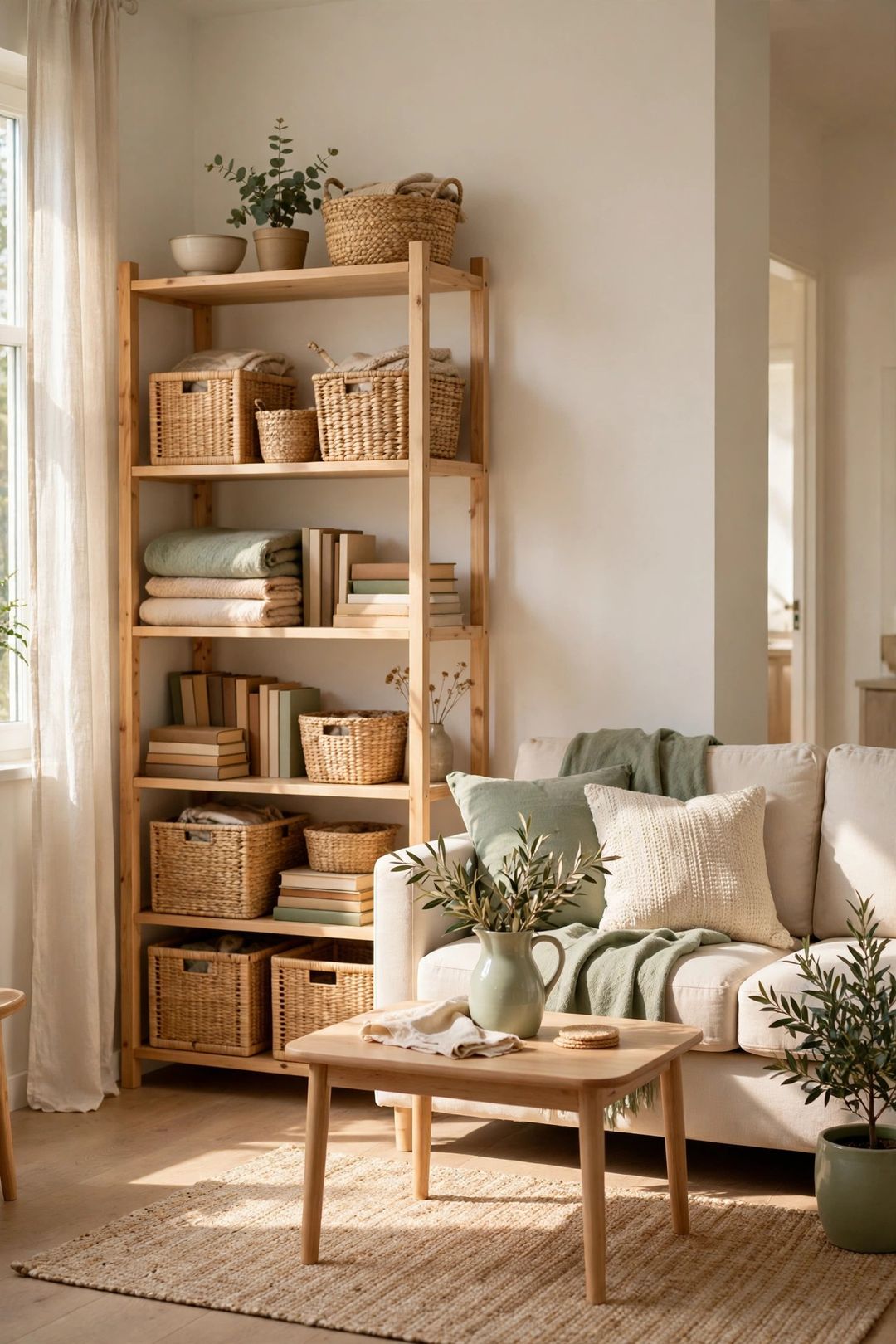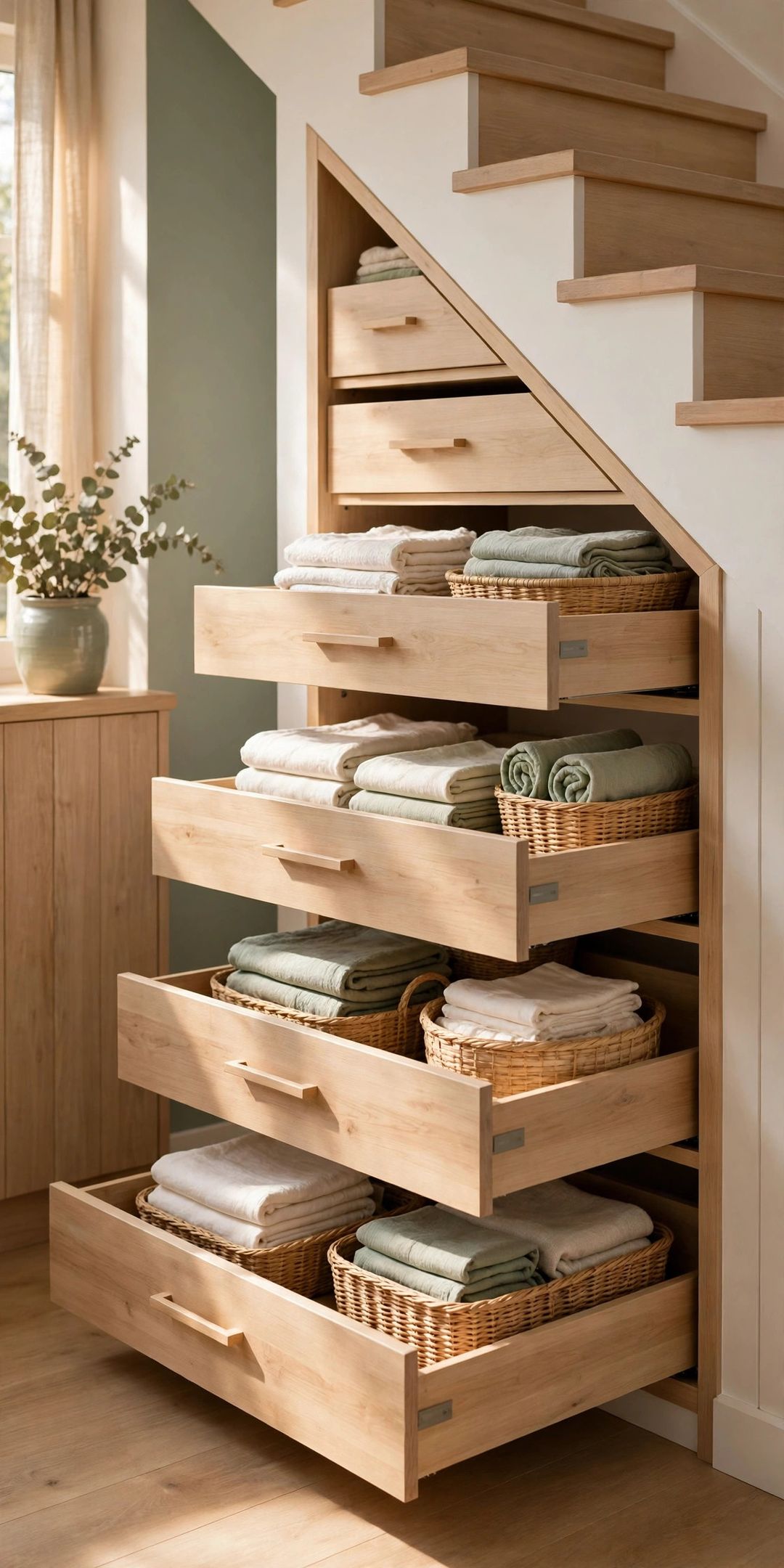
Craft supplies spread fast. Paper slides off tables, ribbon tangles, and tiny beads turn up everywhere. The fix is not a bigger room. It is one defined home — a single closet or rolling cart — that holds everything and closes away when crafting is done.
The craft supply storage ideas small space crafters return to most share three traits: clear containers, a set spot for unfinished work, and labels that read at a glance. A closet suits a larger stash; a rolling cart suits shared tables, because it parks in a corner and rolls to the work spot. Either base works, as long as everything fits inside it.
The Base: Clear Bins, Trays, and Labels
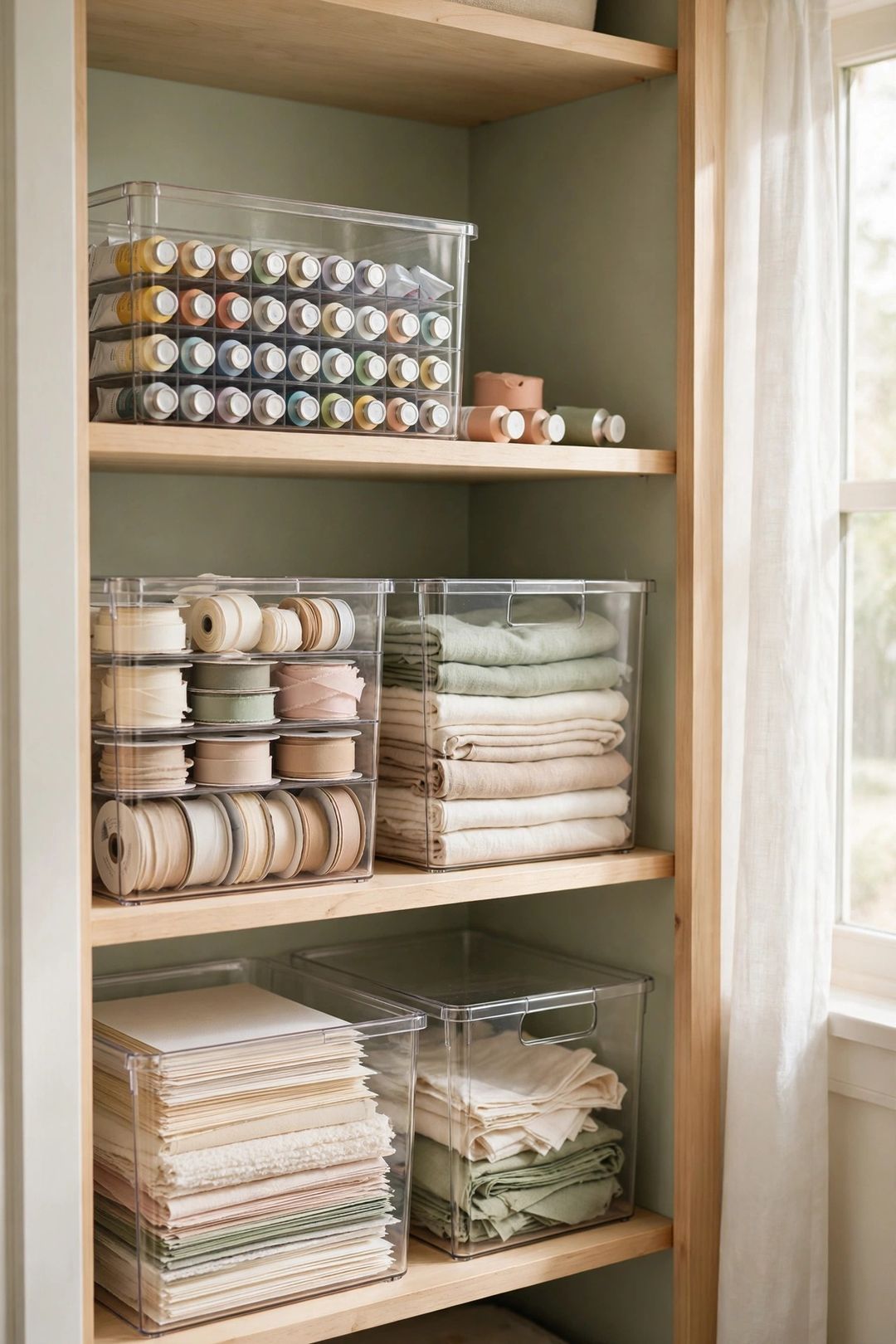
1. Sort supplies into clear bins by project. Give each project one clear bin holding all it needs: fabric, pattern, thread, and notions together. Project bins end the hunt for one lost zipper. Shoe-box bins stack on a shelf or cart tier.
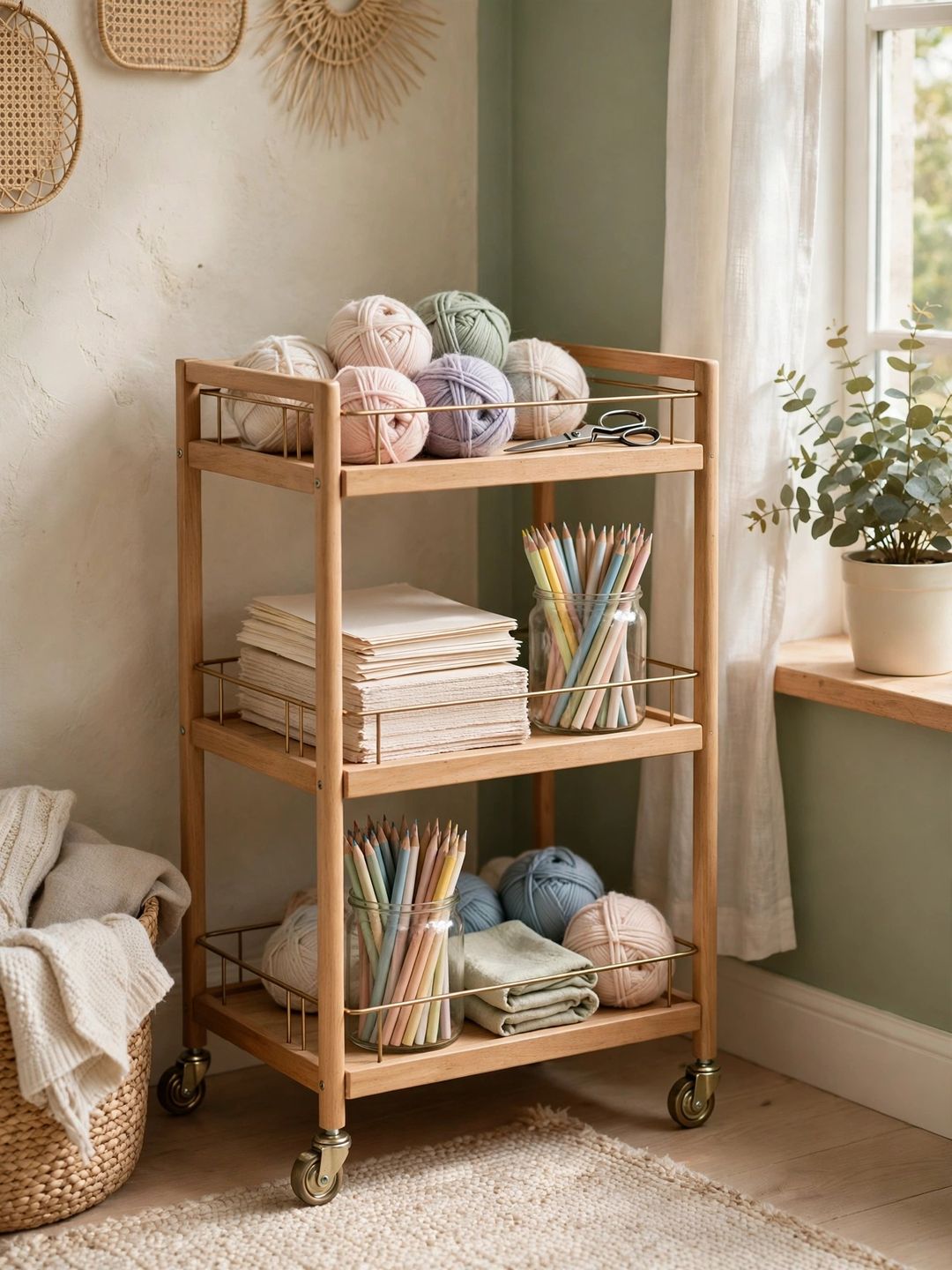
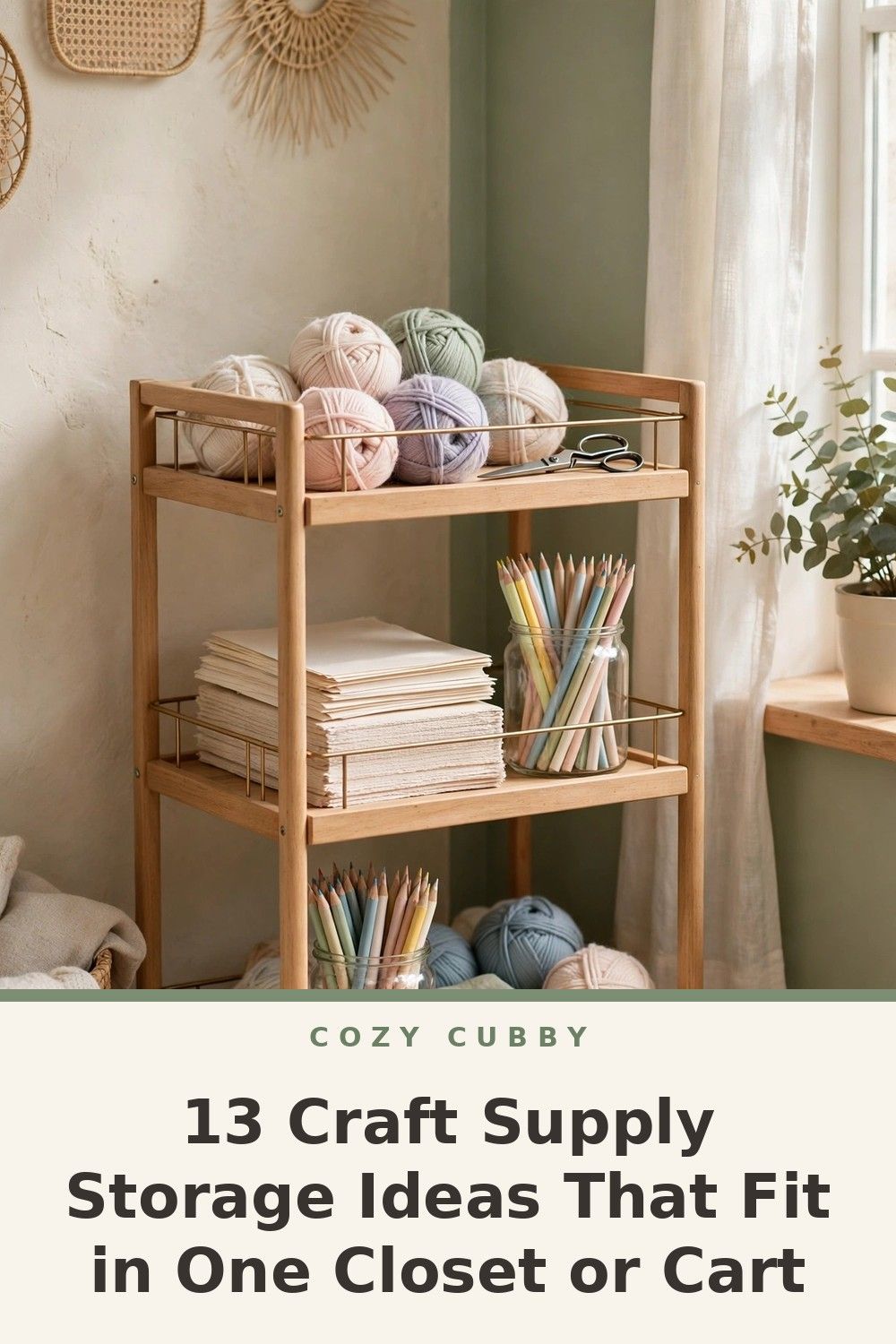
2. Use one three-tier rolling cart as the station. The top tier holds tools like scissors, glue, and markers. The middle tier holds the current project; the bottom holds paper and heavier supplies. One cart, three tiers, nothing stored elsewhere.
3. Keep works in progress on shallow trays. An unfinished project left in a loose pile gets tangled and mixed into other work. One shallow tray per project keeps cut pieces and parts together, and trays stack on a shelf or cart tier, ready to pause and restart in seconds.
4. Label every bin on the front and the top. Label bin fronts for shelves and bin tops for stacks. Name the project or supply type and, for project bins, the stage: cut, sewn, or waiting.
Paper, Ribbon, and Yarn Without the Tangles
5. Store paper upright in a file sorter. Cardstock stored flat under heavy items bends at the corners. An upright file sorter keeps sheets standing, sorted by color or type, in the closet or on the cart. Upright paper flips through like a book, so the right sheet is found fast.
6. Keep paper scraps in one clear folder. Scraps worth saving deserve one home, not a spot in every bin. A clear accordion folder holds scraps sorted by size or color. When the folder bulges, use scraps first or let the smallest pieces go.
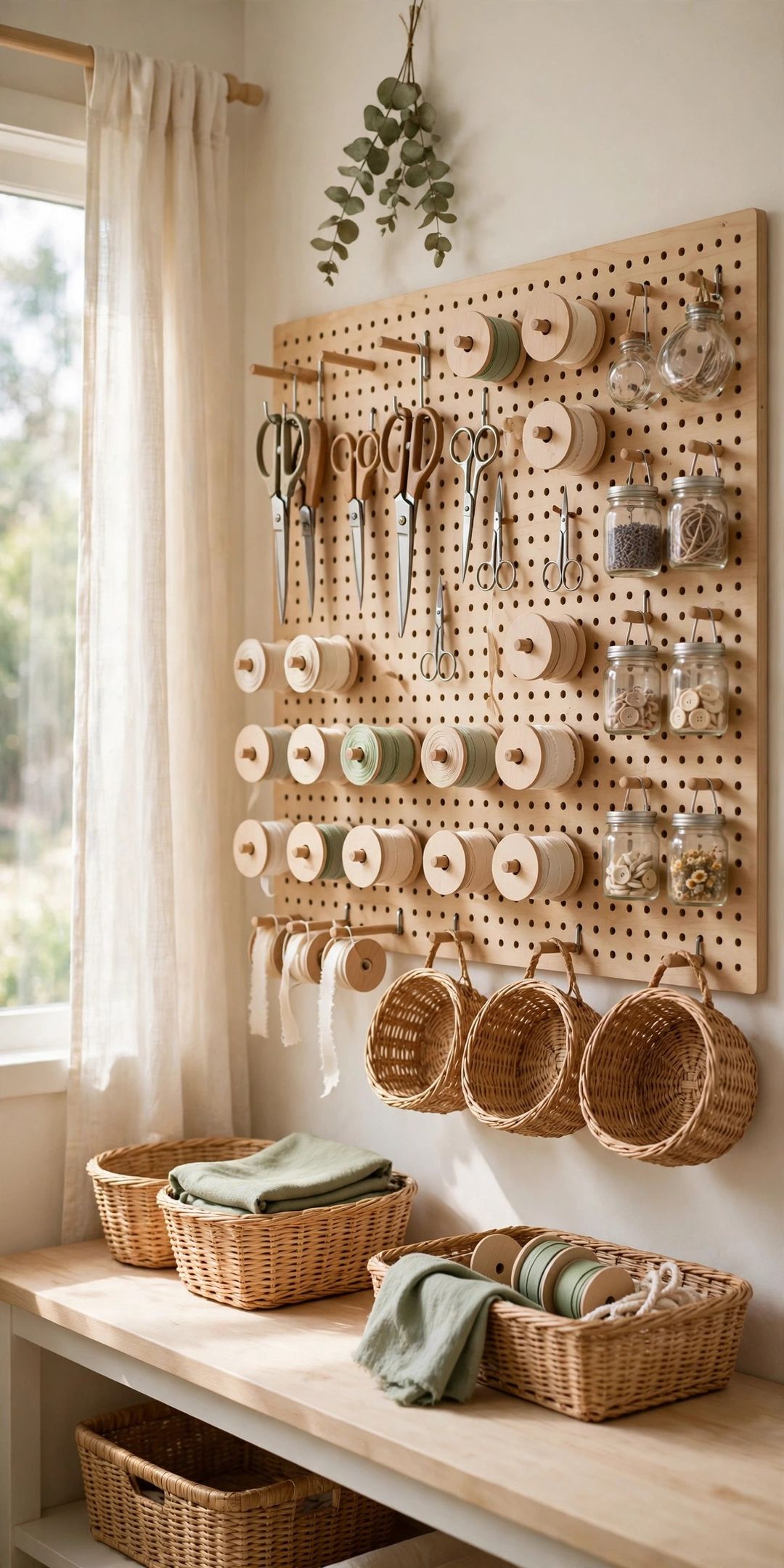
7. Thread ribbon spools onto a slim rod. A short dowel or slim tension rod inside the closet, or along the cart side, turns loose spools into a neat row. Ribbon unwinds cleanly, and every color stays visible. Tape or pin each loose end to its spool.
8. Stand yarn in clear bins, one project per bin. Yarn tangles when skeins share one big basket. Clear lidded bins keep skeins clean and separate, one bin per project or color family. Stand skeins upright so colors show from above, and tuck each paper band into the bin.
Small Parts and Vertical Door Space
9. Give beads and buttons their own small jars. Tiny parts need tiny homes with real lids. Small clear jars hold one type or color per jar, so a red button is never buried under blue beads. Jars line up on a shelf or tier, and a spill stays inside one jar.
10. Use a divided box for the smallest parts. Sequins, eyelets, brads, and jewelry findings are too small even for jars. A flat divided box with a snap lid keeps each type in its own cell and stacks neatly. One box holds a whole category.
11. Hang clear pockets on the inside of the door. The inside of a closet door is prime vertical space. A clear pocket organizer holds glue sticks, paint tubes, tape, and tools in plain sight. Pockets suit the items reached for most, because nothing needs unstacking first.
12. Add hooks or a slim rail to the door. Beside the pockets, a few adhesive hooks or one slim rail holds scissors, a ruler, a measuring tape, and the current project tote. Vertical storage keeps sharp, flat tools off shelves, where they slide under paper and disappear.
13. Keep one small pass-on box on the closet floor. A one-closet limit only works if supplies that no longer fit a project leave regularly. One small box collects extras for donation or swaps. When the box fills, it goes out before new supplies come in.
What to Buy
A three-tier rolling cart, typically $20–$35. Pro: Any corner becomes a station that moves to the table. Con: Open tiers collect dust. Skip if: A closet already holds the whole stash.
Clear shoe-box bins with lids, typically $10–$18 for a set of four. Pro: Contents stay visible, and lids stack safely. Con: Fixed sizes waste space around odd tools. Skip if: Most projects are large, like quilts.
Shallow project trays, typically $6–$12 each. Pro: Work in progress stays together and easy to restart. Con: One flat layer only, so bulky work outgrows them. Skip if: Every project is finished in one sitting.
Small clear jars with screw lids, typically $8–$14 for a set. Pro: One type per jar ends digging and contains spills. Con: Glass adds weight to a cart tier. Skip if: A divided box covers every small part.
An upright file sorter, typically $9–$15. Pro: Paper stands sorted and safe from bent corners. Con: Standard sheet sizes only. Skip if: Paper is mostly rolls or oversized sheets.
Mistakes to Avoid
- Sorting by shopping trip instead of by project. Supplies bought together rarely get used together. Project bins keep one make in one place.
- Buying bins before measuring. Cart tiers and shelves set the bin size. Measure height and depth first, then buy.
- Dumping all small parts into one big jar. Mixed beads mean digging, spilling, and re-sorting. One type per jar or cell ends that.
- Stacking paper flat under heavy supplies. Weight bends corners and hides bottom sheets. Paper stands upright, or it becomes scrap.
- Skipping labels because the bins are clear. Clear shows what a thing is, not what it is for. Labels carry the project name.
Frequently Asked Questions
Is a closet or a rolling cart better for craft storage?
A closet suits a bigger stash and bulky tools. A cart suits shared spaces, because it rolls to the table and parks in a corner. The better choice holds the whole stash in one spot.
How should beads and other tiny parts be stored?
One type or color per jar with a screw lid, or per cell in a divided box. Single-type storage ends digging, keeps spills small, and shows when a color runs low.
What keeps craft paper from bending or getting lost?
Store sheets upright in a file sorter, sorted by color or type, with scraps in one clear folder beside them. Upright storage protects corners and keeps paper visible.
How does a one-closet limit stay realistic over time?
Three habits hold the cap: new supplies enter a bin with space for them, works in progress stay on trays, and the pass-on box leaves when it fills. An edited stash fits a small home for years.
One closet or one cart is enough when every supply has a clear, labeled home and every project has a tray. Save this post to your Craft Organization board on Pinterest so the setup is handy at the next tidy-up.