Cutting boards are awkward to store. They are flat, wide, and often still damp after washing, so they end up leaning against the backsplash, stacked in a pile, or buried under baking sheets.
These cutting board storage ideas cover three places every kitchen has: a small stretch of counter, the inside of a cabinet door, and a drawer or cabinet. The goal is the same in each spot — store boards upright, with air between them, so they dry well and come out one at a time.
Before choosing a spot, measure your largest board, including the handle. Most everyday boards are 12 to 18 inches long and 8 to 12 inches wide. Storage needs to be at least 1 inch taller and deeper than that board.
On the Counter: Ideas 1 to 3
Counter storage suits the one or two boards used every day. Keep the footprint under about 12 inches wide, and place it away from sink splashes so boards can finish drying.
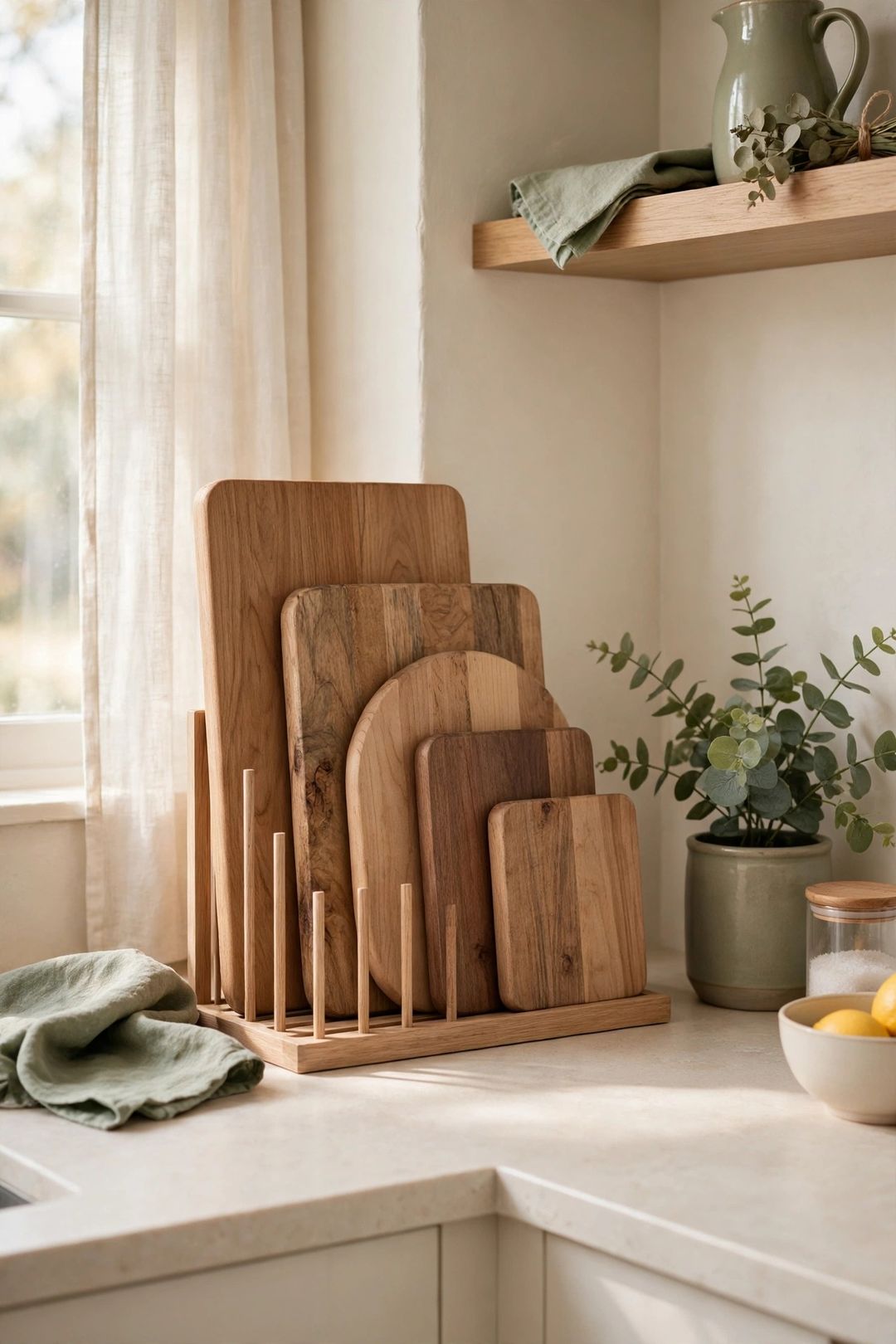
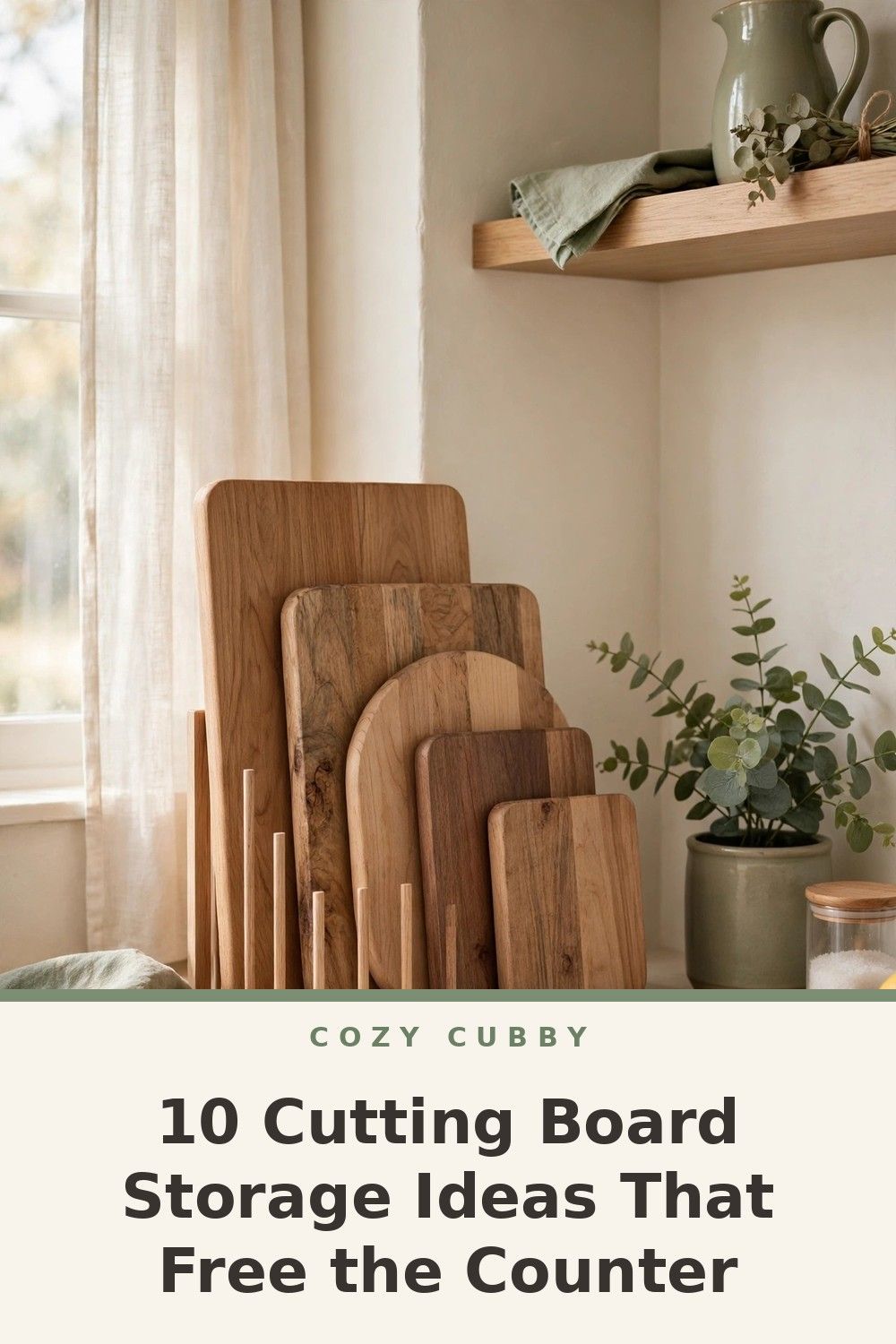
1. Upright file-style rack. A rack with vertical slots, like a file organizer, holds 3 to 5 boards standing on their long edge. Look for slots at least 1 inch wide for thick wood boards. Place it against a wall so boards cannot tip forward when one is removed.
2. Countertop slot holder with a drip gap. A short holder with raised rails lifts boards about half an inch off the counter. That gap lets air move underneath and stops moisture pooling at the base. Choose stainless steel or sealed bamboo near the sink, and wipe under it weekly.
3. Magnetic wall strip beside the prep zone. A wall-mounted magnetic strip, typically 12 to 18 inches long, can hold thin boards fitted with a metal hanging disc. This works best for plastic or composite boards under 2 pounds. Keep the strip at least 6 inches from the stove, away from heat and steam.
On Cabinet Doors: Ideas 4 to 6
The inside of a cabinet door is flat, dry, and usually empty. It suits medium boards up to about 14 inches tall, as long as shelves inside are set back enough for the door to close.
4. Over-door hook rack. Two hooks slip over the top of a cabinet door and hold a narrow rack below, with no screws needed. Measure first: most doors need hooks under 0.1 inch thick to close well. Use this for 1 to 2 lightweight boards, and add felt pads where the rack touches the door.
5. Screw-in door organizer with a low rail. A shallow organizer, about 2 to 3 inches deep, mounts with four short screws and holds boards upright behind a low front rail. Check that screw tips will not come through the door front, and leave half an inch between the board and the shelves inside.
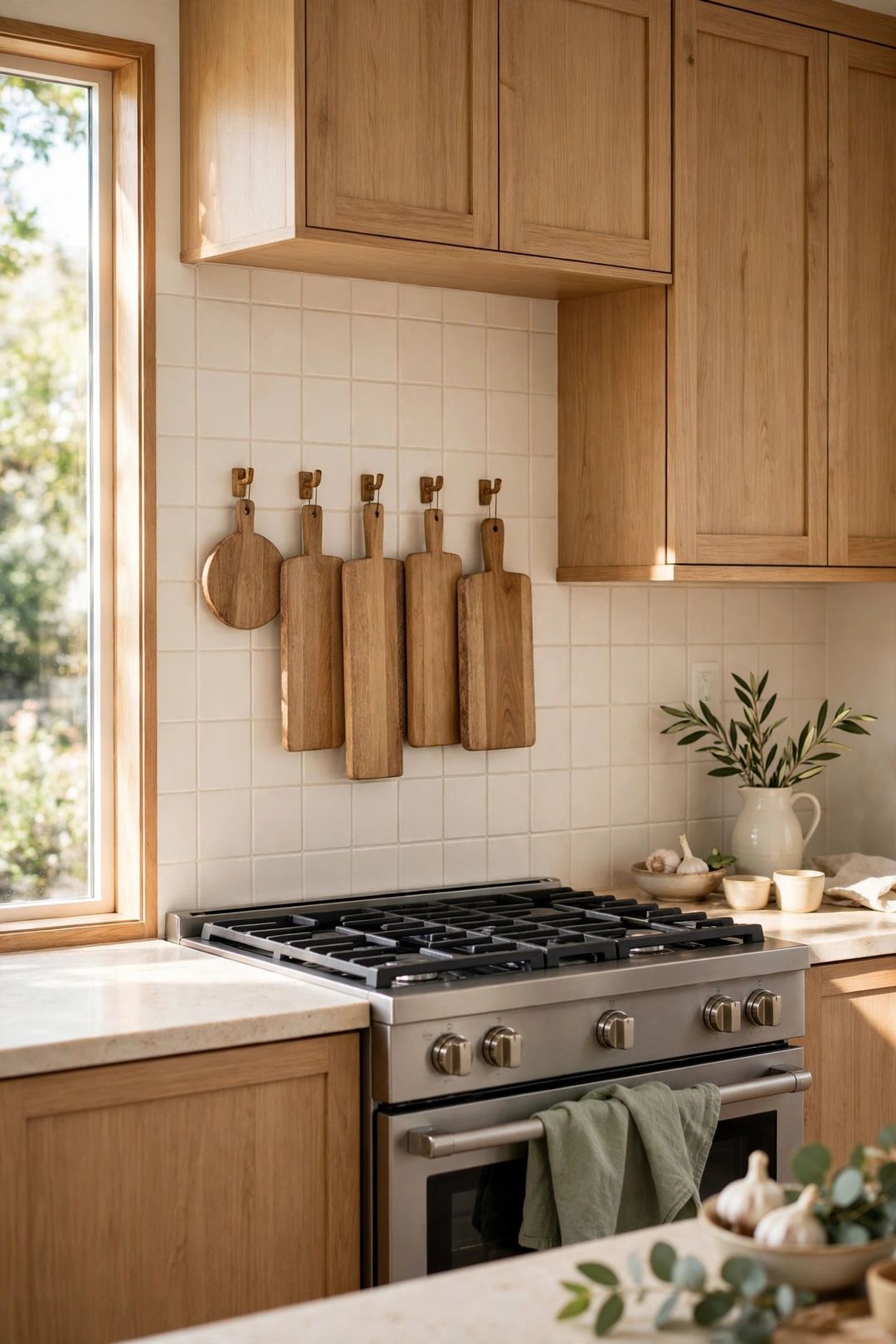
6. Adhesive hooks for a single daily board. Two large adhesive hooks, spaced about 6 inches apart, cradle one board by its bottom edge. This is the cheapest door option and suits renters. Follow the weight rating on the pack, clean the door before sticking, and wait the full curing time listed before hanging anything.
In Drawers and Cabinets: Ideas 7 to 10
Drawers and cabinets hide boards completely, which helps a small kitchen look calmer. The key is dividers, because without them flat boards stack up again and the bottom board never gets used.
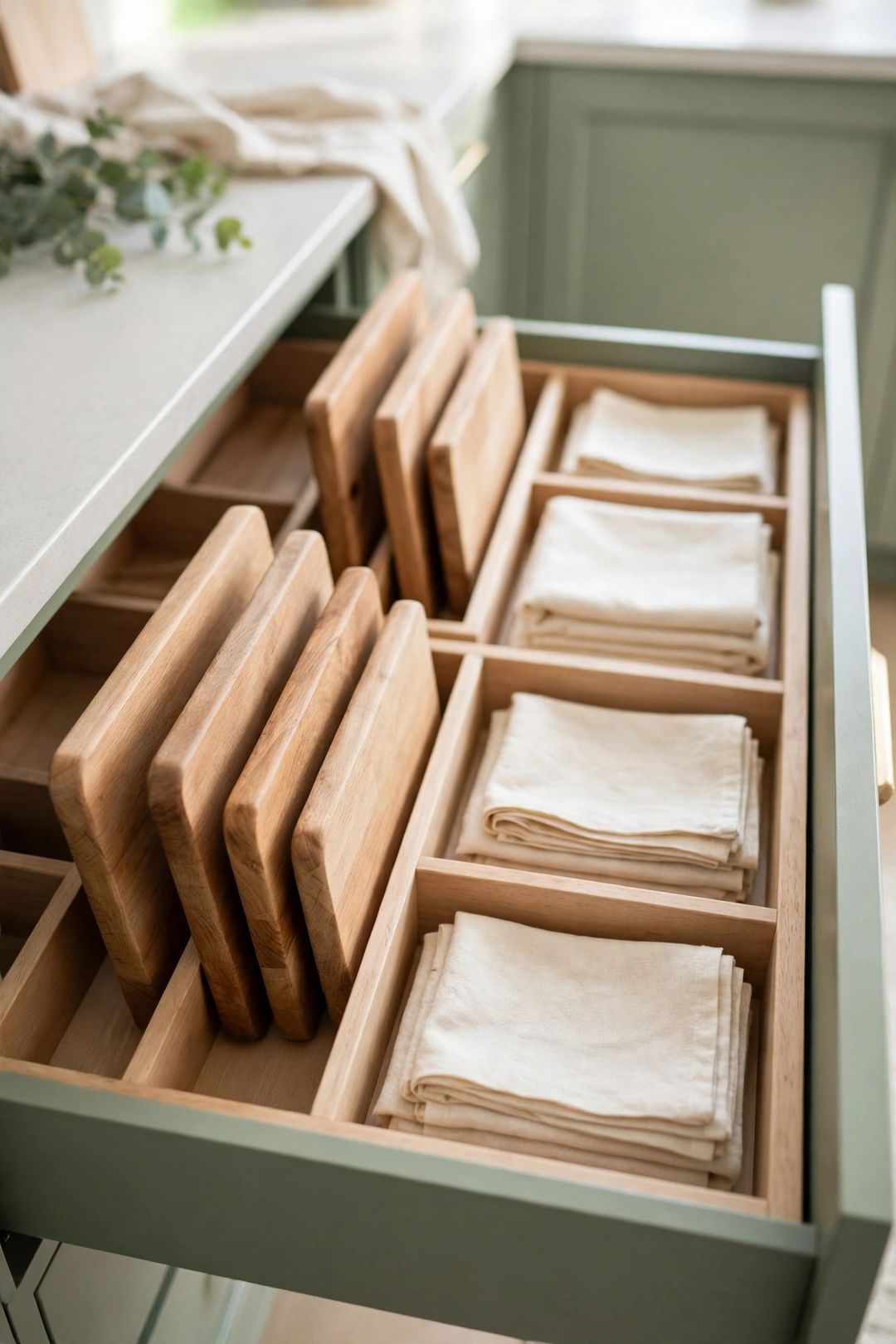
7. Deep drawer with vertical dividers. A drawer at least 6 inches deep can hold boards on edge if dividers split it into sections 1 to 2 inches wide. Stand each board with its long edge down. Keep a fixed order, such as wood for produce and plastic for raw meat, so the right board is easy to find.
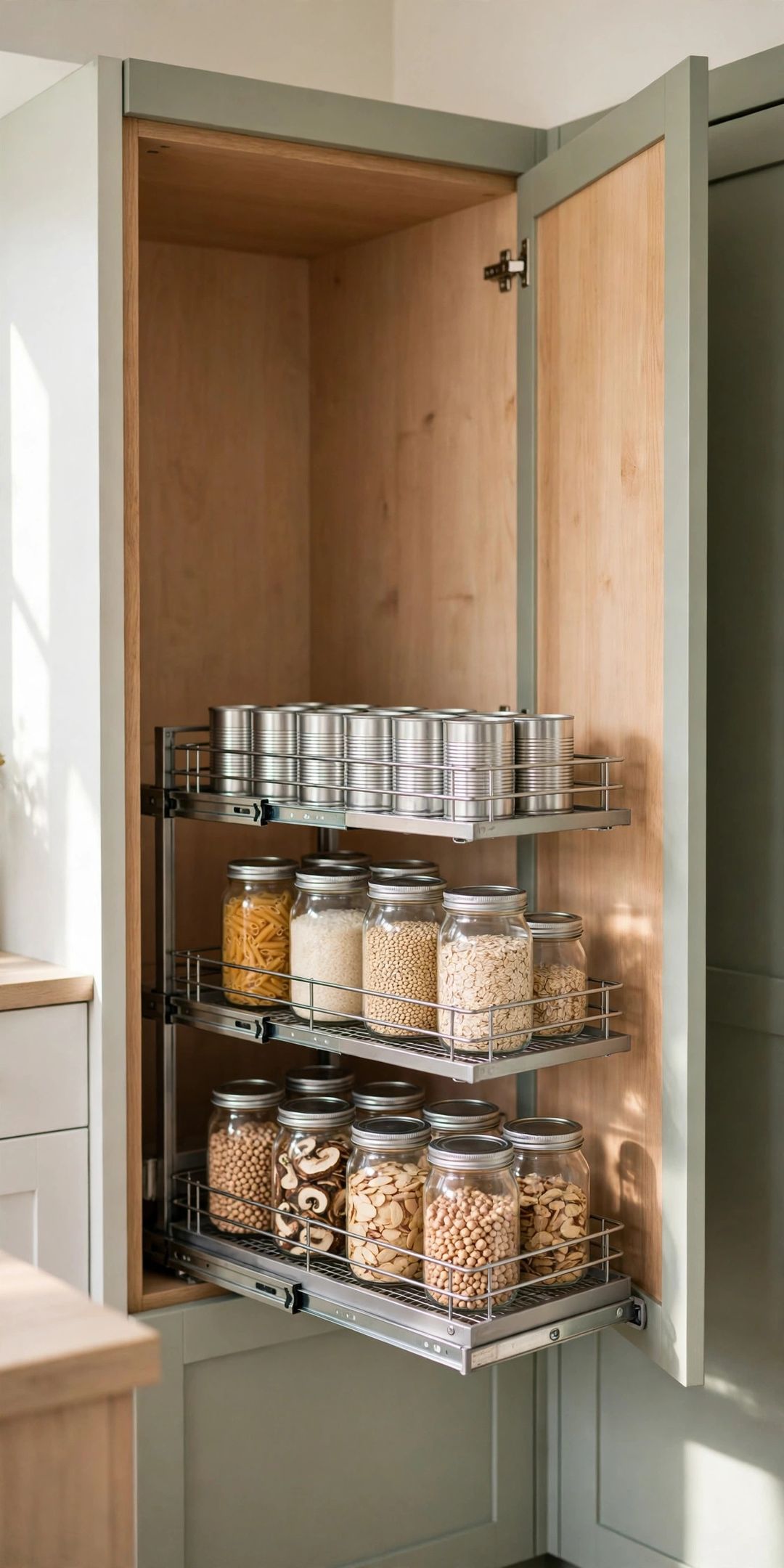
8. Pull-out vertical cabinet divider. In a narrow cabinet next to the oven, a pull-out frame with vertical bars stores boards, baking sheets, and trays in separate slots. Cabinets 9 to 12 inches wide suit this well. It costs more, but removes the need to reach to the back of a dark cabinet.
9. Tension-rod dividers in a base cabinet. Two small tension rods, fitted near the front of a cabinet, create simple sections with no drilling. Set them about 2 inches apart to form a slot for each board. This low-cost fix works in cabinets at least 15 inches tall and removes in minutes.
10. The cabinet above the fridge. This shallow cabinet, often 12 to 15 inches deep, fits boards flat in a single layer or standing in a small rack. Because it is hard to reach, store extra or seasonal boards here, such as the large board for holiday roasts, and keep daily boards lower down.
What to Buy
A file-style countertop rack, typically $14–$24. Pro: Holds several boards upright in a small footprint and lets air circulate. Con: Slots can be too narrow for thick butcher blocks. Skip if: You own only one board and have a good drawer slot for it.
An over-door cutting board rack, typically $12–$20. Pro: Uses empty door space with no drilling. Con: It can rattle, and thick hooks may stop thin doors closing. Skip if: Your cabinet shelves reach right to the door.
Drawer dividers, typically $10–$18 for a set. Pro: They turn one deep drawer into clear, single-board slots. Con: Spring-loaded styles can slip in smooth drawers. Skip if: Your deepest drawer is under 6 inches and boards must lie flat.
A pull-out cabinet organizer, typically $35–$60. Pro: Brings back boards to the front with one pull. Con: It needs careful measuring and basic tools to fit. Skip if: A simple tension rod would do the same job.
Mistakes to Avoid
- Storing boards while they are still wet. Trapped moisture in a tight stack can cause warping and odors. Dry boards upright for at least an hour first.
- Stacking boards flat in a deep pile. The bottom board is hard to reach, so it gets skipped, and air cannot move between surfaces.
- Buying a rack before measuring. Handle length is the usual problem. Measure the full board, handle included, plus 1 inch of clearance.
- Mixing raw-meat boards with all others. Keep a clear system, such as color or material, so meat boards are easy to tell apart.
- Filling every slot at once. A rack packed tight defeats the point. Leave one empty slot so boards slide without scraping.
Frequently Asked Questions
Should cutting boards be stored flat or upright?
Upright is better for most kitchens. It takes less width, lets both faces dry, and makes each board easy to pull out. Flat storage works only for a single board or a very small stack in a shallow drawer.
Where should boards go with no extra cabinet?
Use the inside of the sink-base door with adhesive hooks, or a slim countertop rack beside the fridge. A magnetic strip on a free stretch of wall is the third option when counter space is tightest.
How do you keep wood boards from cracking in storage?
Store wood boards away from direct heat, such as the oven side panel, and out of constant steam. Keep air gaps between boards, and follow the maker's care guide for oiling, since dry indoor air is a common cause of cracks.
How many cutting boards does a home kitchen need?
Two to three boards cover most homes: one for produce and bread, one for raw meat and fish, and one large board for big jobs like watermelon or a roast. Storage for three boards upright needs only about 6 inches of width.
Pick one idea for daily boards and one for extras, measure once, and the pile is gone for good. Save this post to your Kitchen Organization board on Pinterest so the sizes are handy when you shop.