Room-by-room decluttering feels logical, but it hides the real problem. The same category is often scattered across several rooms, so no session ever shows the full total.
The declutter by category konmari order fixes that by grouping everything of one type together before any decisions start. You see true totals, spot duplicates fast, and make each choice only once. The order also builds skill, starting easy and ending with the hardest, so keepsakes are not the first test.
Work through the five categories in sequence, finishing one before starting the next. Set out four sorting spots: keep, donate, recycle, and trash.
1. Clothes
Clothes come first because decisions are mostly practical. Fit, condition, and how often an item is worn are easy to judge, with little emotional weight. Clothing is the training ground for the method.
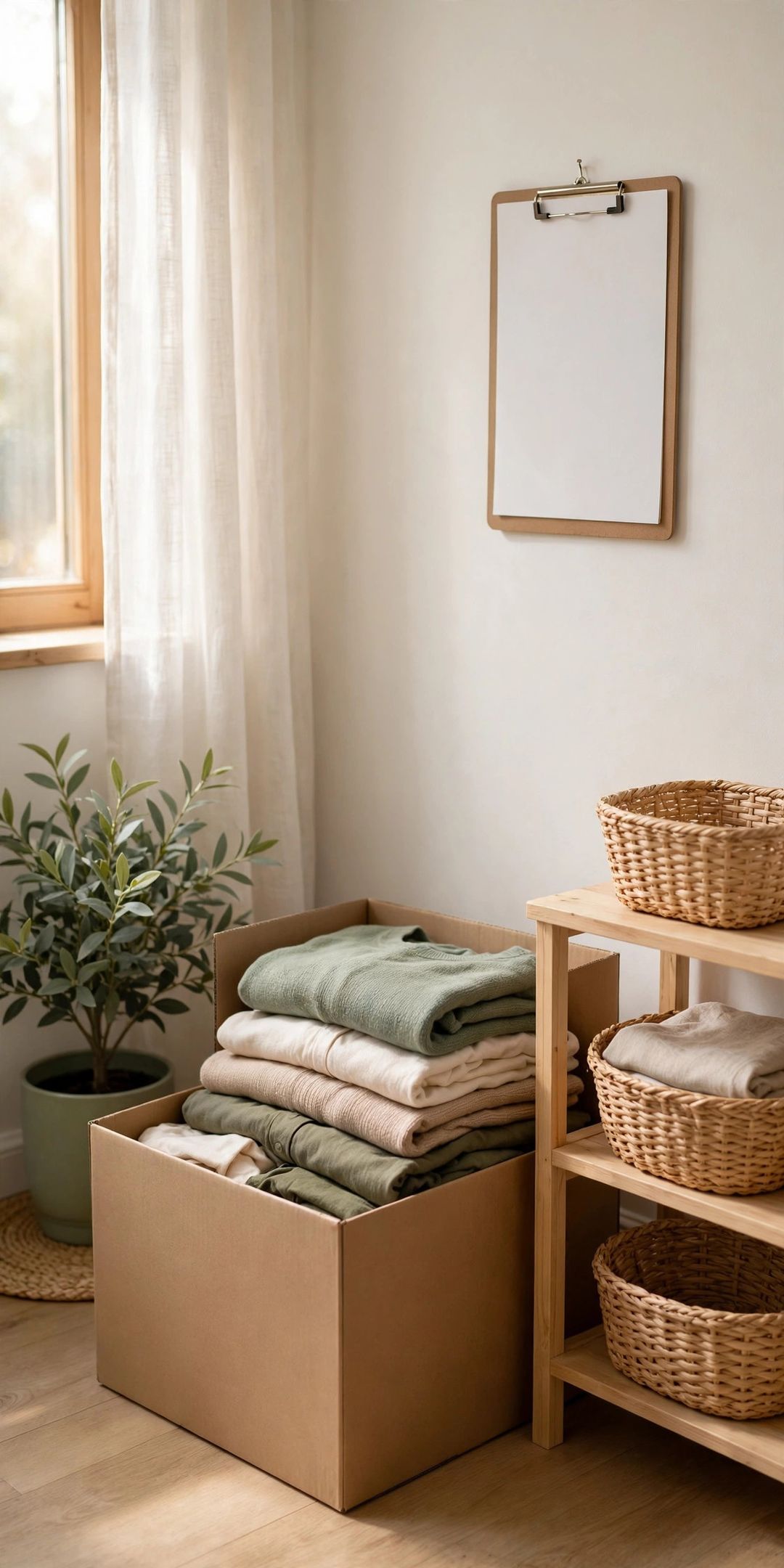
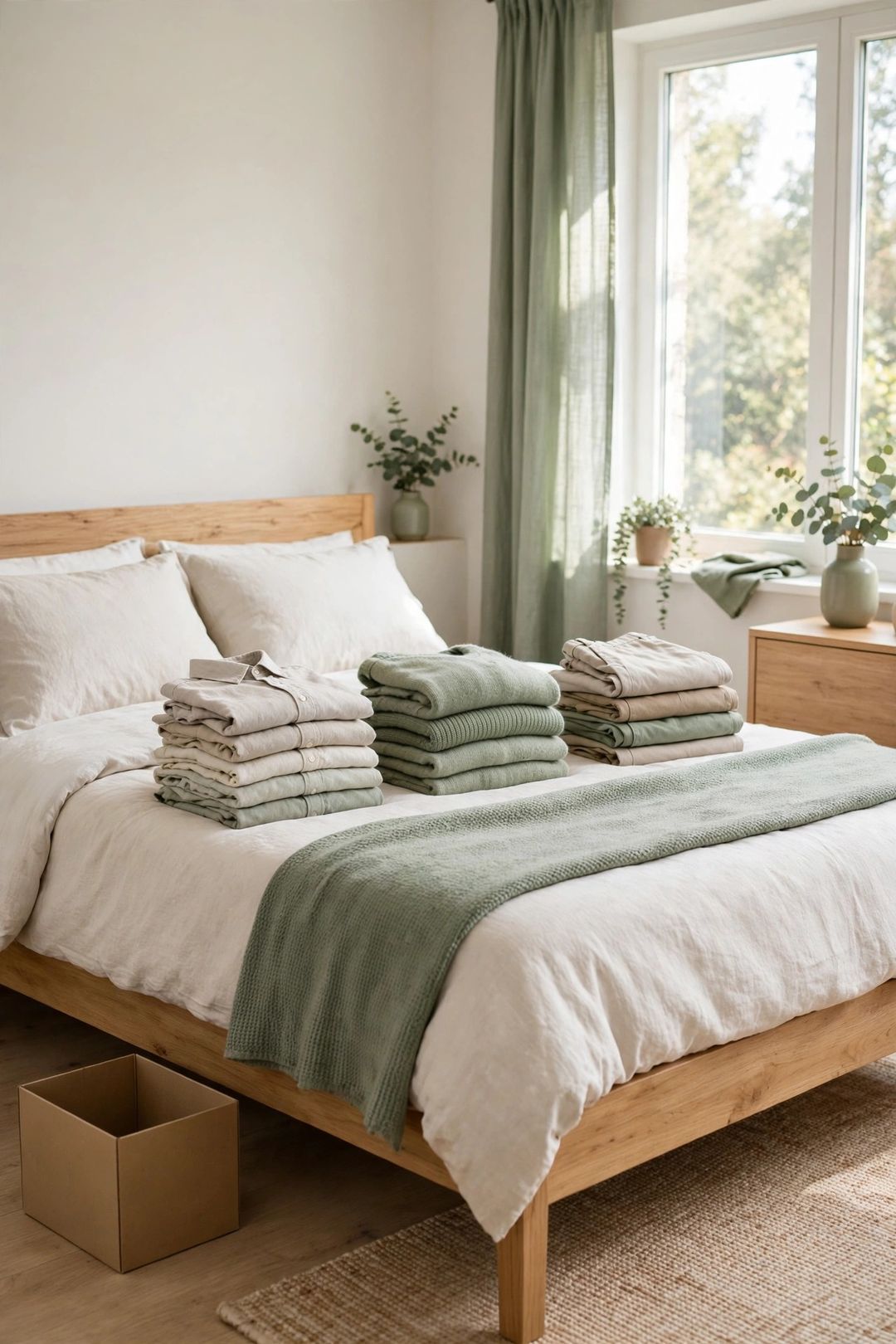
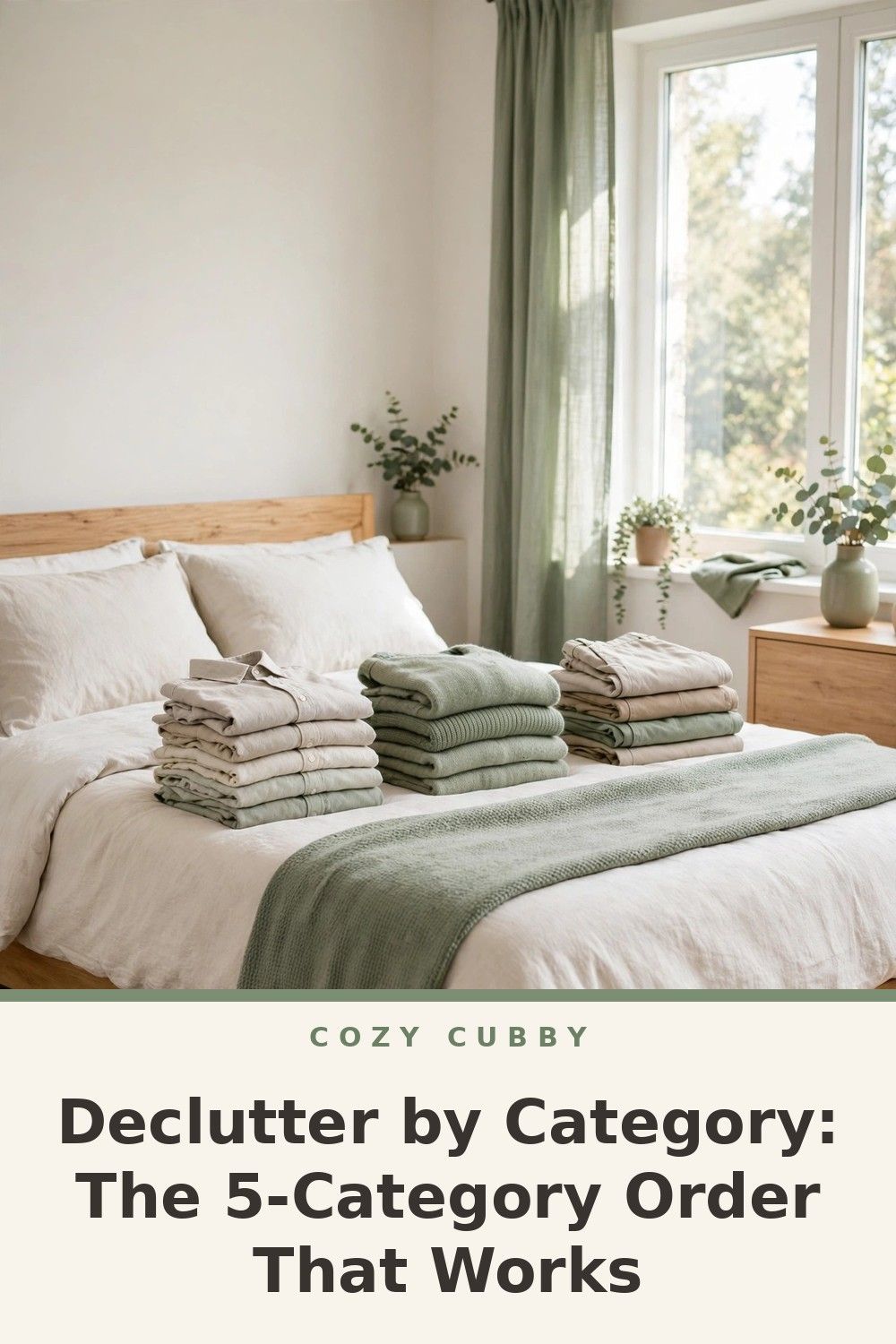
Gather everything into one place. Empty the closet, dresser, coat hooks, laundry baskets, storage bins, and off-season boxes. Check gym bags and guest-room closets too, then pile it all in one spot, such as on a bed.
Decision rules. Keep items that fit now, are in good condition, and suit current routines. Let go of anything torn beyond repair, stretched out, duplicated many times over, or untouched through its full season.
Where keepers live afterward. Return everyday clothes to the main closet and dresser, grouped by type. Store off-season items in one labeled bin in one place only, so the category never scatters again.
2. Books
Books come second because they are still fairly easy to judge, but carry a little more attachment than clothes. Basic sorting now feels familiar, which helps with titles kept from habit.
Gather everything into one place. Collect books from shelves, nightstands, desks, children's rooms, and storage boxes. Include cookbooks and manuals, and stack them where every cover is visible.
Decision rules. Keep books that will be read again, used for reference, or are hard to replace. Let go of outdated guides, damaged copies, duplicates, and books kept only because they were gifts.
Where keepers live afterward. Give books one main home, plus small spots such as a single nightstand stack. Place donations by the door so they actually leave.

3. Papers
Papers sit in the middle. They carry little emotion, but they need care: tax records, contracts, and ID documents can be mixed in with junk mail, so a quick toss is not safe.
Gather everything into one place. Empty desk drawers, filing boxes, mail trays, counters, bags, and every “deal with later” pile. Bring it all to one table with room to sort.
Decision rules. Sort into action, file, and recycle. Keep documents that prove identity, ownership, taxes, warranties, or active agreements. Shred outdated flyers and expired coupons. When a retention rule is unclear, check the issuer's guidance first.
Where keepers live afterward. Use one filing spot for long-term records and one small tray for action items — nothing else. New mail goes to the tray first.
4. Komono: Miscellaneous Items
Komono is the term for miscellaneous items, the largest category. It comes fourth because it needs the practice from the first three rounds. Tackle it in sub-groups, one at a time.
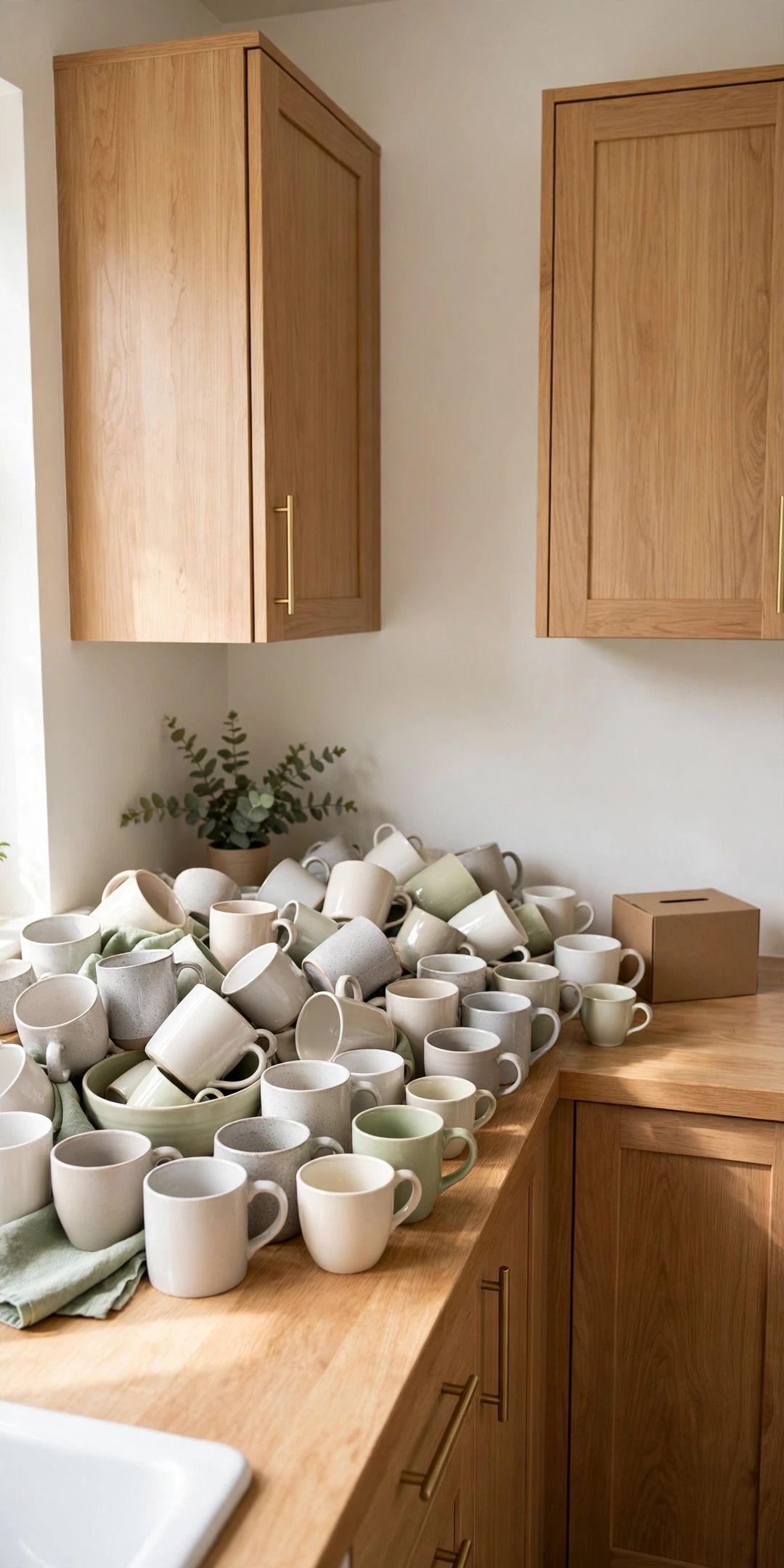
Kitchen: Gather all gadgets, utensils, containers, and small appliances. Keep daily tools and one backup at most. Let go of single-use gadgets never used, warped containers, and lids with no base. Bathroom: Collect toiletries and extras from every cabinet. Keep current, usable products, one spot per type, and remove expired or half-used items no one will finish.
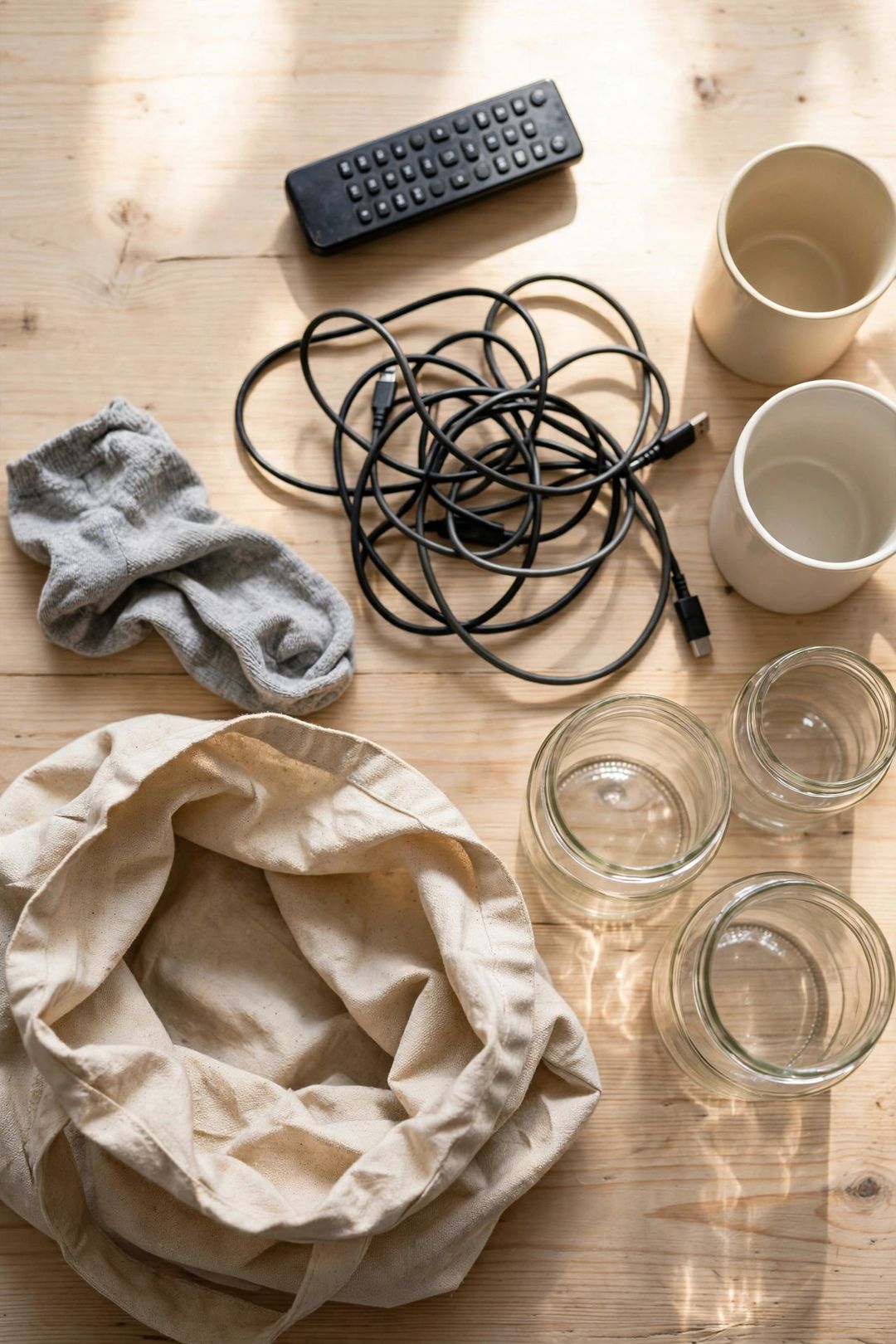
Hobby: Bring craft, sports, and project supplies together by hobby. Keep complete kits for hobbies still active, and let go of supplies for abandoned projects and broken gear. Sentimental-lite: Cover low-emotion leftovers such as old cables and souvenir trinkets. Keep only items with a known use and a matching device or purpose.
Where keepers live afterward. Each sub-group gets one defined home — one drawer, shelf, or bin — labeled by type. If that home fills up, the category is full, and something must leave before more comes in.
5. Sentimental Items
Sentimental items come last on purpose. Photos, letters, and keepsakes carry the strongest memories, and starting here is where most decluttering stalls. After four categories of practice, judging what matters becomes calmer.
Gather everything into one place. Collect photo boxes, albums, memory bins, trophies, and keepsake drawers from every room. Set aside unhurried time, in shorter sessions if the pile is large.
Decision rules. Keep items with a clear, positive memory that deserve space or display. A smaller, best set beats every version of the same memory. Let go of blurry duplicates, items kept only from guilt, and objects whose story no one remembers.
Where keepers live afterward. Give keepsakes one or two dedicated boxes or one shelf, easy to reach. Display a few favorites instead of storing everything away.
What to Buy
Heavy-duty donation bags, typically $8–$15. Pro: Strong bags hold a full category of clothes or books without splitting. Con: They hide contents, so label each bag when filled. Best for: Clothes and soft goods.
Clear sorting bins, typically $10–$20 each. Pro: Contents stay visible while sorting, so piles do not stall out of sight. Con: Large bins take storage space afterward. Best for: Komono sub-groups and papers.
Labels and a thick marker, typically $6–$12. Pro: A labeled box or shelf stops categories scattering again. Con: Labels only work if homes stay consistent. Best for: Off-season and keepsake storage.
Recycling and trash bags, typically $5–$10. Pro: Broken items and junk paper leave the same day. Con: Little beyond restocking. Best for: Every category round.
Mistakes to Avoid
- Starting with sentimental items. Keepsakes are the hardest decisions, and starting there drains energy before easy wins build momentum.
- Skipping the full gather. Sorting only one room hides duplicates stored elsewhere and leads to repeat decisions later.
- Mixing categories mid-round. Finishing one category fully keeps totals clear; five half-finished piles help none of them.
- Buying storage before sorting. New bins for unsorted clutter just organize the excess. Sort first, then buy only what keepers need.
- Leaving donation bags in the house. Bags that sit for weeks tend to get reopened. Take them out within a day or two.
Frequently Asked Questions
How long does the full five-category order take?
It depends on the size of the home and each pile. Many households spread it over several weekends, finishing one category per session. The sequence matters more than speed.
What if a category is too big to gather in one place?
Use the sub-group approach from komono. Gather all of one sub-type, such as all shoes or all kitchen gadgets, decide on that group, then move to the next sub-type.
Can the order change for a small apartment?
The sequence is still useful, because the logic is about decision difficulty, not home size. In a small space, each gather is simply faster, and the one-home rule matters even more.
What should happen to donations and recycling?
Bag them as each category finishes and remove them promptly. Keeping exits near the door prevents sorted-out items from drifting back into closets and drawers.
Work the categories in order, gather everything before deciding, and give each keeper one clear home. Save this post to your Decluttering board on Pinterest so the full five-category order is handy before your next session.