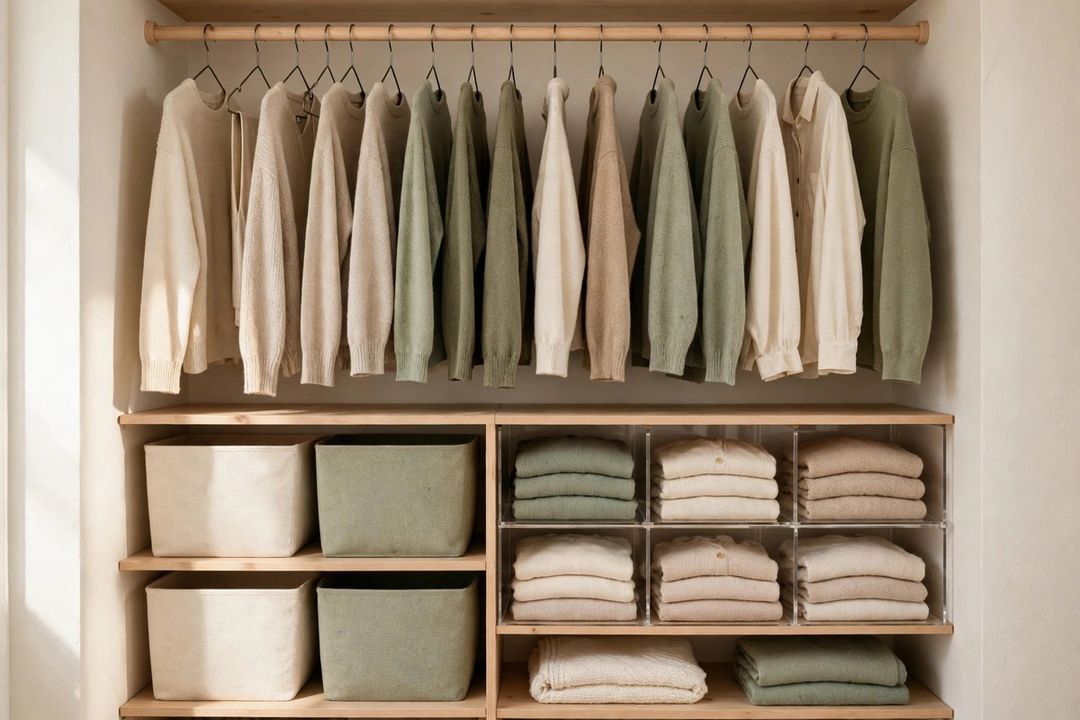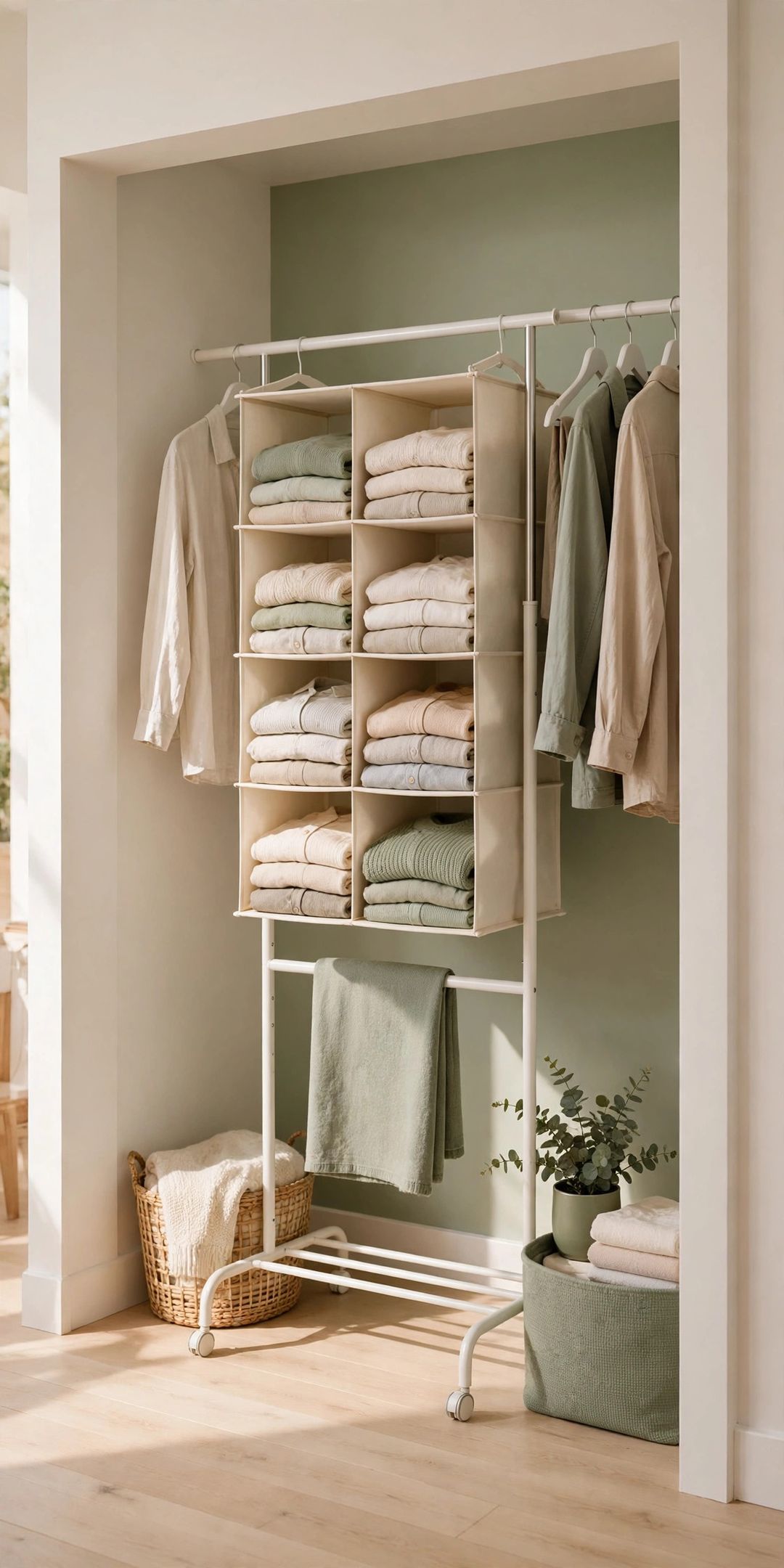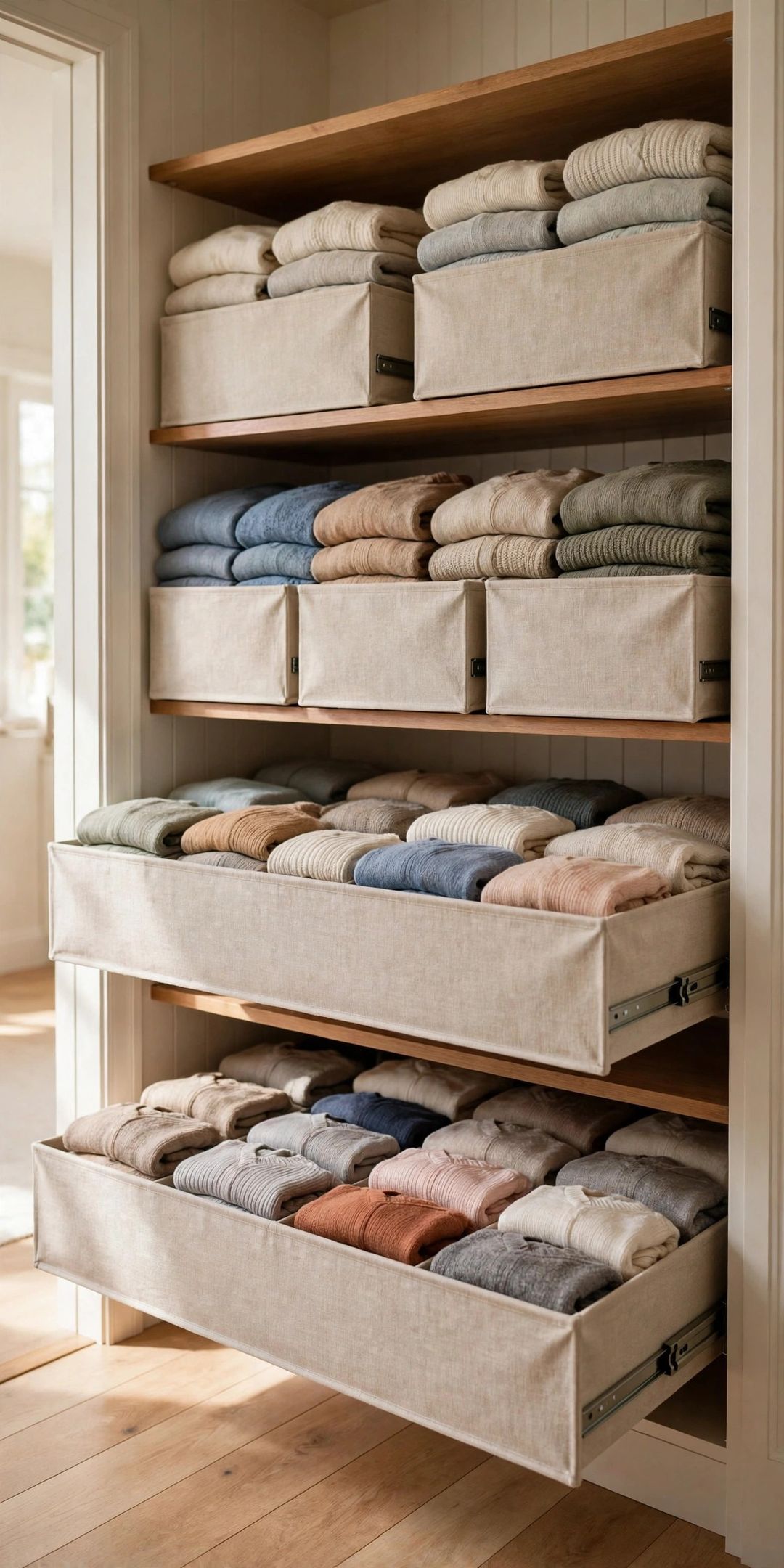
Deep closet shelves sound like a bonus until something slides to the back and disappears. Sweaters get buried, spare linens mix with shoes, and the front row becomes a wall that hides everything behind it.
Good deep closet shelves storage systems pull out setups fix the reach problem first. Instead of stacking deeper, they bring items forward on trays, in bins, and in clear front and back zones.
Measure shelf depth, width, and the height between shelves before buying anything. Most of the systems below work on shelves 16 to 24 inches deep, and they can be mixed shelf by shelf.
1. Full-Extension Pull-Out Bins
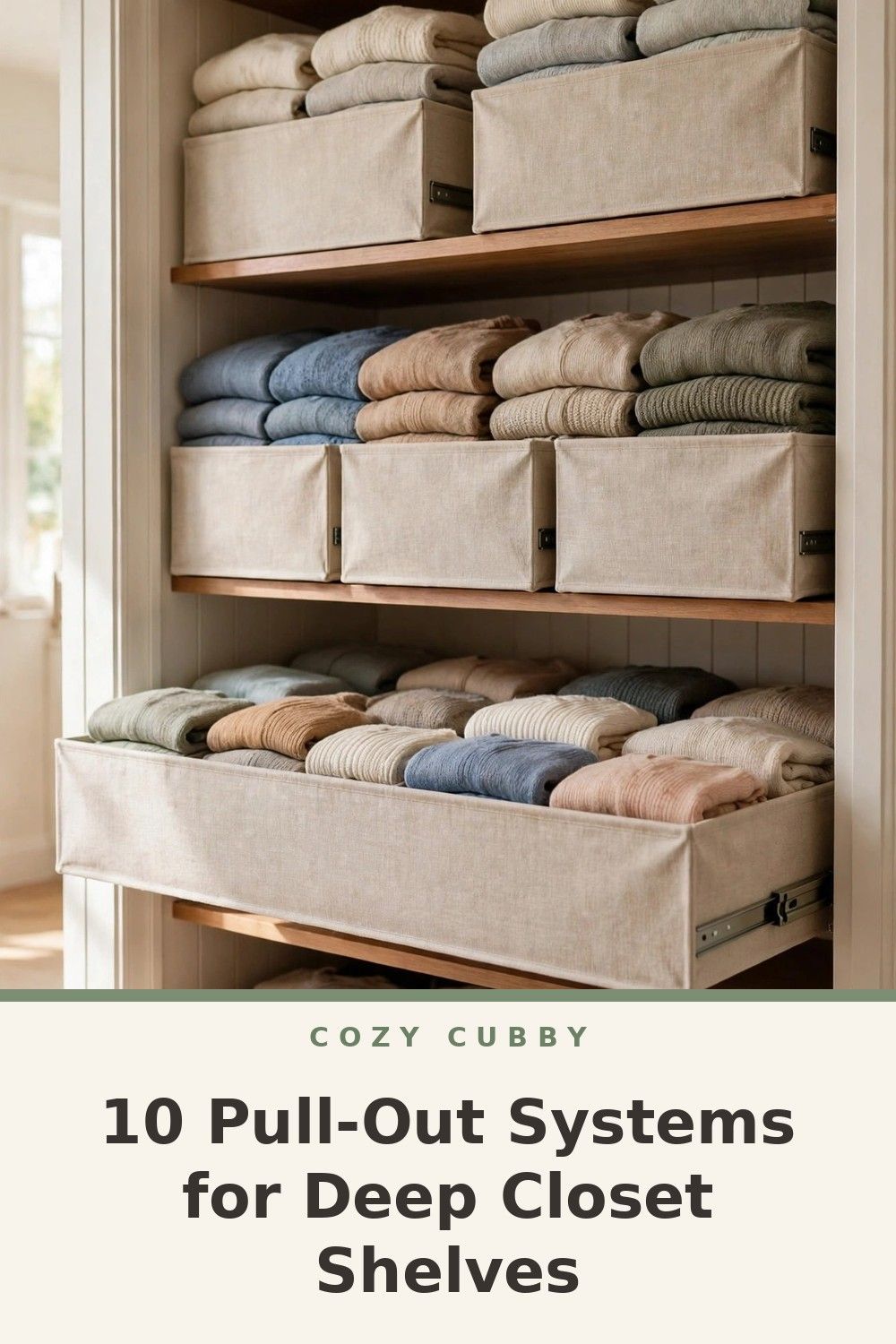
Best for the deepest shelves. A sturdy bin with a handle, sized close to the full shelf depth, turns one deep reach into one simple pull. Keep one category per bin, such as sweaters or bed linens, so the whole bin can come out when you need something from the bottom.
2. Rolling Trays and Low Wheeled Crates
Best for heavy or bulky items. A low tray or crate on small wheels rolls forward without dragging on the shelf surface. Use it for shoe boxes, folded blankets, or board games. Choose a height that clears the shelf above with room to lift items out.
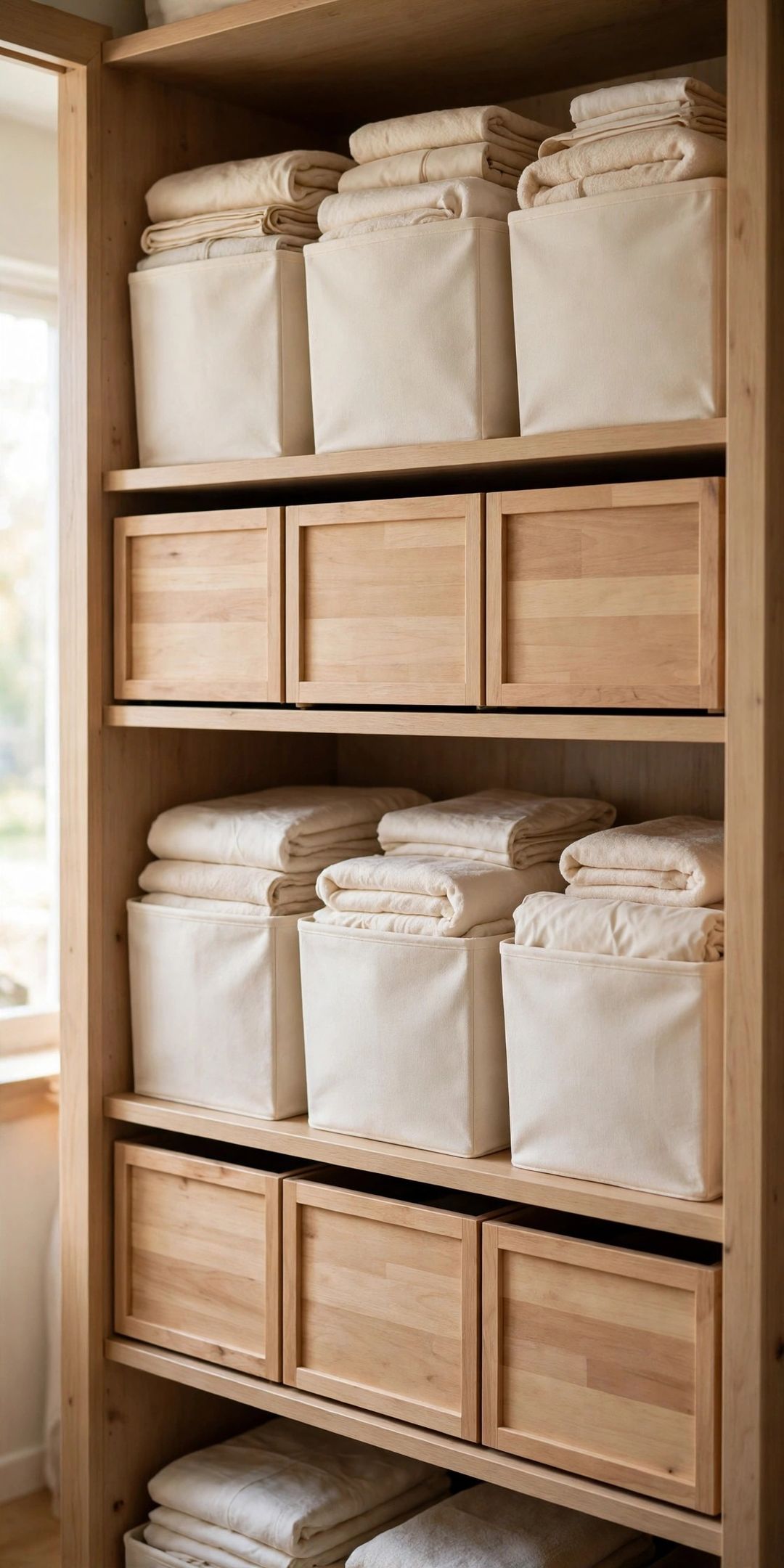
3. Clear Bins With the Label Facing Out
Best for mixed small items. Clear sides show the contents at a glance, and a large label on the front edge names the category anyway. Face every label outward in the same spot on each bin. That small habit makes a quick scan possible without pulling anything down.
4. Front-Row and Back-Row Zoning
Best when you do not want new hardware. Put weekly items in the front half of the shelf and seasonal or backup items in the back half, in their own bin. The back row should be one contained group, never loose pieces that drift and mix with the front row.
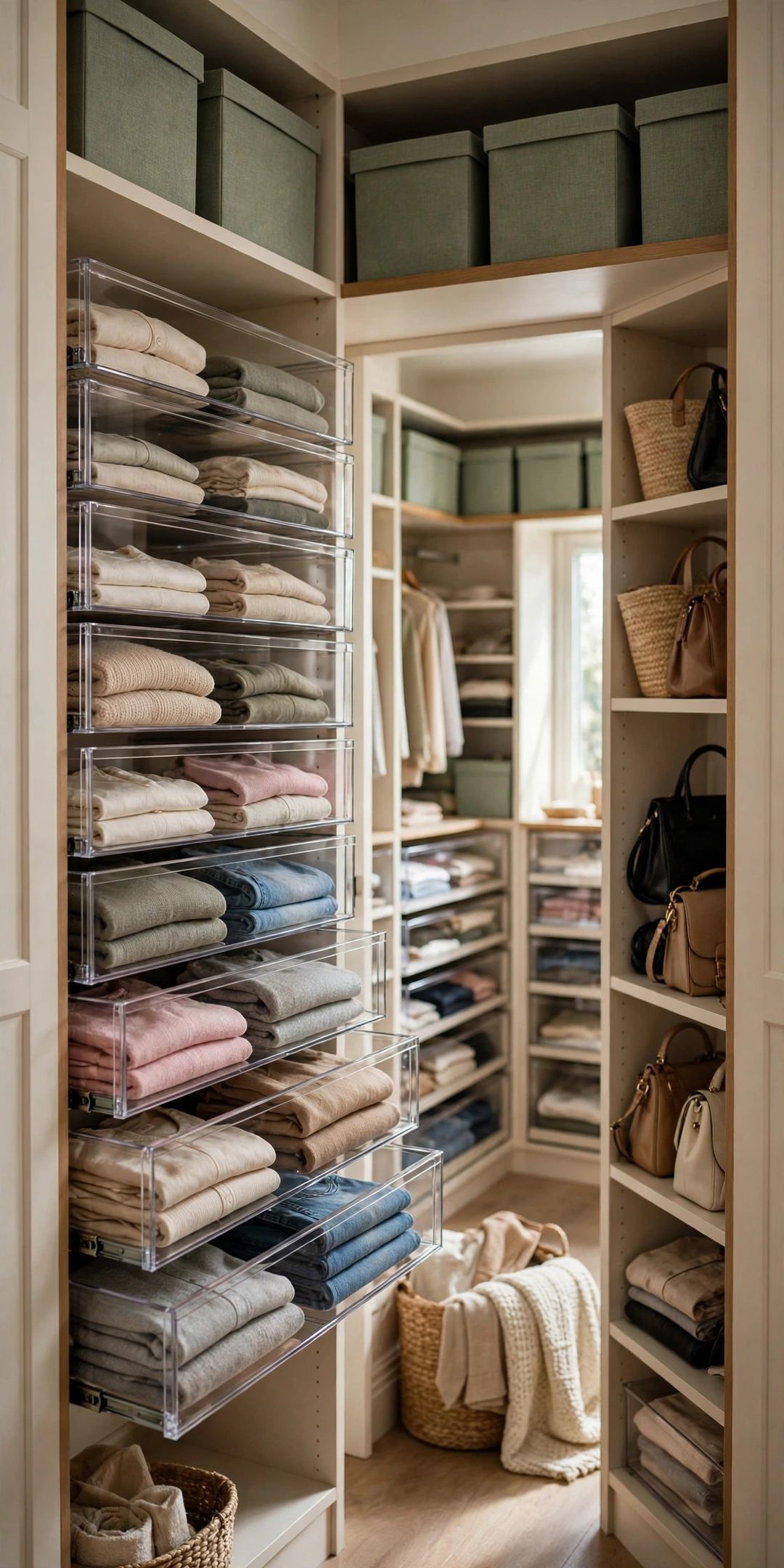
5. A Raised Back Row on a Shelf Riser
Best for folded stacks and shoe boxes. A wide riser lifts the back row a few inches, so its edge stays visible above the front row. This works well for items you can identify by color or shape. Keep the riser stable and leave a clear gap in front for hands.
6. Vertical Shelf Dividers for Stacks
Best for sweaters, jeans, and linens. Upright dividers hold folded stacks apart, so pulling one pile does not topple the next. Space them about one stack wide. Dividers work best on a shelf where items are folded to a similar width and refolded to that same width each time.
7. Long Handled Bins for Linens and Towels
Best for top shelves. A long, narrow bin with handles on both ends holds a full set of towels or a sheet set in one place. Two narrow bins side by side are easier to lift down safely than one wide, heavy box, especially from a high shelf.
8. Stackable Open-Front Bins
Best for using tall space between shelves. Open-front bins stack two high and still let you reach the lower level without unstacking. Use them for hats, bags, scarves, and other light items that keep their shape. Avoid stacking heavy bins, which makes the bottom one hard to use.
9. Under-Shelf Hanging Baskets
Best for the dead space under a shelf. A basket that hooks over the shelf above creates a shallow second level for flat items like clutches, gloves, or folded tees. Keep the contents light and flat, so the basket hangs level and the shelf below stays easy to reach.
10. A Sliding Tray for Deep Corners
Best for corner and end sections. A flat tray or turntable in a deep corner lets you slide or spin a group of items into reach instead of reaching blindly. Round trays suit bottles and small boxes, while a rectangular sliding tray suits folded items and shoe boxes better.
What to Buy
Large handled pull-out bins, typically $12–$22 each. Pro: They turn a full-depth shelf into one easy pull. Con: Cheap thin plastic can flex under heavy linens. Skip if: Your shelves are shallow and a simple stack already stays in reach.
A low rolling tray or wheeled crate, typically $15–$28. Pro: It moves heavy items without lifting or dragging. Con: Wheels add height and need a smooth shelf surface. Skip if: Your shelf surface is wire and wheels would catch in the gaps.
Vertical shelf dividers, typically $10–$18 for a set. Pro: They keep folded stacks upright and separate. Con: They only help if stacks are refolded to a steady width. Skip if: The shelf holds mostly bins, which already create divisions.
A wide shelf riser, typically $14–$24. Pro: It makes the back row visible above the front row. Con: It reduces the height left for tall items. Skip if: The space between shelves is already tight.
A simple label maker or label set, typically $8–$25. Pro: Front-facing labels make every bin readable at a glance. Con: Labels need updating when a bin changes jobs. Skip if: Clear bins plus a marker on tape already stay readable.
Mistakes to Avoid
- Stacking loose items two rows deep. Without a bin, tray, or zone, the back row will vanish behind the front row again.
- Buying bins before measuring depth. A bin that is too short wastes depth, and one that is too long blocks the door or sticks out.
- Mixing categories in one big bin. One bin for sweaters, shoes, and chargers becomes a digging bin, no matter how neatly it starts.
- Making top-shelf bins too heavy. Wide bins of books or dense linens are hard to lift down safely. Split them into two lighter bins.
- Skipping front labels. Clear sides alone are not enough in low light or when similar folded items look alike.
Frequently Asked Questions
How deep should a pull-out bin be?
Choose a bin about 1 to 2 inches shorter than the shelf depth. That leaves room for fingers at the front and stops the bin pressing against a door, while still using most of the depth.
What works best on wire closet shelves?
Wide bins, flat trays, and shelf dividers with a broad base sit most steadily on wire. Add a smooth shelf liner first if small wheels or narrow feet slip through the gaps.
How do you stop the back row being forgotten?
Give the back row one clear job, such as seasonal items or backups, keep it in its own bin, and label the front edge of the shelf. A short check when seasons change keeps it in rotation.
Should deep shelves hold daily clothes?
Daily clothes do better in the front zone or on a pull-out tray. If daily items sit loose at the back, the morning reach becomes the exact problem the system was meant to solve.
Deep shelves can hold a lot without hiding anything, as long as every back item has a way forward. Save this post to your Closet Organization board on Pinterest before your next closet reset, so the 10 systems are handy while you measure and sort.