Deep drawers look like the perfect home for pots, until everything lands in one clanging stack. The pan you need is always at the bottom, and lids slide into the corners.
These deep drawer pot and pan storage ideas turn one deep drawer into a set of small, clear spaces. With a peg base, dividers, and a plan for lids, each pan gets its own spot and lifts straight out.
Before you start, empty the drawer and measure its inside width, depth, and height. Note the tallest pot with its lid, and check the drawer's weight limit in the cabinet paperwork.
1. Start With a Peg Base for Custom Slots
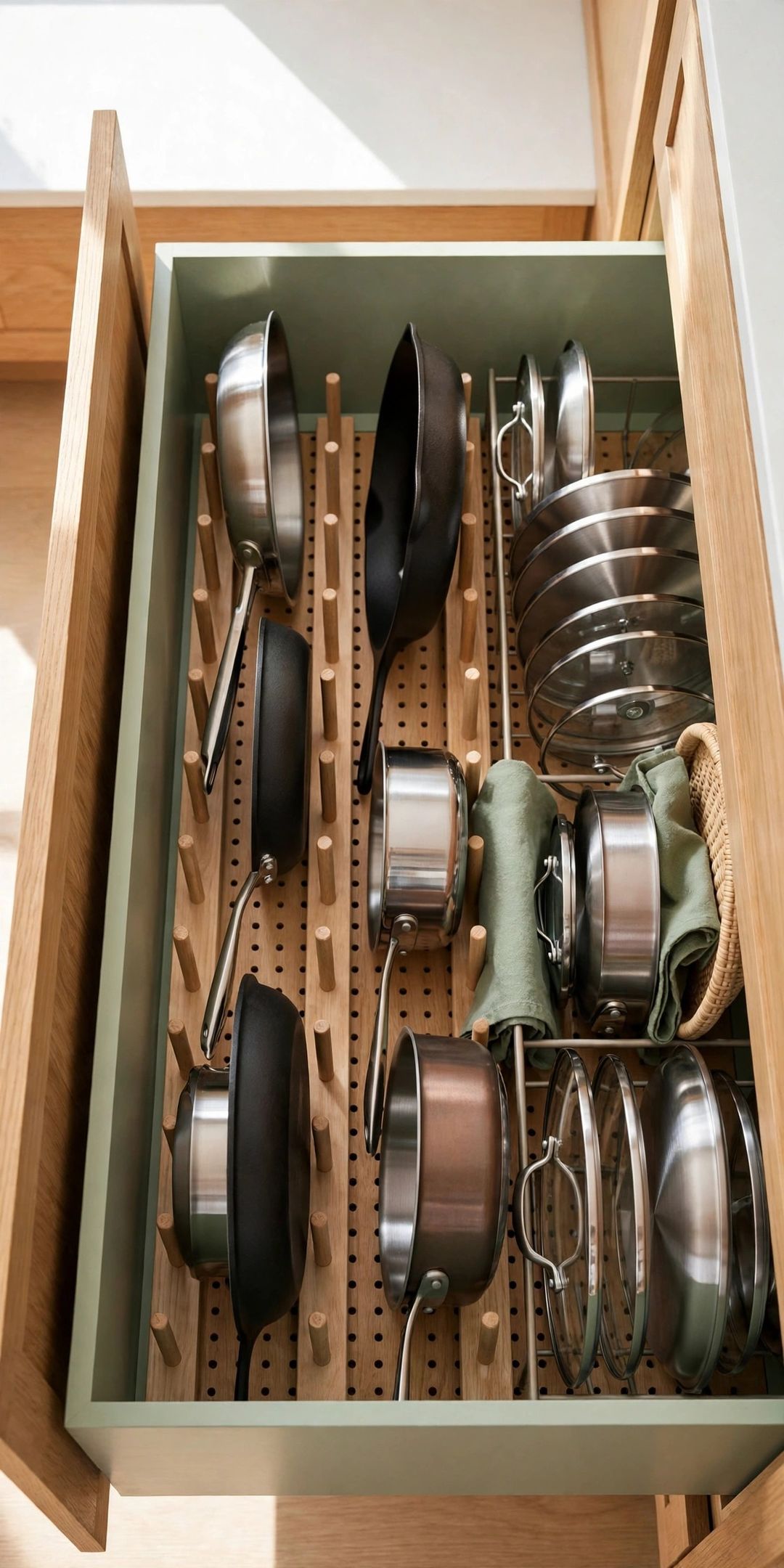
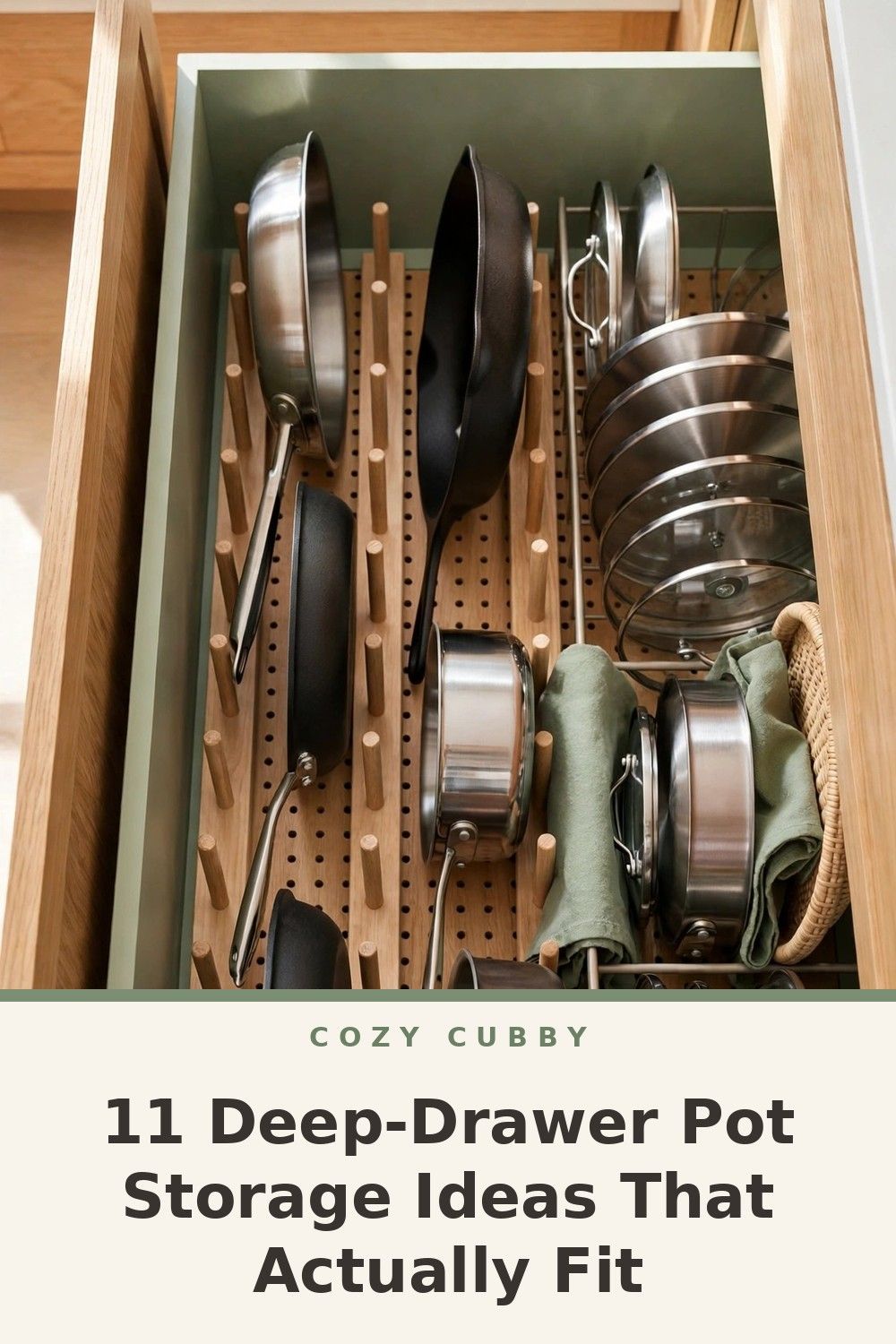
A peg board insert sits on the drawer floor, and movable pegs press into its holes to outline each pot, stopping pans from sliding and banging.
Set the pegs snugly around the pots you use most, and leave one open space for a future piece. Rearranging takes seconds when your cookware changes.
2. Add Adjustable Dividers to Make Lanes
Long dividers that run front to back split a wide drawer into lanes. One lane holds saucepans, another holds skillets, and each row stays in place.
Choose dividers that lock or spring firmly against the drawer sides, and check the fit after the first week. Loose dividers drift over time.
3. File Pans Upright Like Books
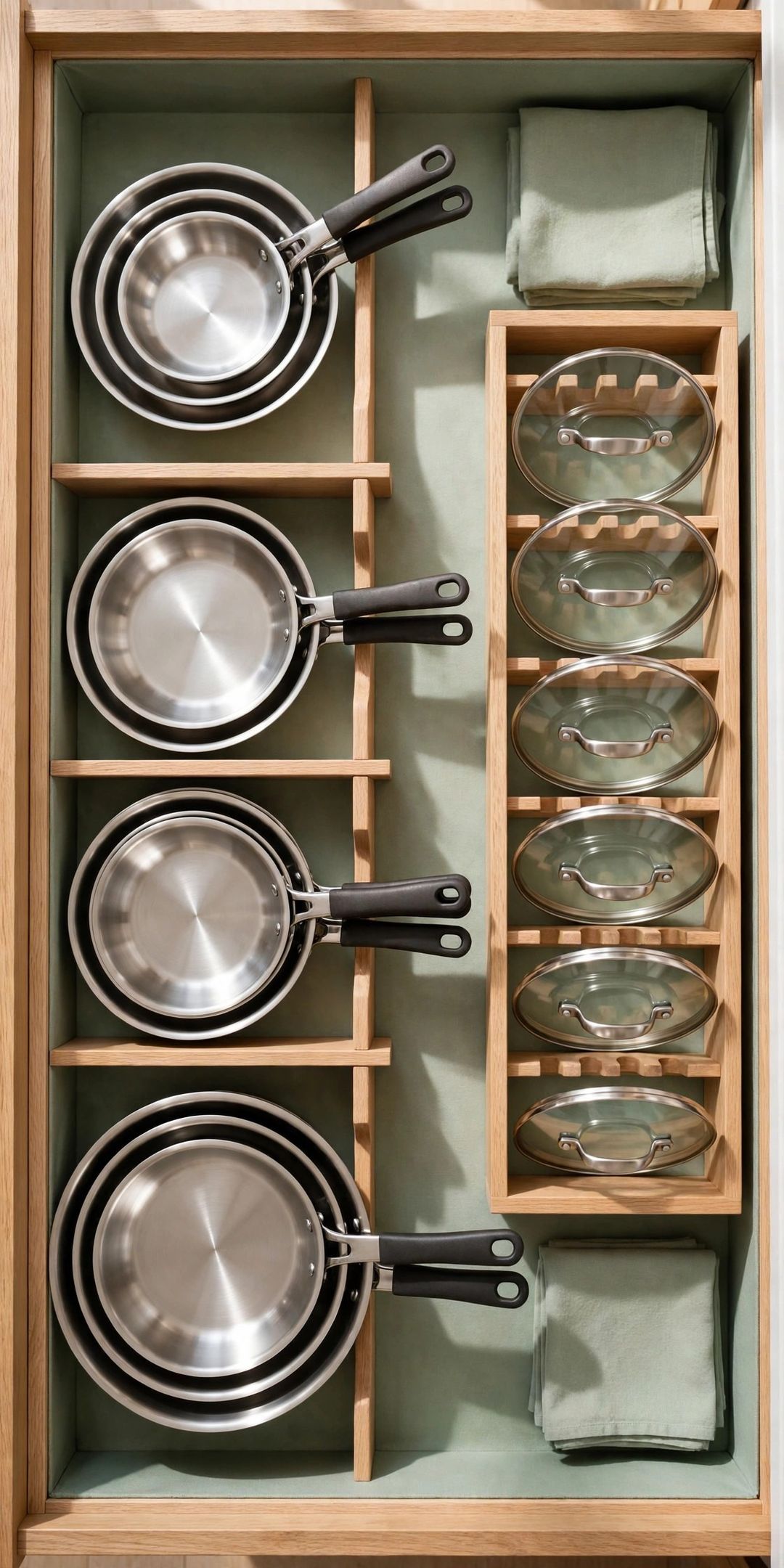
Skillets, griddles, and shallow pans store well standing on edge, like books on a shelf. Dividers or a file-style rack hold them upright, so one pan slides out alone.
Order them by size or by how often you cook with them. Upright filing also shows every pan at once, so none hides at the bottom of a stack.
4. Give Lids Their Own Row at the Front
Lids cause most drawer tangles, so give them a narrow row of their own. A low divider near the front of the drawer holds lids standing on edge, handles facing up, sorted by size.
Measure lid height against the drawer's inside height first. A shallow lid rail inside the row keeps thin lids from slipping flat under the pots.
5. Nest Pots Only With Liners Between Them
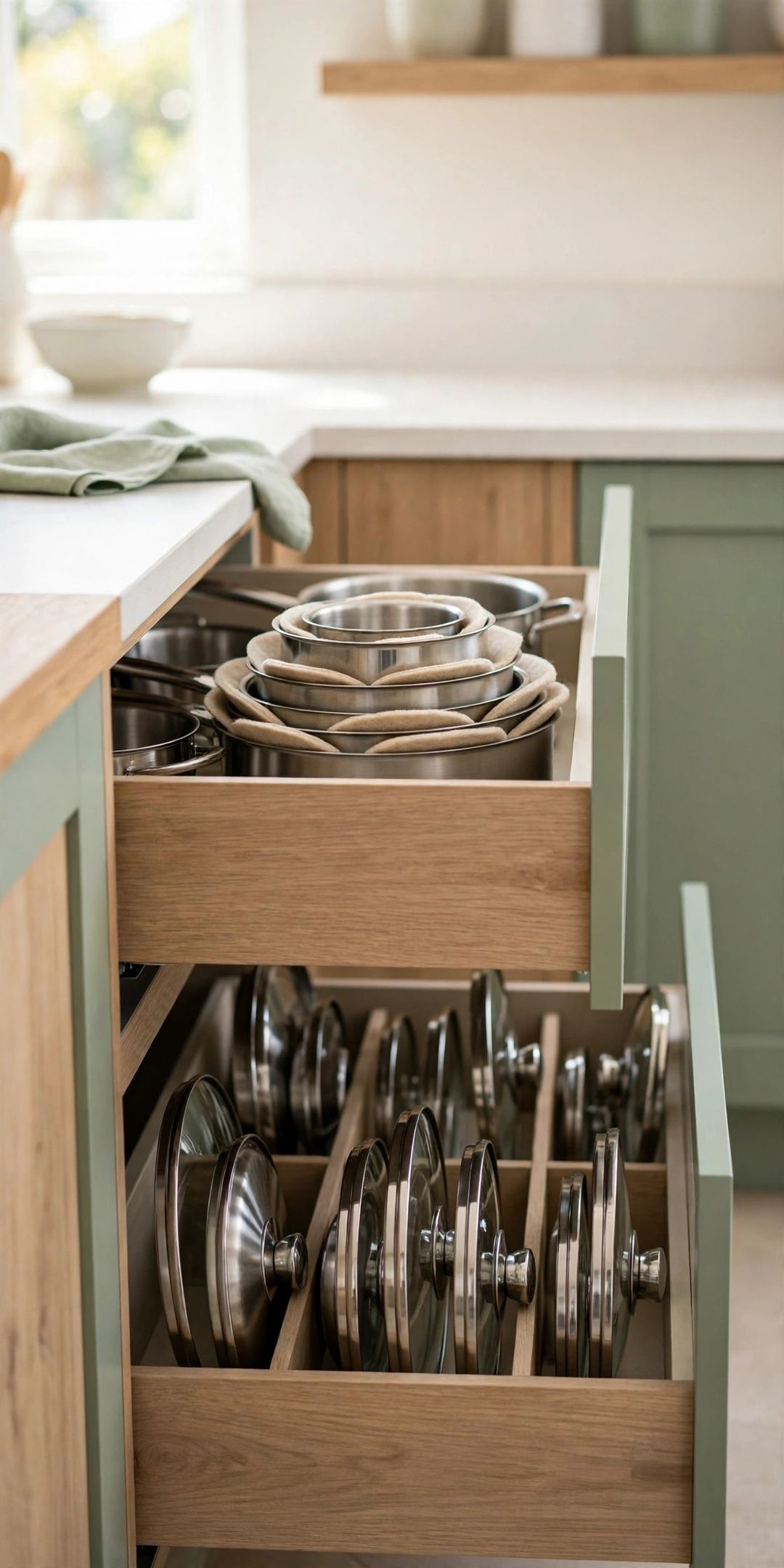
Some nesting is fine, as long as each pot sits inside the next with a soft liner between them. Felt pads, cloth protectors, or a folded dish towel stop scratches and noise.
Nest no more than two or three pots in one stack, in its own pegged or divided section. Handles turned in opposite directions help the stack sit lower.
6. Put Daily Pans at the Front, Rare Ones at the Back
Zone the drawer by use. The skillet and saucepan you reach for daily go at the front, and the stockpot or roaster you use monthly goes behind them.
Build the front zone first when you plan the pegs and dividers, and let the back zone fit around it.
7. Use a Low Insert Shelf for Small Pans
A half-depth insert shelf near the top of a deep drawer creates a second level for small items: a little saucepan or lids for the smallest pots.
Keep the insert toward the back so tall pots still fit in front of it, and measure the clearance above it with the drawer closed.
8. Stand Saucepans on Their Sides in a Pegged Row
Saucepans can stand on their sides in a row, handles pointing the same way, held apart by pegs or divider slots. Each pan lifts out sideways without unstacking anything.
This works best for light to medium pans. Very heavy pans belong flat on the drawer floor, where their weight spreads out.
9. Keep Handles Pointing One Way
Line pans up with handles pointing the same direction, nested along one side of the drawer, and the round bodies pack closer together.
You can also see exactly where to grip, and nothing snags on a handle sticking across the top.
10. Split the Drawer: Pots on One Side, Lids on the Other
In a wide drawer, one divider down the middle creates two zones: pots and pans in pegs and lanes on the larger side, lids in a rack on the narrower side.
This split ends the hunt for a matching lid: when a clean pan goes away, its lid lands on the same side every time, in size order.
11. Leave One Empty Slot on Purpose
Leave one pan-sized slot empty so clean cookware always has somewhere to land on a busy night. A drawer packed to the last inch fails fast, because nothing can move.
The empty slot also absorbs a new piece without a full reorganization. If it keeps filling, one rarely used pan should move to a cabinet.
What to Buy
A peg board drawer insert with movable pegs, typically $30–$60. Pro: It builds custom slots around any pot shapes. Con: It costs more than simple dividers and eats a little drawer height. Skip if: Your drawer is shallow or your pans are all one simple stack.
Adjustable drawer dividers, typically $12–$25 for a set. Pro: They create lanes that fit your exact drawer width. Con: Weak springs can slip under heavy loads. Skip if: A peg base already gives your drawer all the structure it needs.
A file-style pan rack, typically $15–$30. Pro: It holds skillets upright so each one slides out alone. Con: Tall handles may not clear the drawer above. Skip if: Your pans are mostly deep pots rather than flat skillets.
Pot and pan protectors, typically $8–$15 for a set. Pro: Soft layers prevent scratches inside nested stacks. Con: They add a step when putting pans away. Skip if: Nothing in your drawer is nested or stacked.
A lid rack or rail, typically $10–$22. Pro: Lids stand in size order instead of sliding flat. Con: It takes a strip of drawer space from the pots. Skip if: Your lids hang on a door rack that already works well.
Mistakes to Avoid
- Stacking everything in one pile. A single stack hides pans, scratches surfaces, and makes the bottom pan a workout to reach.
- Skipping the measurements. Drawer height, lid height, and handle length decide every layout. Measure inside the drawer, not the cabinet front.
- Overloading the drawer. Heavy cookware adds up fast. Spread the heaviest pieces across drawers if the slides strain or the drawer sags.
- Storing lids loose on top. Loose lids slide, clang, and vanish under pots. A row, rail, or rack keeps them paired and visible.
- Filling every inch. With no empty slot, putting clean pans away becomes a puzzle, and the system collapses within weeks.
Frequently Asked Questions
How tall does a drawer need to be for upright pans?
Measure your tallest skillet standing on edge, handle included, against the drawer's inside height. If it is too tall upright, store it flat in a pegged slot and file only the shorter pans.
Where should lids go if the drawer is narrow?
Use the front-row method: one low divider near the front holds lids on edge in a small footprint. If even that does not fit, a slim rack inside a nearby cabinet door keeps lids close.
Can heavy pots damage a deep drawer?
They can strain the slides if the total weight passes the drawer's limit. Keep the heaviest pots low and centered, and split very heavy pieces between two drawers.
Pegs or dividers: which is better?
Pegs suit mixed, round cookware because each slot is custom. Dividers suit rows of similar pans. Many drawers work best with both: dividers for lanes, pegs in the busiest lane.
One deep drawer, zoned with pegs, dividers, and a real home for lids, can hold a whole cookware set without a single clanging stack. Save this post to your Kitchen Organization board on Pinterest so the layout is handy on reorganizing day.