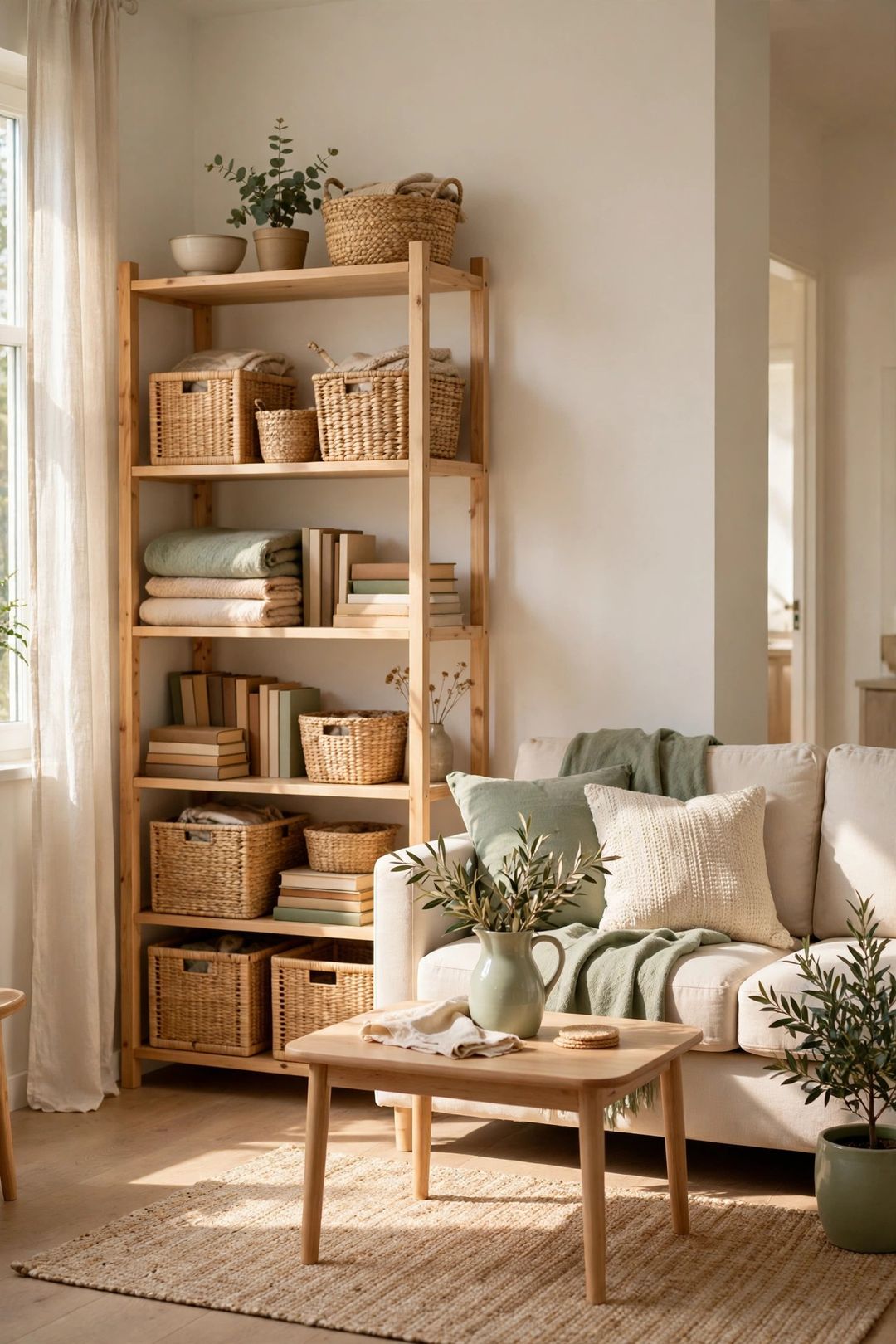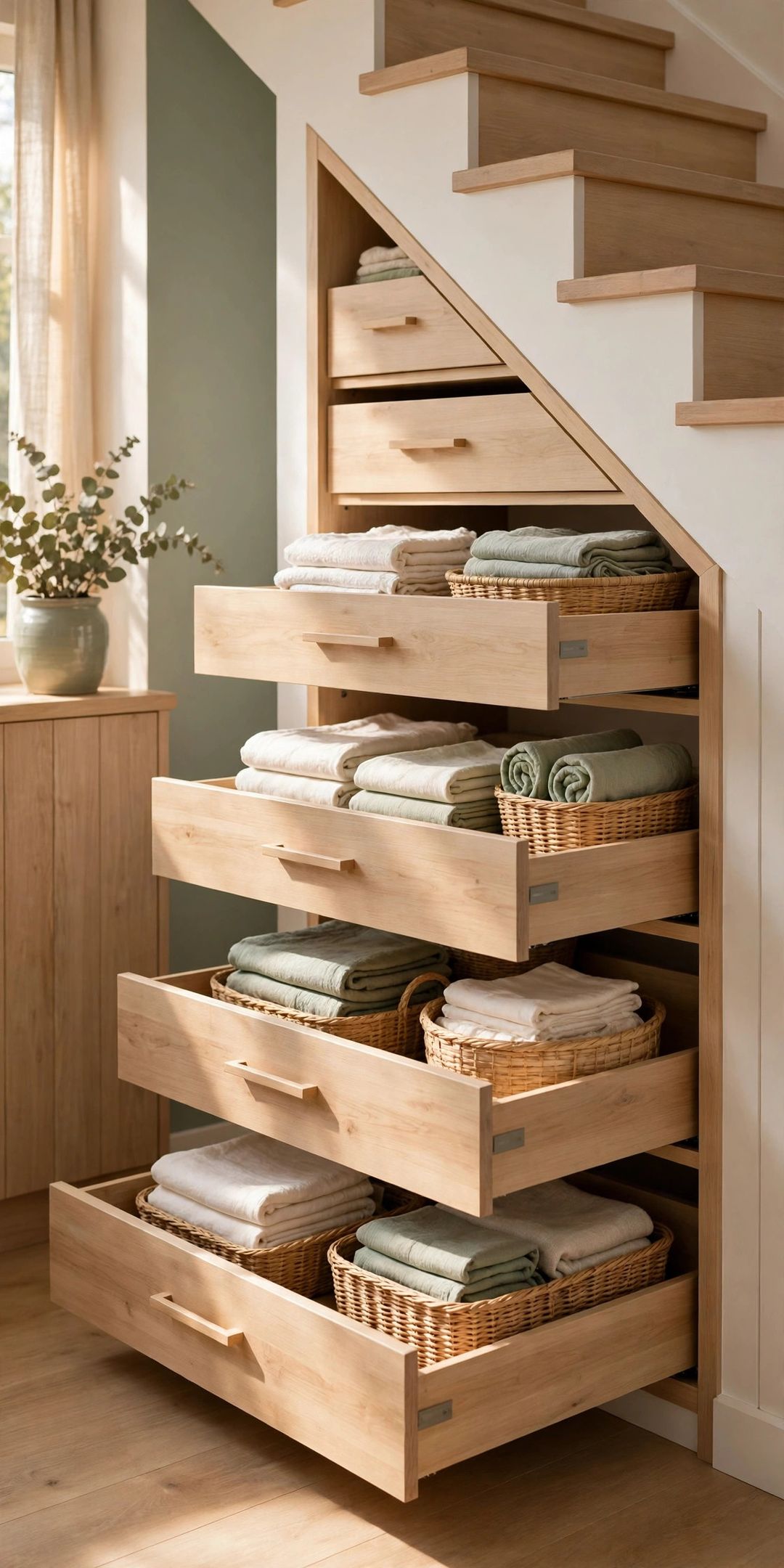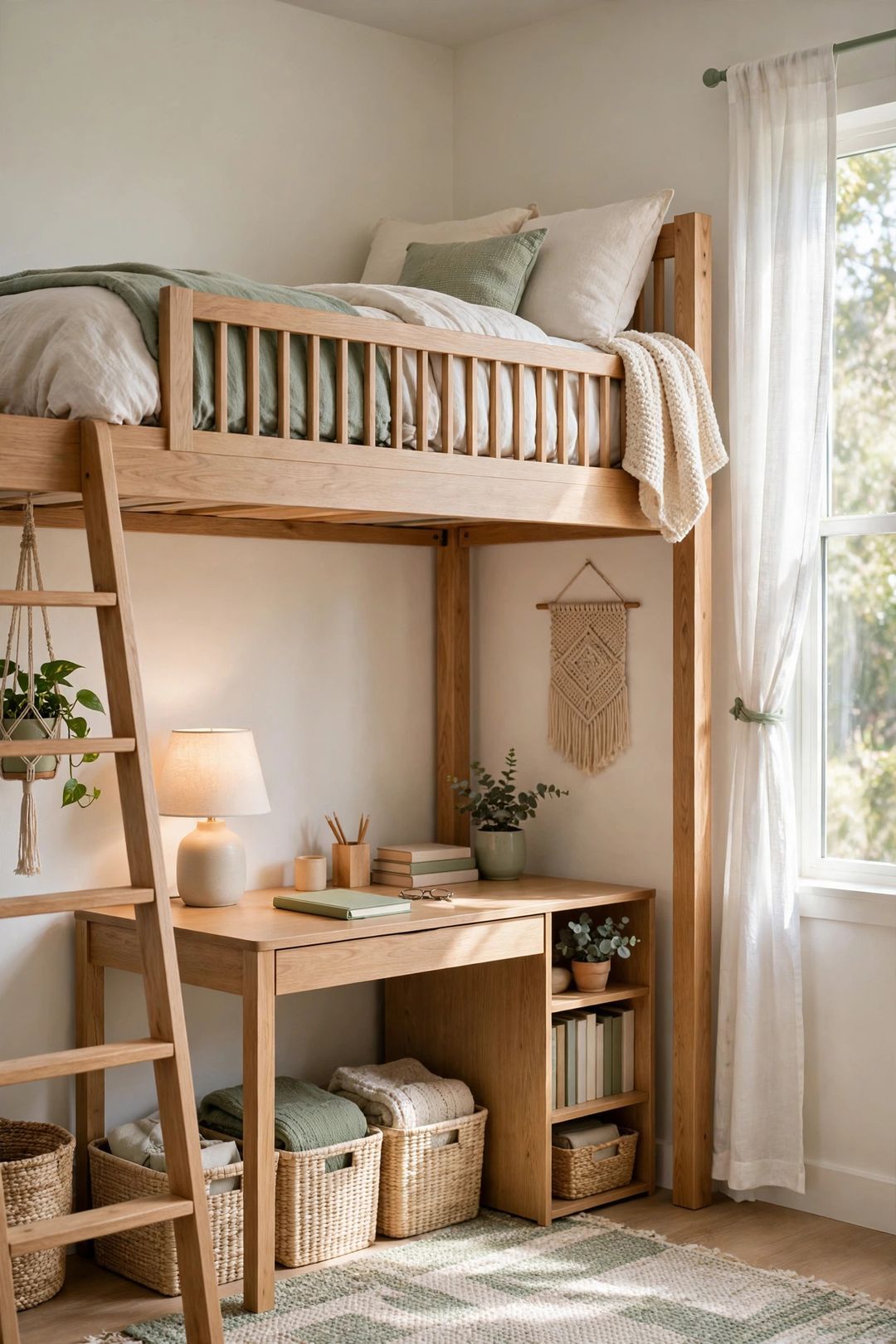
A dorm room holds sleep, study, clothes, food, and downtime in one small shared space. Floor space runs out fast, and bulky furniture rarely helps. The best gains come from vertical space, the area under the bed, and items that move easily.
The dorm room storage ideas below cover four zones: bed, desk, closet, and shared spaces. Every idea respects common dorm rules: no nails or screws, removable adhesive only where allowed, and nothing blocking sprinklers, doors, or exits. Check the housing rules before using bed risers or lofts.
The Bed Zone
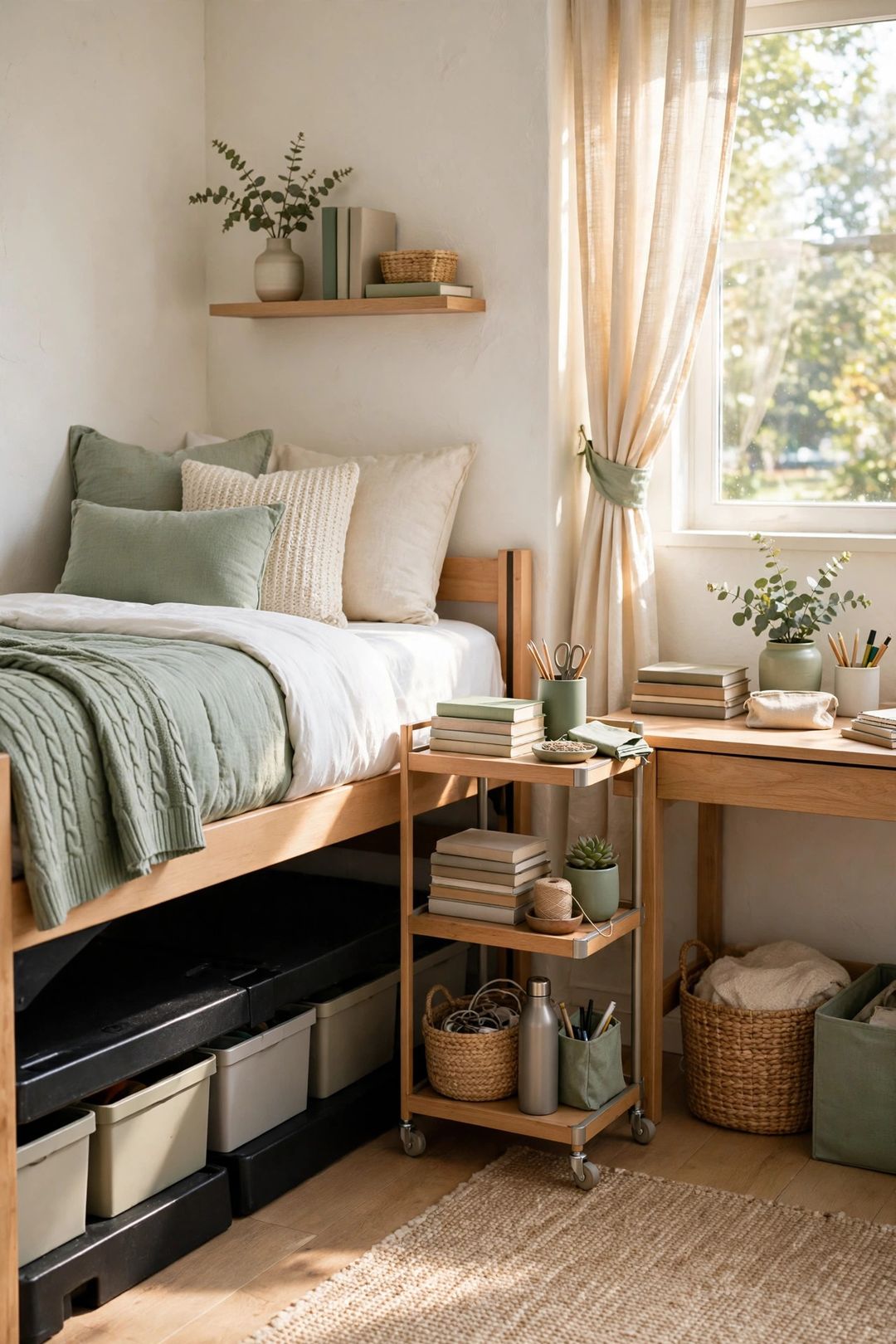
1. Bed Risers for Under-Bed Bins. Risers lift the frame so low bins slide underneath for shoes, bedding, or off-season clothes. Check the housing rules first, since some schools ban risers. Typically $12–$25.
2. Low Bins Under the Bed. Shallow lidded bins use the long, flat space under the bed well. Label each end so the right bin comes out first try. Typically $8–$18 each.
3. Clip-On Bedside Shelf. A small shelf clamps to the bed frame, holding a phone, glasses, and water bottle. No tools are needed, but the weight limit stays low. Typically $15–$30.
4. Hanging Bedside Pocket. A fabric pocket hangs over the bed rail, holding a book, earbuds, and tissues. Soft sides mean no bumps in the night, but capacity stays small. Typically $9–$16.
5. Lap Desk With Storage. A lap desk gives a flat study surface on the bed, with a slot for pens and a phone. Skip bulky models on narrow beds. Typically $18–$35.
The Desk Zone
6. Desk Hutch Shelf. A hutch shelf sits on the desk and adds a second level for books and supplies. Measure the desk width first, since dorm desks vary. Typically $25–$50.
7. Rolling Cart Beside the Desk. A slim cart fits between bed and desk, holding snacks, chargers, or study supplies in tiers. Thin carts wobble when overloaded. Typically $20–$40.
8. Laptop Stand With Space Underneath. A stand raises the screen and frees space below for a notebook or keyboard. Check stability before trusting a heavy laptop to a light stand. Typically $15–$30.
9. Drawer Tray With Small Sections. A divided tray sorts pens, clips, tape, and cables inside one desk drawer. The limit is drawer depth, so measure first. Typically $8–$15.
10. Wall Grid With Removable Hooks. A light grid hangs from removable adhesive hooks, holding notes and small tools with no nails. Adhesive can fail under heavy loads, so keep items light. Typically $12–$22.
Closet and Clothes
11. Vacuum Bags for Off-Season Clothes. Vacuum bags shrink bulky sweaters and spare bedding into flat packs for a high shelf. The drawback is wrinkles, so daily clothes stay on hangers. Typically $12–$25.
12. Slim, Matching Hangers. Slim hangers take less rod space than thick ones and hold clothes at one even height. Thin hangers can bend under heavy coats. Typically $10–$20.
13. Hanging Closet Shelf. A fabric shelf hangs from the closet rod, adding cubbies for folded tops or shoes. Heavy items make the fabric sag over time. Typically $12–$22.
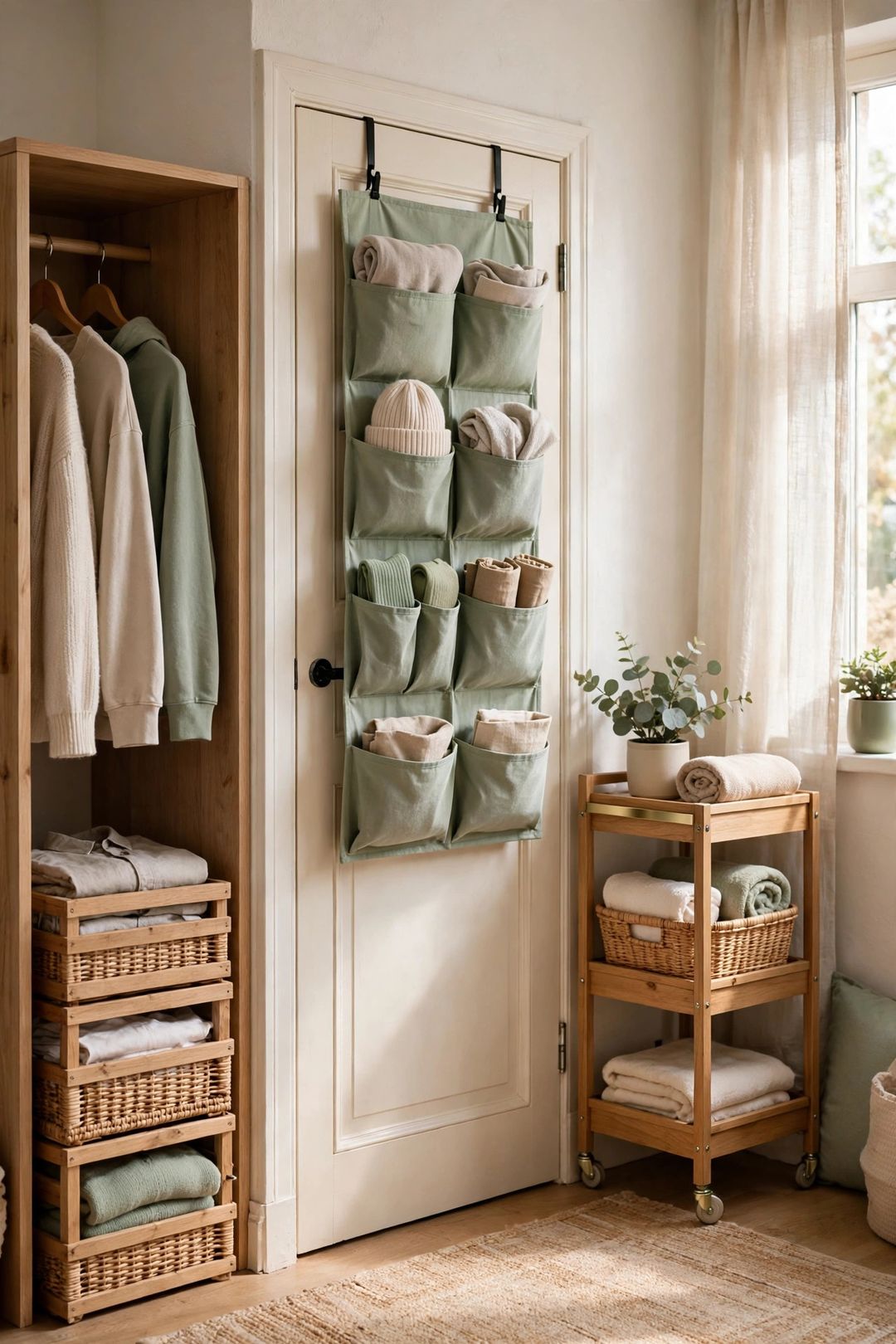
14. Over-Door Hooks for Daily Wear. Hooks over the door hold a hoodie, towel, or next-day outfit off the floor. Test the door close before loading the hooks. Typically $8–$18.
15. Laundry Backpack. A backpack-style laundry bag keeps hands free for doors and stairs. Thin straps dig in under a full load, so check the stitching. Typically $14–$25.
16. Foldable Fabric Bins. Soft bins on the closet floor or shelf corral socks, belts, hats, and chargers. Floppy sides suit light items best. Typically $10–$20 for a set.
Shared Spaces and Bathroom Runs
17. Hanging Shower Caddy. A hooked caddy carries shampoo, soap, and a razor to a shared bathroom. Drainage holes stop water pooling, but metal styles can rust. Typically $10–$20.
18. Toiletry Bag With a Hook. A hanging toiletry bag keeps a toothbrush, skincare, and small bottles in one kit. The hook keeps the bag off wet counters. Typically $12–$22.
19. Clear Bin for Shared Supplies. One clear bin holds shared basics like tissues, tape, and batteries, with stock visible at a glance. Agree on a refill rule with a roommate. Typically $6–$12.
20. Small Bin for Snacks and Dishes. A lidded bin keeps snacks, a mug, and a bowl in one spot instead of across the desk. A closed lid keeps food sealed and tidy. Typically $7–$14.
21. Drop Tray by the Door. A small tray near the door catches keys, a student ID, and earbuds in one fixed spot. Place the tray on the natural path out. Typically $6–$12.
What to Buy
Bed risers, typically $12–$25. Pro: risers unlock the biggest hidden storage area in the room, under the bed. Con: some schools ban risers, so confirm the housing rules first.
Rolling cart, typically $20–$40. Pro: a cart adds flexible storage that moves for cleaning or a new layout. Con: narrow carts tip when top-heavy, so heavy items go lowest.
Hanging shower caddy, typically $10–$20. Pro: bathroom runs get faster with one grab-and-go carrier. Con: skip metal if rust marks on shared fixtures would be a problem.
Vacuum bags, typically $12–$25. Pro: off-season clothes and spare bedding shrink to a fraction of the usual bulk. Con: contents come out wrinkled, so daily wear stays out.
Desk hutch shelf, typically $25–$50. Pro: a hutch doubles desk storage without using extra floor space. Con: the wrong size wastes money, so measure the desk first.
Mistakes to Avoid
- Using nails, screws, or strong tape on walls. Dorm rules usually allow removable adhesive only, and damage charges cost more than any shelf saves.
- Blocking sprinklers, doors, or exits. Tall storage near a sprinkler or a bin behind the door breaks rules and creates a safety problem.
- Buying storage before measuring. Desks, closets, and under-bed gaps vary by building. A tape measure on move-in day prevents returns.
- Storing everything at the desk. A desk buried under clothes and snacks stops working as a study space. Spread storage across all four zones.
- Skipping a roommate agreement. Shared bins and door hooks need a quick agreement first, or small clutter turns into daily friction.
Frequently Asked Questions
Are bed risers allowed in dorm rooms?
Rules vary by school. Some housing offices ban risers, some allow a set height, and some provide loft kits. Check the housing rules before buying.
How can a dorm room gain storage without more furniture?
Use the space under the bed, the back of the door, and vertical desk shelves first. Those areas add real storage while the walkway stays the same.
What storage works best in a shared dorm room?
Personal storage, like a bedside pocket and a toiletry bag, plus one agreed shared bin works well. Clear labels keep shared spaces calm.
When is the best time to buy dorm storage?
Buy the basics before move-in, then wait a week before buying more. Living in the room shows which gaps are real.
Save this post to your dorm ideas board on Pinterest so all 21 storage fixes stay ready for move-in day.