In a small home, a household kit only helps if you can find it fast and grab it without digging. A bag buried behind coats or a box with no label slows you down.
These emergency kit storage ideas small homes focus on one thing: where the kit lives and how it is stored. You will pick one main spot near your exit, use hidden space for backup supplies, and keep everything labeled so anyone at home knows what to take.
Start small. Choose one container, one main spot, and one short list of what is inside. Add a second spot later, once the first feels easy to reach and check.
1. Everyday Spots Close to the Door
The best main spot is on your normal path out. If you walk past the kit daily, you remember it, and grabbing it takes seconds.
1. Keep one bin on the hall closet floor. Place a single lidded bin at the front of the hall closet, not behind coats or cleaning tools. Keep the floor spot clear on purpose, label the lid in large letters, and make sure the bin slides out without catching.
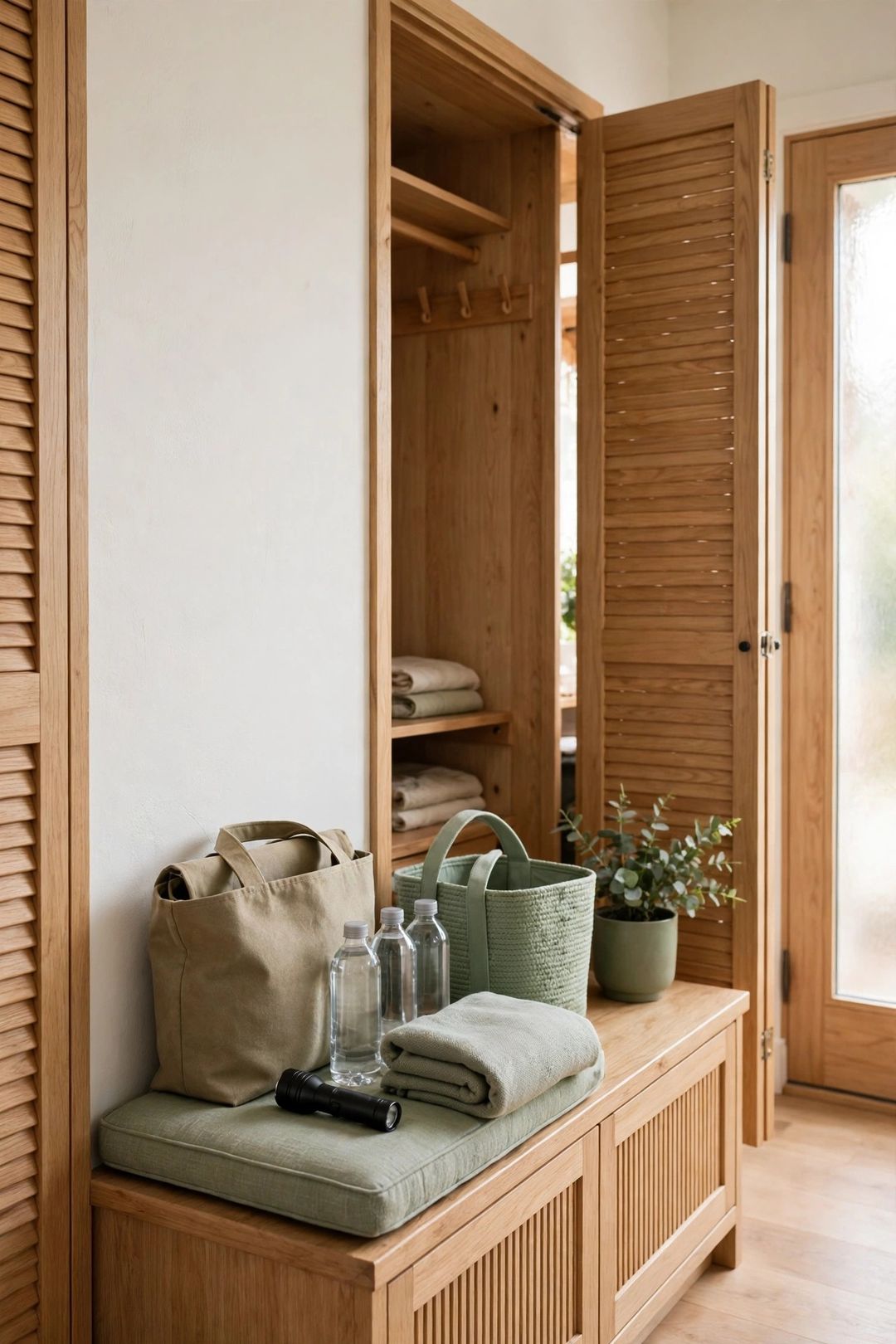
2. Hang a backpack by the door. A sturdy backpack on a hook near the entry holds a compact kit in very little space. Hang it at adult shoulder height so it is quick to lift down, and keep the straps loose and ready. This suits entryways with no closet at all.
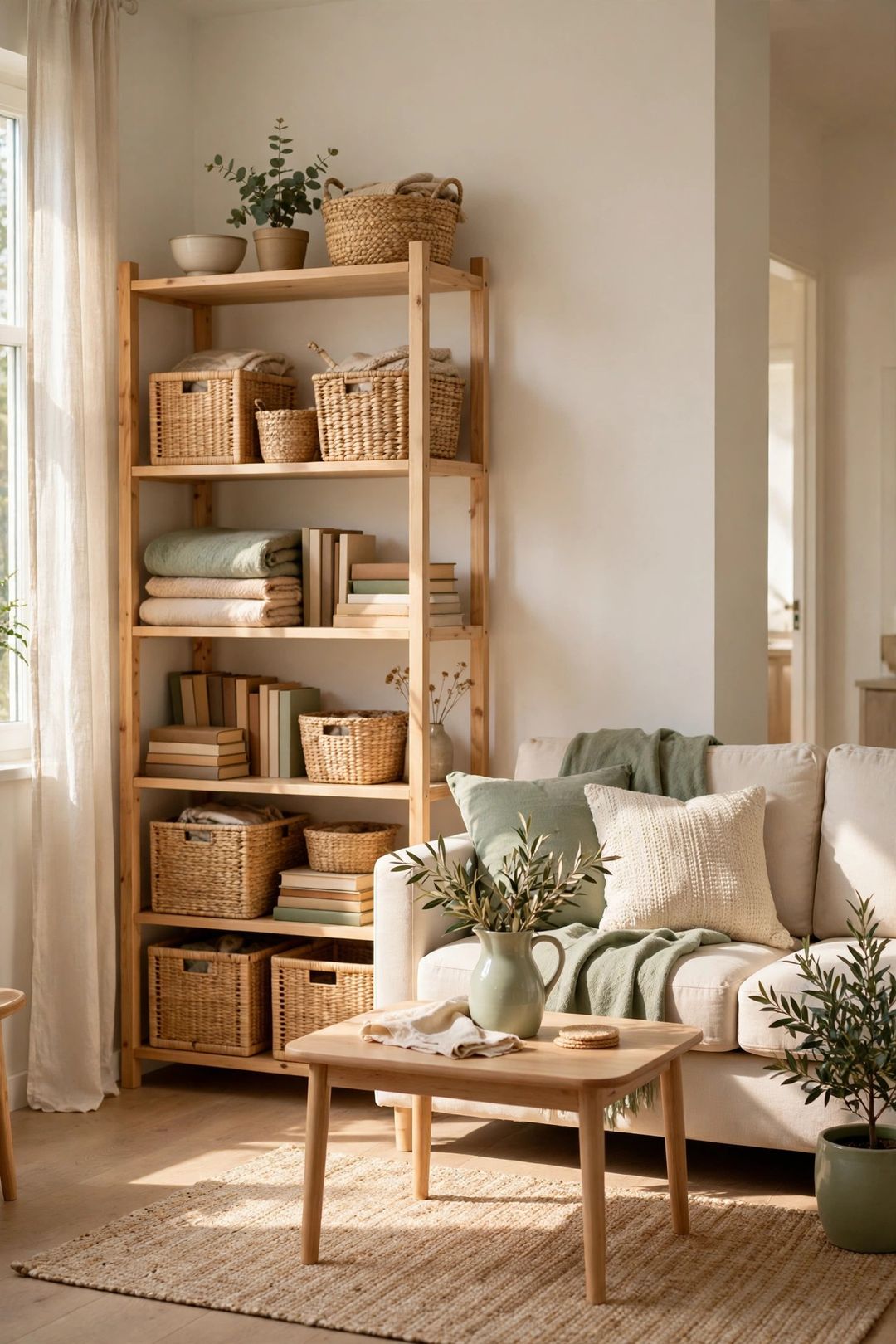
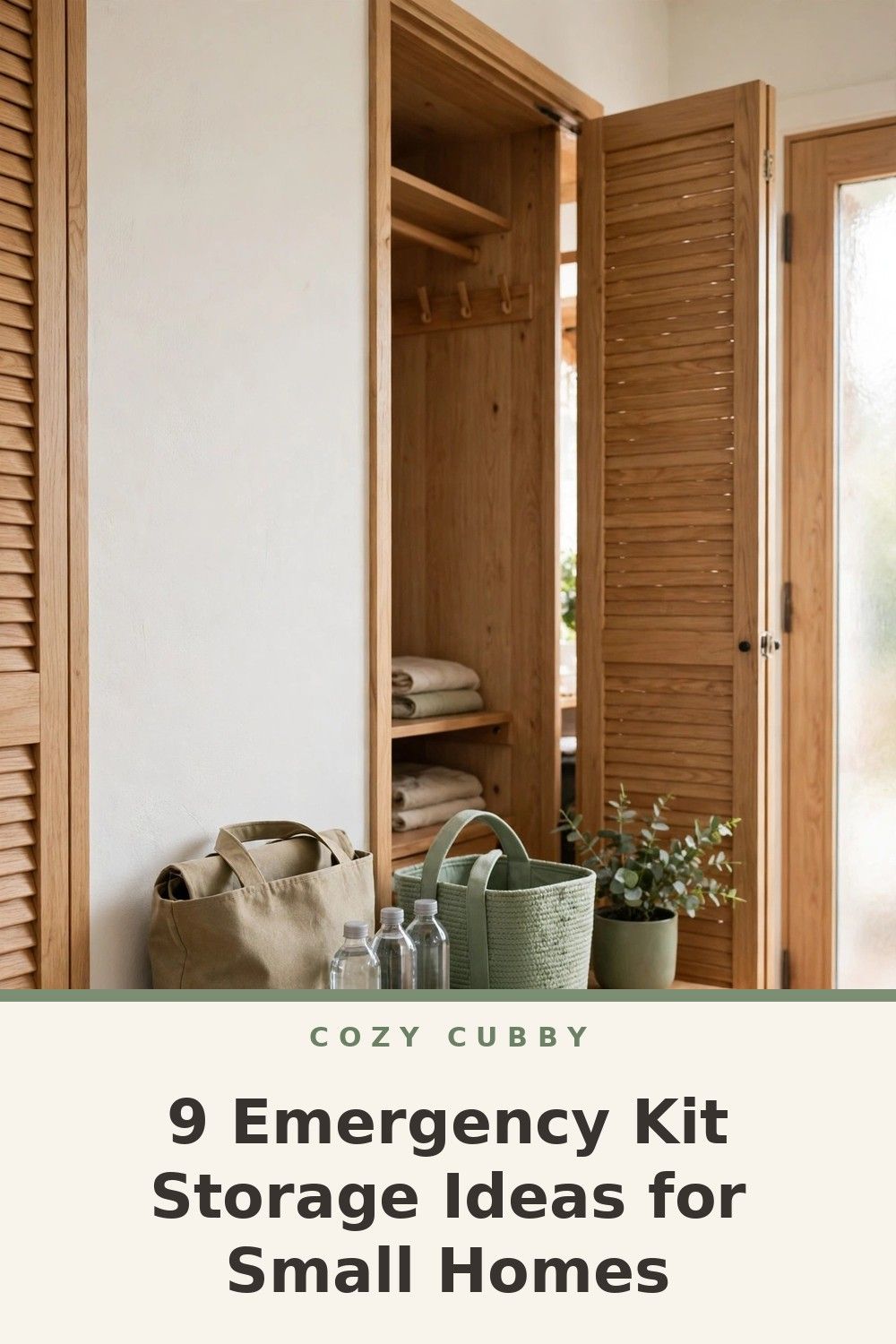
3. Give the kit one small shelf zone. Clear one low shelf in a linen closet, entry cabinet, or bookcase and let the kit own that shelf. It stays visible, off the floor, and clear of everyday clutter.
2. Hidden Spots That Waste No Space
Once your main kit has a home, hidden space can hold backup supplies and a second, smaller kit. Save these spots for items you check now and then.
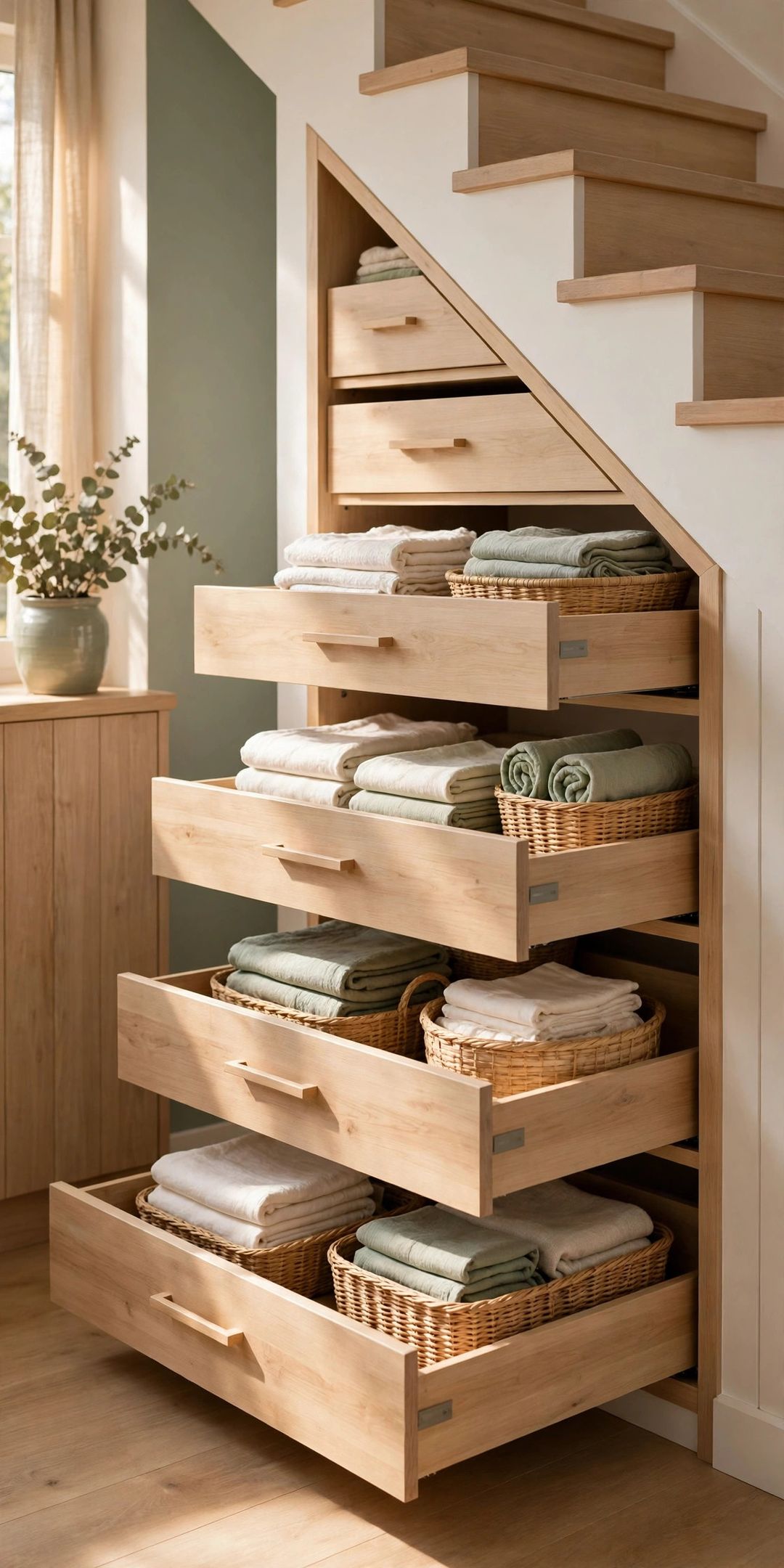
4. Slide a flat box under the bed. A low, flat lidded box under the bed holds extra supplies without using closet space. Label both short ends, and keep it near the edge of the bed, not pushed to the middle.
5. Keep a small bin in the car trunk. A compact bin in one corner of the trunk keeps a basic kit with the car. Choose a bin with a secure lid so contents stay together, and wedge it so it does not slide around. Bring it inside to check it, then return it the same day.
6. Use the top shelf of a bedroom closet. The high shelf you rarely use can hold a clearly labeled backup tub. Keep it light, store only extras there, and use a step stool to bring it down. Your main kit stays lower, closer to the door.
3. Systems That Keep the Kit Ready
A good spot is only half the system. Clear labels, one list, and a regular quick check keep the kit ready.
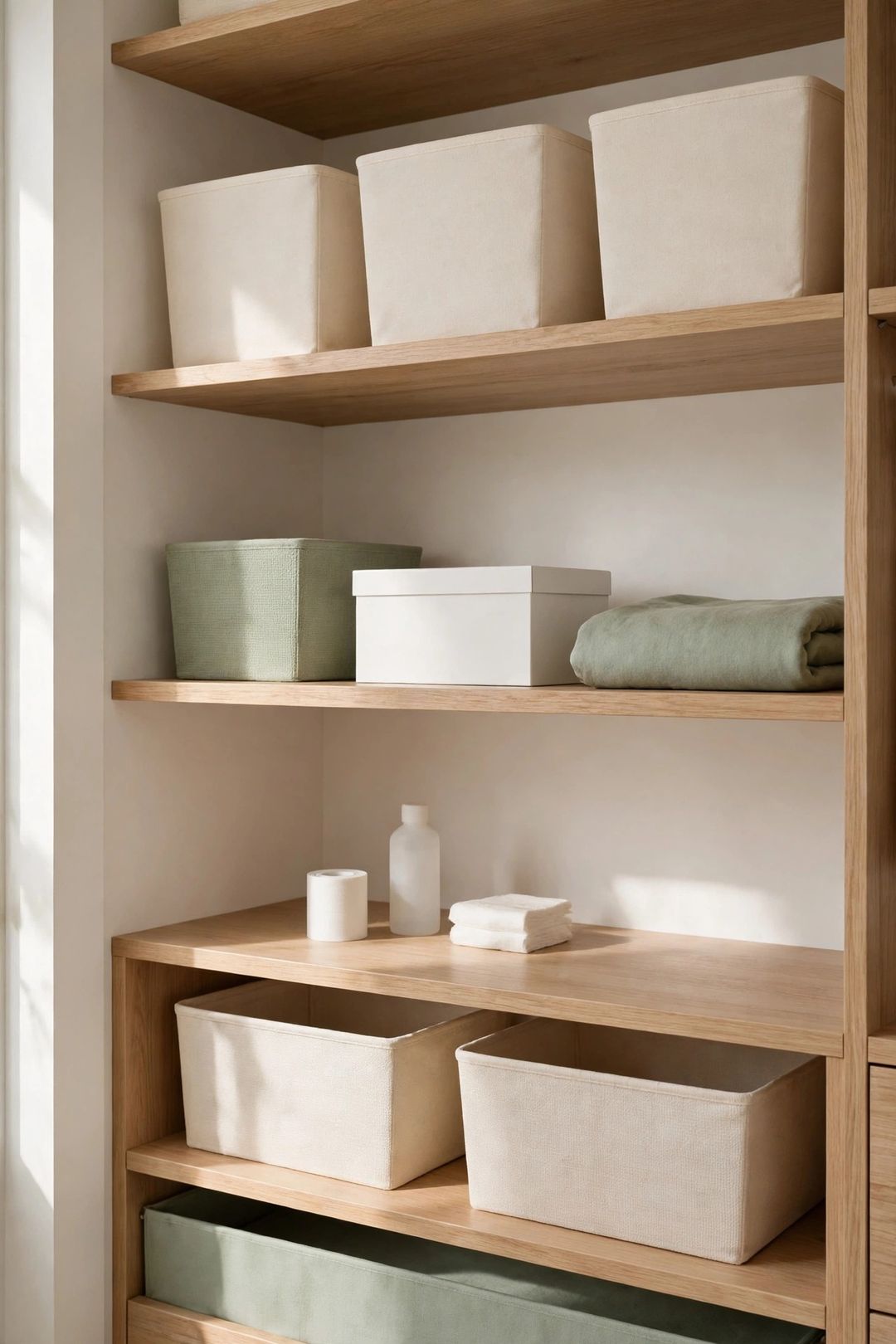
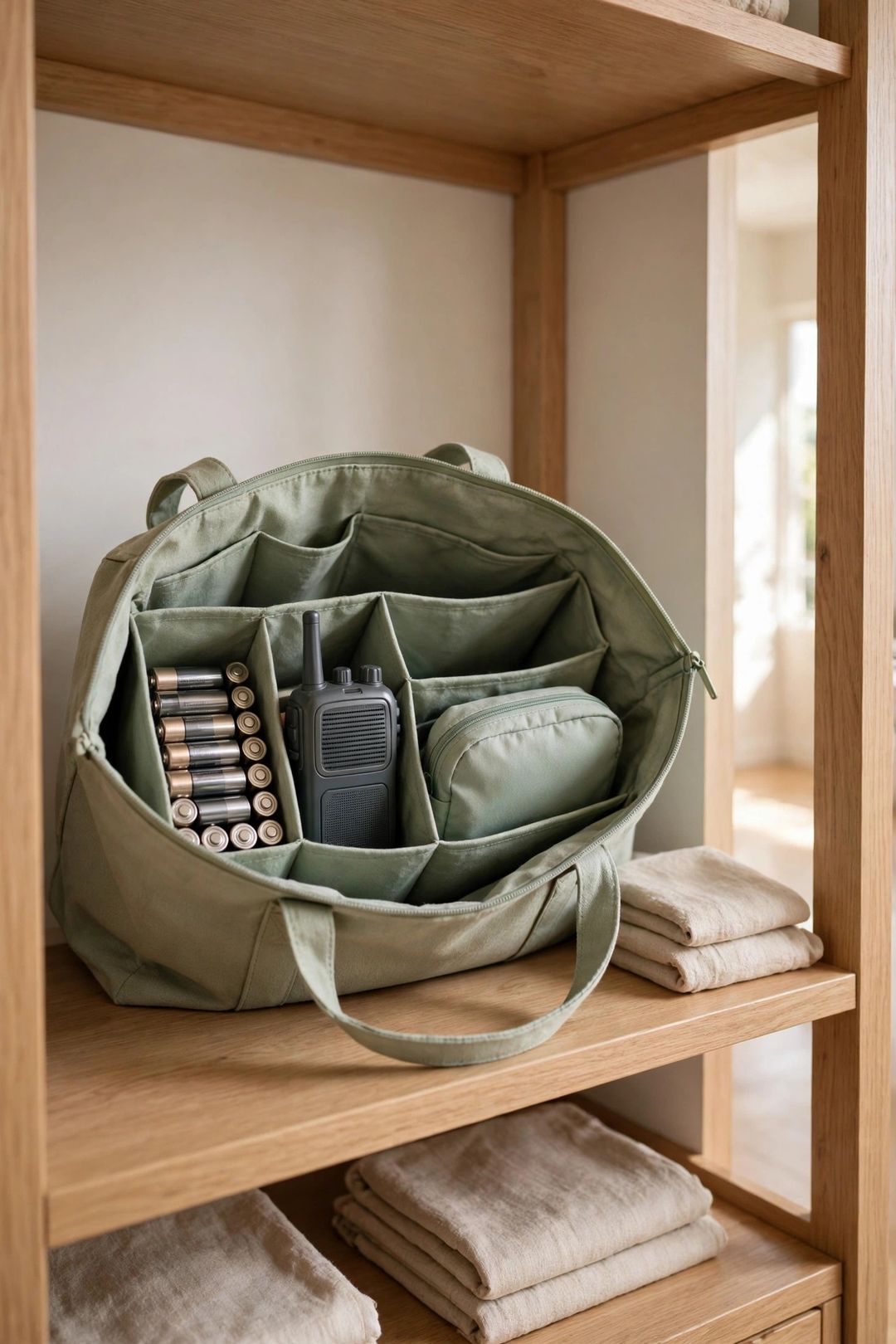
7. Sort supplies into labeled tubs or pouches. Inside your main bin, group items in smaller labeled tubs or zip pouches, such as food and water, light and tools, and daily essentials your household relies on. Labels inside mean you can find one item without emptying the whole bin.
8. Tape a contents list to the lid. Write what is inside, the date you last checked it, and anything to replace soon, then tape the list inside the lid. Anyone at home can check the kit against it in a few minutes.
9. Set one regular check and refresh routine. Pick a simple rhythm you will keep, such as the first weekend of a new season. Check dates and batteries, replace what is used or out of date, note the next check date on the lid list, and put everything back in the same spot right away.
What to Buy
A medium lidded storage bin, typically $10–$18. Pro: It keeps a full kit together, stackable, and easy to slide out of a closet. Con: A bin that is too large gets heavy and hard to carry. Skip if: You already own a sturdy bin that fits your chosen spot.
A sturdy backpack with wide straps, typically $20–$38. Pro: It is the easiest kit to grab and carry from a hook by the door. Con: It holds less than a bin, so it suits a compact kit only. Skip if: Your kit is large and a lidded bin by the door already works well.
A flat under-bed storage box, typically $14–$24. Pro: It uses hidden space and keeps backup supplies out of daily view. Con: It is slower to pull out than a closet bin. Skip if: Your bed frame sits too low for a box to slide under.
Small zip pouches or mini tubs, typically $8–$15. Pro: They sort the inside of a kit so one item is easy to find. Con: Too many tiny pouches can slow you down. Skip if: Your kit is small enough to stay tidy in one open bin.
A label maker or large label set, typically $10–$22. Pro: Big, clear labels make the kit easy to spot for everyone at home. Con: Labels need redoing when you change containers. Skip if: A thick marker on painter's tape already gives readable labels.
Mistakes to Avoid
- Storing the kit where no one remembers it. A box in a deep attic or packed storage unit is too slow to reach. Keep the main kit on your daily path out.
- Splitting the kit across many rooms. One item in each closet means nothing is ready to grab as one kit. Keep the main kit together and label any backup spot clearly.
- Using a container with no label. An unlabeled bin looks like every other bin in a hurry. Label the lid and at least one side in large, plain words.
- Letting everyday clutter cover the kit. Coats, bags, and boxes slowly bury a floor bin. Protect the spot and move clutter elsewhere during your regular check.
- Never checking dates or contents. Food, water, and batteries do not last forever. A short check on a set schedule keeps the list honest and the kit ready.
Frequently Asked Questions
Where is the best place to store an emergency kit in a small home?
For most small homes, the front of a hall closet or a backpack on a hook by the main door works best. Pick a spot that is easy to reach and on the way out, with nothing stored in front of it.
Should the kit go in one spot or several?
Keep one main kit together in one spot so it is ready to grab as a single unit. A second, smaller kit in the car or a labeled backup box under the bed is fine, as long as each spot is labeled and checked on the same routine.
How do you store a kit when there is no hall closet?
Use a backpack on a wall hook, one shelf in a bedroom closet or bookcase, or a flat box under the bed near the edge. Any spot works if it stays clear, labeled, and quick to reach without moving other things first.
How often should you check a stored kit?
A quick check a few times a year is enough for most homes. Look over the contents list, check dates, test lights, and replace anything used or out of date, then note the date on the lid.
One labeled kit in one clear spot beats supplies scattered through every closet. Save this post to your Small-Space Storage board on Pinterest so the 9 storage ideas are handy when you set up your kit.