The entryway pile rarely starts with a big mess. It starts with keys on the nearest surface, mail under the keys, a bag on the floor, and shoes wherever they came off. By the end of the week the front door opens onto clutter, and leaving the house means hunting for the things you need.
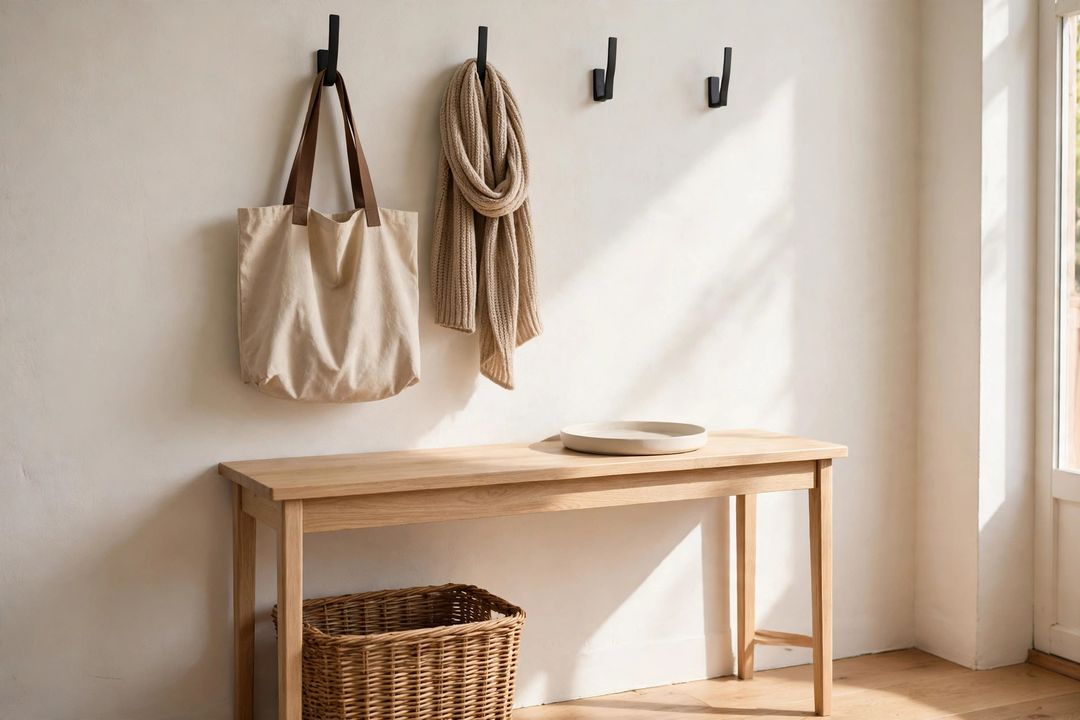
These entryway drop zone ideas fix the pile with one simple rule: one tray, one hook, one basket. The tray catches small things, the hook holds what hangs, and the basket contains what lands on the floor, so even a tiny wall can work as a full drop zone.
The Core Three: Tray, Hook, Basket
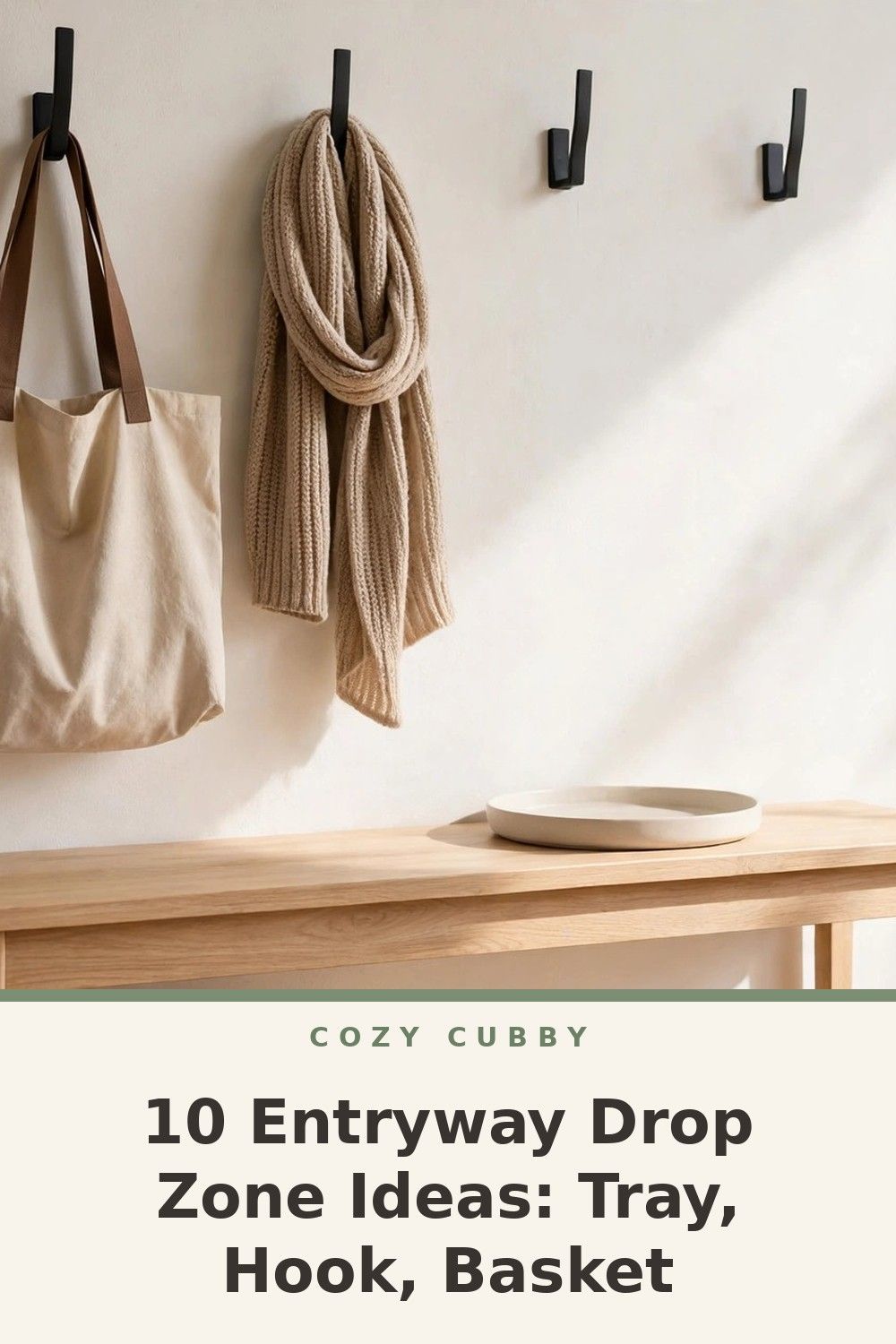
1. A shallow tray for keys and wallet. Set one shallow tray or small dish right where you walk in, on a shelf, stool, or windowsill. Keys, wallet, and sunglasses go in the tray every time, nothing else. A tray works because it draws a border: items inside it look tidy, and anything outside it shows the zone drifting.
2. A wall mail slot for paper. Mail spreads faster than any other entryway clutter, so give it a slim wall holder or standing slot beside the tray. Sort as you walk in: junk goes straight to recycling, and only mail that needs action stays in the slot. When the slot looks full, that is the signal to clear it.
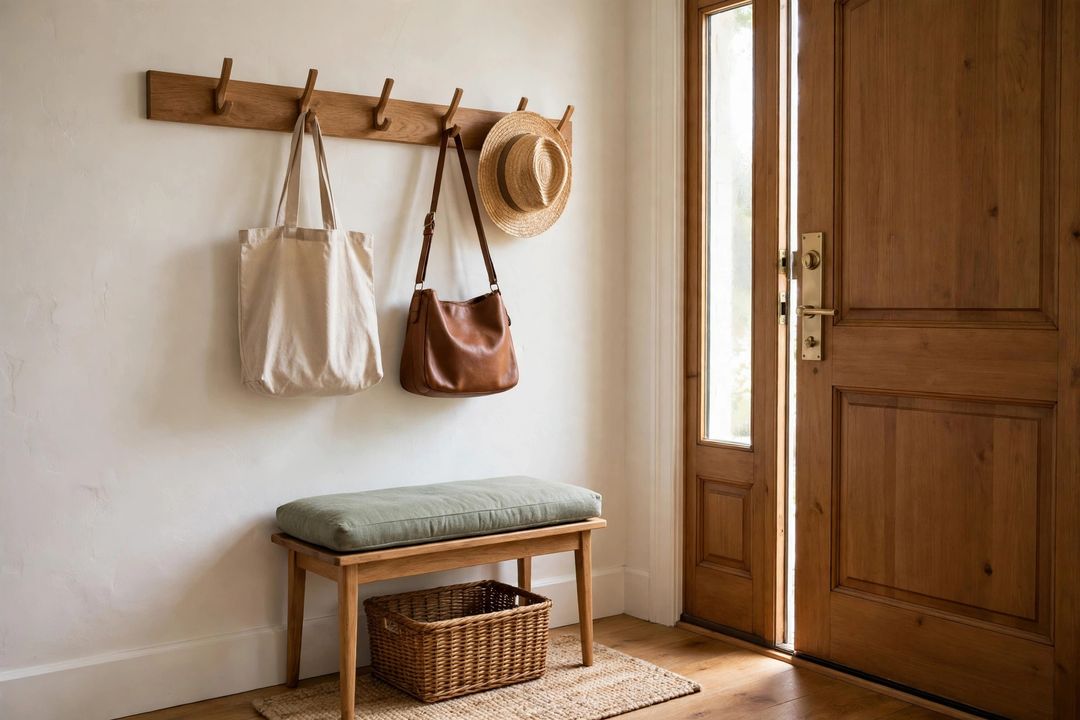
3. One hook per person. A short row of sturdy hooks gives each person one home for a coat or jacket. One hook per person is a limit as much as a storage spot: when a second coat appears, the older one moves to a closet. Hooks beat a coat stand in small spaces because they keep the floor clear.
4. A shoe basket that sets the limit. One wide basket or low open bin by the door holds the shoes worn most days. The basket sets a visible limit: if a pair does not fit, a pair moves to the closet. Keep it open with no lid, because a lid slows the drop and shoes end up beside it instead.
Small-Space Swaps When There Is No Console
5. Hooks at two heights. A high row serves adults for coats and bags, while a lower row, around kid shoulder height, holds children's jackets and backpacks. Two heights stop small coats sliding off tall hooks onto the floor, and kids can reach their own hook without help, so the system works without reminders.
6. Dedicated bag hooks by the door. Work bags, totes, and the dog leash deserve their own hooks, separate from coats. Place them on the wall closest to the door, at a height where bags hang clear of the floor. When every bag has a named hook, bags stop colonizing chairs and counters.
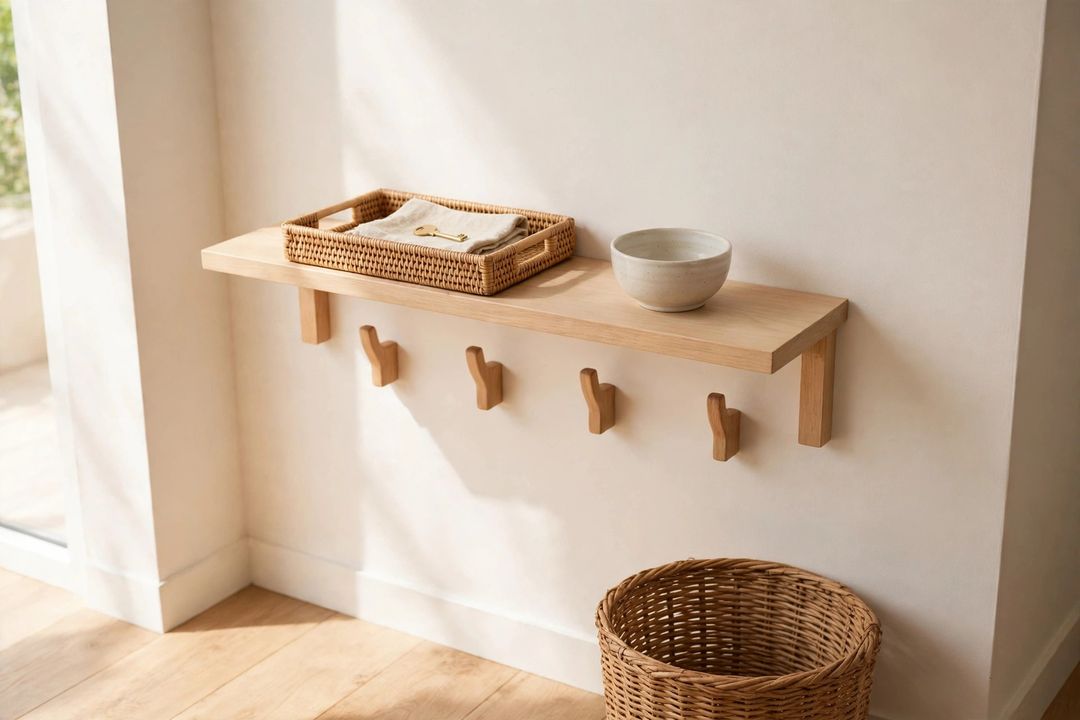
7. A tiny console substitute. If a console table will not fit, fake one: a narrow floating shelf, a small stool, a plant stand, or the top of a low shoe cabinet all hold the key tray just fine. The surface only needs to fit the tray and mail. Anything bigger invites extras, so choose the smallest stand that works.
8. Wall pockets for the small extras. A hanging wall pocket or small set of wall bins catches the bits that do not belong in the key tray: sunscreen, gloves, or a lint roller. Mount pockets above or beside the hook row so they use vertical space and leave the tray free for true everyday items only.
Keeping the Zone Clear Day After Day
9. A "leave with you" spot for tomorrow. Add one small basket, tray, or hook reserved for things that must leave the house next: returns, library books, or a form to hand in. Place it at eye level or above the shoe basket so you see it on the way out, and fill it the night before, not in a morning rush.
10. The 2-minute evening reset. A drop zone stays tidy because of a habit, not hardware. Once a day, set a timer for two minutes: keys back in the tray, mail slot checked, shoes paired into the basket, bags on their hooks, and anything that belongs elsewhere carried out. It stops small drift becoming a weekend project.
What to Buy
A shallow key tray, typically $8–$18. Pro: Gives small essentials one clear border and stops the scatter. Con: A tray that is too large quietly becomes a junk tray. Skip if: A spare shallow dish already does this job.
A wall-mounted mail holder, typically $12–$25. Pro: Lifts paper off surfaces and makes a full slot easy to spot. Con: Deep holders can hide mail for weeks. Skip if: Almost all your mail is digital.
A sturdy hook rail, typically $15–$35. Pro: Mounts once and holds coats, bags, and leashes at two heights. Con: Needs solid mounting for heavy coats. Skip if: A working coat closet already serves your entry.
An open shoe basket, typically $12–$28. Pro: Contains daily shoes in one step, with no lid to slow anyone down. Con: Holds a limited number of pairs by design. Skip if: A low shoe cabinet already fits and gets used.
A narrow floating shelf, typically $15–$30. Pro: Stands in for a console in almost no floor space. Con: Holds the tray and little else. Skip if: A stool or shoe cabinet top already gives you a landing surface.
Mistakes to Avoid
- Starting with a big furniture piece. A large bench or hall tree overwhelms a small entry. Start with the tray, hook, and basket, then add only what is missing.
- Giving everything a spot except mail. Unsorted mail expands across every flat surface. A mail slot plus same-day sorting keeps paper contained.
- Too many hooks. Extra hooks invite extra coats and bags to live by the door full time. One hook per person, plus bag hooks, is enough.
- No limit on shoes. Without a basket limit, the shoe row creeps across the doorway. One basket, and overflow goes to the closet the same day.
- Skipping the daily reset. Even a good zone drifts without the 2-minute evening reset. The habit is what makes the hardware work.
Frequently Asked Questions
How big does a drop zone need to be?
It can fit on one short wall. A tray, a hook row, and a basket need roughly the width of a standard door. If the core three fit and the door opens fully, the zone is big enough.
What if there is no wall space by the door?
Use the nearest surface and the door itself: a tray on a stool, over-door hooks for coats and bags, and a basket on the floor below. The rule matters more than the furniture.
How do you keep a drop zone from becoming a junk zone?
Keep borders visible and limits small: one tray, one mail slot, one hook per person, one shoe basket. Sort mail the day it arrives, run the evening reset, and move anything that does not help you enter or leave elsewhere.
Where should kids' things go in a shared entryway?
On the low hook row and in their share of the shoe basket. Gear at kid height gets put away by kids, while gear stored high gets dropped on the floor. A low wall pocket for gloves completes their part.
Start this week with just the core three, live with them for a few days, and add only what the pile tells you is missing. Save this post to your entryway organization board on Pinterest so the tray, hook, and basket setup is handy when you build yours.