An apartment without a coat closet loses more than coat space. It loses the shelf for gloves, the floor for boots, and the door that hid the daily pile. Coats land on chairs, shoes spread across the entry, and keys disappear under mail.
Good entryway organization no coat closet style does not try to copy a closet. It splits the closet's jobs across the walls, the floor, and one small drop zone: hooks hold coats, a slim cabinet holds shoes, and a tray holds daily carry. Each job gets one compact spot.
Measure before you buy anything: the wall length beside the door, the door swing in inches, and the depth you can use without narrowing the walkway. Most of the ideas below need 8 inches of depth or less, so they suit the entryway organization no coat closet setup in most rental apartments.
1. Vertical Coat Storage
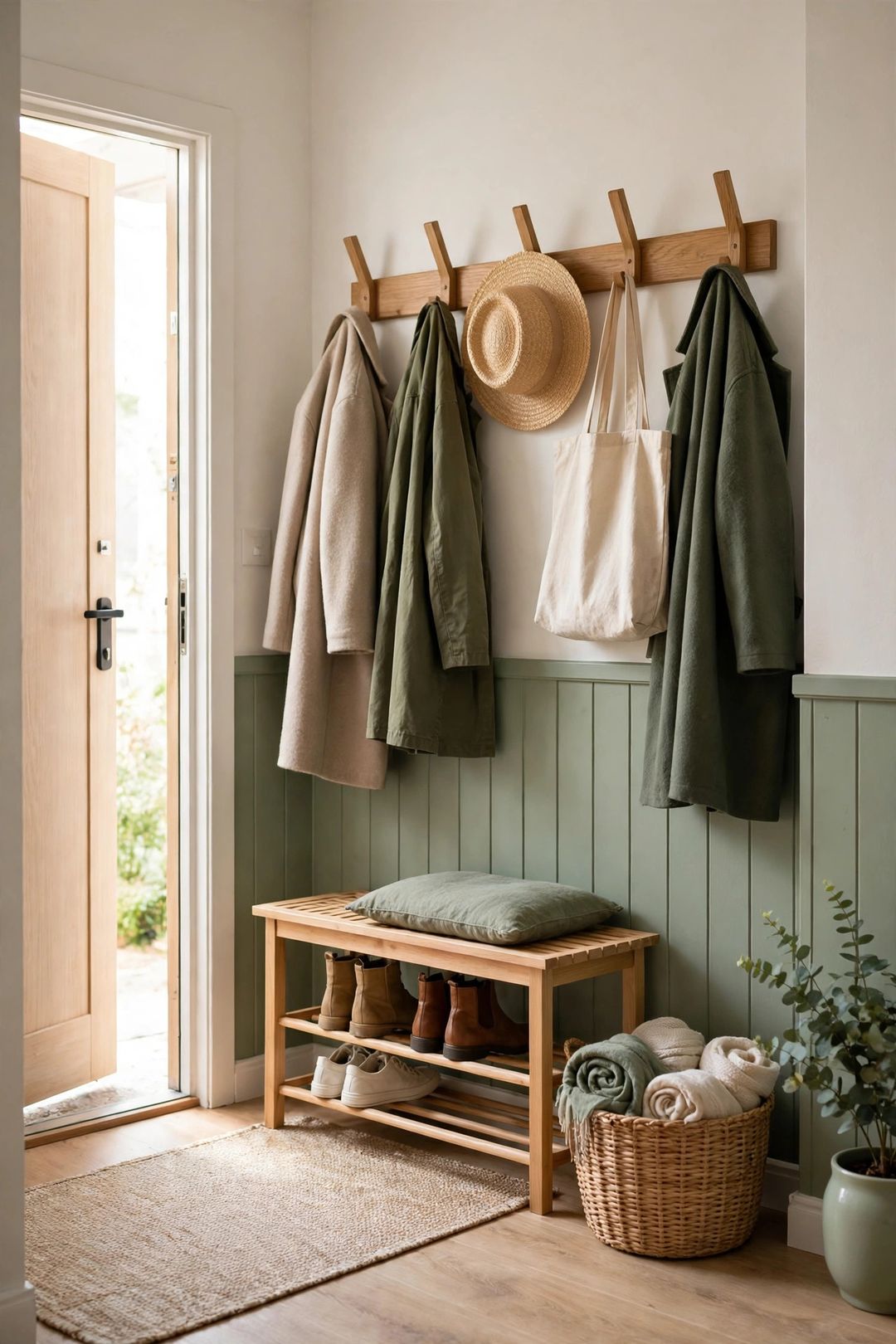
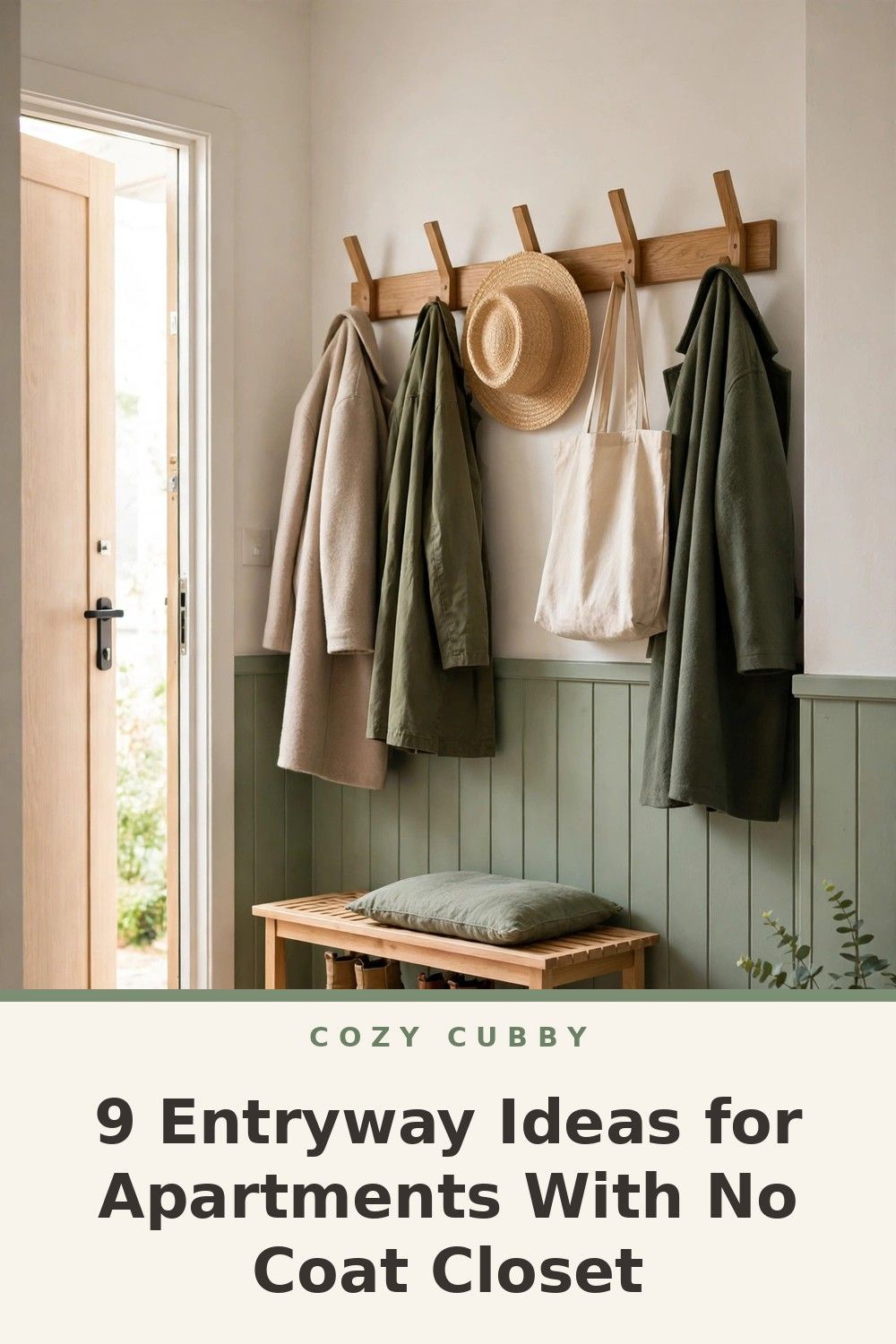
1. Mount a wall hook rail at two heights. Set the upper rail at about 60 to 66 inches for adult coats and a lower rail at about 40 to 44 inches for kids, short jackets, and bags. A rail 24 to 36 inches long with four to five hooks holds daily coats without crowding them into one row.
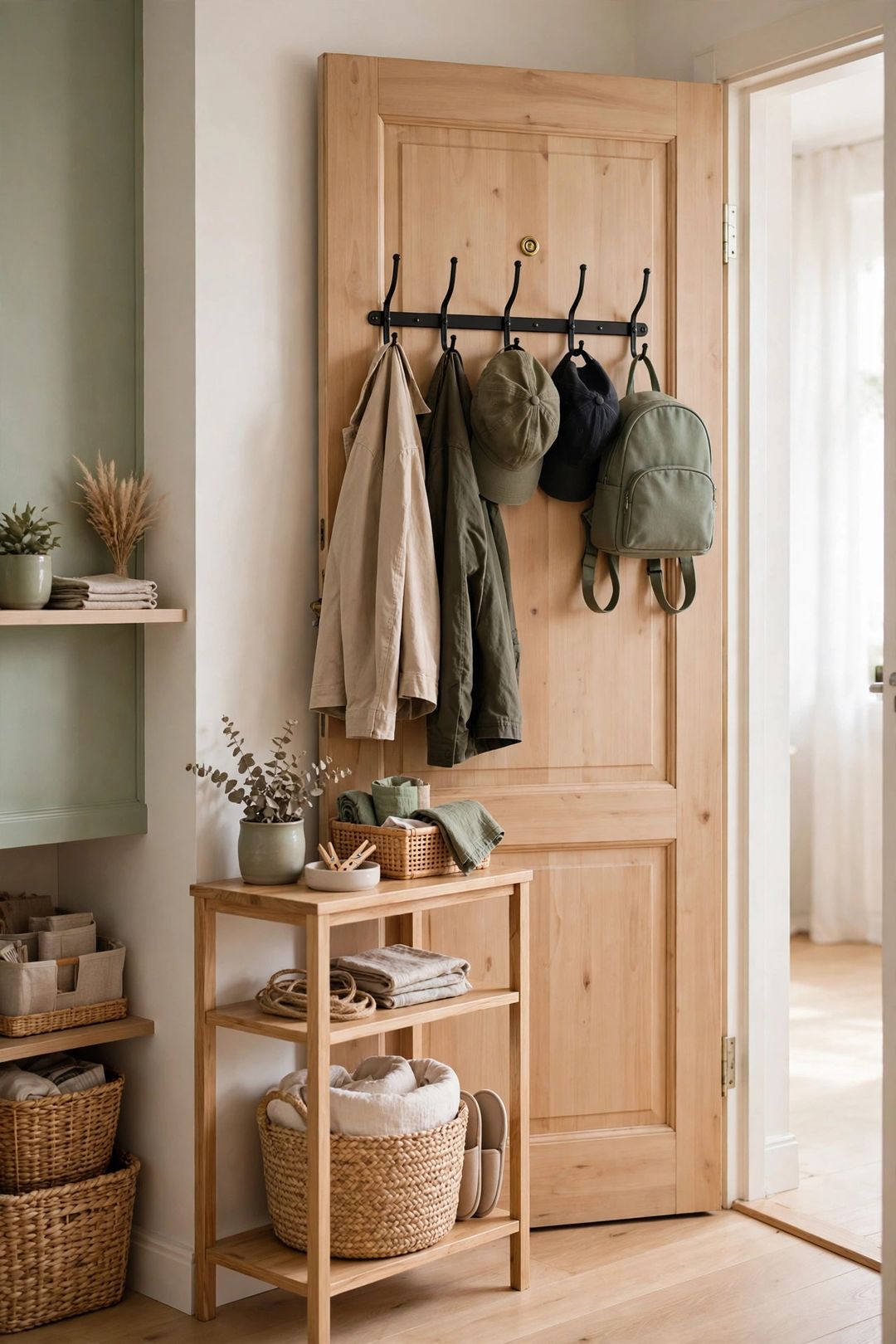
2. Add over-door hooks on the entry or a nearby door. A rack that slips over a standard door, about 1.5 to 2 inches thick at the bracket, adds five to six hooks with no holes. Use it for guest coats, a dog leash, or the bag you grab daily, and test that the door still closes fully.
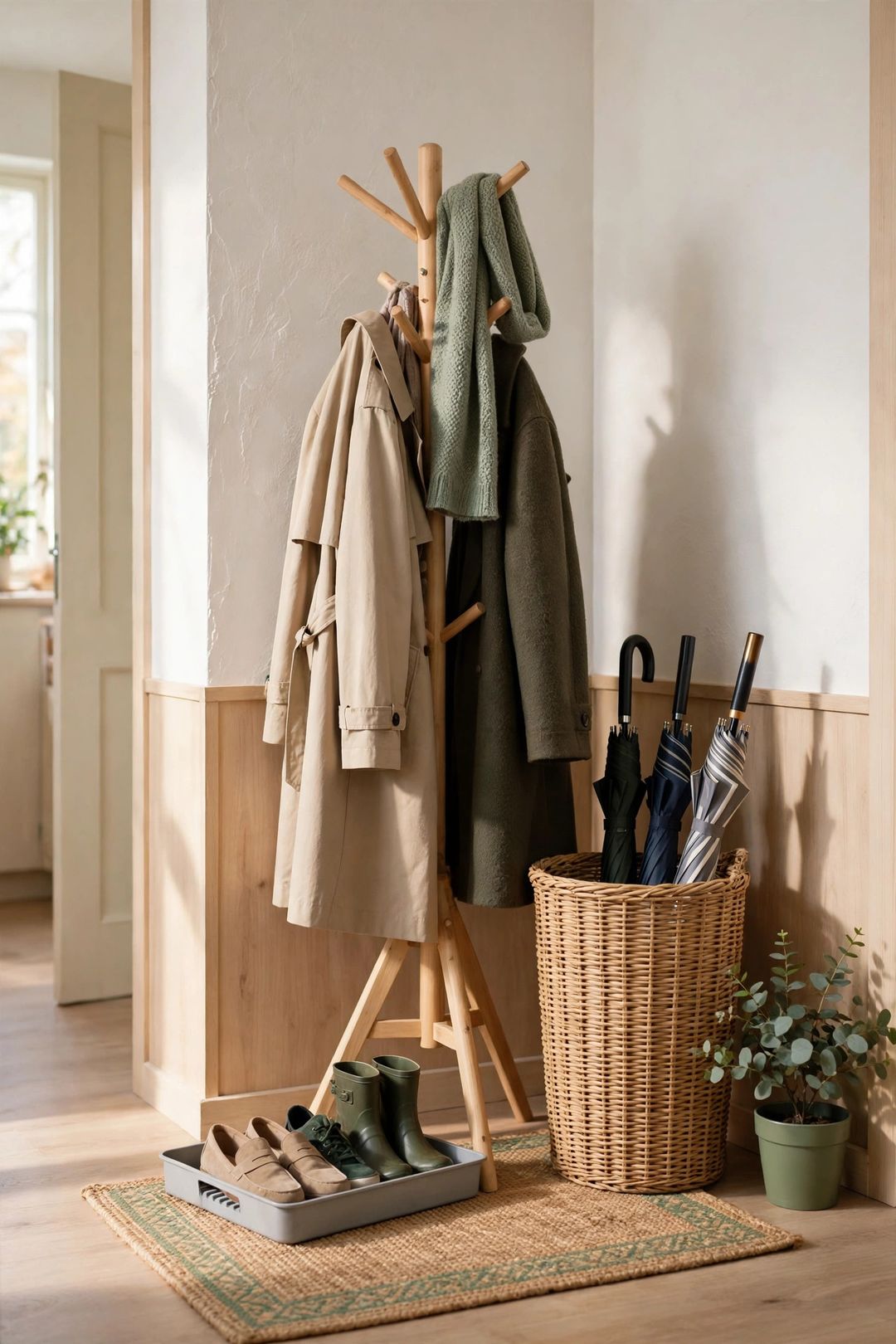
3. Stand a coat rack in the corner. Choose a rack with a weighted base, typically 12 to 15 inches across, and a footprint that fits your corner without blocking the door swing. A corner rack holds four to six coats in about 1 square foot of floor space, and it can move rooms if your layout changes.
2. Shoes and Floor Control
4. Use a slim flip-front shoe cabinet. A flip-front cabinet is typically only about 6 to 8 inches deep, so it hugs the wall while holding shoes inside tilt-out compartments. Most two- or three-tier units hold about 6 to 12 pairs, depending on shoe size, and the flat top doubles as a small surface.
5. Slide a boot tray under the hooks. A tray about 14 by 28 inches with a raised lip, near 1 inch high, catches drips from rain boots and winter soles before they reach the floor. Place it directly under the coat rail, where wet coats drip too, and choose a tray that rinses clean.
6. Tuck baskets under a small bench for overflow. A bench about 28 to 32 inches long gives you a seat for putting on shoes, and the space under it fits two baskets, roughly 12 inches wide each. Use them for overflow shoes, gloves, and scarves, so extras stay hidden but close.
3. The Drop Zone That Replaces the Closet Shelf
7. Add a narrow console or floating shelf with a key and mail tray. A shelf 8 to 10 inches deep holds a tray for keys and mail without blocking the walkway. Keep the tray small, about 6 by 9 inches, and sort mail as it lands so the shelf stays a landing spot, not a paper store.
8. Give each person one hook and one basket. Make this the daily-carry rule: one hook for a coat or bag, one basket for gloves, a wallet backup, or small gear. When a basket is full, something moves back to a bedroom closet. The limit is what stops the entry from slowly refilling.
9. Keep a seasonal rotation bin in a bedroom closet. Only in-season gear lives at the door. Off-season coats, heavy boots, or sandals go into one labeled bin, typically 18 to 24 inches long, stored in a bedroom closet or under a bed. Swap the bin contents when the weather turns, about twice a year.
What to Buy
Wall hook rail, typically $15–$30. Pro: Holds several coats on the wall and frees all floor space below it. Con: Needs studs or proper drywall anchors to hold heavy winter coats. / Skip if: Your walls cannot be drilled and an over-door rack already covers your hooks.
Slim flip-front shoe cabinet, typically $45–$90. Pro: Stores shoes behind a closed front in only about 6 to 8 inches of depth. Con: Large boots and high heels often do not fit the tilt-out compartments. / Skip if: You own only two or three pairs and a small open rack holds them neatly.
Boot tray with raised lip, typically $10–$20. Pro: Catches water, salt, and mud in one washable spot under the hooks. Con: A tray sized too small leaves the wettest boots hanging over the edge. / Skip if: Your climate is dry year-round and a washable mat already handles the drips.
Entryway baskets, typically $8–$18 each. Pro: Give gloves, scarves, and overflow shoes a uniform, closed-look home under a bench or on a shelf. Con: Unlabeled baskets become junk drawers fast. / Skip if: Each person already has a drawer or bin elsewhere for small gear.
Mistakes to Avoid
- A rack wider than the door swing. Measure the full swing in inches first. A coat rack or bench that the door hits will dent, wobble, and get moved into the walkway.
- No drip control in winter. Without a boot tray, meltwater and salt spread past the entry and damage flooring. The tray belongs under the hooks, not beside them.
- Hooks all at one height. One high rail leaves kids and bag users stacking items on the floor. A second, lower rail gives every coat and bag a reachable spot.
- Every pair of shoes living at the door year-round. A full shoe collection overwhelms any small entry. Keep daily pairs at the door and rotate the rest by season.
- No limit on daily carry. Without the one hook and one basket rule, each person adds items until the drop zone stops working for everyone.
Frequently Asked Questions
How many hooks does a small entryway need?
Plan on two hooks per person — one for a coat and one for a bag — plus one spare for guests. For two people, that is five hooks, which one rail 24 to 36 inches long can hold if hooks are spaced about 6 inches apart.
What are no-drill options for renters?
Use an over-door hook rack, a freestanding coat rack with a weighted base, and adhesive hooks only within their stated weight limit for light items like hats. A slim shoe cabinet and boot tray need no fixing at all, which makes entryway organization no coat closet friendly for most rentals.
Where do coats go in summer?
Move heavy coats to the seasonal rotation bin in a bedroom closet, and leave the rail for light jackets, bags, and hats. Keeping only two or three summer items at the door stops the rail feeling crowded in warm months.
How deep is a slim shoe cabinet, really?
Most slim flip-front cabinets are about 6 to 8 inches deep, compared with 12 to 14 inches for a standard open shoe rack. Measure your largest daily shoes first, since deep compartments suit flat shoes and low sneakers best.
A missing coat closet stops being a daily problem when coats, shoes, and carry items each get one small, fixed home — a rail, a cabinet, and a tray. Start with the hooks, add floor control second, and set the drop zone last. Save this post to your entryway board on Pinterest so all 9 ideas are ready when you set up your entry.