Family laundry grows fast. School clothes, work clothes, sports kits, and towels land in one shared pile, and wash day starts with a long, dull sort. A clear family laundry sorting system splits that pile at the source, so each load is mostly ready before the washer door opens.
The systems that last share three traits. Each person has a set place for dirty clothes. Labels stay simple enough for young kids to follow alone. And clean clothes travel back in the same basket, so no second sort waits at the end.
The 11 systems below focus on family workflow, not room size. Pick one to start, or combine a bin system with a label system and a wash-day habit.
One Bin Per Person
Per-person sorting removes the biggest wash-day job: pulling one mixed pile apart by owner. Size, wash needs, and folding stay grouped from the start.
1. One labeled bin per person. Give each family member a separate bin or hamper section, labeled with a name. Clothes go in by owner, not by color, so a full bin equals about one personal load. Small kids get a low, open bin that stays easy to reach and easy to toss into.
2. Color-matched bin lids. Assign each person a color, then match the bin lid, basket, and hanger color to that same color. A chart on the laundry room wall shows each name beside the assigned color. Young kids who mix up names can still match colors with confidence.
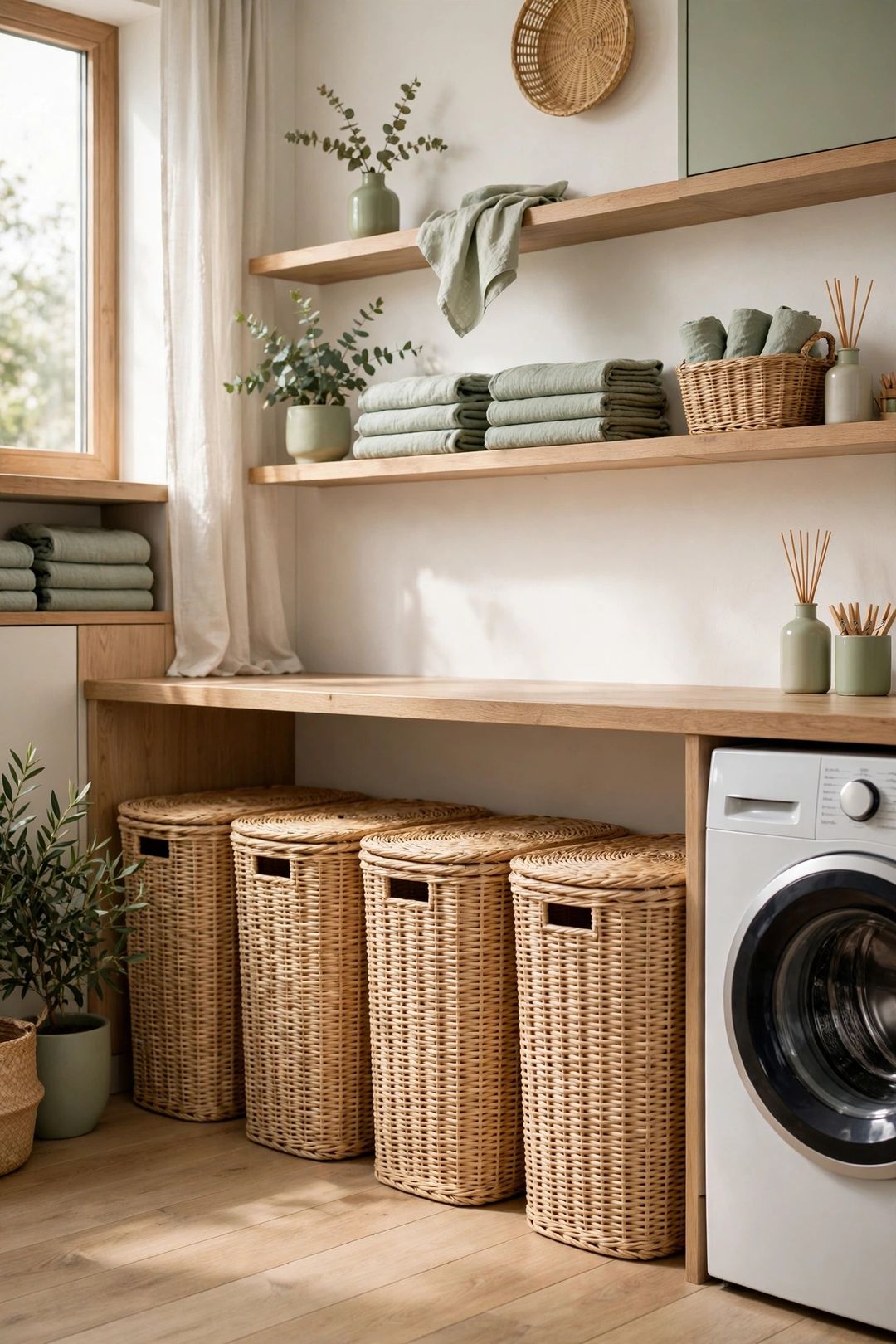
3. Personal basket carry-back. Clean clothes return to bedrooms in the same basket that held the dirty load. Each child carries a personal basket back, puts clothes away, and returns the empty basket to the laundry spot. Light baskets with two handles suit younger kids best.
4. Teen personal wash day. Older kids and teens get a set wash day and a personal bin large enough for a full week of clothes. A simple posted schedule shows whose day falls when. The rule stays clear: bin to washer, washer to dryer, fold, and carry back, all on that day.
Labels and Rules Kids Can Follow
Rules fail when kids must guess. Clear pictures, short rules, and sorting at the hamper turn laundry into a habit.
5. Picture labels for pre-readers. Use picture cards instead of words: a white shirt image for whites, a dark sock image for darks, a towel image for towels. Tape one picture to each bin at kid height. A quick glance tells a young child where each item belongs, no reading needed.
6. Sort-at-the-hamper pockets. Choose a hamper with two sections or two pockets, marked whites pocket and colors pocket. Sorting happens at drop-off time, in the moment clothes come off, not on wash day. Two choices stay simple enough for daily use, even on rushed school mornings.
7. Wall chart matching game. Post a large chart that pairs bin colors with clothing colors: red bin for brights, pale bin for whites, dark bin for jeans and dark tees. Kids match the item in hand to the chart, then drop the item in. Keep the chart at eye level beside the bins.
8. Mesh bag per person for small items. Each person gets a mesh wash bag for socks, underwear, and small items, kept inside or beside the personal bin. On wash day, the zipped bag goes straight into the load. Small items stay grouped by owner, and sock pairs stay far easier to match after drying.
The Wash-Day Flow
Good bins still need a steady flow. These three systems handle fast-turnaround clothes, lost socks, and the trip back to bedrooms.
9. Uniform and sports kit fast lane. Keep one small, open bin near the entry or bathroom for school uniforms and sports kits that need a quick wash before the next game or school day. That bin jumps the queue on set days, while normal bins wait for the regular schedule.
10. Lost-sock pairing clip. Clip single socks to a short line or clip strip above the folding spot instead of tossing singles into a drawer. When the mate comes out of the next load, pair the two and put the pair away at once.
11. Fold and return in the same basket. Fold each finished load straight into the owner basket, with no shared folding pile on a bed or table. The basket then travels to the right bedroom in one trip. Empty baskets stack in the laundry area, ready for the next round, and clean clothes never mix by owner.
What to Buy
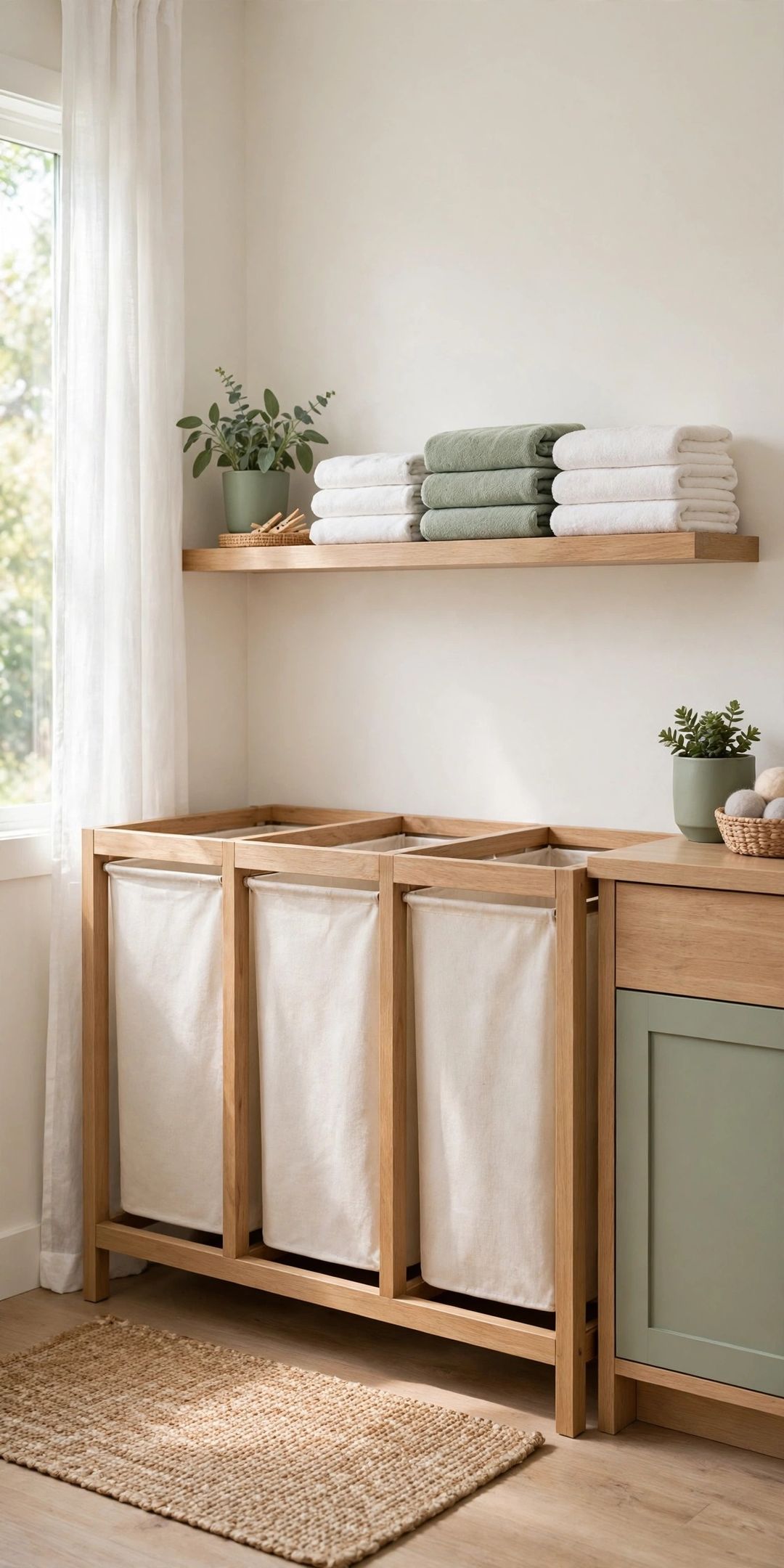
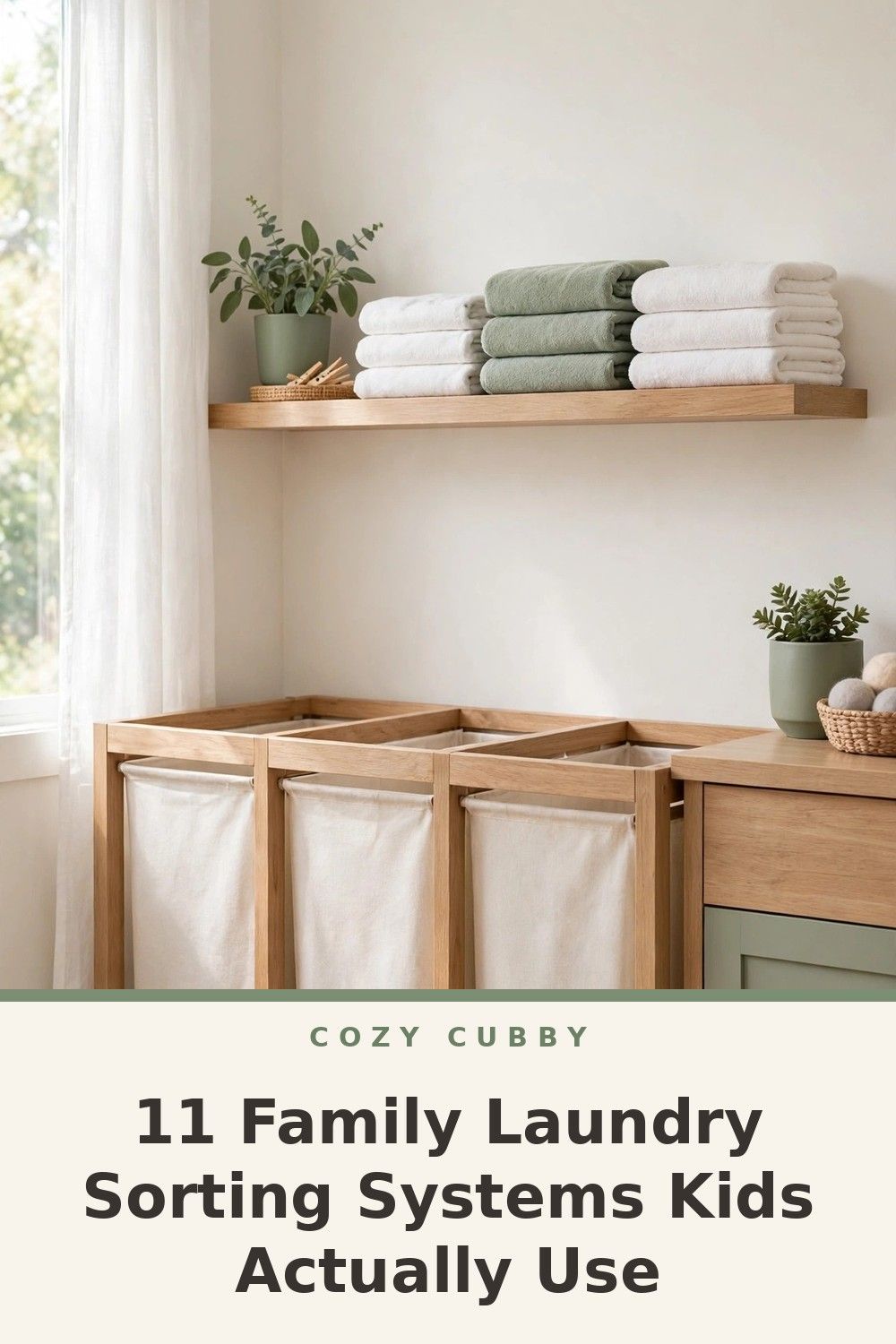
Divided family hamper, typically $25–$50. Pro: two or three sections let sorting happen at drop-off, close to bedrooms or the bathroom. Con: shared sections fill at uneven rates, so one full section can force an early wash day.
Per-person laundry baskets, typically $8–$18 each. Pro: one color or label per person keeps loads, folding, and carry-back grouped by owner. Skip if closet and laundry space cannot store a stack of empty baskets.
Mesh wash bags, typically $8–$15 for a multi-pack. Pro: zipped bags keep socks and small items together through wash and dry cycles. Con: bags add a zip-and-unzip step that older kids may skip unless the bag lives inside the bin.
Picture label set, typically $6–$12. Pro: picture cards let pre-readers sort alone and help guests or sitters follow the same system. Skip if all kids read well and printed name labels already stay clear and current.
Mistakes to Avoid
- Too many sort groups for kids. Five or six categories stall young kids. Two or three clear groups build the habit first, and extra groups can come later.
- Labels placed too high. A label above kid eye level gets ignored. Place pictures and names where the child stands at the bin.
- One shared folding pile. Folding all loads onto one bed mixes owners again and creates a second sort. Fold into owner baskets instead.
- Rules that change each week. Shifting bin colors or wash days breaks habits. Keep colors, spots, and days fixed for at least a full month.
- Bins that are too big. Oversized bins hide weeks of clothes and turn one load into three. Size each bin close to one normal load.
Frequently Asked Questions
At what age can kids sort laundry?
Many preschool kids can match colors and pictures with a simple two-bin setup. School-age kids can handle whites, colors, and towels, plus carrying a personal basket. Teens can run a full personal wash day with a posted schedule.
Should sorting be by person or by color?
By person works best as the first split for family workflow, since loads, folding, and put-away stay grouped. Add a simple whites and colors pocket or section inside each bin if wash needs call for a second split.
How can lost socks be reduced?
Mesh bags per person keep pairs together through the wash. A pairing clip for single socks near the folding spot gives mates a visible home until the next load, instead of a drawer or a loose basket.
What if bedrooms sit far from the laundry area?
Keep a small personal bin in each bedroom and a set carry day for trips to the laundry area. Light baskets with handles make the trip easy, and the same basket brings clean folded clothes back.
Start with one bin per person, add labels kids can read at a glance, and keep wash days fixed. Save this post to your laundry organization board on Pinterest so the 11 systems stay handy on the next reset day.