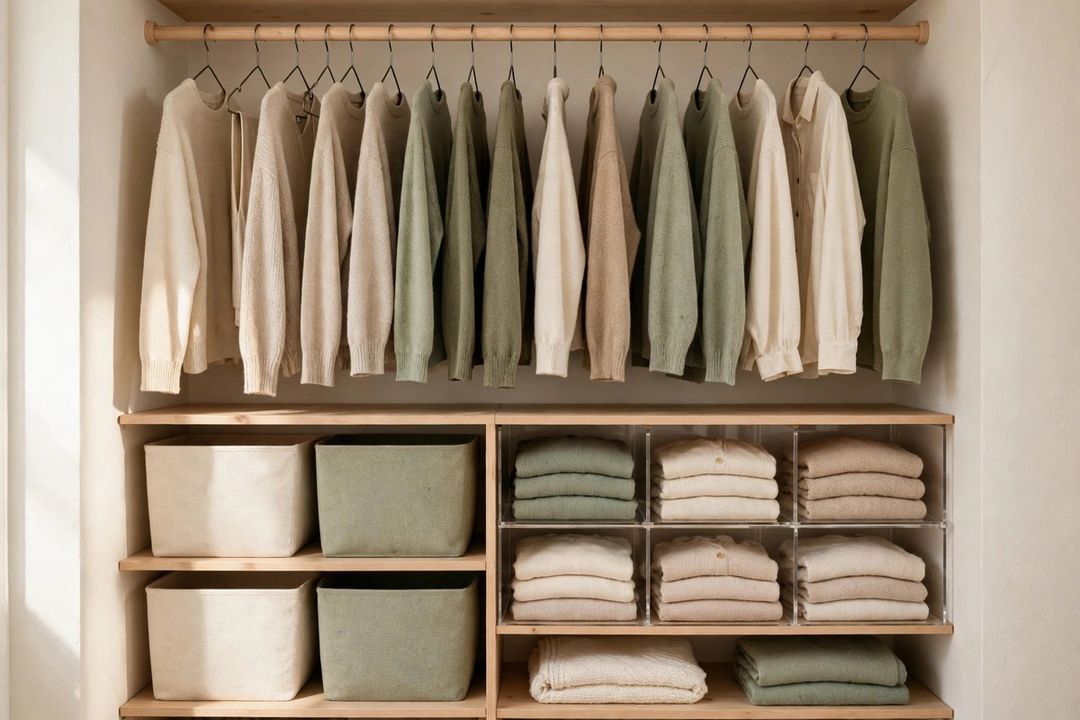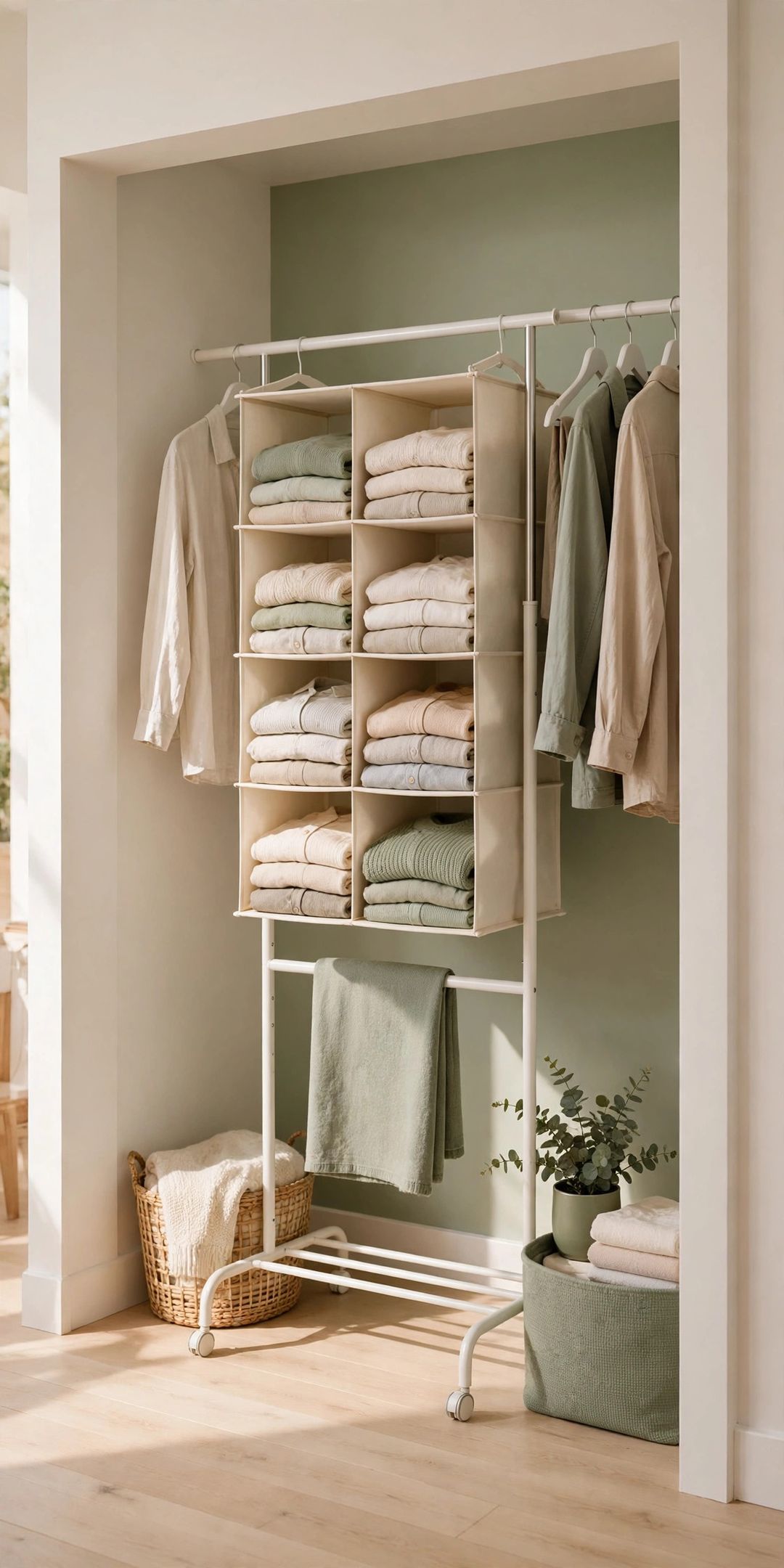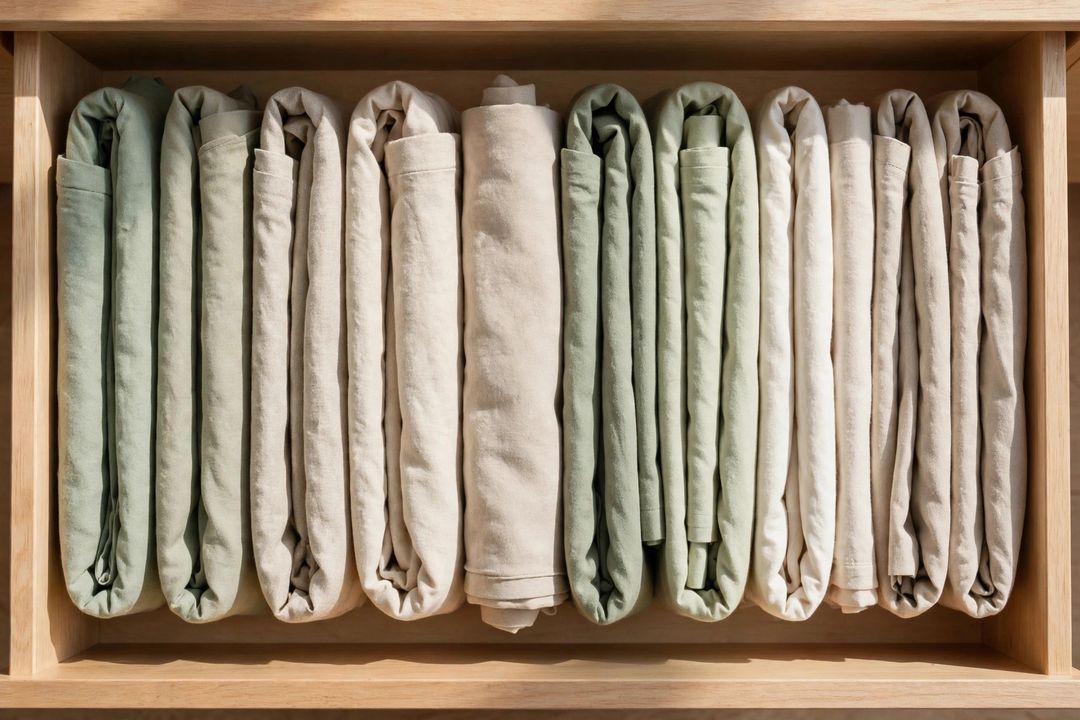
Flat stacking has a built-in flaw: the shirt at the bottom gets forgotten, and pulling it out wrecks the stack above it. File folding takes the opposite approach. Each item is folded into a small, firm rectangle and stood upright, side by side, like files in a cabinet.
Learning how to fold clothes to save space file folding style is mostly about one skill — folding a rectangle that can stand on its own edge. Once a piece stands upright instead of lying flat, the full drawer depth gets used, rows stay separate, and every item can be seen and pulled out without disturbing the rest. That visibility is why more fits in practice: nothing is buried or left unworn at the bottom.
The Basic File Fold, Step by Step
1. Start flat and smooth. Lay the garment face down on a bed or table and smooth out wrinkles with both hands. A smooth start matters, because creases folded in now get pressed deeper during storage.
2. Fold the sides in to make a long rectangle. Fold one side toward the center, then the other, so the shape becomes a neat strip. For shirts, fold sleeves back along the strip so nothing sticks out.
3. Fold the strip in half, then in thirds. Bring the bottom up to the top once, then fold the bundle into thirds. The goal is a compact packet that stands roughly as tall as the drawer, usually 4 to 6 inches for a standard dresser drawer.
4. Test that it stands. Set the packet on its folded edge. If it stands without leaning, the fold is firm enough. If it flops, fold one more third or tighten the side folds.
5. File it in a row, not a stack. Place packets side by side, snug enough to hold each other up but not squeezed. Leave a little room at the end of the row so one piece can slide out cleanly.
Folds by Garment Type
T-shirts and tops. Tees are the easiest place to start. Fold the sides in, tuck the sleeves, then fold in thirds as above. Thin tees may need one extra fold to stand well. Prints end up facing outward, which makes picking a shirt faster.
Pants and jeans. Fold pants in half lengthwise, smooth the legs flat, then fold the legs up in thirds from the hem. Jeans make firm packets that stand easily and suit a deeper drawer. Lightweight trousers stand better with the waistband folded over once to stiffen the packet.
Sweaters and knitwear. Use the same rectangle method, but fold loosely and stop at halves instead of thirds if the knit is bulky. Over-compressing thick knits creates hard creases. Chunky sweaters often do better in an open bin on a shelf than in a drawer row.
Kids' clothes. Small clothes file fold well because the packets are tiny. Fold sides in, then fold in half twice to make a small square that stands in a shallow drawer or bin. Group by outfit or type in short rows, since small packets tip in a long, half-empty row.
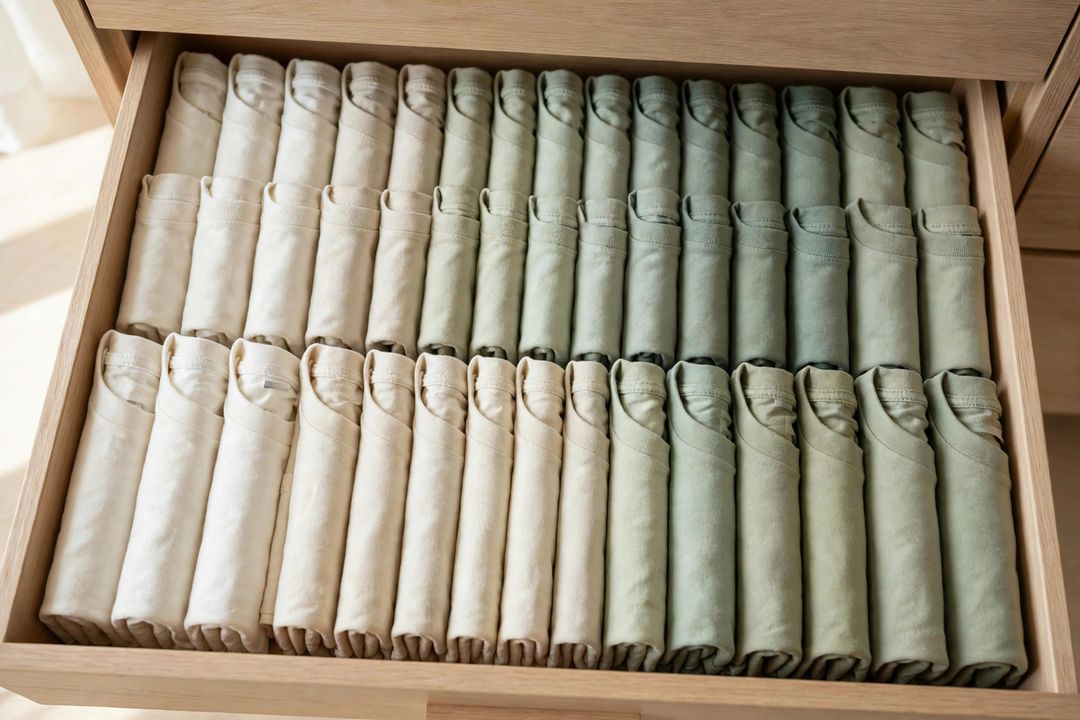
Drawer Setup: Dividers, Bins, and Rows
A file-folded drawer stays tidy when rows have light support. Spring-loaded dividers are the simplest tool: they run front to back, split a wide drawer into lanes, and hold rows upright where tipping starts. Set one divider per category — tees in one lane, pants in another — so a half-empty lane never collapses the drawer.
Open bins work too, especially in deep drawers and for kids' clothes. The walls keep packets standing even when a few pieces are in the laundry, and shallow bins lift small items up where they can be seen.
Whatever support is used, keep rows about three-quarters full. A row packed too tight is hard to browse and wrinkles the end pieces, while a loose row tips over. When a category outgrows its lane, moving one divider or adding one bin beats refolding everything tighter.
What Not to File Fold
Some items lose more than they gain from file folding. Dress shirts, blazers, and anything structured wrinkle along the extra folds and do better hanging. Silky, slippery fabrics slide instead of standing and slump into a pile; rolling or a shallow tray suits them better.
Very bulky items — thick hoodies, heavy jackets, winter knitwear — make packets too large to stand in a standard drawer. Fold those flat on a shelf or in a storage bin instead. Underwear and socks can sit in a small bin, but elaborate folds for tiny basics rarely pay back the time; a simple divider is enough.
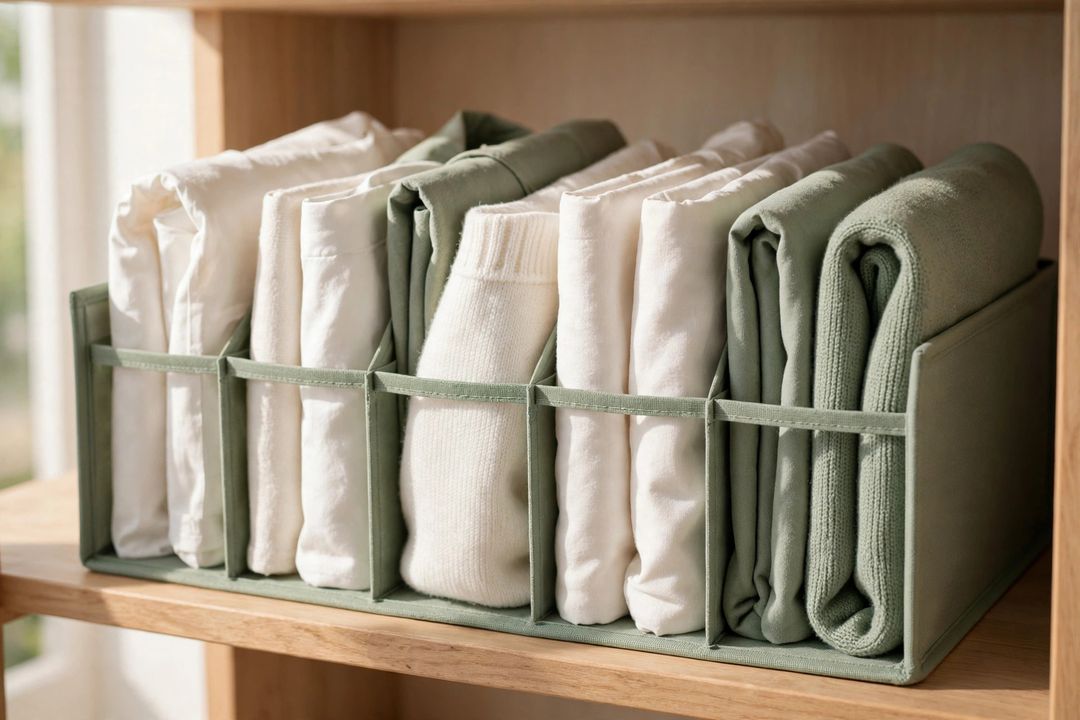
What to Buy
Spring-loaded drawer dividers, typically $10–$20 for a pack. Pro: They adjust to the drawer, create lanes in minutes, and hold rows upright without tools. Con: Spring tension can mark soft wood over time. Skip if: The drawer is narrow enough that rows stay up alone.
Open fabric or plastic drawer bins, typically $8–$18 each. Pro: Bin walls keep small and kids' clothes standing, and a bin lifts out for sorting. Con: Bin walls waste a little space at the edges. Skip if: Dividers already keep every row tidy.
A shallow drawer organizer tray, typically $9–$16. Pro: It gives socks, underwear, and small basics a divided home without detailed folding. Con: Fixed compartments may not match the sizes in the drawer. Skip if: Small items already live happily in a spare bin.
Mistakes to Avoid
- Folding packets too loose. A soft, floppy packet cannot stand. Fold in thirds, keep edges aligned, and test each garment type until the packet stands alone.
- Ignoring drawer height. Packets should stand just below the inside height. Too tall and they catch when the drawer opens; too short and they tip.
- Packing rows to one hundred percent. A full row cannot be browsed. Leave a small gap at the end of each row so pieces slide out without pulling others along.
- File folding everything. Structured shirts, silky fabrics, and bulky knits do worse filed than hung. Match the method to the garment.
- Skipping categories. One mixed row of tees, pants, and sweaters tips and tangles fast. Lanes or bins per category keep the system working.
Frequently Asked Questions
Does file folding damage clothes?
For everyday tees, pants, and casual knitwear, file folding is gentle when packets are firm but not crushed. Extra folds can crease crisp dress shirts and structured fabrics, which is why those pieces are better hung. Smoothing each piece first keeps crease lines soft.
How long does it take to file fold a load of laundry?
The first few loads are slower while the fold becomes a habit. Once the steps feel automatic, each piece takes only a few extra seconds over a flat fold, and putting laundry away gets faster because each packet goes straight into its row.
What drawer size works best for file folding?
Most dresser drawers work, as long as packets stand just under the inside height. Shallow drawers suit tees and kids' clothes folded smaller; deeper drawers handle jeans and thicker items. Measuring the inside height once prevents packets that catch.
How do rows stay up when some clothes are in the wash?
Dividers and bins do the holding when a row runs low. A lane that empties often can be narrowed with a spring divider, or the remaining pieces can rest in a smaller bin until laundry returns.
Start with one T-shirt drawer, fold a single row, and live with it for a week — the visible, no-digging difference usually sells the method. Save this post to your Closet Organization board on Pinterest so the fold steps are handy on laundry day.