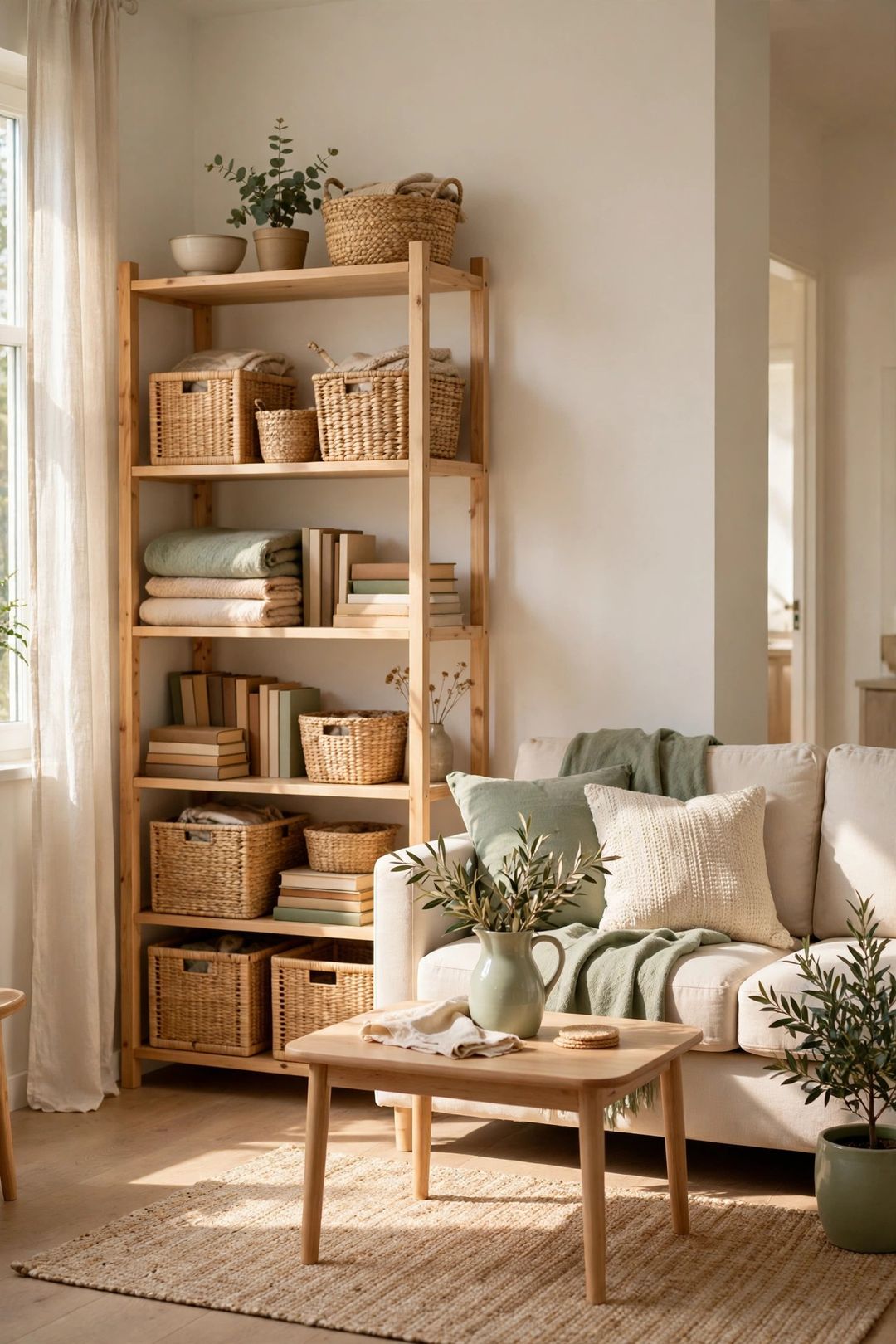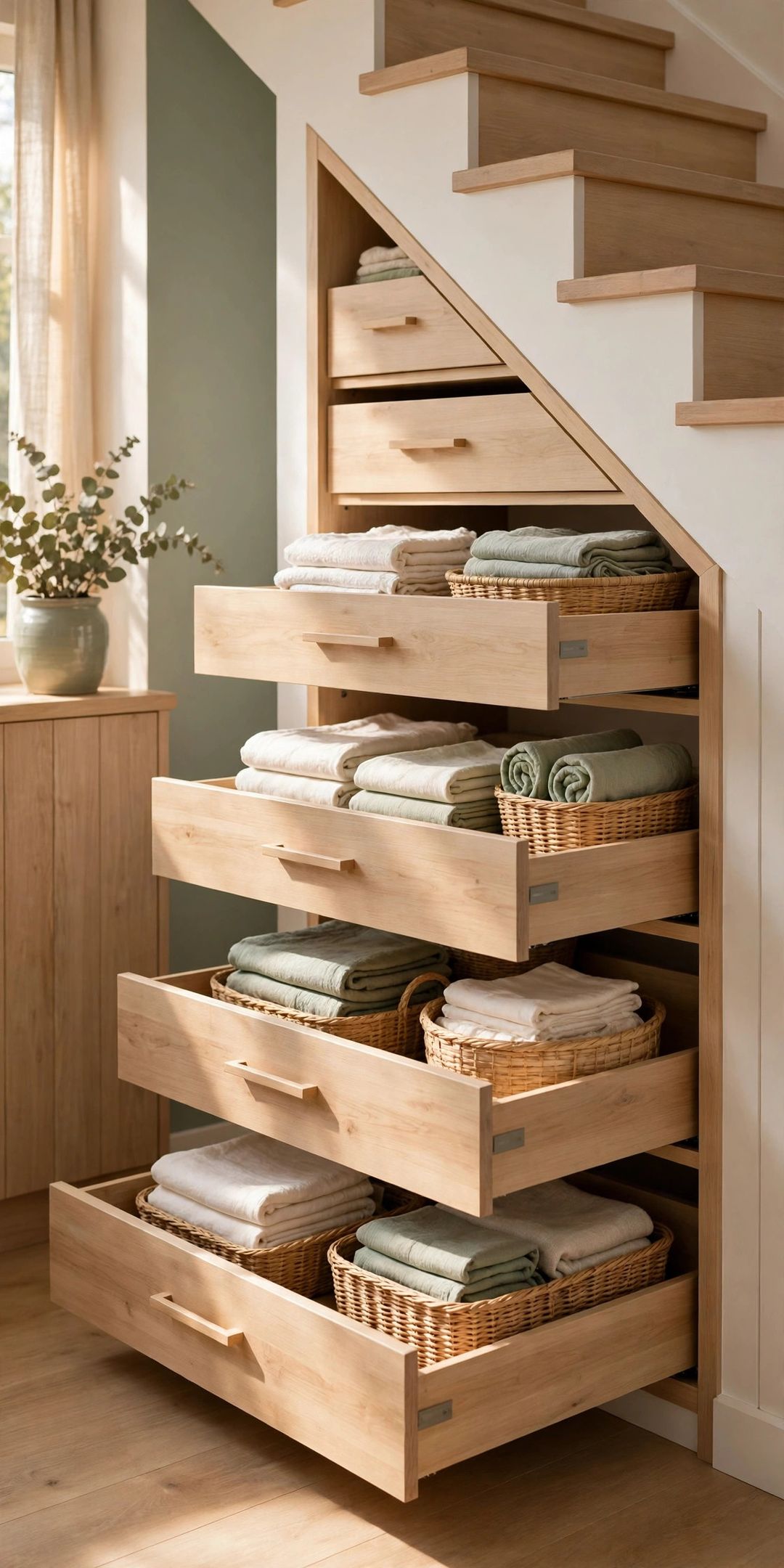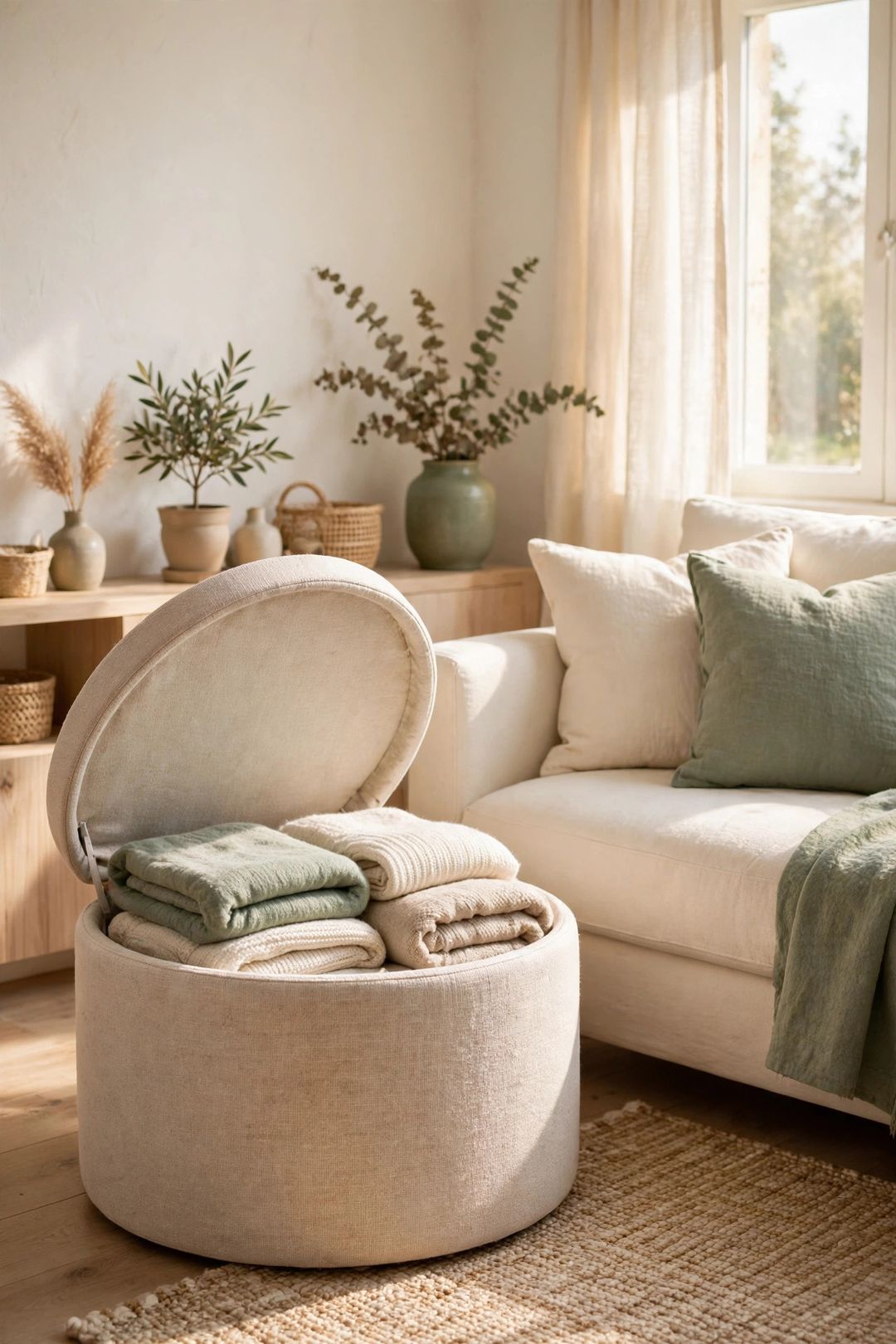
Moving into a first apartment is exciting, but clutter builds fast when nothing has a set place. Keys land on the kitchen counter, mail covers the table, and laundry spreads across a chair.
These first apartment organization starter systems fix that in a sensible order. Start at the front door, work through the rooms you use daily, and finish with storage and a short reset habit.
You do not need to buy everything at once. Set up each system with what you own first, live with it for a week, then add only the helpers that make it work better.
1. Set Up an Entry Landing Zone
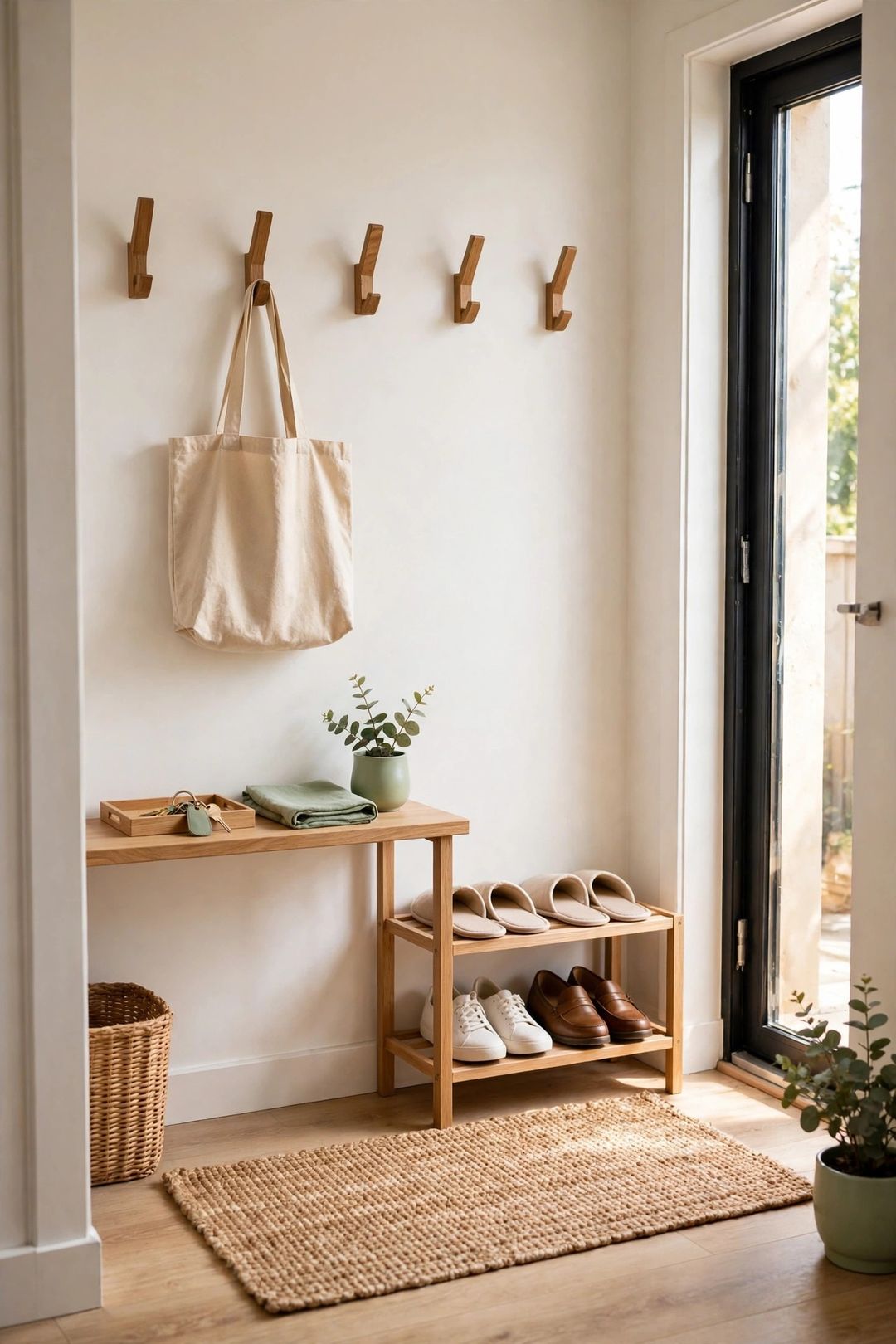
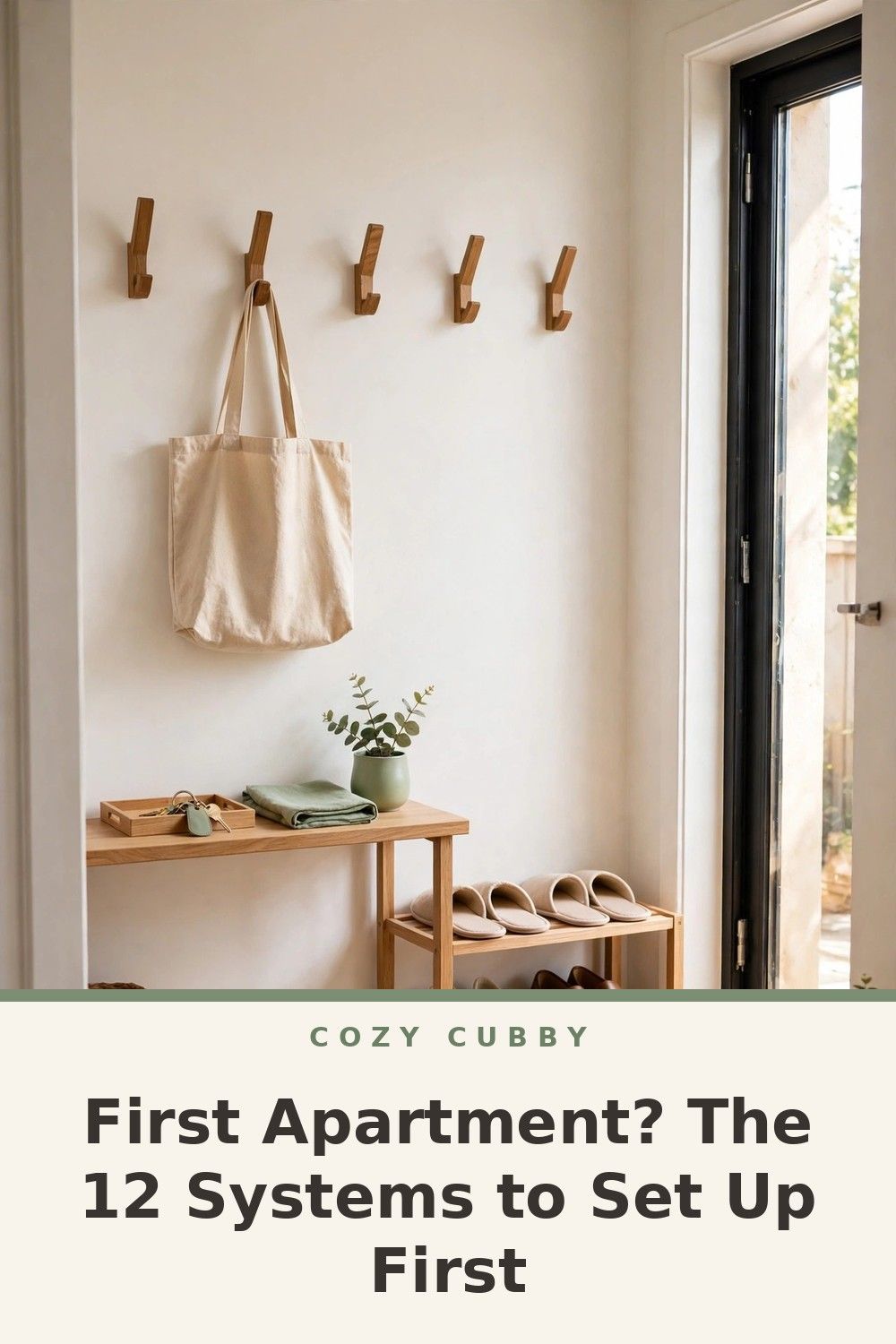
1. Entry landing zone. Place a small tray by the door for keys, hooks for a bag and jacket, and one spot for daily shoes. When everything you carry has a landing spot, pockets stop emptying onto every flat surface.
2. Create Kitchen Counter Basics
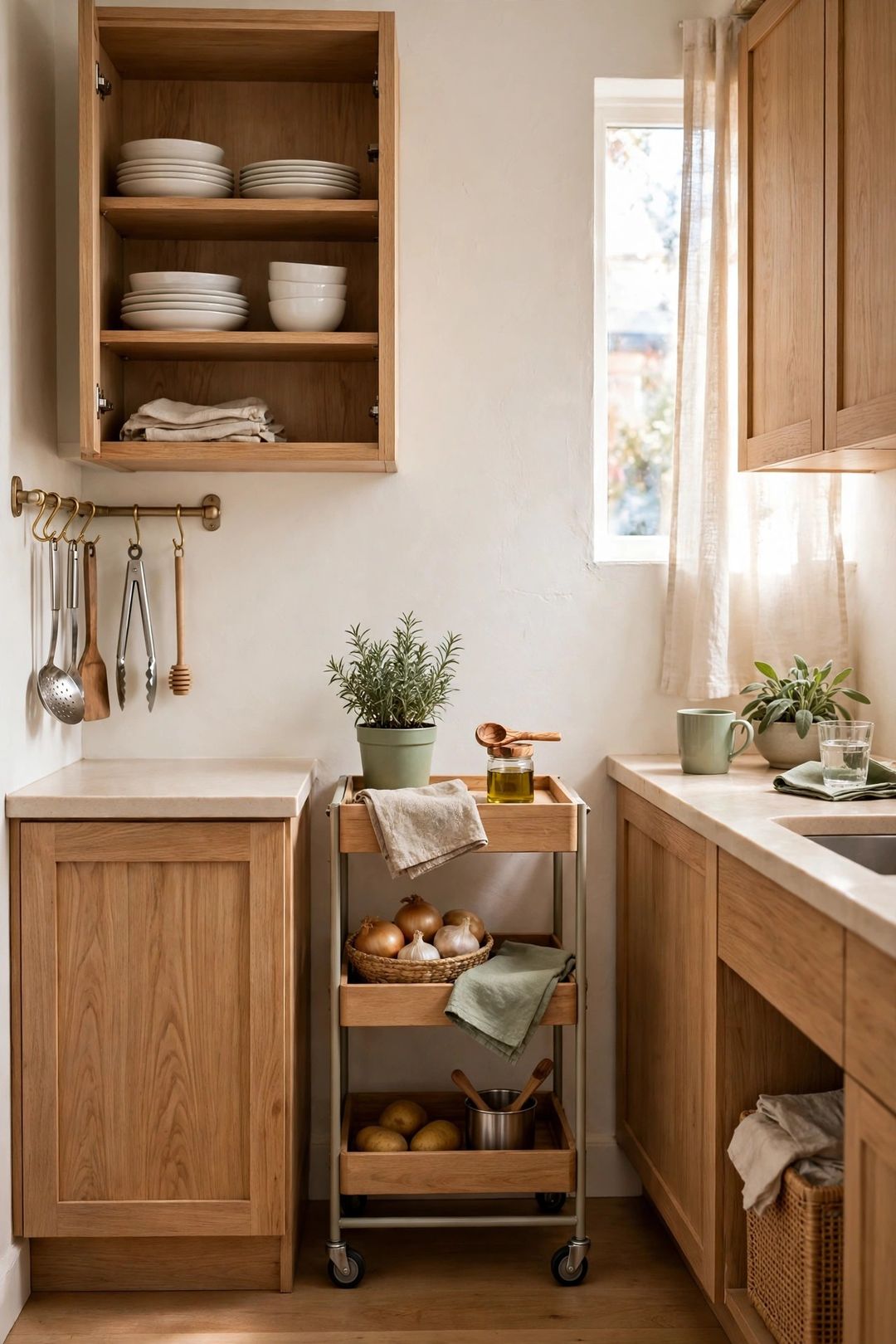
2. Kitchen counter basics. Keep only daily tools on the counter, such as a utensil holder and cutting board. Give cabinets simple zones for dishes, glasses, and pots, and leave one clear stretch open for cooking and unpacking groceries.
3. Give Food Simple Fridge and Shelf Zones
3. Fridge and dry food zones. Group food by job, not by shopping trip. Keep breakfast items together, cooking basics together, and snacks in one bin. In the fridge, put leftovers at eye level and keep one spot for items to use first.
4. Build a Bathroom Caddy System
4. Bathroom caddy system. If counter space is tight, store daily toiletries in a handled caddy you can lift in and out. Keep towels on one hook, cleaning basics under the sink, and backups in one small bin.
5. Sort Your Closet and Dresser by Category
5. Closet and dresser basics. Hang clothes you wear most where they are easiest to reach, and fold bulky sweaters and jeans. Use drawers by category, such as tops, bottoms, and sleepwear. Keep a donation bag in the closet for items you stop wearing.
6. Start a Laundry Sorting Station
6. Laundry sorting station. Place a hamper where you undress, not where you wish laundry would go. If space allows, use two sections for lights and darks. Keep detergent and stain remover together near the hamper or machine.
7. Set Up a Paper and Mail Station
7. Paper and mail station. Choose one tray or small basket for all incoming paper. Sort mail as it arrives into action, file, and recycle. Keep a pen and your documents folder in the same spot, so bills never hide in a pile.
8. Assemble One Portable Cleaning Kit
8. Cleaning kit. Put a main spray cleaner, a bathroom cleaner, cloths, a small brush, and trash bags into one handled caddy. Store it under a sink or in a closet, so you can clean any room without hunting for supplies.
9. Add a Trash and Recycling Routine
9. Trash and recycling system. Give trash and recycling clear spots, even if recycling is just a sturdy bag near the kitchen bin. Keep spare bags nearby, and take recycling out on a set day before it stacks beside the door.
10. Control Cords, Remotes, and Living Room Clutter
10. Living area control spot. Pick one basket or tray for remotes, chargers, and headphones. Run cords to one outlet area and label look-alike cords with tape. One home for small electronics stops the nightly search through cushions and bags.
11. Use Hidden Space for Seasonal Storage
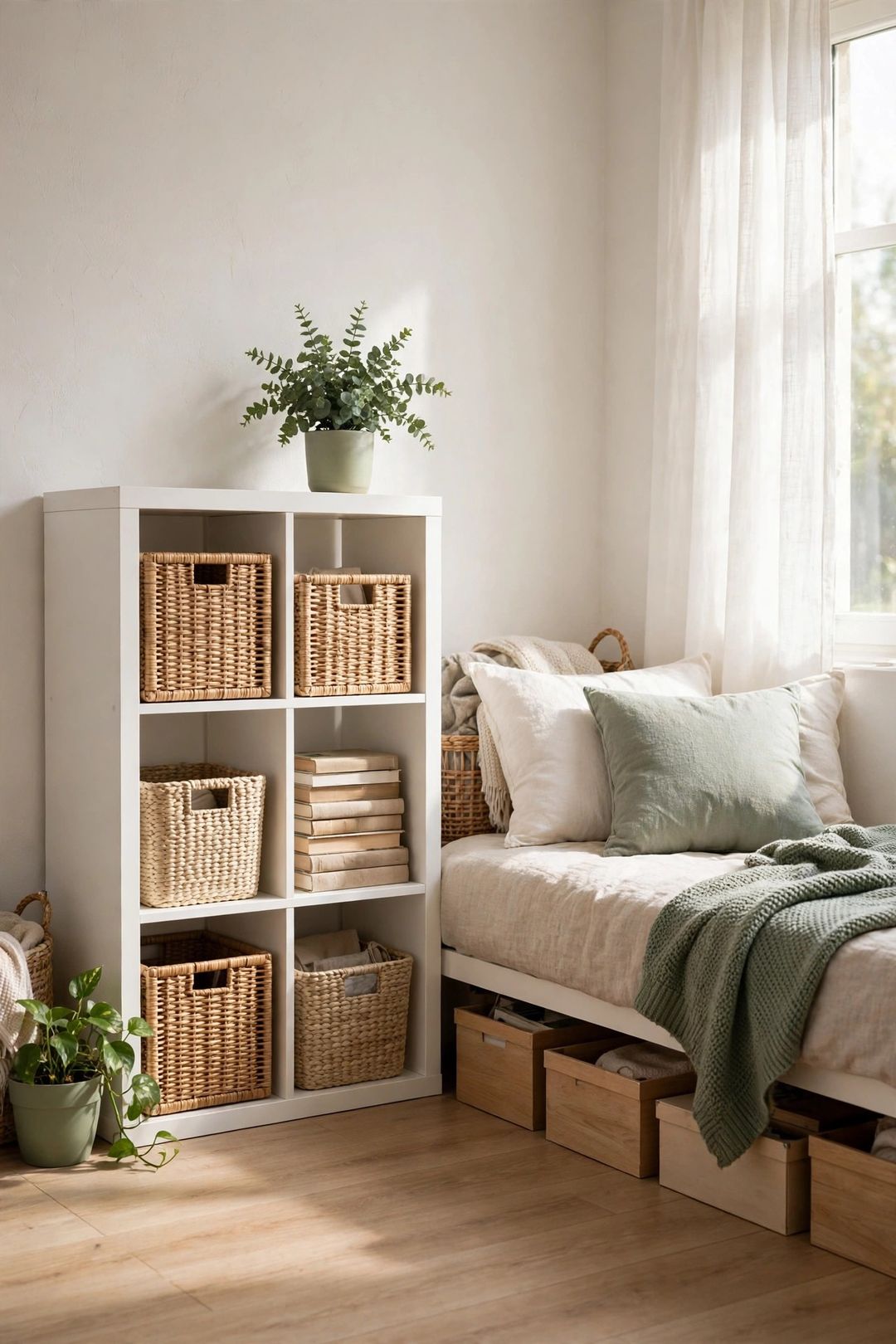
11. Under-bed and seasonal storage. Save prime closet space for clothes you wear now. Store off-season clothes and extra blankets in flat bins under the bed or on a high shelf. Label each bin on the side you see first.
12. Keep a Weekly Reset and Restock List
12. Weekly reset system. Once a week, return items to their zones, clear the mail tray, and check food and cleaning basics. Keep a running restock list on your phone or fridge. This habit keeps the other systems working without a big cleanup.
What to Buy
A small entry tray and wall hooks, typically $10–$25. Pro: They give keys, bags, and shoes a clear landing spot. Con: Hooks may need renter-safe strips instead of screws. Skip if: You have a coat closet and table by the door.
A handled shower or cleaning caddy, typically $8–$18. Pro: One caddy keeps bottles or supplies together and easy to carry. Con: Small caddies fill fast if you store backups inside too. Skip if: You already have plenty of shelf space.
A two-section laundry hamper, typically $15–$35. Pro: Sorting as you go makes laundry day faster. Con: A wide hamper can take too much floor space. Skip if: You do one mixed load at a time and prefer a single basket.
A mail tray or upright file sorter, typically $10–$22. Pro: All paper lands in one visible place. Con: A tray only works if you sort it weekly. Skip if: You receive almost no paper mail and track bills online.
Flat under-bed storage bins, typically $12–$28. Pro: They use hidden space for seasonal items. Con: You must measure the height under your bed frame first. Skip if: Your bed sits too low for bins to slide underneath.
Mistakes to Avoid
- Buying storage before you move in. You cannot know shelf sizes or tight corners until you live there. Start with zones, then buy to fit.
- Placing systems where you will not use them. A station far from where the task happens will be ignored. Put each one where clutter already lands.
- Trying to organize everything in one day. Fatigue leads to random piles and extra spending. Set up two or three systems at a time.
- Storing backups with daily items. Extra bottles and supplies crowd what you reach for most. Keep backups together in one back spot.
- Skipping the weekly reset. Even good systems drift. Without a short reset, mail, laundry, and food zones slowly merge back into clutter.
Frequently Asked Questions
What should you set up first on a tight budget?
Start with the entry zone, mail station, and laundry hamper. A bowl, a tray, and one basket can do all three jobs, and they stop the clutter you handle every day.
Do you need matching bins for a first apartment?
No. Size and placement matter more than matching looks. Use boxes and trays you already own first, and replace them one at a time only when a size is clearly wrong.
How do these systems work with a roommate?
Keep shared zones simple and labeled, such as the entry tray, cleaning kit, and trash routine. Give each person a private spot for mail and bathroom items, and agree on one reset day.
What if your apartment has almost no storage?
Use door backs, the space under the bed, and one basket or cart that can move between rooms. Keep daily items in prime spots and seasonal items in harder-to-reach places.
A first apartment feels settled faster when every daily task has a simple home. Save this post to your First Apartment board on Pinterest so you can set up the 12 systems in order, one room at a time.