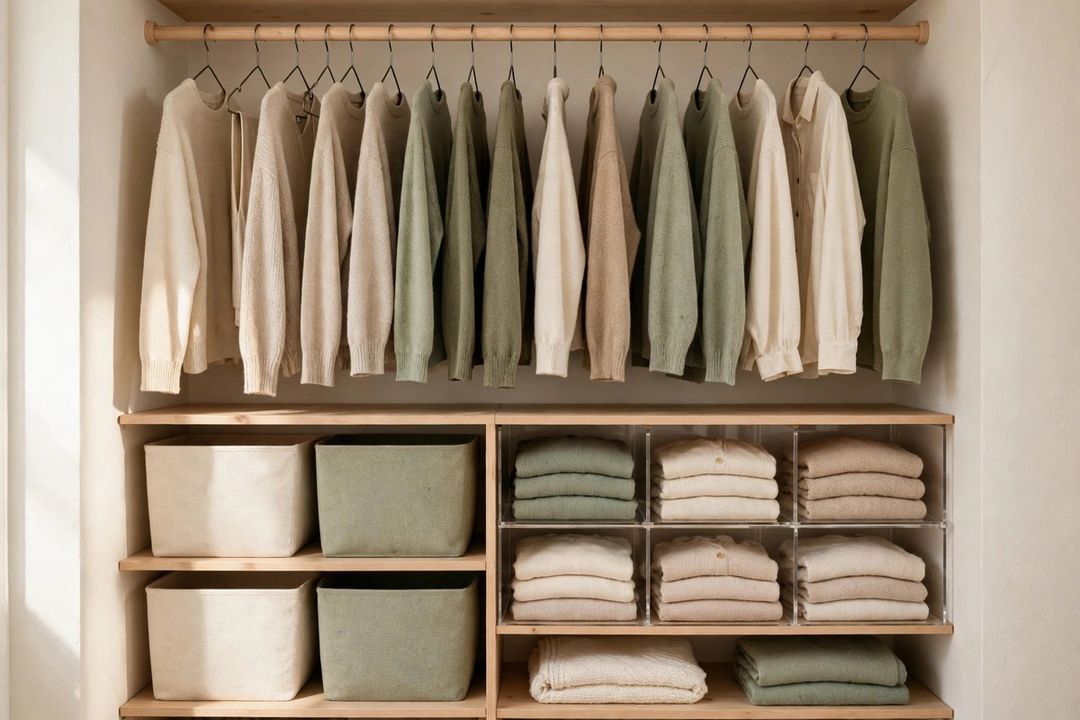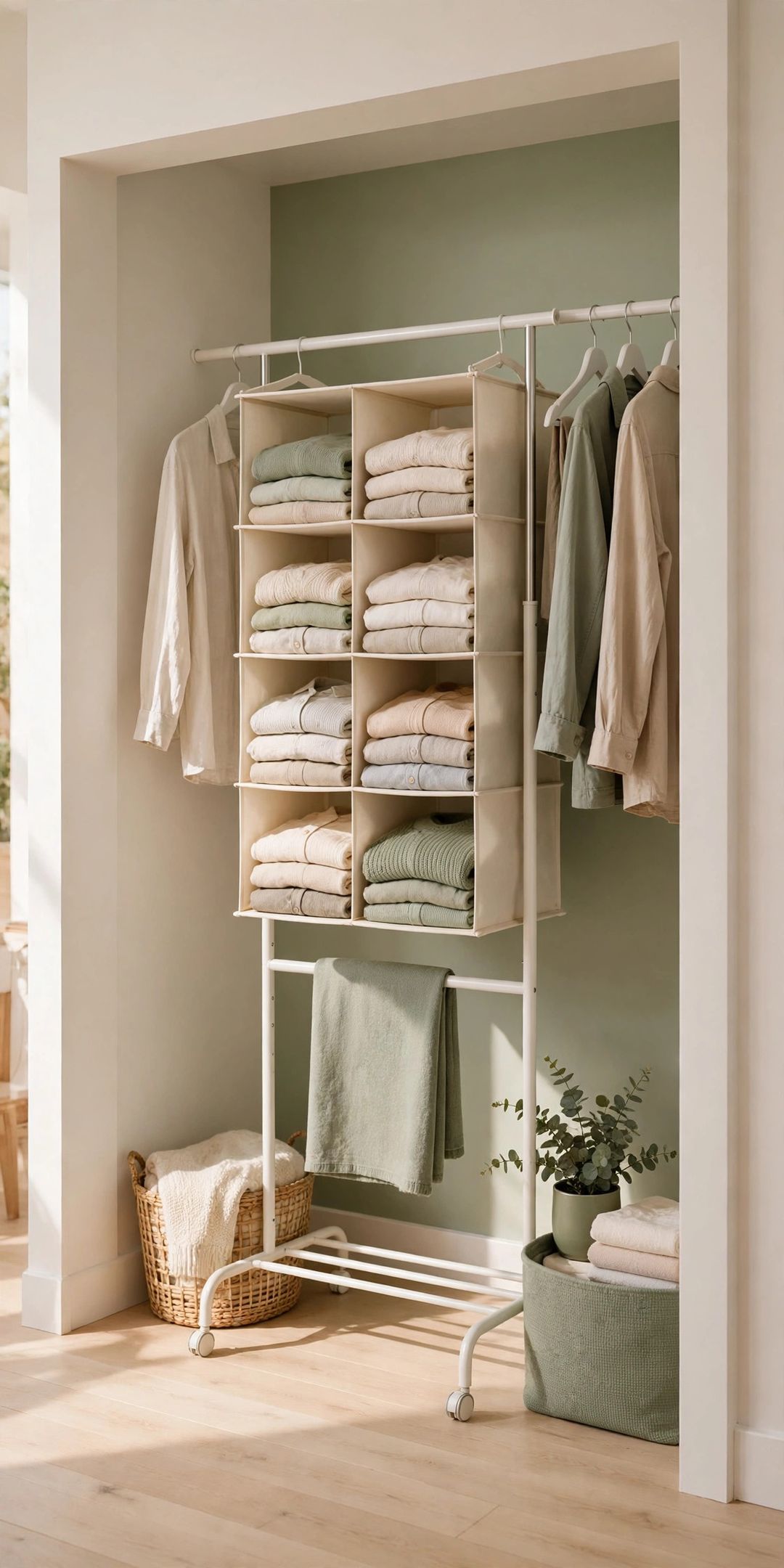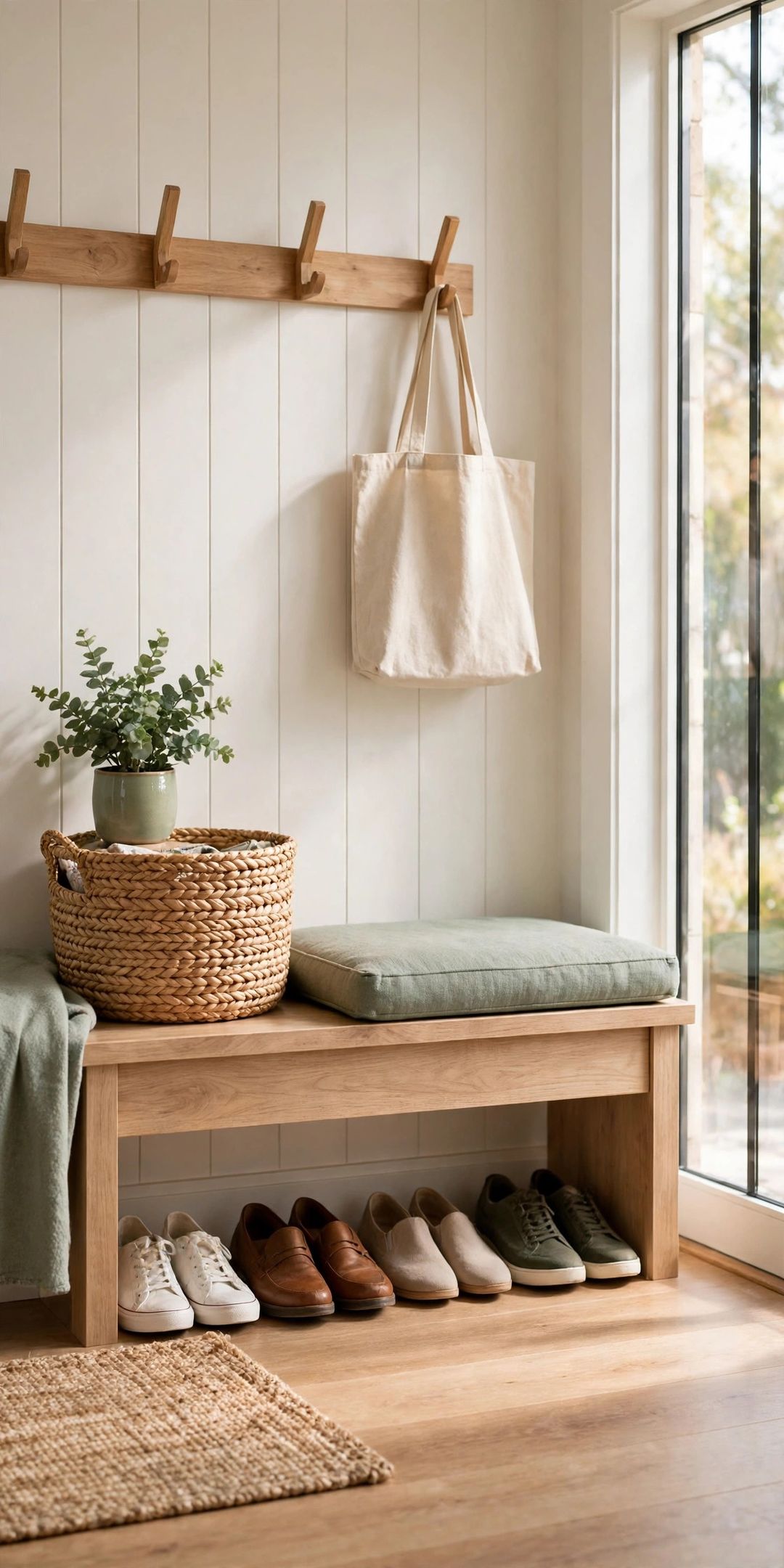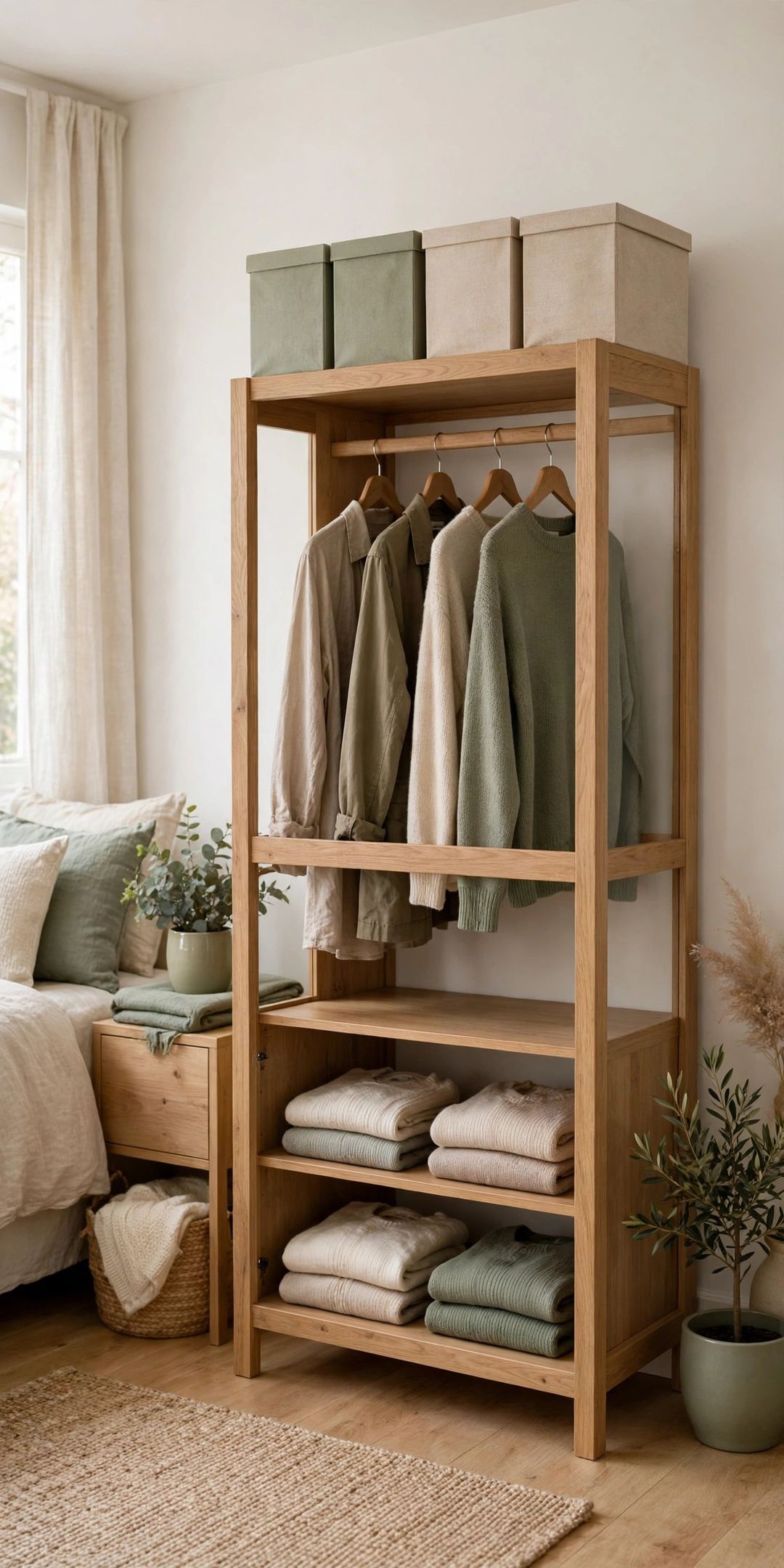
A room with little or no closet does not have to mean clothes on chairs and boxes in corners. A freestanding wardrobe or garment rack can hold a full wardrobe well, as long as it is set up with a plan instead of treated as a temporary rail.
These freestanding wardrobe storage ideas help a simple rack work more like a built-in. The key is to give it zones, a top and bottom, and a place for the items that do not hang. With those pieces in place, the setup looks planned and is easier to keep tidy.
Start with the clothes you wear most, measure your wall space, and build the setup in sections. Small changes, like matching bins and a curtain, make a big visual difference.
1. Zone the Rack Like a Built-In
Divide the hanging space into clear zones. Keep daily clothes in the center, work or dressier pieces at one end, and long items at the other end where they have full drop space. Zoning stops the rack becoming one mixed row.
2. Use Double Hanging Where You Can
Add a second, lower rail for short items. Shirts, folded pants, and jackets hang short, so a second rail below or beside them can double that section. Leave one tall section open for dresses and coats. Measure garment lengths before you set rail heights, and keep the lower rail high enough that clothes clear the floor or shelf below them.
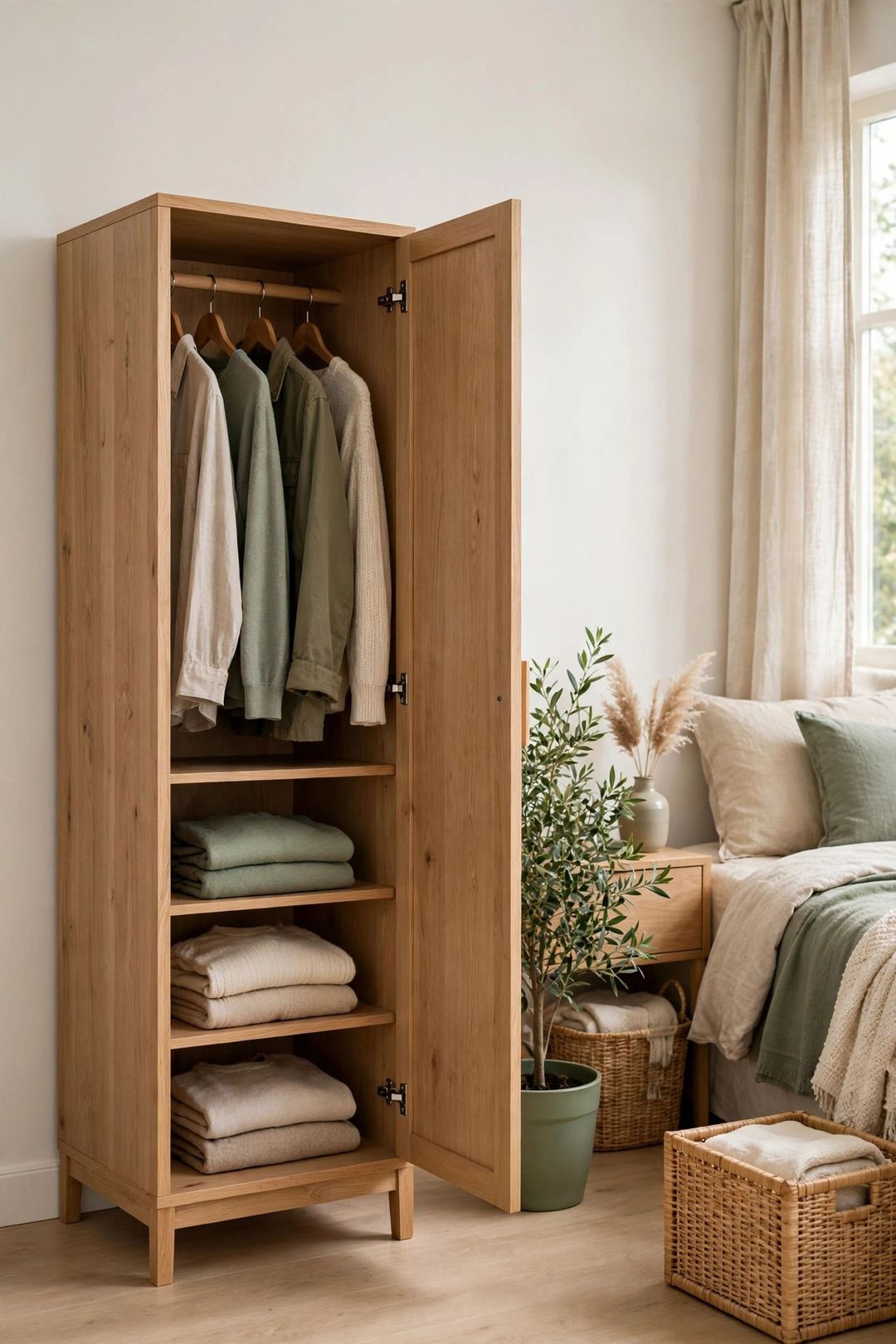
3. Add a Shelf or Bins on Top
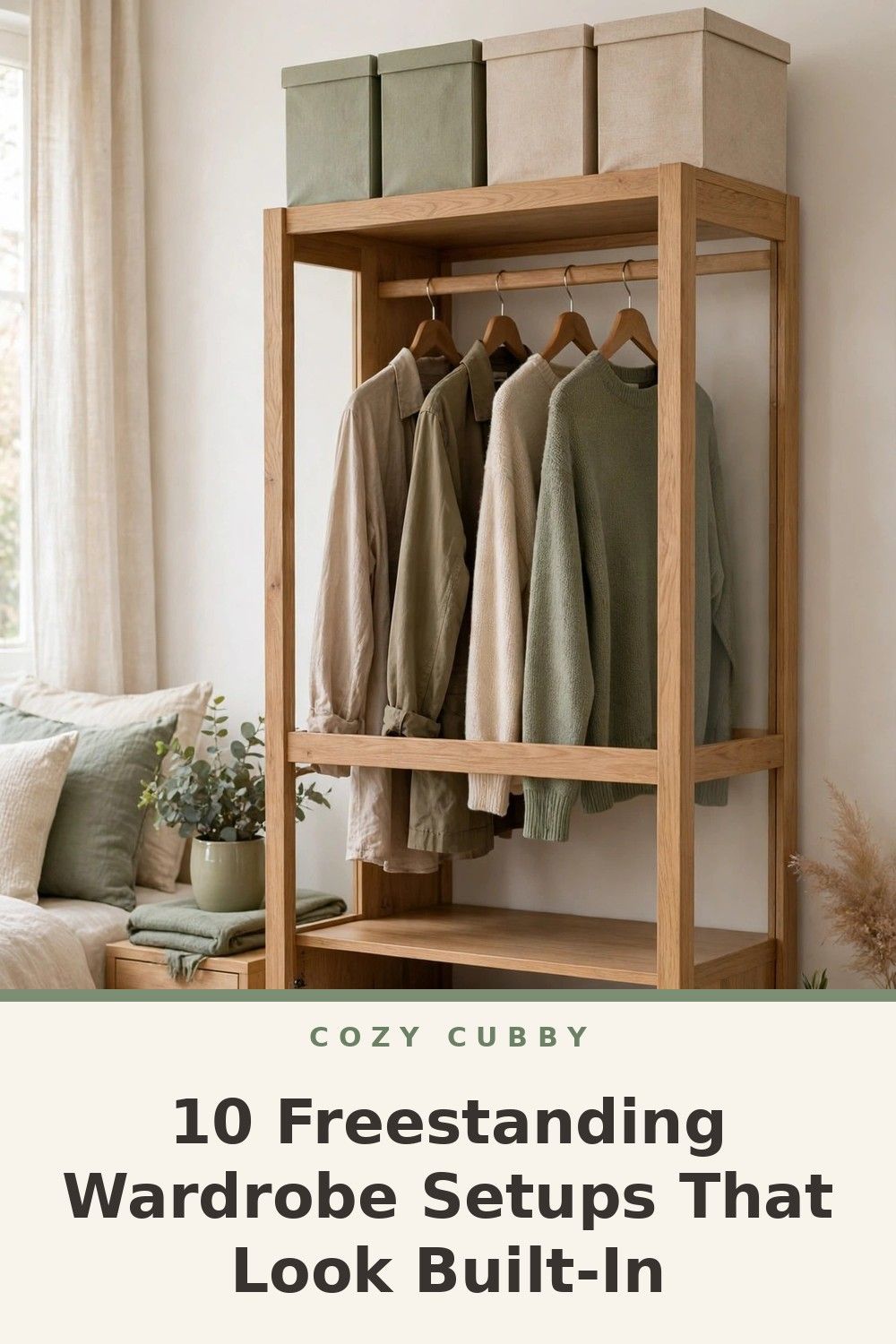
Use the top of the unit for matching, closed storage. A top shelf or a row of same-size bins holds off-season clothes, bags, or extra bedding. Matching bins make the setup look finished and keep dust off stored items. Keep heavy items down low instead.
4. Put Shoes and Folded Clothes at the Base
Give the bottom of the wardrobe a job. A low shoe rack, a row of baskets, or a flat shelf at the base holds shoes and folded items that would otherwise spread across the floor. This base layer is part of what makes a rack feel like a built-in.
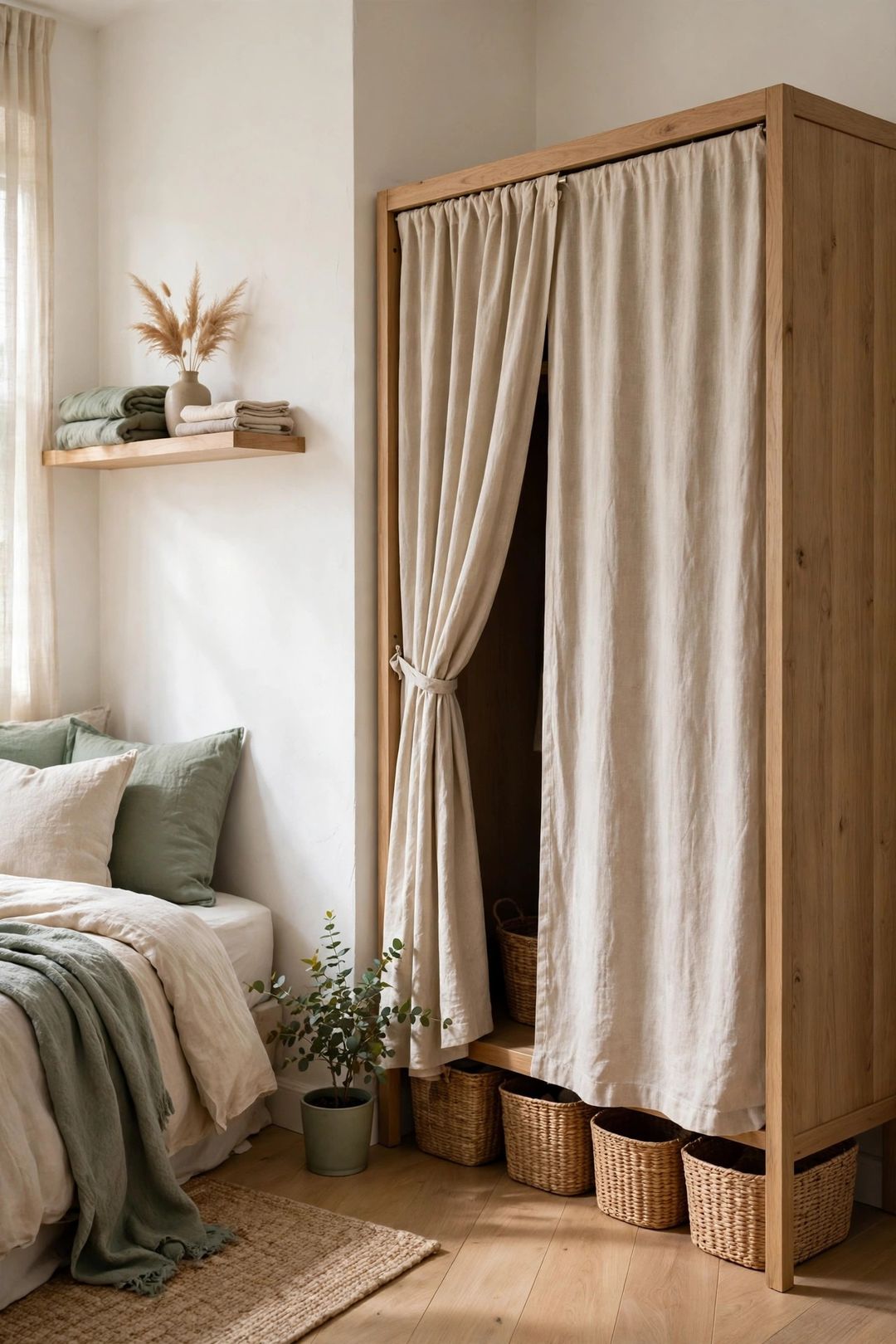
5. Add a Curtain or Cover for a Calm Look
Hang a simple curtain in front of the rack. A plain curtain on a rod or the rack frame hides visual clutter, protects clothes from dust and light, and makes the room feel calmer. Choose a washable fabric in a color close to the wall for the most built-in effect.
6. Pair the Rack With a Dresser
Place a dresser beside the rack for folded clothes. Hanging space alone cannot hold underwear, knitwear, and casual basics well. A dresser fills that gap and gives the setup a solid, furniture-like feel. Together, rack and dresser cover the same jobs as a fitted wardrobe.
7. Add a Narrow Shelf for Daily Items
Fit a slim shelf or small unit at one end. Use it for the items you reach for daily, such as a bag, a folded throw, or a basket for belts and scarves. A narrow shelf also creates a clear end point for the wardrobe, so it reads as one planned piece of furniture.
8. Keep Hangers and Bins Matching
Use one hanger type and one bin style throughout. Mixed hangers at different heights make even neat clothes look messy. Slim, matching hangers also save rail space and keep shoulders level.
9. Anchor Tall Units Safely
Secure tall or heavily loaded units to the wall. Freestanding wardrobes can tip if they are tall, unevenly loaded, or pulled on, so follow the manufacturer's anchoring guidance for your unit and wall type. Use the straps or brackets supplied or recommended for it, and check them after you move the unit. Keep the heaviest items low, and avoid hanging extra weight on the outside of the frame.
10. Leave Breathing Room Around the Setup
Do not fill every inch of the wardrobe. A small gap between hangers helps clothes stay smooth and makes it easy to see what you own. Leave a little empty rail and shelf space for laundry coming back and for new items. A setup that is packed solid is hard to use and quickly spreads into the rest of the room. Breathing room keeps the system working day to day.
What to Buy
A sturdy freestanding wardrobe or garment rack, typically $45–$120. Pro: It adds full hanging storage without any building work. Con: Light frames can wobble under heavy coats. Skip if: You have usable closet space and only need overflow storage for one season.
Matching storage bins with lids, typically $20–$40 for a set. Pro: Closed bins protect off-season clothes and make the top of the unit look neat. Con: Bins that are too large get heavy when full. Skip if: Your unit has closed cabinets that already hide stored items.
A washable curtain and simple rod, typically $15–$35. Pro: A curtain hides clutter and softens the look of an open rack. Con: Fabric needs washing and can hold dust if never opened. Skip if: You prefer open storage and keep the rack neat enough to leave on show.
Slim matching hangers, typically $12–$25 for a pack. Pro: Uniform hangers save space and give a clean, level rail. Con: Very slim hangers may not suit heavy structured jackets. Skip if: Your current hangers already match and fit the rail well.
A low shoe rack or base shelf, typically $18–$40. Pro: It uses the wasted floor space under hanging clothes. Con: It reduces drop space for long garments in that section. Skip if: Shoes already have a set home elsewhere in the room.
Mistakes to Avoid
- Loading one side with all the heavy clothes. Uneven weight makes a frame lean and stresses the joints. Spread heavy items across the rail.
- Skipping anchoring on a tall unit. Tall, loaded wardrobes can tip. Follow the manufacturer's anchoring guidance instead of relying on weight alone.
- Buying the rack before measuring. Wall width, ceiling height, and door swing all matter. Measure the space and your longest garments first.
- Having no home for folded clothes. A rail alone leaves basics homeless. Pair the rack with drawers, shelves, or baskets from the start.
- Filling the top with loose items. Unboxed items on top look messy and collect dust. Use matching lidded bins instead.
Frequently Asked Questions
Can a freestanding wardrobe replace a closet?
For many bedrooms, yes, if it combines hanging space, folded storage, and a base for shoes. A rack on its own is rarely enough. Pairing it with a dresser and top bins covers the same main jobs as a small closet.
How do you stop a garment rack from looking messy?
Zone the rail, use matching hangers and bins, and add a curtain if the room still feels busy. Most of the messy look comes from mixed hangers, loose items on top, and clothes with no set section.
Is it safe to leave a tall freestanding wardrobe unanchored?
Tall units are safer anchored. Follow the manufacturer's anchoring guidance for your model and wall type, keep heavy items low, and recheck the fixings if you move the unit to a new spot.
What goes on top of a freestanding wardrobe?
Light, less-used items in matching lidded bins work best, such as off-season clothes or spare bedding. Keep heavy items low, where they are safer to lift and put less strain on the frame.
With zones, matching storage, and a dresser beside it, a simple rack can work like a real wardrobe. Save this post to your Closet Organization board on Pinterest so the full setup is handy when you build yours.