Most freezers hold more food than anyone realizes. Chicken sits under frozen peas, ground beef hides behind ice trays, and a fresh version of both ends up in the next grocery cart anyway.
A freezer inventory system checklist fixes that without reorganizing anything. It is a running list of what is in the freezer, where it is, and when it should be used — checked before you shop or plan meals, instead of digging through cold bags from memory.
The system works for a chest freezer, an upright, or a small freezer drawer. Pick one format, learn the four fields that matter, and keep it current with two small habits.
1. Pick One List Format and Keep It in One Place
The best format is the one you will actually update. Choose one of these three:
Paper on the freezer. A sheet or notebook on the freezer door or fridge is simplest. It sits where food goes in and out, so updating takes seconds. Drawback: only people at home can see it while shopping.
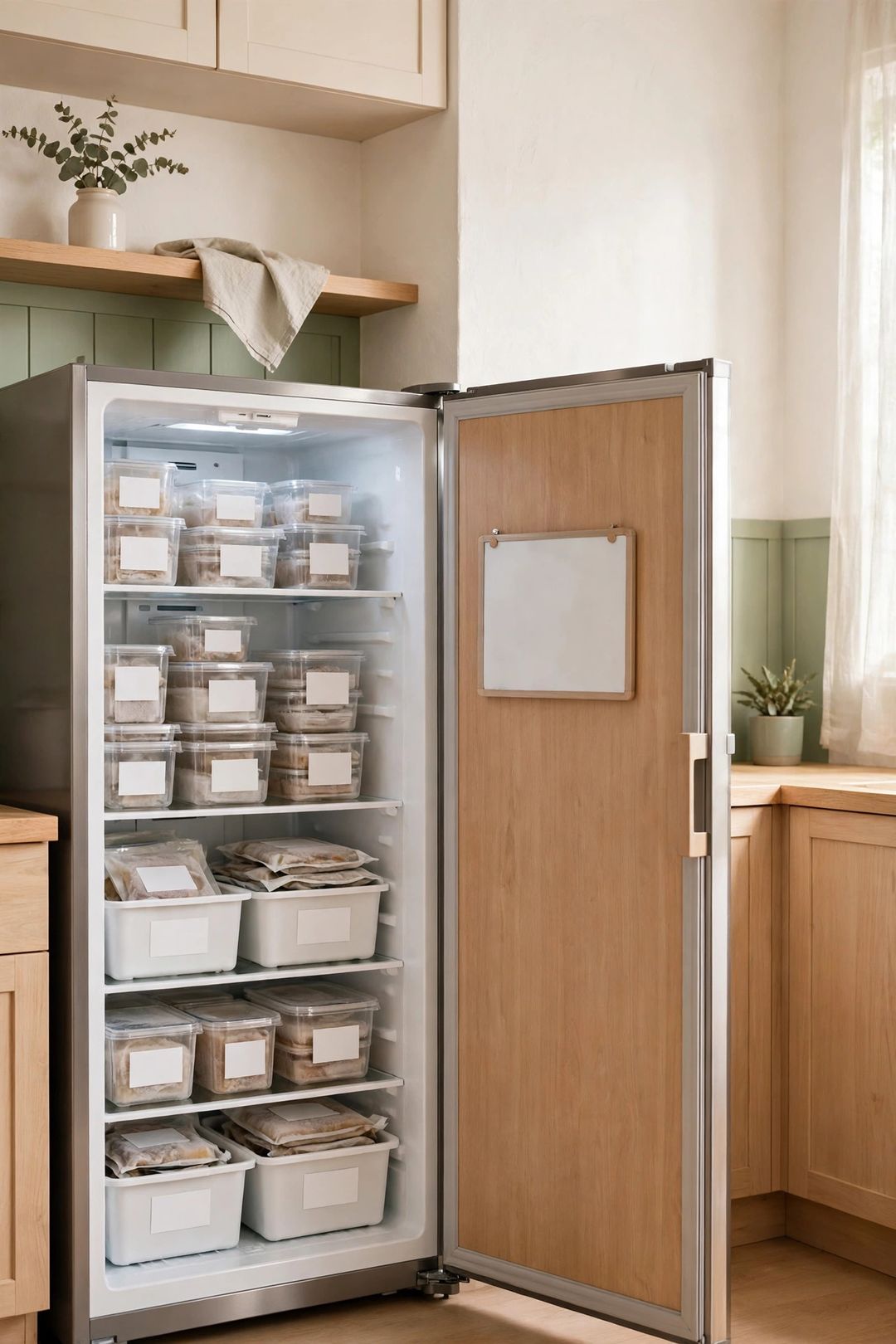
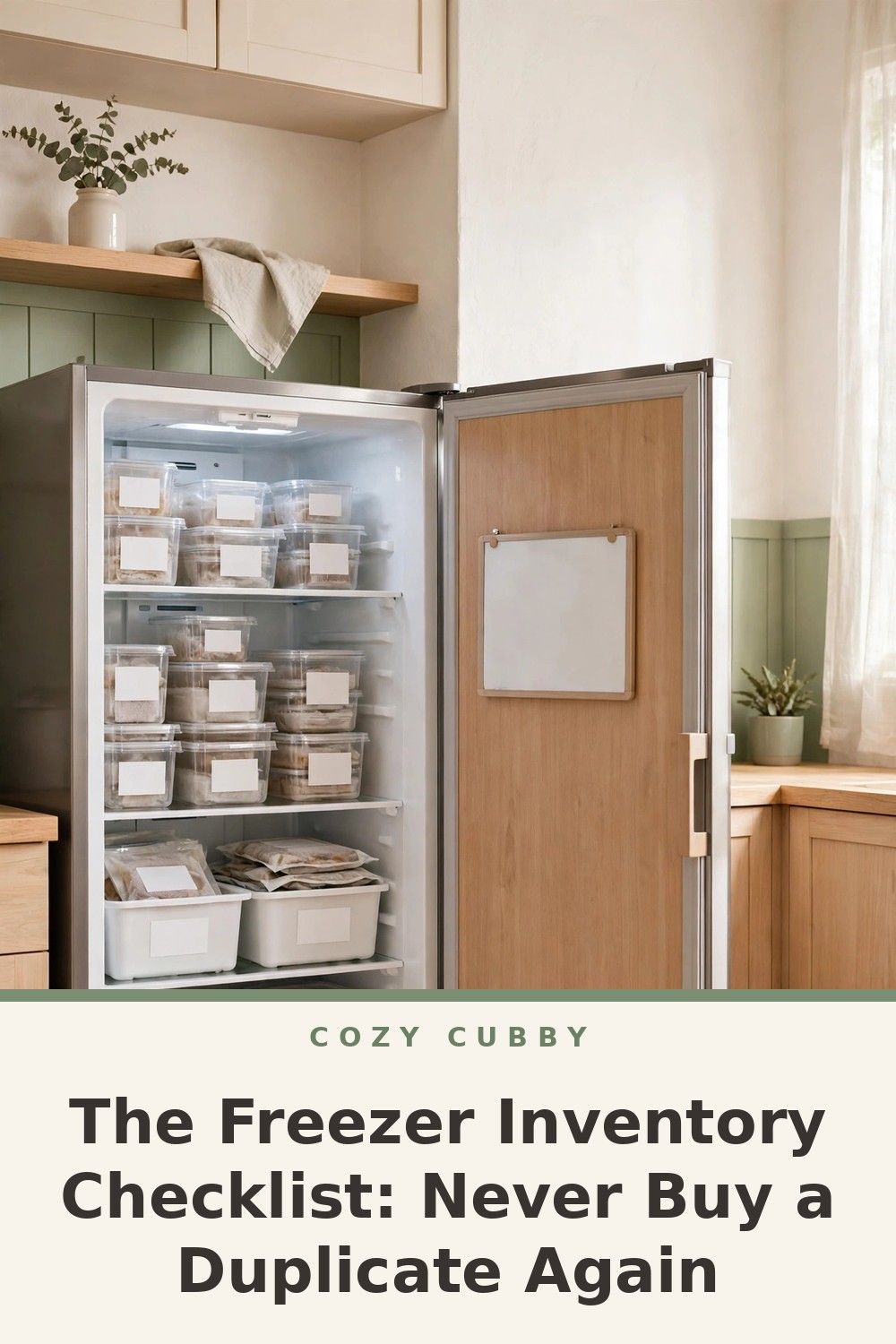
A whiteboard. A small dry-erase board near the freezer makes changes fast. The risk is accidental erasing, so keep the monthly recount in section 6 as a backup.
A phone note or list app. A shared note suits homes where more than one person shops, because the list travels to the store. Drawback: if opening the app feels slow, updates get skipped. Pin the note to the top.
Use only one master list. Two half-updated lists are worse than one simple one, because no one trusts either.
2. Record Only the Four Fields That Matter
Long logs fail because they take too long. Four fields are enough:
Item. Plain words, including the cut: "chicken thighs," not just "chicken." Note if it is raw or cooked.
Amount. Use the unit you shop in: packs, pounds, bags, or portions.
Date in. The month and year it went into the freezer. This stops old food drifting to the back, forgotten.
Use-by. A target month to use it by, based on the package date or your plan. Treat it as a reminder to cook it soon, and check the packaging if you are unsure about quality.
3. The Copyable Checklist, Grouped by Type
Copy this structure onto your paper, board, or phone note. Each line uses the same four fields: Item / Amount / Date in / Use-by.
Protein: Each meat, fish, or plant-based protein on its own line.
Produce: Frozen vegetables, fruit, herbs, and food prepped from fresh.
Meals and leftovers: The meal and its portions, such as "soup, 2 portions."
Extras: Bread, dough, butter, ice cream, stock, and sauces.
Leave two or three blank lines in each group, so new items can be added fast.
4. Match Your Zone Counts to Your Boxes and Bins
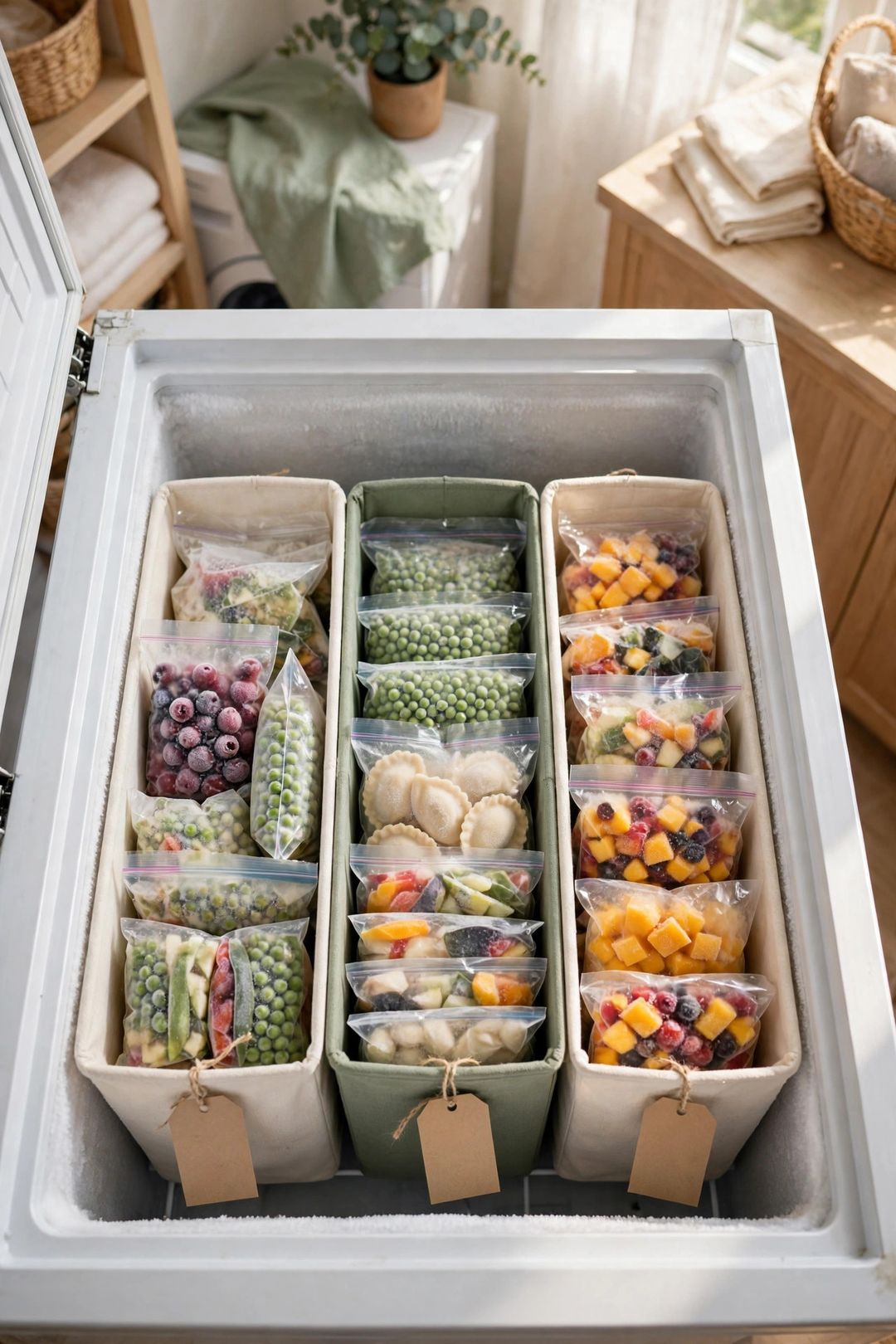
If you use boxes or bins, make the list match them. Add a zone note to each line, such as "top bin," or keep a small count for each bin at the top.
If the protein bin holds four packs of chicken, the list should say four. When bin counts and list counts agree, you can trust the list at the store without opening the freezer. Keep zones broad — protein, produce, meals, and extras are enough.
5. Build the Cross-Off Habit
An inventory only works if it changes when the freezer changes. Two rules keep it honest:
Cross off as you take out. When you remove an item, cross it off or lower the amount right away. If you use part of a bag, adjust the amount and leave the line in place.
Add as you put in. Add new items before they go in, with date in and use-by target. Writing it first forces a quick look at what is already listed.
Make it a shared rule: anyone who takes food out can update the list. If it depends on one person, it will drift within a week.
6. Do a 10-Minute Monthly Recount
Once a month, set a timer and compare the list to the freezer, shelf by shelf or bin by bin. Ten minutes is enough if the list is mostly current.
Cross off anything gone, add anything missed, and fix wrong amounts. Move the oldest items to the front as you go, and circle two or three to use first. Pick a fixed cue: the day before your biggest grocery trip, or the first weekend of the month.
7. Plan Meals From the List, Not From Memory
The payoff comes at planning time. Start each meal plan by reading the list, not by thinking of recipes first. Pick one protein and one produce item already listed, build the meal around them, and check the meals group for busy nights.
Before writing a shopping list, scan every group and cross off anything the freezer already covers. That habit stops duplicate buying, because you shop from a count you trust.
8. Keep Physical Storage Simple
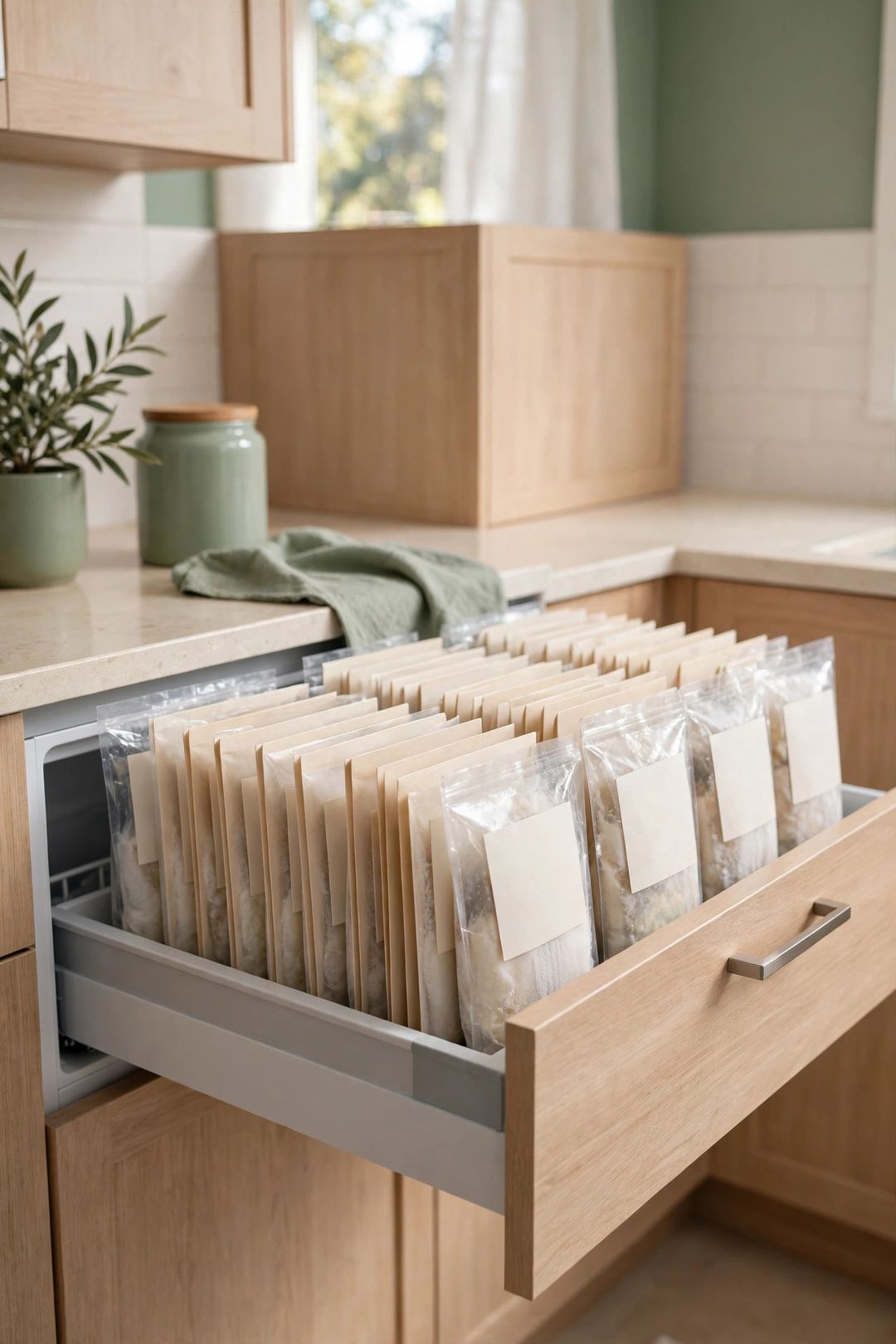
This system is about the list, not a full reorganization. Freeze food flat in bags where you can, group like with like in bins that match your zones, and write the name and date on each package so it agrees with the list at recount time.
What to Buy
A small dry-erase whiteboard, typically $8–$15. Best for: A fast-changing list by the freezer. Pro: Changes take seconds. Con: Writing can be erased by accident, and small boards fill up fast.
A magnetic notepad or inventory sheets, typically $6–$12. Best for: Paper lists on the door. Pro: Ruled lines keep entries neat and easy to scan. Con: Sheets run out, and a lost pen slows updates.
Clear freezer bins, typically $10–$20 each. Best for: Matching list zones to physical groups. Pro: Contents stay visible and lift out together. Con: Rigid bins waste space in small or curved drawers.
Freezer-safe labels or tape and a marker, typically $5–$10. Best for: Dating packages to match the list. Pro: Cheap and flexible. Con: Some tapes lose grip in deep cold, so press them onto dry packaging.
Mistakes to Avoid
- Tracking too much detail. Brands, prices, and exact weights slow every update. Four fields are enough.
- Keeping two lists at once. A paper list and a phone list will drift apart. Pick one master list.
- Adding food without dating it. Undated items become mystery items, and the oldest food stays hidden.
- Never crossing items off. A list that only grows stops being trusted, and duplicates return.
- Skipping the monthly recount. Small errors build up. Ten minutes a month keeps the list trustworthy.
Frequently Asked Questions
Paper, whiteboard, or phone: which format is best?
Choose based on who shops. Paper or a whiteboard is fastest at home. A shared phone note is better if different people shop, because it travels to the store. Using only one matters more than the format.
How detailed should each entry be?
Keep it to item, amount, date in, and use-by target. Add a zone note only if you use bins. If an entry takes more than a few seconds, it is too detailed to maintain.
What if the list and the freezer no longer match?
Do a full recount instead of patching guesses. Empty one shelf or bin at a time, rewrite that group from scratch, then move on.
Does this work for a small fridge freezer?
Yes, and it may help even more. Small freezers fill fast and hide items, so a short list prevents buying a third bag of something already buried at the back.
Start the list at your next recount and let it do the remembering for you. Save this post to your Kitchen Organization board on Pinterest so the checklist is handy on grocery day.