The fridge door opens more often than any other part of the fridge, yet it often holds the messiest mix: loose sauce packets, half-used jars, and bottles tipped on their sides. Small items slide to the back and get bought twice.
These fridge door organization ideas focus only on the door itself — its bins, racks, and covered compartments. The plan is simple: group condiments by use, corral small items in clear bins, label each zone, and move the few foods that do not belong on the door.
Most doors can be reset in about 30 minutes. Work bin by bin and put back only what earns a clear spot.
Sort and Group What Belongs on the Door
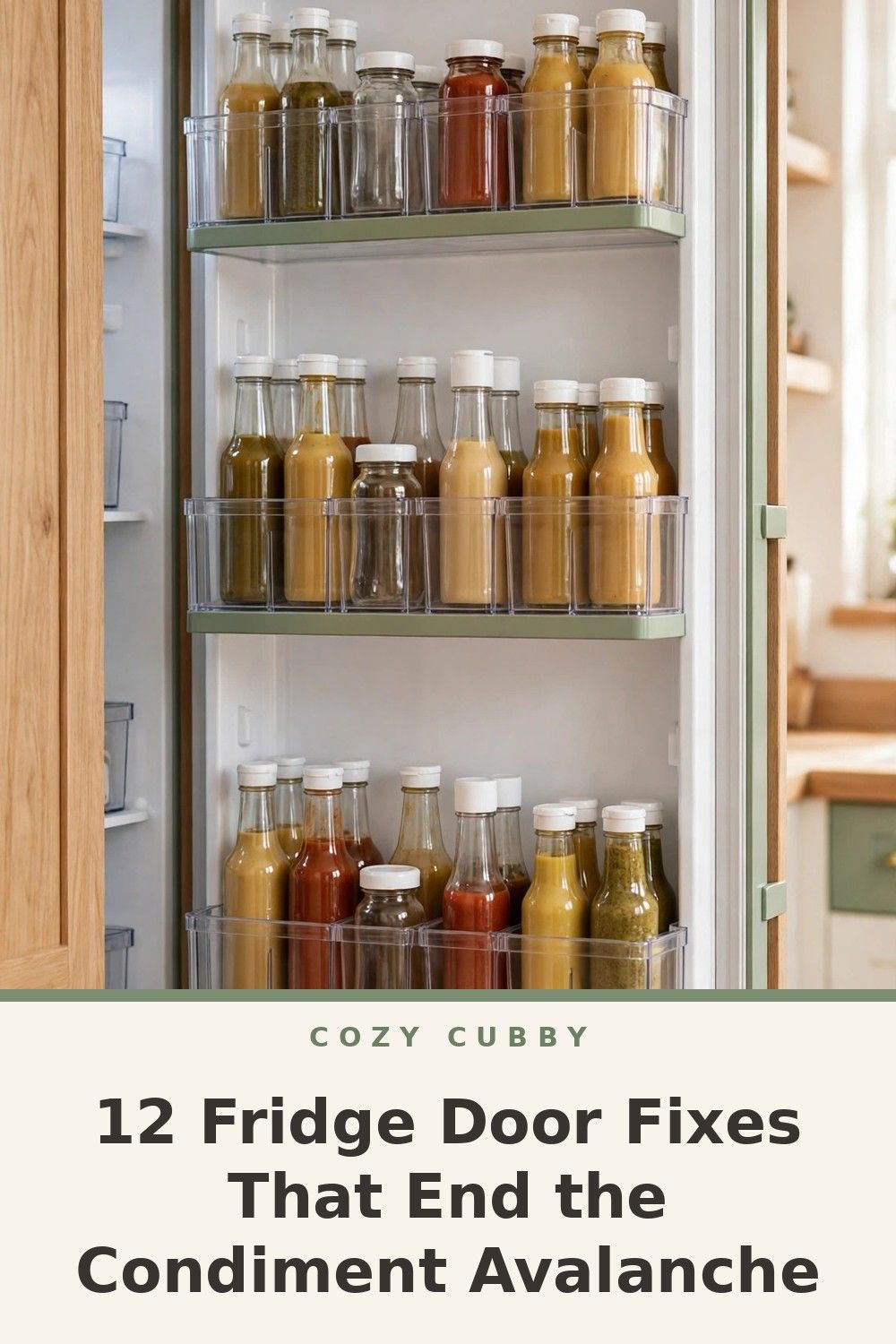
1. Group condiments by meal, not by bottle shape. Keep sandwich spreads, mustard, and pickles together, salad dressings in another group, and cooking sauces like soy sauce and hot sauce in a third. When everything for one meal sits in one place, there is no hunting across three shelves at dinner time.
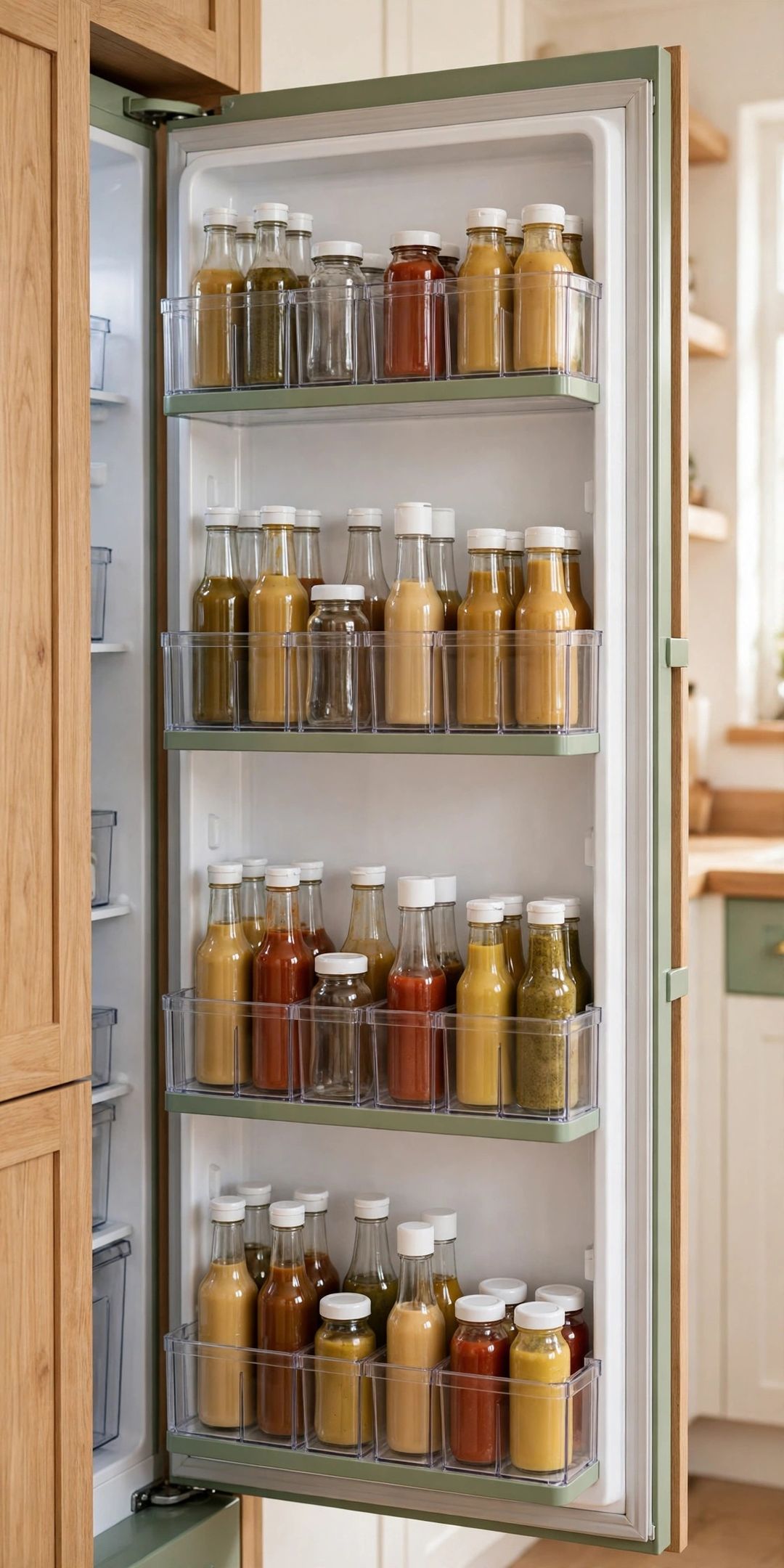
2. Corral tiny jars and packets in one small clear bin. Soy sauce packets, single-serve jams, and mini jars are the items most likely to vanish. Drop them upright into one short, clear bin on a middle shelf. The bin lifts out in one move, so nothing hides behind taller bottles.
3. Keep breakfast spreads in one top bin. Jam, honey, and nut butter used at breakfast belong together near the top, away from strong-smelling sauces. A single breakfast bin also makes it easy to carry everything to the table and return it in one trip.
4. Stand tall bottles together and face labels out. Ketchup, dressings, and drink mixers fit best in the tallest door bin, usually the bottom one. Line them in one row with labels forward. If a tall bottle must lie down to fit, it belongs inside the fridge instead, where it will not roll or leak.
Add Bins, Racks and Labels That Fit the Door
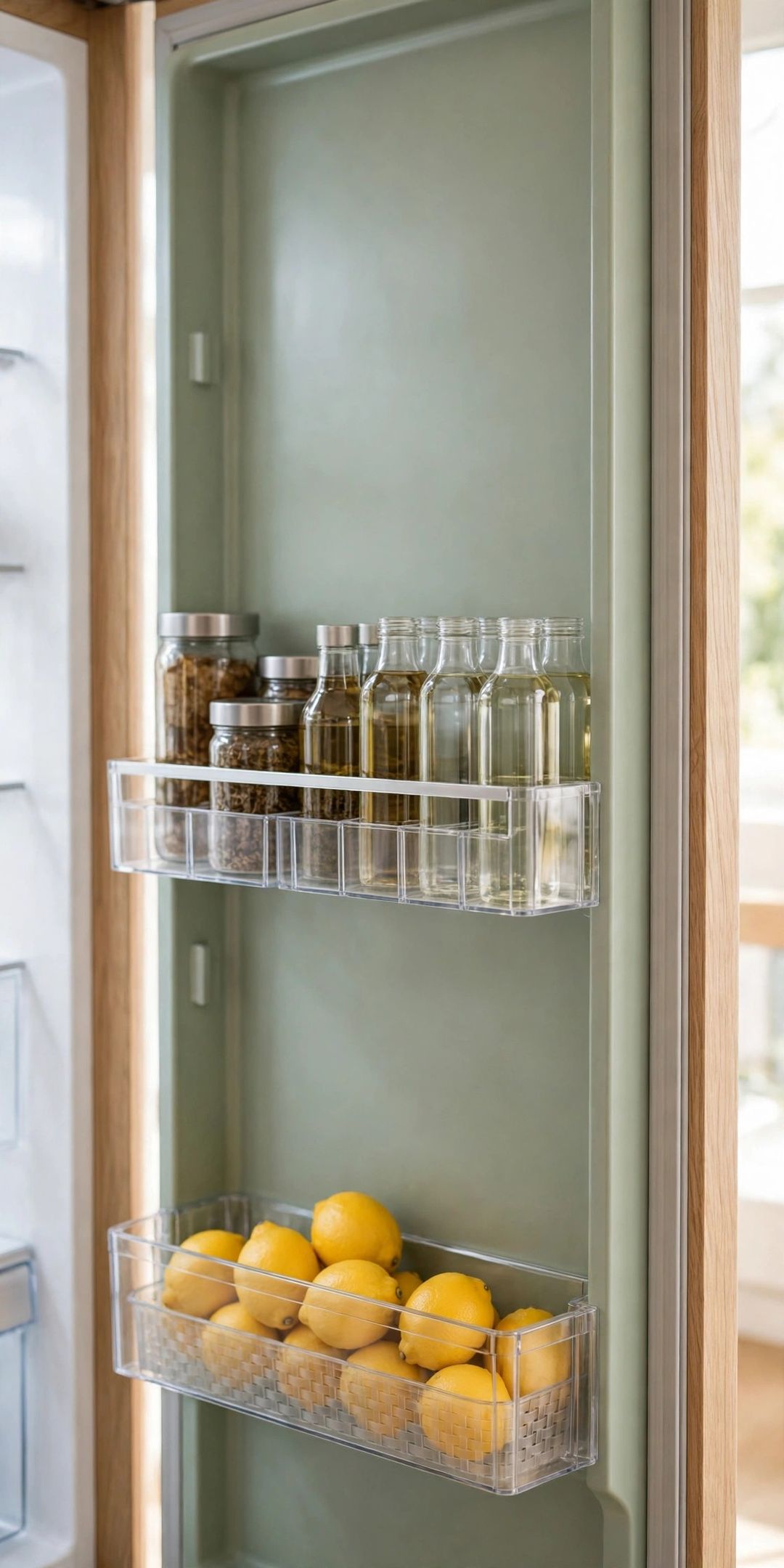
5. Add small clear bins inside wide door shelves. Many door shelves are wider than the bottles they hold, which leaves wasted gaps. A slim clear bin, roughly 4 to 6 inches wide, turns one loose shelf into two defined sections. Choose bins with a lip or handle so they slide out without tipping bottles.
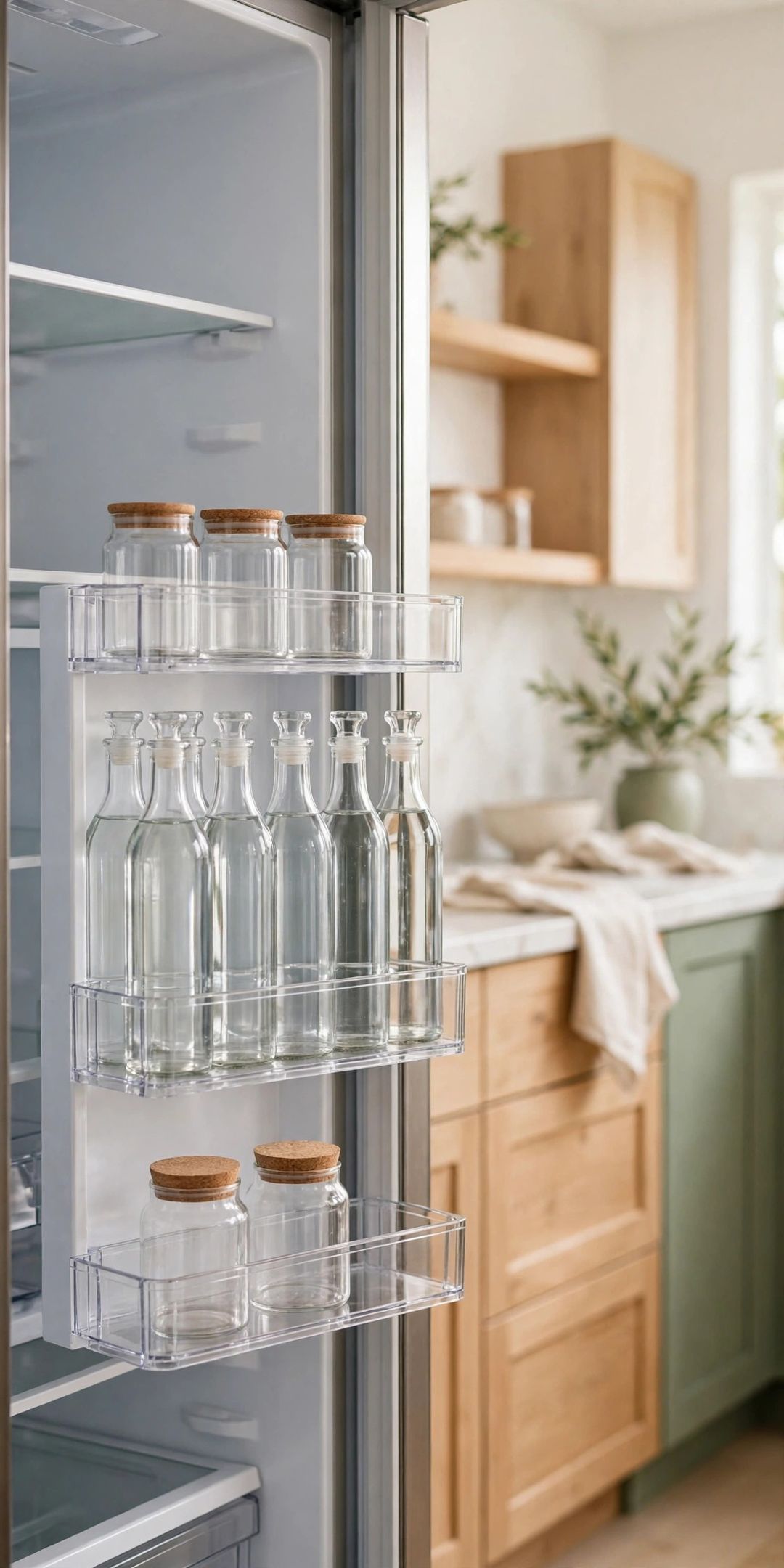
6. Use dividers or a bottle retainer bar. Adjustable dividers and clip retainer bars stop bottles from sliding and clinking every time the door swings. Set one divider between heavy glass bottles and lighter plastic ones, and check that any built-in guard rail is seated firmly before adding more bottles.
7. Label each bin and the top of each jar. A short label on the front of each bin — Dressings, Sandwich, Breakfast, Kid Snacks — tells everyone where items return. For small jars viewed from above, write the name on the lid. Labels matter most on the door, because items are packed tight and read from the top.
8. Line door bins with a washable liner. Sauces drip, and sticky rings build up fast in narrow bins. A cut-to-fit, non-slip liner catches drips, keeps small bottles from sliding, and lifts out for a quick rinse. Avoid thick liners that steal height, and skip paper towels, which tear when damp.
Set Up Zones for Everyday Items
9. Use the covered top compartment for butter. Most fridge doors have one covered bin at the top, and it suits butter well. Butter picks up odors, so a closed compartment keeps it separate from sauces and ready to spread. Keep cheese slices beside it if space allows, and keep the lid closed.
10. Put kid snacks on the lowest reachable door shelf. Cheese sticks, yogurt tubes, and fruit sauce pouches fit well in one low, open bin that children can reach without moving glass bottles. Keep only sturdy, sealed snacks at this height, and place glass jars and heavy bottles higher up.
11. Make one use-first bin for opened items. Opened dressings, leftover takeout sauce, and a jar that needs finishing soon belong together in one small bin at eye level. Check this bin before opening a new bottle of the same item. It cuts duplicates and stops older items drifting to the back.
12. Move milk and eggs off the door. The door is the warmest part of the fridge, and the temperature shifts each time it opens, so it is a poor spot for milk and eggs, which keep best in a steadier cold spot inside the main fridge. Use the freed space for sturdy condiments and pickles instead.
What to Buy
Small clear bins for fridge doors, typically $8–$18 for a set. Pro: They corral packets and mini jars so nothing hides at the back. Con: A bin that is too deep will not slide past the shelf above. Skip if: Your door shelves are already narrow and divided.
Adjustable fridge bin dividers, typically $7–$14. Pro: They stop bottles sliding and can shift as contents change. Con: Clip styles do not fit every bin shape. Skip if: Your bottles already stand in one tight, stable row.
A covered butter dish that fits a door compartment, typically $6–$12. Pro: It limits odor transfer and keeps butter easy to find. Con: Oversized dishes waste the whole covered bin. Skip if: Your door compartment already has a fitted lid that seals well.
Waterproof label set or label tape, typically $6–$13. Pro: Labels survive cold and damp and keep zones clear for everyone. Con: Printed labels need redoing when a zone changes. Skip if: A marker on painter's tape stays legible in your fridge.
Non-slip fridge bin liners, typically $7–$12. Pro: They catch drips and rinse clean in seconds. Con: They need trimming to fit narrow door bins. Skip if: Your bins are smooth, shallow, and already quick to wipe out.
Mistakes to Avoid
- Storing milk and eggs on the door. The door warms and cools with every opening, so keep both inside the main fridge where the temperature stays steadier.
- Mixing every condiment on one shelf. Breakfast spreads beside hot sauce and pickles means longer searching and more duplicates opened at once.
- Using bins that are too tall or too deep. A bin that scrapes the shelf above or blocks the door will be removed within a week.
- Skipping labels because the door looks tidy today. Without labels, items drift back to any open gap and the zones disappear.
- Overloading the lowest bin with glass. Heavy glass in the widest bin strains the shelf and risks breakage when the door swings wide.
Frequently Asked Questions
What foods are safe to store on the fridge door?
Sturdy condiments, pickles, jams, sealed dressings, butter in a covered compartment, and sealed drinks handle the door well. These foods tolerate the small temperature changes that happen each time the door opens.
How often should fridge door bins be cleaned?
Wipe one bin each week on grocery day and wash all bins more deeply every month or after any spill. Liners and small clear bins make this fast, because each one lifts out on its own.
What size clear bin fits most fridge doors?
Start with bins about 4 to 6 inches wide and 3 to 4 inches tall, then measure your own shelves before buying more. Height clearance under the shelf above matters most.
Where should eggs go if not on the door?
Keep eggs in their carton on a shelf inside the main fridge, toward the back where the temperature is steadier. The carton also limits odor transfer and protects the shells.
A tidy fridge door means every sauce, spread, and snack is visible in seconds. Save this post to your Kitchen Organization board on Pinterest so the 12 door zones are handy on your next grocery day.