Most garages do not get messy all at once. A box stays by the door, tools pile up on a workbench, sports gear lands in a corner, and soon there is barely room to walk, let alone park.
These garage organization ideas on a budget use simple zones, wall storage, bins, and labels to bring order back without a remodel. Each system below uses low-cost supplies, generally in the $10–$50 range per system, so you can build one zone at a time.
Start by clearing one wall or corner, sorting items into keep, donate, and trash piles, and only then set up storage for what remains.
1. Map Zones Before You Buy Anything
Zones are the foundation of a garage that stays tidy. Instead of storing things wherever they fit, give each type of item a set area: tools in one spot, sports gear in another, and seasonal items together.
A simple map works well: tools near the workbench, garden supplies near the door, sports gear by the entry, and seasonal boxes on high shelves.
2. Use Wall Space for Tools
Tools spread across a workbench are hard to find and easy to damage. Wall storage lifts them off the bench and puts each tool in plain sight.
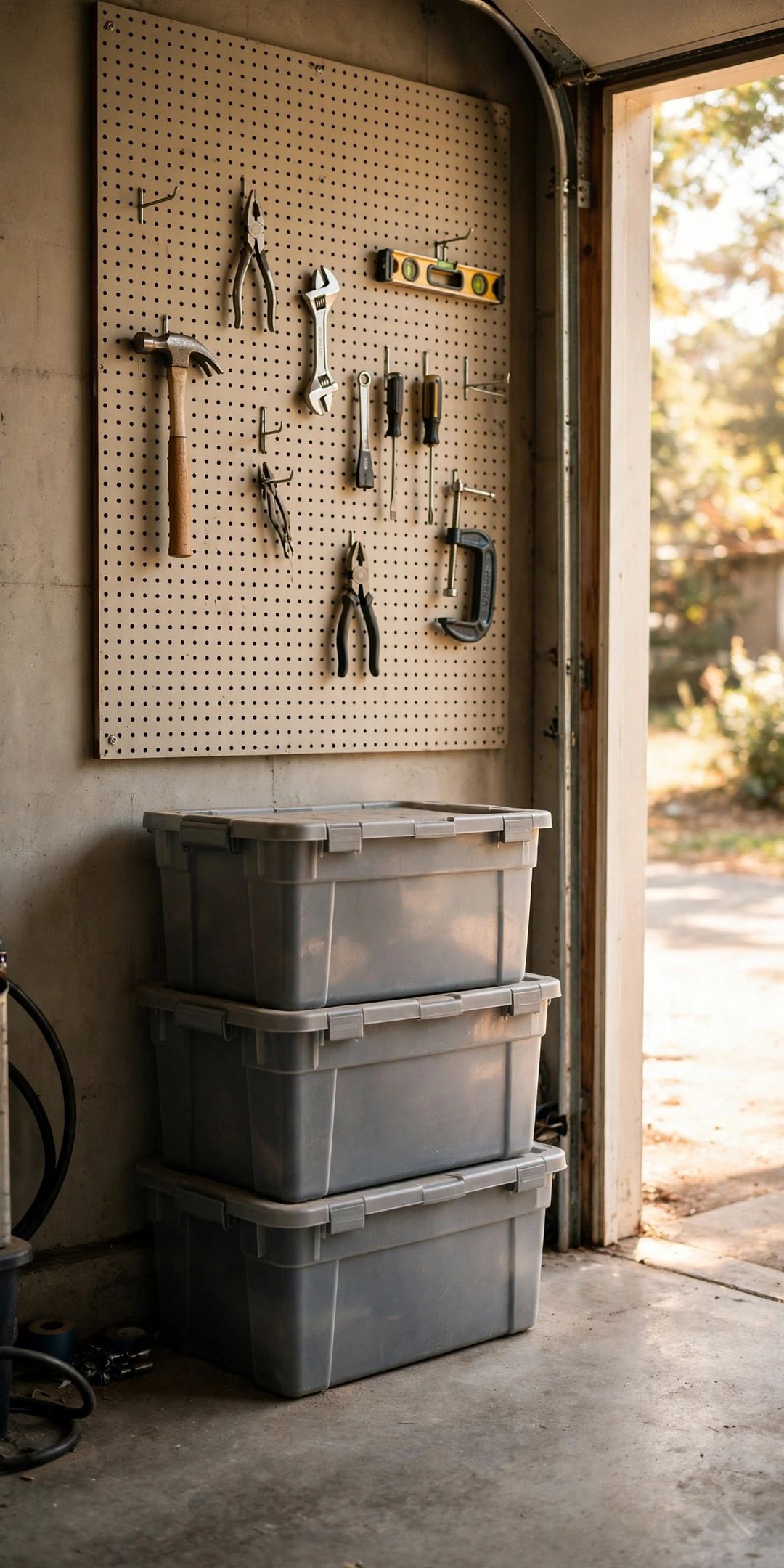
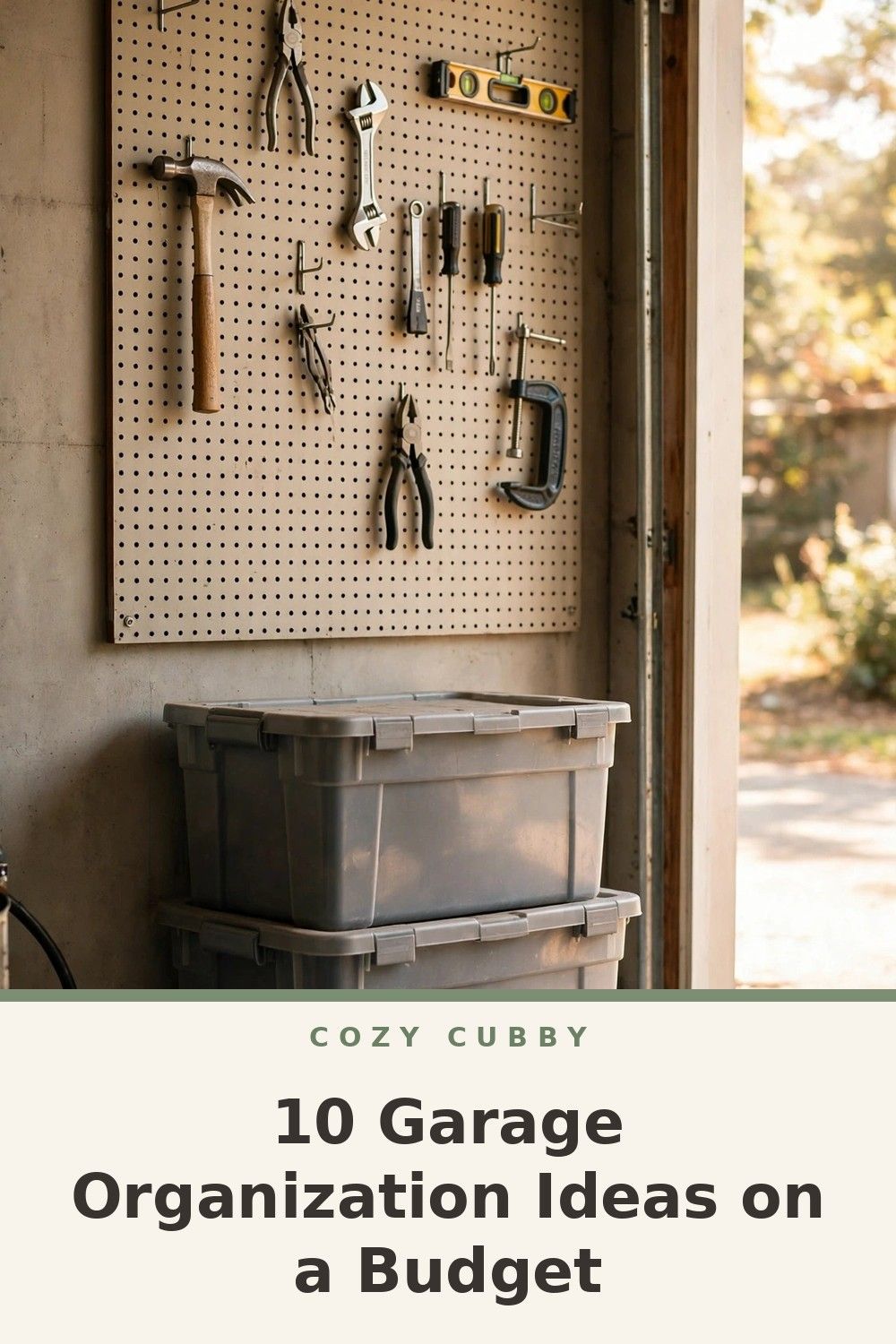
A pegboard panel or a row of wall hooks holds hammers, wrenches, and screwdrivers where they are easy to grab. Label each row, so a missing tool is obvious, and keep sharp tools up high.
3. Hang Bikes and Bulky Gear
Bikes, ladders, and large sports gear eat floor space fast. Wall hooks or ceiling hooks lift them overhead or flat against a wall, freeing the floor for walking and parking.
Hang bikes by the frame or wheel, with helmets and pumps nearby in a small bin. Check vehicle height first, so nothing blocks a car door.
4. Sort Sports Gear Into One Zone
Balls, bats, helmets, and pads scatter across a garage when they have no home. A single sports zone with a tall bin or a few wall hooks keeps the whole set together.
Use one large bin for balls, hooks for bags and helmets, and a small basket for gloves and bottles.
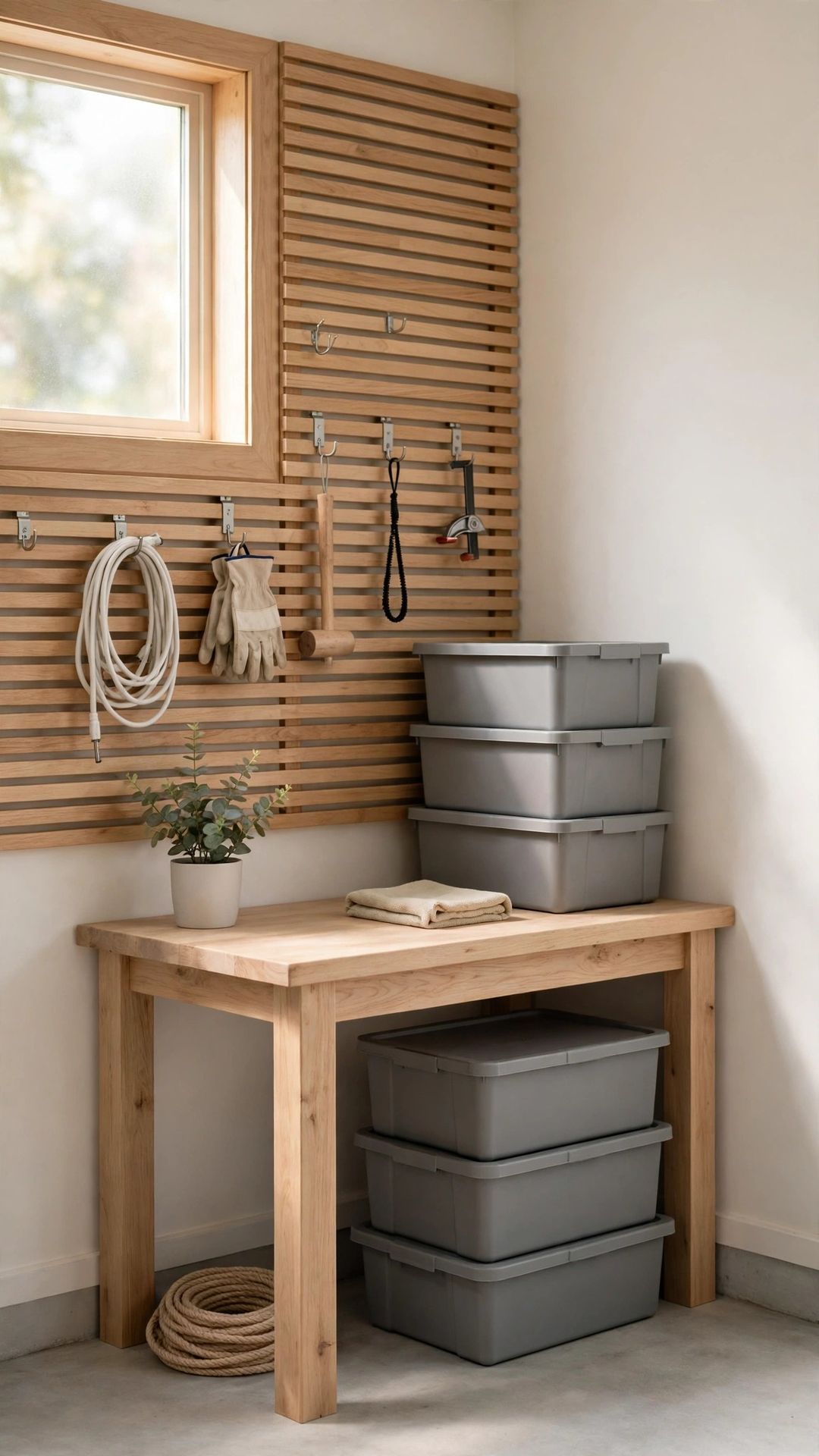
5. Label Bins for Seasonal Items
Holiday decorations, camping gear, and off-season clothes often live in stacked boxes with no labels. Finding one item means opening every box.
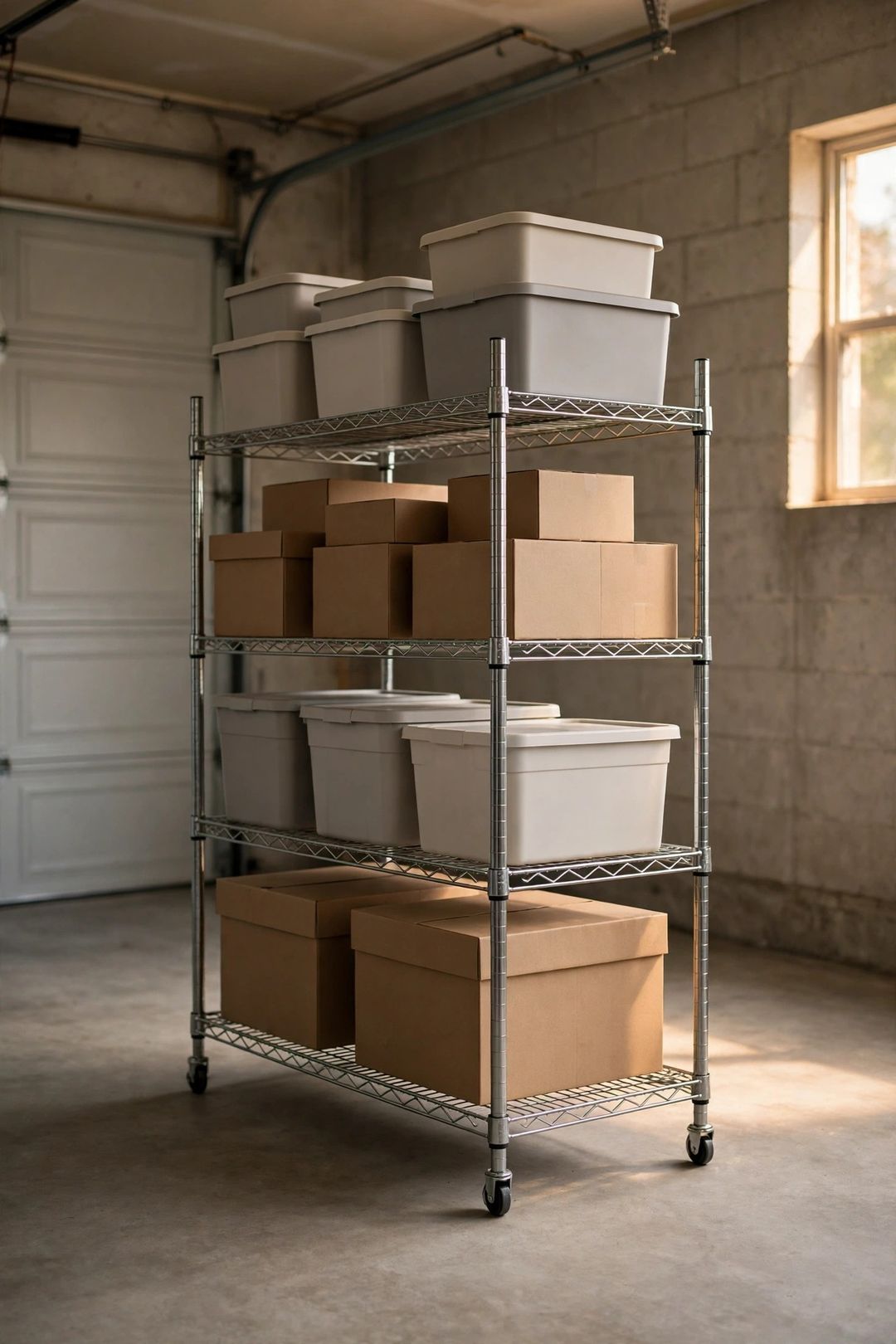
Label each box on two sides with a short word, such as holidays or camping. Stack lighter boxes on top, and keep often-used boxes at a reachable height.
6. Build a Small Workbench Zone
A workbench works best when it has a job and a boundary. Without one, it becomes a shelf for mail, half-finished projects, and items with no other home.
Keep only active tools and the current project on the bench, and store the rest on the wall or in labeled bins nearby.
7. Store Paint and Hardware Safely
Half-used paint cans, screws, nails, and small hardware parts pile up in corners and spill easily. A dedicated shelf and small containers keep them safe and easy to find.
Store paint cans upright on a sturdy shelf, lids sealed and labels out. Sort small hardware into jars or divided boxes by type, and keep chemicals away from children and heat.
8. Keep a Donation Box by the Door
Garages fill up again when outgoing items have nowhere to go. A single donation box near the garage door catches items the moment you decide to let them go.
When the box is full, take it to a donation center right away and start a fresh box.
9. Tape a Floor Plan to the Wall
Even a simple floor plan helps a garage stay organized. Mark where cars park, where the zones are, and where the walkways run, then tape the plan inside the garage door.
The plan shows which floor space must stay open, and whether a new item fits a zone or something else must leave first.
10. Do a Seasonal Reset Twice a Year
Garages change with the seasons: winter gear comes out, summer gear goes away, and holiday boxes rotate. A reset twice a year, in spring and fall, keeps the zones honest.
During each reset, check labels, clear the workbench, empty the donation box, and move seasonal bins to the right height.
What to Buy
A pegboard panel with hooks, typically $20–$50. Pro: Tools stay visible and easy to reach, and the workbench stays clear. Con: Heavy tools may need wall studs for support. Skip if: Your tools already live in a toolbox you carry to each job.
Wall hooks or a bike hook set, typically $10–$30. Pro: Bikes and bulky gear move off the floor with no new furniture. Con: Hooks must be fixed into studs to hold weight safely. Skip if: Your garage ceiling is too low for hanging items safely.
Clear storage bins with lids, typically $10–$25 each. Pro: Contents stay visible and protected from dust. Con: Large bins get heavy when full. Skip if: Your items are used weekly and open bins are easier to grab.
A tall open bin for sports gear, typically $15–$30. Pro: Balls and pads go in fast, which helps kids tidy up. Con: Small items sink to the bottom. Skip if: Sports gear already has a dedicated shelf or rack.
Small jars or a divided hardware box, typically $8–$20. Pro: Screws and small parts stop rolling around loose drawers. Con: Tiny parts still need labels to stay sorted. Skip if: You keep hardware in its original packaging and rarely lose track of it.
Mistakes to Avoid
- Buying storage before sorting. Boxes and racks bought first often fit items you later donate. Sort and declutter, then buy only what the remaining items need.
- Hanging heavy items without studs. Drywall anchors alone may not hold bikes, ladders, or loaded shelves. Fix heavy storage into wall studs.
- Stacking bins too high. Tall stacks topple and hide the bottom boxes. Keep stacks at a height you can reach and move safely.
- Blocking the walkway. A tidy wall means little if the path to the door is blocked. Keep walkways and car space clear in the floor plan.
- Skipping labels. Unlabeled bins in a garage all look alike. Label two sides so boxes stay readable even when stacked.
Frequently Asked Questions
Where should I start in a very messy garage?
Start with one wall or corner, not the whole garage. Clear it fully and set up that zone before moving on.
How do I keep cars fitting in the garage?
Mark the parking space on the floor plan and keep it clear. Wall storage and high shelves add space without taking floor area.
What is the safest way to store paint?
Store paint upright on a sturdy shelf, lids sealed and labels out, away from heat and out of reach of children.
How often should a garage be reorganized?
A seasonal reset twice a year is enough for most garages: check labels, clear the workbench, and move seasonal items each spring and fall.
A garage with clear zones, wall storage, and labeled bins is easier to use every day, not just on cleaning day. Save this post to your Garage Organization board on Pinterest so the plan is handy for your next weekend reset.